
How to Commission a Custom Painting — A Step-by-Step Guide for First-Time Buyers
Share
There's a particular kind of hesitation people feel when they first think about commissioning a painting. It's not like buying a piece that already exists — where you can see the finished work, decide if it moves you, and make a choice. Commissioning means stepping into the unknown. You have an idea, a blank wall, a feeling you want to capture — and you're asking an artist to bring it into being.
It sounds daunting. In practice, it's one of the most rewarding ways to own original art.
This guide walks through the entire process — from the first spark of an idea to the moment the finished painting arrives at your door. No art-world jargon. No gatekeeping. Just how it works, step by step.
---
## Why Commission?
Before getting into the how, it's worth understanding the why. People commission paintings for reasons that don't fit an off-the-shelf solution:
**The size is specific.** You have a wall that needs a 48-by-60-inch piece, and everything you find is either too small or the wrong orientation. A commission is built to your dimensions from the start.
**The colours need to work with a room.** You've spent months getting the interior right — the sofa, the rug, the light. A commissioned painting can be created with your palette in mind, not matched after the fact.
**The subject is personal.** A landscape from a trip. A portrait of someone who matters. An abstract that captures a specific feeling or memory. These aren't things you browse for — they're things you create with an artist.
**You want to be part of the process.** Some buyers find that collaborating with an artist — exchanging ideas, seeing sketches evolve, making decisions together — deepens their connection to the final piece in a way that buying ready-made work doesn't.
---
## Step 1: Define What You Want (Loosely)
You don't need to arrive with a fully formed vision. In fact, the best commissions often start with something open-ended — a mood, a reference image, a colour you keep coming back to.
What helps is knowing roughly where you stand on a few questions:
**Subject matter.** Are you thinking portrait, landscape, abstract, or something conceptual? Look through your own saved images — screenshots, Pinterest boards, photos you've taken — and notice what keeps appearing.
**Medium.** Oil, acrylic, watercolour, mixed media. If you're not sure, spend time looking at examples. Nahira's oil work — like *The Essence of Womanhood* — has a classical depth and warmth. Roshan Tehranian's acrylic and oil pieces — like *Radiance* — carry a more spiritual, luminous quality. Browsing the collection by medium is a fast way to calibrate your eye.
https://vanarthub.com/products/the-essence-of-womanhood
https://vanarthub.com/products/radiance
https://vanarthub.com/collections/paintings
**Colour direction.** You don't need a precise palette. But knowing whether you're drawn to warm earth tones, cool blues, or bold contrasts gives the artist a starting point.
**Size and orientation.** Measure your wall. Consider the furniture below or around it. A painting that's too small will float; one that's too large will overwhelm. If you're unsure, tape the dimensions on the wall with painter's tape and live with the shape for a day or two.
The goal at this stage isn't a perfect brief. It's a direction. Artists work best when they have parameters and room to interpret — not when every detail is prescribed.
---
## Step 2: Find the Right Artist
This is the most important decision in the process. The right artist isn't necessarily the most technically skilled — it's the one whose existing work already moves in a direction you want to go.
Browse artist collections, not just individual pieces. Look at an artist's body of work across multiple paintings. Does their visual language speak to you? Do they explore themes that resonate?
At VanArtHub, each artist has a dedicated collection page with their biography and full portfolio:
- **Nahira** — Vancouver-based. Figurative and abstract work exploring human connection, vulnerability, and silence. Oil and acrylic. Her commissions tend toward intimate figurative scenes and layered emotional portraits.
https://vanarthub.com/collections/nahira
- **Phaedra** — Tehran-based. Coloured pencil, oil, and mixed media. Wildlife studies, introspective portraiture, and serene landscapes. Known for delicate detail and quiet emotional depth. Her piece *Symphony of the Wild* demonstrates the vivid precision she brings to natural subjects.
https://vanarthub.com/collections/phaedra
https://vanarthub.com/products/symphony-of-the-wild
- **Marjan Mousavi** — Iranian painter whose work reflects a lifelong fascination with nature and its hidden symmetries. Her piece *Wonderment* shows her ability to merge natural forms with spiritual and geometric influences.
https://vanarthub.com/collections/marjan-mousavi
https://vanarthub.com/products/wonderment-1
- **Nima Sayadian** — Iranian painter exploring liminal states between presence and absence. Acrylic. His commissions tend toward conceptual figurative work with philosophical undertones.
https://vanarthub.com/collections/nima-sayadian
When you find an artist whose work resonates, spend time with it. Read their statement. If their existing paintings make you feel something, there's a strong chance a commission with them will too.
---
## Step 3: The Brief — What to Share
Once you've chosen an artist, the next step is sharing your vision. A good commission brief doesn't need to be long. It needs to be clear.
Here's what to include:
- **The basics:** subject matter direction, preferred medium, desired dimensions.
- **Visual references:** 3–5 images that capture the mood, palette, or style you're drawn to. These don't need to be art — they can be photographs, fabric swatches, a colour you saw on a building.
- **Where it will live:** a photo of the room and wall where the painting will hang. This helps the artist understand lighting, surrounding colours, and the physical context of the work.
- **What you don't want:** sometimes the most useful thing in a brief is knowing what to avoid. "No bright reds." "Nothing too abstract — I want the subject to be recognizable." Boundaries are helpful.
- **Timeline:** when you're hoping to have the piece. Be realistic — a commission can take anywhere from a few weeks to a few months depending on the artist's schedule, the size of the work, and the complexity of the piece.
---
## Step 4: Understanding the Creative Timeline
Every commission follows a similar arc, though the pace varies by artist and project:
**Week 1–2: Concept and sketches.** The artist reviews your brief and produces initial sketches or digital mock-ups. This is the exploratory phase — loose ideas, not finished work. You'll see rough compositions, colour studies, and the general direction the piece is heading.
**Week 2–3: Feedback and refinement.** You respond to the sketches. This is where the collaboration happens. You might say: "I love the composition in sketch B, but could we explore a warmer palette?" The artist adjusts and returns with revisions. Most commissions include 2–3 rounds of feedback.
**Weeks 3–8: Painting.** Once the direction is locked in, the artist begins the actual painting. This phase is largely independent — the artist is in the studio, working through the piece. You may receive one or two in-progress photos, but the goal here is to give the artist space to execute the vision you've agreed on.
**Final week: Approval and delivery.** The artist shares photographs of the finished work. You approve the piece (or request minor adjustments if the agreement allows). Once approved, the painting is varnished, packed, and shipped.
---
## Step 5: What Commissioning Costs
Commission pricing follows the same logic as purchasing existing work — based on size, medium, complexity, and the artist's experience — with a premium for the collaborative process.
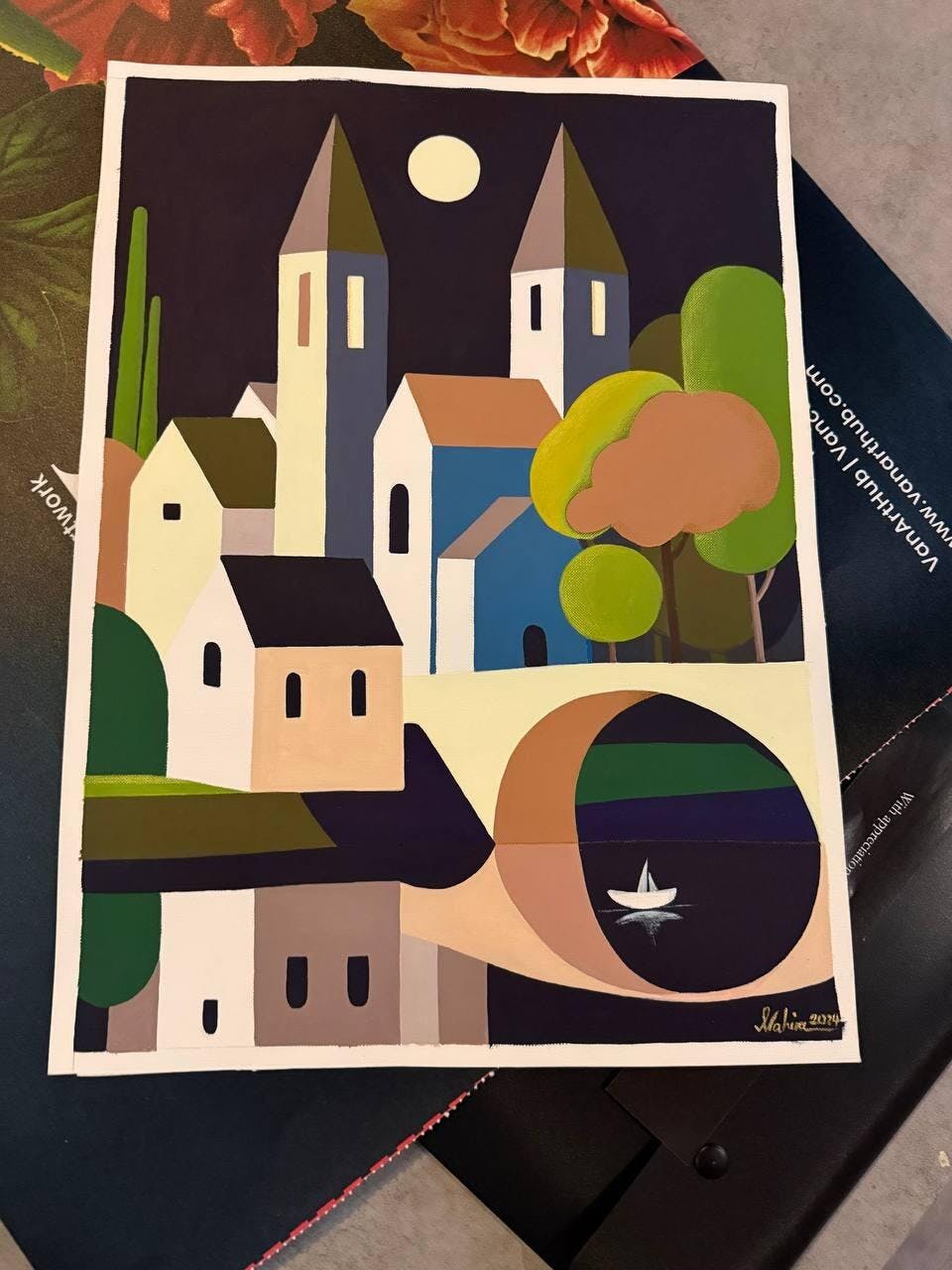
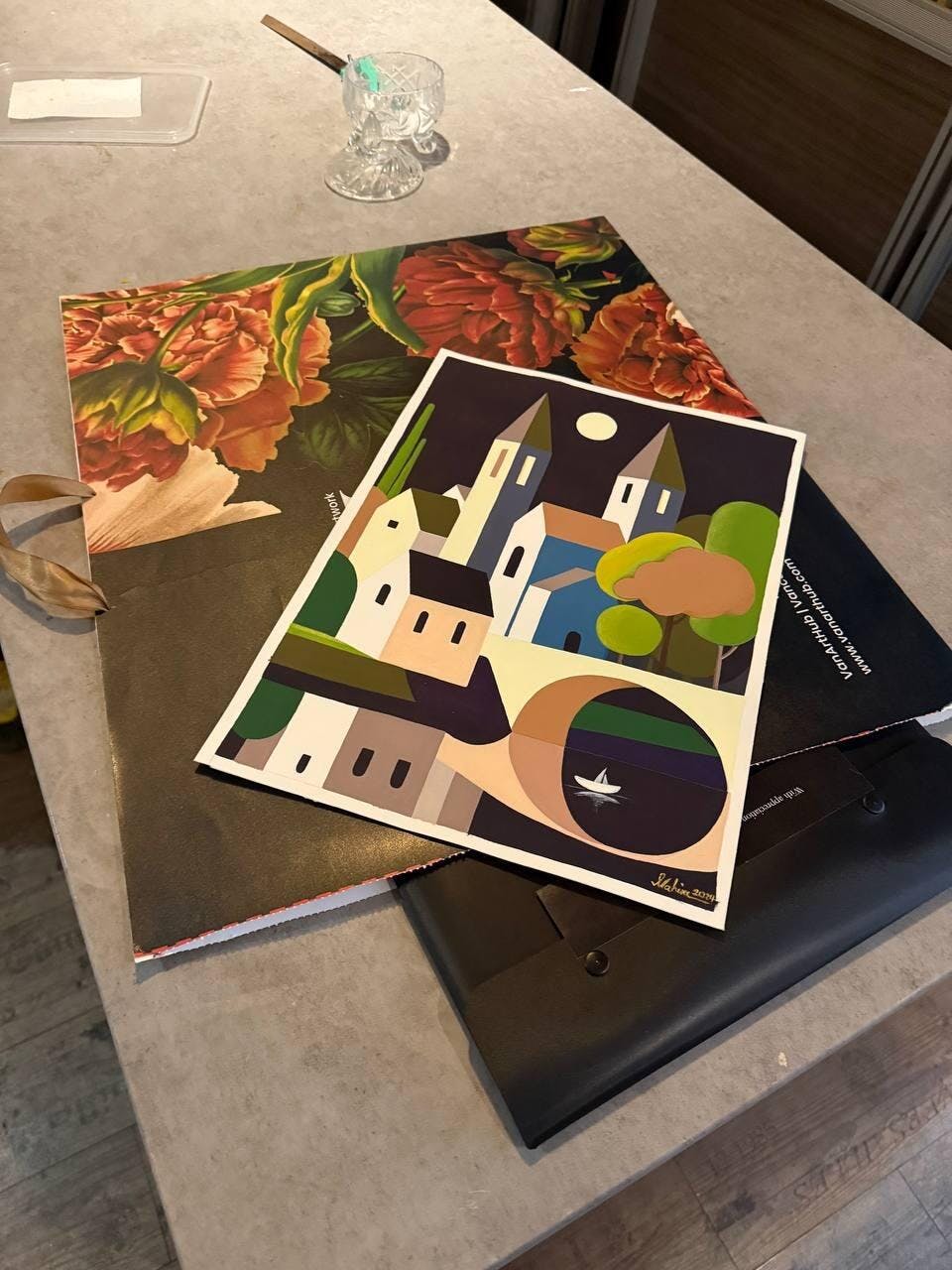
In practice, a commission through VanArtHub typically ranges from $500 for a small work (around 30 × 40 cm) to several thousand dollars for large-scale statement pieces. The exact quote depends on the artist and the scope of the project.
**Payment is usually structured in two parts:** a deposit (typically 50%) to begin the work, and the balance upon completion and approval. This protects both you and the artist — the deposit commits the artist's time, and the final payment ensures you're satisfied before the piece ships.
---
## Is Commissioning Right for You?
Commissioning isn't for everyone. If you want something immediately, buying an existing piece is faster and simpler. If you want total control over the outcome, a commission can be frustrating — the best commissions leave room for the artist's voice.
But if you have a specific wall, a personal vision, or a desire to be part of the creative process, there's nothing quite like it. You don't just end up with a painting. You end up with a story — of how an idea became an object, of conversations with an artist you might never have known otherwise, of a piece that exists because you made it possible.
---
Every commission at VanArtHub begins with a conversation. There's no commitment, no pressure — just a discussion about what you're looking for and whether we're the right fit.
https://vanarthub.com/pages/contact
*VanArtHub represents a curated group of artists available for custom commissions. Each commission is a direct collaboration between you and the artist, facilitated by the gallery. All works are original, hand-painted, and shipped securely from Vancouver to anywhere in Canada and the United States.*
Ready to start?
- Contact VanArtHub — share your brief and we'll match you with the right artist
- Browse Existing Works — explore styles and artists before commissioning
- Art for Commercial Spaces — how original paintings elevate hospitality
Looking for inspiration?