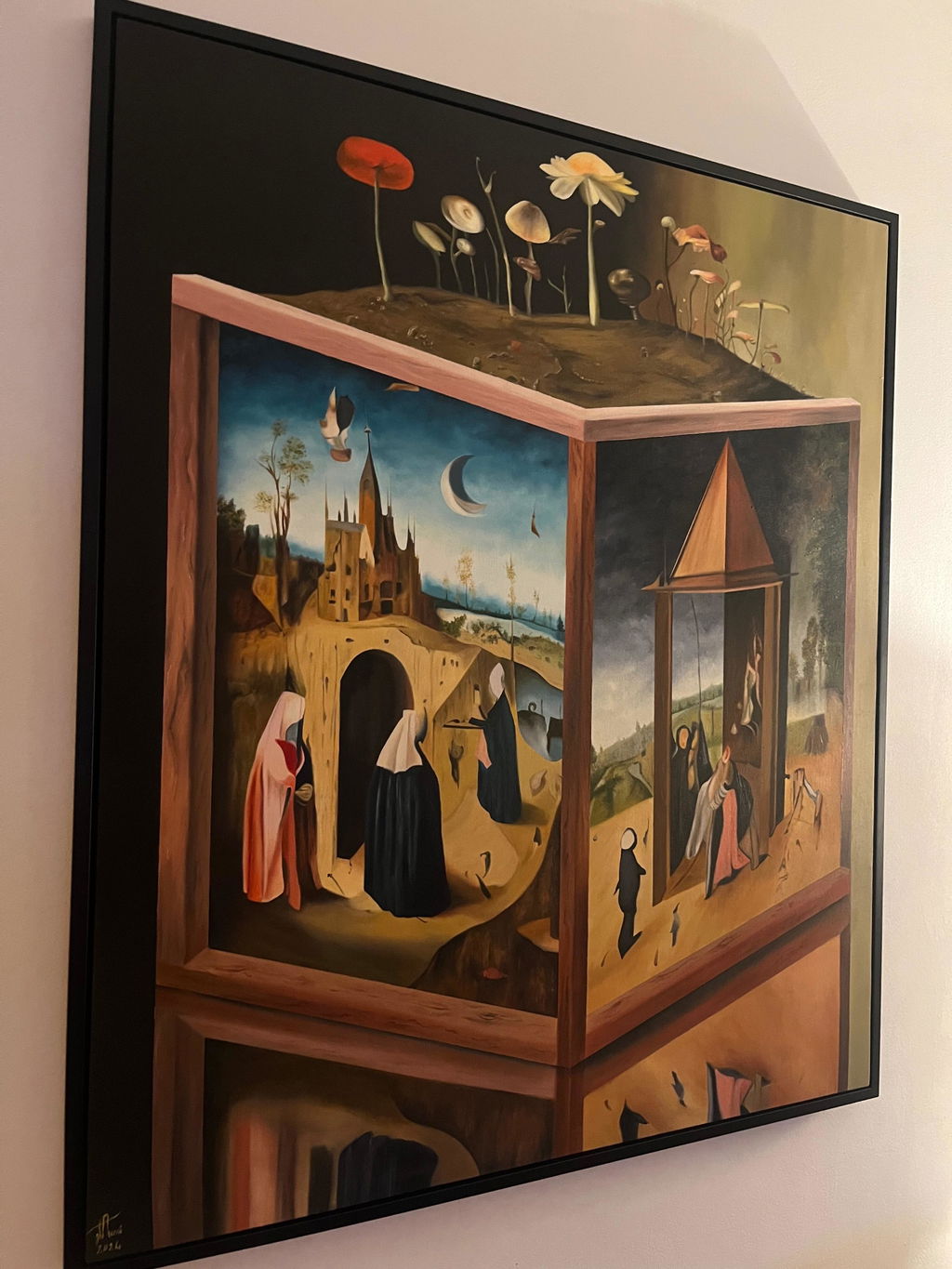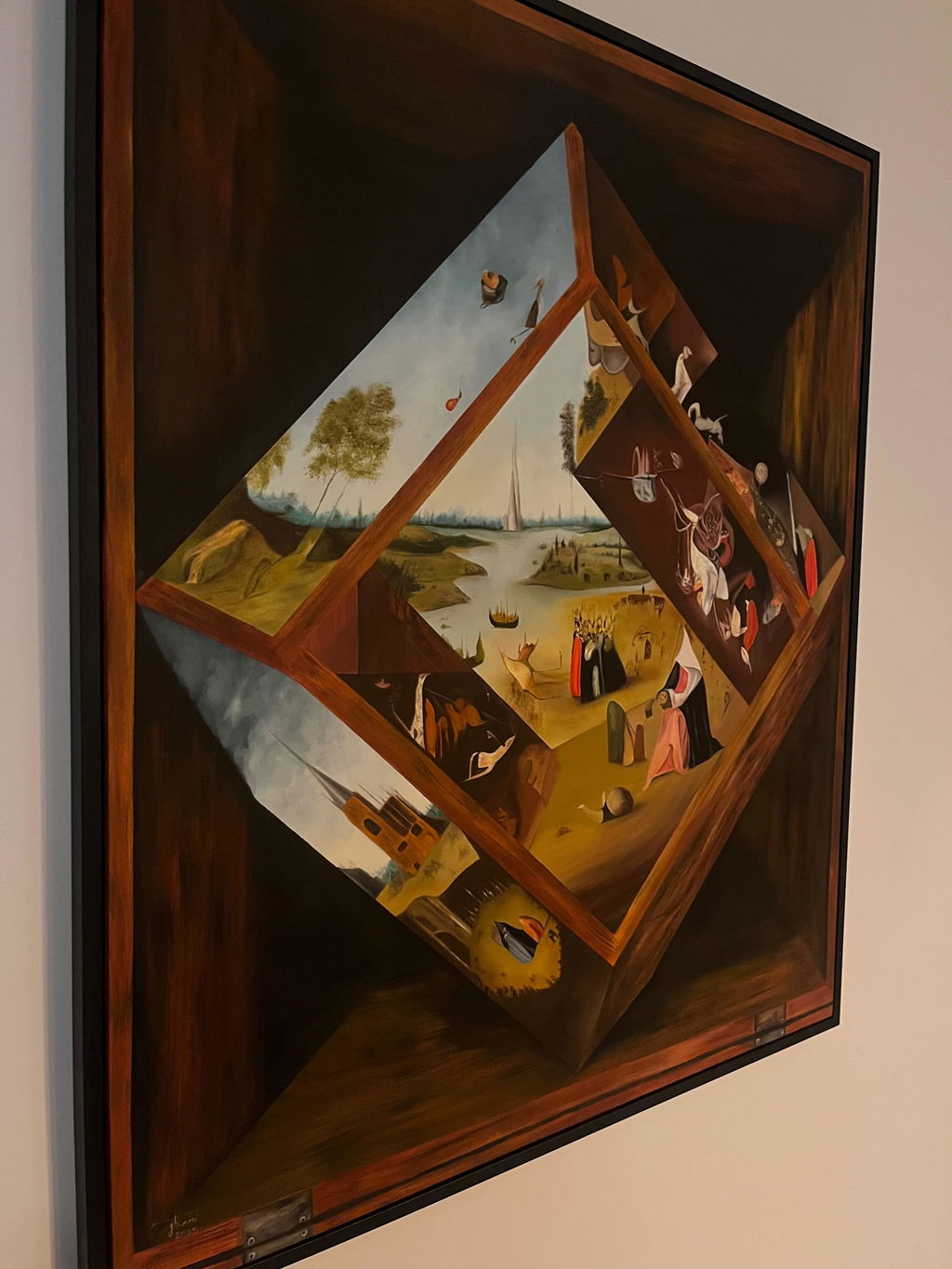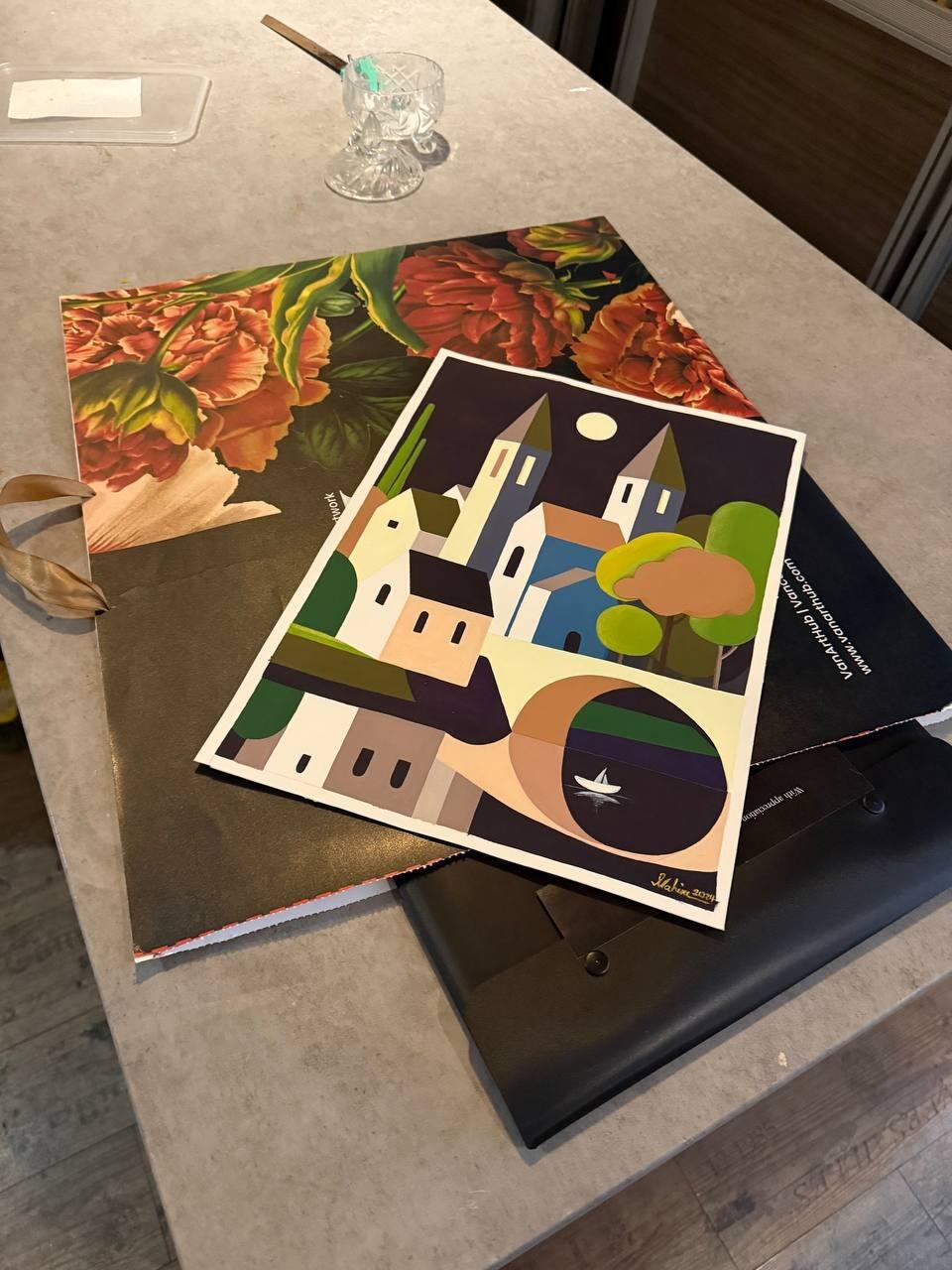
How to Choose Between Two Paintings You Both Like
Updated By VanArtHub Curatorial TeamShare
You have narrowed it down to two. Both have been open in browser tabs for a week, you showed them to one friend who liked the wrong one, and you are no closer. We have this conversation in the gallery constantly, and it always turns on the same thing. The block sits somewhere other than the paintings, and naming where it sits is what breaks the deadlock.
Being stuck is information, so read it first
A week of not deciding usually means the two works are genuinely close in quality for you. It also means looking harder at the images will not help, because you have already taken everything the images can give.
What we ask people first is a plain question. What are you actually afraid of here? The answers are almost always one of four things: spending the money, choosing the one that turns out to be wrong for the room, being judged for having obvious taste, or losing the other painting forever.
Each of those has a different answer, and three of them have nothing to do with which painting is better.
Take the room out of the decision
Room fit is the easiest worry to remove, so remove it before you agonise over anything else.
Cut paper to the exact dimensions of each painting. Tape them to the wall you have in mind, one at a time, at the height they would hang. Live with each for a full day, including at night with the lamps on. Usually one shape fits and the other does not, and the question settles in an afternoon.
If they are the same size, hold up a printout of each at arm's length from where you usually sit. Printed, at a distance, rather than on your phone. Screens flatter everything equally, which is the problem when you are comparing two things.
If both still fit the room, you have removed the excuse and you are back to the real question.
The five questions we actually ask people
These are the ones that move a stuck decision, in the order we tend to ask them.
First: which one did you find first? Not which one you have looked at most, which one you found first. The one you returned to a second time under your own steam usually wins in the end, and people forget which that was.
Second: which one would you be more annoyed to see sold to someone else this afternoon? This question is unfair, and that is why it works. Imagined loss produces a faster and more honest answer than imagined ownership.
Third: which one do you want to explain to people? Some paintings you want to talk about, some you want to sit with quietly. Both are good reasons to buy, and they suit different rooms.
Fourth: which one will still be interesting in five years? A painting with one strong idea can be perfect and also finished after a month. One with a passage you have not resolved yet keeps giving.
Fifth: are you choosing one because it is safer? Safer usually means it matches the sofa. Sofas get replaced every eight years.
Our actual opinions, which you are free to reject
People ask us to just say it, so here is what we would do.
Between a bolder work and a calmer one, at the same price, we take the bolder one. The calm painting is easier to live with in week one and easier to stop seeing by month six. The bold one keeps making you look at it.
Between a large piece and a small one for a main wall, we take the large one. Undersized art on a big wall is the most common mistake in the photographs customers send us.
Between one you love and one your partner loves, buy neither today. Go find a third you both want, because a painting one person quietly resents hangs there for years.
Between the one you keep returning to and the one that is objectively more accomplished, take the one you keep returning to. You are the person who has to live with it.
And where price is the only difference and both are affordable, buy the more expensive one, because the price gap will feel enormous this week and will be invisible in three years.
A short table for when you want a tiebreak
| The difference | What we would take | Why |
|---|---|---|
| Bold versus calm | Bold | Calm work stops registering sooner |
| Large versus small on a main wall | Large | Undersized art is the common regret |
| Your favourite versus your partner's | Neither yet | Find a third you both want |
| The one you return to versus the more accomplished one | The one you return to | You live with it, not with a judgement of it |
| Cheaper versus more expensive, both affordable | The more expensive one | The gap shrinks fast in memory |
| Fits the sofa versus does not | Ignore the sofa | Furniture changes, the painting stays |
Use it as a tiebreak, not as a rule. If a row gives you an answer you immediately dislike, you have learned something more useful than the row.
The trap of waiting, and the trap of hurrying
Both exist and they pull in opposite directions.
Every piece we sell is one of a kind, so when one sells that exact painting is gone. That is a fact about the market rather than a sales tactic, and it is why people feel pressure.
We also think urgency is a bad reason to buy. A painting bought in a hurry to beat an imagined competitor tends to be the one people trade back.
Holding both ideas at once: if you have been deciding for more than two weeks and still cannot name why, the answer is usually that neither one is right. If you can name exactly why, decide today.
Buy one, and use the fourteen days properly
Buy the one that is winning, even by a small margin. Hang it. Live with it for the full 14-day trial, in morning light and evening lamplight, and pay attention to whether you look at it when you walk past. If it is wrong, tell us inside those 14 days and we send a prepaid insured return label and refund you in full. We pay the return shipping.
Two weeks on your own wall settles this argument better than two more weeks of comparison, because the question changes from which is better to whether this one belongs here.
Our honest limit: we cannot hold the other one for you while you decide. If the second painting sells during your trial, it has sold. Any gallery promising to reserve a piece other people are actively looking at is telling you a story.
If you want both and can only afford one now, tell us. Sometimes the sensible plan is buying the one that suits the wall you have today and coming back for the other.
Key Takeaways
- Being stuck for a week usually means the two works are close in quality for you, so looking harder will not help.
- Remove the room from the argument first: cut paper to each size and tape it up for a day.
- Ask which one you would be more annoyed to see sold. Imagined loss gives a faster honest answer than imagined ownership.
- Between bold and calm at the same price, we take the bold one. Calm work stops registering sooner.
- Between large and small on a main wall, we take the large one. Undersized art is the regret we hear most.
- Buy the one that is winning and use the full 14-day trial. Two weeks on your wall settles it faster than more comparison.
Frequently Asked Questions
How do I choose between two paintings I like equally?
Stop comparing the images and change the question. Tape paper cut to each size on the actual wall for a day, then ask which one you would be more annoyed to see sold to someone else this afternoon. That question produces a faster and more honest answer than trying to rank them on merit.
Should I pick the one that matches my furniture?
We would not weight that heavily. Furniture gets replaced every several years and a painting you chose properly stays for decades. Match the light and the scale of the room instead, since those change far more slowly than a sofa or a paint colour.
Bigger or smaller, if I cannot decide?
On a main wall, bigger. Undersized art on a large wall is the most common problem we see in the photographs customers send us, and in years of these conversations nobody has told us their painting turned out too big. In a narrow space or a hallway the answer flips, since you never step back there.
My partner and I disagree. Who wins?
Neither, today. A painting one person quietly resents hangs on the wall for years and turns into an argument about something else. Go and find a third work you both want. That takes longer and it is the version people are still happy with later.
Is it worth paying more for the one I like slightly better?
If both are affordable, yes. The price gap feels enormous during the week you are deciding and is close to invisible three years later. What stays vivid is which one you actually wanted.
What if I buy one and then regret it?
You have 14 days from delivery. Hang it, live with it, see it in morning and evening light. If it is not right, tell us within those 14 days and we send a prepaid insured return label and refund you in full once it is back. We pay the return shipping.
Can you hold the other painting while I decide?
No, and we would rather say that plainly than take a deposit and hope. Every piece is one of a kind, so if the second work sells while you are deciding, it has sold. Any gallery promising to reserve a piece other people are actively looking at is telling you a story.
Should I buy quickly because originals sell?
Only if you can name exactly why you want it. It is true that each piece is unique and gone once sold, and it is also true that a painting bought in a hurry is the one most likely to come back to us. Urgency is a poor reason on its own.
How long should deciding take?
If you can say clearly why one is winning, decide today. If you have been going back and forth for more than two weeks and still cannot name the reason, the honest answer is usually that neither is right, and you should wait for one that does not need the debate.
How long do I have to return a painting?
Fourteen days from delivery. Hang it, live with it, see it in morning and evening light. If it is not right, tell us within those 14 days and we send a prepaid insured return label and refund you in full once it is back. We pay the return shipping.
What is the Lifetime Trade-Back?
If your taste or your space changes years from now, return the painting in good condition at any time and we issue store credit toward another original. It is credit rather than cash, and we would rather say that plainly than dress it up.
About VanArtHub
VanArtHub is an online gallery in Vancouver selling original, signed, one-of-a-kind paintings by independent artists. No prints and no reproductions. Every piece ships with a Certificate of Authenticity, free fully insured delivery to Canada and the USA, and a 14-day trial so you can decide at home. Browse all current originals, see what fits under a set budget in under $1,000, or read why we offer a 14-day trial. If you want a second opinion on two specific works, our art advisory is free to ask. Our full policy lives on the Buy with Confidence page.