Ready-made frames come in a fixed set of sizes: 8 by 10 inches, 11 by 14, 16 by 20, A4, A3, and so on. Those sizes exist because they are photographic paper and printing sizes. They have nothing to do with how anyone paints.
An original is whatever size the artist stretched or cut. Sometimes that lands near a standard size. It essentially never lands exactly on one.
What happens when you force it
The frame is slightly too small
There are two ways out and both are bad. Trim the artwork, which permanently destroys an original and any value it had. Or leave part of the piece behind the rebate, hiding more of the image than intended, which is survivable on a print and a genuine loss on a painting.
The frame is slightly too large
The piece sits loose in the rebate. Every time the frame is moved or a door slams, the artwork shifts a few millimetres. Over years that movement abrades the edge against the rebate and, on a glazed piece, rubs the surface against the glass. It also never sits straight.
The frame is nearly right
The worst case, because it looks fine and nobody investigates. A canvas 3 mm wider at the bottom than the top, forced into a square frame, is under constant pressure on two corners. Stretcher bars can bow.
Custom is not a luxury tier
Custom framing does not mean expensive materials. It means the frame is cut to your piece. You can have a custom-cut frame in the plainest moulding available, and it will still be a better object than a ready-made frame in a nicer profile that does not fit.
The cost difference is smaller than people expect, because the moulding, glass and board are priced by the length and the sheet either way. What you are paying for is the cutting and fitting.
When a standard frame is genuinely fine
-
A poster or an open-edition print produced at a standard size. It was made for the frame; use the frame.
-
Work you plan to reframe. A ready-made frame as a temporary holder is sensible, as long as the artwork is not being trimmed and is not pressed against glass.
-
An artist who works to standard sizes deliberately. Some do, precisely so buyers can frame easily. If a piece measures exactly 400 by 500 mm, that was probably a decision.
The middle path
If the budget is genuinely tight, there is a compromise that does not harm the work: a custom-cut mat inside a standard frame.
The mat is cut so its outer dimensions match a standard frame size, and its window is cut to your artwork. The artwork is hinged correctly to conservation backing, nothing is trimmed, nothing is loose, and the frame is off the shelf.
You lose control of the frame's proportions, and the mat borders may not be ideal, but the artwork is properly housed. It is a real option and we will do it if that is what makes sense.
Our own work
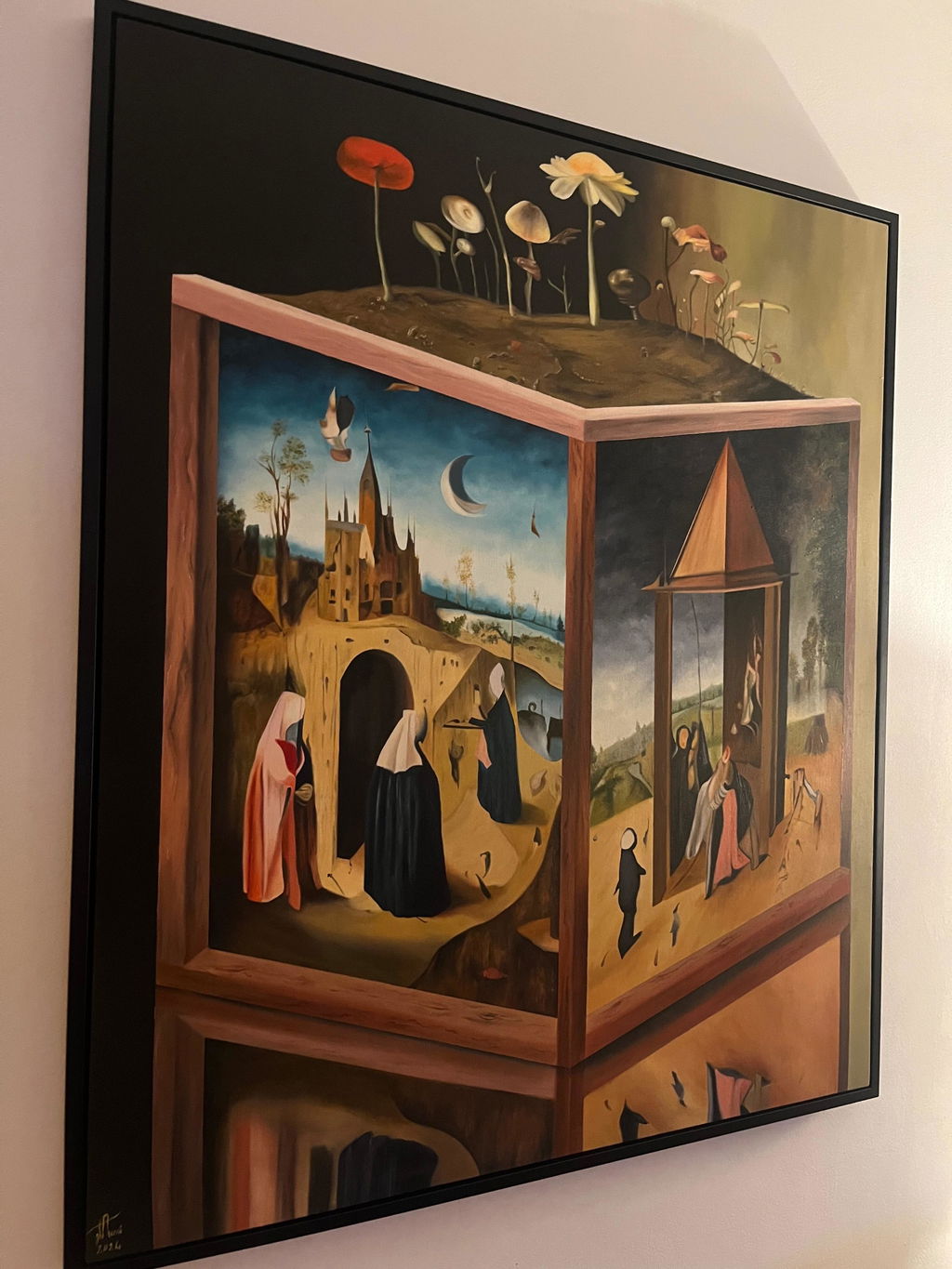
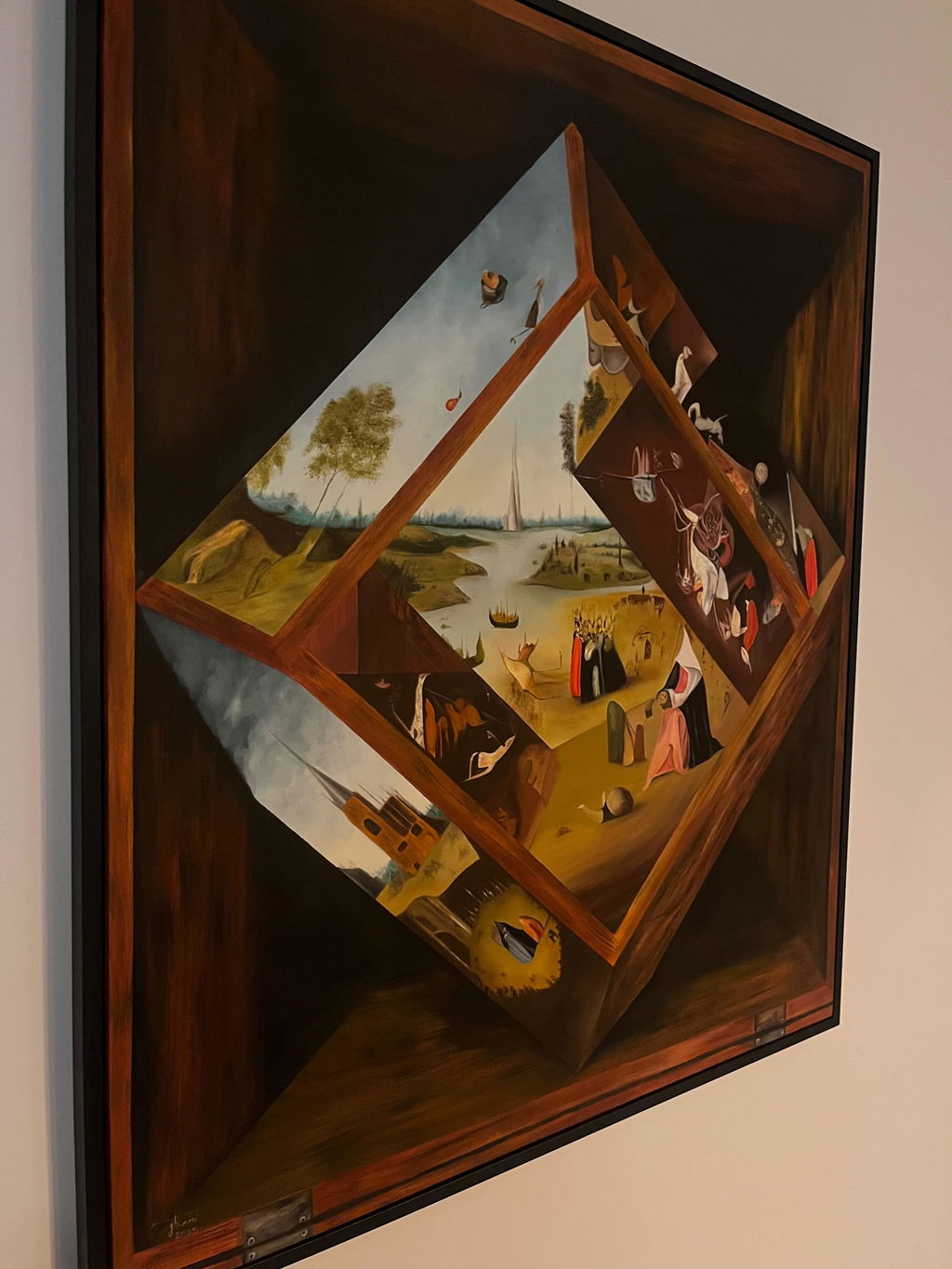
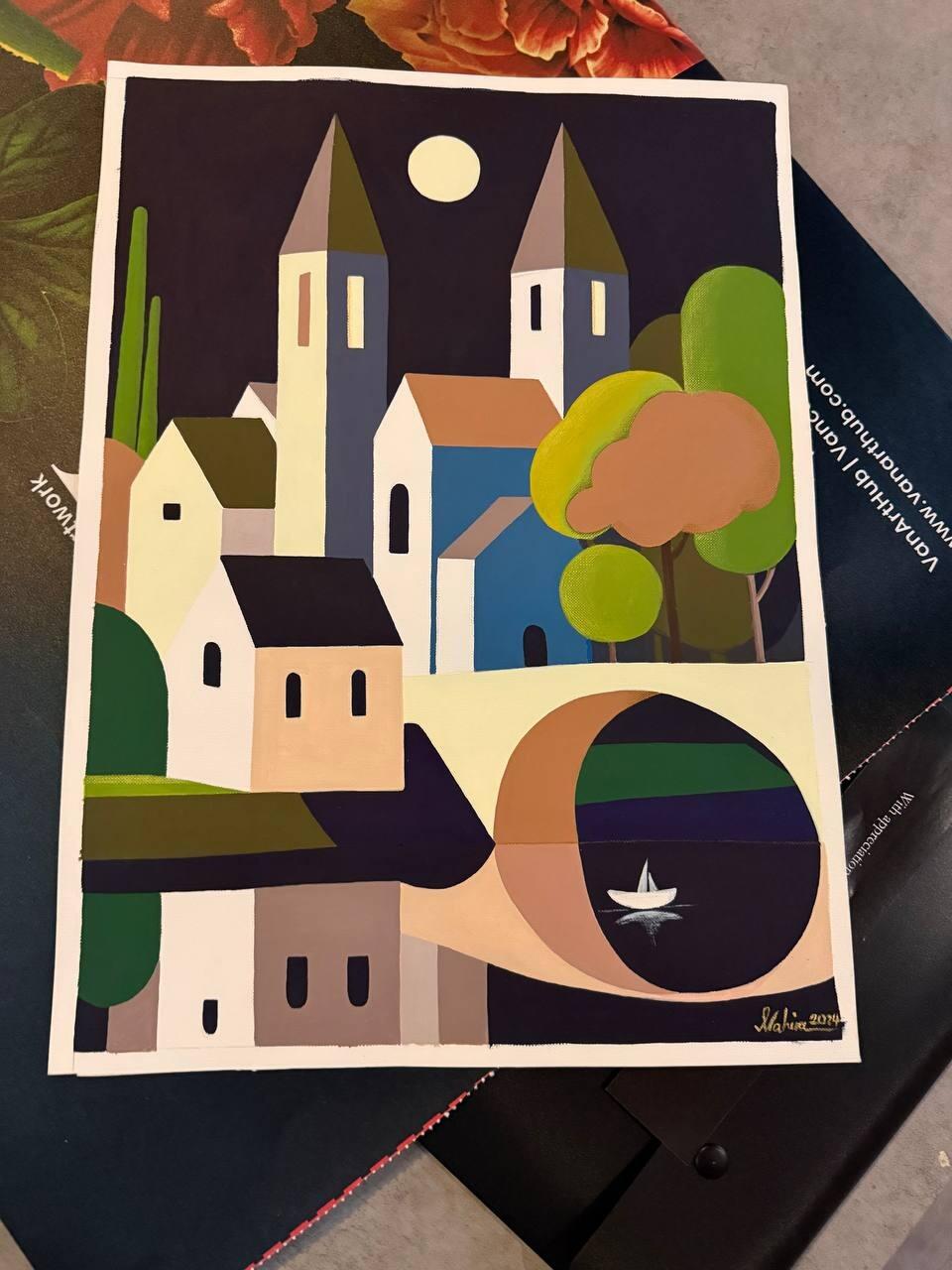
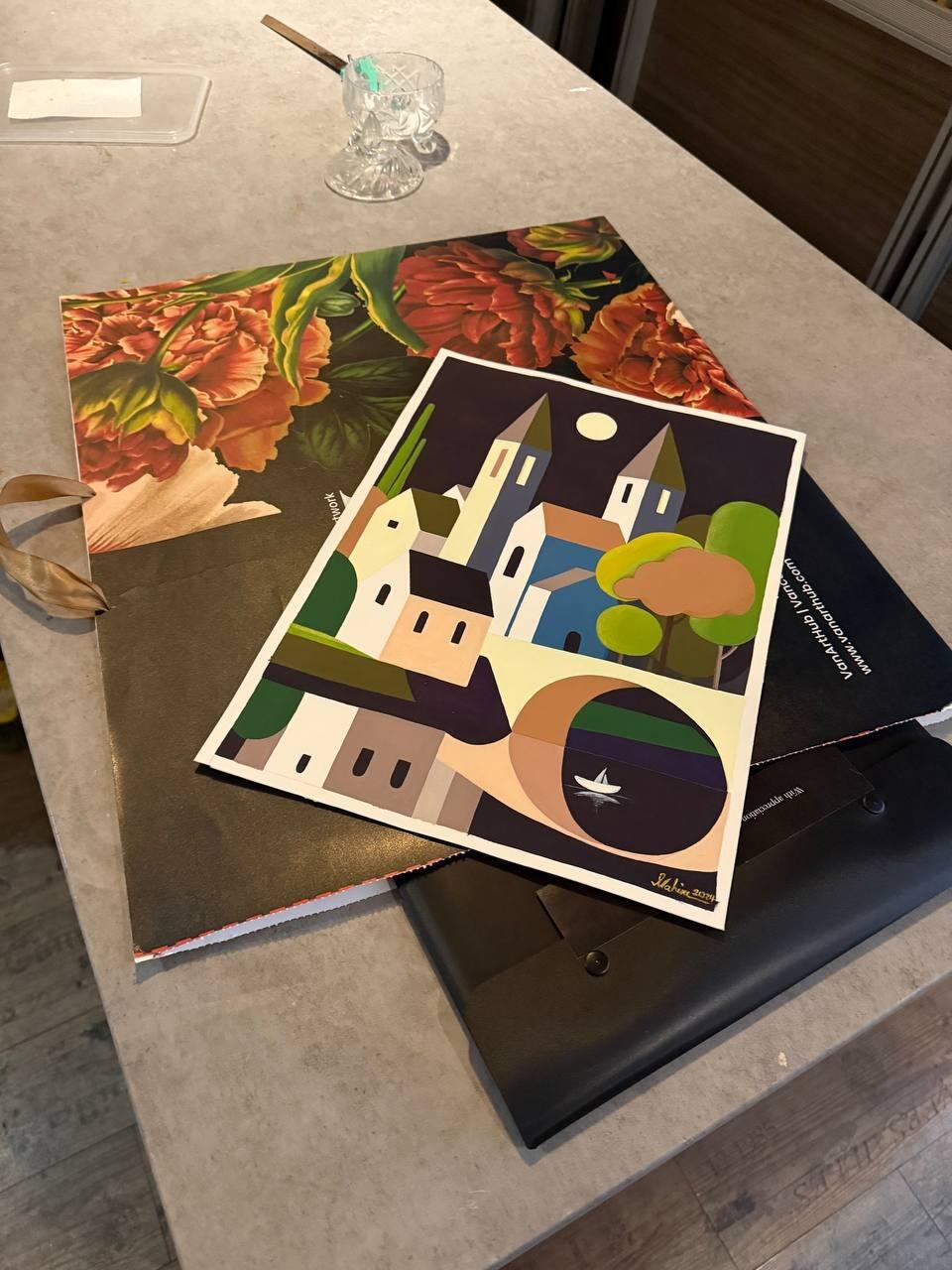
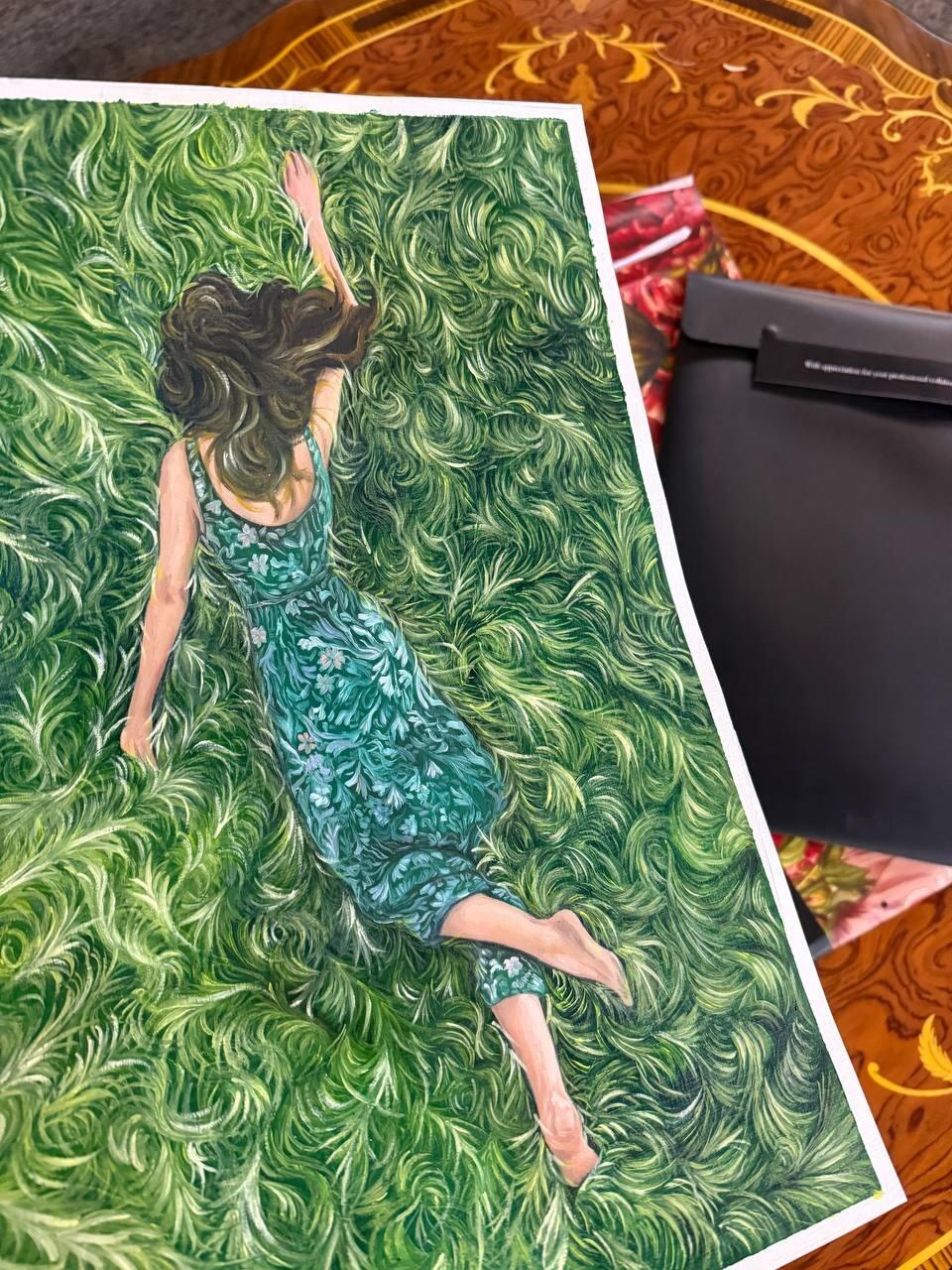
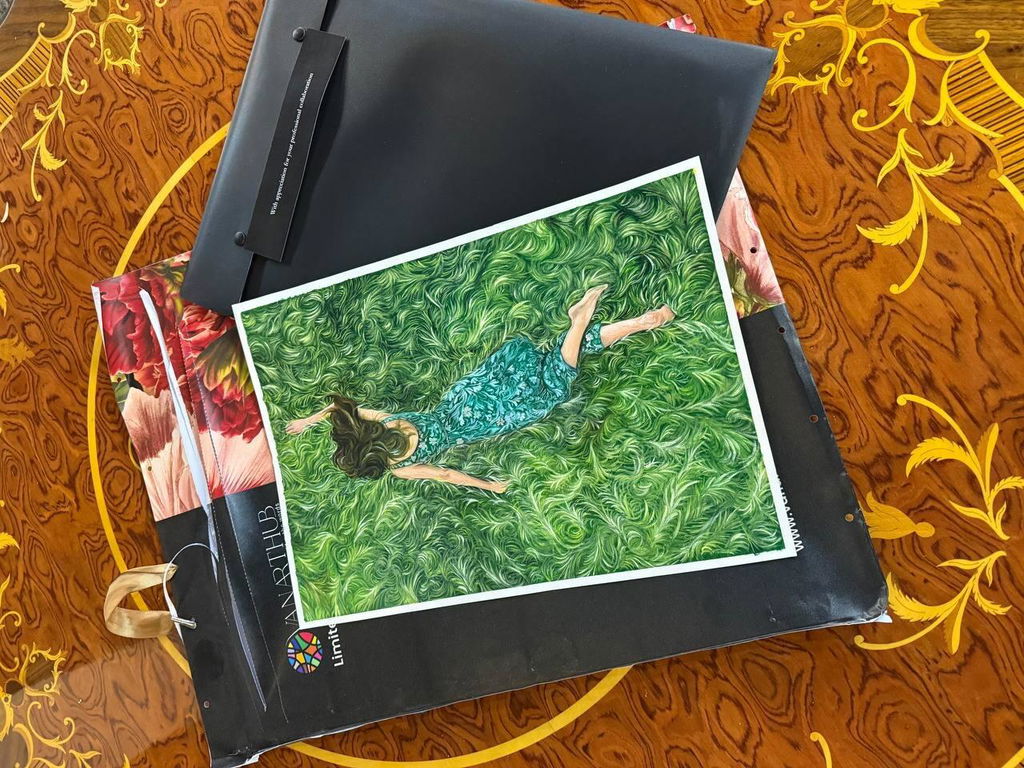
Every piece in this gallery is a one-off, made to whatever size the artist worked at. A canvas like Echoes of Serenity was stretched to its own dimensions, not to a paper size, which is exactly why we cut frames rather than buy them. Send us the measurements from how to measure a painting for a frame and we will quote it.
Three examples of the size mismatch
Standard frame sizes exist for mass-produced prints and mats built to hide the gap, not for an original painting's actual dimensions. Three real examples show how often the two disagree.
An 18 by 24 inch canvas. This looks close to the standard 16 by 20 inch or 18 by 24 inch print sizes sold everywhere, and it is exactly 18 by 24 on paper. But a stretched canvas measures across the outer edge of the stretcher bars, which run 19 to 38 mm deep, so the true outer dimension is often a few millimetres over nominal on both sides. A stock 18 by 24 frame built for a flat print with no depth allowance will not close over the stretcher at all.
A 500 mm square painting on paper. There is no common standard size at exactly 500 mm square. The nearest stock sizes are 16 by 16 inches (406 mm) or 20 by 20 inches (508 mm), and neither is a clean fit. Forcing it into the 508 mm size means a mat with an uneven, slightly-too-generous border on all sides, which a trained eye reads as slightly off even without knowing why.
A panoramic piece at 1200 mm by 400 mm. This 3:1 ratio has no standard equivalent at all, since stock sizes cluster around 4:3, 5:4, and 3:2. There is no stock frame to force this into; it has to be built to the actual dimensions from the start.
In each case the fix is the same: measure the actual object, not the nearest round number, and order to that. See how to measure a painting for a frame and we will quote it.
Common questions
Can a standard frame be modified to fit?
Sometimes it can be cut down, if the moulding is deep enough to remitre and the frame is not a moulded plastic unit. Often the labour costs more than a new frame in a plain moulding. Worth asking about only if the frame itself is special.
Is there really no standard size for original art?
There are conventional canvas sizes that many suppliers make, so originals do cluster around certain dimensions. But a stretched canvas is rarely exactly square even when it was built to a standard size, which is why both diagonals get measured.
What about float mounting into a standard frame?
That works well. Because a float mount does not need the mat window to match the artwork edge, the artwork can be any size at all inside a standard outer dimension. It needs a spacer to keep the glazing clear.
What are some common standard canvas sizes?
Sizes like 40 by 50 cm, 60 by 80 cm and 90 by 120 cm come up often because many stretcher bar and pre-cut moulding suppliers stock those dimensions. Buying a standard size does not guarantee a standard frame fits, though, since even a nominally standard canvas can be a few millimetres off due to how it was built.
Does a custom frame take longer to make than a standard one?
A little, usually, since a standard-size moulding may already be pre-cut or close to it, while a custom size is mitred and joined specifically for that piece. The difference in turnaround is typically a matter of days, not weeks, and we tell you the real timeline when we quote the job.
Is it worth building a painting to a standard size on purpose?
Sometimes, mainly if cost matters more than the exact proportions, or if the piece will need to fit a mass-produced frame later without custom work. For an original painting, we would rather the size serve the composition, and frame to fit whatever that ends up being.
Can a custom frame ever cost less than a standard one?
Occasionally, yes. A standard frame in a premium finish can cost more than a custom frame in a plainer moulding, since finish and material drive price more than whether the cut is standard or custom. Size for size, the two are usually close, with custom adding a modest premium for the exact fit.
Do you keep any standard sizes in stock?
We keep a working range of common moulding lengths on hand rather than pre-built standard frames, since almost every original we frame ends up slightly off a stock dimension. This lets us cut to the exact size quickly rather than forcing a piece into a size it was not built for.