These two get confused constantly, and the confusion costs people money in both directions: some pay for museum grade on a piece that did not need it, others buy plain glass for a work that did.
The difference is simple. They do the same thing for the artwork. They do completely different things for you.
What each one actually is
Conservation glazing has a UV-filtering layer that blocks roughly 99 percent of ultraviolet light. Optically it behaves like ordinary glass: it reflects about 8 percent of the light hitting it, which is why you can see the room in it.
Museum-grade glazing has the same UV filtering plus an anti-reflective optical coating, which drops reflection to under 1 percent. At that point the glass effectively disappears and you see the painting instead of yourself.
So the upgrade buys visibility, not protection. Both protect the work about equally.
|
Standard clear |
Conservation |
Museum grade |
| UV blocked |
~45% |
~99% |
~99% |
| Light reflected |
~8% |
~8% |
under 1% |
| Protects the art |
Barely |
Yes |
Yes |
| You can see the art |
Depends on the wall |
Depends on the wall |
Always |
Those percentages are the published ranges for each category of glazing, not a measurement of one manufacturer's product.
When the upgrade is worth it
It comes down to one question: is there a light source facing the picture?
-
A window opposite the wall. This is the main case. A picture facing a window is, for much of the day, a mirror. Museum glazing is the only thing that fixes it.
-
A spotlight or picture light. Anything aimed at the piece produces a hot reflection exactly where you are looking.
-
Dark work. Reflection is most visible against dark passages, because there is no bright paint to compete with it. A dark graphite drawing behind ordinary glass in a lit room can be almost unreadable.
-
Anything you look at closely. Detailed work invites you to lean in, and leaning in is exactly when your own reflection arrives.
When conservation glazing is plenty
- The picture hangs on the same wall as the window, or in a corridor with no facing light source.
- The work is light and high-key, where reflection is far less noticeable.
- The piece is large and the budget is finite. On a big sheet the glazing upgrade is the single biggest line on the quote, and the money is often better spent on the frame or simply saved.
The mistake worth avoiding
Anti-reflective glass with no UV filtering exists and is cheaper than museum grade. It looks wonderful and protects almost nothing. If someone offers you "non-glare" or "anti-reflective" glass, ask specifically whether it also filters UV, because the two properties are independent and only one of them matters to the painting's lifespan.
Note also that older "non-glare" glass is a different thing entirely: it is etched or frosted to scatter reflection rather than optically coated. It does reduce glare, but it softens the image and gets worse the further the art sits from the glass. It is not a substitute for a proper anti-reflective coating.
What we default to
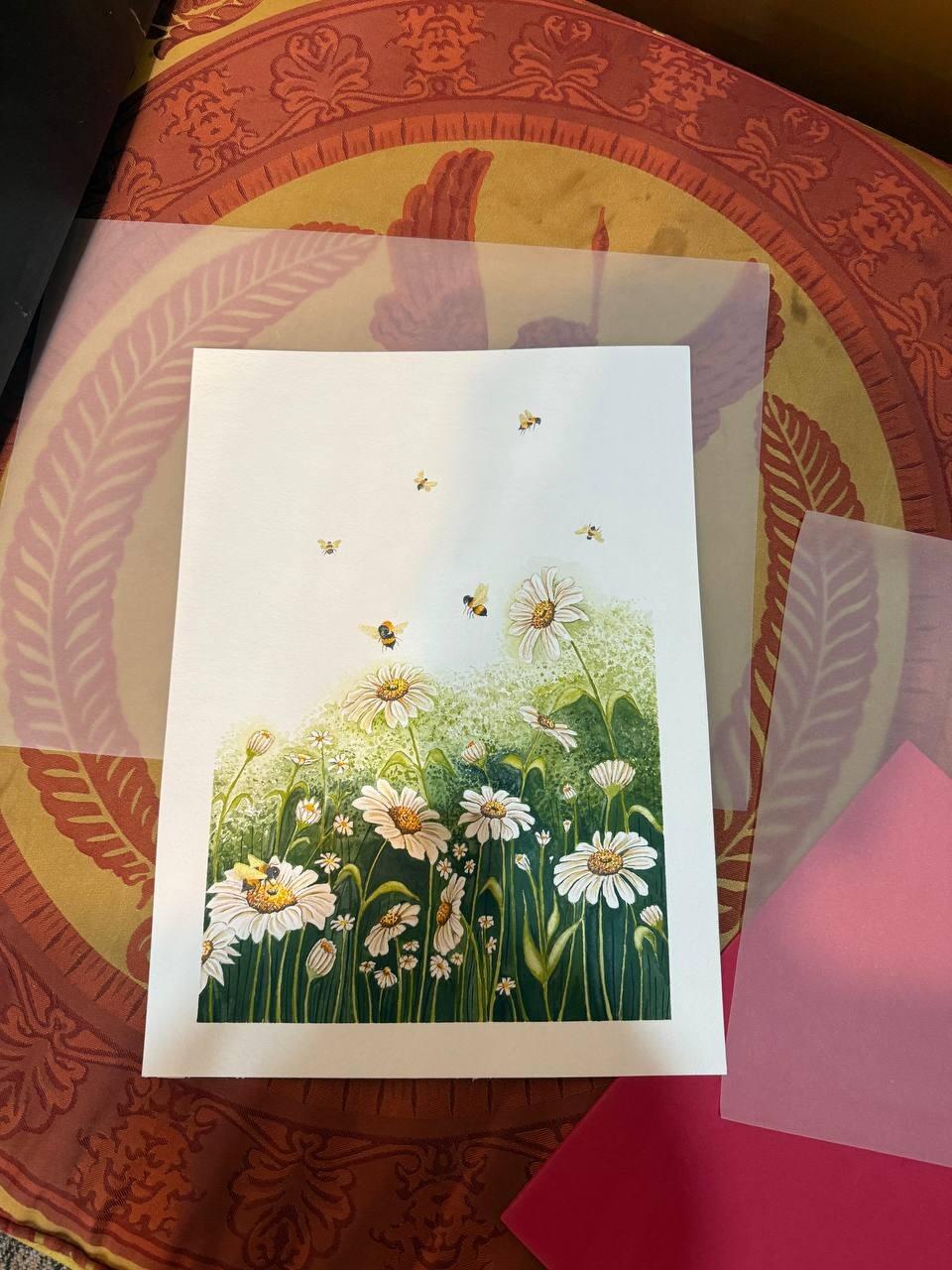
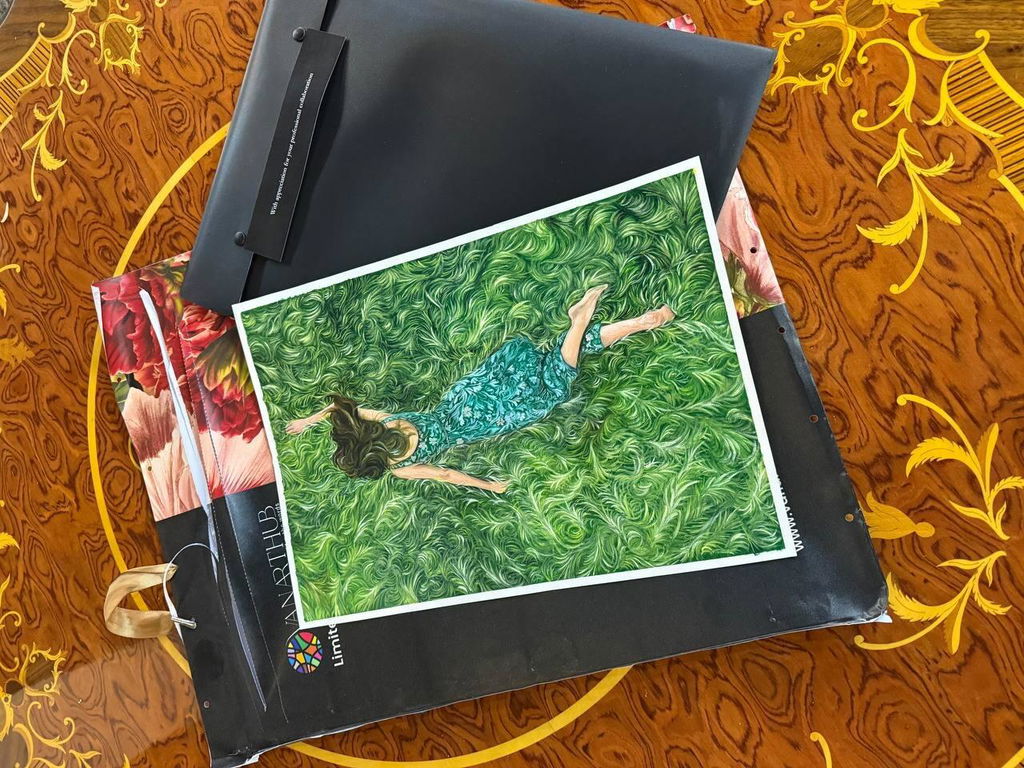
On works on paper we use UV-filtering glazing as standard, and we recommend museum grade when the piece is going somewhere with a facing light source. On a coloured pencil work like Blossom Serenade, where the pigment is light-sensitive and the surface rewards close looking, that upgrade earns its place. On an oil on canvas the whole question does not arise, because it is not going behind glass at all. See do oil paintings need glass.
Deciding per room
The museum-grade upgrade is worth targeting at specific rooms rather than applying everywhere or nowhere. Two things decide it: how much natural light the room gets, and how much the piece in it matters to you.
Rooms that justify museum glass. A living room or dining room with south-facing or west-facing windows and no blinds drawn during the day gets meaningfully more UV and visible light than an interior room, and that light exposure is cumulative over years. A piece you consider irreplaceable, an early work by an artist you collect, a commission, or simply a piece with strong sentimental value, is worth the upgrade regardless of the room, because the cost difference is small next to what it protects.
Rooms where conservation glass is enough. A hallway, an interior bedroom wall, or any room with mostly artificial light and limited direct sun does not put the same UV load on a piece, so conservation-grade glazing, which already blocks the great majority of UV, does the job without the extra cost of museum glass's anti-reflective coating.
The two gradings are not a UV-protection choice, both block UV well; the difference museum glass adds is the anti-reflective coating and slightly better clarity. So the real question for museum glass is closer to the anti-reflective glass decision: does this room have a light source, a window or a picture light, that will reflect in ordinary glass? If yes, and the piece matters enough to justify the cost, museum glass answers two problems at once. If about an existing frame, assume there is none.
Common questions
Does UV glazing stop fading completely?
No, and anyone who says it does is overselling. It stops the most damaging part of the spectrum. Visible light also fades pigment, more slowly. Glazing buys years; it does not make a sunlit wall a good idea. See UV glass and glazing.
Can I upgrade the glazing later?
Yes, easily, and it is one of the cheapest reframing jobs there is. The frame, mat and backing all stay; only the glass is replaced. If the budget is tight now, conservation glazing today and museum grade later is a perfectly sensible plan.
How can I tell what glazing a frame already has?
Hold something white near the surface at an angle. Ordinary and conservation glass give a clear, bright reflection. Museum-grade glazing gives a very faint one, often with a slight green or magenta cast in the coating. UV filtering itself is invisible, so if there is any doubt about an existing frame, assume there is none.
What is the actual difference between museum and conservation glass?
Conservation glass blocks UV light, usually around 99 percent, and is otherwise ordinary clear glass. Museum glass adds an anti-reflective coating on top of the same UV filtering, so it does the same protective job while also cutting glare dramatically. The jump in price is for the coating, not for stronger UV protection.
Is museum glass worth it for every piece?
Not every piece, no. On a work hung where it rarely catches direct light or reflections, such as a hallway with no facing window, conservation glass does the same protective job for less money. Museum glass earns its price on a piece hung opposite a bright window or under strong gallery-style lighting.
Does museum glass protect a painting better, or just look better?
Both properties come from the same UV filter, so the protection level is the same as conservation glass. What museum glass adds is the anti-reflective coating, which is about visibility, not preservation. If protection is the only concern and budget is tight, conservation glazing already covers it.
Can museum glass be used on a very large work on paper?
Yes, though weight and cost both rise with size, so acrylic in the museum-grade equivalent is often used instead on larger pieces to keep the frame lighter and safer to hang and ship. We recommend the material based on the finished size when we quote large works on paper.
Does the coating on museum glass wear off over time?
It is a durable, factory-applied coating designed to last the life of the glass under normal indoor conditions, not a surface film that rubs away. It should be cleaned with a soft cloth and a glass cleaner made for coated glazing, since some ordinary ammonia-based cleaners can streak the coating over repeated use.