A framed picture needs only a few minutes of care a year. Clean glass and acrylic in different ways, keep liquid off the frame, and look at the back once a year.
A well-framed picture needs only a few minutes of care a year. Most damage to framed art at home comes from three things: liquid cleaner that runs under the glass, a cloth that scratches acrylic, and a wall with too much sun, heat or damp. This guide covers cleaning, the place on the wall, and a short check of the frame once a year.
First, find out if it is glass or acrylic
Glazing means the clear sheet at the front of a frame. It is either glass or acrylic, a clear plastic, and the two are cleaned in different ways. Tap the sheet with a fingernail. Glass gives a sharp, high sound and feels cold. Acrylic gives a dull sound and feels warmer, and the frame is light for its size. Large frames are often glazed with acrylic for that reason. Our guide to acrylic vs glass explains the differences.
A painting on canvas usually has no glazing at all. Dust it with a soft, dry brush and keep every cleaner away from the paint.
How to clean glass
Hold the frame still with one hand, or lay a small frame flat on a towel with its face up.
Spray a small amount of glass cleaner on a soft cloth that leaves no fluff. Keep the spray away from the frame: liquid sprayed on the glass runs down to the bottom edge, gets under the glass and soaks into the mat, the border of card around the picture.
Wipe from the middle toward the edges and stop before the cloth reaches the frame.
Dry the glass with a second clean cloth.
How to clean acrylic
Acrylic scratches more easily than glass, and some household cleaners damage it.
Blow or brush loose dust off first. Dust dragged under a cloth leaves fine scratches.
Use a soft microfibre cloth with water and a drop of mild soap, or a cleaner made for acrylic.
Keep paper towels away from it. Paper is rough enough to scratch the surface.
Keep glass cleaners that contain ammonia or alcohol away from it. They can turn the surface cloudy.
Wipe with light pressure and dry with a clean soft cloth. A dry cloth rubbed hard builds static, which pulls dust back onto the sheet.
A painting on canvas usually hangs with no glazing, so it has no sheet in front of it to clean. Echoes Within is an acrylic on canvas from our gallery, 30 by 40 cm, showing the green outline of a head in profile with a small figure inside.
Dust a wooden or metal frame with a soft dry cloth or a soft brush. Keep water and furniture polish off a gilded or painted finish, because gold leaf and some painted finishes lift when they get wet. A carved frame holds dust in its pattern, and a clean, dry paintbrush reaches into it.
Taking a frame off the wall
Lift a frame with one hand on each side. Lifting by the top edge alone pulls on the corner joints, and lifting by the wire can pull a fixing out of the wood. Ask a second person to help with a large frame. Lay the frame face up on a towel or a blanket, on a table that is larger than the frame.
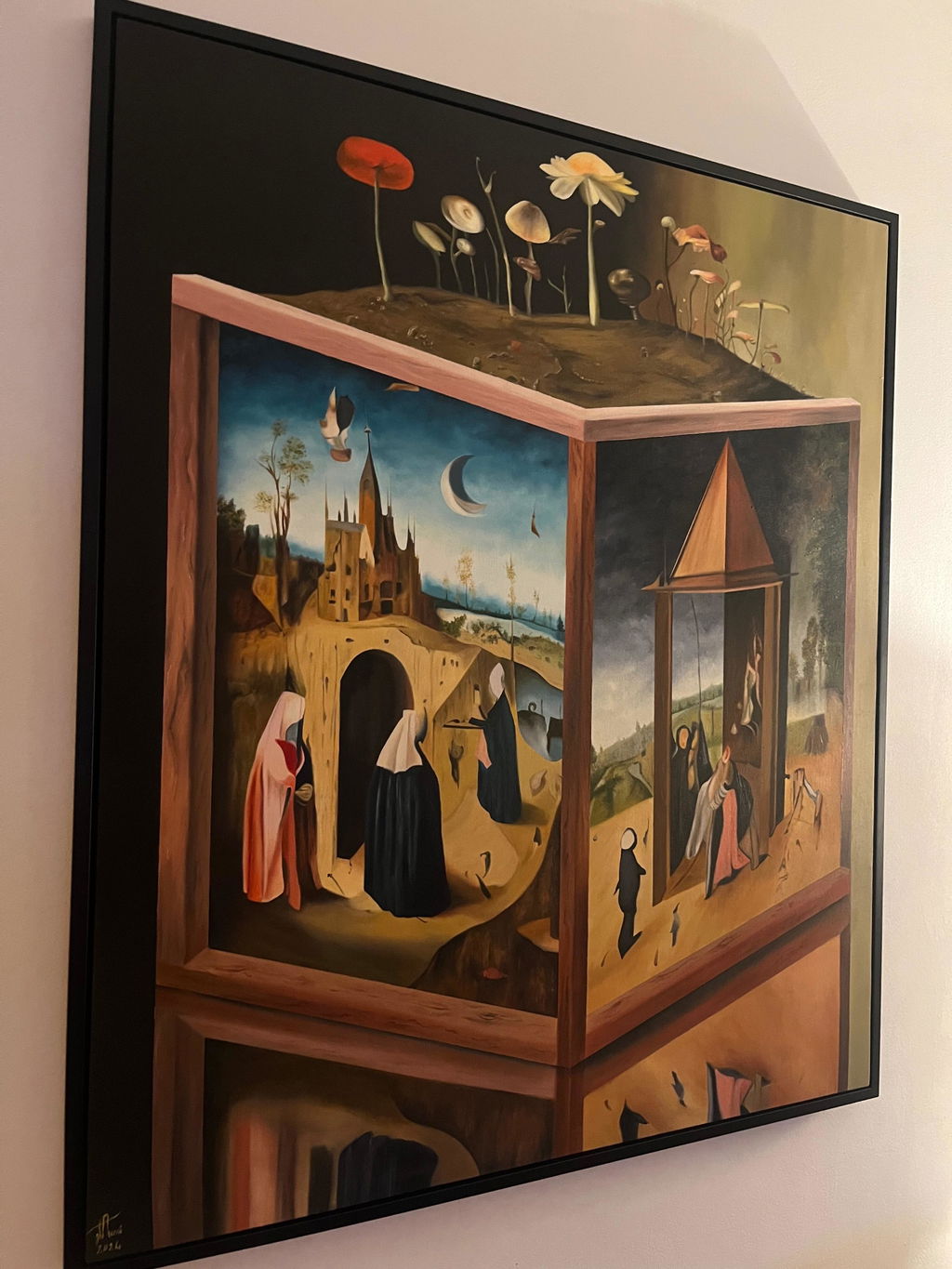
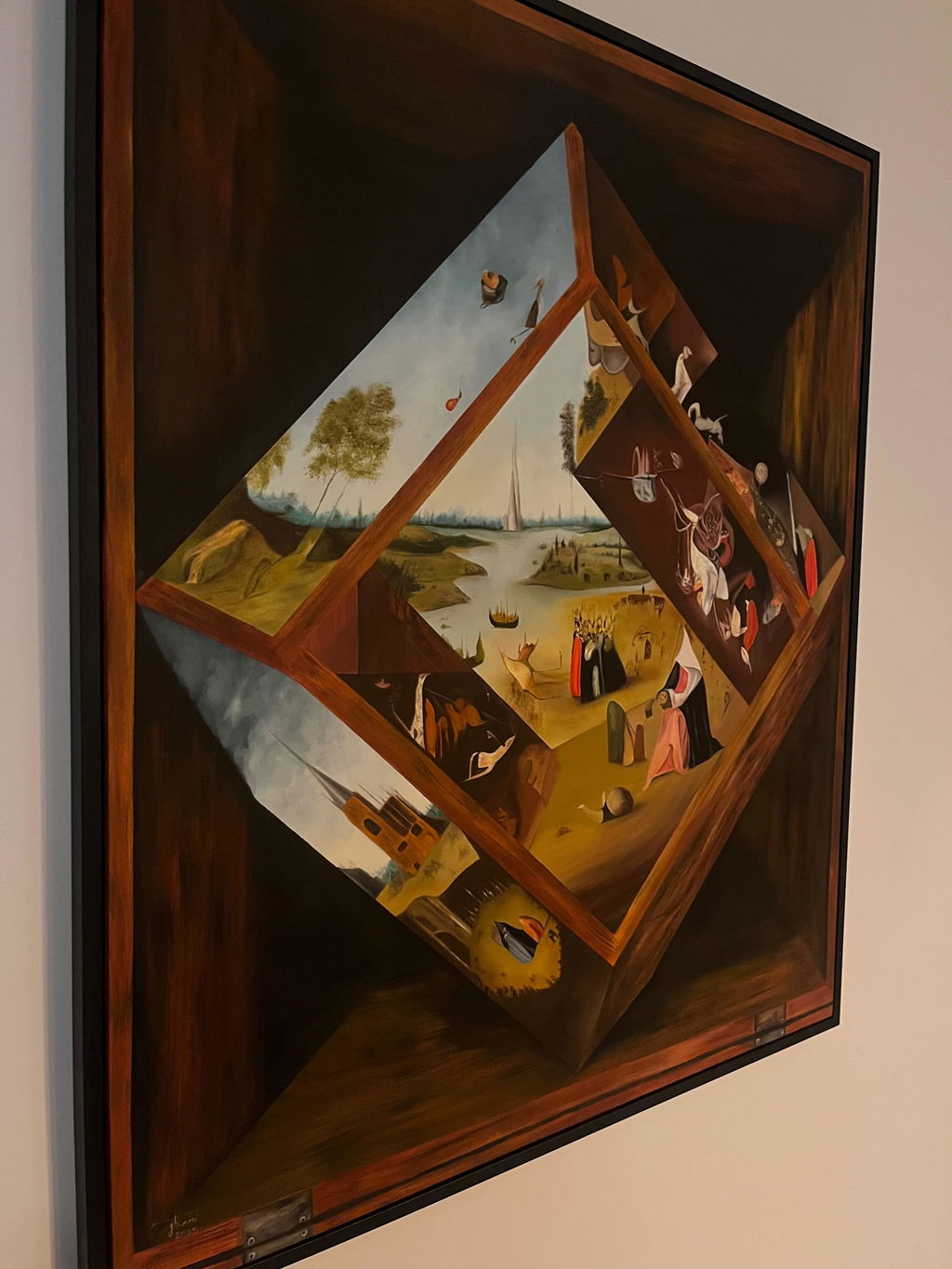
A large painting is a job for two people. Breaking Certainty, an oil on canvas of a wooden cube with landscapes painted on two sides, is 100 by 120 cm, a size to take off the wall with a second person.
Sun. Direct sun fades paper, photographs, textiles and signatures. UV glazing slows this, and a shaded wall slows it more. See UV glass and glazing.
Heat. A wall above a radiator, a heating vent or a working fireplace dries paper and wood, and warm air carries dust and soot upward onto the frame.
Damp. Kitchens and bathrooms fill with steam, and paper ripples in damp air. Our guide to framing art for kitchens and bathrooms covers what can hang there.
Outside walls. A cold outside wall can leave the back of a frame damp. Small bumpers, soft pads on the bottom corners of the back, hold the frame off the wall so air can move behind it.
A check once a year
Once a year, take each frame down and look at the front and the back.
The hanging wire and fixings. Replace a frayed wire or a loose fixing before it fails. Our guide to hanging hardware shows the types.
The paper across the back. Many frames have a sheet of paper sealed across the back to keep dust and insects out. A torn sheet lets both in.
The inside of the glazing. Look for specks of dust, small insects, a grey haze or drops of moisture.
The picture. Look for new ripples in the paper, a brown line along the edge of the mat, small brown spots, or colour that has faded.
The corners of the frame. A gap at a corner means a joint has opened.
When to have the frame opened
Leave the back closed at home. The back of a frame is closed to keep dust out, and opening it lets dust in and can shift the picture. Take the frame to a framer when you see moisture or haze inside the glazing, a brown line or brown spots on the paper, new ripples, insects inside, or a picture that has slipped. A framer can open the frame, find the cause and replace the part that failed: the mat, the backing, the glazing or the seal.
What care cannot undo
Colour that has faded stays faded, and a brown stain from an acidic mat stays in the paper. Care stops both from getting worse. A faded picture can move to a shaded wall and UV glazing, and an acidic mat can be replaced with an acid-free one, as our guide to acid-free mats and backing explains.
The routine in one table
Task
When
What to use
Dust the frame
When you dust the room
A soft dry cloth or brush
Clean glass
When it is marked
Glass cleaner sprayed on the cloth
Clean acrylic
When it is marked
Microfibre cloth, water and mild soap
Check the front and back
Once a year
Your eyes and good light
At our own workshop, the reframing service page describes what happens when a frame is opened, and glass replacement covers a cracked or scratched sheet.
Common questions
How do I clean the glass on a framed picture safely?
Clean the glass on a framed picture by spraying glass cleaner on a soft cloth and wiping from the middle toward the edges. Keep the spray away from the frame, because liquid that runs to the bottom edge gets under the glass and soaks into the mat. Stop before the cloth reaches the frame, then dry the glass with a second clean cloth.
Can I use window cleaner on an acrylic picture frame?
Read the label before you use window cleaner on acrylic. Many window cleaners contain ammonia or alcohol, and both can turn acrylic cloudy. Use a soft microfibre cloth with water and a drop of mild soap, or a cleaner made for acrylic. Brush loose dust off first, and keep paper towels away, because paper scratches the surface.
How often should framed art be dusted?
Dust framed art when you dust the rest of the room, with a soft dry cloth or a soft brush. The glazing needs cleaning only when it shows marks. Once a year, take the frame down and check the wire, the paper across the back, the corners and the inside of the glazing. That yearly check finds problems while they are still small.
Why is there moisture inside my picture frame?
Moisture inside a picture frame comes from damp air that has entered the frame and settled on the cold inside face of the glazing. It happens most on outside walls, in bathrooms and kitchens, and after cleaner has run under the glass. Take the frame to a framer soon, because damp paper ripples and can grow mould. Then choose a drier wall.
What are the small brown spots on my framed print?
Small brown spots on a framed print are called foxing. They are linked to damp air and to impurities in the paper or in the board behind it. Foxing spreads slowly while the conditions stay the same. A framer can replace the board with acid-free board and close the frame again, and a drier wall slows further spotting. Removing the spots is work for a paper conservator.
Is it safe to hang framed art above a radiator or a fireplace?
A wall above a radiator or a working fireplace is a poor place for framed art. Heat dries paper and wood, so paper can ripple and frame joints can open, and rising warm air carries dust and soot onto the frame. A fireplace that is never lit is safer. For a piece you care about, choose a wall away from the heat source.
Should I open a frame to clean the inside of the glass?
Leave the frame closed and take it to a framer when the inside of the glass needs cleaning. The back is closed to keep dust out, and the picture, the mat and the backing sit in a set order. Opening the frame at home lets dust in and can shift or mark the picture. A framer cleans the glass and closes the back again.
10% off your custom framing when you show this code at our shop
We frame, stretch canvas and reframe by hand, in our own workshop inside the gallery at
1242 Davie Street. Enter your email and your code appears right here. Show it at the
counter and we take 10% off the job. The code does not expire.
Choosing a selection results in a full page refresh.
Opens in a new window.
In-shop offer · 1242 Davie Street, Vancouver
Get 10% off your framing at our shop
Add your name and email and your code appears on the next screen. Show it at the counter
and we take 10% off any framing, stretching or reframing job you bring us. It does not
expire.
Exceptional Service and a Truly Memorable Art Purchase
I had a wonderful experience with Van Art Hub Gallery. I came across two pieces by Melina Ghaemi — *Mad Mirrors* and *Small World in the Hands of a Stranger* — and immediately fell in love with them.
I contacted Van Art Hub Gallery, and they were incredibly helpful throughout the entire process, from arranging the payment to organizing the shipping. At first, I was a little skeptical and nervous about how everything would work, especially since the paintings were still in Iran and it was shortly after the war. But the gallery handled everything with such professionalism and care that my concerns quickly disappeared. Amazingly, they were able to get the paintings to Canada in just two days!
The pieces are absolutely captivating. Even when I picked them up from the frame maker and was simply carrying them to my car, several people stopped and asked me about the paintings. That says a lot about how striking and special Melina Ghaemi’s work is.
A big thank you to Van Art Hub Gallery for making this experience so smooth and enjoyable. I truly appreciated their professionalism, communication, honesty, and integrity throughout the entire process. I would happily work with them again and highly recommend them to anyone interested in purchasing art through the gallery.
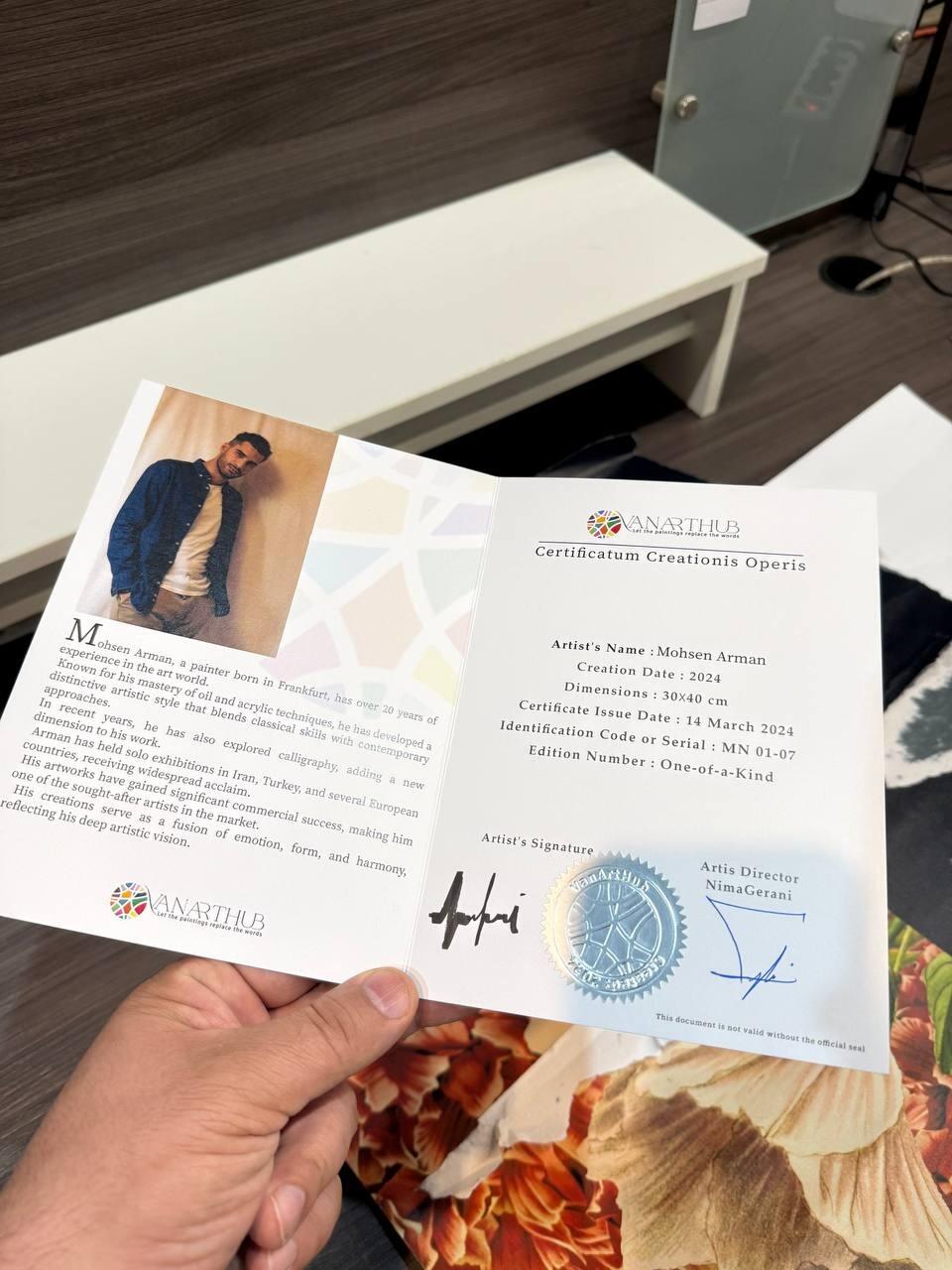
I got my order today and your work is really good. I didn’t expect to get a certificate for this painting, it was a surprise. Thanks for caring about small details.
The support team was really helpful and followed up nicely, wich I really appreciated. The painting is just like the photo – great quality and very detalied. I just wish it arrived a bit sooner, but honestly it was worth the wait.
I received my painting today. The support team was great and very responsive. The artwork is exactly what I was hoping for – even more beautifull in person. Truly a valuable piece. I’ll definetely order again. Thank you!