Caring for an original painting comes down to four things: hang it away from heat, damp and direct sun, keep the room's humidity stable, dust it lightly and never wet-clean it, and look at it properly once a year. Almost every painting that deteriorates in a private home does so because of where it was hung, not because of anything anyone did to it.
None of this needs equipment or expense. It needs a decision about which wall, made once, and about ten minutes of attention a year after that. This page covers the practical routine. The measured environmental limits behind it are set out on our page about protecting art from light and humidity, and cleaning is covered in detail under cleaning and varnishing a painting.
Key takeaways
- Where a painting hangs matters more than anything else you will do for it.
- The Canadian Conservation Institute puts the safest relative humidity for paintings on canvas or wood at a stable 40 to 60%, with temperature anywhere from 16 to 25 degrees Celsius.
- Light damage accumulates and never reverses, so keep paintings off walls that receive direct sunlight.
- Carry a painting with two hands on the sides of the frame, never by the top edge and never touching the painted surface.
Choosing the wall
Four locations account for most of the avoidable damage in ordinary homes.
Above a working fireplace. This is the worst spot available and the one people most want to use. A lit fire produces heat that rises directly up the chimney breast, soot that settles on the surface, and humidity that swings sharply every time the fire is lit and goes out. If the fireplace is decorative and never lit, the wall is fine.
In a bathroom or directly outside one. Humidity rises and falls dramatically with every shower. It is the repeated movement rather than the absolute level that does the damage, because the canvas expands and contracts and the paint layer, which is less flexible, eventually cracks.
On a wall receiving direct sunlight. Sunlight fades pigment permanently. A wall that gets an hour of direct sun a day in summer will visibly change a painting over years, and no amount of later care undoes it.
On an uninsulated exterior wall, or in an unheated basement, attic or garage. These spaces swing between temperature and humidity extremes with the seasons, and basements add the risk of flooding and mould.
What is left is most of a normal house: an interior wall, out of direct sun, in a room that is heated and lived in. That is genuinely all a painting needs.
Hanging it safely
Use two fixings rather than one. A painting on two hooks sits flat against the wall, hangs level, and cannot swing or rotate if it is knocked. A single central hook allows all three.
Match the fixing to the weight and to the wall. Plasterboard needs an anchor rated for the load. Check the hanging hardware on the back of the frame periodically, because screw eyes work loose and picture wire degrades with age. The Canadian Conservation Institute notes a minimum of 1.5 cm clearance between the tip of any screw and the face of the work, which is the practical reason not to substitute a longer screw than the frame was built for.
Leave a small air gap behind the painting. Small rubber bumpers on the bottom corners hold the frame off the wall, which lets air circulate and prevents damp collecting where the frame meets a cold wall.
Handling and moving
Carry a painting with one hand on each side of the frame, holding it upright. Never carry it by the top edge of the frame, because the joint at the top is not built to take the weight of everything below it, and never let your fingers touch the painted surface, since skin oils remain and attract dirt.
Before you pick a painting up, know where you are putting it down. Most damage happens in the moment of hesitation halfway across a room. Clear the destination first.
Rest a painting on a padded surface rather than a hard floor, standing it upright and leaning it slightly against a wall, face inward. Never lean anything against the front of a canvas, and never rest a stretched canvas on its stretcher bar.
Storage, if it must be stored
Store paintings upright, never flat, because a flat painting invites things to be stacked on it. The Canadian Conservation Institute advises supporting paintings at least 7 to 10 cm above the floor, which protects against a small leak becoming a total loss, and stacking no more than four to five together, face to face and back to back with a barrier between each.
Choose a room you heat and use, not a basement, attic or garage. A spare bedroom is a far better store than a purpose-built rack in an unheated space.
Cover a stored painting loosely with a clean cotton sheet rather than sealing it in plastic. Plastic traps moisture against the surface, which is how mould starts.
The yearly ten minutes
Once a year, take the painting off the wall in good light and look at it properly.
- Look across the surface at a shallow angle for lifting or flaking paint, and for any new cracking.
- Check the corners of a stretched canvas for slackness. A canvas that has gone loose can usually be corrected by a framer, and left alone it will eventually crack along the fold.
- Check the back for dust, insects and any sign of damp.
- Test the hanging hardware by hand.
- Dust the front lightly with a clean, soft, dry brush, working downward. Nothing wet, ever.
- Photograph it, so you have a dated record of its condition.
If you find lifting paint, active flaking, mould or damp, stop and contact a conservator. Do not attempt to fix any of these, because all of the obvious remedies make them worse.
What we send with every piece
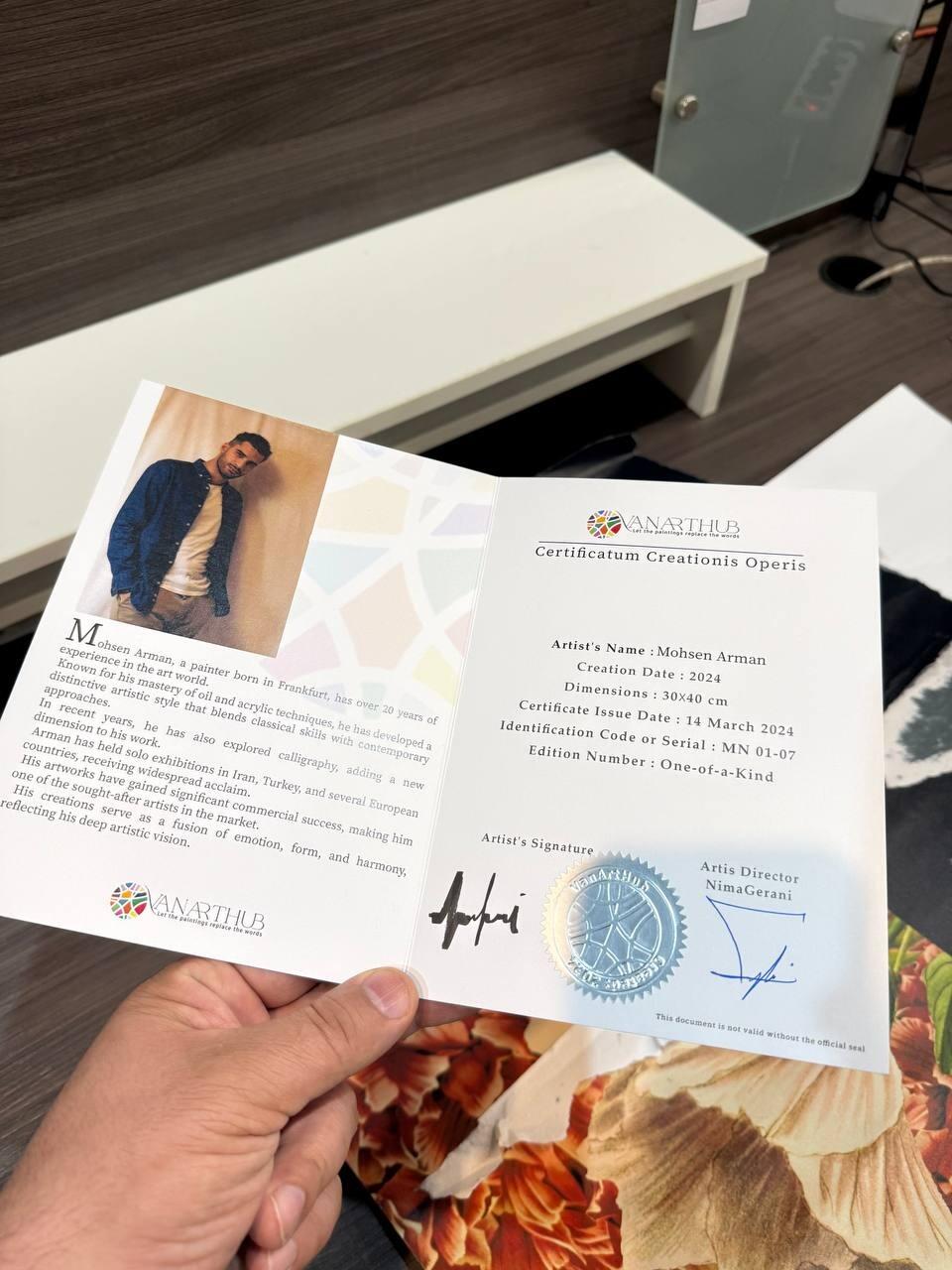
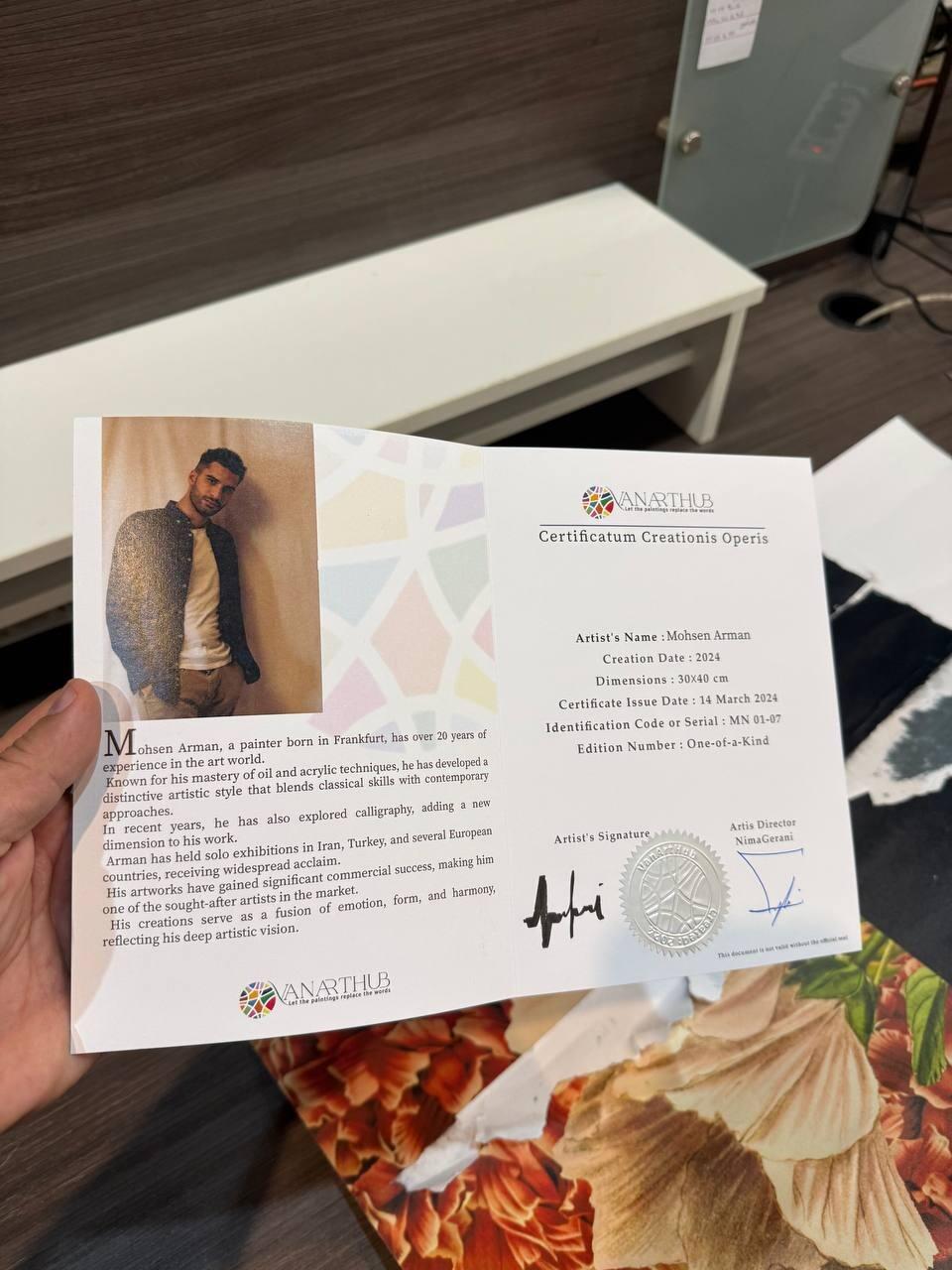
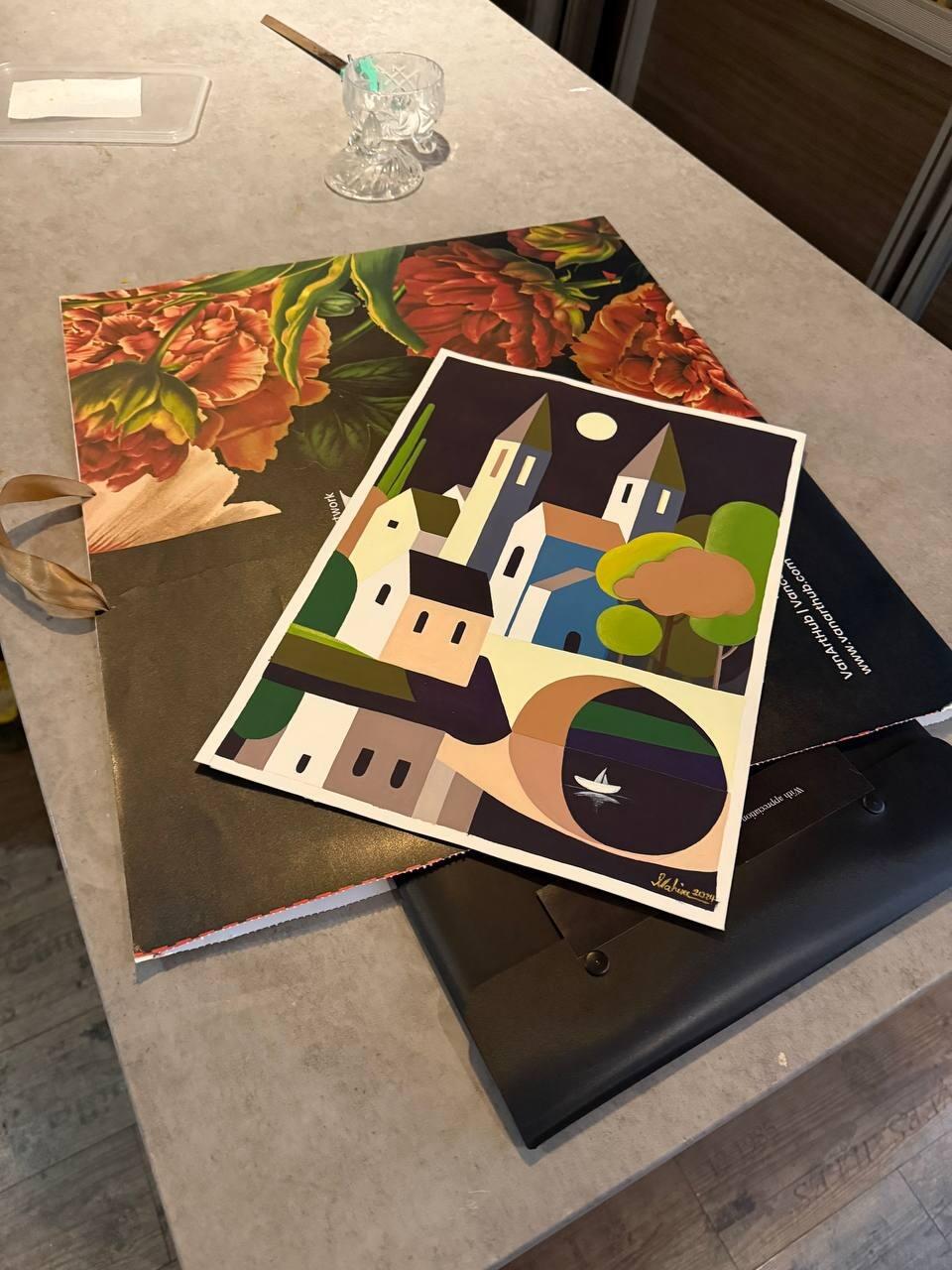
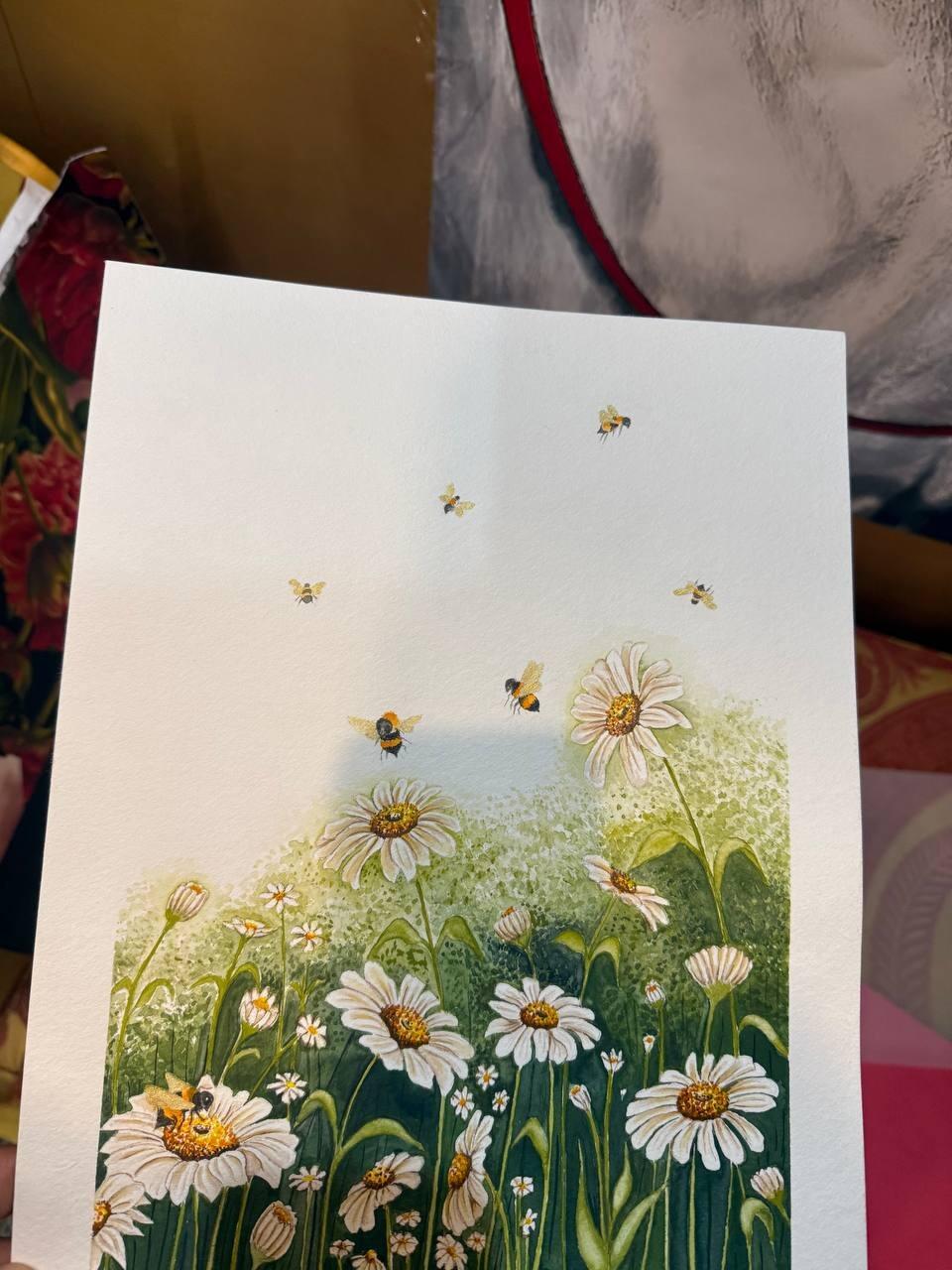
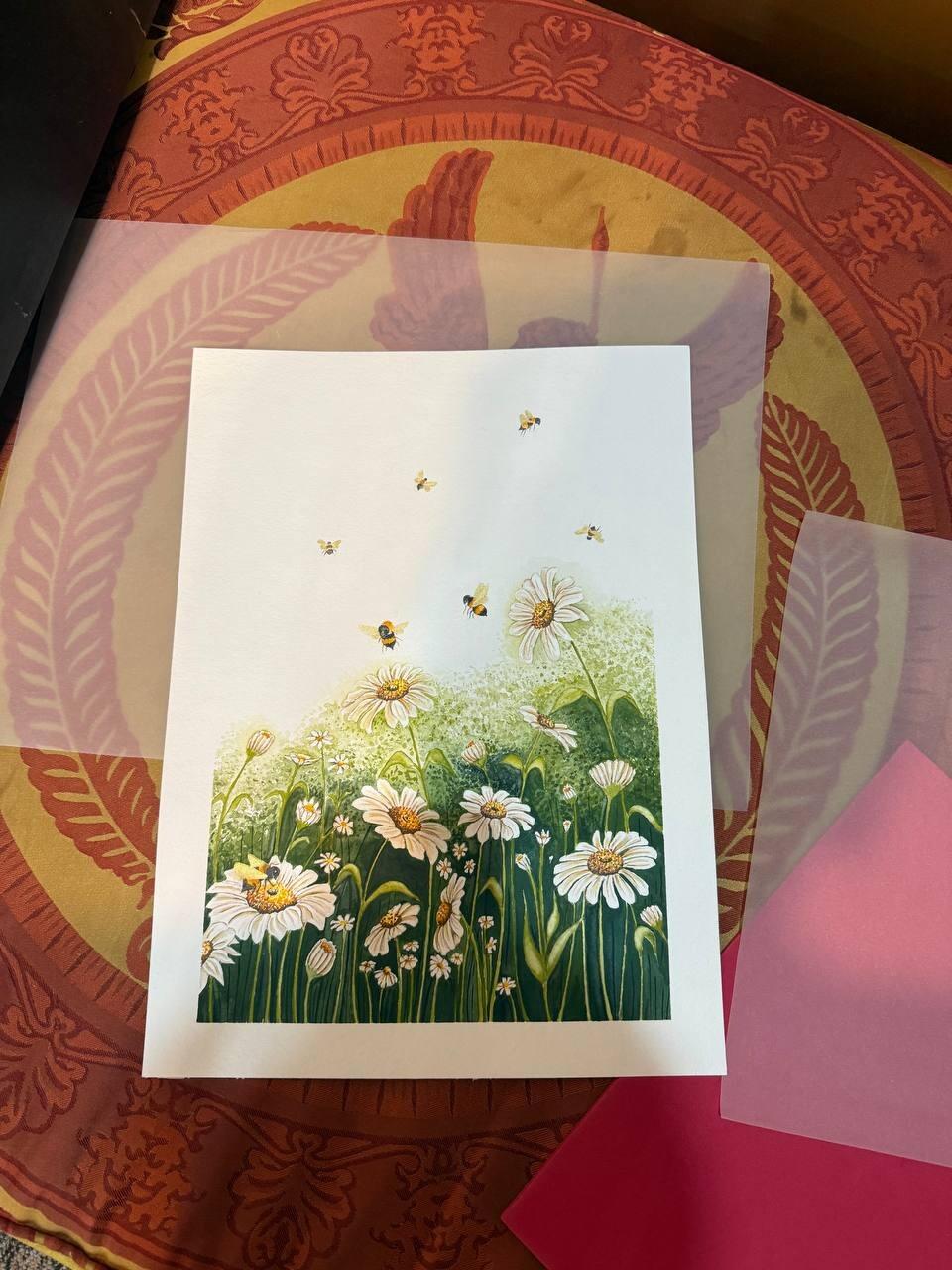
Every VanArtHub painting arrives ready to hang, packed for transit and fully insured in shipping, with a Certificate of Authenticity. As of 5 September 2026 the gallery lists 148 original paintings from $531 to $8,000, median $1,265, all in Canadian dollars. Every piece is a one-of-a-kind original by a named living artist, which means that if you ever have a question about the materials in a specific work, the person who chose them can be asked.
Frequently asked questions
Where should I not hang an original painting?
Do not hang an original painting above a working fireplace, in or beside a bathroom, on a wall that receives direct sunlight, or on an uninsulated exterior wall. Each of these exposes the work to either heat, sharp humidity swings, or accumulating light damage. An interior wall in a heated, lived-in room, out of direct sun, suits a painting perfectly well and needs no special treatment.
How often should a painting be dusted?
Dusting an original painting once or twice a year with a clean, soft, dry brush is enough in a normal home. Work downward with a light touch and never use a cloth, which can catch on raised brushwork, or anything damp. Dusting is the only cleaning an owner should carry out; anything beyond surface dust belongs with a trained conservator.
Is it safe to hang a painting above a radiator?
Hanging a painting directly above a radiator is not safe, because rising warm air creates a column of heat and low humidity against the back of the work, and dust carried in that air settles on the surface. If the wall above a radiator is the only option, a shelf or mantel that deflects the rising air helps, but a different wall is a better answer.
What relative humidity should a painting be kept at?
The Canadian Conservation Institute states that the safest relative humidity for paintings on canvas or wood is a stable level between 40 and 60%. Stability matters more than the exact figure, since repeated swings make the canvas expand and contract while the paint layer, which is less flexible, gradually cracks. A normal heated home usually sits within this range without intervention.
How should I carry a painting?
Carry a painting upright with one hand on each side of the frame, keeping your fingers off the painted surface entirely. Never lift it by the top edge, because that joint was not built to bear the weight of the whole work and can pull apart. Decide where the painting is going before you pick it up, since most accidents happen mid-room when someone hesitates.
Can I store a painting in a basement or garage?
A basement, attic or garage is a poor place to store a painting, because these spaces swing between temperature and humidity extremes and basements carry a flood risk. A heated, lived-in room such as a spare bedroom is a far better store. Whatever the room, stand paintings upright and off the floor rather than laying them flat.
Should I cover a stored painting in plastic?
Do not seal a stored painting in plastic, because plastic traps moisture against the surface and creates the conditions mould needs. Cover it loosely with a clean cotton sheet instead, which keeps dust off while letting air move. The same reasoning applies to leaving a painting wrapped in its shipping plastic for months after delivery.
What do I do if the canvas has gone slack?
A canvas that has gone slack can usually be corrected by a framer or conservator, either by adjusting the keys in the stretcher corners or by re-tensioning the canvas. Do not leave it, because a loose canvas flexes when touched or knocked and eventually cracks along the fold lines. Do not attempt to tighten it by wetting the back, which is advice that circulates online and causes real damage.
Does a painting need to be varnished to be protected?
A painting does not need varnish to be protected, and many contemporary works are deliberately left unvarnished as a choice about how the surface looks. Where varnish is used it provides a sacrificial layer that can be removed and replaced by a conservator. Timing matters greatly, as varnishing before oil paint has fully cured causes problems later, which is covered on our cleaning and varnishing page.
How do I know if a painting needs a conservator?
Contact a conservator if you find paint lifting or flaking, new cracks appearing, mould, water damage, a tear, or a surface that has darkened noticeably. These conditions worsen without intervention, and every obvious home remedy makes them worse. A conservator will examine the work and quote before doing anything, so an enquiry costs nothing and settles whether treatment is needed.
Sources and references
Each link was opened and confirmed to resolve on 5 September 2026.
-
Environmental Guidelines for Paintings, CCI Notes 10/4. Canadian Conservation Institute, Government of Canada. Published 1990, revised 2016. Accessed 5 September 2026. Source for the 40 to 60% relative humidity range and the 16 to 25 degrees Celsius temperature range.
-
Storage and Display Guidelines for Paintings, CCI Notes 10/3. Canadian Conservation Institute, Government of Canada. Published 1986, revised 2016. Accessed 5 September 2026. Source for the 7 to 10 cm floor clearance, the four to five stacking limit, and the 1.5 cm screw clearance.
- VanArtHub catalogue figures (148 active originals, $531 to $8,000, median $1,265, Canadian dollars) counted from the store's own product records on 5 September 2026.