Paper moves. That single fact drives every decision in this guide.
A sheet of paper takes up moisture when the room is damp and gives it back when the room is dry, expanding and contracting a little every time. Over a year in a normal home it does this constantly. Frame it in a way that lets it move and it stays flat for a century. Frame it in a way that pins it down and it buckles, and eventually tears itself.
The four rules
1. Hinge at the top only
The sheet hangs from two small hinges along its top edge, and is free everywhere else. It can then expand downwards and sideways without restraint.
Never glue, never dry mount, never tape all four corners. A sheet fixed at four points has nowhere to go and the movement turns into permanent cockling. Dry mounting is the one to be most careful about: it bonds the sheet to a board permanently, cannot be reversed, and for an original work it is close to vandalism.
2. Hinges must be reversible
Japanese tissue and wheat starch paste, or a proper conservation tape. Both release with moisture, so a future framer can undo the work without touching the artwork. This is the test every conservation decision should pass: can the next person undo what I did?
3. Nothing touches the surface
Either a mat holds the glazing off the work, or a spacer does. Glass resting directly on paper is a problem waiting to happen: any moisture at all and the sheet sticks to the glass, and separating them takes the surface with it.
If you want the full sheet visible with no mat covering the edges, that is a float mount, and it needs a spacer to keep the glazing clear.
4. Conservation board, front and back
Acid-free and lignin-free, both the mat and the backing. See acid-free mats and backing.
By medium
Graphite and coloured pencil
Stable and relatively robust, but the surface can burnish if anything rubs it, and graphite in particular can offset onto glass over years if they are in contact. Mat or spacer, UV glazing, conservation board.
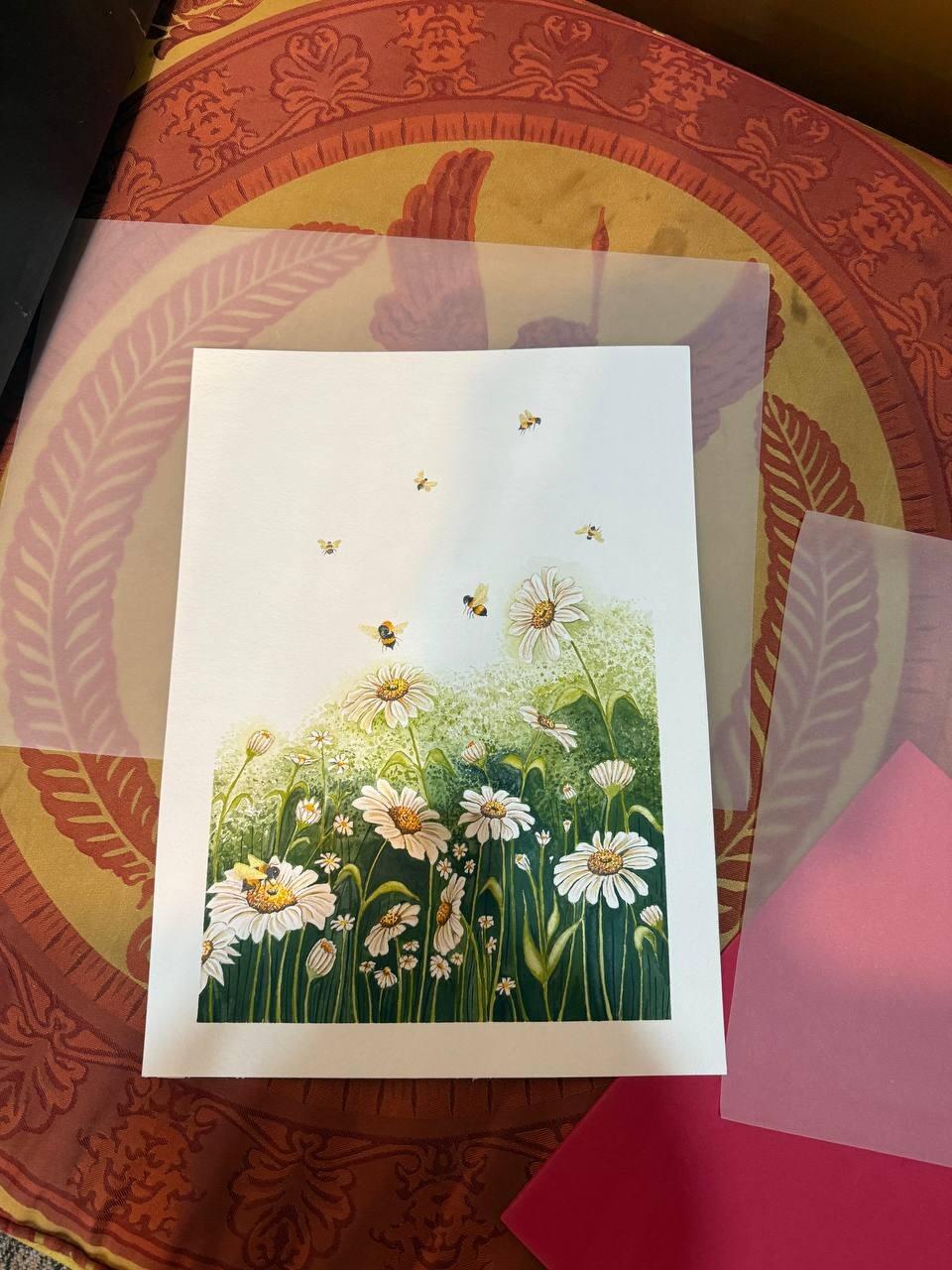
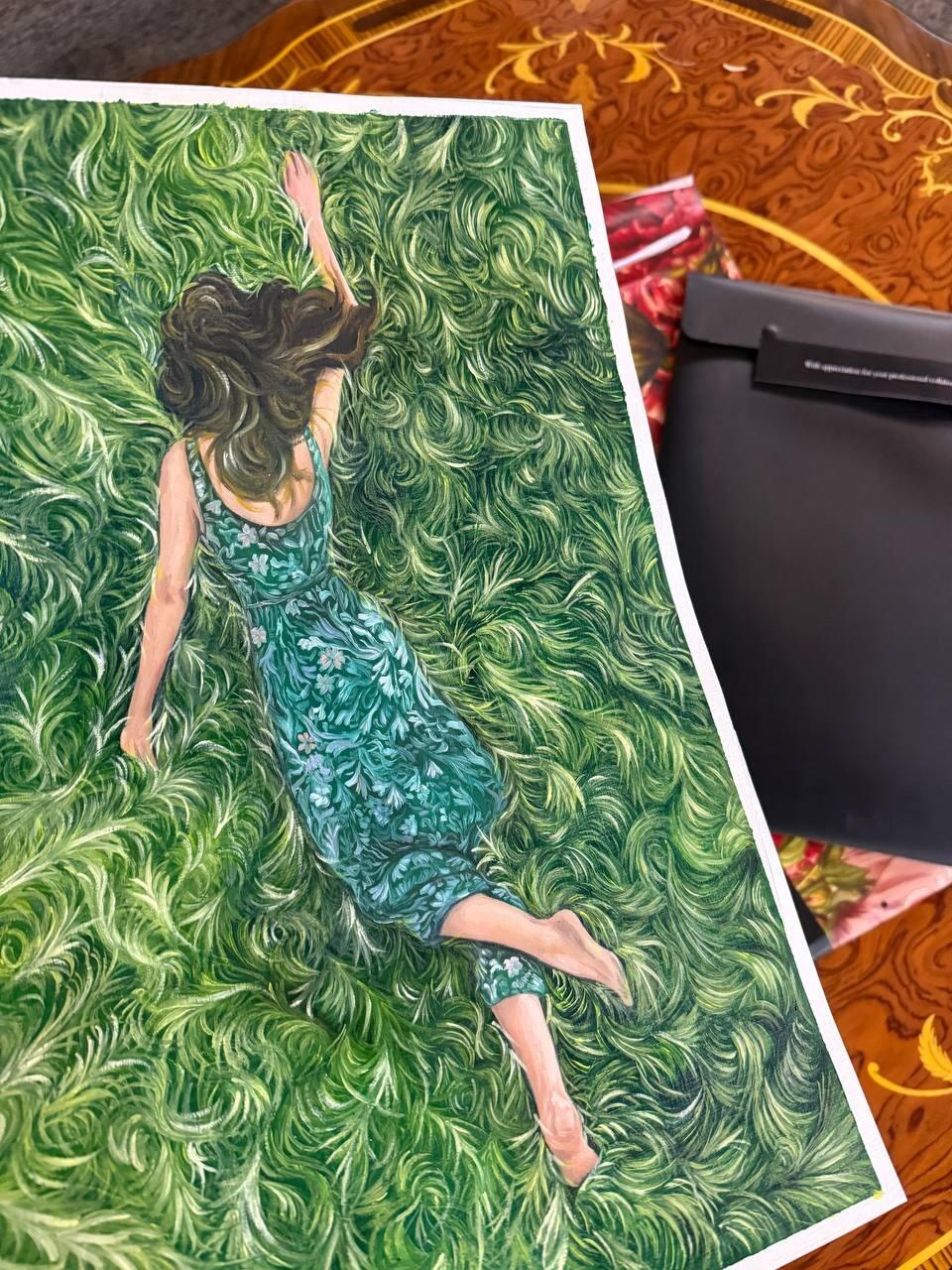
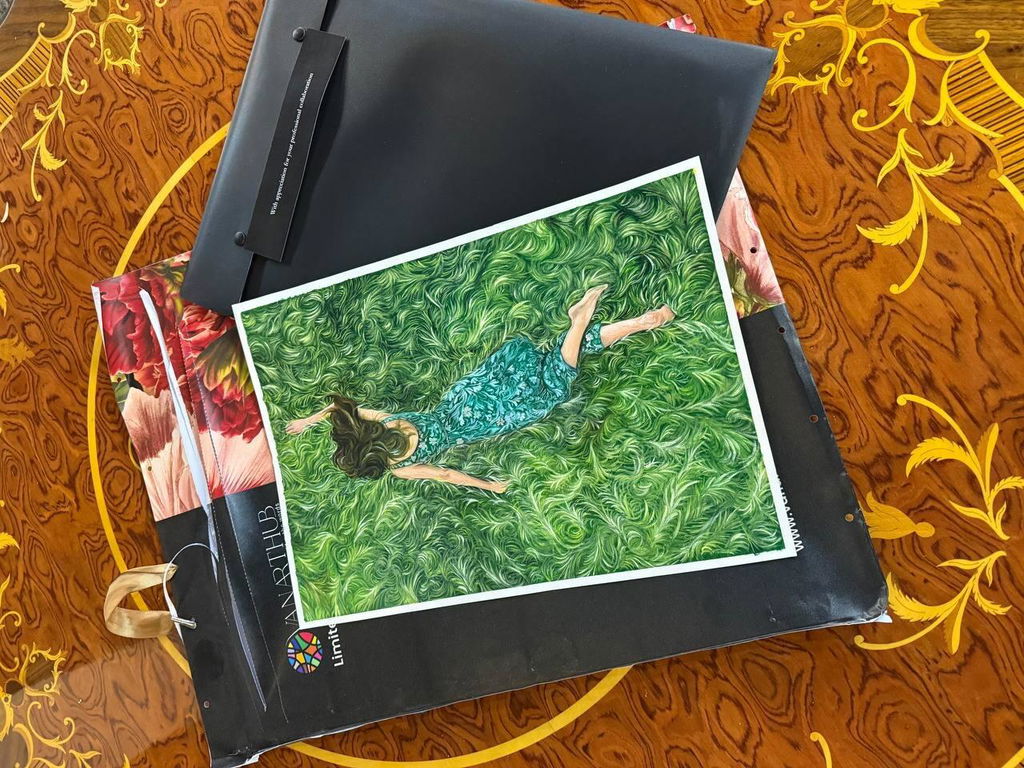
Most of our works on paper are in these media. Pieces like Silent Frequency in graphite and Ethereal Duet in coloured pencil are framed exactly this way: hinged at the top, matted, behind UV-filtering glazing.
Watercolour
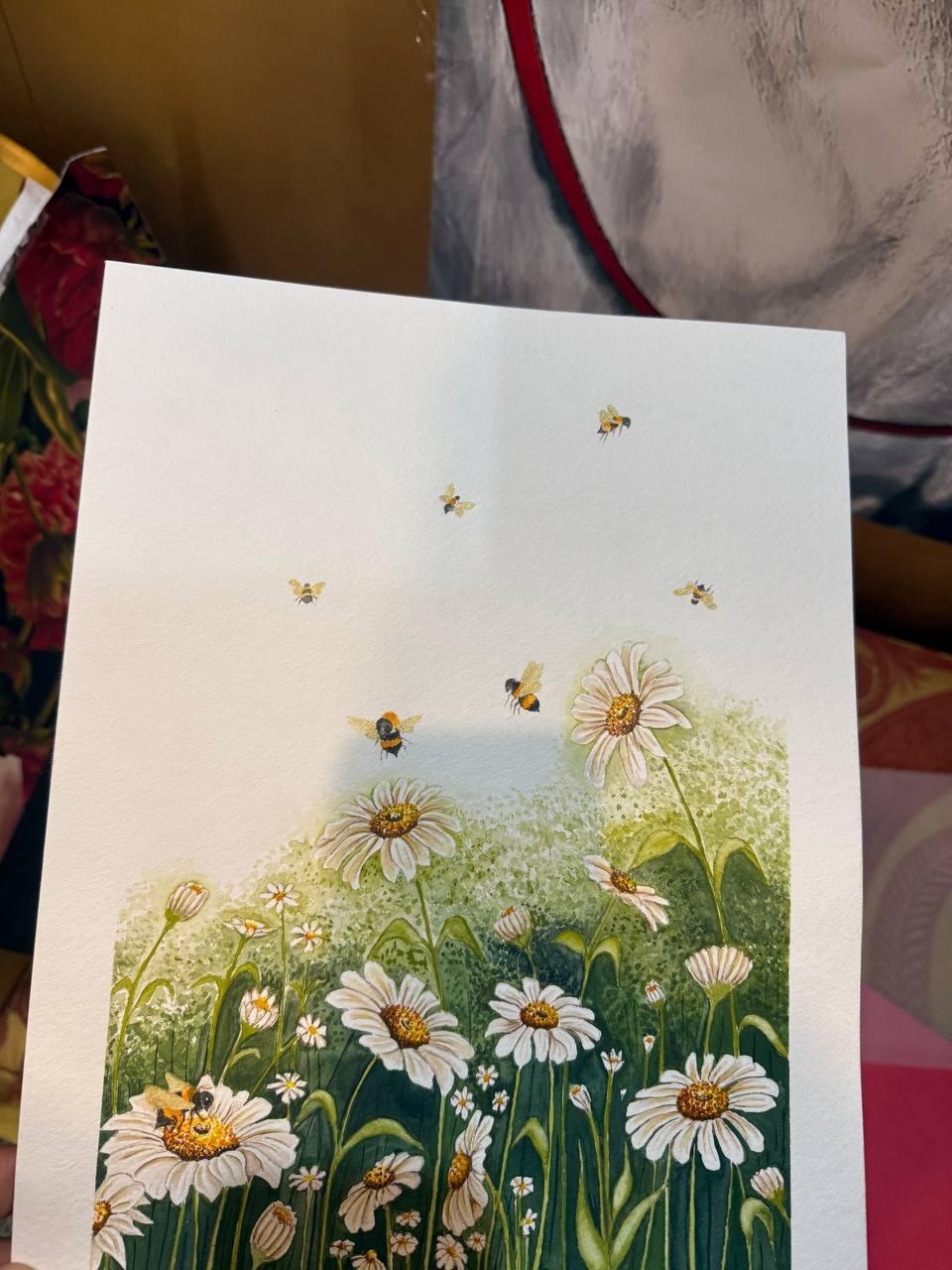
The most light-sensitive medium in common use. Some watercolour pigments visibly fade in a few years on a bright wall. UV glazing is not optional, and placement matters more than for anything else. Heavier watercolour paper also cockles more dramatically, which makes correct hinging essential.
Pastel, charcoal and chalk
The special case, and the one with a hard rule. The pigment is sitting loose on the surface, held by very little.
-
Glass, never acrylic. Acrylic builds static and lifts the pigment straight off the paper onto the inside of the glazing. It is unrecoverable.
-
A deep spacer rather than a plain mat, so any pigment that does drop has somewhere to fall other than onto the mat surface.
-
Never lay it flat or tap the frame. Handle and transport it upright.
Ink and mixed media
Depends entirely on what is in it. Some inks are extremely fugitive under light. If there is collage or applied material, the depth of the package has to accommodate it, which usually means a spacer or a shadow box.
Photography
Its own discipline. Many photographic processes are sensitive to both light and pollutants, and some do badly against buffered board. Say it is a photograph rather than a work on paper and it will be matted accordingly.
Float mount, if you want the whole sheet visible
Where the paper has a deckled edge, a visible plate mark, or a signature in the margin, covering the edge with a mat hides part of the object. A float mount hinges the sheet on top of a backing board so the full sheet, edges included, sits in view, with a spacer holding the glazing clear.
It costs a little more and it is usually the right call on anything where the edge is part of the work.
Common questions
My watercolour has gone wavy in its frame. Can it be fixed?
Often, yes. Mild cockling frequently relaxes once the sheet is released from whatever is restraining it and allowed to settle. Severe cockling, or a sheet that has been glued down, needs a paper conservator. Either way the frame should be opened, because whatever caused it is still causing it.
Can a work on paper hang in a sunny room?
It can, with UV glazing, but it is still the worst place for it. Sun also means heat, and it means the light level is high all day. If you have one wall that gets direct sun, put a canvas there and keep the paper somewhere calmer.
Do I need a mat, or can the artwork go straight against the glass?
It needs either a mat or a spacer. Straight against the glass is the one option that is not acceptable. If you do not want a visible mat border, a float mount with a spacer gives you the look you want without the contact.
What is a float mount and when is it used?
A float mount holds the paper's edges slightly clear of the window mat, or dispenses with a window mat entirely, so the full sheet including its deckle edge is visible rather than covered by a border. It suits prints and drawings with an interesting edge, and it always needs a spacer to keep the paper off the glazing.
Can a print with a signature in the margin still be matted normally?
Yes, and it usually should be, so the signature stays visible rather than hidden under the mat window. We measure the sight size to include the signature and any edition number, which is standard practice for limited edition prints and keeps that information part of what is displayed.
Does framing a work on paper always require a mat?
It needs either a mat or a spacer, one of the two, so the glazing never touches the artwork directly. A mat is the more common choice and gives a visible border; a spacer with a float mount gives a borderless look. Straight glass-to-paper contact is not acceptable in either case.
How is a work on paper attached inside the mat?
With hinges, small strips of acid-free tissue and starch paste, or an archival hinging tape, attached only at the top edge in most cases so the sheet can expand and contract freely below. The paper is never glued flat across its whole surface, which would restrict natural movement and risk tearing.
Is charcoal or pastel handled differently from ink or watercolour?
Yes. Charcoal and pastel sit loosely on the paper surface rather than binding into it, so they need a wider spacer to keep any distance between the artwork and the glazing, since even light contact can smear the medium. Ink and watercolour bind into the paper fibre and tolerate normal matting without that extra precaution.