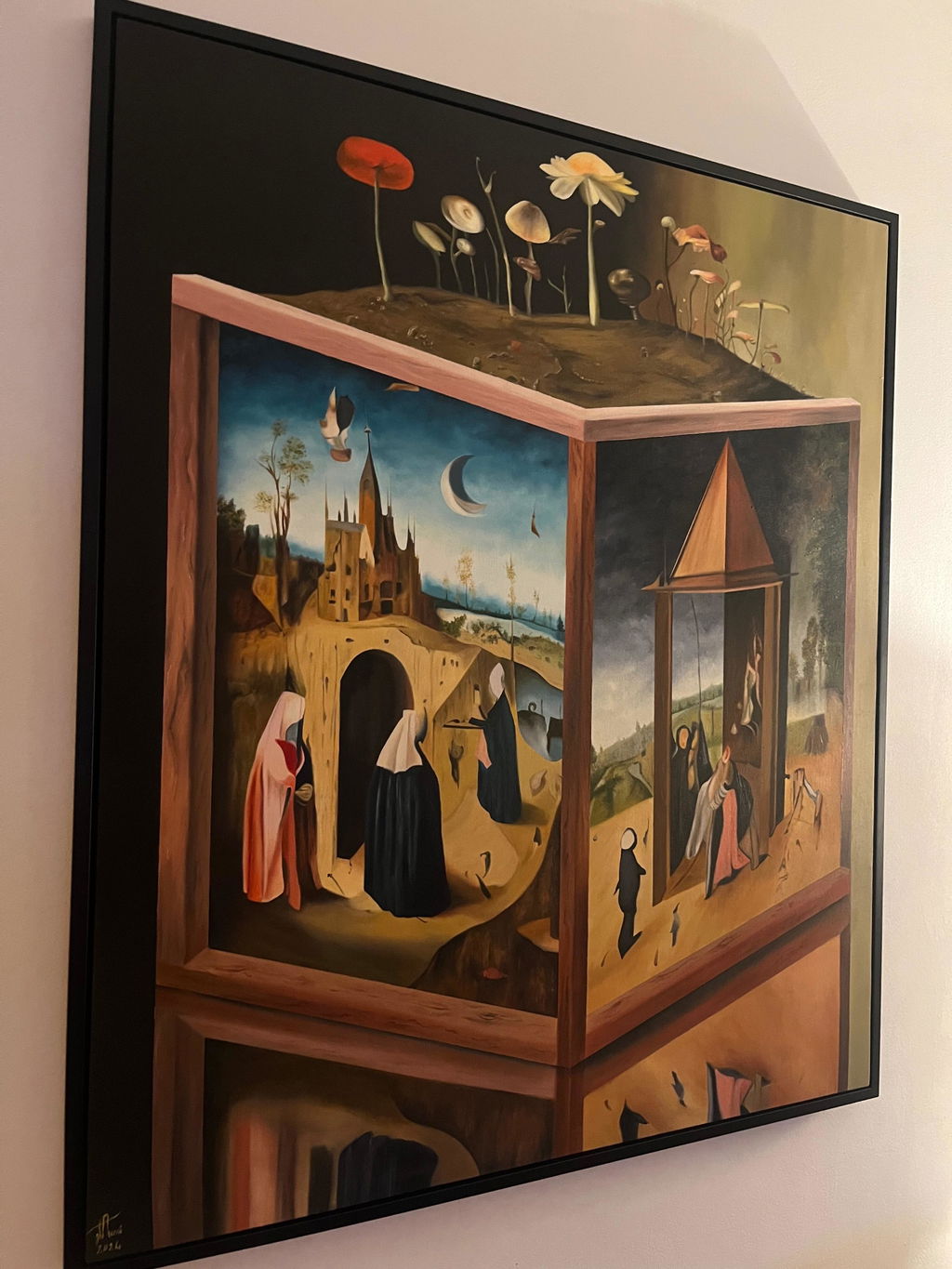
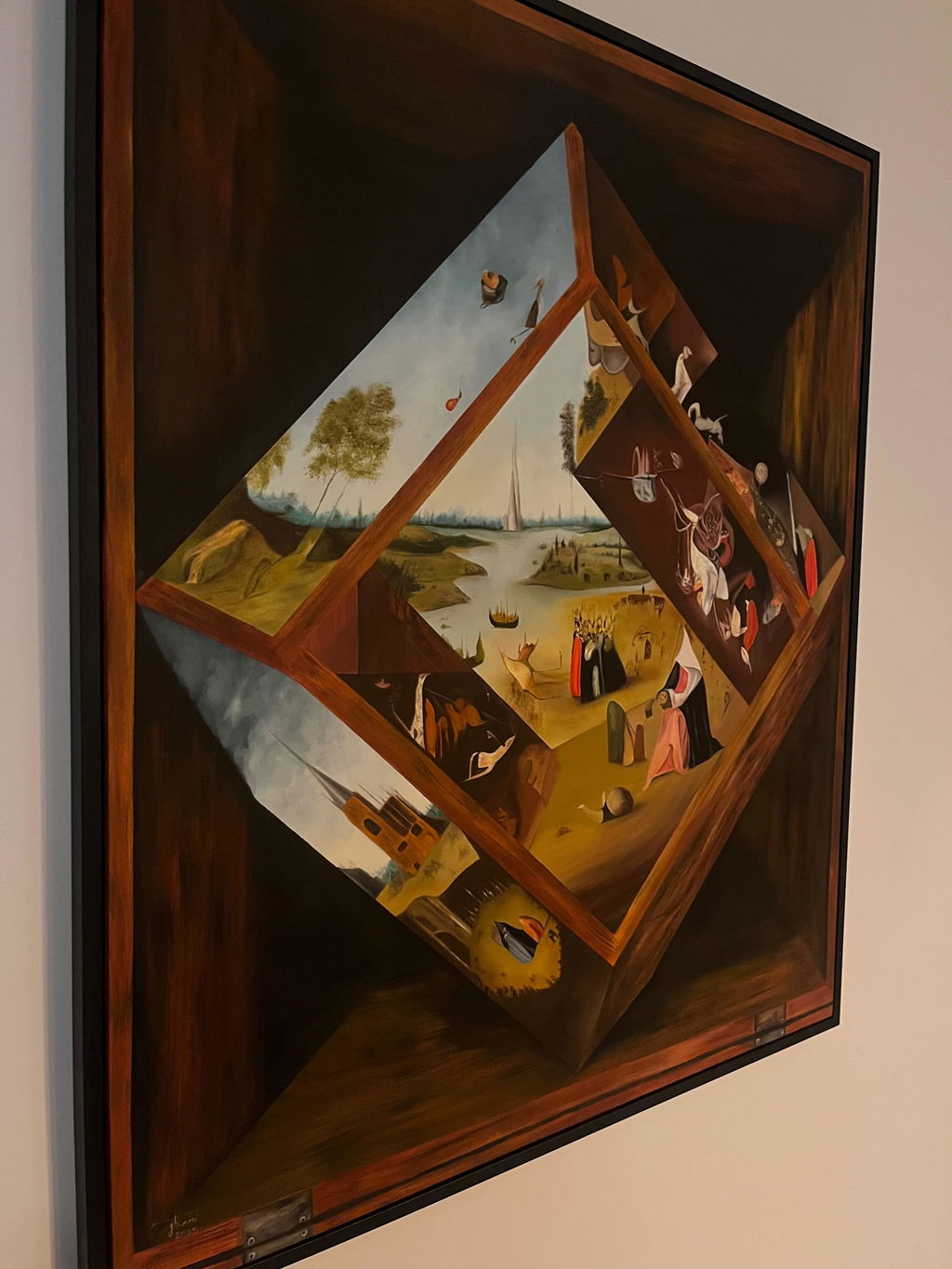
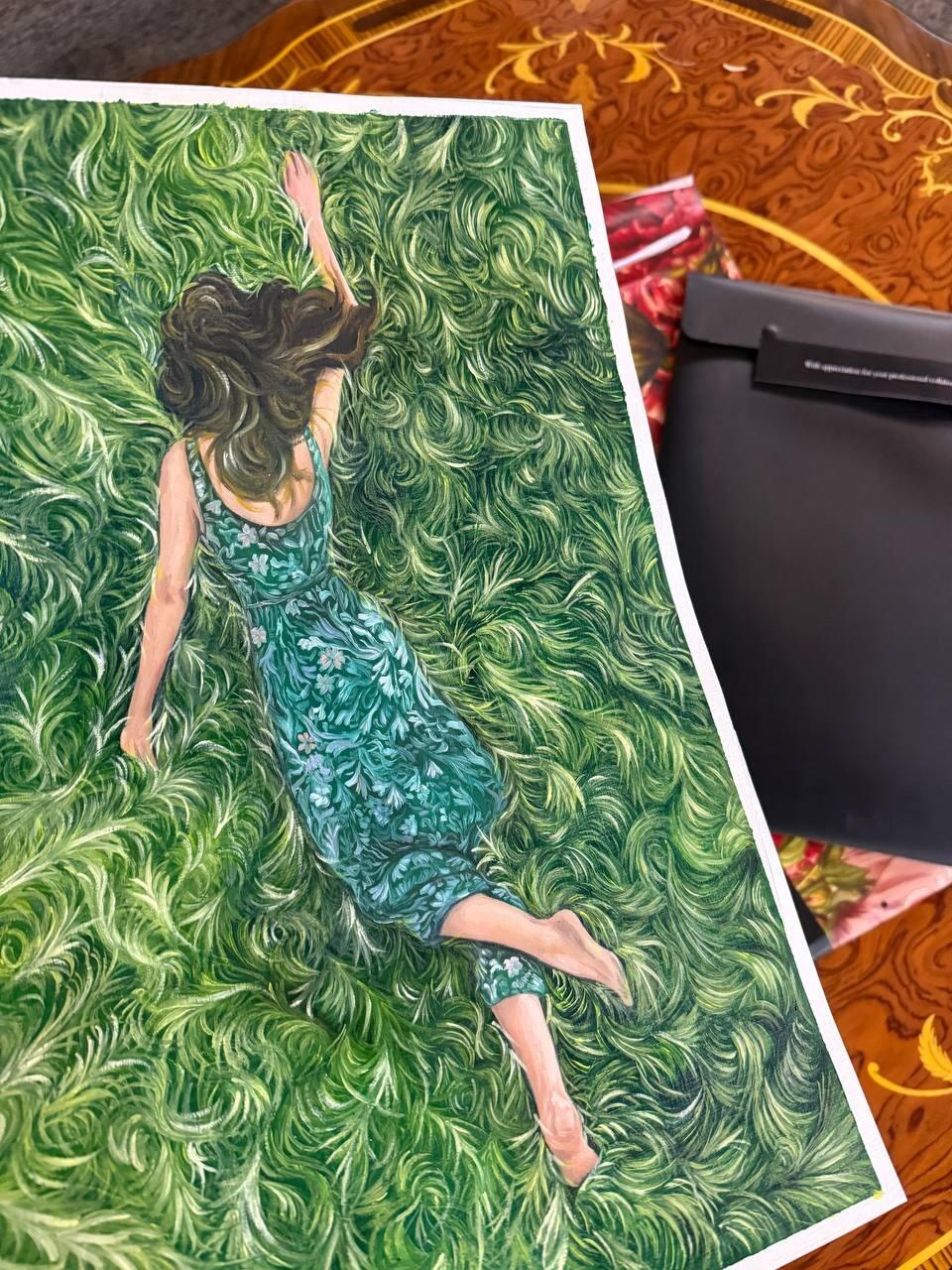
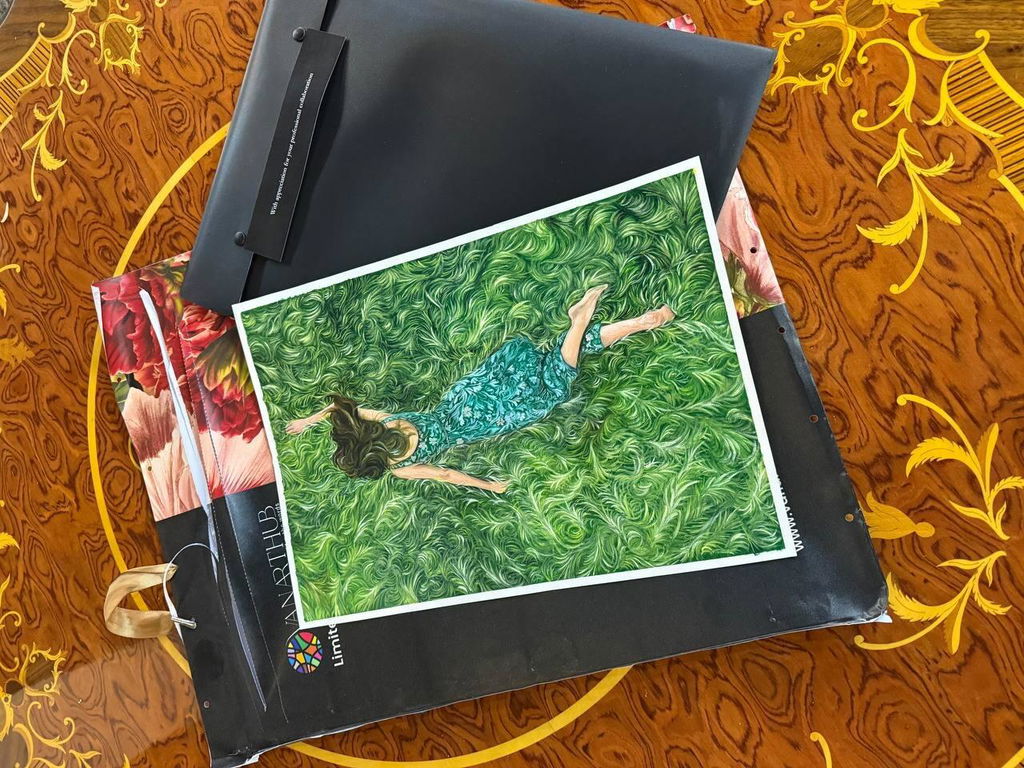
The frame you choose changes how a painting reads on the wall more than most buyers expect. A clean floater and a wide gold moulding on the same canvas tell two different stories about the same art.
We frame the original paintings we sell so they arrive ready to hang, and in many cases we can frame a piece you already own. This page walks through the three frame families we use most and when each one fits.
The three frame styles we work with
Most of what we do falls into three groups. Each one suits a certain kind of art and a certain kind of wall.
Floater frames
A floater frame holds a stretched canvas from behind, so the canvas sits inside a shallow gap with the frame around the edge. The face of the painting stays open, with no lip covering the edges. It looks like the canvas is floating inside the frame, which is where the name comes from. This is the modern gallery look, and it is our default for oil and acrylic on stretched canvas. If you want more on why, see floater frames for canvas.
Gallery wrap, no frame
A gallery wrap is a stretched canvas where the paint continues around the sides, so the piece can hang with no frame at all. It reads as clean and current. Many buyers hang the canvas bare, then add a floater later if they want a more finished edge. It costs nothing to start bare, and you keep the option open.
Traditional moulding
A traditional frame uses a wider moulding, often wood, sometimes with a gold or dark finish and a raised profile. It suits landscape work, portrait work, and any room with classic furniture. A wider moulding gives a painting more weight and presence on a large wall. Compare this against the modern look on our frame colour by room page.
How to pick the style
Start with the art, then the room. A loose abstract in bright colour usually wants a quiet floater so the paint does the talking. A detailed landscape can carry a wider wood moulding without looking busy. If the room already has strong classic furniture, a traditional frame will feel at home. If the walls are plain and the furniture is simple, a floater keeps the whole thing calm.
-
Modern rooms, bold or abstract art: floater frame in black, white, or natural wood.
-
Classic rooms, landscape or portrait: wider wood moulding, warm finish.
-
You are not sure yet: hang a gallery wrap bare and decide later.
One honest note: there is no single right answer. A frame is a matter of taste, and taste changes. What we can promise is a straight opinion for your specific piece and room if you send us a photo.
What about works on paper
The three styles above are for canvas. If your piece is a watercolour, a drawing, or a print on paper, the framing is different. Paper usually goes behind glass with a mat, and the glass choice matters. See our page on UV glass and glazing for that, and the wider guide on framing original paintings.
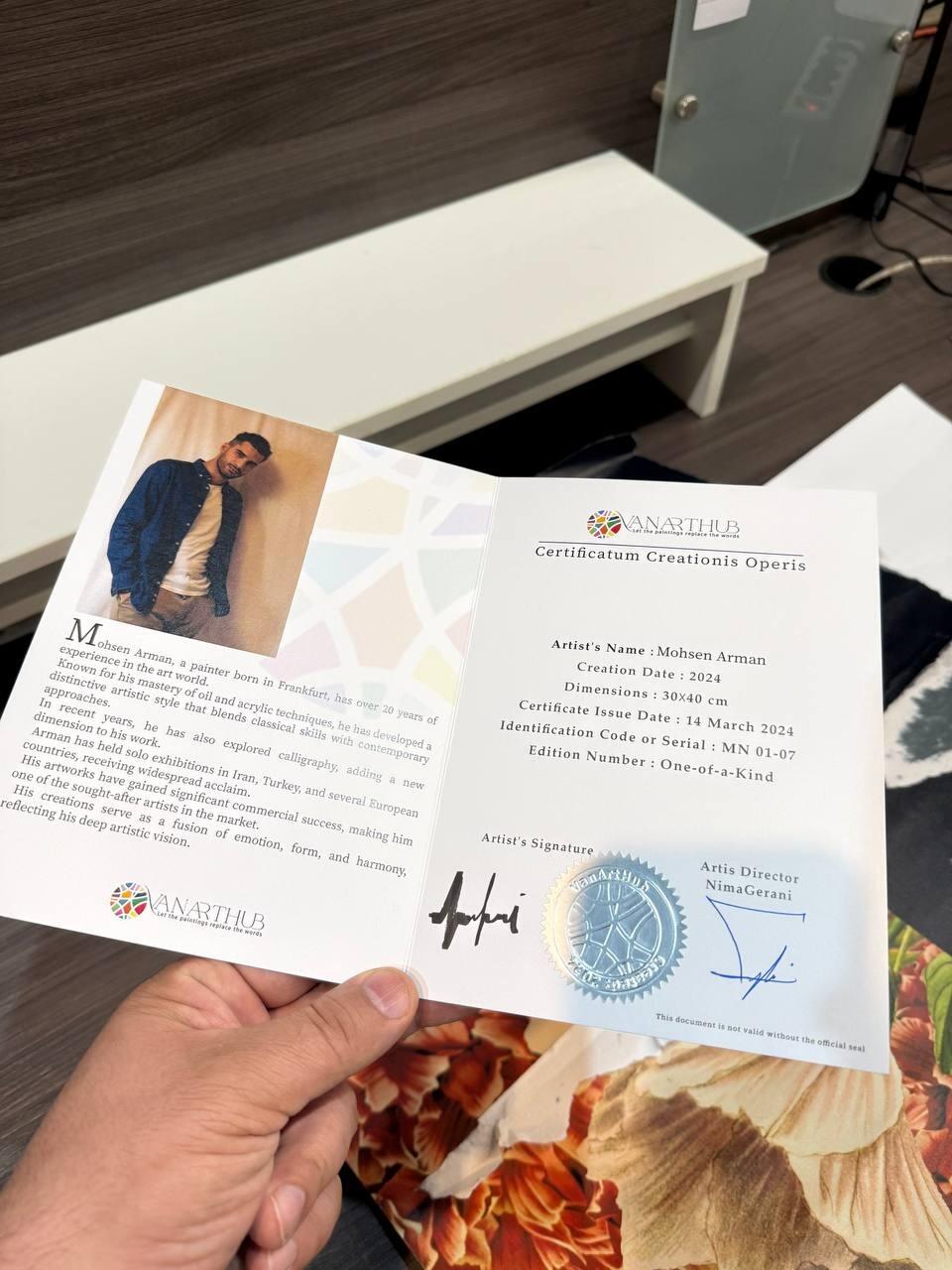
Every original we sell is hand signed by a Canadian artist and ships from our Vancouver studio with a Certificate of Authenticity. When we frame a piece, we use materials that protect the work, not just materials that look good in the shop.
Frequently asked questions
Not sure which style fits your piece? Talk to our art advisory team and we will give you a straight recommendation. You can also browse framed and frame-ready work in oil paintings, abstract paintings, and all artworks.
Common questions
Which frame style is most popular for original paintings?
The floater frame is our most requested style for oil and acrylic on stretched canvas. It gives a clean, modern gallery edge without covering any of the painted surface. For landscape and portrait work in classic rooms, wider wood moulding stays popular. The right pick depends on the art and the room, not on a trend.
Can you frame a painting I already own?
In many cases yes. Send us clear photos, the exact size, and whether the piece is stretched canvas or works on paper. We will tell you what frame styles fit and what the work involves. If a piece is fragile or unusually large, we will say so honestly before you commit.
Do your paintings come framed or unframed?
Many of our stretched canvases are sold as gallery wraps ready to hang bare, and we can add a floater or other frame on request so the piece arrives finished. Tell us the look you want when you order, and we will quote the framing before we start.
Does the frame style affect the value of the art?
The painting holds its value, not the frame. A good frame protects the work and helps it look right on your wall, but you can reframe later without touching the art itself. We use conservation materials so the frame never damages the piece over time.
How many frame styles do you offer?
Enough to cover the four main families: floater, gallery, traditional wood moulding, and metal profiles, each in several finishes. Rather than a fixed catalogue, we match the profile and finish to the piece and the room. See frame profiles explained for the shapes themselves.
Can I see a frame style before I order?
Yes. Come to the gallery at 1242 Davie Street and we will hold the actual moulding against the actual piece in daylight. If you are not in Vancouver, we photograph the combination against your painting and send it before anything is cut.
Is one frame style more durable than another?
Durability comes from the material and the joinery, not the visual style. A solid hardwood moulding and a well-built metal profile both last for decades indoors. What varies by style is upkeep: gilded finishes need gentler handling than a painted or metal one.
Do frame styles go in and out of fashion?
Some drift, most do not. A floater frame has looked current for decades because it does one job cleanly. What dates faster is an overly literal match to a decorating trend, which is why we frame the painting first and the room second.