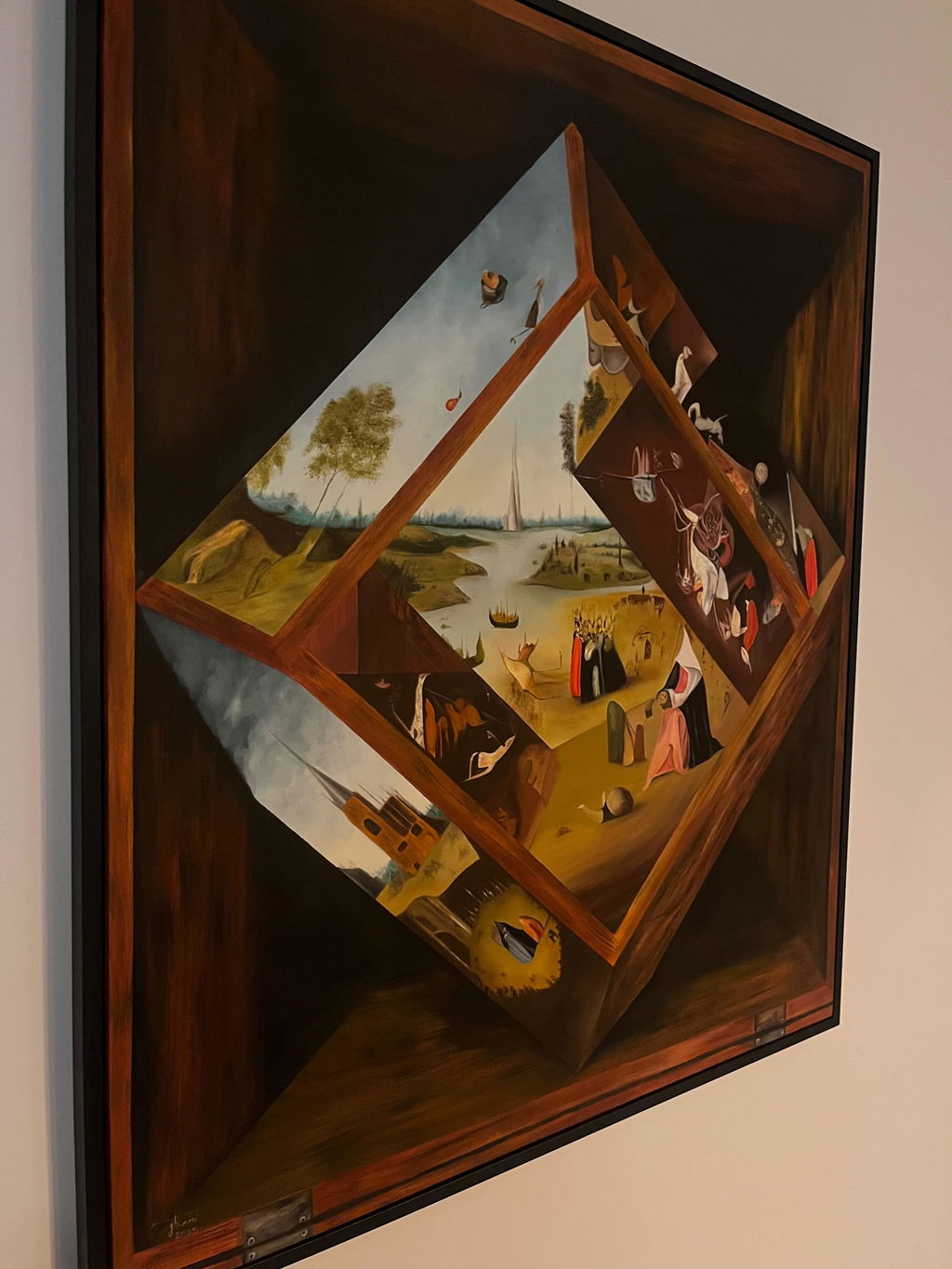
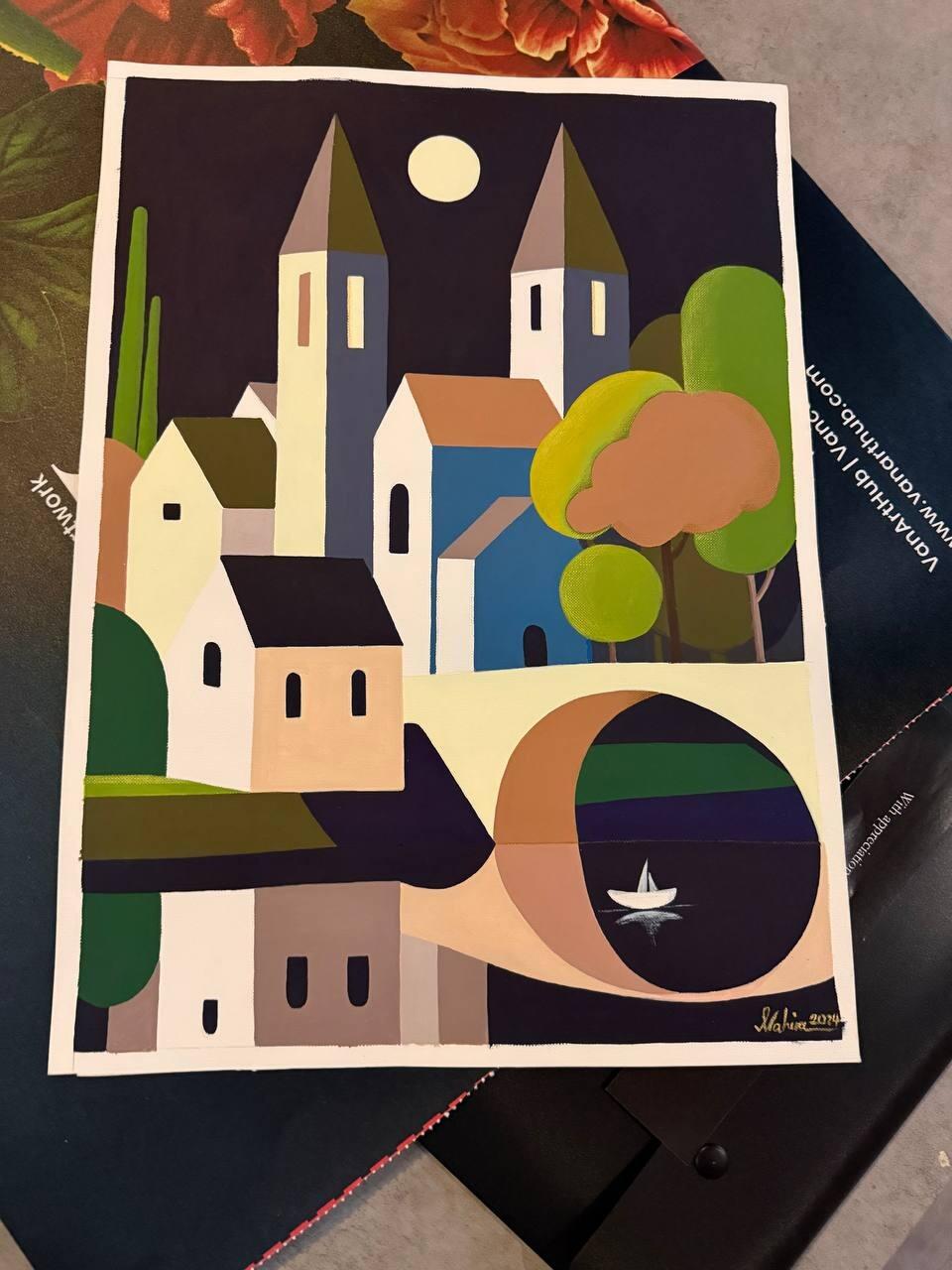
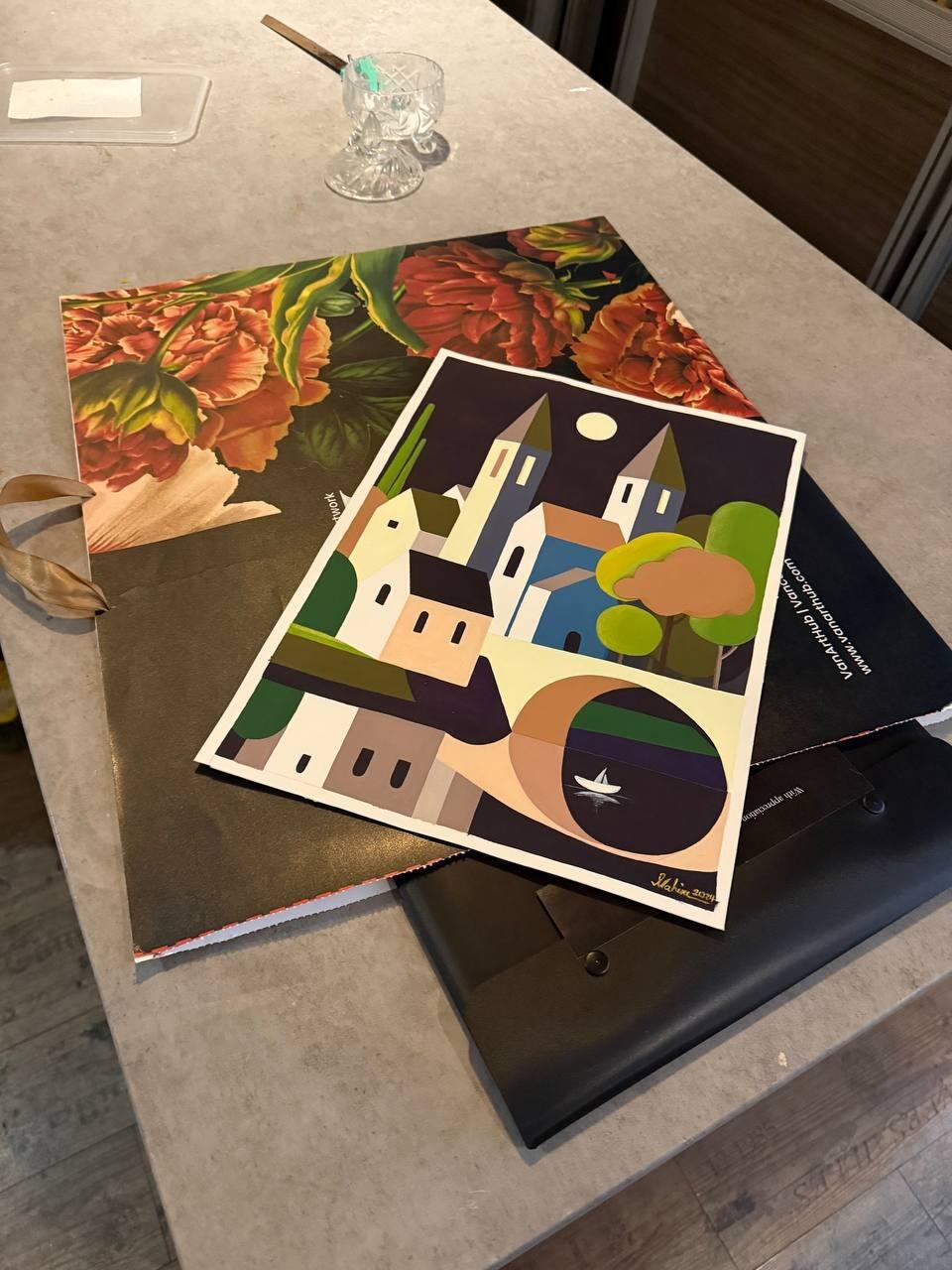
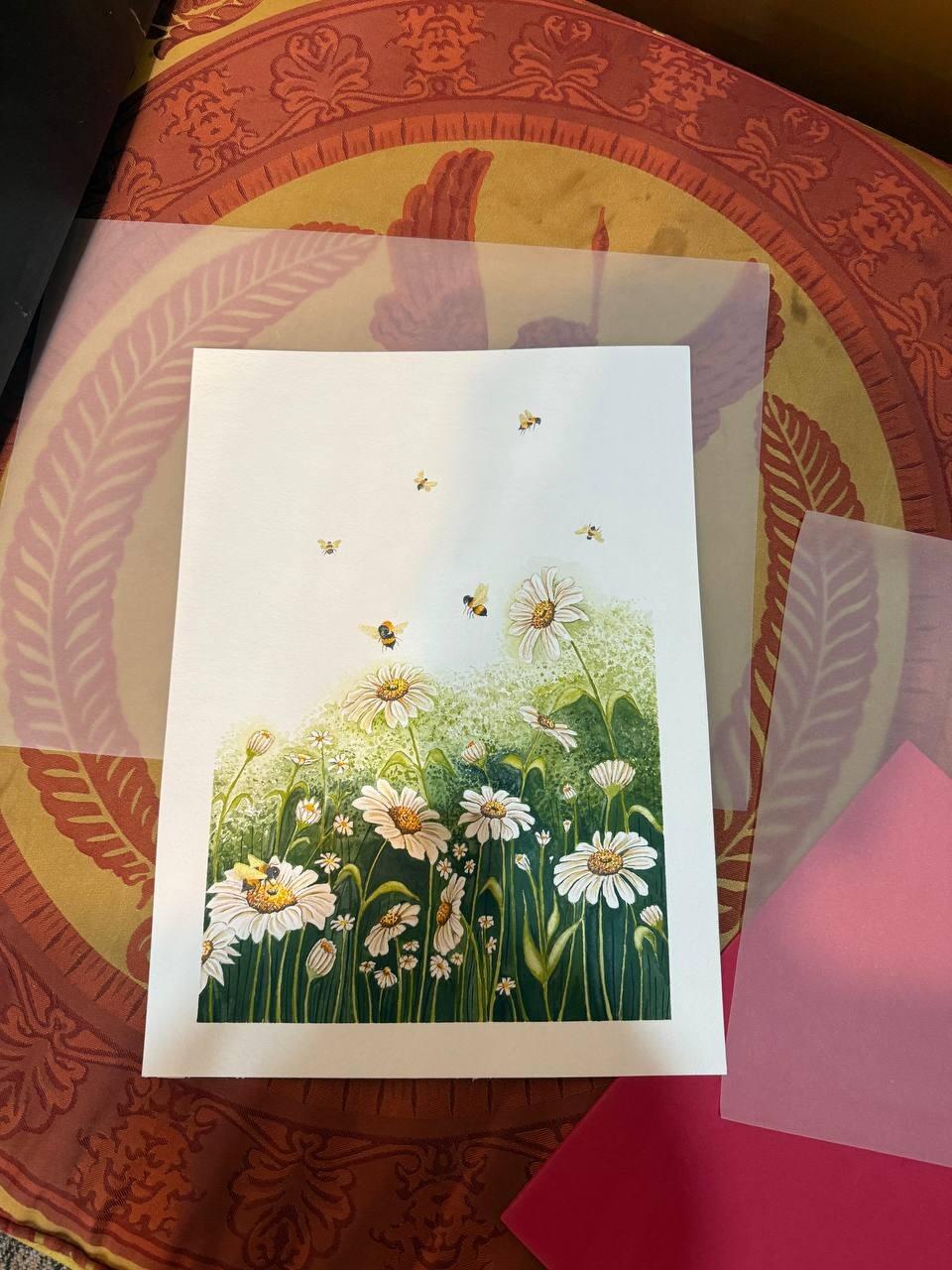
Not every painting needs a frame. A gallery-wrapped canvas, where the artist has continued the painting around the sides and finished the edges, is complete on all faces and was made to hang bare. Framing it is optional and sometimes counterproductive.
This is worth saying plainly, because a framer who tells you everything needs framing is not being straight with you.
What a gallery wrap actually is
The canvas is stretched over the stretcher bars and secured on the back rather than the sides, so no staples are visible from any angle you can see. The sides are then finished, in one of three ways:
-
Continued. The image carries on around the edge. The painting genuinely extends onto the sides.
-
Painted solid. The edges are painted a flat colour, often black, white, or a tone pulled from the composition.
-
Mirrored. The edge of the image is reflected around the side. Common on reproductions, rare on originals.
Any of these is a finished edge. What is not finished is a canvas with raw white cotton on the sides, or with staples visible along the edge. Those were stretched to be framed.
When frameless is right
- The edges are painted or continued, and deep enough to read from the side. Roughly 38 mm or more looks intentional; 19 mm can look thin on a large piece.
- The work is contemporary and the room is spare. A bare canvas is a modern gesture and it belongs in modern surroundings.
- You are hanging several pieces and want them to read as a group of images rather than a group of objects.
- Budget is genuinely tight. Skipping the frame on a canvas costs the painting nothing, whereas skipping proper glazing on a work on paper costs it a great deal.
When frameless is a mistake
-
Anything on paper or board. This is not a style question. Unframed paper is unprotected paper, and it will cockle, discolour, and pick up damage. A coloured pencil work on artboard like Censored from Within needs glazing and a mat, not open air.
-
Shallow stretcher bars. On a thin canvas the side is barely visible and the piece reads as unfinished rather than deliberately bare.
-
Traditional or formal work. A portrait or a historically-minded painting hung bare tends to look like it is waiting for something.
-
Busy or highly decorated walls. Without a frame there is no boundary between the painting and the wallpaper, and the two run together.
The middle option
A floater frame is the compromise and it is a good one. It gives the canvas a defined outer edge and a shadow line while still leaving every part of the painted surface visible, including the sides. If you like the bare look but the piece is getting lost on the wall, this is the fix rather than a conventional frame. See floater frames for canvas.
Hanging a bare canvas well
Two things separate a bare canvas that looks considered from one that looks unfinished.
The hardware must be invisible and level. With no frame there is nothing to hide a crooked hang or a wire showing at the top corner. Fit D-rings to the stretcher bars about a third down and keep the wire short.
The back matters. On a bare canvas the corner of the stretcher is visible from an angle. It should be clean, square, and free of loose staples or tape.
When not to go frameless
A finished gallery wrap is not automatically the right choice to leave bare. Three situations argue for a frame even when the canvas is technically ready to hang without one.
Fragile or unfinished edges. If the canvas edge shows staples, uneven paint coverage, or raw cotton where the image does not continue, a frame is covering a genuinely unfinished surface, not adding decoration to a finished one. Check all four sides and the corners specifically, since a corner can look clean from the front and show a visible staple line when viewed from an angle.
High-traffic areas. A stairwell, a hallway with foot traffic, or a spot behind a dining chair puts a bare canvas edge at real risk of a bumped corner or a scuff from a passing bag or shoulder. Canvas edges dent more easily than a framed edge, and a dent in unstretched canvas is much harder to correct than a knocked frame corner. In these spots, a simple floater frame gives the edge physical protection without hiding the wrap.
Rooms with kids or pets. The same logic as high traffic, but constant rather than occasional: a low-hung piece in a family room or entryway is within reach, and a frame is cheap insurance against an edge that cannot be un-dented once damaged.
If none of these apply, a clean gallery wrap can hang bare with no loss of protection. If in doubt about whether an edge is finished, stop and ask rather than trying to lift it yourself to check.
Common questions
Will an unframed canvas get damaged?
The paint film itself is durable. What is exposed is the canvas: a knock to the corner can dent the weave, and dust settles on the top edge of the stretcher. Both are manageable. The real risk is somewhere it can be brushed against, like a hallway, where a frame would take the contact instead of the painting.
Can I frame a gallery wrap later?
Yes, at any time. That is one of the arguments for starting unframed: nothing is committed. A floater frame can be fitted to a gallery-wrapped canvas years later with no change to the painting at all.
How do I clean a bare canvas?
A soft dry brush, lightly, from the top down. No cloths, no water, no cleaning products, and nothing sprayed anywhere near it. If something has actually marked the surface, stop and ask rather than trying to lift it.
What is painted on the sides of a gallery wrap canvas?
The canvas is stretched so the image continues around the wooden stretcher bars, meaning the sides show a continuation of the painting, a mirrored edge, or a solid colour, depending on how the artist finished it. This is what lets the piece hang with no frame and still look complete from an angle.
How deep is the stretcher on a gallery wrap?
Most gallery wrap stretchers are built around 3.8 cm deep, sometimes deeper on larger canvases for extra rigidity. That depth is what gives the piece enough presence on the wall to read as a finished object without a frame, rather than looking like a flat panel.
Does an unframed canvas need any hardware to hang?
Yes, the same as a framed piece. A sawtooth hanger or a wire strung between two D-rings on the back bar lets it hang from a single wall hook. The canvas arrives with hardware fitted, so nothing extra needs to be bought before hanging it.
Can a bare canvas hang safely above a heating vent or radiator?
It is worth avoiding. Constant warm air dries the canvas and the paint film unevenly over time, which can eventually cause fine cracking. A gap of at least a metre from a heat source, or a different wall entirely, protects the piece with no cost or effort involved.
Is a gallery wrap considered less formal than a framed painting?
It reads as more contemporary, yes, which is why it is common in modern interiors and offices. Formality is really about the frame choice sitting on top of that, not the canvas itself: the same gallery wrap painted in a traditional subject can still look considered and finished with no frame at all.