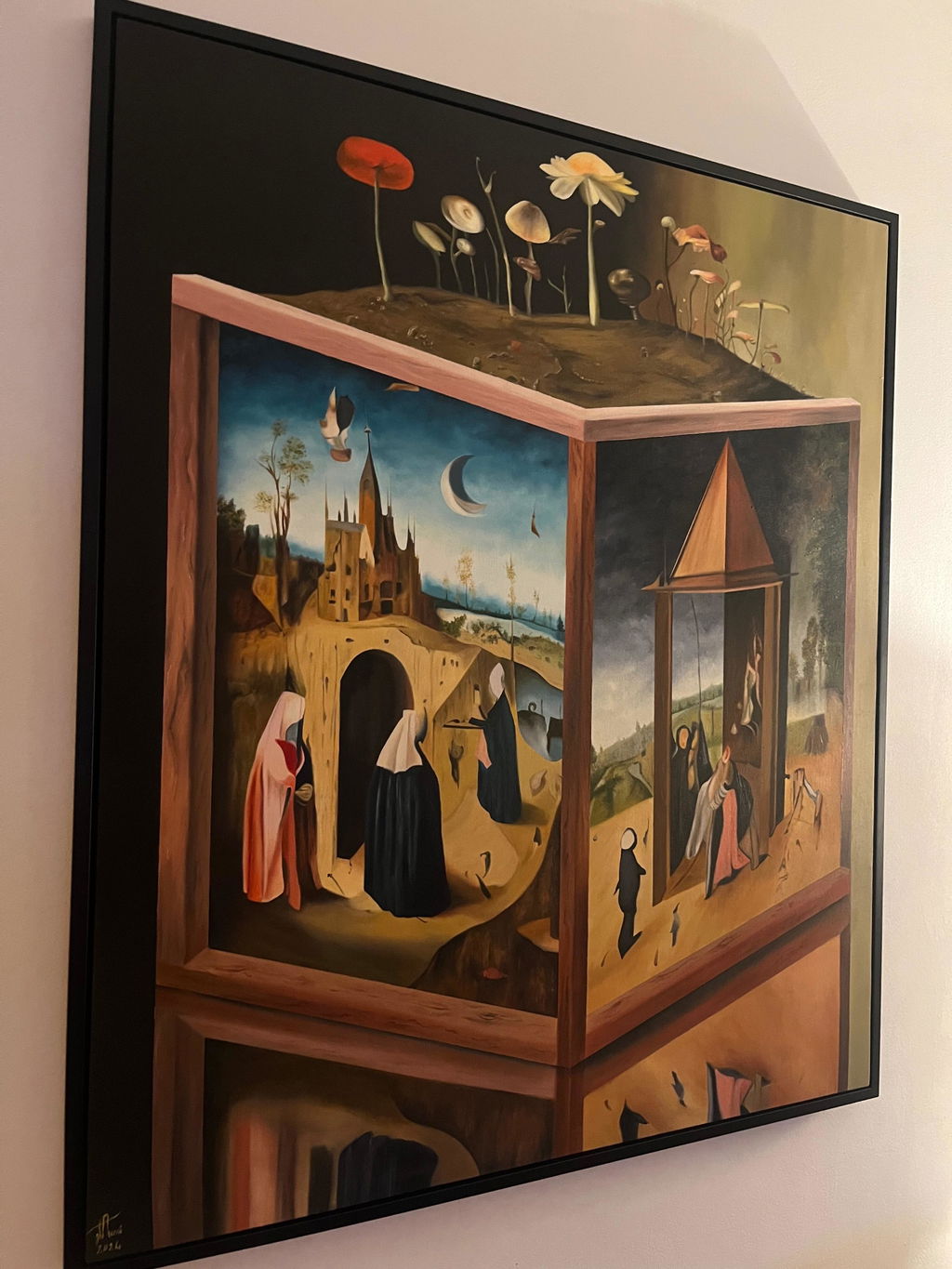
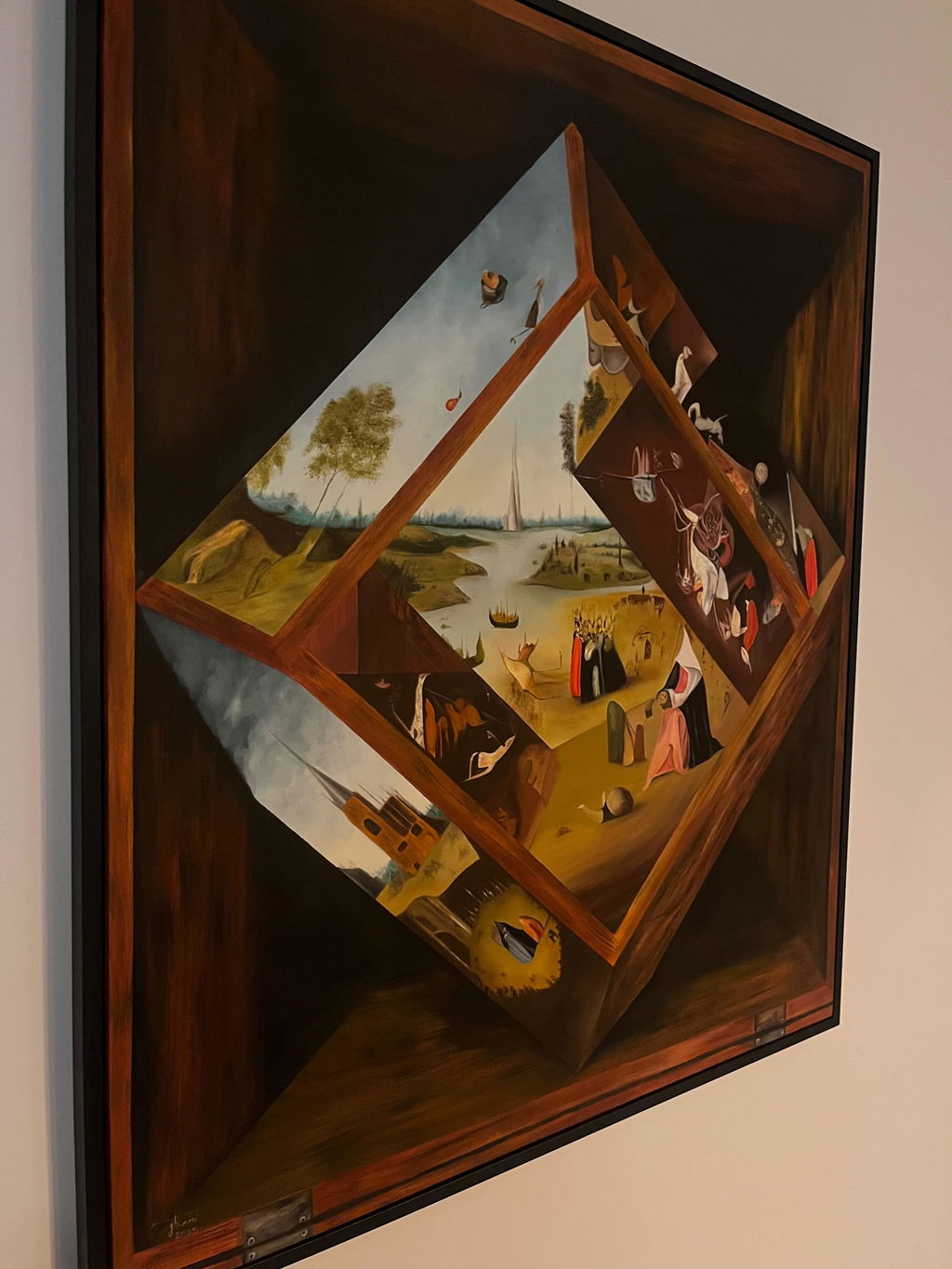
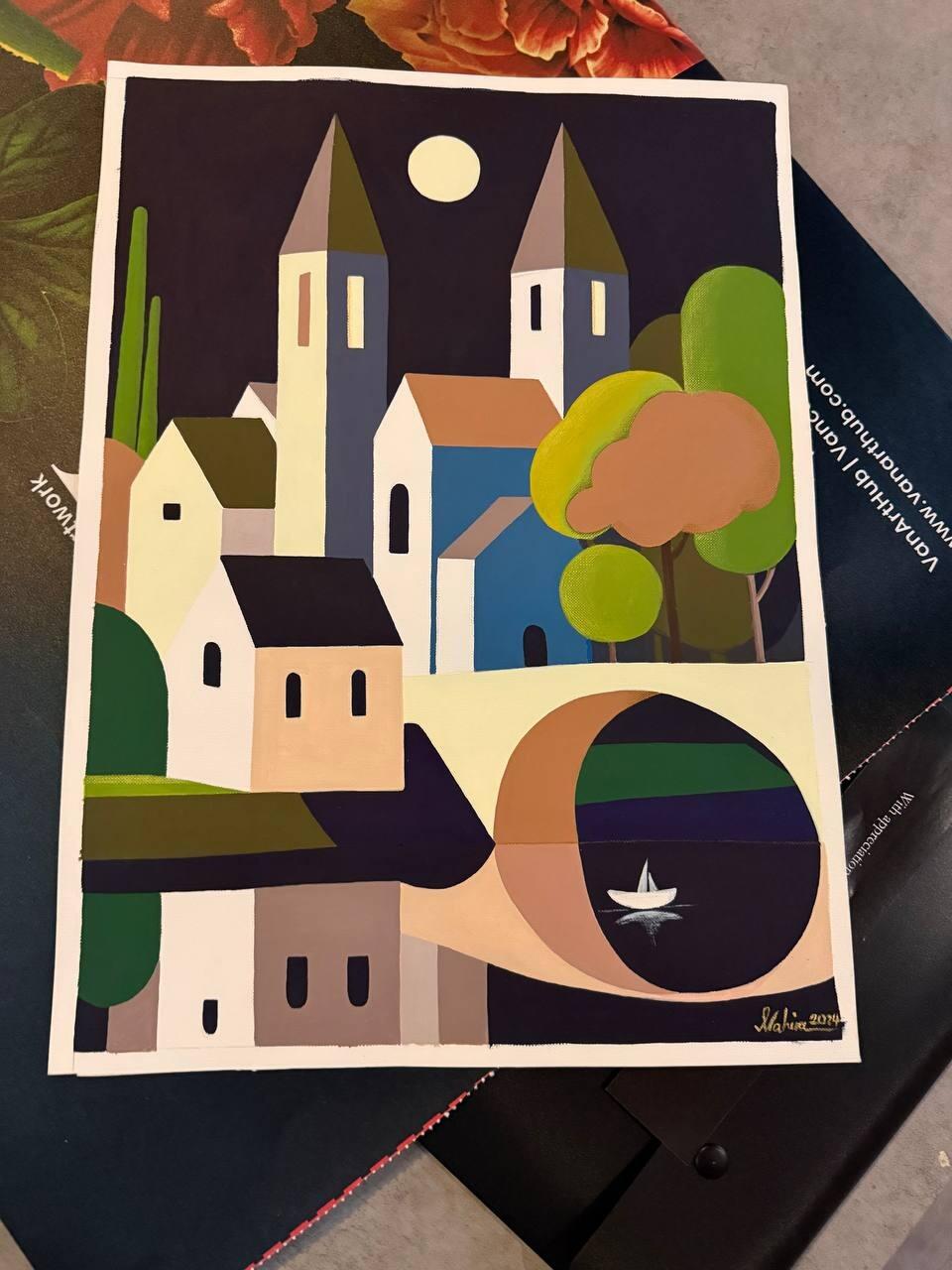
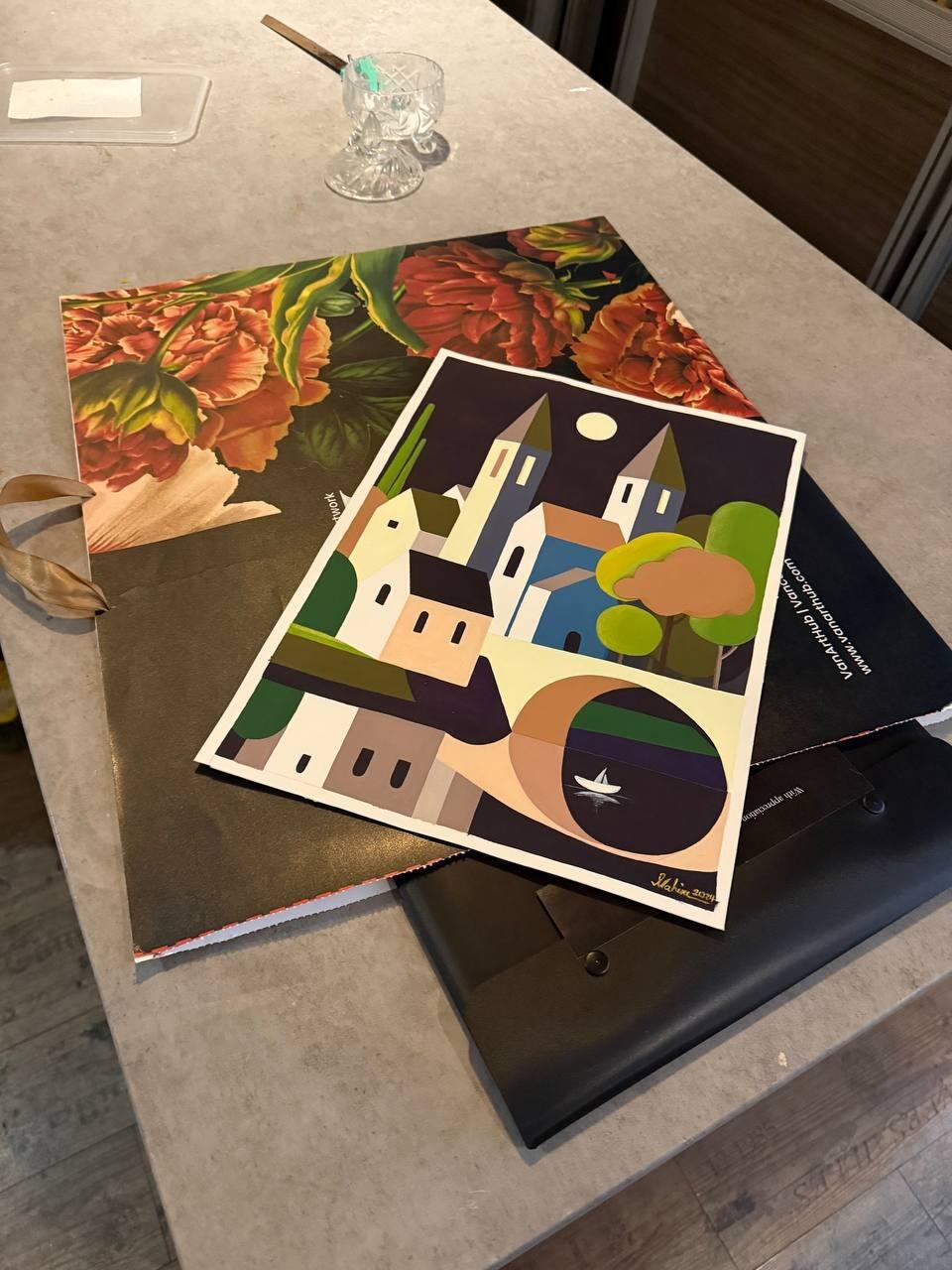
What is the last thing you look at before you fall asleep, or the wall your eye lands on when the lamps are low and the day is winding down? Bright art fights that mood. A dark night painting joins it, and that is exactly why a nocturne can make a room feel deeper and more private than any daytime scene. This page is our guide to buying an original Canadian night and nocturne painting, what the term really means, where a dark piece belongs, and what it costs at VanArtHub.
Every nocturne we sell is an original, painted by hand by an artist based in Vancouver and signed on the front. We do not sell prints or reproductions. If you would rather browse first, our darker and more atmospheric originals live in the surrealism collection.
What makes a painting a nocturne?
A nocturne is an original painting built around night, low light, and shadow, where the mood comes from what is barely visible rather than what is fully lit. Our Vancouver artists paint the version they know: a wet city street under a single street lamp, harbour lights smeared across black water, a room lit by one window, a forest edge just after the sun has gone. The colour range is narrow on purpose. Deep blues, near-blacks, warm points of light, and the small glow where a light source meets the dark. It is a real place at a real hour, painted once, not a photo run through a dark filter.
The honest part: a nocturne asks more of a wall than a bright landscape does. It rewards a spot where the light stays low and steady. In a room flooded with midday sun, some of the drama flattens out. We will tell you straight when a piece needs the right setting to work, because a nocturne in the wrong light is the one kind of painting that can look like a mistake.
Why a dark painting adds depth to a room
Dark art pulls a wall inward. Where a light canvas sits flat on the surface, a nocturne reads like a window cut into the room, and that sense of distance makes a space feel larger and quieter at the same time. It also brings intimacy. A single glowing window or a lit street corner gives the eye one warm place to rest, which is why these pieces suit the rooms you use in the evening: bedrooms, media rooms, and dining rooms lit by candles or a low pendant. There is a second trick worth knowing. A dark piece on a light wall is one of the strongest looks in a home. The wall becomes the frame, the painting becomes the focus, and a pale room that felt a little empty suddenly has an anchor.
How to choose and size a nocturne
Size the same way you would any original, then think about light before you commit. A nocturne wants a wall where lamps, not sunshine, do the work in the evening. Aim to span most of the furniture below the piece, and if you are stuck between two sizes, go larger, because a dark canvas that is too small can read as a hole in the wall rather than a focal point. The table below is where we point first-time buyers.
| Where it hangs |
Painting size to aim for |
Typical price at VanArtHub |
| Above a bed or a media-room sofa |
About 90 to 150 cm wide, or a set of two |
About $900 to $3,000 |
| Above a dining sideboard or dresser |
About 60 to 90 cm |
About $700 to $1,300 |
| A low-lit hallway or a bedside nook |
Up to about 40 cm each |
About $531 to $700 |
Use these as planning figures. Every listing shows its own exact size and price. If you want the full method, read our guide on how to buy original art.
Lighting a dark painting, and what it does to the wall colour
A nocturne is the one kind of art where the lighting matters as much as the frame. Point a small warm picture light or an adjustable ceiling spot at it, kept dim, and the dark passages open up while the glowing spots in the paint start to feel lit from inside. Skip the harsh cool downlight, which flattens the shadows and kills the whole effect. Wall colour changes the read too. Against a pale or off-white wall, the painting looks graphic and sharp, a deep shape on a bright field. Against a moody wall, a slate blue, a warm charcoal, a deep green, it melts into the room and feels enveloping. Both are good. Pick the one that matches the feeling you want in that room.
Oil or acrylic for a night scene?
Both are real originals and both last for generations when cared for. For nocturnes, oil has a natural edge in the darkest passages, because it lets an artist blend one shadow into the next without a hard line, and it holds a deep, layered black that seems to have space behind it. Acrylic gives cleaner, brighter points of light, so a lamp or a reflection can pop crisply against the dark. Either works for a night scene. Choose the individual painting you respond to, not the medium in the abstract.
Key things to remember
- A nocturne at VanArtHub is an original, signed night scene by a Vancouver artist, never a print.
- Dark art adds depth and intimacy, which suits bedrooms, media rooms, and dining rooms best.
- A dark piece on a light wall is one of the strongest anchors you can hang.
- Light it warm and dim, and never with a harsh cool spotlight that flattens the shadows.
- Nocturnes run from about $531 for small originals to several thousand for large statement canvases, and every piece ships free and fully insured with a Certificate of Authenticity and a 14-day trial.
Frequently asked questions
Where can I buy an original Canadian nocturne or night painting online?
VanArtHub sells original, signed Canadian night and nocturne paintings by independent Vancouver artists, shipped free and insured across Canada and the USA. Every piece is a one-of-a-kind painting with a Certificate of Authenticity, and each order includes a 14-day trial for a full refund if it is not right for your space.
Does a dark painting work in a room without much natural light?
Yes, a low-light room is often the best home for a nocturne. Dark art was made for the hours when lamps do the work, so bedrooms, media rooms, and evening dining rooms suit it well. Add a small warm picture light aimed at the piece and the shadows open up while the glowing points in the paint feel lit from inside.
Will a dark piece make my room feel heavy or closed in?
Rarely, if you hang it right. A single nocturne reads as depth, like a window into the night, which actually makes a room feel larger and calmer. Heaviness comes from too many dark objects crowded together, not from one good painting. Give it space and a light or moody wall around it, and it anchors the room instead of weighing it down.
How should I light a night or nocturne painting?
Light it warm and dim. A small picture light or an adjustable spot on a low setting opens the dark passages and makes the bright points glow. Avoid harsh cool downlights, which flatten the shadows and drain the drama out of the scene. The goal is to hint at the light, not flood the whole canvas evenly.
What wall colour looks best behind a dark painting?
Two directions both work. A pale or off-white wall makes the painting sharp and graphic, a deep shape on a bright field, which is one of the strongest looks in a home. A moody wall like slate blue, charcoal, or deep green lets the piece melt in and feel enveloping. Choose based on the mood you want in that room.
How is a nocturne painting shipped and can I return it?
Free and fully insured, packed to gallery standard from our Vancouver studio. Canadian orders usually arrive in 3 to 7 business days and US orders in 5 to 10. Because dark art depends on your room's light, the 14-day trial matters here: live with it, and if it is not right, send it back within 14 days for a full refund with return shipping paid.
Ready to look? Browse our darker and more atmospheric originals in the surrealism collection, or return to the Canadian art hub for the complete buying guide. If you want more colour and energy instead, see our Canadian abstract art page, or for lit-up night skylines try Canadian cityscape paintings.