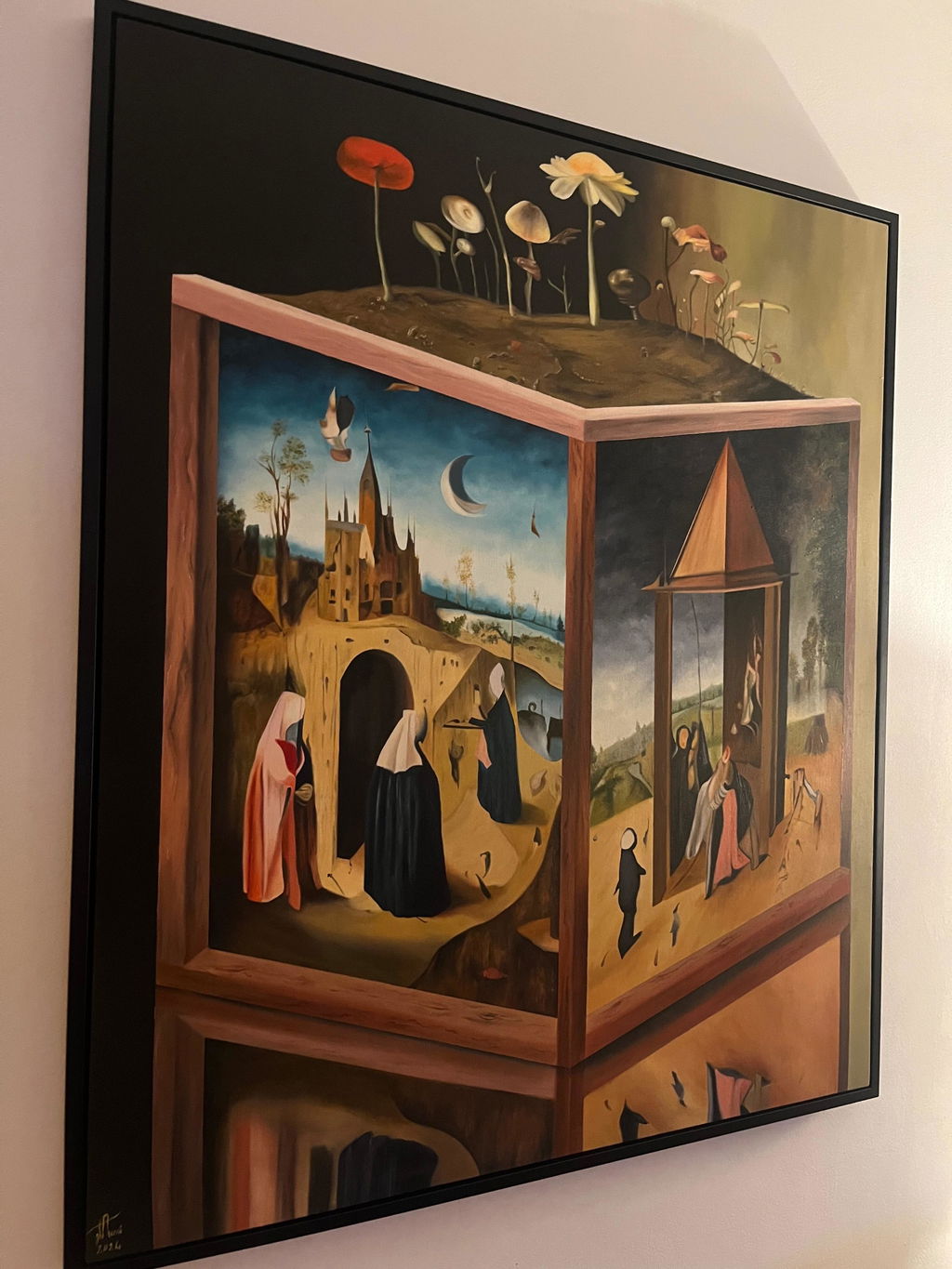
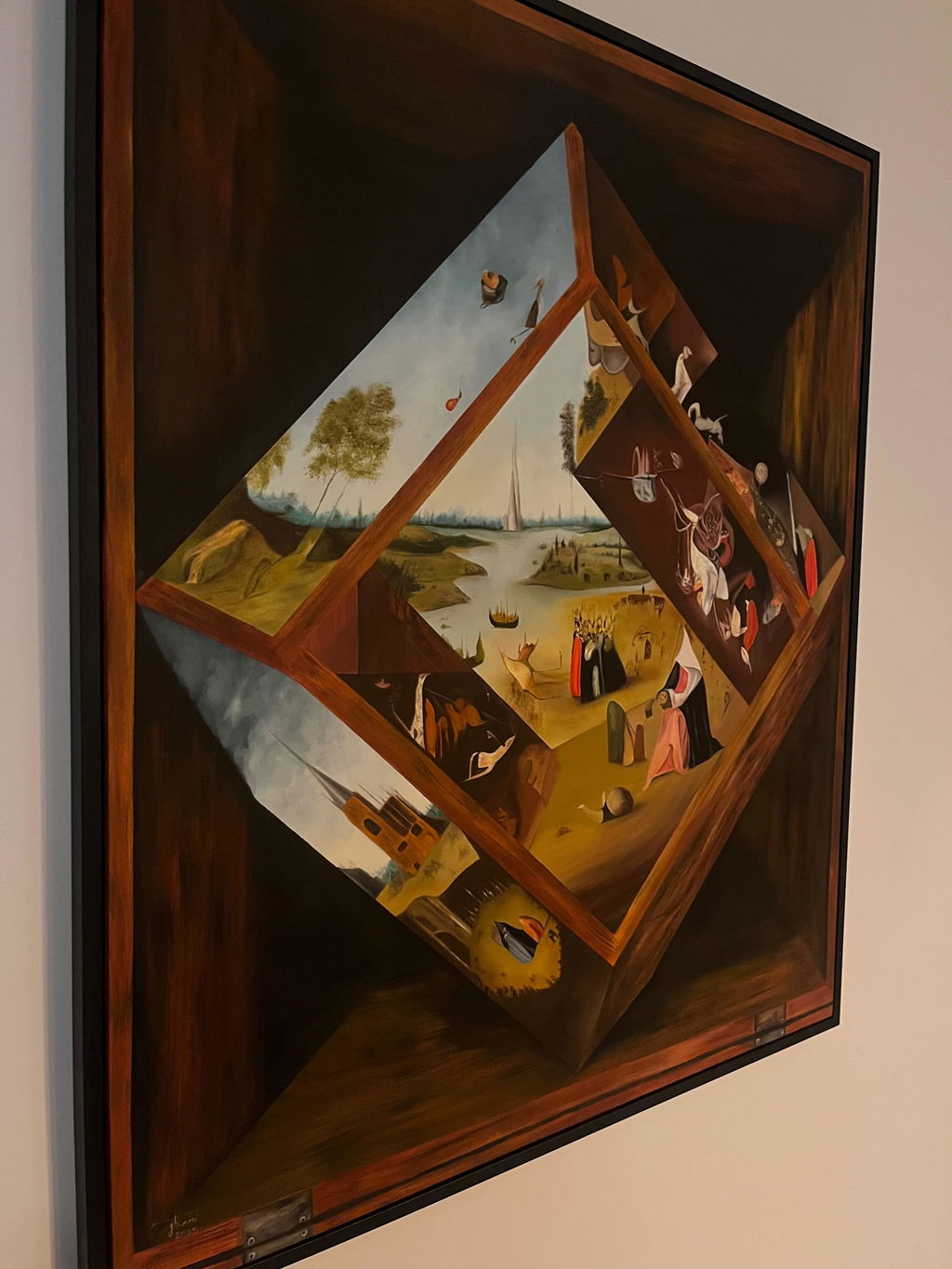
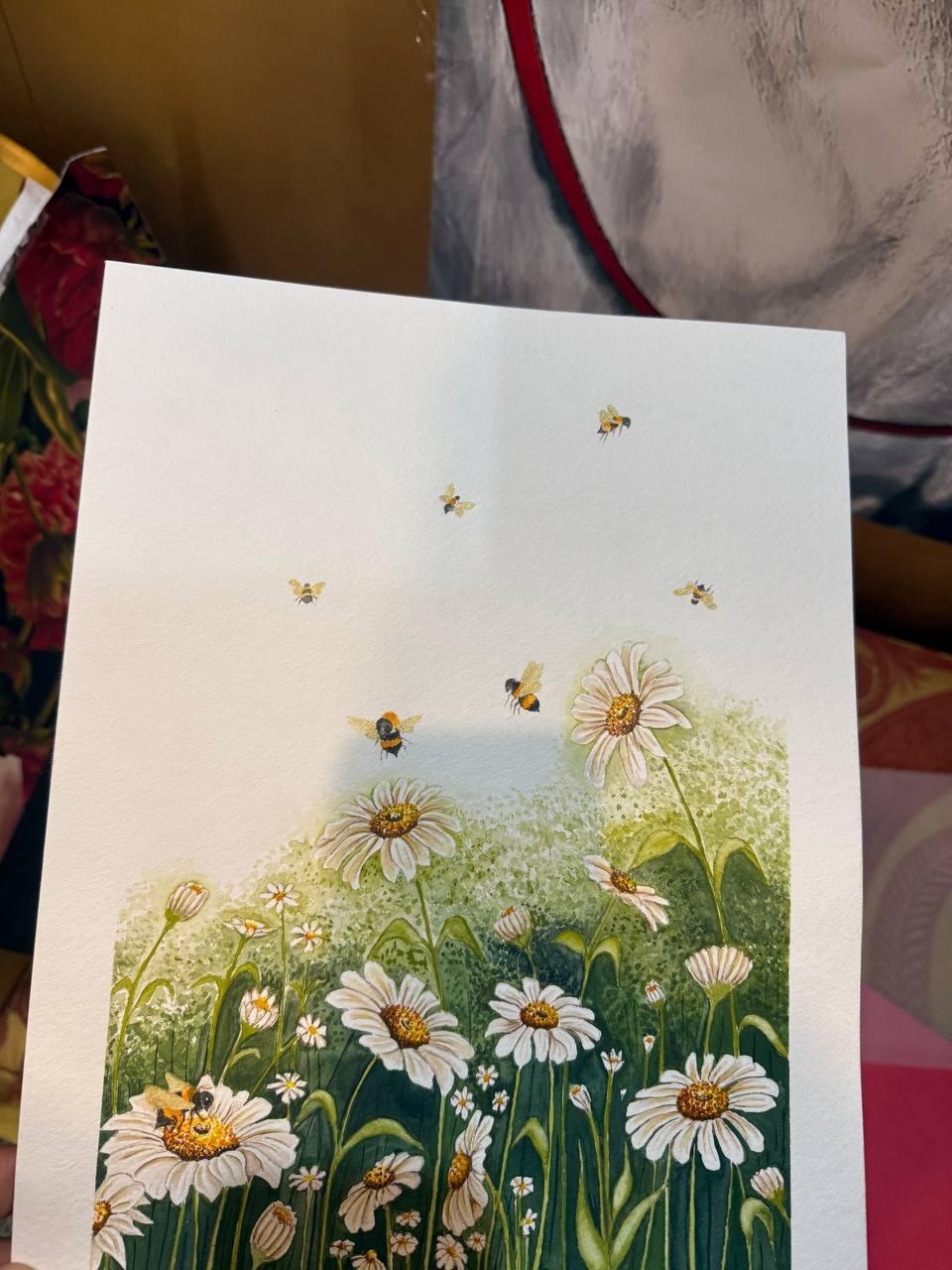
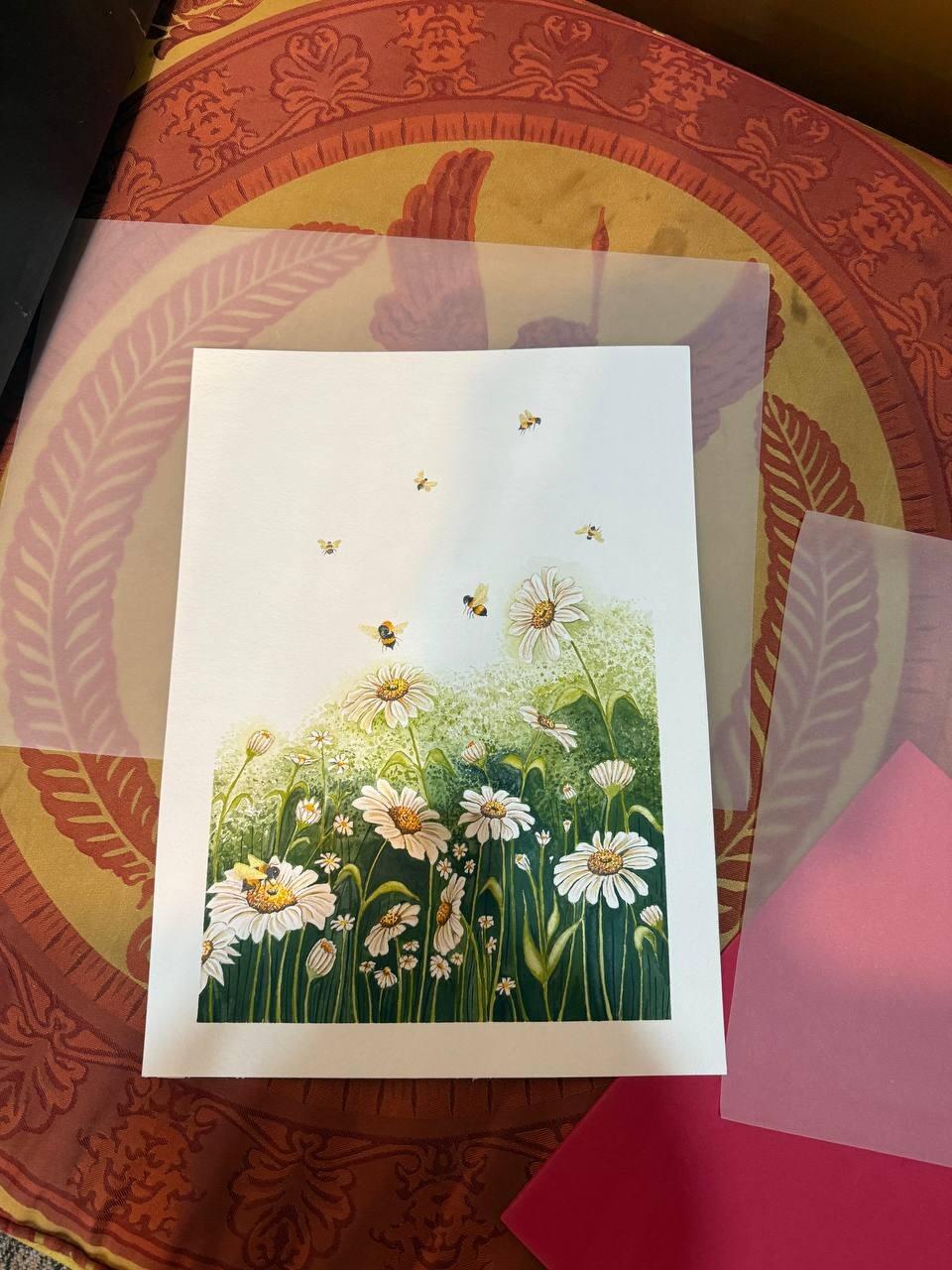
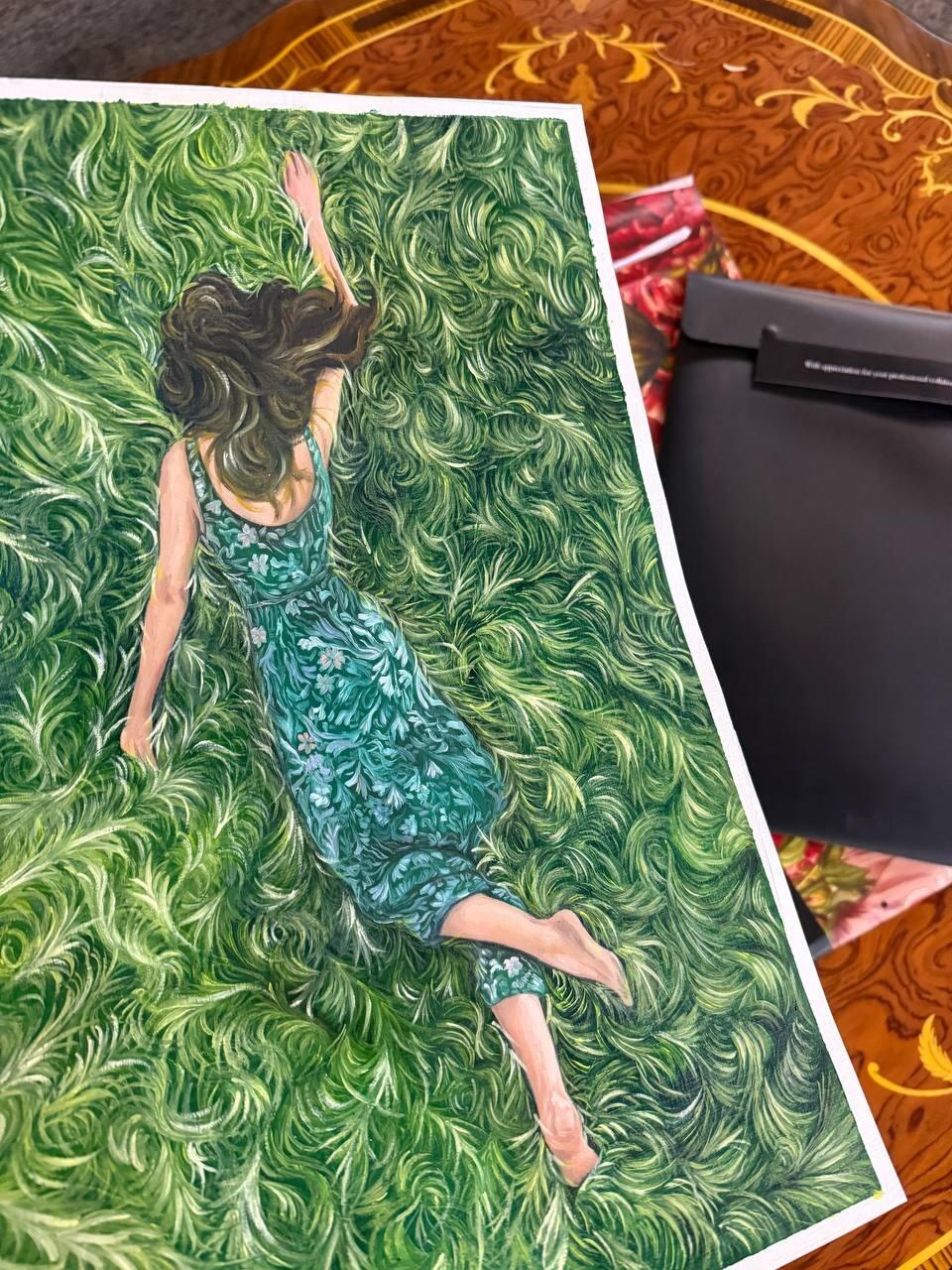
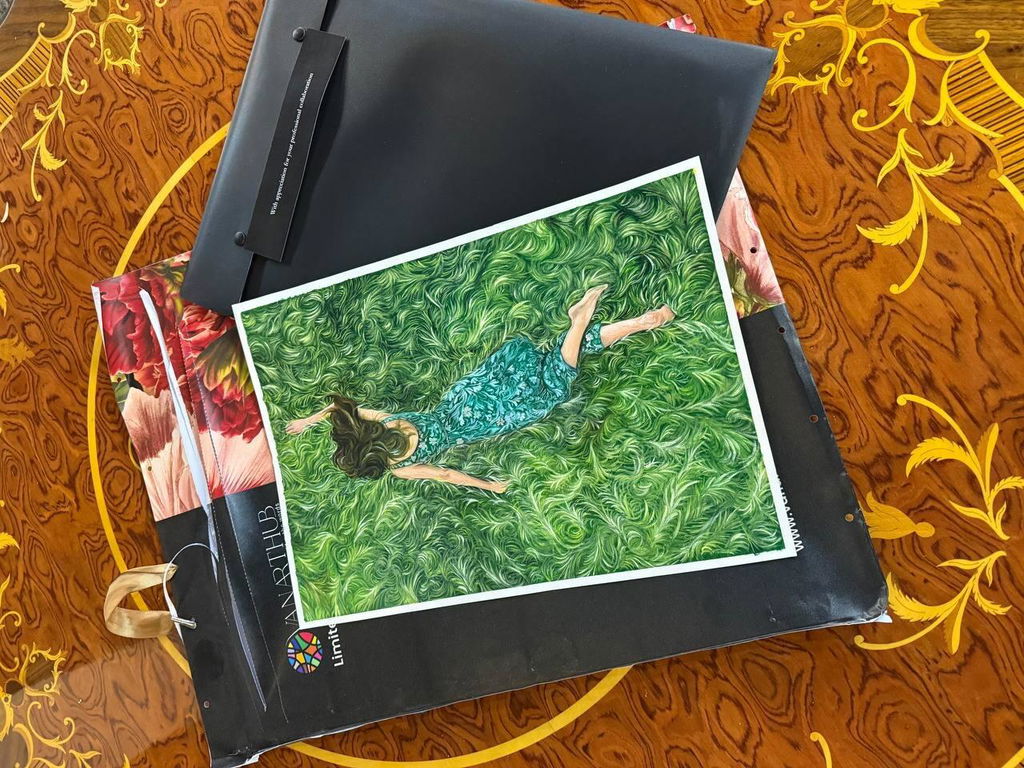
Small work is harder to frame than large work. A big painting has presence whatever you do; a small one has to be given it, and the framing is most of how that happens.
The mistake is nearly always the same: treating a small picture as a scaled-down version of a big one. Proportions do not scale linearly, and a border that looks generous on a large piece looks mean on a small one.
Give it far more space than seems reasonable
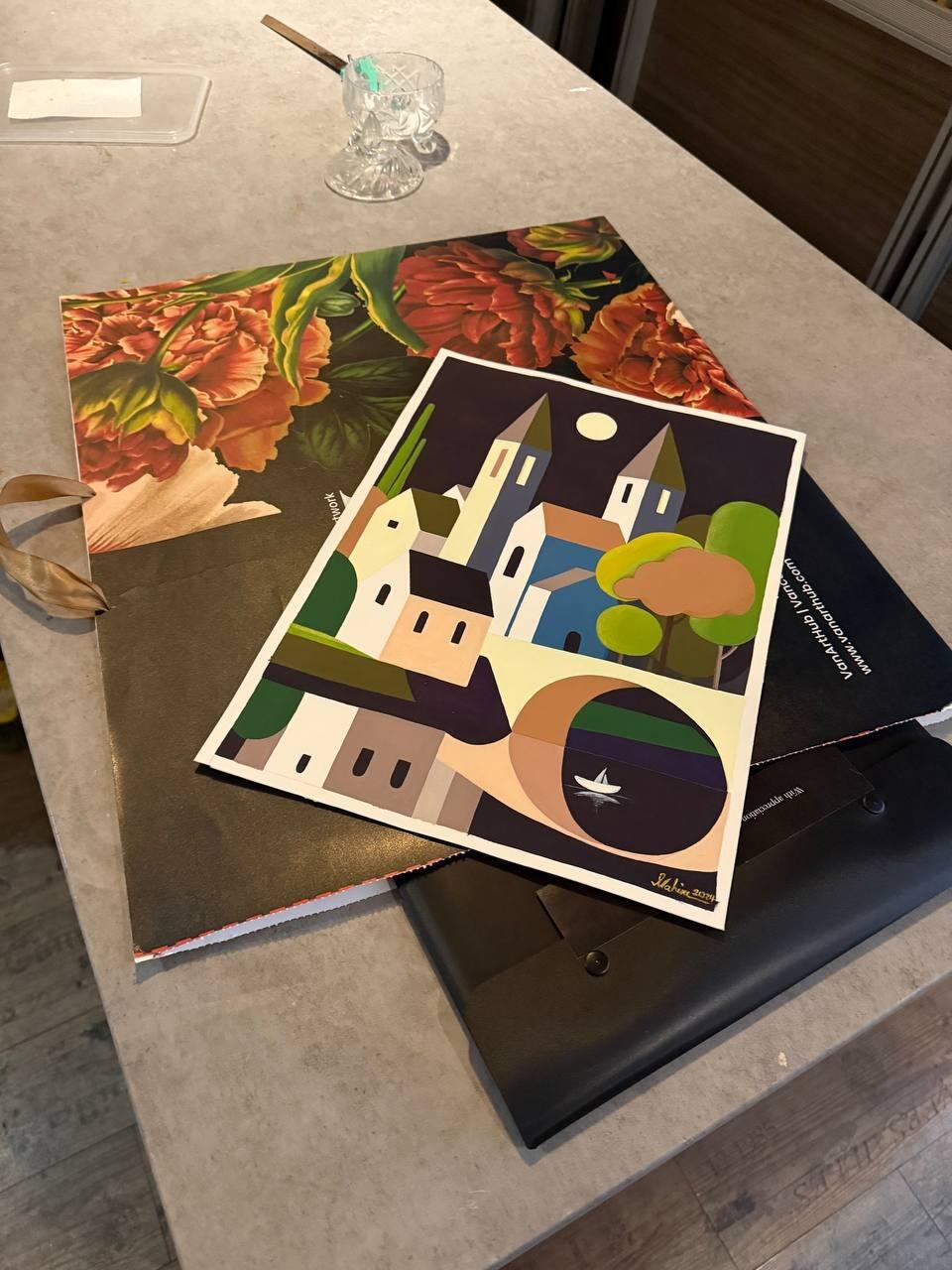
The single most effective thing you can do for a small work on paper is a wide mat. Not proportionally wide, absolutely wide.
A 150 by 200 mm drawing in a 25 mm mat looks like a greetings card. The same drawing in a 70 mm mat looks like something worth looking at. The border is now nearly half the width of the image, which sounds absurd and looks right.
What the space does is force a pause. It separates the work from the wall and tells the eye that this small thing is the subject, not an incidental object.
Our coloured pencil pieces sit in exactly this territory. A work like Fiery Echo is intimate and rewards close looking, and a generous mat is what gives it the room to do that.
Keep the frame narrow
Wide mat, narrow frame. That is the combination.
A wide moulding on a small picture crowds it and makes the whole object read as a frame that happens to contain something. A narrow profile lets the mat do the work. On a small piece, a moulding around 15 to 25 mm is usually right, and the mat should still be wider than that. See mat border width guide.
Where to hang it
This is where small work most often fails, and it is not a framing problem at all.
Do not put a small piece in the middle of a large empty wall. It looks lost, and no amount of matting rescues it. A small work needs a wall that is in proportion to it, or company.
Better places for one small piece:
- A narrow wall between two doors or windows.
- Above a small piece of furniture, so the furniture defines the space.
- In a corridor, where you pass it closely and the viewing distance is short.
- At the end of a bookshelf, or in an alcove.
- Somewhere you sit: beside a chair, at desk height. Small work rewards proximity.
Hang it slightly lower than you would a large piece. The usual guidance puts the centre at about 145 to 150 cm, which suits work you view from across a room. A small piece is viewed from close up, and 140 cm often sits better.
Small work in groups
Several small pieces together solve the empty wall problem completely, because the group behaves as one large object while each piece stays intimate.
Two things make a group work: consistent framing and tight, even spacing. Gaps of 50 to 80 mm between frames read as one composition. Push the gaps out to 150 mm and it becomes several separate pictures that happen to be near each other. See gallery wall frame sizing.
A useful approach: mat several different small works to the same outer size, in the same frame, with the borders varying to suit each image. From a distance it is a clean grid; up close each piece has its own proportions.
Small canvases
Different problem. There is no mat to give it space, so a small canvas hung bare on a big wall has nothing helping it at all. A floater frame adds a defined edge, which helps a little. Grouping helps far more.
Framing one small piece as a standalone statement
A small painting does not have to hide inside a group to hold a wall. Hung alone, it works on a different logic than a grouped arrangement: instead of leaning on the pieces around it for visual weight, it uses empty wall space as part of the composition.
The frame does more work here than it does in a group. A wider mat than you would use in a cluster, often 100 mm or more of border even on a modest 200 mm canvas, gives the eye somewhere to land before it reaches the image, which reads as intentional rather than sparse. A narrow frame with a generous mat around a small piece looks considered; a small frame with a thin mat on a large blank wall looks like an afterthought that got lost.
Placement carries more weight for a solo small piece than it does in a cluster, since there is nothing nearby to anchor it visually. Hang it at a genuine focal point, centred over a console table, on its own section of wall between two doorways, or as the single piece above a reading chair, rather than in the middle of an otherwise unbroken wall where it has no relationship to anything around it. A small piece with real presence on its own is usually one with a strong, simple composition and enough colour contrast to hold attention from across the room, since detail that only reads up close is wasted on a piece hung to be seen from a distance.
Common questions
Can a small painting go above a sofa?
Alone, no. A sofa is a wide horizontal object and a single small picture above it looks stranded. Either use a group of small pieces spanning roughly two thirds of the sofa width, or put one larger piece there and hang the small one somewhere it can be seen closely.
Is a wide mat expensive on a small piece?
It costs a little more, because the outer dimensions grow and so do the glass and the moulding run. On a small piece the absolute numbers are still low, and it is the best value change you can make. Widening the border costs less than upgrading the moulding and does more.
Should small pieces have thin frames in a group?
Yes. In a group the frames repeat, so any weight in the moulding multiplies. Narrow profiles keep a group of small works feeling like a set of images rather than a wall of frames.
What counts as a small painting for framing purposes?
Roughly anything under about 30 by 40 cm, where the frame's proportions start mattering more than on a larger piece, since a small error in mat width or moulding depth is far more visible relative to the size of the artwork itself. Below about 20 cm on a side, we treat proportions especially carefully.
Does a small painting need less glazing protection than a large one?
No, the same standards apply regardless of size. A small work on paper gets the same UV-filtering glazing and acid-free mat as a large one, since size does not change how light or acid affects the paper. What changes with size is mainly cost, since a smaller sheet of glazing costs less.
How many small pieces can hang together as one group?
There is no fixed limit, but a group of three to seven is the most common range for a cohesive cluster, since much beyond that it tends to split visually into sub-groups whether you intend it to or not. See gallery wall frame sizing for spacing between pieces.
Can a small canvas take a floater frame?
Yes, though the gap should be scaled down from what looks right on a large canvas. A gap that suits a metre-wide painting can look oversized around a 20 cm one. We adjust the gap and the profile width together so the frame stays in proportion to the piece.
Should a small painting be hung at the same eye-level height as a large one?
Generally yes, around 145 to 150 cm to the centre of the piece, the same guideline used for larger work and for groups. Size does not change where the eye naturally expects to find art on a wall; what changes with a small piece is how close a viewer needs to stand to appreciate it.