A mountain does not sit quietly on a wall the way a calm lake does. It rises, it looms, and it pulls your eye up toward snow and thin blue air. That is the whole appeal, and it is also the thing most people get wrong when they buy one. This page is our guide to buying an original Canadian mountain painting at VanArtHub: what the subject really means, why the tall vertical format changes where it can hang, how to size it, and what it costs.
Every mountain painting we sell is an original, painted by hand by an artist based in Vancouver and signed on the front. No prints, no reproductions. If you would rather look before you read, the full set lives in our Canadian mountain and landscape paintings collection.
What makes a painting a Canadian mountain painting?
A Canadian mountain painting is an original artwork of real Canadian peaks, made by an artist living and working in Canada. Our Vancouver painters know two very different mountains first-hand. There are the coastal ranges that drop straight into the sea, wet and grey-green with cloud caught on the ridgeline. And there are the sharper interior peaks, drier and higher, where the rock is bare and the snow holds a hard white edge against a deep sky. A good mountain painting shows you which one it is. You can read the altitude in the light and the thinness of the air the artist paints.
The honest part: our artists are contemporary painters, not the historical names in a national museum. What you get is a living artist's current work at a price a normal person can pay, signed on the canvas, with their name on the Certificate of Authenticity.
Why a mountain scene works where a flat landscape cannot
Mountains give you depth and height, and those are two different gifts. Depth comes from the layering: a dark ridge in front, a paler one behind it, then a faint blue peak that seems to sit miles away. That recession makes a small wall feel like it opens onto a valley. Height comes from the vertical shape many mountain paintings take, and that is the real reason to buy one. A tall painting fills space a wide landscape leaves empty. It is the piece that finally works on a narrow wall beside a doorway, in a two-storey stairwell where the wall runs up past the landing, or on a high wall above a tall bookcase.
How to choose and size a mountain painting
Size for the wall first, then fall in love with the specific peak. With mountains the trick is to match the format to the shape of the space, not only the width of the furniture. A tall wall wants a vertical, or portrait, canvas. A long low wall over a sofa can still take a mountain, but look for a wide, horizontal composition so the range spreads across instead of getting cut off. When you are unsure between two sizes, go larger: a mountain that is too small reads as timid, and scale is half of what makes the subject feel like a real place. The table below is where we point first-time buyers.
| Where it hangs |
Format and size to aim for |
Typical price at VanArtHub |
| A stairwell or a high two-storey wall |
Tall vertical, about 100 to 150 cm high |
About $900 to $3,000 |
| Above a sofa or bed (wide range view) |
Horizontal, about 90 to 150 cm wide, or a pair |
About $700 to $2,500 |
| A narrow wall beside a door or window |
Slim vertical, about 40 to 70 cm high |
About $200 to $700 |
| A nook, landing, or gallery-wall group |
Up to about 40 cm each |
About $531 to $700 |
Use these as planning figures. Every listing shows its own exact size and price. If you want the full method, read our guide on how to buy original art.
Reading the light: altitude and atmosphere
The best mountain paintings get the atmosphere right, and that is worth learning to look for. High peaks sit in thinner air, so the light is cooler, shadows on snow turn faintly blue, and far ridges fade to a soft haze the higher and further they go. Painters call that fade atmospheric perspective, and it is what separates a mountain that feels tall from one that looks like a green hill. When you view a piece, check the top third: crisp cold light and a hint of blue in the snow shadows tell you the artist understood the altitude. Warm even light everywhere usually means a lower, closer scene, which can be lovely too, just calmer.
Oil or acrylic for a mountain scene?
Both are real originals and both last for generations when cared for. Oil dries slowly, which suits the soft haze of distant peaks and the gradual blend from rock to snow to sky. Acrylic dries fast and gives crisp edges and strong contrast, which can make bare rock and hard snow lines snap. For a coastal, cloudy range, oil often wins. For a sharp sunlit alpine face, acrylic can be striking. Choose the individual painting you respond to, not the medium in theory.
Key things to remember
- A Canadian mountain painting at VanArtHub is an original, signed work by a Vancouver artist, never a print.
- Tall vertical formats are the reason to buy a mountain: they finally fill stairwells, high walls, and narrow spaces beside doors.
- Match the format to the wall shape first, vertical for height and horizontal for a wide range, then choose the peak.
- Look for cool light and blue snow-shadows in the top third: that is what makes a mountain read as tall and far.
- Prices run from about $531 for small originals to several thousand for large statement canvases, all shipped free and insured with a 14-day trial.
Frequently asked questions
Where can I buy an original Canadian mountain painting online?
VanArtHub sells original, signed Canadian mountain paintings by independent Vancouver artists, shipped free and fully insured across Canada and the USA. Every piece is a one-of-a-kind painting with a Certificate of Authenticity, and each order includes a 14-day trial for a full refund if the piece is not right for your space.
Should a mountain painting be vertical or horizontal?
Match the shape to the wall. A tall vertical, or portrait, canvas suits a stairwell, a high wall, or a narrow space beside a door, and it plays up the height of the peak. A wide horizontal canvas suits a sofa or a long low wall and spreads the whole range across. Buy the format that fits the space, then choose the scene.
What is the best mountain painting for a stairwell or high wall?
A tall vertical canvas, usually about 100 to 150 cm high, is the right call for a stairwell or a two-storey wall. The height fills the space a wide landscape would leave empty, and the upward rise of the peak matches the rise of the stairs. Hang it so the middle of the painting sits near eye level from the landing.
How much does an original mountain painting cost?
At VanArtHub, original mountain paintings start at about $531 for small works and reach several thousand dollars for large statement canvases. Size and format drive the price more than the artist's fame, so a tall vertical original can cost less than a mass-produced print made to fill the same wall.
Are these real paintings or prints?
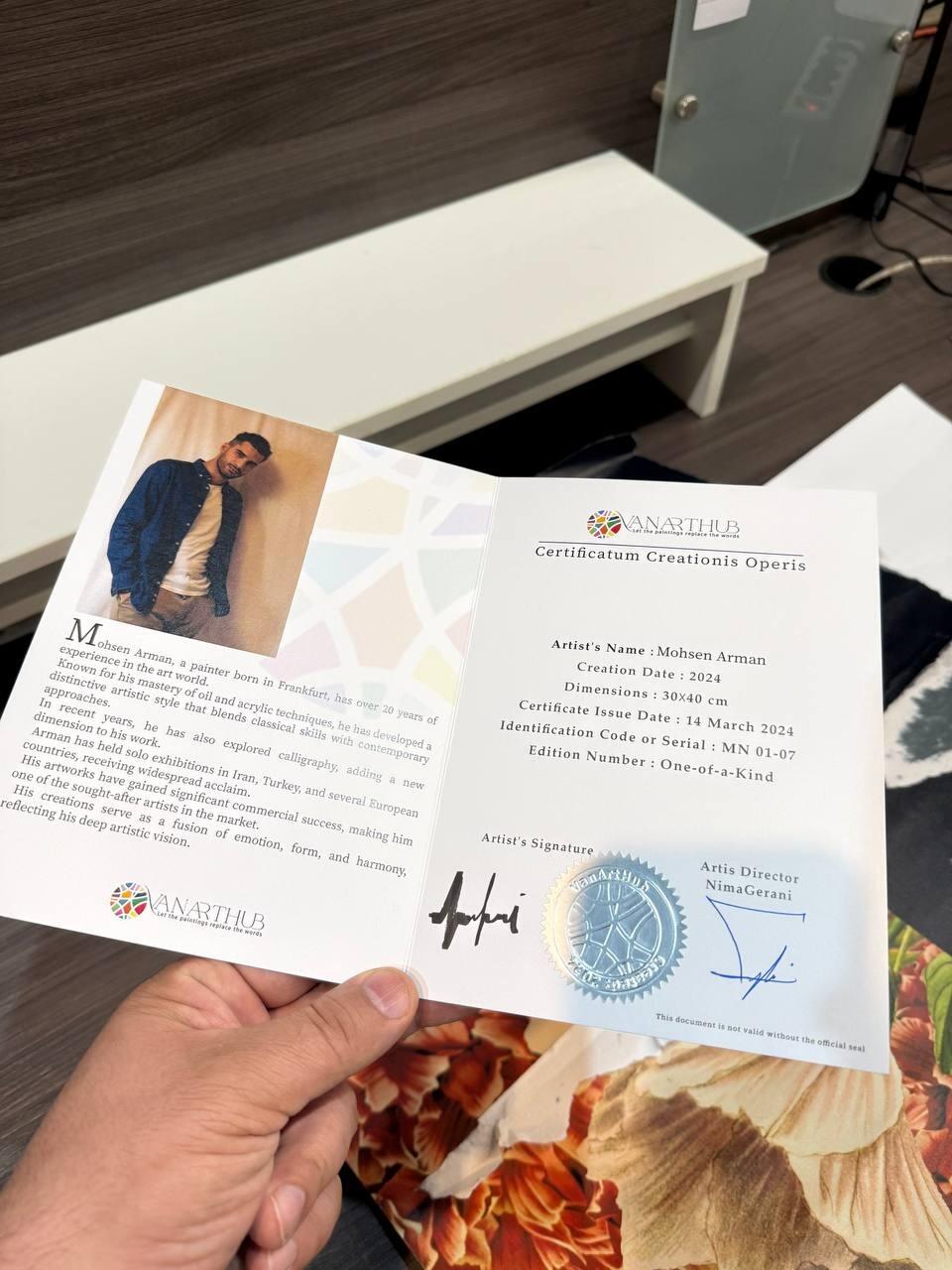
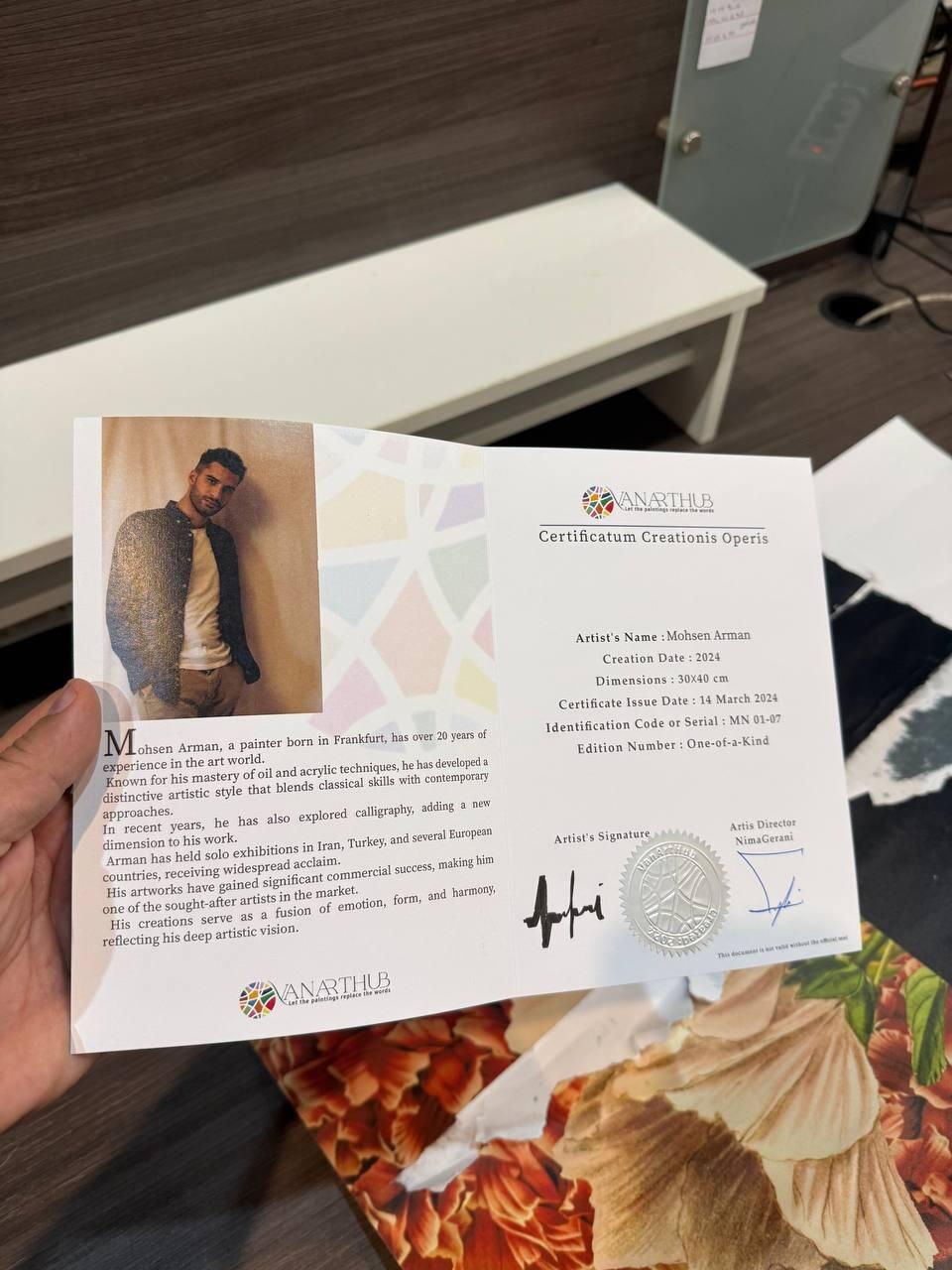
They are real originals. Every mountain painting we sell is painted by hand and signed by the artist. We do not sell prints, posters, or reproductions. Each piece ships with a Certificate of Authenticity naming the artist, title, medium, and size, so the paperwork matches the painting.
Can I commission a painting of a specific peak?
Often, yes. Many of our Vancouver artists take commissions for a particular mountain, whether it is a coastal range or a favourite interior peak, at the size and format your wall needs. A custom mountain painting usually takes about 3 to 6 weeks depending on scale. Send us the location, the wall size, and the feeling you want.
Ready to look? Browse the full Canadian mountain and landscape paintings collection, compare it with our Canadian landscape paintings and Canadian forest paintings pages, or return to the Canadian art hub for the complete buying guide.