To tell if a painting is real, examine the surface in raking light for physical brush texture, check the reverse for stretcher bars and age-consistent labels, and ask the seller to name where the work came from. Those three checks cost nothing, take about ten minutes, and settle the question on the large majority of paintings offered for sale. Everything beyond them, including laboratory analysis, exists for the small number of contested cases where real money turns on an attribution.
This page walks through those checks in the order a careful buyer should run them. The order is deliberate. Each step is cheaper than the one after it, and each one can end the enquiry on its own. There is no sense paying a conservator to analyse pigment on a painting whose seller cannot say who owned it last.
Key takeaways
- An original painting has physical relief. A printed reproduction does not, and a magnifier shows its regular dot pattern.
- The back of a painting is harder to fake than the front, and it is where most inconsistencies show up.
- A signature is the easiest part of a painting to copy, so a matching signature is neutral evidence rather than confirmation.
- Buying from the artist or the gallery that represents them removes almost all of this risk, because you become the first owner of record.
Step 1: ask where the painting came from
Before looking at the object, ask the seller a plain question: who owned this before you, and how did you get it? A gallery selling work by a living artist it represents can answer in one sentence. An auction house can point to the consignment. A private seller should be able to describe a purchase, an inheritance, or an estate.
An answer that is vague, that changes, or that arrives with reluctance is itself information. It does not prove the painting is fake. It does mean the ownership record has a gap, and a gap is exactly where a substituted or misattributed work enters the market. Where the answer is clean, the rest of the checks usually confirm what you already suspect.
Step 2: look at the surface in raking light
Take the painting to a window or hold a lamp so the light strikes the surface at a shallow angle, almost parallel to it. This is called raking light, and it is the single most useful test available to a person with no equipment.
An original painting reveals itself immediately under raking light. You see the ridges where a loaded brush dragged paint, the small peaks left by stiff bristles, the places where the artist scraped back, and the uneven gloss of varnish that settled differently over thick and thin passages. The canvas weave shows through wherever the paint was applied thinly.
A reproduction printed on canvas shows none of this. The surface is uniformly flat, and any apparent texture is either the machine-made texture of the canvas itself or a clear gel applied evenly over the whole image. Under a jeweller's loupe or a phone camera at maximum zoom, a print resolves into a regular grid of dots. Paint does not do this: it is continuous.
Step 3: examine the back
Turn the painting around. Sellers stage the front, and forgers work on the front, because that is what buyers look at. The back is where a painting keeps its history, and it is much harder to fabricate convincingly.
On a stretched canvas, look at the stretcher bars: their construction, whether the wood has aged and darkened evenly, whether the keys in the corners are present, and whether the tacking edges show paint that ran over from the front while the artist worked. Look for labels from galleries, exhibitions, framers and shippers. Note whether their apparent age is consistent with the claimed date of the work.
The inconsistencies that turn up here are usually simple. A back that is noticeably newer than the front. A modern staple in a canvas said to be a century old. An exhibition label for a show that can be checked and did not include that work.
Step 4: read the signature, but do not lean on it
Compare the signature against signatures on documented works by the same artist, which museum collection records and auction archives often publish. Look at how the letters are formed, where the signature sits, and what it was made with.
Then discount the result. A signature is a few seconds of work on a surface anyone can practise, which makes it the least reliable element on the painting. A signature that matches tells you almost nothing on its own. A signature that clearly does not match is a genuine warning, so the test is worth running for its negative result rather than its positive one.
Step 5: read the paperwork critically
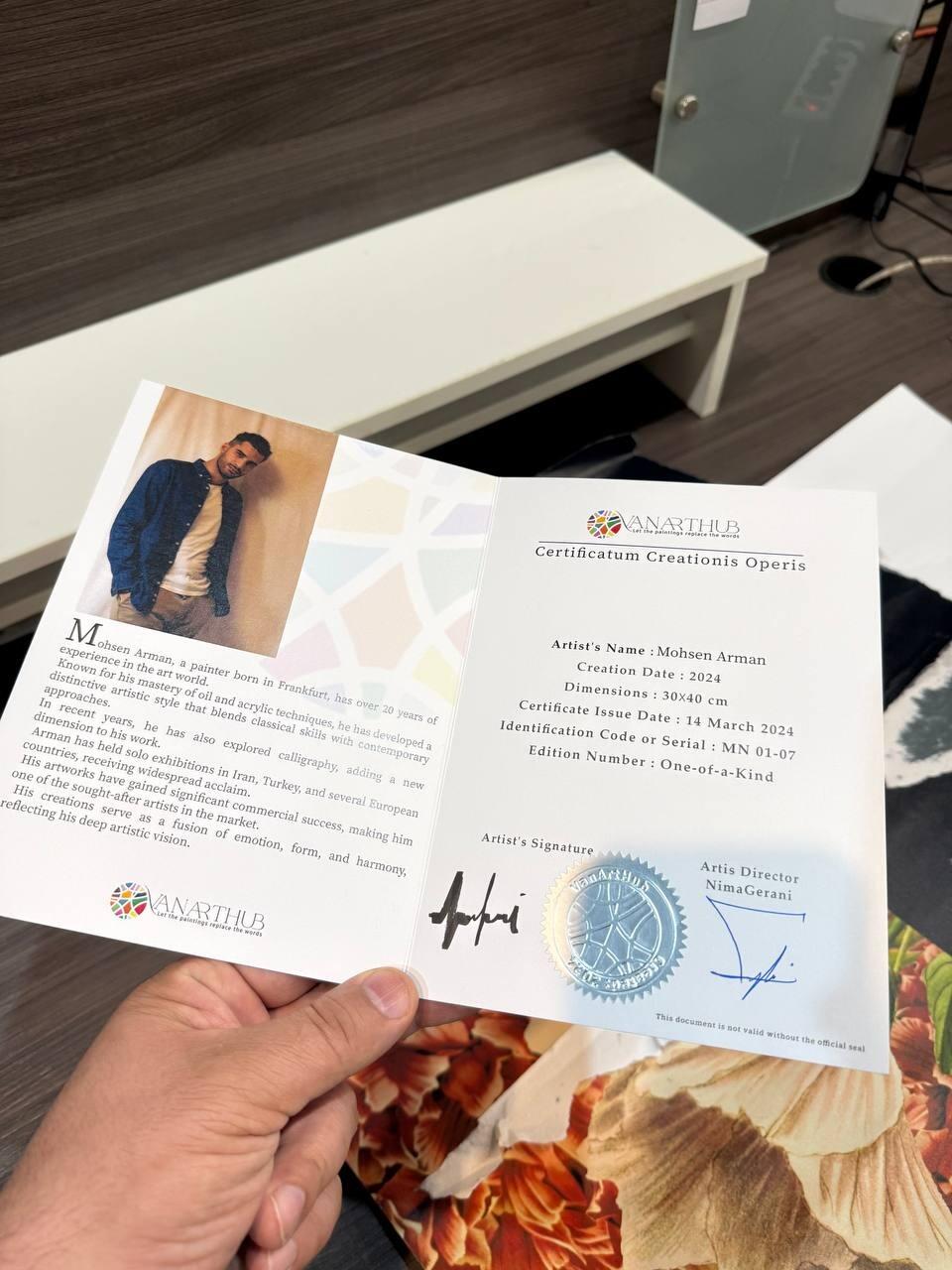
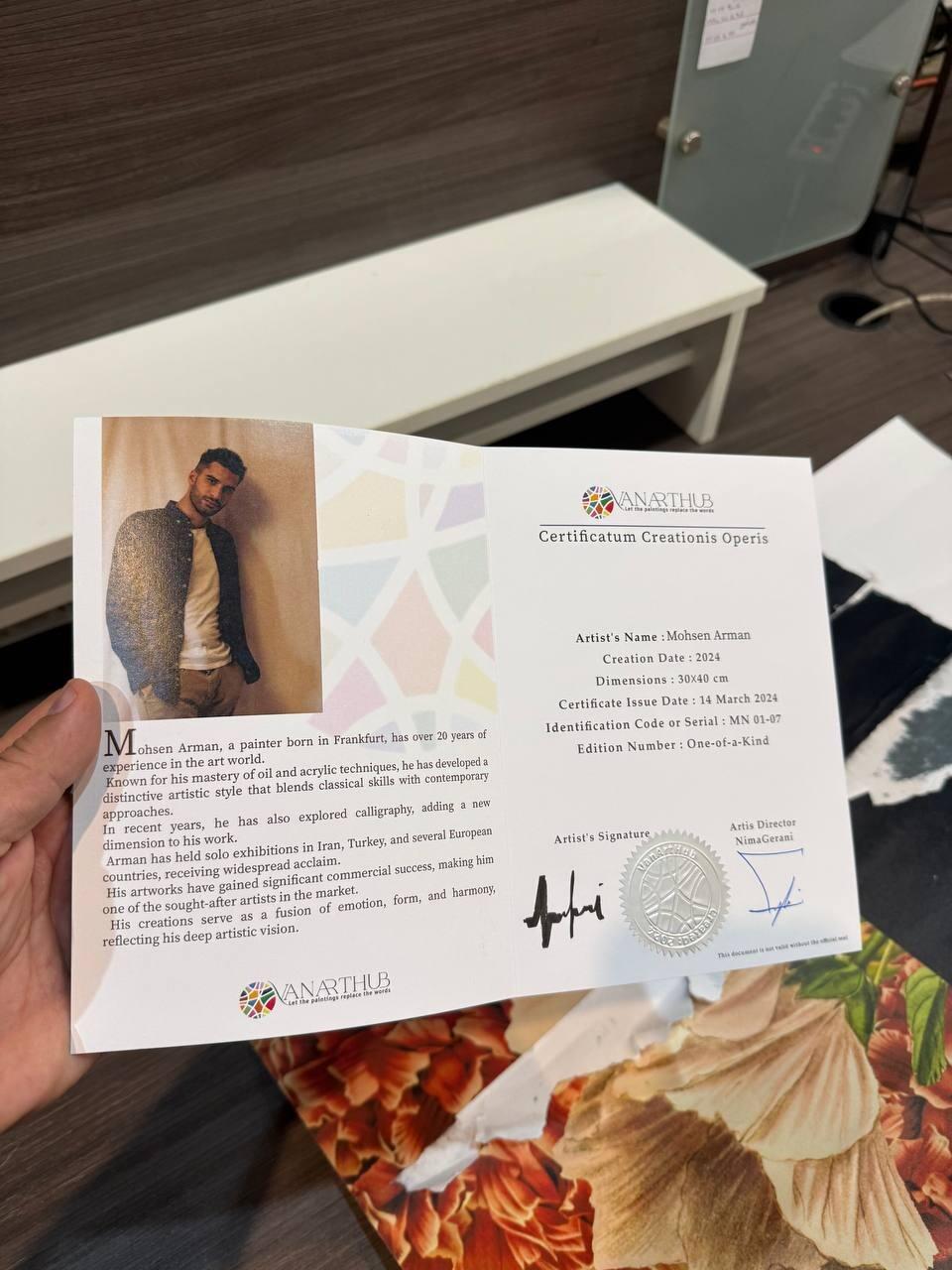
If a certificate of authenticity comes with the work, ask who signed it and whether that person can still be contacted. A certificate signed by the living artist, or by the gallery that sold the work new, is meaningful. A certificate with no signature, or one issued by a party with no connection to the artist, adds nothing at all. This is covered in detail on our page about what a certificate of authenticity actually proves.
Invoices, letters and exhibition catalogues are frequently stronger evidence than the certificate itself, because they were created for another purpose at the time rather than produced later to support a sale. Together these documents form the work's provenance.
Step 6: escalate only if it still matters
If value is significant and doubt remains after all of the above, the next step is a paid expert. A conservator can examine the painting under ultraviolet light to reveal retouching, and can analyse the materials to check whether any pigment used was available in the claimed period. Some artists have foundations or catalogue raisonné committees that rule on attribution.
This is genuinely expensive, and for a painting in the range most people buy it will cost a meaningful fraction of the work's value. That is why it sits at the end of the list rather than the start.
How buying new removes most of this
Everything above exists because the secondary market moves paintings between owners, and each transfer is a chance for the record to break. Buying a new work directly from the artist, or from the gallery that represents them, collapses the problem. There is no prior owner to trace, no attribution to contest, and the person who made the painting can confirm it.
That is the position a VanArtHub buyer is in. As of 5 September 2026 the gallery lists 148 original paintings, from $531 to $8,000 with a median of $1,265, all in Canadian dollars, every one a one-of-a-kind original by a named living artist working in or near Vancouver. There are no prints and no editions, so there is no edition number to verify. Each work ships with a signed Certificate of Authenticity recording the title, artist, medium, dimensions and year, and with 14 days to return it for a full refund with return shipping paid.
Frequently asked questions
How can you tell a painting from a canvas print at a glance?
Look across the surface at a shallow angle rather than straight at it. A painting catches light unevenly because the paint has physical height, so brushstrokes throw small shadows. A canvas print is flat and reflects light uniformly across the whole image. If a phone camera zoomed to maximum shows a regular grid of dots rather than continuous colour, the image was printed rather than painted.
Does a painting need a certificate to be real?
A painting does not need a certificate to be real, and many genuine works, particularly older ones, have never had one. Certificates became common practice relatively recently and are produced by galleries and artists rather than by any authority. The absence of a certificate is normal; what matters far more is whether the seller can account for where the painting came from.
Can I tell if a signature is forged by comparing it myself?
Comparing a signature against documented examples is worth doing, but treat only a mismatch as meaningful. A signature is a small, practised mark that a competent forger reproduces easily, so a match confirms very little. Handwriting comparison on artworks is a specialist discipline, and even experts treat signatures as supporting evidence rather than as the basis for an attribution.
What does ultraviolet light show on a painting?
Ultraviolet light causes varnish and paint of different ages to fluoresce differently, so areas that were retouched or overpainted later show up as dark patches against the older surface. It reveals restoration history rather than authenticity directly. A conservator uses it as one examination among several, because heavy retouching can conceal both damage and alteration.
Is buying original art online riskier than buying in person?
Buying original art online carries the same authenticity questions as buying in person, and the mitigation is the same: buy from a seller who can name the artist and account for the work's origin. What online buying does remove is the chance to examine the surface before paying, which is why a genuine return period matters. VanArtHub allows 14 days to return any piece for a full refund and pays the return shipping.
What is a catalogue raisonné?
A catalogue raisonné is a scholarly listing of every work an artist is known to have produced, compiled by specialists and usually published after the artist's death. Inclusion in one is strong evidence a work is genuine, and exclusion raises serious doubt. They exist only for artists significant enough to warrant the research, so most living and mid-career artists do not have one.
Should I be suspicious if a painting is priced far below market?
A price far below the going rate for an artist deserves an explanation, and often there is a legitimate one: a damaged work, an estate clearing quickly, or an early piece from before the artist was established. Ask directly why the price is what it is. A seller with a real reason will give it, and a reason that does not hold up is a signal to walk away.
Do galleries guarantee authenticity?
Reputable galleries stand behind what they sell, and many will refund a work later shown not to be by the stated artist, though the terms vary and are worth reading before buying. A gallery selling work by living artists it represents is making the simplest possible claim, because it acquired the painting from the person who made it. Ask what the gallery's policy is in writing.
How long do these checks take?
The three checks that matter most, examining the surface in raking light, looking at the back, and asking where the work came from, take about ten minutes between them and need no equipment beyond a lamp. Expert examination is a different matter, taking days to weeks and costing a meaningful sum, which is why it is reserved for cases where the value at stake justifies it.
What if the artist is still alive?
If the artist is alive, they are the highest authority on whether they made a given work, and many artists will confirm or deny a piece if contacted with clear photographs. This makes authenticity questions on contemporary art far simpler than on historical work. It is also the reason buying new from a living artist or their gallery carries so little authenticity risk.
Sources and references
Each link was opened and confirmed to resolve on 5 September 2026.
-
Condition Reporting, Paintings. Part II: Examination Techniques and a Checklist, CCI Notes 10/7. Canadian Conservation Institute, Government of Canada. Accessed 5 September 2026. Source for the examination techniques described, including raking light and ultraviolet examination.
-
Condition Reporting, Paintings. Part I: Introduction, CCI Notes 10/6. Canadian Conservation Institute, Government of Canada. Accessed 5 September 2026.
- VanArtHub catalogue figures (148 active originals, $531 to $8,000, median $1,265, Canadian dollars) counted directly from the store's own product records on 5 September 2026. These change whenever inventory changes.
Descriptions of gallery certificate practice on this page reflect common practice and our own, not a published standard from any issuing authority, because no such standard exists.