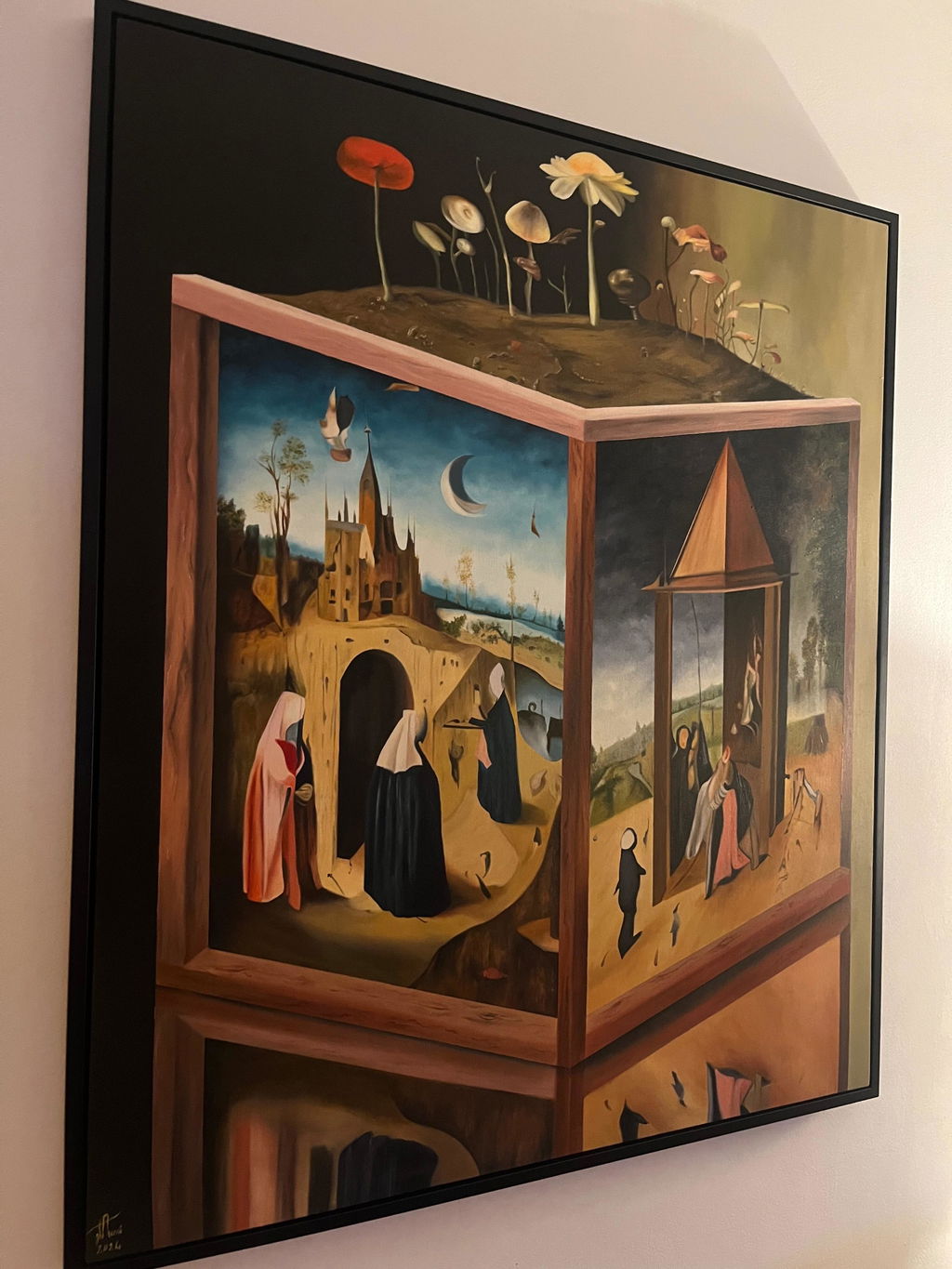
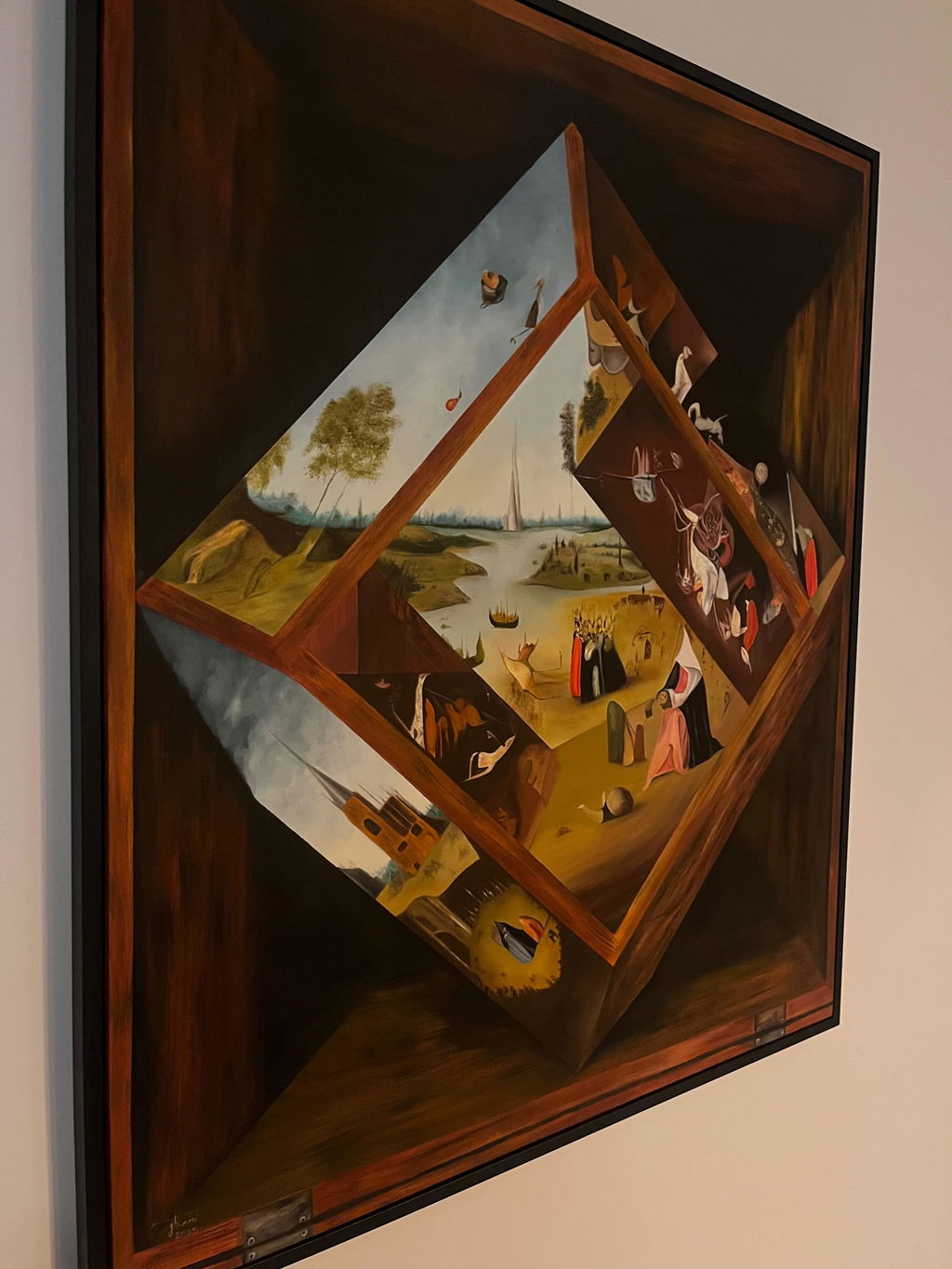
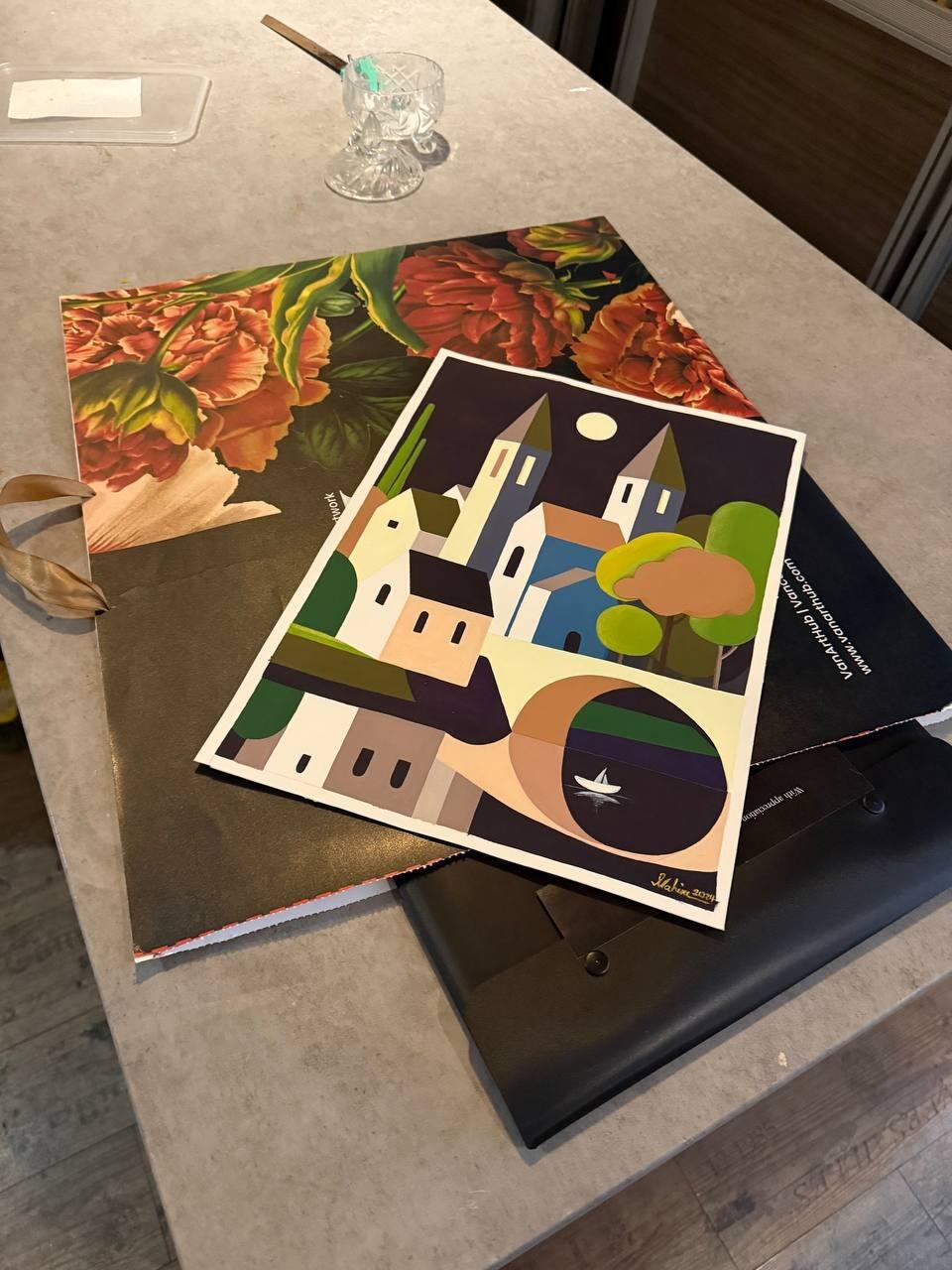
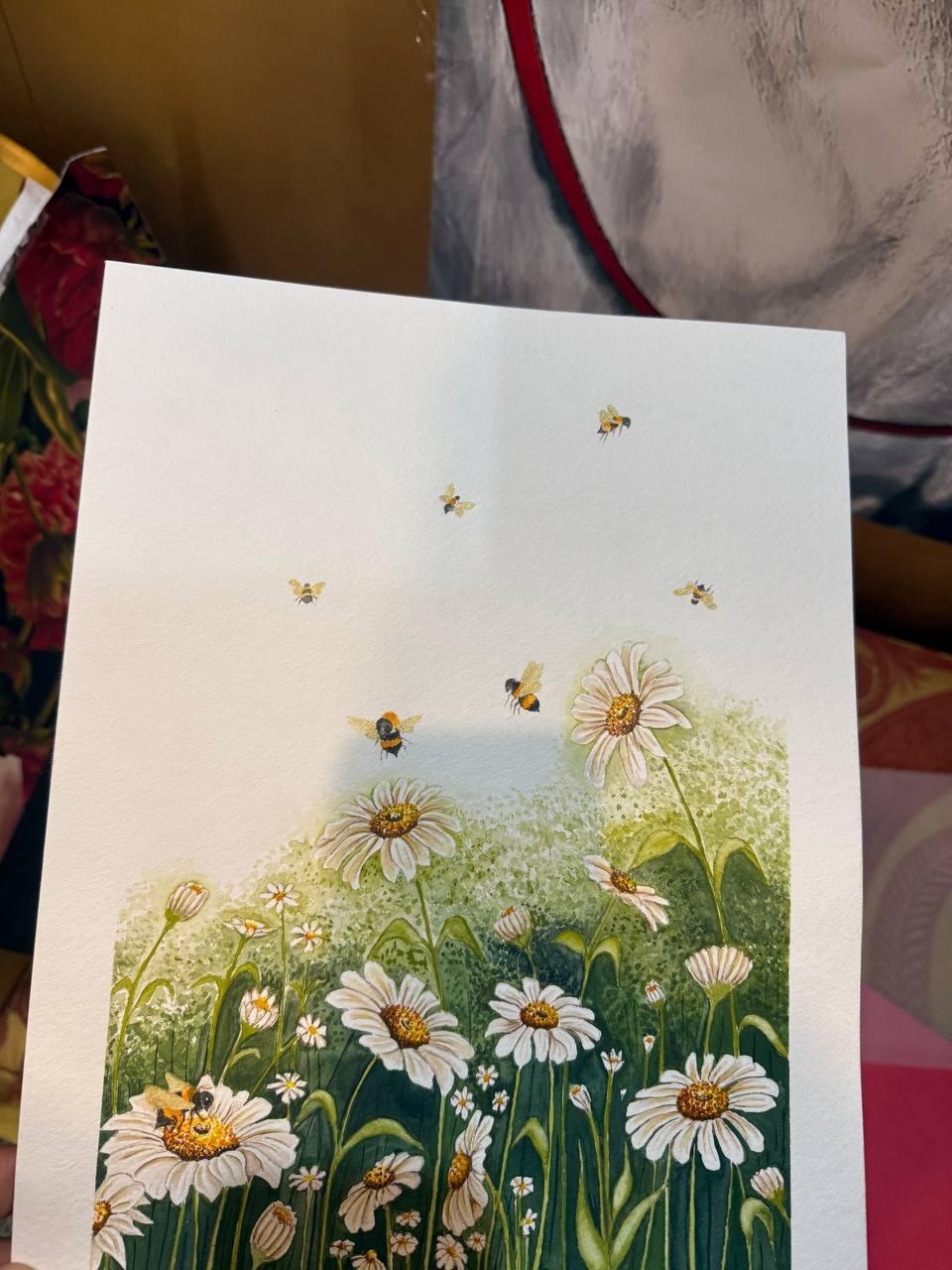
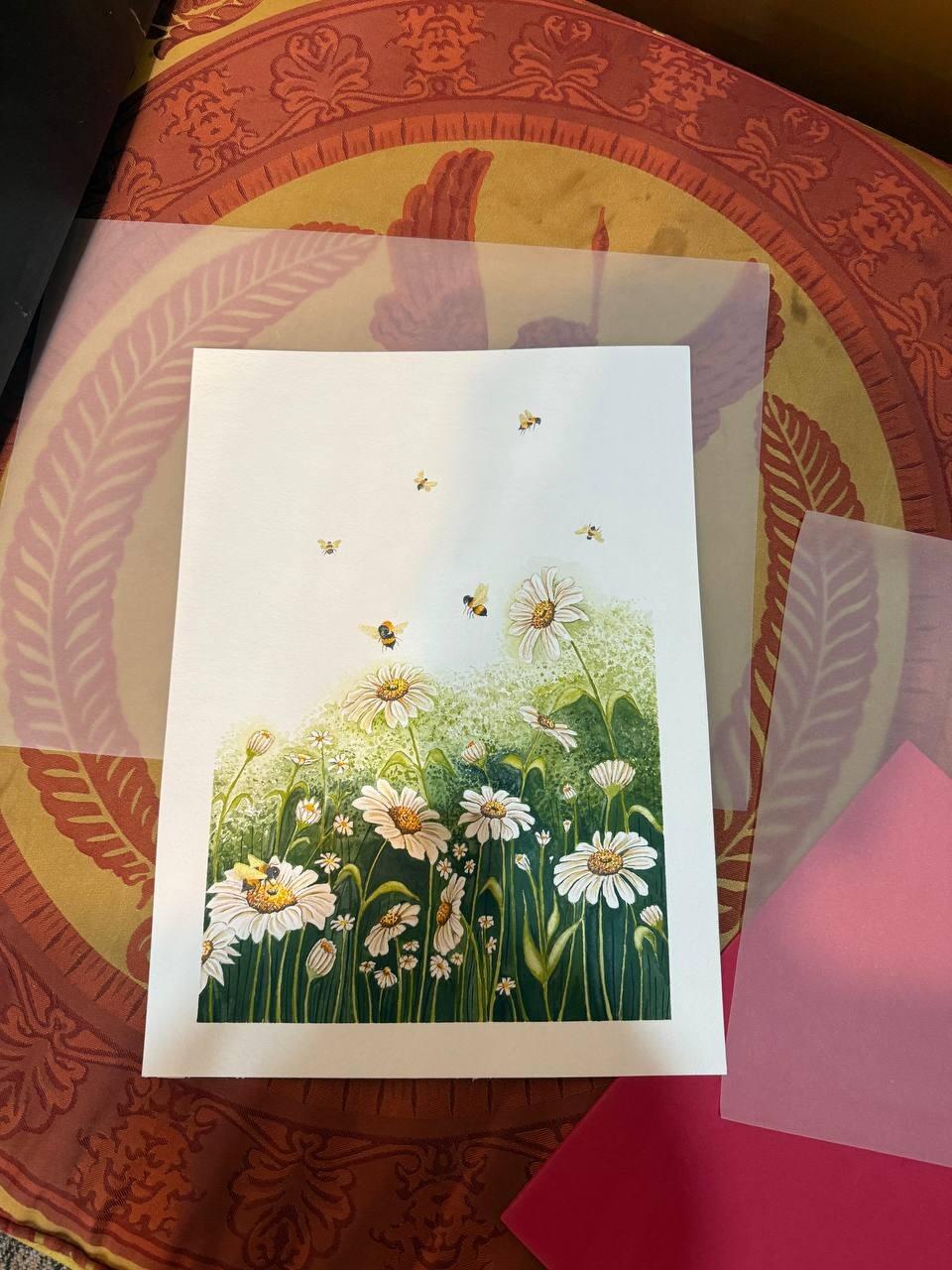
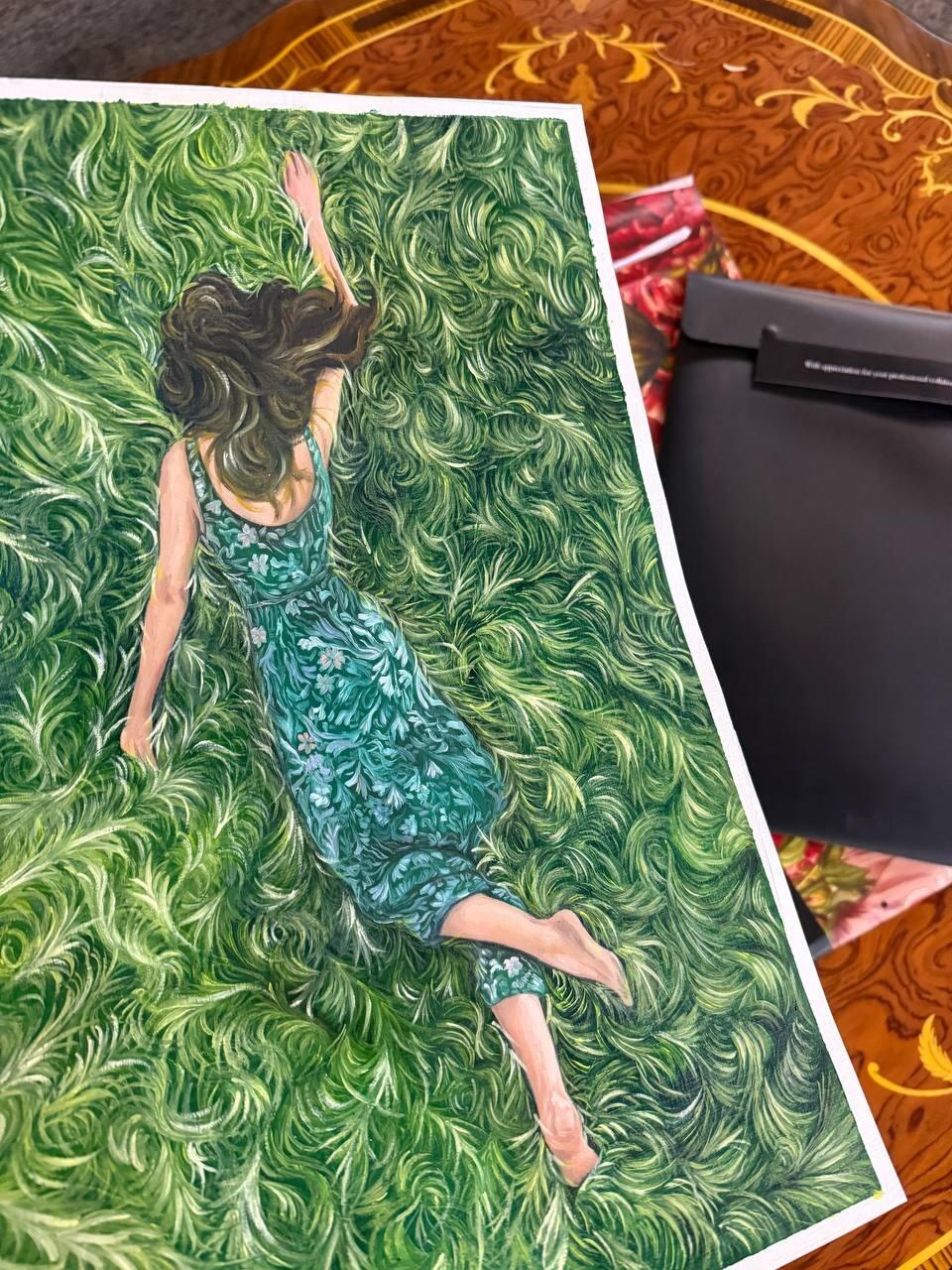
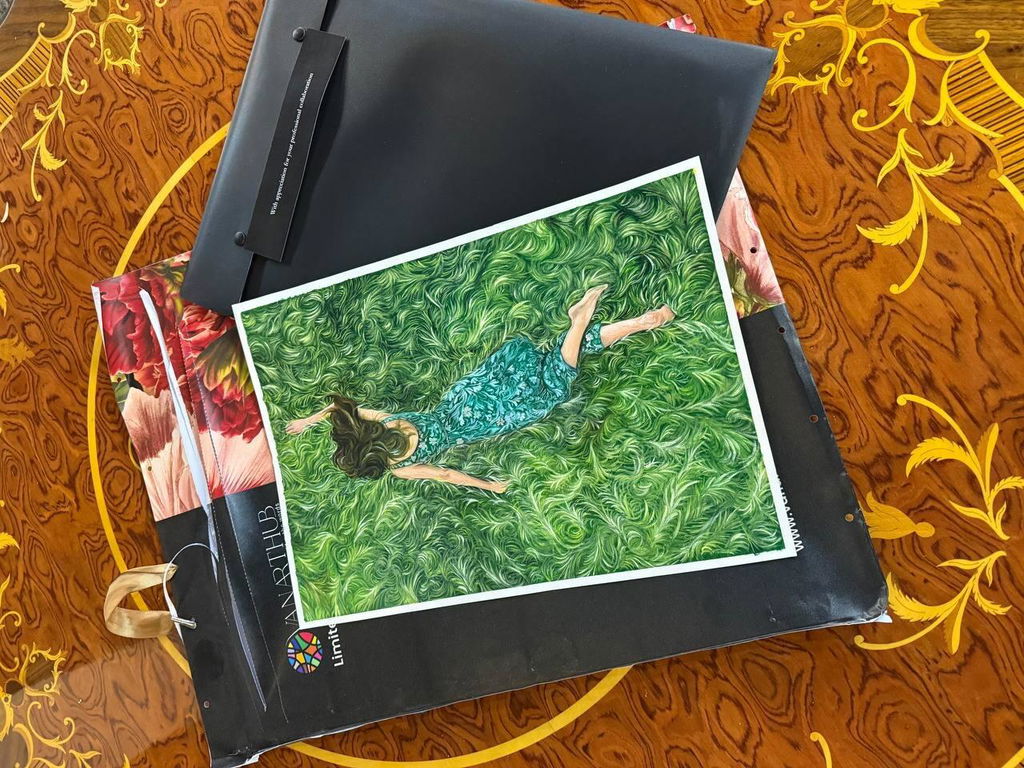
You bought the painting, it arrived safe, and now it leans against the wall because you are afraid to put a hole in the wrong spot. That fear is normal, and the fix is simple. Hanging and lighting original art is mostly a few fixed numbers, and once you know them you will never eyeball a nail again. Everything below is what we tell collectors after their piece ships from our Vancouver studio. If you want to browse first, our biggest pieces live in the large wall art collection, and those are exactly the ones where height and hardware matter most.
How high should you hang a painting?
Hang the painting so its centre sits about 57 to 60 inches from the floor. That is the gallery standard, because it puts the middle of the work at average adult eye level. Most people hang too high, which leaves the art floating in empty wall and forces you to look up. When in doubt, go lower, not higher.
To find the nail, do a little math. Take your target centre, usually 58 inches, and add half the painting's height. Then subtract the drop from the top of the frame down to the taut hanging wire. That number is where the nail or hook goes. Mark it with a pencil, check it with a level, then hang.
Hanging over furniture, and in groups
The 57 to 60 inch rule bends when the art sits above a sofa, bed, console, or headboard. Here you follow the furniture, not the room. Leave about 15 to 20 cm of clear wall between the top of the furniture and the bottom of the frame. Close enough that the piece and the sofa read as one group, high enough that a head leaning back will not knock it.
For a pair or a group, treat the whole cluster as one shape and centre that shape at 58 inches. Keep a tight, even gap between pieces, about 5 to 8 cm for medium canvases, so the eye reads them together. For a gallery wall, lay everything out on the floor first, shuffle until it looks right, then measure. The table below covers the common cases.
| Room or wall |
Hanging height |
Tip |
| Open wall, hallway, or stairwell landing |
Centre at 57 to 60 inches from the floor |
Use 58 inches as your default and check it with a level |
| Above a sofa or bed |
15 to 20 cm above the furniture top |
Span most of the furniture width, or hang a pair |
| Above a console, dresser, or fireplace |
15 to 25 cm above the surface or mantel |
Keep it clear of candles, heat, and picture frames on top |
| A pair or a group |
Centre the whole group at 58 inches |
Even 5 to 8 cm gaps; lay it out on the floor first |
| Behind a dining table |
Centre a touch lower, about 55 to 58 inches |
People are seated here, so the sightline drops |
What hardware holds a heavy canvas?
A small original on stretched canvas weighs almost nothing, and a single nail or plastic hook will hold it. The trouble starts with our larger pieces. A canvas 90 cm wide or more, especially oil on a deep gallery frame, can weigh several kilos, and a lone nail in drywall will pull out over months.
Use two fixing points instead of one. Two points stop the piece from tilting and split the load. If you can hit a wall stud, a wood screw straight into the stud is the strongest option there is. If you cannot, use proper drywall anchors, either toggle bolts or self-drilling anchors rated well above the painting's weight. On concrete or brick, use a masonry plug and screw. Skip adhesive strips entirely for real art. We would rather you drill twice than watch a signed painting hit the floor.
How to light original art without damaging it
Good light makes a painting look twice as expensive, and bad light can quietly ruin it. Two rules come first. Keep art out of direct sunlight, because ultraviolet rays fade pigment and dry the paint over years, and keep it away from hot bulbs like old halogens that bake the surface and the varnish. A painting on a wall that gets afternoon sun through a bare window is on a slow timer.
For the light you add, use LED. It runs cool, uses little power, and the good ones give warm, accurate colour. Look for a colour rendering index, or CRI, of 90 or higher so the colours stay true. Three setups work well: a picture light above the frame, adjustable track lighting angled at the wall, or recessed ceiling spots on a dimmer. Aim the beam at about a 30 degree angle to the wall. That angle cuts glare and skims across the texture so the brushwork and impasto show. Straight-on light flattens a painting; angled light gives it depth.
Key things to remember
- Hang the centre of the painting about 57 to 60 inches from the floor, using 58 inches as your default.
- Over a sofa, bed, or console, leave 15 to 20 cm of clear wall between the furniture and the bottom of the frame.
- For heavy canvases 90 cm and wider, use two fixing points and hit a stud or a rated anchor, never a single nail in bare drywall.
- Keep art out of direct sun and away from hot halogen bulbs, both of which fade and dry the paint over time.
- Light with cool-running LED at 90+ CRI, aimed at about a 30 degree angle so the texture and true colour show.
Frequently asked questions
How high should I hang a painting from the floor?
Hang it so the centre of the painting is about 57 to 60 inches from the floor, with 58 inches as a safe default. This is the gallery standard because it places the middle of the work at average adult eye level. Most people hang too high, so if you are unsure, go a little lower rather than higher.
How far above a sofa should art hang?
Leave about 15 to 20 cm of clear wall between the top of the sofa and the bottom of the frame. That gap is close enough to link the painting and the sofa as one group, and high enough that someone leaning their head back will not bump the frame. Aim to span most of the sofa's width.
What hardware do I need for a heavy canvas?
Use two fixing points, not one, so the load splits and the piece cannot tilt. A wood screw into a wall stud is strongest. If no stud is there, use toggle bolts or self-drilling drywall anchors rated above the painting's weight. On brick or concrete, use a masonry plug and screw. Avoid adhesive strips for real art.
Can I hang an original painting in direct sunlight?
No. Direct sunlight carries ultraviolet rays that fade pigment and dry the paint over the years, and the damage cannot be undone. Hang the piece on a wall that avoids strong afternoon sun, or fit UV-filtering blinds or window film. Indirect daylight is fine and often the most flattering light of all.
What is the best light for a painting at home?
Use LED with a colour rendering index of 90 or higher so the colours read true, and skip hot halogen bulbs that bake the surface. A picture light above the frame, angled track lighting, or dimmable recessed spots all work. Aim the beam at about a 30 degree angle to the wall to reduce glare and show the brushwork.
Does the painting come ready to hang?
Yes. Every original from VanArtHub arrives packed to gallery standard from our Vancouver studio and ready to hang, with a Certificate of Authenticity naming the artist, title, medium, and size. Shipping is free and fully insured, 3 to 7 business days in Canada and 5 to 10 in the USA. You also have 14 days to live with it and return it for a full refund.
Once it is on the wall at the right height and lit well, an original painting changes the whole room, and at VanArtHub we would rather you hang it once and hang it right. Browse the large wall art collection for statement pieces, read our companion guides on framing original paintings and caring for original paintings, or return to the Canadian art hub for the full buying guide.
More on placement: our hanging and sizing guide covers the measurements in full, including how high to hang a painting and lighting a painting at home.