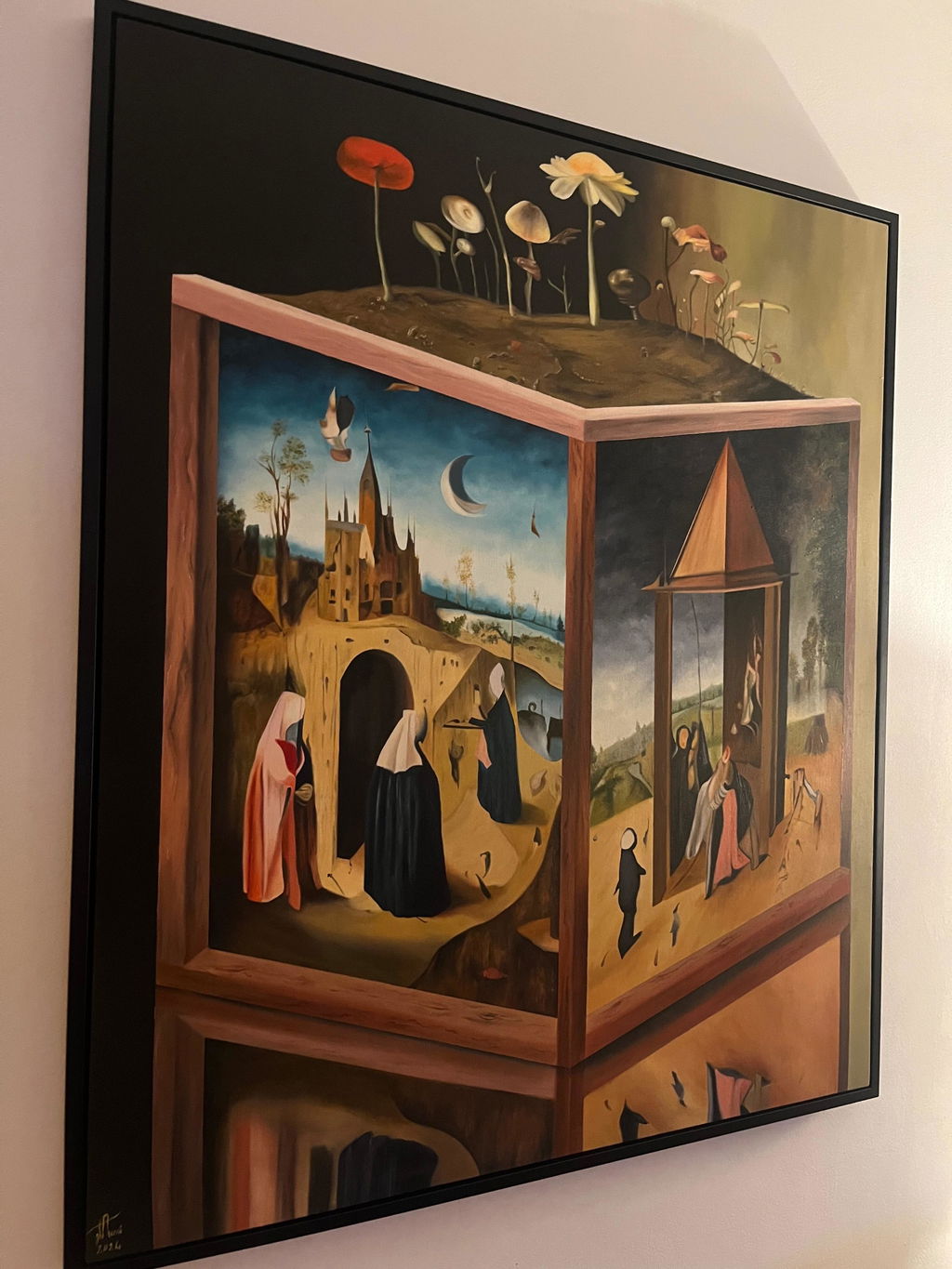
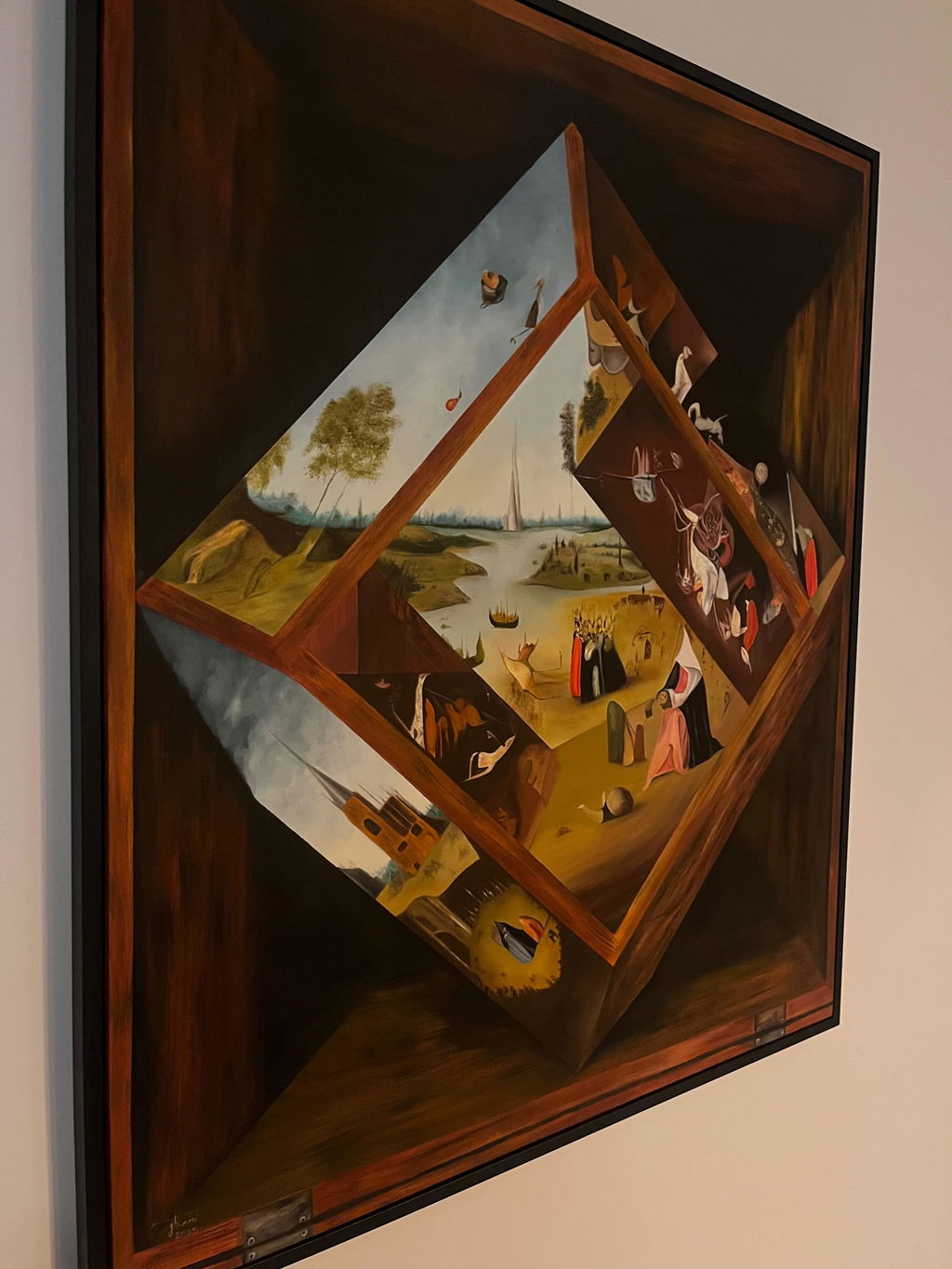
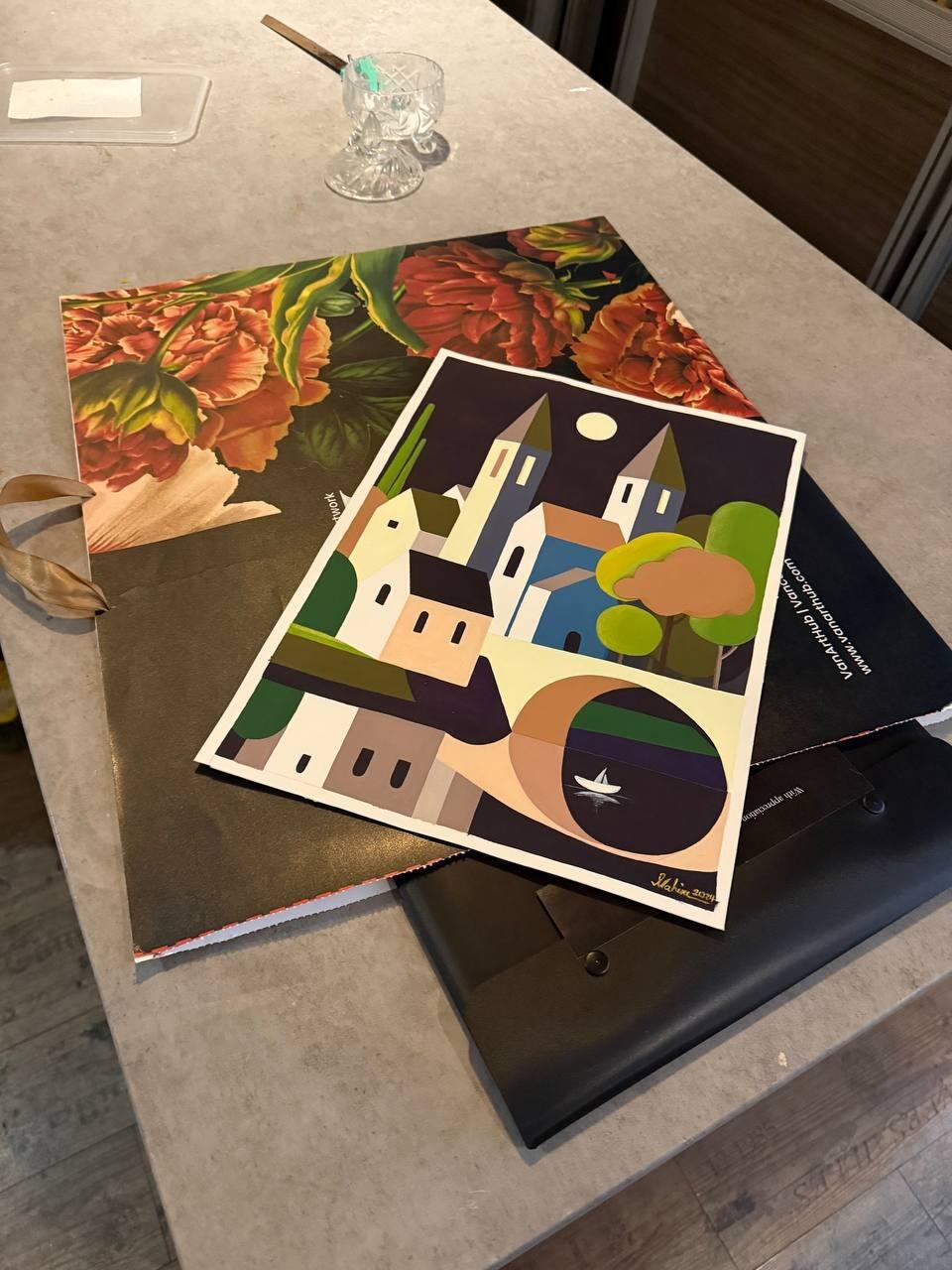
A profile is the shape of the moulding seen in cross-section, as if you had sawn through the frame and looked at the cut end. It is the single most important thing about a frame and the thing people look at last, usually after they have already decided on a colour.
It matters because the profile decides where your eye goes. A shape that rises away from the art pushes your attention outward. A shape that slopes down toward the art pulls it in. You feel this without noticing it.
The six shapes
Flat
A simple rectangle in section. No slope, no rise. It gives a work a clean border and gets out of the way entirely. This is the safest profile in the catalogue and the right answer far more often than people expect, particularly for contemporary work.
Scoop
Concave, curving down from the outer edge toward the artwork. It acts like a funnel for the eye and makes a small work feel more significant than a flat profile would. It also catches light along the curve, so it has more presence in a room.
Cap
Rises to a defined outer lip, then steps or slopes back down to the art. It gives the frame a hard outer boundary, which is useful when the wall behind is busy, patterned, or a similar tone to the frame.
Reverse
Highest at the outer edge and stepping down toward the art, the opposite of a scoop. It creates a sense of the artwork being set into a recess. It reads as modern and architectural and is very good with photography and hard-edged abstract work.
Cassetta
A flat panel with a raised lip on both the outer and inner edges, historically often gilded on the lip. It is the classical frame shape and it works with painting that has a classical sensibility. On the wrong picture it looks like fancy dress.
Float
An L-shape with a platform, holding a canvas away from the moulding. Covered in full in floater frames for canvas.
Matching the profile to the painting
The rule that holds most often: the busier the painting, the quieter the profile. A composition with a lot happening in it needs a border that stops the image, not one that adds to it.
The second rule: a profile can echo something already in the work, but only one thing. If the painting has gold in it, a warm or gilded lip can pick that up. A piece worked in oil and gold like Muraqqa' can carry a cassetta with a gilded inner lip because the gold is already there in the paint. Add gold to a painting that has none and you have introduced a colour the artist did not choose.
Width, and why it is not the same as presence
People assume a wider frame is a stronger frame. It is not quite that. A narrow reverse profile in dark metal can hold a picture harder than a wide flat profile in pale oak, because the contrast at the edge is greater. What creates presence is the difference between the frame and what is on either side of it, not the number of millimetres.
This is worth knowing because moulding is priced by the length and a wider profile costs more per metre. If you want more presence for less money, go darker rather than wider.
Profile depth and shadow-box needs for thick or textured work
Depth is the dimension people forget when they choose a profile by its face width alone. A frame's depth is the rebate, the recessed lip on the back that holds the glazing, mat, and artwork in place, and it has to be deeper than whatever sits inside it or the piece will not seat flat.
Heavy impasto oil paintings, where the paint stands 5 mm or more off the canvas in places, need a rebate deep enough to clear the highest ridge of paint without the glazing touching it, if glazing is used at all. A shallow profile made for a flat print will crush that texture against the glass over time, or simply refuse to close.
A true shadow box goes further: it holds the glazing well forward of the artwork on purpose, creating an air gap of anywhere from about 10 mm to 40 mm, so a raised or three-dimensional piece, a canvas with attached objects, or thick palette-knife work has room to sit inside the frame without touching the front glazing at all. This needs a specific deep-rebate profile built for the purpose, not a standard moulding with spacers added, because a standard rebate is rarely deep enough and thin spacers can bow under a large sheet of glass or acrylic.
Rule of thumb: measure the highest point of texture off the canvas surface, add at least 5 mm of clearance, and that is the minimum air gap the profile needs to provide. Tell us that measurement when you order and we will pick a profile with enough depth rather than one that only looks right from the front.
Common questions
Does a deeper frame mean a better frame?
Depth is structural before it is aesthetic. A large frame needs a deeper section so it does not bow across the span, and a canvas needs a rebate deep enough to take the stretcher. On a small work on paper, depth is purely a look.
Can I mix profiles in one room?
Yes, and a room where every frame is identical often looks like a showroom. What holds mixed frames together is a shared alignment line and consistent spacing, not a shared profile. See gallery wall frame sizing.
What profile is safest if I cannot decide?
A narrow flat profile in a neutral tone. It is the least likely to be wrong, the least likely to date, and the easiest to live with. You can always reframe into something with more character later; the reverse is a harder conversation.
What is a rebate on a frame profile?
The rebate is the L-shaped groove cut into the back inside edge of the moulding. It is what actually holds the glass, mat, artwork and backing board in place. A rebate that is too shallow cannot hold a canvas stretcher or a thick mat stack, which is why the profile has to be chosen with the depth of the whole package in mind, not just the picture on the front.
What is the difference between a cove and an ogee profile?
A cove profile has a smooth concave curve rising from the rebate to the outer edge, which reads as soft and traditional. An ogee has an S-shaped curve, concave then convex, giving it more visual movement and a more ornate feel. Both are wood profiles rather than flat sections, and both are common on landscape and portrait moulding rather than on floater frames.
Why do some profiles cost more per foot than others?
Cost per linear foot follows the amount of timber used and how the finish is applied. A wide profile with hand-applied gilding or a compound curve takes more material and more labour than a narrow flat or scoop section in a single stain. See custom framing cost for how profile choice fits into the total price.
Can a flat profile still look substantial?
Yes. A flat profile can be built wide and left with a strong, matte finish so it reads as solid without any carved detail. Width and finish do more work than curve does. A 6 cm flat black moulding around a large canvas looks considerably more present than a narrow ornate one.
Does the profile affect how the art is lit?
A profile that steps up steeply from the rebate can cast a faint shadow line onto the outer edge of the artwork under angled light, especially with a work on paper set back behind glass. A shallow or flat profile avoids this. It rarely matters under even room lighting, but it is worth checking under a single strong spotlight.