Gold has a bad reputation in framing and most of it is deserved, because most gold frames people encounter are bright, machine-finished, and put on work that did not ask for them. Used properly, gold does something no other finish can: it puts light at the edge of a painting.
How gilding is built
A traditional gilded frame is not gold-coloured paint. It is built in layers, and the layers are why an old gilded frame looks the way it does.
-
Gesso. Chalk and glue, built up and sanded smooth, giving a surface fine enough to take leaf.
-
Bole. A coloured clay, traditionally deep red, sometimes yellow or grey. This is the layer that shows through where the gold wears, and it is why worn gilding looks warm rather than white.
-
Leaf. Genuine gold leaf, applied in small squares, overlapping slightly.
-
Burnishing and toning. Polished where it should be bright, knocked back with a wash where it should be quiet.
The toning is what separates a good gilded frame from a bad one. Untoned bright leaf is very hard to live with. Toned back, gold reads as warm light rather than as metal.
Real leaf, or a gold finish?
Both are legitimate and they behave differently.
-
Genuine leaf has depth, slight irregularity where the squares overlap, and it ages. It costs considerably more.
-
Composition or metal leaf is cheaper and convincing at normal viewing distance, but it can tarnish over decades unless sealed.
-
A gold-toned paint or foil finish is flat and even. Honest and inexpensive, and fine on a modest piece, but it will never have the movement of leaf.
We will tell you which a frame is. It is not a detail worth being vague about.
Which paintings carry it
The safest test: is there already gold, warm ochre, or strong warm light in the painting? If yes, a gilded frame picks it up. If no, the frame introduces a colour the artist did not use.
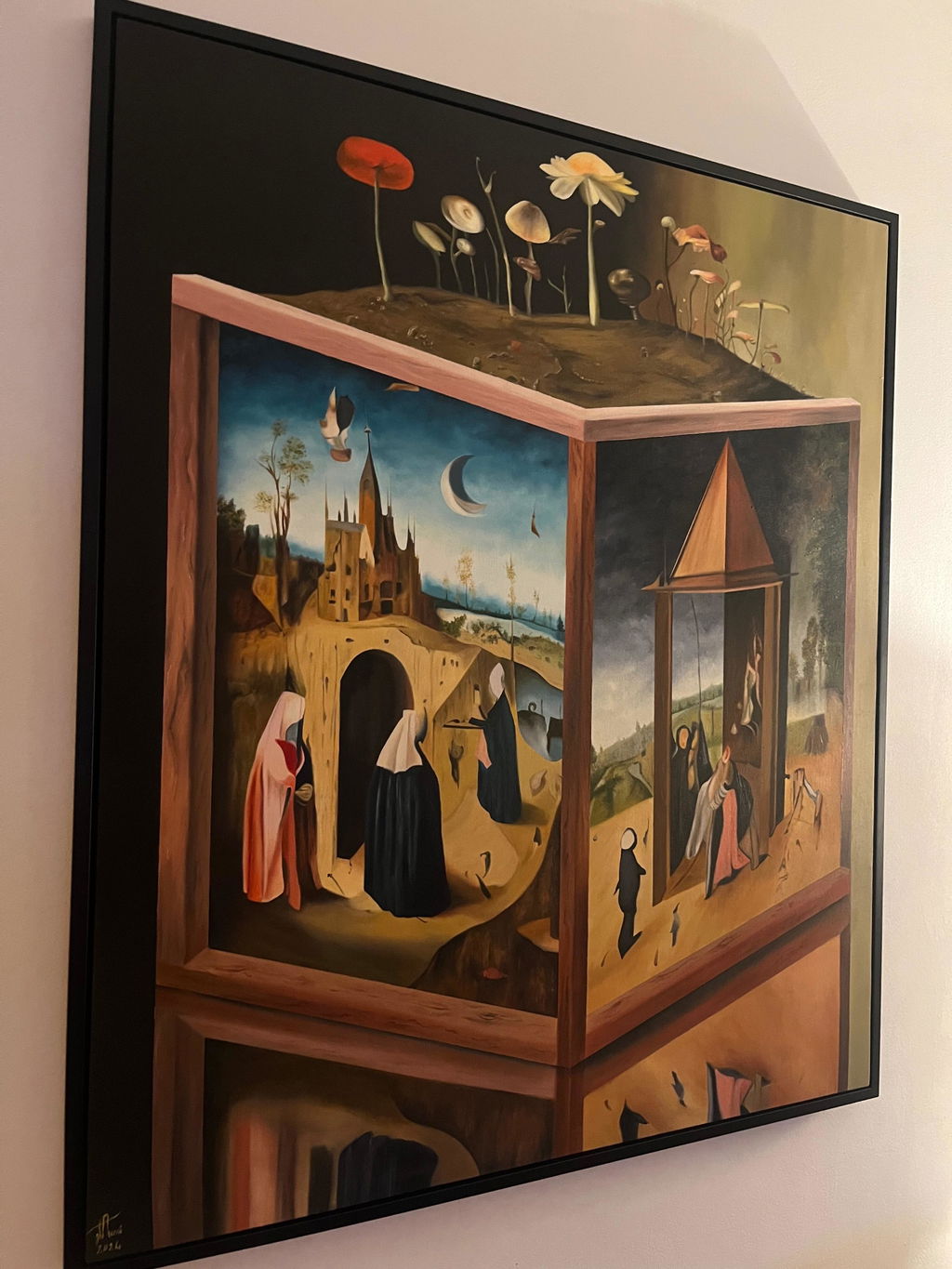
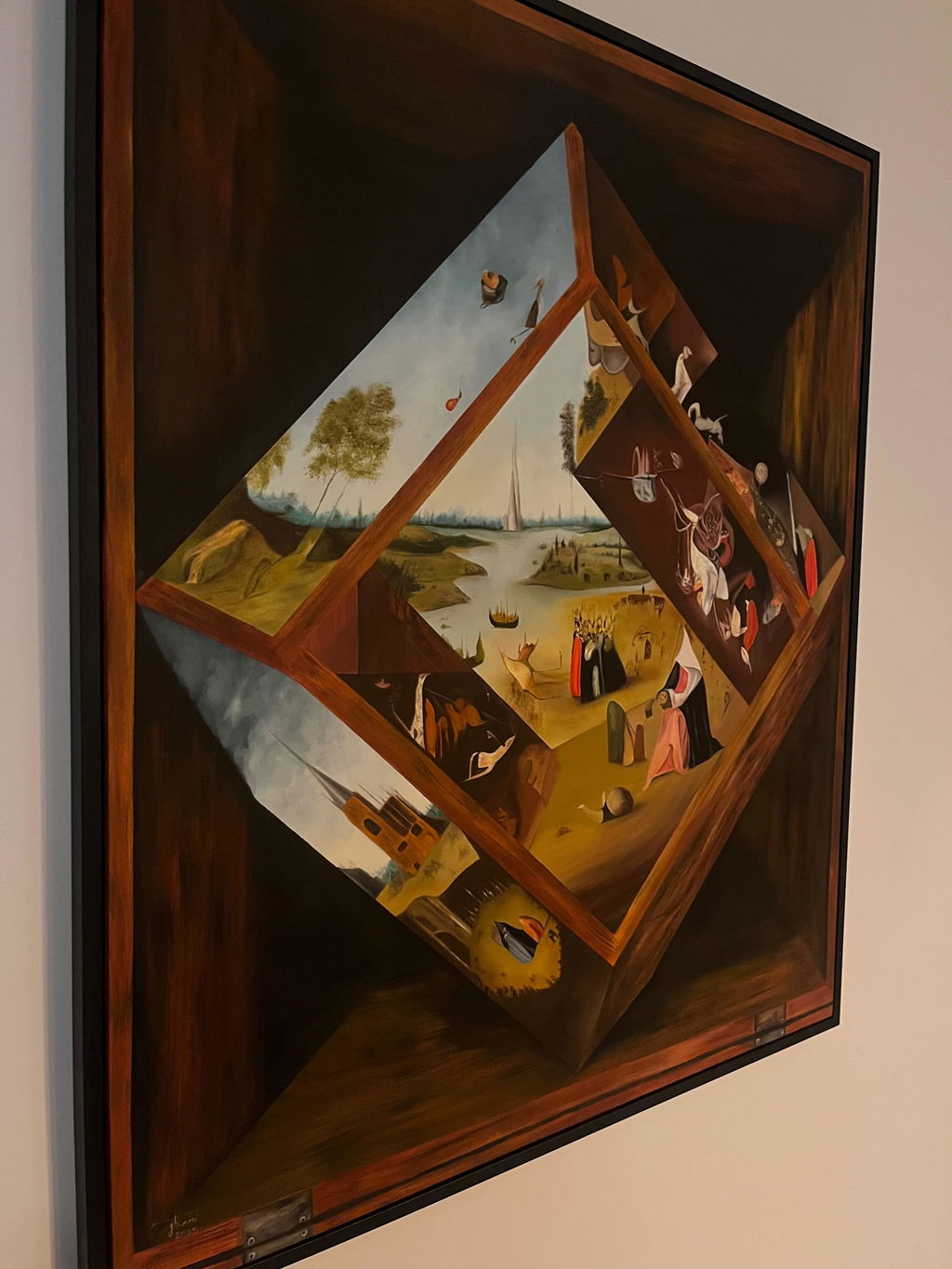
Work made in a historical idiom is the natural home for it. A Persian miniature worked in oil and gold, like Naghsh-e Khial, is a piece where an ornate gilded frame is not decoration but continuation: the gold is in the painting, and the frame agrees with it.
Portraiture is the other case. A formal portrait in a slim black frame can look like a passport photo. Some weight at the edge helps.
Gold in a modern room
It can absolutely work, and there are two ways to do it.
Go quiet. A champagne or pale gold with a narrow flat profile reads as a warm neutral rather than as an ornate frame. Almost any room takes this.
Go deliberate. One properly ornate gilded frame in an otherwise spare, modern room is a strong, confident move. What does not work is the middle: a mildly decorative gold frame among other mildly decorative things reads as unconsidered.
Living with a gilded frame
Gold leaf is thin, soft, and easily rubbed through. Dust with a very soft dry brush only. Never use a cloth, never use any cleaner, and never touch the gilded surface with fingers, because the oils mark it. If a gilded frame is chipped, leave it. Worn gilding with the bole showing through is desirable; a badly touched-up patch is not.
Cleaning and maintaining a gilded finish
Gilded frames are finished with either real gold leaf, which is gold beaten to a few micrometres thick and laid over a red or yellow bole ground, or a composition gold paint or leaf substitute. The two need different care, and treating one like the other is the fastest way to damage a frame that should last generations.
Real gold leaf does not tarnish, gold itself does not oxidise, but the surface is extremely thin and sits on a soft ground underneath. Dust it with a soft, dry brush only, the kind used for cleaning camera lenses works well, moving in one direction rather than scrubbing. Never use water, glass cleaner, or any polish on real gilding: moisture can soften the bole underneath and lift the leaf in flakes, and polish abrades the gold itself since there is nothing underneath to sand back to.
Composition or paint finishes are more forgiving of a barely damp cloth, but test an inconspicuous spot first, since some finishes are varnished and some are not, and an unvarnished paint finish can mark from moisture the same way gilding can.
Keep gilded frames out of direct sun and away from heat sources like radiators or fireplaces: heat dries and cracks the bole ground, and UV light dulls composition gold faster than it dulls real leaf. A light touch-up of small chips, where the red bole shows through, is a specialist job, not a home repair, because matching burnished gold leaf by eye is difficult and a bad patch is more visible than the original chip.
Common questions
Is an antique frame safe for a painting?
The frame usually is. What is inside it often is not. Old frames commonly hold acidic backing board, animal glue, and nails driven into the rebate. If you are reusing an antique frame, the frame can stay and everything behind the artwork should be replaced. See reframing an old or inherited painting.
Does gold work with cool colours?
Sometimes, and it is a strong effect when it lands. Gold against deep blue is a historical pairing for good reason. Gold against a cool grey or a pale blue-white usually is not: there is nothing in the picture for the frame to agree with.
Can silver be used the same way?
Yes, and it is easier in modern interiors. Silver and white gold are cooler and less loaded, and they suit work with grey, blue, or steel in it. The same rules apply: tone it back, and only use it if the picture has something for it to echo.
What is the difference between gold leaf and gold paint on a frame?
Gold leaf is real metal, applied in tissue-thin sheets over a prepared base called gesso, and it catches light with a depth that paint cannot match. Gold paint or a metallic finish is far cheaper and more durable day to day but looks flatter up close. Most ornate framing today uses a composition leaf or a high-quality metallic finish rather than pure gold leaf.
Does an ornate frame overwhelm a small painting?
It can, if the carving is wide relative to the piece. A heavily ornate profile generally suits a larger canvas better, where the moulding has room to read as detail rather than as the dominant object. On a small work, a narrower ornate profile keeps the balance in favour of the painting.
How do I clean a gilded frame safely?
A soft, dry brush only, worked gently along the carving to lift dust out of the recesses. No water, no polish, and no cloth pressed against gold leaf, because leaf is extremely thin and can lift or burnish with contact. If a gilded frame is genuinely dirty rather than dusty, bring it in rather than treating it at home.
Can a gold frame be toned down to look less bright?
Yes. An aged or antiqued gold finish uses a darker glaze rubbed into the recesses of the carving, which softens the shine and adds contrast without changing the profile. This is a common request for buyers who like the ornate shape but want a quieter, older look than bright new gold gives.
Is ornate framing only suitable for classical paintings?
No, though it is the most common pairing. A contemporary painting in a bold, simple palette can look striking in an ornate frame, because the contrast between an old-style border and new-style art draws attention to both. It is a deliberate style choice, and it does not suit every piece, so ask us if you are unsure.