New or Antique Persian Miniature: Which One Should You Buy?
UpdatedAntique Persian miniatures for sale today are three different kinds of object under one name: a page taken from an old manuscript or album, a later miniature made for the market, often on bone or ivory, and a new miniature painted and signed by a living painter. The three differ in what you must check, in where they are sold, and in the paperwork that should come with them. We are VanArtHub, a Vancouver gallery that sells original Persian miniatures and contemporary paintings that draw on Persian tradition, and we sell only the third kind. This guide compares all three and says when another seller is the right one for you.
Who this guide is for, and the three kinds side by side
You searched for "antique Persian miniatures for sale" or "vintage Persian miniatures for sale". In a listing, "antique" and "vintage" are the seller's own words, so ask for a date range and the evidence behind it.
Where this guide touches the law, it reports what a government or treaty page says, with the date we read it. We give no legal or tax advice, and rules change, so confirm with the agency before you buy.
Printed copies are a fourth thing on sale, and our guide to buying a Persian miniature has the checks for those. Our page on Persian miniature painting covers the old schools.
| Kind | What it is | Where it is sold | What you must be able to prove | The main risk | Care |
|---|---|---|---|---|---|
| A page from an old manuscript or album | A painting made for a handwritten book or album, later sold as a single sheet | Auction houses and specialist dealers | Who has owned it, and how it left its country of origin | A gap in the ownership history, or a picture added later | Low light, and a paper conservator for any repair |
| A later miniature made for the market | A small painting of the 19th or 20th century, on paper, bone or ivory | Antique shops, online marketplaces and auctions | What the sheet is made of and how old it is | An ivory sheet that needs permits to cross a border | Steady humidity and low light |
| A new miniature by a living painter | A painting signed by a painter you can name | The painter or the painter's gallery | That the signature, certificate and listing agree | A print sold as handwork | No direct sun, no damp, a frame with glass |
Mi'raj: The Night Journey by Kamal al-Din Ghotb is a Persian miniature in oil and gold on paper, 30 x 40 cm (11.8 x 15.7 in), dated 2026 on its product page. A haloed rider crosses a blue sky on Buraq, the winged steed with a crowned human face, carried through gold clouds by angels above a city of domes and minarets. It is an example of the third row.

Pages from old manuscripts and albums
Some old pages on the market come from books that were taken apart. Priscilla Soucek reports in the Encyclopaedia Iranica that a Paris dealer, Georges Demotte, could not sell one copy of the Shahnameh (also written Shahnama) whole at his price and "removed the binding in order to sell the pages separately". Our page on famous Persian paintings shows where the best-known pages are now.
The record of who owned a page is its provenance. The Smithsonian's National Museum of Asian Art defines it as a work's "history of ownership from creation to the present", and adds that this history "can often reveal if a work of art was acquired lawfully". A gap in it is the main risk with an old page, for two reasons.
The first reason is what can happen at a border. Canadian Heritage, on a page dated 2017-10-24, says "it may be illegal to bring cultural property into Canada, such as antiques or fossils, whose sale or export is banned or controlled by the country of origin". US Customs and Border Protection, on a page last modified on March 14, 2025, says "you must have documents such as export permits and receipts when importing such items into the United States". Both name the 1970 UNESCO Convention, ratified by 150 states. We read these pages on 8 October 2026. Confirm with the agency before you buy.
The United States and Canada also have rules on goods of Iranian origin. We do not summarise them here. Ask the seller which rules apply to the object, confirm with the agency before you buy, and read our guide on how to buy Persian art.
The second reason is that old pages were altered and imitated. Sheila S. Blair writes in the Encyclopaedia Iranica that illustrated manuscripts are "one of the most popular categories for forgery". Her example is a Shahnameh bought by the New York Public Library in 1929: its text was copied in 1614, and later research found that many of its paintings "use pigments first isolated in the 18th or 19th century".
The Art Loss Register says a search of its database shows "whether an item has been reported stolen, missing or looted". Authorship and date are separate questions for a specialist. Ask about condition too: the Canadian Conservation Institute says thick applications of gouache, which it describes as opaque watercolour, "are prone to cracking and flaking".
Muraqqa': The Blue Robe by Kamal al-Din Ghotb is a Persian miniature in oil and gold on paper, 30 x 40 cm (11.8 x 15.7 in), dated 2026 on its product page. It is painted as an album page: a youth in a pale blue robe plays the panpipes under a calligraphy panel on gold. We show it here because it takes the form of an old album page and has no earlier owner to research.

Later miniatures made for the market, on paper, bone or ivory
The second kind is younger. Habib Borjian writes in the Encyclopaedia Iranica that in previous centuries paintings in Isfahan, miniatures among them, "were produced for the market, including the tourist trade". He describes the city as home to painters who work "from traditional miniature to modern designs that are painted on canvas, bone, ivory, wood, and other materials".
India had a similar trade. The Victoria and Albert Museum holds an ivory plaque painted in Delhi or Agra, dated ca. 1850, from sets "produced for the growing number of Europeans in India who wished to acquire high quality souvenirs of their travels". In our experience, online listings often place such plaques among Persian miniatures.
A market miniature is a fair purchase when the listing says what it is: its age, its painter where known, and its support, the sheet the picture is painted on. The support matters most, and bone and ivory look alike in a photo.
The Canadian Conservation Institute explains the difference: bone has tiny blood vessels, which "appear as tiny dark spots, pits, or lines on the surface of bone objects", and ivory has none. Ask the seller to name the material in writing. For care, the institute says changes in humidity crack and warp ivory, a problem "particularly acute with thin ivory objects, such as portrait miniatures".
What government pages say about ivory
We read both pages below on 8 October 2026. Confirm with the agency before you buy, sell or carry an object across a border.
Canada. Environment and Climate Change Canada says stricter measures came into force on January 8, 2024: "Permits are required for the import and export of all items of worked elephant tusk (ivory) or rhinoceros horn, including those that are personal or household effects." The requirement also covers ivory harvested before July 1975. Raw ivory is under tighter rules, and the page's definition of raw includes cut tusk "in any form, polished or unpolished, painted or unpainted". Which class a painted sheet falls into is a question for the agency. The same page says "Canadians may still own or possess legally obtained elephant tusk (ivory)".
United States. The US Fish and Wildlife Service says: "Commercial import of African elephant ivory into the United States is prohibited." It says the sale of African elephant ivory across state lines is prohibited, "except for items that qualify as ESA antiques" and certain items holding a small amount of ivory. ESA is the Endangered Species Act. The first of its four criteria for an antique is "It is 100 years or older", and the seller must demonstrate all four. Federal wildlife rules "do not prohibit possessing or display of ivory, provided it was lawfully acquired", and the page adds: "Some states have laws prohibiting or restricting sale of ivory".
Both pages are about elephant ivory, so the material the seller names in writing decides which rules you need to read.
New miniatures by living painters
The third kind is the one we sell. A new miniature has things an antique cannot have: a painter you can name and ask, a signature to compare with the certificate, and return terms. It has no earlier owners to research, because you are the first.
An antique has things a new work cannot have. A page painted in 2026 has no age and no place in history. If those are what you want, we are the wrong seller.
The three works in this guide are by Kamal al-Din Ghotb, and more are in the Kamal al-Din Ghotb collection. Each product page gives the medium as "Oil and gold on paper, Persian miniature (negargari)" and the year as 2026.
Naghsh-e Khial by Kamal al-Din Ghotb is a Persian miniature in oil and gold on paper, 30 x 40 cm (11.8 x 15.7 in), dated 2026 on its product page. Two armies meet across a pale blue plain, trumpeters raise long gold horns, and the scene is set inside columns of Persian verse. We show it as a battle scene in the old layout whose painter, year and medium you can read before you pay.

What to ask the seller of an antique
- Who has owned it, with names and dates, as far back as the record goes?
- When did it leave its country of origin, and may I see the export permit?
- What is it painted on: paper, bone or ivory? Please write it on the invoice.
- If it is ivory, which species, how old, and which documents show that?
- Has a specialist examined the object itself, including any later repainting or repair, and may I read the report?
- What are your return terms if a later opinion disagrees with yours?
A reputable auction house or specialist dealer expects these questions and answers them in writing.
Who should buy which
Buy an antique page if you want age and a place in history. Buy it from an auction house or a specialist dealer that publishes the ownership history. That is a purchase we respect and cannot offer.
Buy a market miniature if you like it as a small painting of the 19th or 20th century and the seller names the support in writing. Buy a new miniature if you want the picture, the handwork and a painter to ask. In our view it is the simpler purchase for most buyers, because every question above has a short answer.
How buying from us works
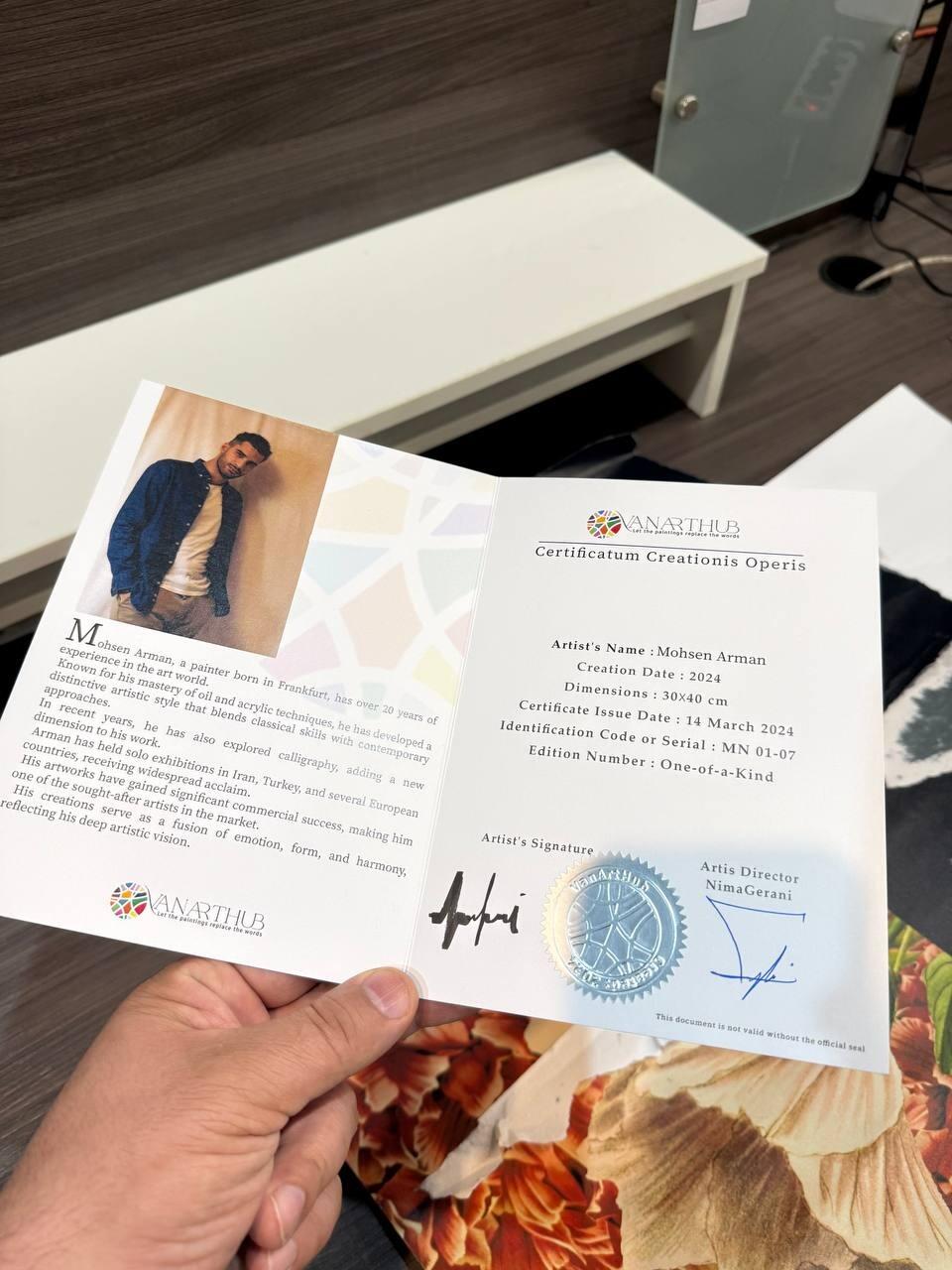
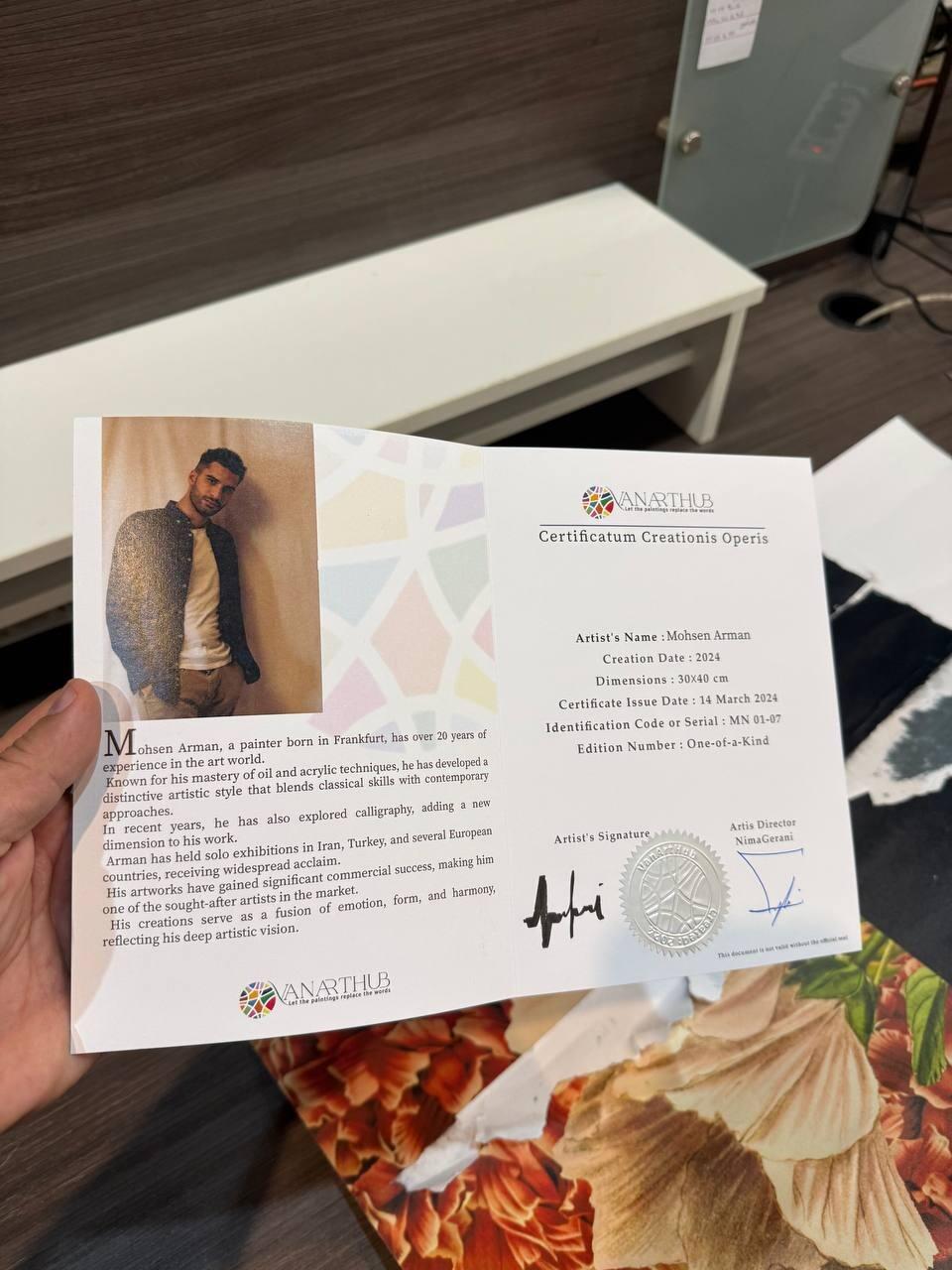
Every painting we ship is an original, signed and one of a kind, made by a painter we represent and shipped from Vancouver. Each arrives with a Certificate of Authenticity. Shipping is free and fully insured: 3 to 7 business days in Canada and 5 to 10 to the USA. If a carrier asks you for a customs or brokerage fee, contact us before you pay it.
The 14-day trial starts at delivery: return the work within 14 days for a full refund, and we pay the return shipping. The full terms are on our Buy with Confidence page.
Every product page has a form to ask us a question about that painting. Our gallery is at 1242 Davie Street in Vancouver's West End, with opening hours on our West End gallery page. Contact us before you come, so we can confirm the work is at the gallery that day.
Each product page has one more option, Buy Print File: a high-resolution digital file of the image for personal printing. Nothing is shipped, we email the file within 48 hours, and copyright stays with the artist. A print made from the file is a reproduction, and the painting itself still exists once. Our guide to originals and prints explains the difference.
Key Takeaways
- "Antique Persian miniature" can mean an old manuscript page, a later miniature made for the market, or a new signed work. We sell the third.
- For an old page, ask for the ownership history and the export papers.
- For a market miniature, get the support named in writing: paper, bone or ivory.
- Canada and the United States publish rules on elephant ivory. Confirm with the agency.
- A new miniature has a painter to ask, a certificate and a 14-day trial. An antique has age, and a reputable auction house or specialist dealer is the seller for it.
Frequently Asked Questions
Where are antique Persian miniatures sold?
Antique Persian miniatures are sold by auction houses and specialist dealers, and later market miniatures also appear in antique shops and on online marketplaces. Ask any of them for the ownership history, the export papers and the name of the material in writing. VanArtHub sells new miniatures by living painters and no antiques, so for an old page another seller is the right one.
What is the difference between an antique and a vintage Persian miniature?
In our experience sellers use both words loosely, and each one needs a date beside it. One government page gives "antique" a fixed meaning for ivory: the US Fish and Wildlife Service lists "100 years or older" among its criteria for an antique under the Endangered Species Act. For any other listing, ask the seller for a date range and for the evidence behind it.
How do I tell whether a miniature is painted on ivory or on bone?
Bone shows tiny dark spots, pits or lines on its surface, and ivory has none, according to the Canadian Conservation Institute. Those marks are the ends of small blood vessels. A synthetic imitation called French Ivory also exists. A photo is weak evidence, so ask the seller to name the material in writing and to say who identified it.
Do I need a permit to bring an ivory miniature into Canada?
Environment and Climate Change Canada says permits are required for the import and export of all items of worked elephant ivory, including personal and household effects, under measures in force since January 8, 2024. Its page treats raw ivory more strictly. We read the page on 8 October 2026. Confirm with the agency before you buy or travel.
What do US rules say about selling a miniature on ivory to another state?
The US Fish and Wildlife Service says the sale of African elephant ivory across state lines is prohibited, except for items that qualify as antiques under the Endangered Species Act and certain items holding a small amount of ivory. The seller must demonstrate that an item qualifies. We read the page on 8 October 2026. Confirm with the agency and with your state.
What documents should the seller of an antique Persian page give me?
A careful seller gives you a written ownership history with names and dates, a copy of the export permit from the country of origin, a condition report, and an invoice that names the material and the date range. US Customs and Border Protection says importers of cultural property must have documents such as export permits and receipts. Confirm with the agency before you buy.
Should I buy an antique Persian miniature from VanArtHub?
No, because we have none. Every miniature in our gallery is a new work by a living painter, and the three in this guide are dated 2026 on their product pages. If you want the age of an old page and its place in history, a reputable auction house or specialist dealer is the right seller, and the questions in this guide are for them.
Where do your new Persian miniatures ship from, and how long does delivery take?
Our paintings ship from Vancouver, free and fully insured. Delivery takes 3 to 7 business days in Canada and 5 to 10 business days to the USA. If a carrier asks you for a customs or brokerage fee, contact us before you pay it. Our guide to buying original art from Canada is written for collectors in the United States.
Can I return a new miniature if I decide I wanted an antique after all?
Yes. Every work comes with a 14-day trial: return it within 14 days of delivery for a full refund, and we pay the return shipping. Use those days to decide whether a new work answers what you were looking for. The full terms are on our Buy with Confidence page.
Can I visit your gallery to look at a new miniature before I choose?
Our gallery is at 1242 Davie Street in Vancouver's West End, and the opening hours are on our West End gallery page. Contact us before you come, so we can confirm the work is at the gallery that day. If you live far away, use the form on the product page to ask for close photos of the signature and the gold.
Sources
- Encyclopaedia Iranica, Demotte Shah-nama, by Priscilla P. Soucek, read October 2026.
- Encyclopaedia Iranica, Forgeries iii. Of Islamic Art, by Sheila S. Blair, read October 2026.
- Encyclopaedia Iranica, Isfahan xiii. Crafts, by Habib Borjian, read October 2026.
- Victoria and Albert Museum, The Jami Masjid, Lahore, painting on ivory, Delhi or Agra, ca. 1850, read October 2026.
- Smithsonian's National Museum of Asian Art, Provenance Research, read October 2026.
- Art Loss Register, Search, read October 2026.
- Canadian Heritage, Import of cultural property, read October 2026.
- US Customs and Border Protection, Prohibited and Restricted Items, read October 2026.
- UNESCO, The 1970 Convention on illicit trafficking of cultural property, read October 2026.
- Environment and Climate Change Canada, Import and export of elephant tusk (ivory) and rhinoceros horn, read October 2026.
- US Fish and Wildlife Service, Elephant Ivory FAQs, read October 2026.
- Canadian Conservation Institute, Care of Ivory, Bone, Horn and Antler, CCI Notes 6/1, read October 2026.
- Canadian Conservation Institute, Caring for paper objects, read October 2026.
Sources read in October 2026. If you spot something out of date, tell us and we will correct this post.
About VanArtHub
VanArtHub is a gallery based in Vancouver, Canada, that sells original, signed, one-of-a-kind works, each with a Certificate of Authenticity, free insured shipping and a 14-day trial. Persian art is also called Iranian art, and our guide to contemporary Persian painting introduces its painters and styles. You can also browse all artworks.