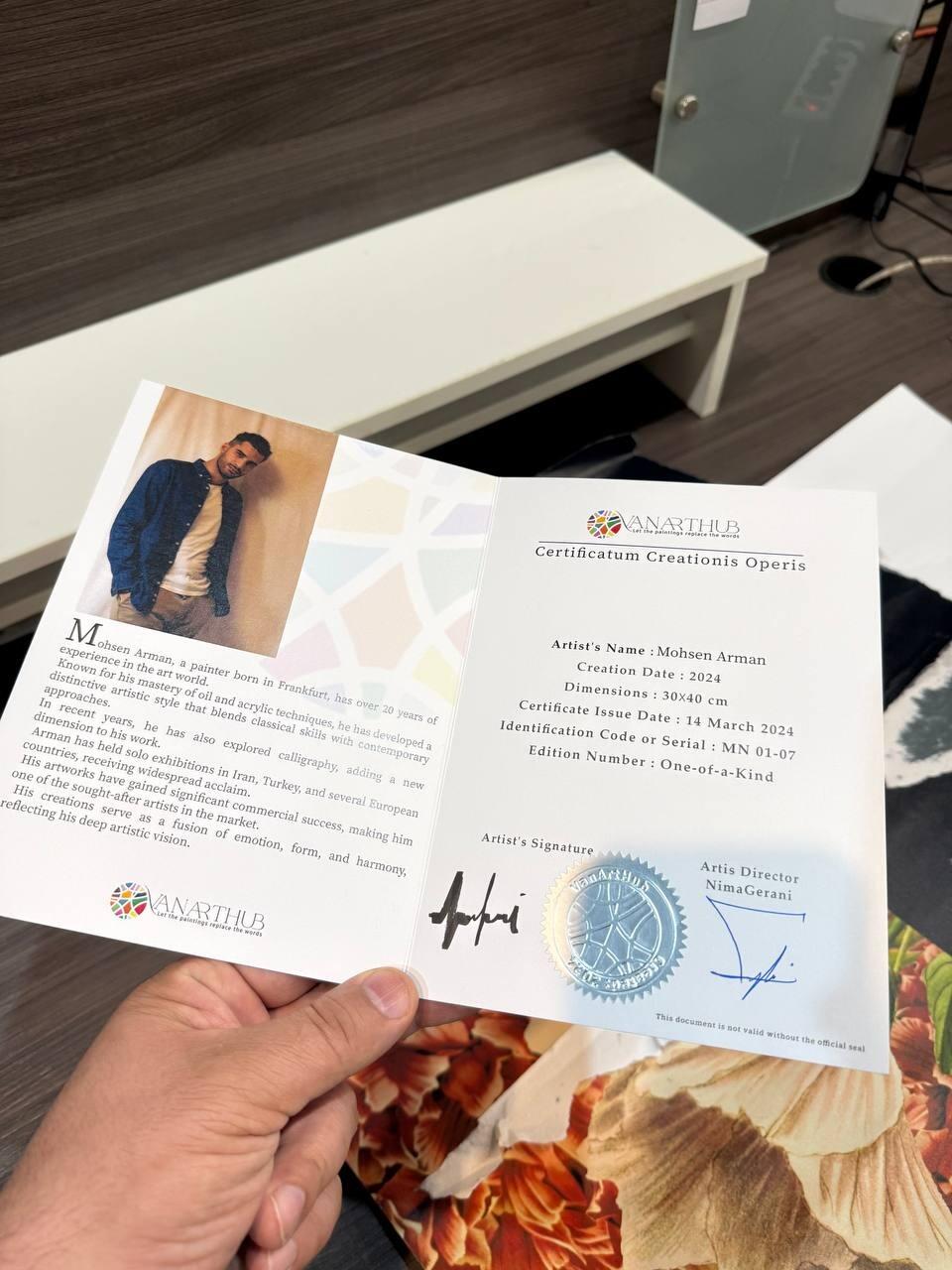
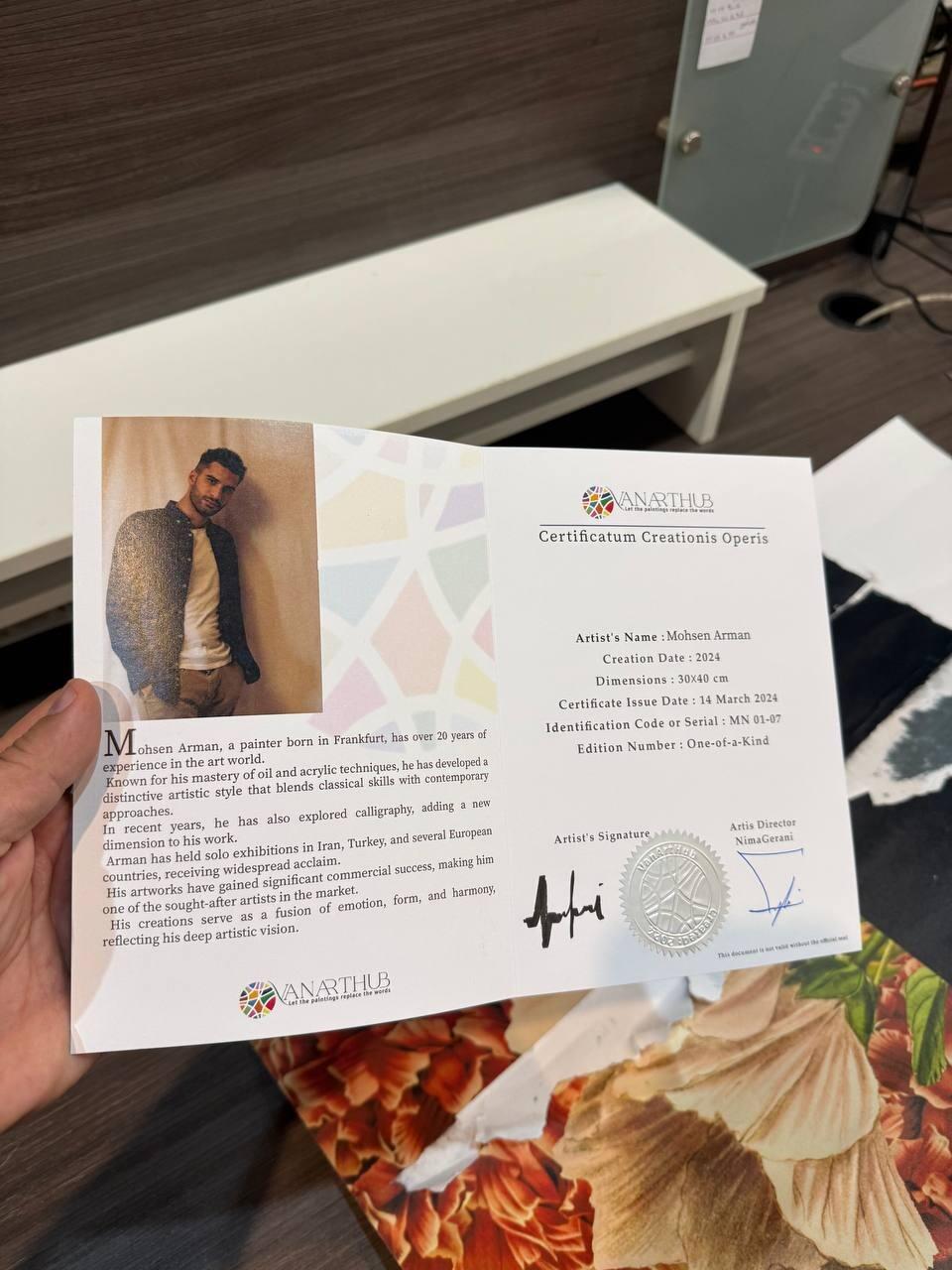
A certificate of authenticity is a signed statement that a named work is by a named artist. It proves identity, never value, and it is only as good as the person who signed it. A certificate signed by the living artist, or by the gallery that sold the painting new, is meaningful supporting evidence. One that is unsigned, or issued by a party with no connection to the artist, adds nothing to a sale at all.
Certificates are widely misunderstood, in both directions. Some buyers treat one as settling the question of whether a work is genuine, which it does not. Others dismiss them as worthless paper, which is also wrong. This page sets out what a certificate does, what belongs on one, and where its usefulness stops.
Key takeaways
- There is no issuing authority for certificates of authenticity. Galleries and artists produce them, and no regulator sets their format or content.
- A certificate speaks only to identity: that this object is the work it claims to be. It says nothing about what the work is worth.
- The signature on the certificate is what carries the weight. An unsigned certificate is a printed page.
- A certificate is most useful in combination with an invoice and a clear ownership record, and least useful on its own.
Why no standard exists
It is worth being direct about this, because a great deal of writing on the subject implies otherwise. No government body, standards organisation or industry regulator issues rules for what a certificate of authenticity must contain. There is no accreditation to obtain and no register of valid certificates.
What exists instead is convention, arrived at because certain information turned out to be useful and the rest did not. When this page describes what belongs on a certificate, it is describing that convention and our own practice. It is not describing a rule, and any source presenting it as one is overstating the position.
What a useful certificate records
The purpose of the document is to tie a specific physical object to a specific artist so firmly that the two cannot be separated later. Everything useful on a certificate serves that purpose.
-
The artist's full name, spelled as the artist spells it.
-
The title of the work, exactly as the artist titled it.
- The year it was made.
-
The medium and support, stated precisely: oil on canvas, acrylic on board, coloured pencil on artboard.
-
The dimensions, height by width, and depth for a stretched canvas, with the units stated.
-
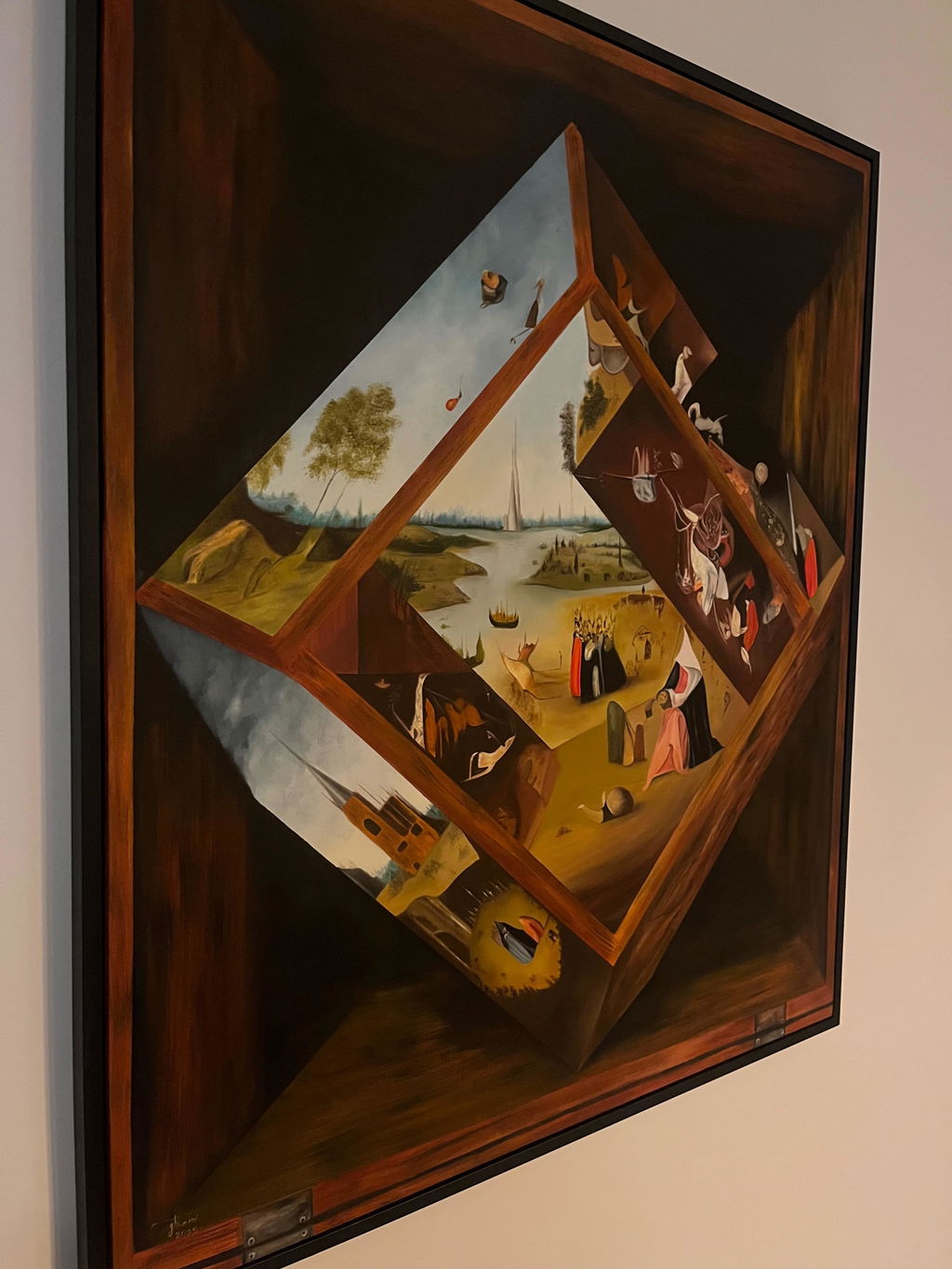
A photograph of the work. This is the element most often left out and the one that matters most, because it is what allows a certificate to be matched back to its painting if the two are ever separated.
-
Whether the work is unique, or if not, the edition size and this work's number within it.
-
A signature, and the name and role of whoever signed it.
-
The date of issue, and contact details that will still work later.
A certificate carrying all of these is genuinely useful. One that names the artist and nothing else is close to useless, because it could be attached to any painting.
Whose signature makes a certificate worth having
This is the whole question. A certificate is a statement, and a statement is worth what the person making it is worth.
The artist is the strongest possible signatory for a contemporary work. Nobody is better positioned to confirm they made something, and for a living artist this is usually verifiable by simply asking them.
The gallery that sold the work new is the next strongest. It acquired the painting from the artist, so it is stating something it witnessed directly, and it has a reputation that depends on being right.
An artist's estate, foundation or authentication committee carries authority for artists who have died, where these bodies exist.
A previous owner is weak. They can confirm they owned it, which is useful for provenance, but they were not present when it was made.
An unnamed or uncontactable party is worthless. If the signature cannot be traced to a person who can be asked about it, the document proves nothing.
What a certificate does not do
A certificate does not establish value. It is not an appraisal, it is not a valuation, and it creates no financial guarantee. An insurer asking for evidence of a painting's worth wants an appraisal, which is a separate document produced by a qualified appraiser. Our page on insuring and appraising original art covers that difference.
A certificate also cannot make a doubtful painting genuine. If the physical evidence and the ownership record point one way and the certificate points the other, the certificate is the weakest item in the set, because it is the easiest to produce. The checks on our page about how to tell if a painting is real carry more weight than any paperwork.
And a certificate does not replace provenance. The ownership record is the stronger document, because it accumulates from many independent sources over time rather than being produced by one party at one moment.
What we issue, and what we say about it
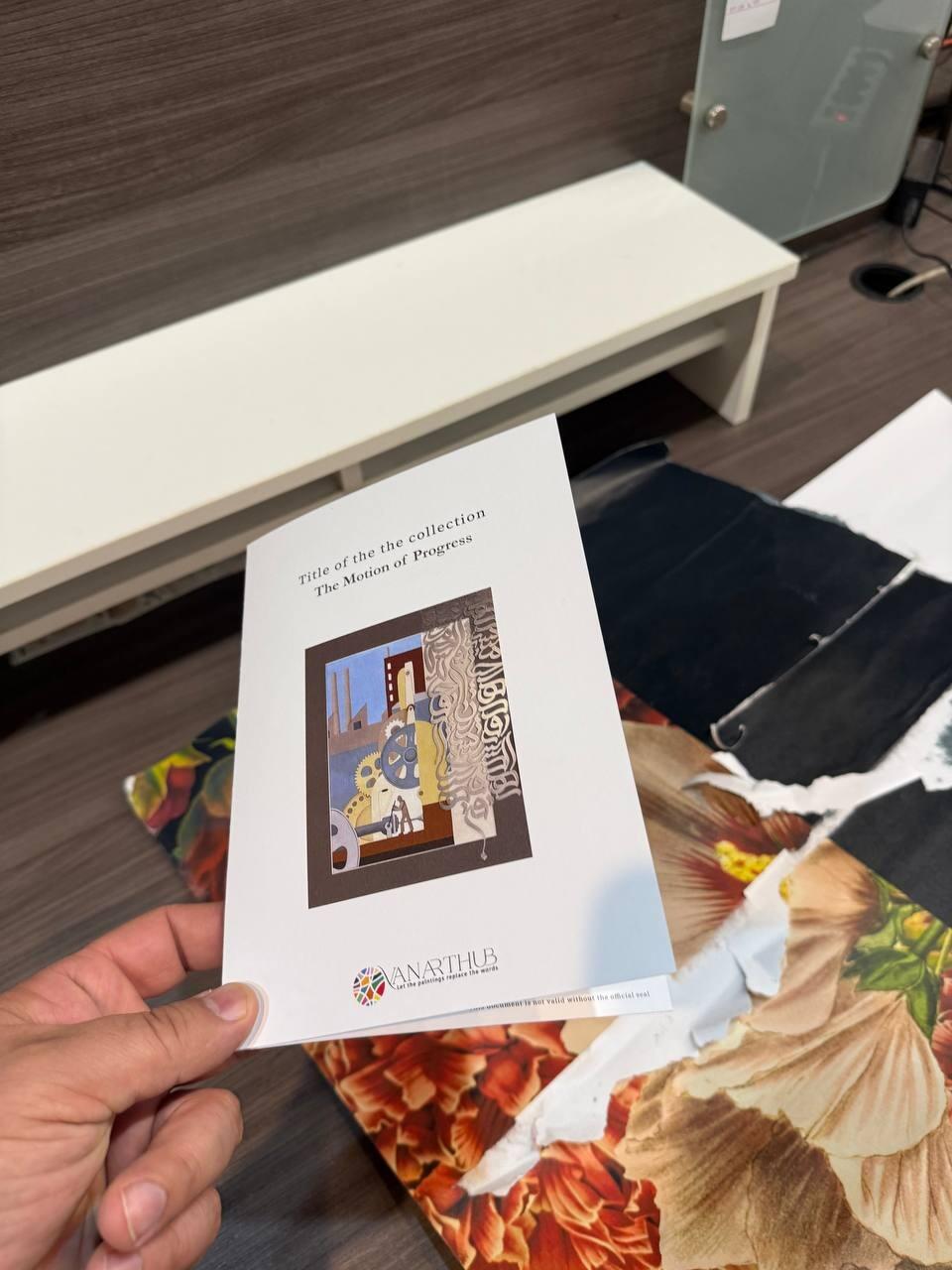
Every painting VanArtHub sells ships with a Certificate of Authenticity recording the title, the artist, the medium, the dimensions, the year, and the details of the sale, signed on issue. As of 5 September 2026 that covers 148 original paintings listed, from $531 to $8,000 with a median of $1,265, all in Canadian dollars.
We buy directly from the artists who make the work, so our certificate states something the gallery witnessed rather than something it inferred. We keep our own record of every sale, which means a certificate can be checked against our files years later.
We also say plainly what it is not. It is not an appraisal, it carries no guarantee of future value, and it is not a substitute for insuring the work properly. Any seller telling you a certificate makes a painting a safe investment is describing a document that does not exist.
Frequently asked questions
Does a certificate of authenticity increase what a painting is worth?
A certificate of authenticity does not increase what a painting is worth, because it records identity rather than value. What it can do is protect value at resale, by making it easier for the next buyer to establish that the work is what it claims to be. A painting with clear documentation is easier to sell than an identical one without, which is a practical benefit rather than an increase in value.
Who is allowed to issue a certificate of authenticity?
Anyone can issue a certificate of authenticity, because no authority regulates them and no accreditation is required. That is precisely why the signature matters more than the document: the certificate carries whatever weight its signatory carries. In practice the meaningful issuers are the artist, the gallery that sold the work new, and an artist's estate or foundation.
What should I do if a painting I own has lost its certificate?
If the artist is living, contact them directly with clear photographs and the details of your purchase, as many will reissue a certificate for a work they recognise. If you bought from a gallery, ask them, since a gallery that keeps sale records can usually confirm the transaction. Keep the original invoice regardless, because a dated purchase record from a named seller is often stronger evidence than the certificate was.
Is a digital or blockchain certificate better than a paper one?
A digital certificate solves the problem of the paper being lost or damaged, and a blockchain record makes the issue date difficult to alter after the fact. Neither changes the fundamental limitation, which is that the record is only as reliable as the party who created it. A blockchain entry made by someone with no connection to the artist proves exactly as little as a printed page from the same source.
Should a certificate be attached to the back of the painting?
A certificate should be stored separately from the painting rather than attached to its back, even though attaching it seems tidier. Adhesives, tape and staples damage the reverse of a canvas, and the reverse is part of the work's physical record. Keep the certificate with your purchase invoice somewhere safe and dry, and photograph it so a copy survives if the original is lost.
What is the difference between a certificate and an appraisal?
A certificate of authenticity states who made a work, while an appraisal states what it is worth on a given date. They answer different questions, are produced by different people, and are not interchangeable. Insurers and estates ask for appraisals, which are prepared by qualified appraisers and expire in practical terms as the market moves, whereas a certificate does not go out of date.
Do older paintings usually have certificates?
Older paintings usually have no certificate, because the practice of issuing them became common relatively recently. For historical work, the evidence is the ownership record, exhibition and auction history, and where the artist is significant enough, inclusion in a catalogue raisonné. The absence of a certificate on an older painting is entirely normal and is not a reason for suspicion.
Can a certificate of authenticity be forged?
A certificate of authenticity can be forged easily, since it is a printed document with a signature and no security infrastructure behind it. This is the central reason it should never be treated as proof on its own. The defence is to verify the signatory independently by contacting the artist or gallery named on it, rather than to look for security features on the paper.
Does VanArtHub's certificate guarantee resale value?
The VanArtHub Certificate of Authenticity records the title, artist, medium, dimensions, year and sale details, and it is not a guarantee of resale value. No certificate from any gallery guarantees value, because value depends on the market rather than on documentation. What VanArtHub does offer alongside it is a Lifetime Trade-Back, which allows a piece to be traded back toward store credit.
What paperwork should I keep after buying a painting?
Keep the certificate of authenticity, the purchase invoice showing the seller and the date, and any correspondence with the gallery or artist about the work. Photograph the front, the back, and the signature, and store the images somewhere separate from the paper. Together these establish both authenticity and ownership, which is what an insurer or a future buyer will ask to see.
Sources and references
Each link was opened and confirmed to resolve on 5 September 2026.
-
Deceptive marketing practices. Competition Bureau Canada. Accessed 5 September 2026. Relevant to claims made about a work at the point of sale.
- VanArtHub catalogue figures (148 active originals, $531 to $8,000, median $1,265, Canadian dollars) and certificate contents, taken from the store's own product and sale records on 5 September 2026.
No issuing authority publishes a standard for certificates of authenticity in the visual arts. The conventions described on this page are common gallery practice and our own, stated as such rather than as a rule.