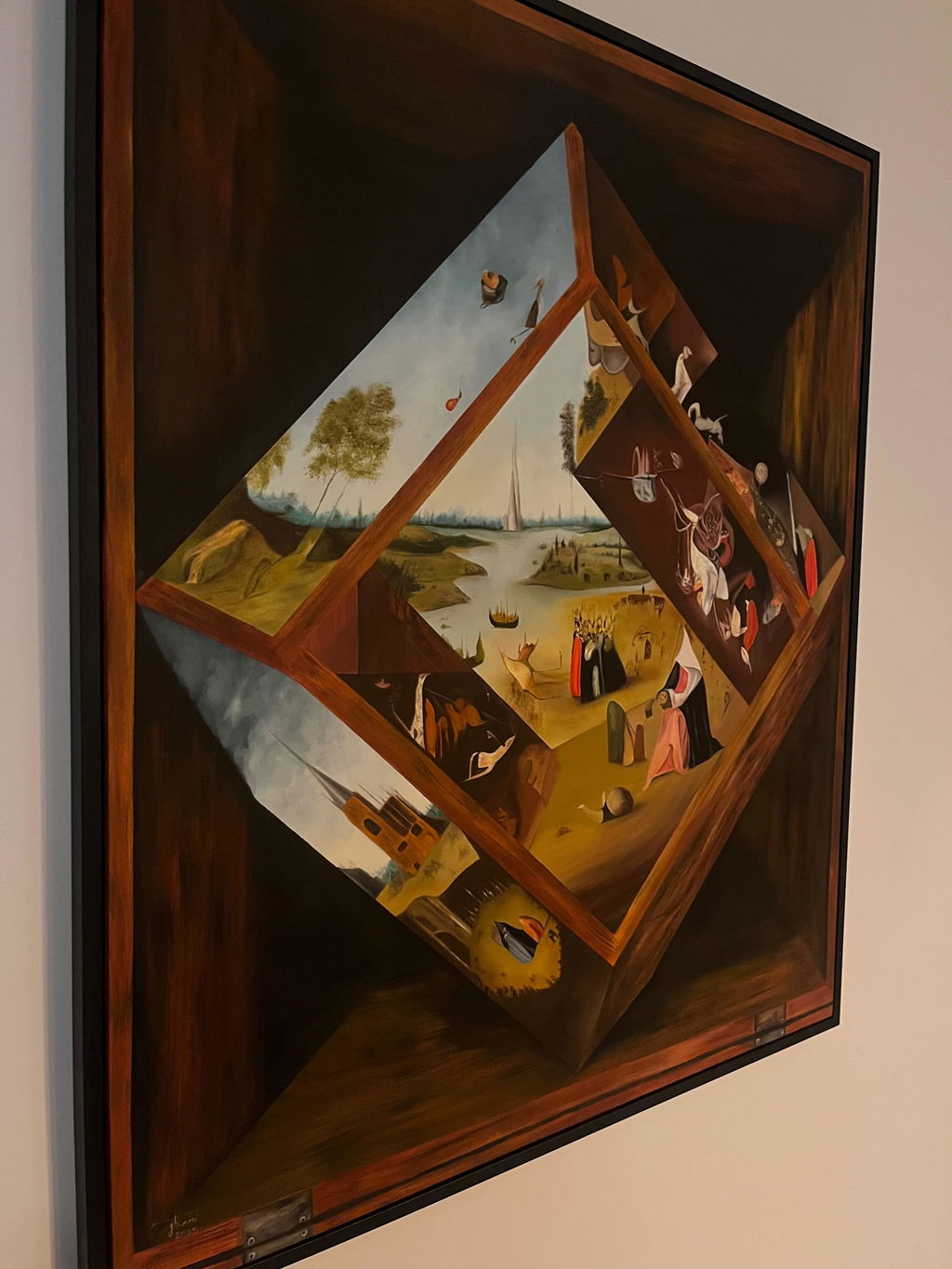
A floater frame is the cleanest way to finish a stretched canvas. The canvas sits inside the frame with a small gap all around, so the painting looks like it floats, and none of the painted surface is hidden.
This is our default frame for oil and acrylic on stretched canvas, and it is what most modern galleries use. Here is how it works and when it is the right call.
How a floater frame is built
A floater frame does not sit on top of the canvas the way a traditional frame does. Instead, the canvas is attached to the frame from behind, and the frame wraps around the outside edge with a narrow channel between the two. That channel, usually a few millimetres wide, is the gap that gives the floating look.
Because the frame never touches the front face, every bit of the painting stays visible, including the edges where the artist often carries the paint around the sides. For a gallery wrap, where the image continues onto the sides, a floater lets you keep that wrap on show while still giving the piece a finished border.
Why it suits canvas so well
Stretched canvas is usually not put behind glass. The surface has texture, and often real impasto where the paint stands up off the cloth, and glass would flatten all of that and add glare. A floater frame solves the finishing problem without glass. It gives the canvas a clean edge and protects the corners, while leaving the surface open to the room.
-
No glass, no glare: the texture and depth of the paint stay visible.
-
Full painting on show: the frame covers none of the image.
-
Modern, quiet look: the frame frames the art without competing with it.
-
Edge protection: the corners and sides of the canvas are guarded.
When to choose a floater, and when not to
Choose a floater when your piece is oil or acrylic on stretched canvas and you want a modern, finished edge. It works especially well for abstract work, where a busy traditional moulding would fight the art. See our abstract paintings and oil paintings for the kind of work this suits.
A floater is not the pick for works on paper. Paper needs a mat and glass to stay flat and protected, so a floater does not apply there. If your piece is a watercolour or a print, read UV glass and glazing instead. And if your room leans classic, a wider wood moulding may suit better, which we cover in custom framing styles.
Finishes and colour
Floater frames come in a range of finishes. The three most common are black, white, and natural wood. Black gives a sharp, defined edge and reads well against light walls. White almost disappears and keeps a bright room feeling open. Natural wood adds warmth and pairs nicely with earthy or landscape colours. For help matching the finish to your room, see frame colour by room.
When we frame one of our own paintings, we hand pick the floater to suit the piece, then ship it ready to hang from our Vancouver studio. Every original is signed by a Canadian artist and comes with a Certificate of Authenticity.
Frequently asked questions
Want a floater frame on a piece you love? Contact us with the size and a photo and we will quote it. Browse frame-ready canvases in all artworks, or read the full custom framing guide.
Common questions
What is the gap around a floater frame for?
The small gap is the whole point of the style. It separates the canvas from the frame so the painting appears to float, and it means the frame never covers any of the painted surface. The gap is usually a few millimetres wide. It is a design choice, not a fault.
Can a gallery wrap canvas take a floater frame?
Yes, and it is a common pairing. A gallery wrap has paint carried around the sides, and a floater frame lets that wrapped edge stay visible while giving the piece a clean border. You get the finished look of a frame without hiding any of the art.
Do floater frames use glass?
No. Stretched canvas is not put behind glass, so a floater frame has no glazing. This keeps the texture and depth of the paint fully visible and avoids glare. Glass is only for works on paper, which are framed a different way.
Can you add a floater frame to a canvas I already own?
In many cases yes. Send us the exact size and clear photos, and we will confirm the fit and quote the work. Very large or fragile canvases may need extra care, and we will tell you honestly before you commit.
How wide should the gap be on a floater frame?
Most galleries use 6 to 10 millimetres. Narrower reads as tighter and more modern; wider draws more attention to the shadow line itself. On a very large canvas a slightly wider gap keeps the proportion from looking mean against the size of the piece.
What wood or finish do floater frames come in?
Natural oak, walnut, and maple are the most requested, alongside black, white, and a raw unfinished look. Metal floater profiles in matte black or brushed aluminum are also available for a more precise, modern edge. See wood vs metal frames.
Does a floater frame protect the edges of the canvas?
Yes, that is one of its practical jobs alongside the look. The frame wraps the outside edge of the stretcher bars, so a knock to the wall or a shift in transit lands on the frame first, not on the painted edge of the canvas.
Can a floater frame be removed later without damaging the canvas?
Yes. A floater frame attaches to the stretcher bars from behind with screws, not glue, so it comes off cleanly. You can rehang the canvas bare, put it in a different floater, or move to a traditional frame with no mark left on the painting.
Do floater frames work on small canvases too?
Yes, down to quite small formats. On a small canvas keep the gap toward the narrow end, around 6 millimetres, so the frame does not read as oversized next to the painting. Larger canvases can carry a wider gap without looking thin.