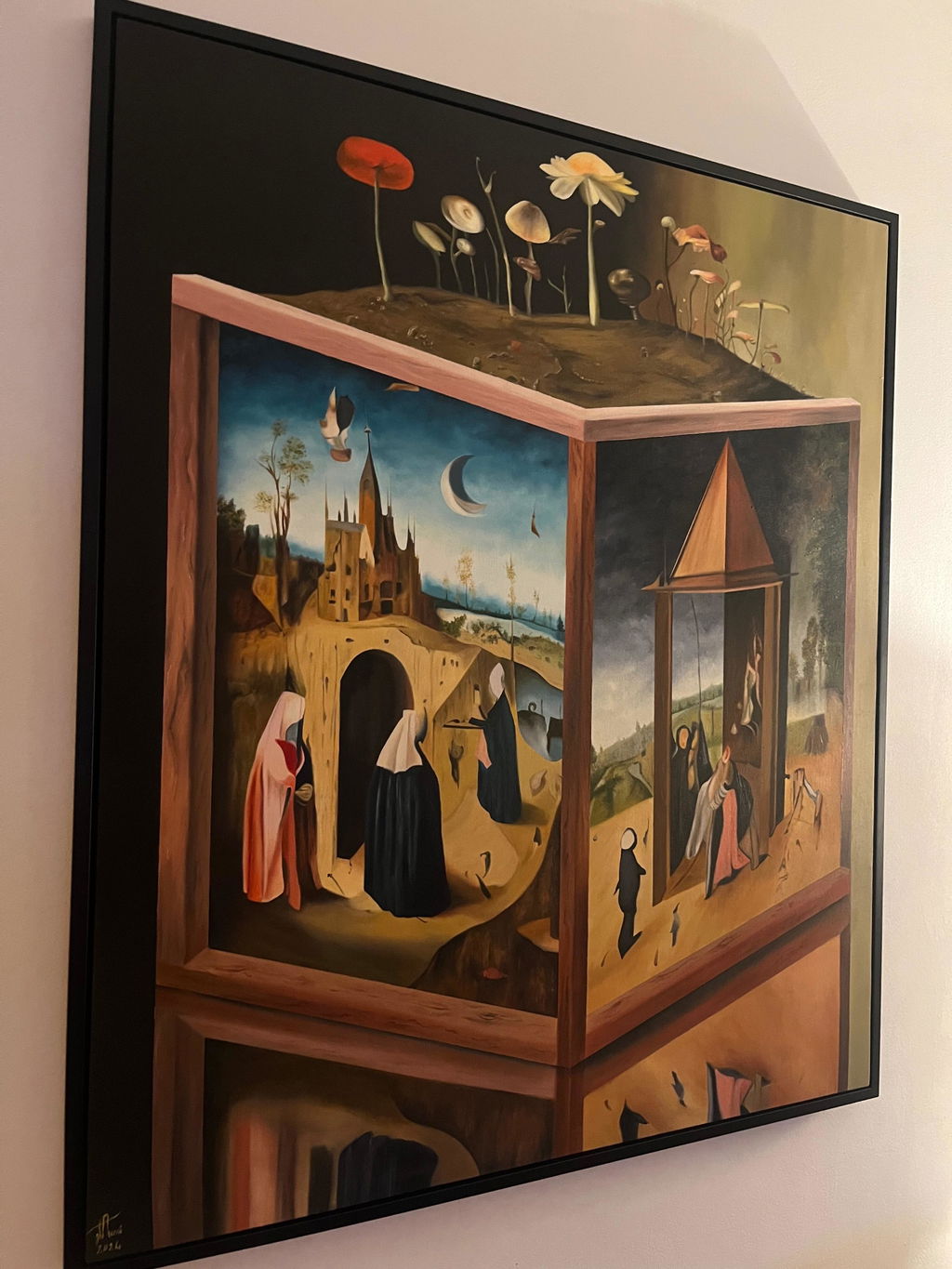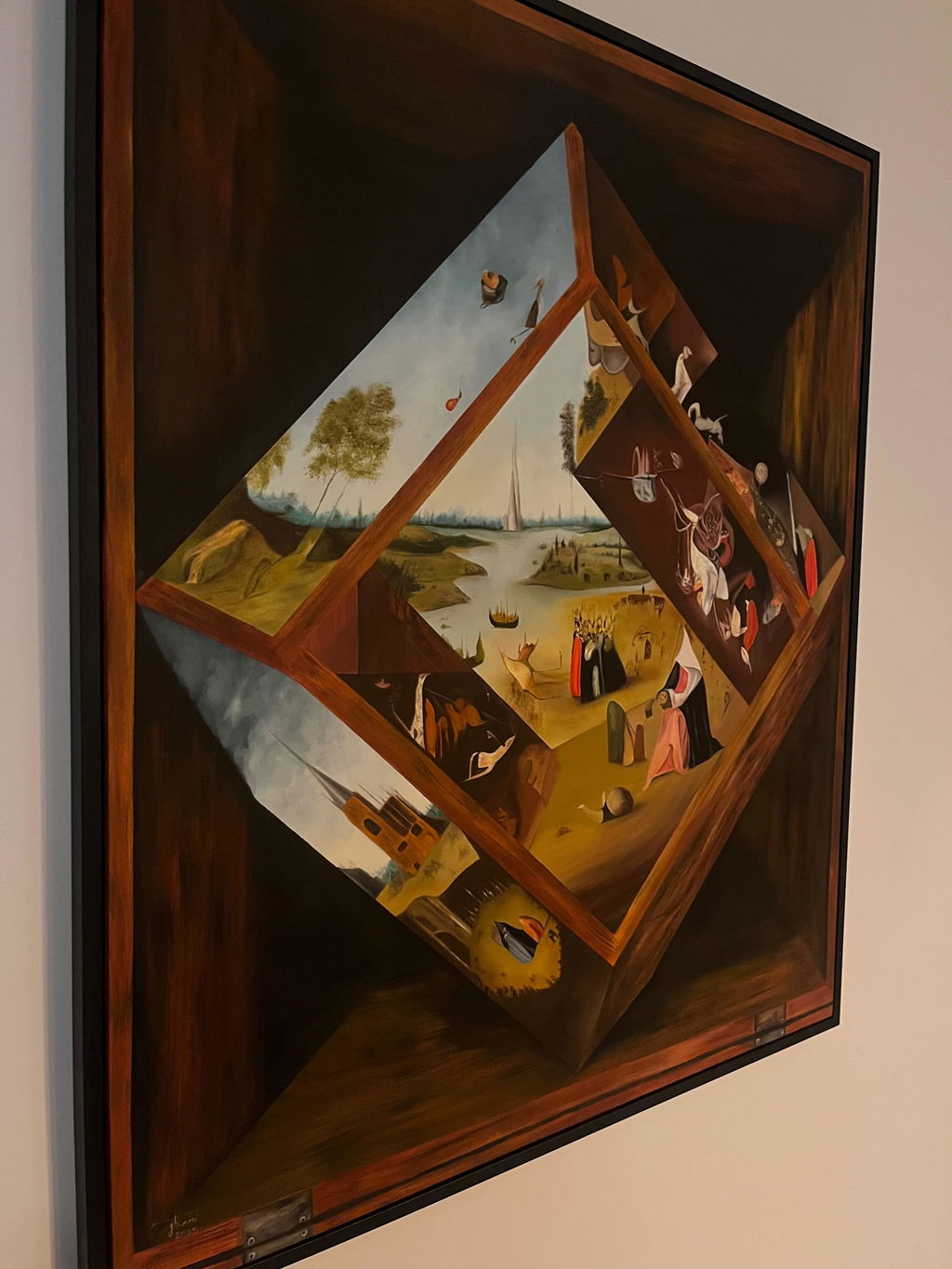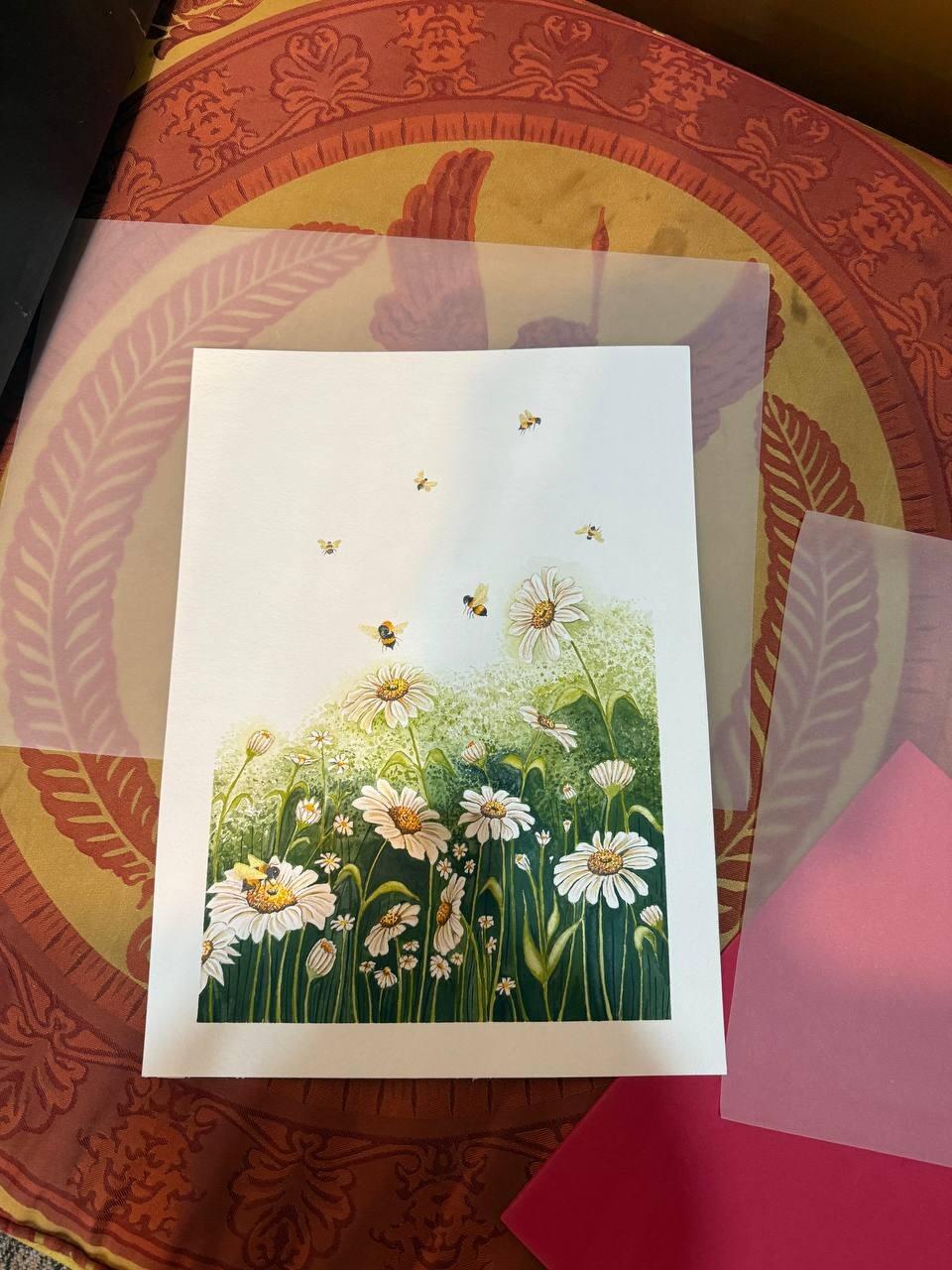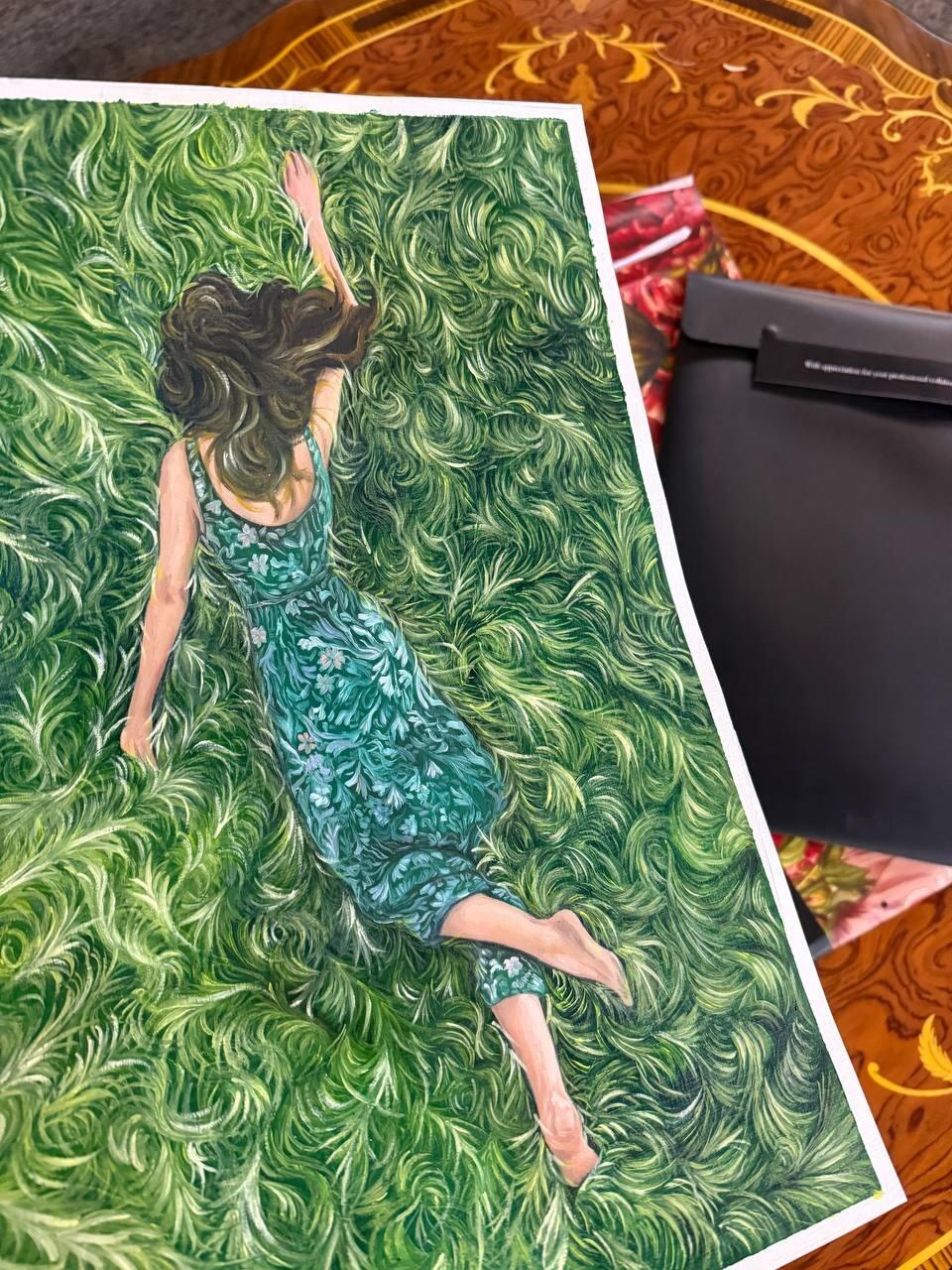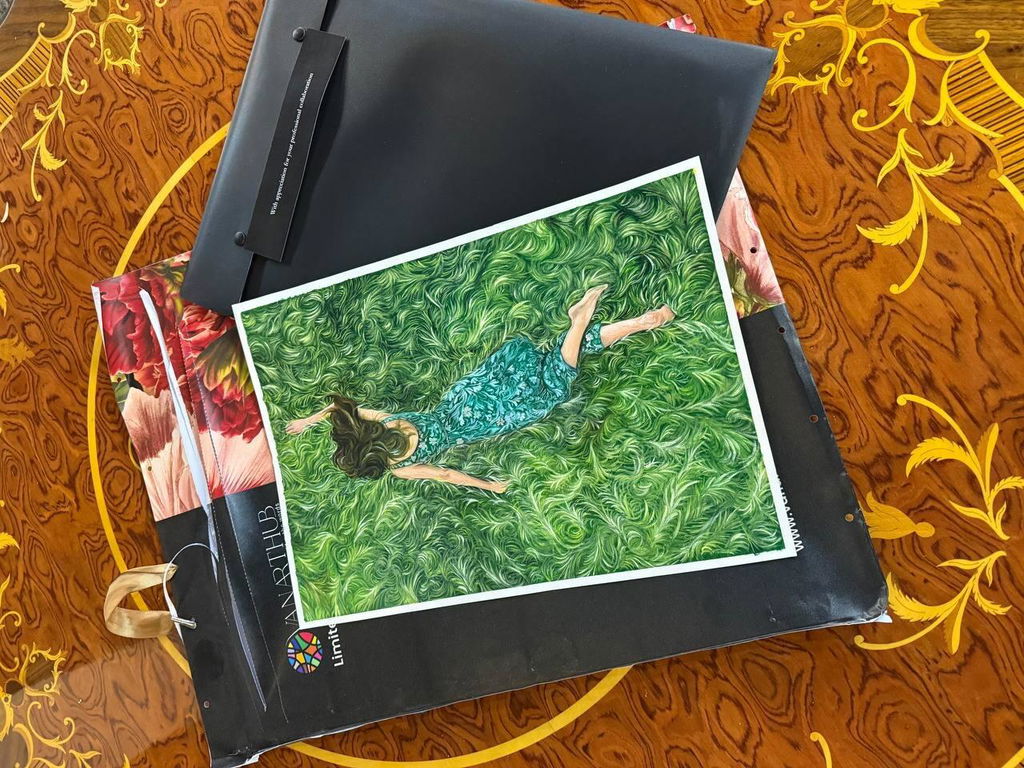
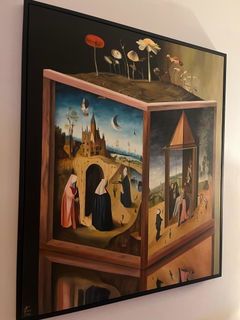
Original Abstract Paintings

Original abstract paintings by independent artists, each one hand-painted, signed, one of a kind, and backed by a 14-day home trial with free insured shipping.

How is an original abstract painting actually made?

It is built in layers over hours or weeks, and each pass leaves a record you can still see in the finished surface. Most artists start by covering the canvas fast, often with thinned paint and a wide brush or a rag, to kill the white and set a temperature. Then the decisions slow down. Some layers go on wet into wet so the colours mix on the canvas, and others wait until the layer below is dry so the new mark sits on top with a hard edge. Paint gets scraped back, sanded, wiped off with a cloth, or buried under another colour. What you finally see is the last five percent of a long argument, with the earlier rounds still showing at the edges. That history is what gives a good abstract its depth. This collection is the made-by-hand side of abstraction, so if you would rather browse by mood and subject, start with our abstract collection instead.

The Secret of Creation: Original Acrylic on Canvas by Roshan | VanArtHub, an original painting in the Abstract Paintings: Contemporary Original Art | VanArtHub collection
The Secret of Creation: Original Acrylic on Canvas by Roshan | VanArtHub · $2,801.00

Which abstract painting technique should you look for?

Pick the technique by how close you will be standing, because texture only pays you back within a few steps of the canvas.

TechniqueHow it is madeWhat you see in personUsual medium
ImpastoPaint applied thick, straight from the tube or with a knifeRidges that cast real shadows and shift as the light movesOil, heavy body acrylic
Palette knifePaint pushed and scraped flat with a steel bladeCrisp planes with a small ridge of paint at the end of each strokeOil, acrylic
GlazingThin transparent layers over a dry layer beneathColour that looks lit from behind, deep and slow to readOil, acrylic with medium
Pouring and fluid workThinned paint poured and tilted across the surfaceSoft cells and veins, no brush marks, often glossyAcrylic
Dry brush and scumblingNearly dry paint dragged over an existing textureBroken misty edges with older layers showing throughOil, acrylic
Textured groundMarble dust, sand, or paste mixed into the groundA rough physical surface you can read with your handAcrylic based

Surface matters more as the wall gets bigger, which is why most of our large abstract paintings are knife work or impasto rather than thin washes.

Why can a print never copy a hand painted abstract?

Because the content of a textured abstract is physical, and printing flattens the exact thing you are paying for. A ridge of paint two millimetres high throws a shadow that moves when you walk past and changes completely between morning daylight and a lamp at night. A print of that ridge is a picture of one shadow, frozen at one angle, on a flat sheet. The irony is that the case for prints gets made entirely with photographs, which erase every dimension where the original wins. Now the honest exception: some abstraction is deliberately flat, matte, and even, and a well printed reproduction of that kind of design comes much closer. The texture argument is strongest for work with a real surface and weakest for work without one. You can watch pieces being built layer by layer in watch art being made, which is as close as a screen gets.

Silent Echo: Original Acrylic on Canvas by Peyman Mehdizadeh | VanArtHub, an original painting in the Abstract Paintings: Contemporary Original Art | VanArtHub collection
Silent Echo: Original Acrylic on Canvas by Peyman Mehdizadeh | VanArtHub · $1,807.00

How do you judge quality in an abstract canvas?

Squint at it. If the composition still holds when the detail disappears, the structure is real, and if it collapses into a pile of pretty marks it was never composed. After that, look for four things. Decided colour instead of muddy colour, which means the artist mixed on the palette and committed rather than stirring everything together on the canvas. Edges that vary on purpose, some sharp and some lost. Evidence of layers, because a one-pass painting looks thin beside a built one. And a finished object: painted or wrapped sides, a signature, a clean back, and hanging hardware that will hold the weight. Most of our abstract work is acrylic on stretched canvas and arrives with a Certificate of Authenticity. If the surface does not do in person what it did on screen, the 14-day home trial takes it back with a full refund and we pay the return shipping.

Frequently asked questions

Why does this page have so few paintings compared with your main abstract collection?

This page holds a small set of large, more involved abstract canvases, priced from about $800 to $1,550, while our wider abstract collection starts near $72 and includes small works. Everything here is at least 89 cm wide, so these are statement pieces for a main wall. If you want smaller or cheaper abstract work, the wider collection is the better place to look.

Are these canvases too big for a condo?

They are big, from about 89 by 102 cm up to roughly 127 by 140 cm, so they need a clear wall with nothing crowding it. In a condo that usually means the wall behind the sofa or the one you see when you walk in. If your longest clear wall is under about 150 cm, one of these will look squeezed and you should size down.

What does acrylic, oil and pen on canvas mean on one of these pieces?

It means the artist used all three materials on one canvas, so you see painted areas and drawn line in the same work. Acrylic dries fast and holds flat shapes, oil stays workable and blends, and the pen puts a deliberate line on top. In person this reads as more layers and more detail than a single medium canvas.

Is one of these enough for a whole living room wall, or do I need two?

One is enough on most living room walls. These canvases run up to about 127 by 140 cm, which fills the space above a standard sofa without a second piece beside it. Because every painting here is one of a kind, a matched pair is not possible anyway. On a very wide wall, hang one of these as the anchor and keep the rest quiet.

If a canvas this large does not work in my room, can I still send it back?

Yes, the 14-day home trial covers these large canvases like any other piece, and we pay the return shipping. Size is the main reason people change their mind, so we would rather you hang it and find out than agonise over a tape measure. Return it within 14 days in the condition it arrived and you get a full refund.

Do Peyman Mehdizadeh and Roshan have other work on your site?

Yes, both artists appear beyond this page. Their work also shows in our wider abstract collection and in our colour based collections, so if the pieces here are sold or not quite right, search their names across the site. Because each painting is one of a kind, seeing several works by the same artist is the best way to understand how they paint.

What makes an abstract painting an original rather than a print?

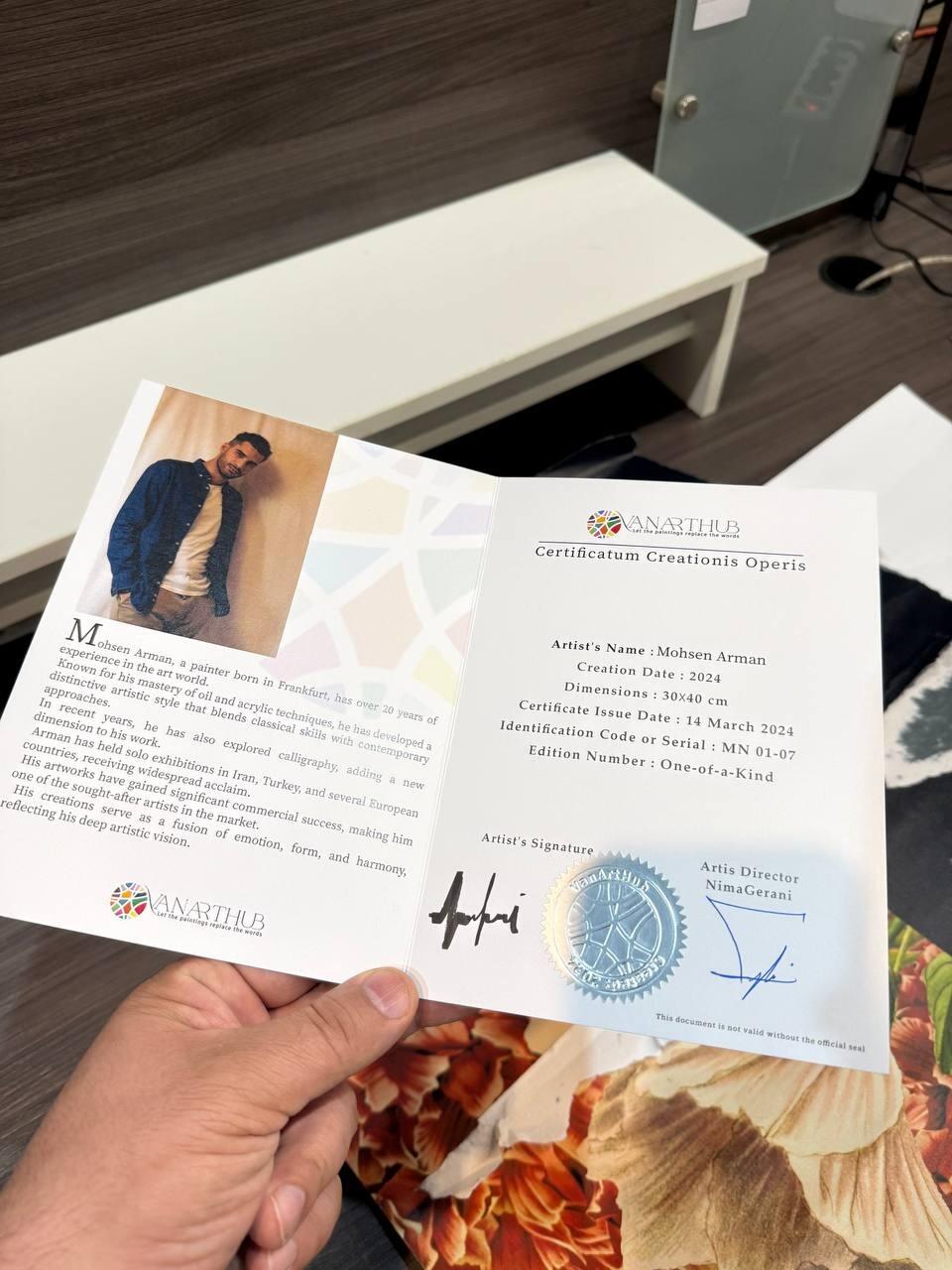
An original abstract is painted by hand on canvas or panel and exists once. With a lamp shining across it from one side you can see brush and knife marks standing above the surface, and the sides usually carry paint. Ours are signed by the artist and shipped with a Certificate of Authenticity naming the title, medium, and size.

How much do original abstract paintings cost?

Small originals start around $72, most mid size canvases run $400 to $1,000, and large statement work sits above that. Heavy impasto costs more than thin work at the same size, because it uses far more paint and needs long drying time between layers. Size and hours drive the number, not the subject.

What size abstract canvas do I need for a large wall?

For a wall wider than 3 m (10 ft), plan on at least 140 to 200 cm (55 to 79 in) of artwork, either as one canvas or a pair hung close together. Undersizing is the most common mistake we see. If you are between two sizes on a big wall, take the larger one.

How do I choose an abstract painting for my room?

Pull two or three colours out of the painting and hold them against your floor, your wood tones, and the largest textile in the room, then check the scale against the furniture below. Do the colour test in the room's real evening light, not only in daylight. Then buy the piece you keep going back to.

How do you clean a textured abstract painting?

Dust it every few months with a dry, soft, natural bristle brush, working from the top down. Never use water, household cleaner, or a damp cloth, because acrylic and unvarnished oil surfaces both hold moisture and grime in the ridges. Keep it out of direct sun and away from cooking grease.

How do I know the painting is hand painted and not machine made?

Ask for a photo taken with a lamp low to one side, which reveals the real height of every mark. Hand painted work has irregular ridges and small imperfections, while printed canvas stays uniformly flat. You can also watch our artists working on pieces in the studio before you decide to buy.

When is an abstract painting the wrong choice?

Skip it when you want the artwork to sit quietly in the background but you have fallen for a bold, high contrast piece, or when you are only trying to fill a gap quickly. In a room already full of pattern, a smaller and calmer canvas is the better call, and it will still read as original work.