If you have ever taken an old picture out of its frame and found a brown line burned around the edge of the image, exactly where the mat sat, you have seen acid burn. It is the most common framing damage there is, it is entirely preventable, and it cannot be reversed.
What actually happens
Ordinary mat board and backing card are made from wood pulp, and wood pulp contains lignin, the compound that makes wood stiff. Lignin breaks down over time, especially with light and warmth, and as it breaks down it produces acids.
Those acids do not stay put. They migrate into whatever the board is touching, which is your artwork. The paper discolours, goes brittle, and takes on the brown stain that follows the exact shape of whatever was against it. Because the mat touches the edges and the backing touches the whole reverse, the damage arrives from both directions at once.
Timescale: on cheap board, visible within about ten to fifteen years in ordinary conditions, faster in a warm or bright room. Sometimes considerably faster.
The grades, in plain terms
| Grade |
What it is |
Use it for |
| Ordinary / standard |
Untreated wood pulp. Will go acidic. |
Nothing you care about. Posters at most. |
| Conservation |
Wood pulp, purified and buffered so the lignin and acid are removed. |
The sensible default for original work. |
| Museum / cotton rag |
100% cotton fibre. No lignin to begin with. |
Valuable, irreplaceable, or long-term work. |
"Acid-free" on its own is a weaker claim than it sounds. Board can be acid-free today and turn acidic as it ages, if the lignin is still in it. What you want is acid-free and lignin-free, which is what conservation and museum grades give you. If a supplier will only say "acid-free", ask the second question.
The part that gets skipped
People will pay for a good mat and then let ordinary corrugated cardboard go in behind the artwork, because nobody sees it. The backing is in contact with the entire reverse of the sheet, so it does more damage than the mat does. Corrugated cardboard is the worst common offender: it is highly acidic and it prints its own ridge pattern into the back of the paper over time.
Everything in the package that touches the work has to be conservation grade: mat, backing, hinges, and tape. One cheap component undoes the rest.
Tape, which ruins more work than board does
Never let ordinary tape near artwork. Masking tape, cellophane tape, and packing tape all fail the same way: the carrier dries out and falls off, and the adhesive stays behind as a hard brown stain that has soaked into the fibres. Removing it is a conservator's job and it is not always possible.
Correct hinging uses Japanese tissue and a starch paste, or a purpose-made conservation tape. Both are reversible with moisture, which is the whole point: a future framer can undo it without touching the artwork. See framing works on paper.
Why it matters more on some work than others
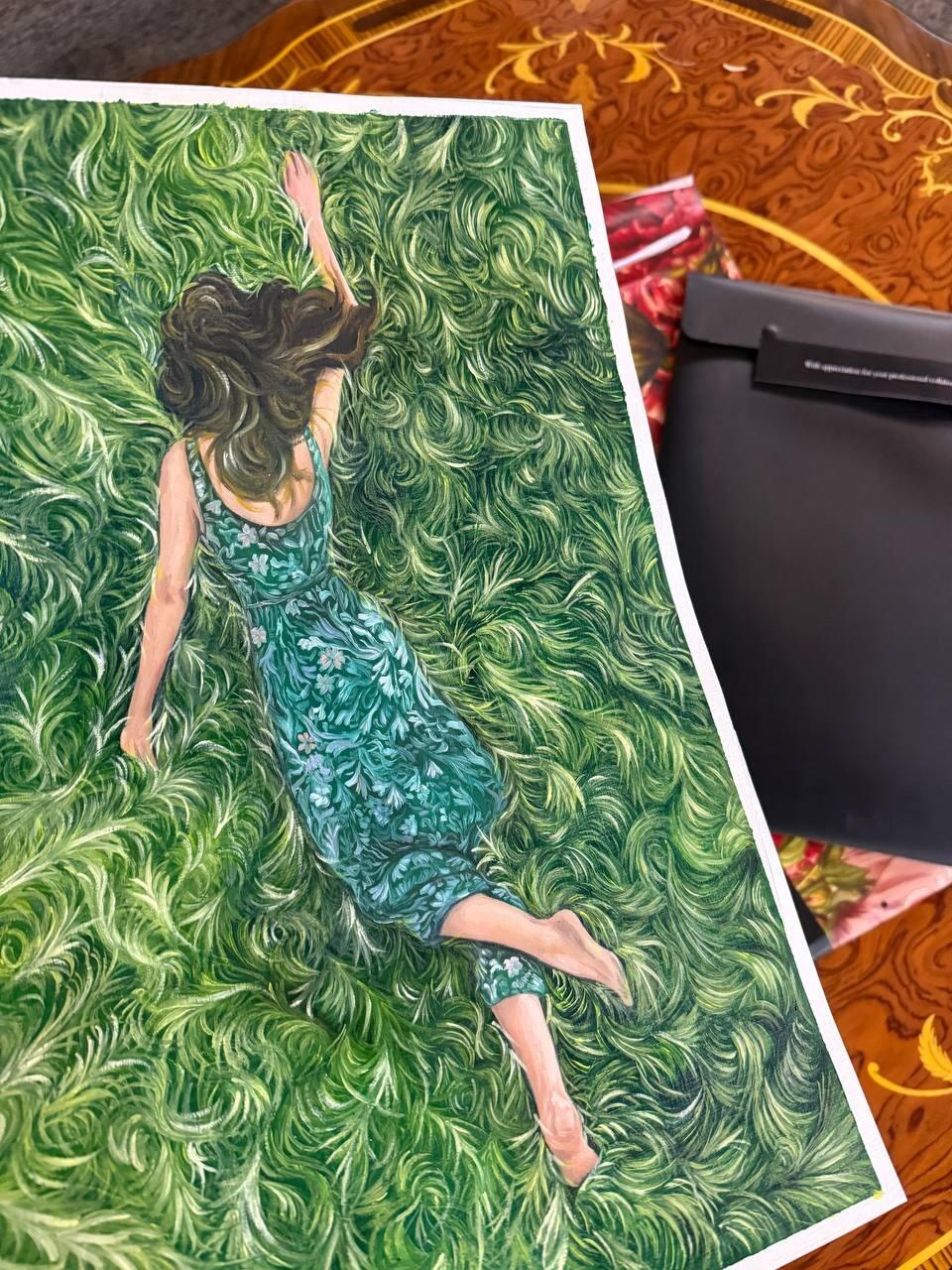
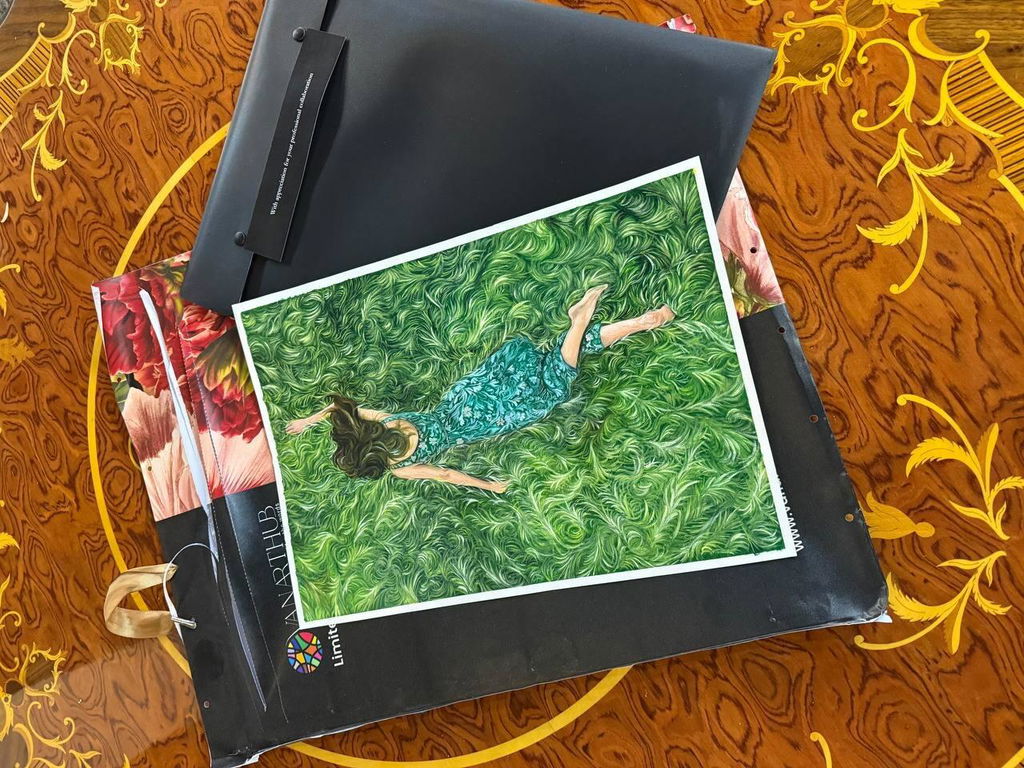
Anything on paper or board is at risk, and the finer the paper, the faster it shows. Coloured pencil and graphite pieces on artboard, such as Between Breath and Breakdown, sit directly against the mat and the backing for their entire life. A canvas is not touching either, which is one of the reasons canvas framing is more forgiving.
What we use
Conservation-grade mat board and backing on everything on paper, without asking, because the difference in cost is small and the difference in outcome is permanent. Cotton rag when the piece warrants it. No ordinary card, no corrugated board, and no pressure-sensitive tape anywhere in the package. See our conservation framing standards.
Buffered versus unbuffered board, in more depth
Buffering means an alkaline compound, usually calcium carbonate, is added to the board during manufacture to neutralise acid as it forms, effectively giving the board a reserve that keeps it acid-free for longer than an unbuffered acid-free board of the same fibre content. Most conservation and museum board sold today is buffered by default, because it suits the majority of what gets framed: works on paper, prints, drawings, and documents.
Unbuffered board leaves out that alkaline reserve, and it exists because a small number of materials are actively harmed by an alkaline environment rather than protected by it. Photographic prints are the main case: many photographic processes, especially older gelatin silver and some colour processes, contain materials that can shift colour or degrade faster in contact with an alkaline buffer over time. Certain other protein-based or dyed materials, some textiles and a handful of colourants used in historical documents, carry the same sensitivity.
The practical rule: if the piece is a work on paper in graphite, ink, charcoal, watercolour, or is a print, buffered conservation or museum board is the correct and standard choice. If the piece is a photograph, particularly anything printed before digital photography became standard, ask specifically for unbuffered board, or say so when you order and it will be matted accordingly. When in doubt about what process a piece was made with, tell us and we will match the board to the material rather than defaulting to buffered for everything.
Common questions
Can acid burn be repaired?
A paper conservator can sometimes reduce the staining, but it is expensive and never complete, and the paper stays weakened. The only real answer is not to let it start. If you have an old frame with cheap board in it, replacing the board now stops the clock even though it cannot turn it back.
How do I know what is in a frame I already own?
Open it, or ask us to. Corrugated cardboard is obvious. Grey or brown board with a yellowing edge is almost certainly acidic. Conservation board stays white or cream through the core; if you can see the bevel, look at the cut edge for a discoloured line.
Is a buffered board always the right choice?
Almost always, but not quite. Buffering adds an alkaline reserve to neutralise acid, which suits most paper. Some materials, notably certain photographs and protein-based media, do better unbuffered. If a piece is a photograph rather than a work on paper, say so and it will be matted accordingly.
What causes a mat to become acidic in the first place?
Ordinary wood-pulp board contains lignin, a compound in raw wood fibre that breaks down into acidic byproducts over time. Conservation and museum board is made from purified cotton or alpha-cellulose with the lignin removed, so it does not generate that acid as it ages. This is the actual chemical difference, not just a marketing label.
How fast does acid burn actually happen?
It is slow but steady, typically becoming visible as a yellow-brown line at the mat window after ten to twenty years in a cheap board, faster in a humid or warm room. It is not something that shows up in months, which is exactly why it goes unnoticed until a frame is finally reopened.
Does acid-free backing matter if the piece already has a mat?
Yes, just as much. The backing board sits directly against the back of the artwork with no gap, so an acidic backing can burn the reverse of the paper even when the front mat is perfectly conservation grade. Both layers need to be acid-free for the protection to actually work.
Is acid-free tape different from ordinary tape?
Yes, considerably. Ordinary pressure-sensitive tape and masking tape contain adhesives that degrade and stain paper, often permanently. Conservation hinging uses either a starch-based paste or an acid-free, pH-neutral tape designed specifically for archival use, and it is applied so it can be removed later without damaging the sheet.
Can acid-free board still discolour over a very long time?
It resists discolouration far better than wood-pulp board, but no material is completely immune to a century or more of light and air exposure. What acid-free board removes is the internal chemical decay that causes staining from the inside out. External fading from light exposure is a separate issue that glazing and placement address.