Is Your Wall Art Vegan? A Practical Buyer's Checklist
Updated By VanArtHub Curatorial TeamShare
Is your wall art vegan? You cannot tell by looking at it, and that is the whole problem. The pigments, the binder, the ground under the paint, even the sizing inside a sheet of paper can carry animal ingredients that leave no visible trace on the finished work. This post is the short, practical version: what to check and what to ask. For the step-by-step deep dive, our full guide on how to verify vegan art goes maker by maker.
Why looks tell you nothing
A finished painting hides its recipe. The most common animal ingredients in art are invisible by design: bone black, a pigment that Golden Artist Colors states is made from carbonized cattle bones, reads as a plain deep black. Carmine, which Britannica describes as a pigment obtained from cochineal insects, reads as a beautiful red. Rabbit-skin glue in a traditional gesso sits under every layer of paint where no one will ever see it. If vegan materials matter to you, the label and the artist are your only real sources.
The five questions that settle it
You do not need a chemistry degree. Five questions cover the layers of almost any painting:
- Which pigments, especially the blacks and reds? The index name PBk9 on any tube means bone char. The words carmine, cochineal, or E120 mean insect-derived red. Golden's Just Paint journal names carbon black (PBk7) and Mars black (PBk11) as the animal-free blacks.
- What is the binder? Acrylic binder is a synthetic polymer. Linseed oil is pressed from flax and is plant-based, but some oil ranges add animal ingredients: Golden states all of its Williamsburg oil colours contain small amounts of beeswax.
- What is the ground? Traditional gesso and traditional canvas sizing use rabbit-skin glue, which Golden describes as refined rabbit collagen. Modern acrylic gesso and acrylic sizing are synthetic.
- If the work is on paper, how is the sheet sized? Many fine watercolour papers use gelatin; Arches states its watercolour paper is gelatin-sized to the core. Other makers use synthetic sizing. Only the maker knows for certain.
- Any inks or varnish? Shellac, which Britannica records as a resin secreted by the lac insect, appears in some traditional inks and finishes. Ox gall, a wetting agent in many traditional watercolours, is cattle bile, though Golden's QoR line uses a synthetic ox gall the maker calls vegan friendly.
The checklist at a glance
| Layer | Common animal ingredient | Animal-free route |
|---|---|---|
| Pigment | Bone black (PBk9), carmine from cochineal | Carbon black (PBk7), Mars black (PBk11); ask about the reds |
| Binder | Beeswax in some oil ranges | Acrylic polymer binder, or a maker-confirmed oil range |
| Ground | Rabbit-skin glue gesso and sizing | Acrylic gesso and acrylic sizing |
| Paper | Gelatin sizing | Ask the maker how the sheet is sized |
| Watercolour additive | Ox gall (cattle bile) | Synthetic ox gall, per Golden's QoR line |
One warning from experience: colour names hide things. Golden's own ingredient page lists bone black inside Jenkins Green, several Neutral Grays, Prussian Blue Hue, and Terre Verte Hue. The pigment line is the truth; the colour name is marketing.
What an honest gallery can and cannot promise
We will be straight with you about our own position. VanArtHub has not audited its artists' materials, so we do not label any painting vegan, and we think you should be suspicious of any gallery that stamps the word on a wall of work it did not make. What we offer instead is simple: ask us about any specific painting and we will put the materials question directly to the artist before you buy. You get the artist's own answer, not our guess.
And because the painting comes with a 14-day trial, the decision never has to be rushed. Live with the work, wait for the artist's answer if it is still on its way, and return the piece for a full refund if anything about it is not right. We pay the return shipping.
Go deeper when you are ready
This checklist gets you through a purchase. The bigger subject is worth an afternoon: start with what vegan art actually means, then work through the full verification guide, both inside our vegan art hub. If you would rather begin with the art itself, our originals under $700 are an easy first step, with works from about $531.
Key Takeaways
- No painting can be judged vegan by sight; animal ingredients hide in pigments, binders, grounds, paper sizing, inks, and varnish.
- The highest-frequency culprits are bone black (PBk9), carmine from cochineal, beeswax in some oils, rabbit-skin glue gesso, and gelatin paper sizing.
- Five questions to the artist cover pigments, binder, ground, paper sizing, and finishes.
- Maker disclosures are the reliable source; Golden publishes its animal ingredients openly, and other serious makers answer when asked.
- VanArtHub will put the materials question to the artist for any painting before you buy; we never claim a work is vegan on our own authority.
Frequently Asked Questions
Can a painting be vegan?
Yes, a painting can be made entirely without animal ingredients: synthetic or plant-based pigments, an acrylic binder, acrylic gesso, and synthetic brushes. But no painting proves this by sight. Whether a specific work qualifies depends on the exact materials the artist chose, which is why the answer always starts with asking.
What makes a painting not vegan?
The usual culprits are hidden in the recipe: bone black pigment (PBk9) made from charred cattle bones, carmine red from cochineal insects, beeswax in some oil paints, rabbit-skin glue in traditional gesso, gelatin sizing in fine papers, and shellac in some inks. None of these leaves a visible trace on the finished surface.
Is acrylic paint vegan?
The acrylic binder itself is a synthetic polymer with no animal source. The pigments are the open question: Golden, for example, states its Bone Black pigment is made from carbonized cattle bones and lists it in 19 products. So an acrylic painting can be fully synthetic, but only the pigment list confirms it.
Are oil paintings vegan?
Not automatically. The main binder, linseed oil, is pressed from flax seed and is plant-based. But Golden states that all of its Williamsburg oil colours contain small amounts of beeswax as a stabilizer, and animal-derived pigments like bone black appear across oil ranges. The binder is plants; the rest needs checking.
Is canvas vegan?
Cotton and linen canvas are plant fibres. The question is the preparation: traditional canvas sizing and traditional gesso use rabbit-skin glue, which Golden describes as refined rabbit collagen. Modern pre-primed canvases normally use acrylic sizing and acrylic gesso, which are synthetic. Ask which preparation the artist used.
Is watercolour paper vegan?
Often not. Many fine watercolour papers are sized with gelatin, an animal product; the paper maker Arches states its watercolour paper is gelatin-sized to the core. Some papers use synthetic sizing instead. The maker's specification sheet, or a direct question to the maker, settles it.
What questions should I ask an artist before buying?
Five cover almost everything: which pigments, especially the blacks and reds; what binder or medium; what ground or gesso; how the paper is sized, if the work is on paper; and what inks or varnishes were used. An artist who works animal-free will usually be glad someone finally asked.
Will VanArtHub check the materials of a painting for me?
Yes. We have not audited our artists' materials, so we never label any painting vegan on our own authority. Ask us about a specific work before you buy and we will put the materials question directly to the artist and pass the answer back to you plainly.
Does a Certificate of Authenticity list the materials?
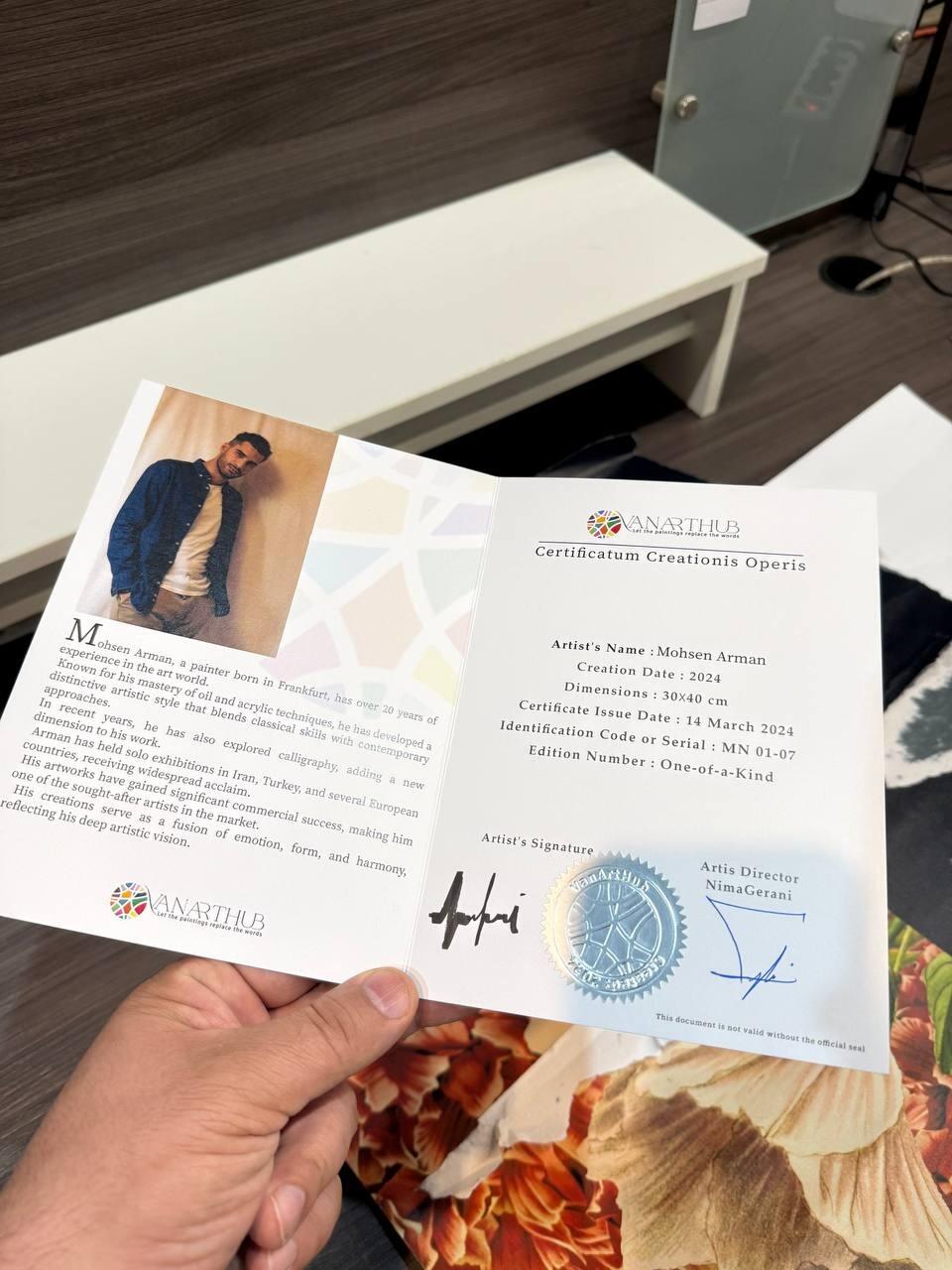
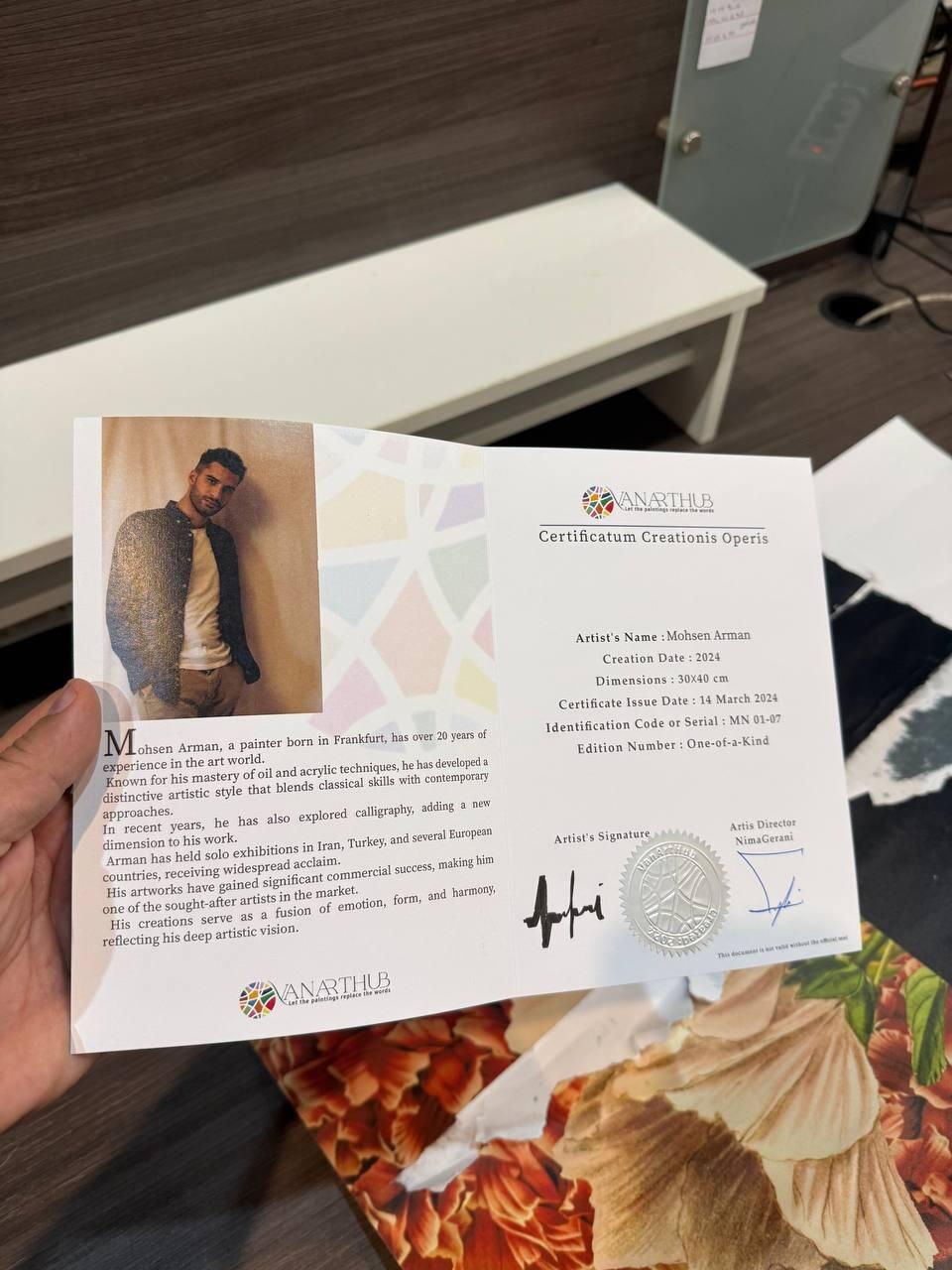
Our Certificate of Authenticity confirms the work is an original painting by the named artist. It is proof of authorship and originality, not a materials audit. If you need the ingredient story for a particular piece, ask us and we will get it from the artist directly.
Are brushes part of whether art is vegan?
For many buyers, yes. Sable, squirrel, and hog brushes are animal hair, while synthetic brushes are not. The hair does not end up in the painting, so this is a question about process rather than the object itself. Buyers who follow a vegan practice usually care about both.
Sources
- Golden Artist Colors: Animal Ingredients and Animal Testing
- Just Paint (Golden): Vegan and Animal-Free Paints and Art Materials
- Encyclopaedia Britannica: Carmine
- Encyclopaedia Britannica: Shellac
Data sourced August 2026. If you spot something out of date, let us know and we will update the guide.
About VanArtHub
VanArtHub sells original signed paintings from our Vancouver studio, never prints, each with a Certificate of Authenticity. Shipping is free and fully insured to Canada and the USA, and every piece comes with a 14-day trial. Start browsing our full paintings collection.