Art for a Narrow Hallway: Scale, Distance, and Sightlines
Updated By VanArtHub Curatorial TeamShare
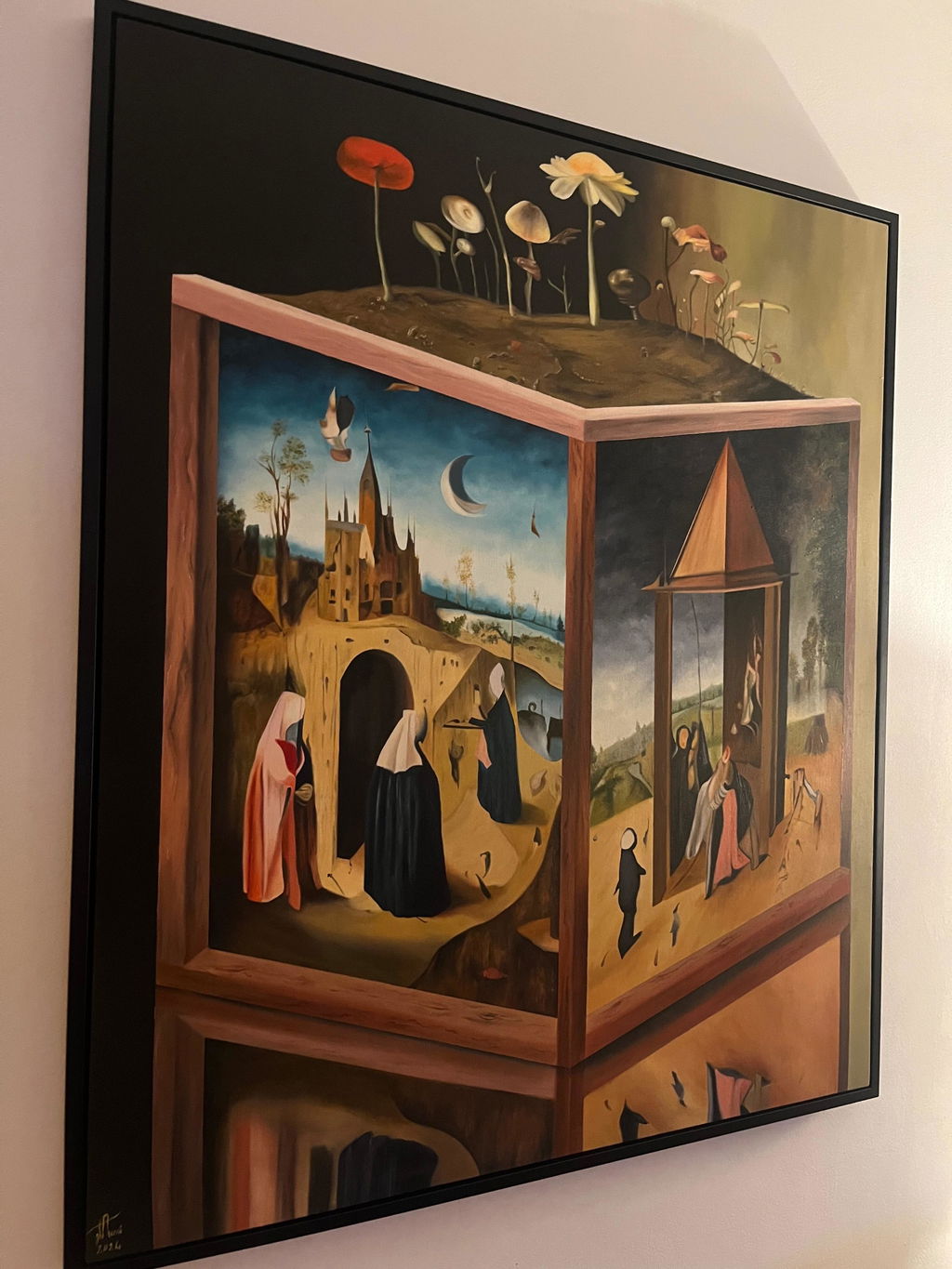
In a living room you sit down three metres away and take in a whole painting at once. In a hallway one metre wide, that never happens. You see the work from close range, at an angle, while walking, and then it is behind you. That single fact should change what you buy for a hallway, and most people ignore it and hang the same kind of painting they would put over a sofa.
Viewing distance is the whole problem
Measure your hallway. At one metre wide, the furthest you can ever stand from the wall is one metre, and you will normally be closer because you walk down the middle.
A large painting needs distance to resolve. Step back far enough and the marks organise themselves into an image. Stand a metre away from a work that is a metre and a half wide and you cannot see the whole of it at once. Your eye has to travel across it, so the composition arrives in pieces.
People buy the big piece anyway, because it looks impressive in a listing photograph where every painting is shown flat and complete. Then it goes up and never quite works, because the room will not let anyone stand where the painting expects them to stand.
What close viewing actually rewards
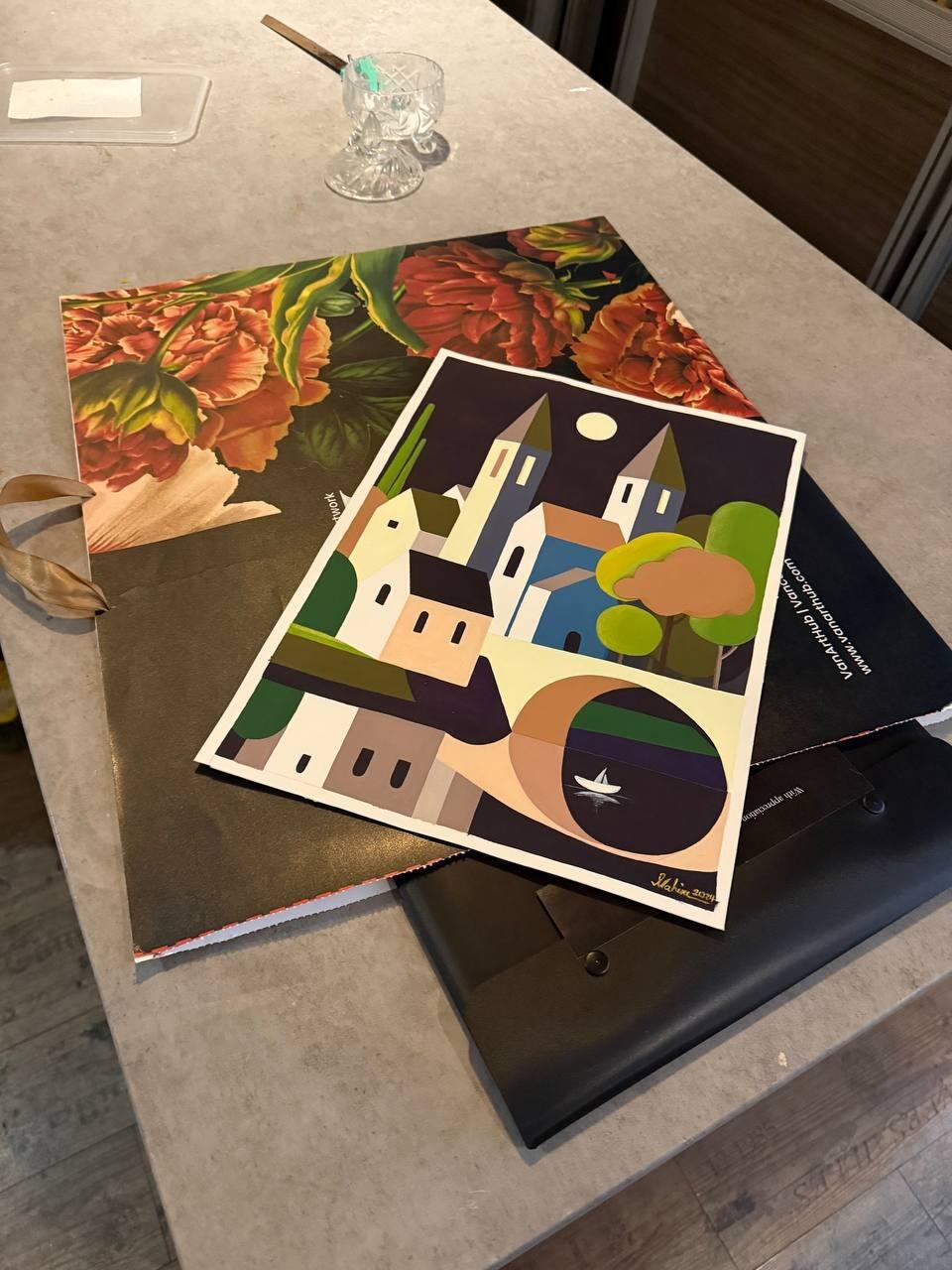
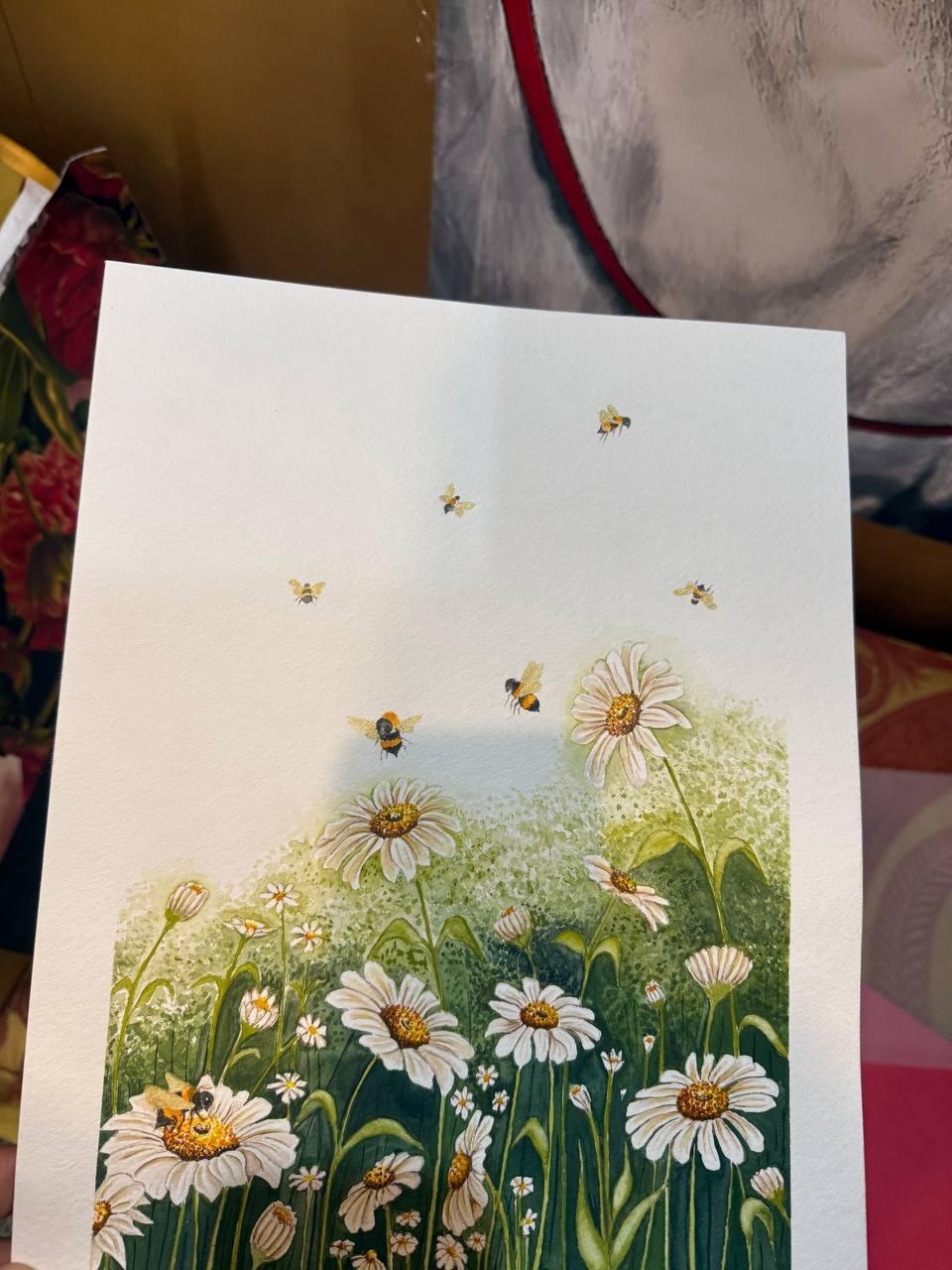
Turn the constraint into a specification. A hallway gives you a viewer at arm's length, so buy work that is better at arm's length. Visible brushwork, drawing you can follow line by line, layered passages where you can see the order the paint went on. All of that is invisible in a listing photograph and right in front of your face in a corridor.
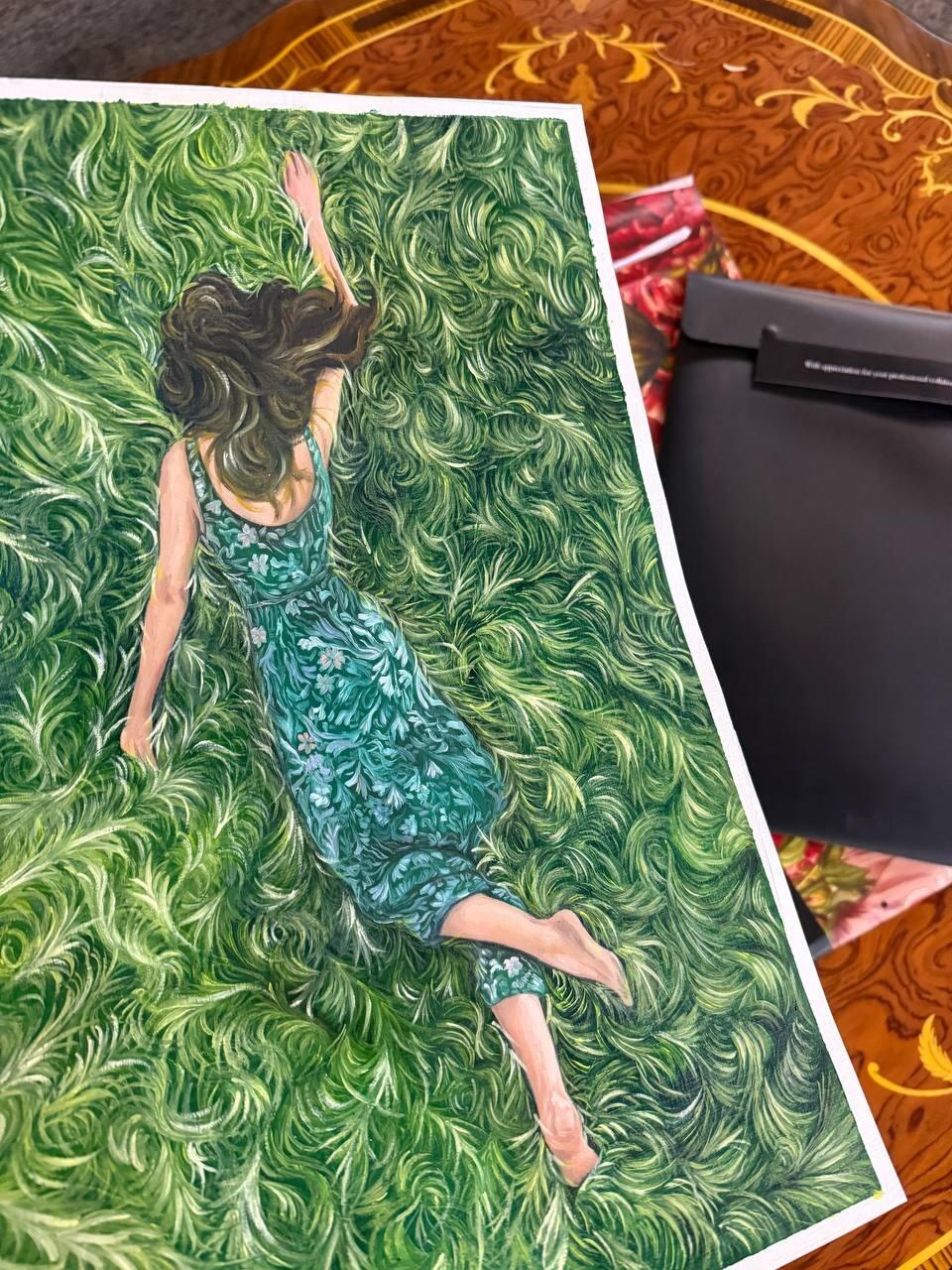
Impasto, meaning paint thick enough to stand off the surface, is a good example. It casts small shadows that shift as you move past. In a hallway you are moving, always, so that texture reads as a change in the work rather than as a static effect.
Detailed drawing media suit this well. Colored pencil on artboard, ink, fine graphite work: pieces where standing close is a reward rather than a compromise.
A modest work with a lot happening in it holds a corridor far better than a large one asking for distance you do not have.
The oblique angle, and the practical problems it creates
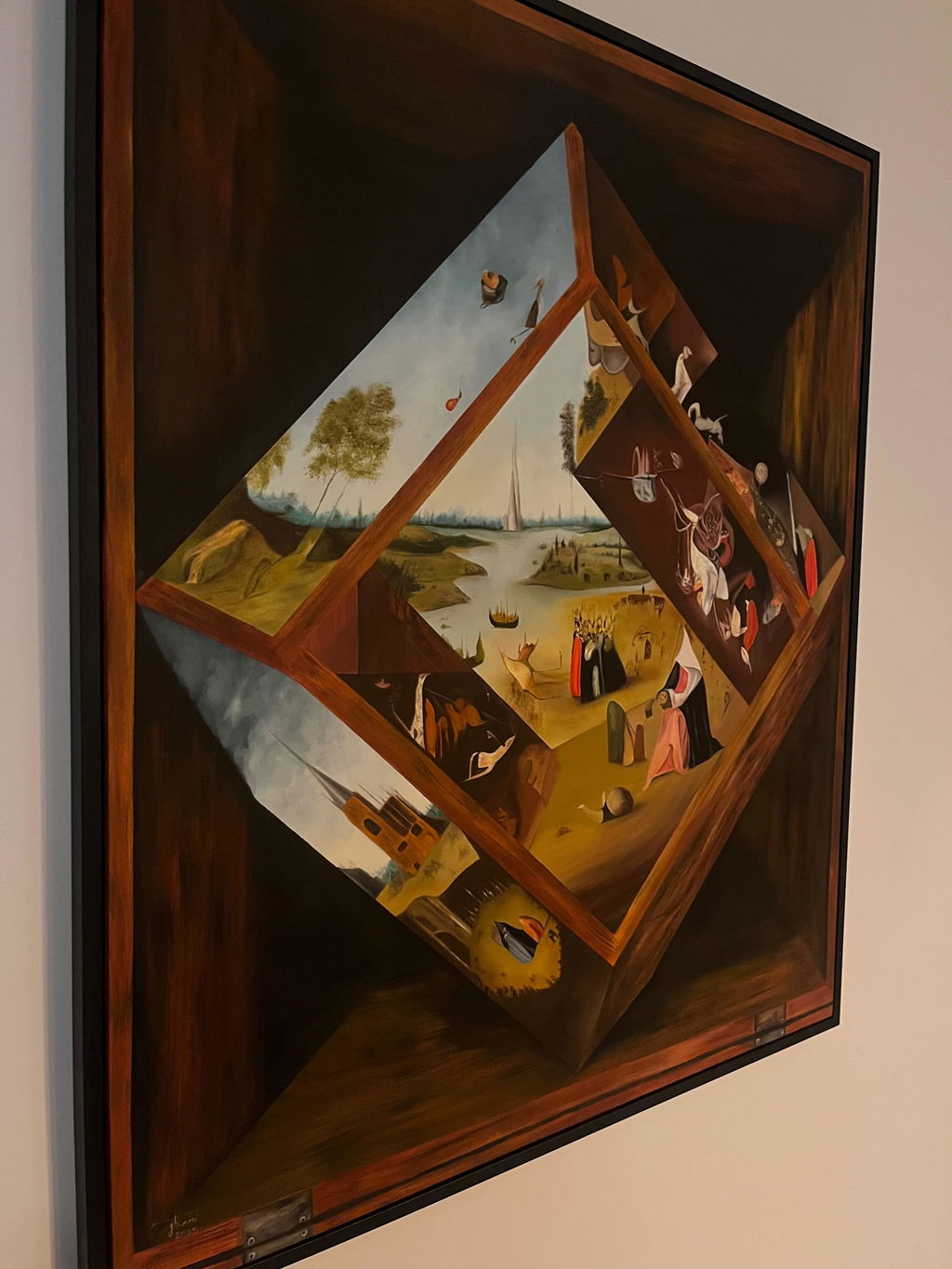
You approach a hallway painting from the side, so most of the time you see it stretched and foreshortened rather than square on. Two consequences follow.
The first is glare. Light hitting a glossy surface at a shallow angle bounces straight into the eye of someone walking towards it, and a hallway is exactly that geometry. Varnished oils and anything behind glass are the worst offenders. If a piece is glazed, ask for non-reflective glazing, and note the CCI rule that glazing must never touch the paint surface and the framing method has to include a spacer.
The second is that a strong central composition loses its centre when seen from the side. Work with an even distribution across the surface survives the angle better than a single subject placed dead centre.
Our fix for glare: light the corridor from fixtures on the same wall as the painting, aiming down and across, rather than from the opposite wall aiming straight at it.
Why we would hang a series instead of one big piece
This is our strong opinion for hallways: hang three to five smaller works in a row at consistent spacing rather than one large painting.
You walk a hallway, so it is experienced over time, like a sequence. A row of related works gives you something at each step and turns the corridor into a short walk with several moments in it.
A row also solves the distance problem completely. Each piece is small enough to take in at close range, so no single work is asking for space the hallway does not have.
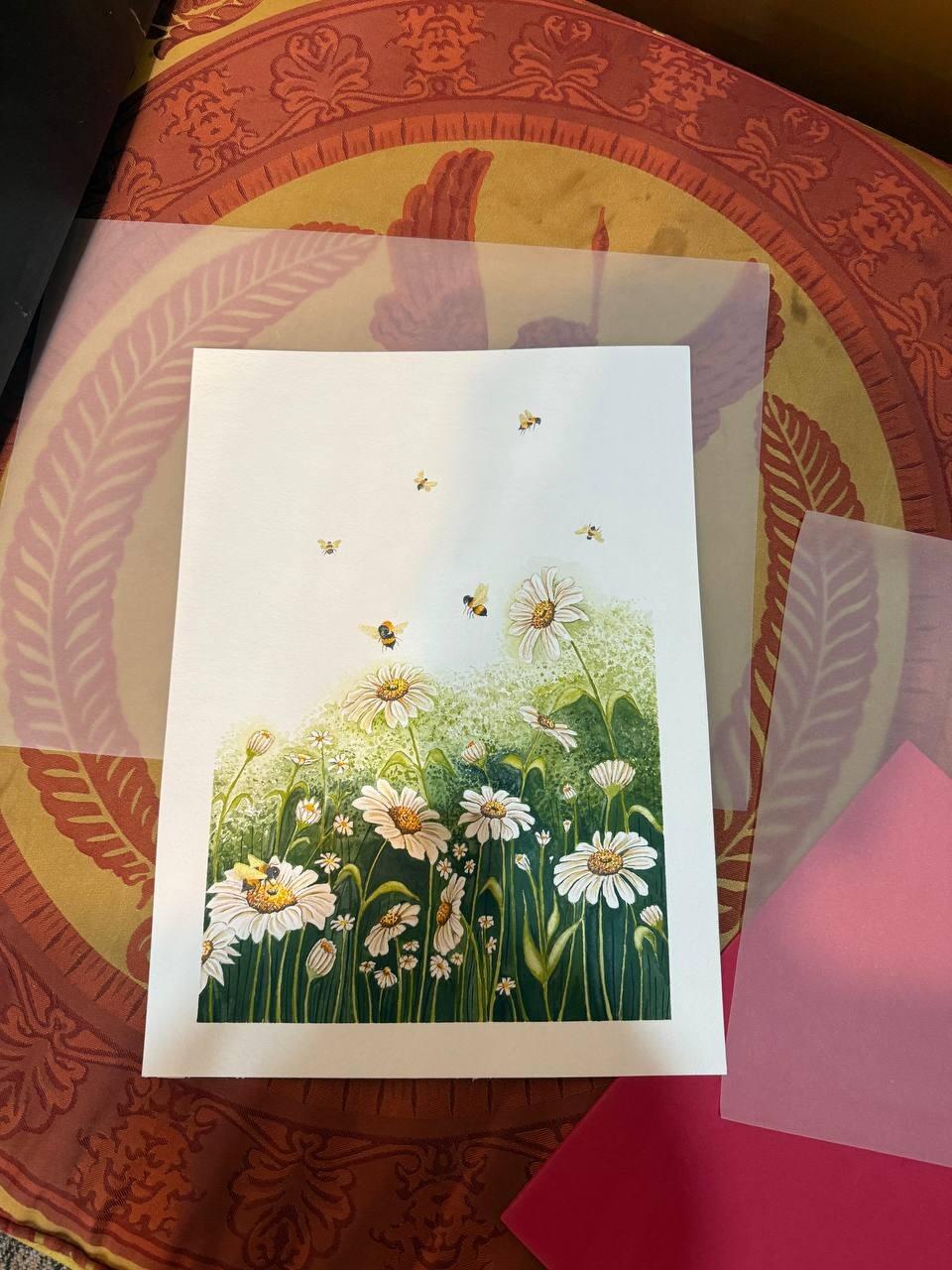
Keep them close in size, use the same gap between each one, and treat the whole row as a single shape when you position it. Share one horizontal centre line even when the works differ in height.
The honest limit: this costs more than one painting and takes longer to assemble, because the pieces have to hold together. Buying them one at a time over a year is a good plan and it is what we would do.
Heights, gaps, and the numbers we use
Hang the centre of the work, or the centre of the whole row, at about 57 inches from the floor. That gallery height holds in a hallway too, and the reasoning is in our 57-inch rule post.
| Hallway width | Largest single piece we would hang | Better option |
|---|---|---|
| About 90 cm, roughly 3 feet | Around 40 to 50 cm on the longest side | A row of three small works |
| About 1.2 m, roughly 4 feet | Around 60 to 70 cm on the longest side | A row of three to four works, or one detailed piece |
| 1.5 m and wider | Up to around 90 cm on the longest side | One piece works here, and a row still works better |
| Any width, at the end wall facing you | As large as the wall takes | This is the one place a big piece belongs, since you approach it head on from the full length |
Those are our judgement from hanging a lot of corridors rather than a published standard. Cut paper to size and tape it up before you decide.
The end wall row is the important one. If your hallway ends in a wall you walk towards, that is the best position in the space, because you get the full length of the corridor as viewing distance.
Depth, damage, and the things that go wrong
A corridor is a place where people carry laundry baskets, suitcases, and furniture. Two rules follow.
Keep the total depth of frame and work shallow. A deep ornate frame projecting from the wall in a narrow passage will eventually be caught by a shoulder or a box corner. Flat profile frames, or an unframed canvas hung close to the wall, survive better.
Fit a backing board on any canvas in a hallway. It stops a puncture from behind, keeps debris out from between the bars and the canvas, and buffers day to night humidity changes. In a corridor with regular traffic that protection earns its keep.
Light is usually kind here. Hallways are often dim and light damage is intensity multiplied by time, so a windowless corridor accumulates far less exposure than a sunny living room wall.
What we would tell you to buy
If you asked us to fill a metre-wide hallway, this is what we would do.
Three or four smaller works, close in size, in a horizontal row centred at about 57 inches. Detailed pieces with visible hand work, since you will be a metre away. Flat frames or unframed canvases. Nothing glossy directly opposite a light. And if the corridor has an end wall you walk towards, one larger piece there to finish it.
The mistake to avoid is buying by the photograph. A listing image shows the composition and says nothing about how the surface behaves at close range, so ask us for a detail shot before you commit.
If the corridor still feels wrong once everything is up, use the 14-day trial. Two weeks of walking past a painting tells you more than any amount of planning.
Key Takeaways
- In a narrow hallway you can never step back, so a painting that needs distance will never resolve there.
- Buy for close viewing: visible brushwork, detailed drawing, and texture that changes as you move past.
- You see hallway art at an oblique angle, so glare is a real problem. Avoid glossy surfaces opposite a light source.
- A row of three to five smaller works usually beats one large piece, because a corridor is walked rather than sat in.
- The end wall you walk towards is the one place a large painting belongs, since it gives you the whole corridor as distance.
- Keep frames shallow and fit a backing board, because corridors are where suitcases and furniture pass.
Frequently Asked Questions
What size art should I hang in a narrow hallway?
Smaller than you would put in a living room. In a hallway about 90 cm wide we would keep a single piece to roughly 40 to 50 cm on its longest side. You can never step back, so anything that needs distance to resolve will not work. Cut paper to size and tape it up first.
Is one large painting or several small ones better in a hallway?
Several small ones, in nearly every hallway we have hung. You walk a corridor, so it works as a sequence, and a row gives you something at each step. It also removes the distance problem, since each piece is small enough to take in from a metre away.
How high should I hang art in a hallway?
Centre it at about 57 inches from the floor, the same as anywhere else. For a row of works, take the centre of the whole group to that height rather than each piece individually. Keep the horizontal centre line consistent even when the works differ in height.
Why does my hallway painting look shiny and hard to see?
Because you view it at a shallow angle, which is the exact geometry that bounces light into your eye. Varnished oils and glazed works are worst. Move the light source to the same wall as the painting, aiming down and across, rather than lighting it from the opposite wall.
What kind of work suits close viewing?
Anything where the hand is visible: brushwork you can follow, layered passages, detailed drawing in colored pencil or ink, or thick paint that casts small shadows as you walk past. These qualities are invisible in a listing photograph and they are the whole experience at arm's length.
Can I put a large painting at the end of the hallway?
Yes, and that is the best spot in the space. You approach an end wall head on with the full length of the corridor as viewing distance, so it is the one position where a large piece gets what it needs. Hang the biggest work you own there.
What frame depth works in a corridor?
Shallow. A deep ornate frame projecting into a narrow passage will eventually be caught by a shoulder or a box corner. Flat profile frames or an unframed canvas sitting close to the wall are more sensible, and they suit the close viewing distance anyway.
Is a hallway bad for a painting?
Usually it is one of the better rooms, because most hallways are dim and light damage is cumulative. The real risk is physical: suitcases, furniture, and laundry baskets. Fit a backing board on any canvas to stop punctures from behind and keep debris out.
How does shipping work and what does it cost?
Shipping is free and fully insured to both Canada and the USA. Canadian orders typically arrive in 3 to 7 business days and USA orders in 5 to 10. Every piece is packed in our Vancouver studio and travels with the insurance already in place.
Sources
- Canadian Conservation Institute, Environmental Guidelines for Paintings (CCI Notes 10/4)
- Canadian Conservation Institute, Backing Boards for Paintings on Canvas (CCI Notes 10/10)
- Canadian Conservation Institute, Framing a Painting (CCI Notes 10/8)
Sources checked 1 September 2026. If you spot something out of date, tell us and we will update the guide.
About VanArtHub
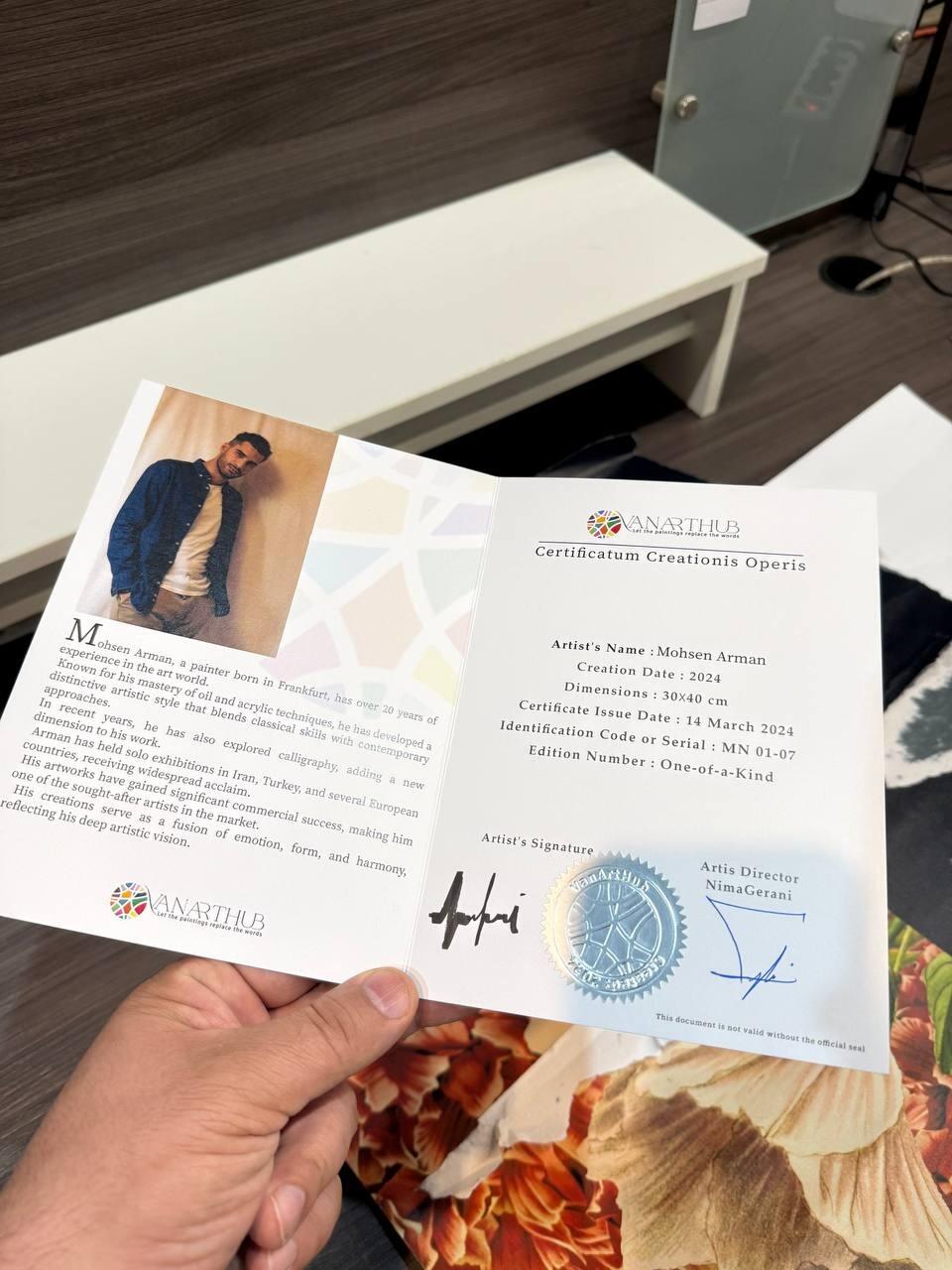
VanArtHub is an online gallery in Vancouver selling original, signed, one-of-a-kind paintings by independent artists. No prints and no reproductions. Every piece ships with a Certificate of Authenticity, free fully insured delivery to Canada and the USA, and a 14-day trial so you can decide at home. See smaller detailed work in under $700, browse all current originals, or read the 57-inch rule explained before you pick up a hammer. Our full policy lives on the Buy with Confidence page.