How Long Oil Paint Takes to Cure, and Why It Matters to You
Updated By VanArtHub Curatorial TeamShare
A new oil painting can feel dry to your fingertip within days, and the paint film underneath can still be changing for a long time after that. Those are two different states, and the gap between them is the reason a fresh oil painting gets handled a little differently from one that has been on a wall for ten years. Nobody explains this at the point of sale, so here it is.
Touch dry and fully cured are two different things
Oil paint does not dry the way watercolour does. Watercolour loses water, and once the water is gone the film has finished.
Oil paint hardens by a chemical reaction with oxygen from the air. The CCI describes oil paint as pigments dispersed in a drying oil, with other ingredients added to change the drying and working properties. That reaction starts at the surface and works inward.
So a painting passes through stages. It stops being sticky. Then it becomes touch dry, meaning you could set a fingertip on it without leaving a mark. Then, over a much longer period, the film underneath keeps hardening and stiffening. Touch dry means safe to move. It does not mean finished changing.
Everything below follows from that distinction.
Why nobody can give you a single number
You will find a lot of confident timelines online. We are not going to add one, because the honest answer is that it depends on things that change from painting to painting.
Pigment is the first variable. The CCI states that pigments can influence the properties of the paint film including its drying rate. Some pigments speed the reaction up considerably, others slow it down, and a single canvas usually contains both.
Thickness is the second. A thin wash and a ridge of impasto standing several millimetres off the canvas are the same paint doing very different things, because the reaction has to reach all the way through.
Medium is the third. The CCI notes that a medium is a substance mixed with paint to change characteristics including drying time and flow. Artists add these deliberately, so the artist has already made choices that move the timeline.
Then temperature, humidity, and airflow in the studio where it sat. Add that together and only the person who painted a specific canvas can speak to it, and even they will speak in ranges.
Our honest limit: if you want to know about your painting, ask the artist through us. We will pass the question on rather than invent a figure to sound authoritative.
What this actually changes for you, in one table
| Situation | Recently painted oil | Settled oil painting |
|---|---|---|
| Wrapping for a move | Never let material rest against the paint. Use a frame or spacers that hold the covering clear of the surface | Same rule, with a little more margin |
| Leaning it face-to-face with another work | Do not do it | Only with rigid separators between them |
| Direct sun on the surface | Avoid entirely | Still avoid, for fading reasons |
| Varnishing | The artist's decision and their timing | A conservator's decision |
| Cleaning the surface | Do nothing at all | Still nothing beyond gentle air |
| Cold car or unheated garage | Avoid | Avoid |
Read down the middle column. Most of it is ordinary good practice made stricter, and none of it costs you anything.
Do not let anything rest against the surface
This is the rule that matters most in the first months, and it is the one people break by being careful.
Bubble wrap taped over the face, a moving blanket pressed on by the weight of a box, tissue squashed flat against a passage of thicker paint: each can leave a texture in the surface or lift paint away when it comes off. On a young film the risk is higher.
The same principle appears in framing. The CCI is explicit that if glazing is used, the glass or acrylic must never touch the paint surface, and the framing method has to include a spacer. That rule exists for every oil painting, at every age.
The practical version at home: wrap around the frame, not across the picture. With no frame, build a cage of cardboard strips around the edges so the covering bridges the surface with air underneath. That is how we pack.
Sun, heat, and the first few months
Keep a new oil painting out of direct sunlight. There are two reasons and they are worth separating.
The first is fading, and it applies forever. Light damage is cumulative, and at average daylight levels of 30,000 lux the CCI reports observable fading of highly sensitive paints within a day to two weeks, with medium-sensitivity paints chalking and varnishes cracking within three years of ultraviolet coming through unfiltered windows.
The second is heat. Direct sun warms a surface unevenly, and the CCI notes that picture lamps on frames sometimes overheat paintings, leading to blisters or cracks. A hot patch of afternoon sun across half a canvas is doing something nobody intended.
Cold is the mirror image. Oil paint stiffens dramatically only between minus 5 and minus 10 degrees Celsius, which gives it more tolerance than acrylic, and a Canadian winter reaches those temperatures. Never leave a painting in an unheated car overnight.
Otherwise, treat it like any painting: a stable 40 to 60 percent relative humidity, away from vents, radiators, and working fireplaces.
Varnish is the artist's call to make
Varnish is where curing time gets discussed most, so this section needs to be careful.
What varnish does is well documented. The CCI describes it as a transparent coating of natural or synthetic resins in a solvent, which saturates the colours, produces the intended surface gloss, and protects the paint film from pollutants, dirt, grime, and minor abrasion. Not all paintings are varnished, and some are only partially varnished.
That last sentence matters. An unvarnished oil painting is a finished painting. Matte, unvarnished surfaces are a deliberate choice many contemporary painters make, and putting a gloss coat on one destroys the effect the artist built.
Our position, held firmly: do not varnish a painting you bought. If the artist intended it varnished, they will have varnished it or told us when they plan to. Ask us and we will ask them. If a painting is old enough that its varnish has yellowed or clouded, the CCI describes that as work for a conservation professional, after careful consideration and testing. There is no consumer product that improves an original painting.
What we do, and what we tell buyers
We do not ship a painting that is still tacky. That is the floor, not the standard.
When a piece is recent we say so on the listing, and we pack so that nothing touches the paint. We ask you to do three things for the first few months: hang it rather than storing it flat under other objects, keep it off a sunny wall, and leave the surface entirely alone.
That last one is not us being precious. The CCI's cleaning guidance says untrained individuals should not attempt to remove dirt or discoloured varnish, that you should never use commercial paint cleaners or picture restoring preparations, and that dry or moist dust cloths, stiff bristle brushes, and feather dusters should never be used. Water-based solutions can weaken the bond between pigment and medium and blanch the surface.
A new painting needs less care than people expect. It mostly needs to be left alone in a normal room.
Key Takeaways
- Touch dry and fully cured are different states. Touch dry means safe to move, not finished changing.
- Oil paint hardens by reacting with oxygen, starting at the surface and working inward.
- Curing time varies with pigment, paint thickness, and any medium the artist added. There is no single number.
- Never let wrapping, glazing, or another painting rest against an oil surface. Always use spacers.
- Keep a new oil out of direct sun. Heat and ultraviolet are separate problems and both are real.
- Varnishing is the artist's decision. Never apply a consumer product to a painting you own.
Frequently Asked Questions
What is the difference between touch dry and fully cured?
Touch dry means the surface will not mark under a fingertip. Fully cured means the reaction with oxygen has worked through the whole film and the paint has finished stiffening. The first happens relatively quickly and the second takes much longer. Touch dry is enough to hang and move a painting.
How long does it take for an oil painting to cure?
There is no single figure, and we will not invent one. The rate depends on the pigments used, how thickly the paint was applied, whether the artist added a medium to change the drying properties, and the conditions in the studio. Ask us and we will ask the artist about your specific piece.
Can I hang a newly painted oil painting straight away?
Yes, provided it is dry to the touch, which it will be before we ship it. Hanging is actually the safest thing you can do with a recent oil, because nothing touches the surface. Storing it flat under other objects is the situation to avoid.
Why can nothing touch the paint surface?
Because covering material pressed against paint can leave its texture in the film or lift paint away when removed. The CCI applies the same principle to framing, stating that glazing must never contact the paint surface and that the method must include a spacer. Wrap around the frame, not across the picture.
Should I varnish my new painting?
No. Varnishing is the artist's decision, and many contemporary oil paintings are meant to stay unvarnished or only partly varnished. Applying a gloss coat to a deliberately matte surface changes the work permanently. If you want to know the artist's intention, ask us and we will find out.
Is direct sunlight bad for a new oil painting?
Yes, for two separate reasons. Light damage is cumulative and ultraviolet through unfiltered windows can make medium-sensitivity paints chalk and varnishes crack within three years. Sun also heats the surface unevenly, and heat is a known cause of blisters and cracks.
Can I clean a new oil painting?
Leave it alone entirely. The CCI advises that untrained individuals should not remove dirt or discoloured varnish, and warns against commercial paint cleaners, picture restoring preparations, dry or moist dust cloths, stiff brushes, and feather dusters. Water-based solutions can weaken the paint and blanch the surface.
Is acrylic different from oil in this respect?
Yes. Acrylic paint dries by water evaporating rather than by reacting with oxygen, so it reaches a stable state much faster. Acrylic has its own weakness: the CCI notes it becomes dramatically stiffer at 5 to 10 degrees Celsius, which makes cold-weather handling risky.
What if I get a mark in the surface of a new painting?
Do not try to rub it out or press it flat. Photograph it, note the date, and contact us. Depending on what happened it may be a job for a conservator, and an unrepaired mark is always easier to treat than one somebody has already worked on.
How long do I have to return a painting?
Fourteen days from delivery. Hang it, live with it, see it in morning and evening light. If it is not right, tell us within those 14 days and we send a prepaid insured return label and refund you in full once it is back. We pay the return shipping.
Sources
- Canadian Conservation Institute, Know Your Paintings: Structure, Materials and Aspects of Deterioration (CCI Notes 10/17)
- Canadian Conservation Institute, Cleaning Paintings: Precautions (CCI Notes 10/1)
- Canadian Conservation Institute, Environmental Guidelines for Paintings (CCI Notes 10/4)
- Canadian Conservation Institute, Framing a Painting (CCI Notes 10/8)
Sources checked 1 September 2026. If you spot something out of date, tell us and we will update the guide.
About VanArtHub
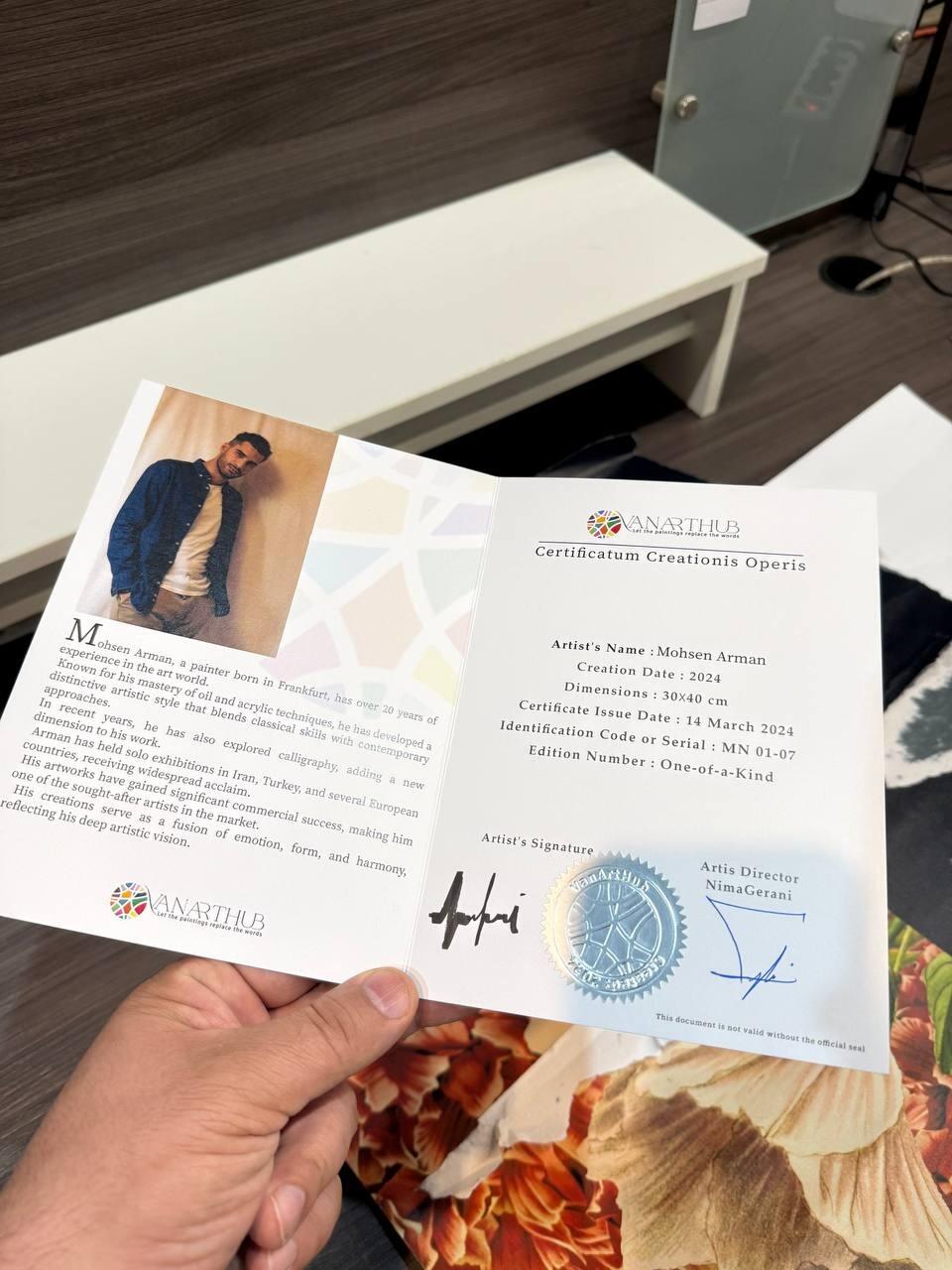
VanArtHub is an online gallery in Vancouver selling original, signed, one-of-a-kind paintings by independent artists. No prints and no reproductions. Every piece ships with a Certificate of Authenticity, free fully insured delivery to Canada and the USA, and a 14-day trial so you can decide at home. See current original oil paintings, read why most oil paintings should not go behind glass, or our guide to caring for original paintings. Our full policy lives on the Buy with Confidence page.