Storing a Painting Between Moves Without Ruining It
Updated By VanArtHub Curatorial TeamShare
The sale closed early, the new place is not ready, and your paintings need somewhere to live for three months. Most people solve this by leaning the whole collection against a spare bedroom wall and shutting the door. That decision causes more damage to privately owned paintings than anything else we hear about. Doing it properly is cheap and takes an afternoon.
Pick the room before you pick the packing
The CCI's storage guidance says plainly that you should avoid attic and basement storage locations, because attics reach extremes of heat and dryness while basements can be damp and are exposed to flooding from ground water and overhead pipes. Those are the two rooms almost everybody chooses, because they are the two rooms nobody is using.
It also warns about a less obvious one. A building's perimeter walls can swing in temperature and humidity and can be a source of moisture, especially if they are poorly insulated or lack a proper vapour barrier. An interior wall in a room you heat normally is better than a well-packed painting against an outside wall.
One more item people never consider: do not store where there is vibration. A room sharing a wall with a laundry, a furnace, or a garage door shakes constantly, and vibration is a recognised hazard for paint and ground layers. Our short version is that a spare bedroom or interior closet on a heated floor of a lived-in home is the best free storage most people have.
The numbers to aim for while they are packed away
The target is the same as it is on your wall. A stable 40 to 60 percent relative humidity with 50 percent as the usual central value, and mould becomes a real risk above roughly 70 to 75 percent. Stability is the operative word. A closet that holds steady at 55 percent all winter is kinder than a room that swings between 30 and 65 every day.
High humidity pockets form against exterior walls and near water pipes. In storage that includes the wall behind a bathroom or under a kitchen. Check what is on the other side.
Light is the one thing storage improves. Light damage is cumulative, brightness multiplied by time, so a painting in a dark closet accumulates nothing. A work parked in a sunny room for a summer is the opposite case.
If the space will be closed up and unvisited, put a cheap humidity gauge in with them and look at it once a week. That is the entire monitoring programme.
Stacking against a wall, done the way museums do it
Leaning paintings against a wall is not recommended as a storage strategy, in the CCI's words, because stacks are vulnerable to damage from contact with each other and from people walking past. But it is what almost everyone will do anyway, so here are the actual rules for doing it as a temporary measure.
| Rule | The specific | Reason |
|---|---|---|
| Lift them off the floor | At least 7 to 10 cm, about 3 to 4 inches, on padded blocks | Protects against dirt, dust, and water on the floor |
| Limit the stack | No more than four to five paintings together | Weight and pressure build up on the works at the back |
| Separate every work | Cardboard or rigid board between each one | Stops frames and canvas touching each other |
| Oversize the separators | Slightly larger than the artwork beside it | No corner of one painting can reach past the board |
| Order by size | Largest against the wall, down to the smallest | Even support, no small frame pressing into a big canvas |
| Face the last one inward | Outermost painting turned to face a separator | Protects the exposed paint surface from knocks |
| Ornate frames face outward | Turn decorated frames away from the wall | Keeps weight off fragile ornament |
Two more from the same guidance. Cover the stack with polyethylene if there are pipes overhead, and block the area off with a barrier if people walk past, so nobody puts a foot through a canvas. Lean them at an angle secure enough that they cannot slip, then check a week later, because paintings settle and slide.
Wrap them, and wrap them sealed
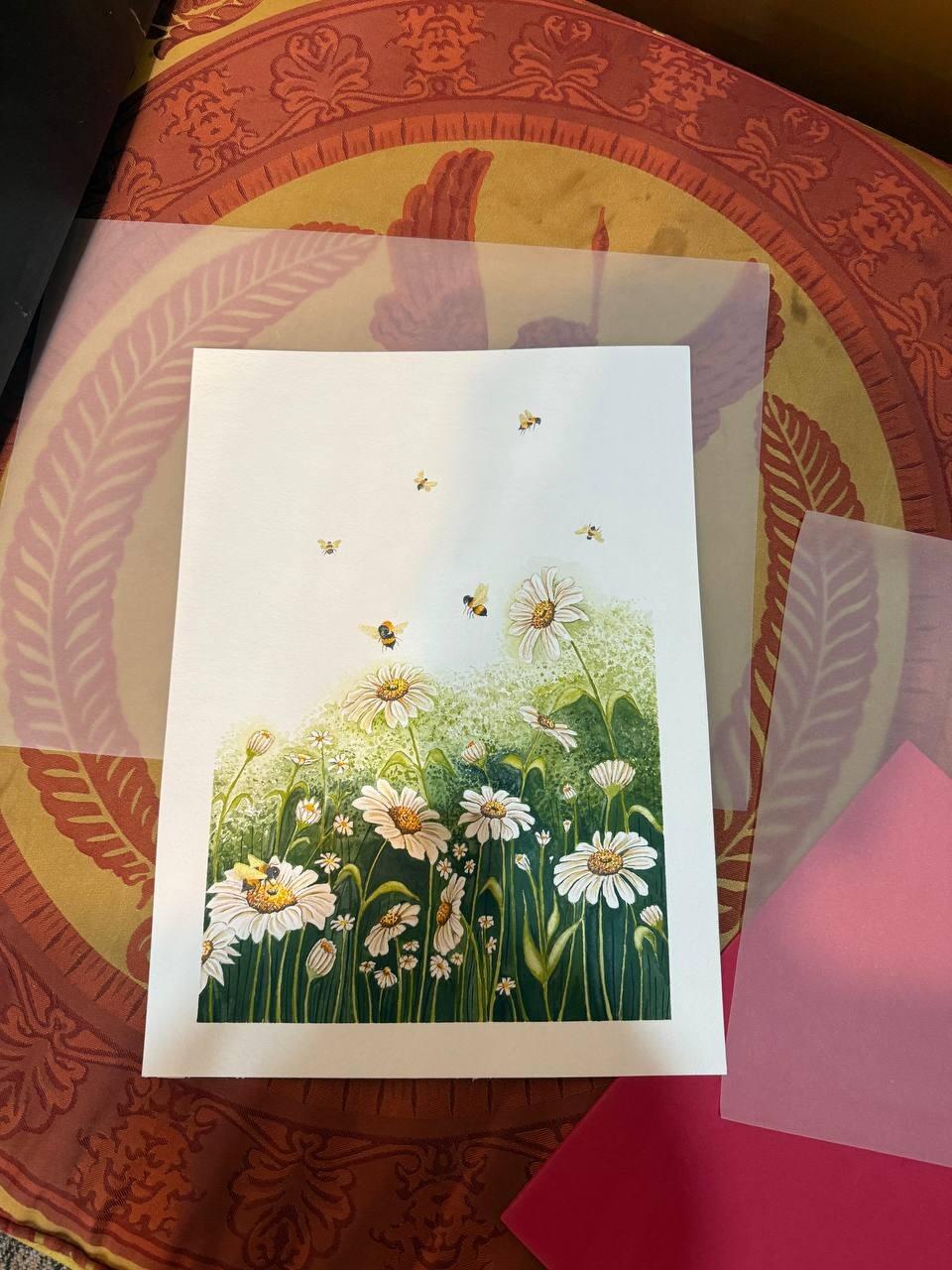
The CCI recommends protecting stored paintings from physical force, dust, dirt, and water, and says the last three can be handled by wrapping and sealing the painting in polyethylene or Mylar sheeting. Clear sheeting has the practical advantage that you can see which painting is which without unwrapping anything.
The guidance on wrapping a painting explains why a sealed wrap works: it isolates the painting from short-term humidity changes, and the wood and canvas inside then buffer the small volume of air around them. A loose drape of plastic does not do this. The seal is the mechanism.
One step is easy to skip. Any cardboard you use should sit in the same room as the paintings for a day before wrapping, so it reaches the same humidity. Cardboard from a cold garage brings its own moisture in.
The exception is thick impasto or a fragile surface. Do not press anything against it. Smaller works can go in a rigid box, and larger ones need a frame holding everything clear of the paint.
Before it goes away: backing boards and loose keys
Two small jobs pay for themselves. First, fit a backing board. The CCI's position is that all paintings should have backing boards, and every benefit is a storage benefit: it stops a puncture from behind, keeps debris out, buffers humidity swings, and reduces vibration.
Second, check the corners for loose wooden keys. Do not tap them. The CCI is clear that keying out to correct slackness is highly inadvisable once ground and paint are on. What you want is for them to be secure so they cannot fall out or rattle around inside the wrapping for three months.
If a canvas has gone slack in a dry room, leave it. It usually tightens on its own when humidity rises.
Moving them in and out without hurting anyone or anything
Most storage damage happens during the two minutes the painting is being carried. The CCI states that a minimum of two people are required to safely carry easel-sized paintings, and that you should never carry a painting by its hanging wire, by the top of its frame, or by any one side alone.
There is one instruction that surprises people: do not hand a painting to another person. Set it down, let them pick it up. The moment of transfer, when neither person is fully holding the weight, is where works get dropped.
Clear the route before you lift. Open the doors, move the boxes, know where it is going down. Wear gloves for a gilded or polished frame, because fingerprints etch into those surfaces.
If anything gets wet, a burst pipe or a roof leak, call a conservator as soon as possible. The effects may take minutes to hours to appear, simple air drying is often unsuitable, and wet canvas can shrink dramatically, cracking and flaking the paint. Waiting to see how it looks tomorrow is the wrong move.
When to pay for professional storage, and what we do
Everything above works for a few months in a normal heated house. For a year, an unheated space, a house left empty over a Canadian winter, or a collection where one work is genuinely valuable, pay for climate-controlled fine art storage. One month of it costs far less than one conservation treatment.
Also worth knowing: many household policies treat art in storage differently from art on your wall, and some exclude it. Call your insurer before the paintings move.
On our side, every piece ships packed in our Vancouver studio with insurance already in place. If you buy while you are between homes, tell us. We can hold a purchased work at our end rather than sending it to a house you are about to leave, which is usually better for the painting.
Key Takeaways
- Avoid attics and basements. The CCI names them for heat and dryness, and for damp and flood risk.
- Perimeter walls swing in temperature and humidity. An interior wall in a heated room is a better choice.
- If you stack, lift the works 7 to 10 cm off the floor, cap the stack at four or five, and separate every one.
- Seal the wrap. Polyethylene or Mylar sealed shut buffers humidity. A loose drape of plastic does not.
- Fit a backing board before storing. It blocks punctures from behind and reduces vibration and humidity swings.
- Two people for anything easel-sized, and never hand a painting over. Set it down and let the other person lift it.
Frequently Asked Questions
Can I store paintings in my basement or attic?
The Canadian Conservation Institute advises against both. Attics reach extremes of heat and dryness, and basements can be damp and are exposed to flooding from ground water and overhead pipes. A spare room or interior closet on a heated floor of the house is a much safer choice.
Is it safe to lean paintings against a wall for a few months?
It is not recommended, because stacked works get damaged by contact with each other and by people walking past. If you must, raise them 7 to 10 cm off the floor on padded blocks, stack no more than four or five, put rigid board between every painting, and cordon off the area.
What humidity should stored paintings be kept at?
A stable 40 to 60 percent relative humidity, with 50 percent as the usual central value. Above roughly 70 to 75 percent mould becomes a risk. Steadiness matters more than the exact figure, so a closet holding 55 percent all winter beats a room swinging between 30 and 65 daily.
Should I wrap paintings in plastic for storage?
Yes, sealed rather than draped. The CCI recommends wrapping and sealing in polyethylene or Mylar to keep out dust, dirt, and water, and clear sheeting lets you identify works without unwrapping. The seal is what isolates the painting from short-term humidity changes.
My canvas went slack in storage. Should I tighten it?
No. The CCI calls keying out highly inadvisable for fixing slackness once ground and paint layers are applied, because forcing tension into a brittle paint film causes cracking and loss. Slackness usually reverses on its own when humidity rises. If it does not, ask a conservator.
When is professional art storage worth paying for?
For anything longer than a few months, for unheated spaces, for a house left empty through winter, or when a single work is genuinely valuable. One month of climate-controlled storage costs far less than one conservation treatment. Check your insurance too, since many policies treat stored art differently.
How long do I have to return a painting?
Fourteen days from delivery. Hang it, live with it, see it in morning and evening light. If it is not right, tell us within those 14 days and we send a prepaid insured return label and refund you in full once it is back. We pay the return shipping.
How does shipping work and what does it cost?
Shipping is free and fully insured to both Canada and the USA. Canadian orders typically arrive in 3 to 7 business days and USA orders in 5 to 10. Every piece is packed in our Vancouver studio and travels with the insurance already in place.
Sources
- Canadian Conservation Institute, Storage and Display Guidelines for Paintings (CCI Notes 10/3)
- Canadian Conservation Institute, Environmental Guidelines for Paintings (CCI Notes 10/4)
- Canadian Conservation Institute, Wrapping a Painting (CCI Notes 10/16)
- Canadian Conservation Institute, Backing Boards for Paintings on Canvas (CCI Notes 10/10)
- Canadian Conservation Institute, Basic Handling of Paintings (CCI Notes 10/13)
- Canadian Conservation Institute, Keying Out of Paintings (CCI Notes 10/9)
- Canadian Conservation Institute, Emergency Treatment of Water-damaged Paintings on Canvas (CCI Notes 10/5)
Sources checked 1 September 2026. If you spot something out of date, tell us and we will update the guide.
About VanArtHub
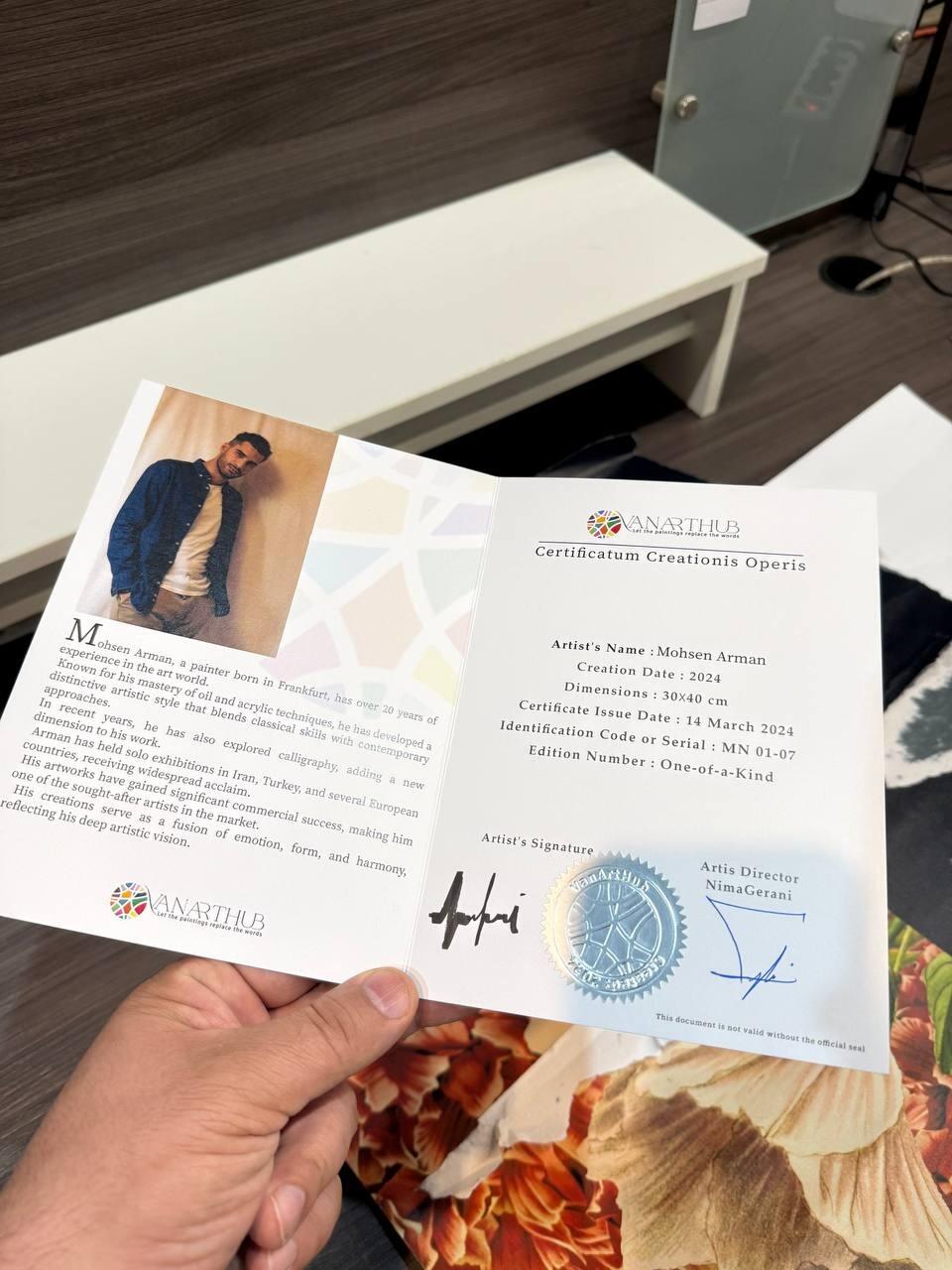
VanArtHub is an online gallery in Vancouver selling original, signed, one-of-a-kind paintings by independent artists. No prints and no reproductions. Every piece ships with a Certificate of Authenticity, free fully insured delivery to Canada and the USA, and a 14-day trial so you can decide at home. See large wall art or landscape paintings, and read humidity, temperature, and safely storing a canvas. Our full policy lives on the Buy with Confidence page.