Humidity, Temperature, and Safely Storing a Canvas
Updated By VanArtHub Curatorial TeamShare
You bought a painting you love, and now you need to put it away for a while. A move, a renovation, a room you are not ready to hang it in yet. The good news is that a canvas is tougher than people think. The bad news is that the wrong storage spot can quietly damage it over months, and by the time you see it, the harm is done. Most of that harm comes from one thing, and it is not the one people worry about.
The one idea that matters most: keep it stable
A stretched canvas is fabric pulled tight over a wooden frame, with layers of ground and paint on top. Fabric reacts to moisture in the air. When the air is damp, the canvas takes on moisture and swells slightly. When the air is dry, it releases moisture and tightens. The paint and varnish sitting on that fabric do not expand and contract at the same rate, so every time the canvas swells and shrinks, the paint layer is being pushed and pulled. Do that many times and you get tiny cracks, lifting, or a slack, wavy canvas.
This is why stability matters more than any exact number. A room that stays roughly the same all year is kinder to a painting than a room with a "perfect" reading that swings hard between seasons or between day and night. If you remember nothing else, remember that the swing is the enemy, not one damp week.
What to aim for, in plain terms
Aim for moderate, steady humidity, the kind of comfortable indoor air that feels neither clammy nor bone-dry to you. Aim for a moderate, steady temperature, roughly the comfortable range you keep your living space at. You do not need a meter or a lab. You need a spot that does not get muggy in summer, does not freeze or bake, and does not swing wildly from morning to night. If a room is comfortable for a person to sit in year-round, it is usually fine for a canvas.
Avoid chasing precise percentages you read online. Conditions in a real home move around, and it is far more practical to pick a genuinely stable spot than to try to hold an exact figure in a space that will drift anyway.
Where NOT to store a canvas
Some spots look convenient and quietly wreck a painting. Skip these:
The attic. Attics swing hard. Hot in summer, cold in winter, often damp too. That is the worst combination for a stretched canvas.
The basement. Basements tend to hold damp air and can flood. Damp is bad on its own, and it also invites mould on the canvas and frame.
Against an exterior wall. Outside walls change temperature with the weather and can get cold enough to sweat, leaving moisture against the back of the canvas.
Near heat. A radiator, a heating vent, a fireplace, or direct afternoon sun through a window all create a moving band of heat that dries and stresses the surface unevenly.
The pattern is the same in all four: they move. A boring interior closet that stays steady beats every one of them.
Flat or upright, and how to set it down
For most stretched canvases, store the painting upright, standing on its edge, not flat. Lying a canvas flat lets dust settle on the surface and, over time, gravity can let the fabric sag in the middle. Upright also saves space and keeps the surface off the floor.
When you stand it up, keep it off the ground with a couple of clean blocks or a shelf, so it is not sitting in any water that reaches the floor. Lean it against a wall at a slight angle, resting on the frame, never on the canvas corners. If you are storing two paintings together, put them face to face so the two painted surfaces are protected between them, and pad the point where the frames touch so nothing presses into the canvas.
Unstretched works, like a rolled canvas or a work on paper, are a different case and are usually stored flat or loosely rolled with the paint facing out. If you are unsure whether a piece you own is a true stretched original in the first place, our guide on how to tell if a painting is a real original walks through what to look for.
How to wrap it
The goal of wrapping is to keep dust off and cushion knocks, without trapping moisture against the paint. Do not shrink-wrap a painting in plastic pressed to the surface. Plastic against paint traps humidity and can leave the surface tacky or stuck, especially in a warm spell.
A good order is: a layer of acid-free tissue or clean cotton against the painted surface if you want extra protection, then a breathable outer wrap such as a cotton sheet, a moving blanket, or acid-free paper. If you must use plastic for a move, use it as an outer shell with a gap and a breathable layer underneath, and take it off as soon as the painting is in storage so air can move. Add corner protectors or cardboard on the frame edges, since edges take the knocks.
Light, pests, and a quick check before you store
Two smaller risks are worth a mention. Keep the painting out of direct sunlight in storage, the same as on a wall, because strong light fades some colours over time. A dark, steady closet is ideal on that count too. And keep the space clean and dry enough that insects and mould have no reason to settle, since damp is what invites both. This is one more reason the basement is a poor choice and a dry interior room is a good one.
Before you wrap a piece for long storage, look it over in good light. Note any existing marks so you know its condition going in, and make sure the surface is clean and fully dry, with no recent damp on the frame. A painting stored in good condition comes out in good condition. If you ever need to confirm what a piece is made of or whether it is a true original before you invest in storing it well, our guide on oil versus acrylic versus mixed media paintings helps you read the surface.
Why this beats worrying about exact numbers
People spend a lot of energy trying to hit a precise humidity reading and then store the painting somewhere that swings anyway. That is backwards. A steady, comfortable interior spot, off the floor, breathably wrapped, and away from heat and damp, will protect a canvas for years. A painting is also a lasting object by design, which is part of what gives an original its value over time. If you are curious about that side of it, our piece on what gives an artwork its value covers why condition and permanence matter to collectors.
The short version
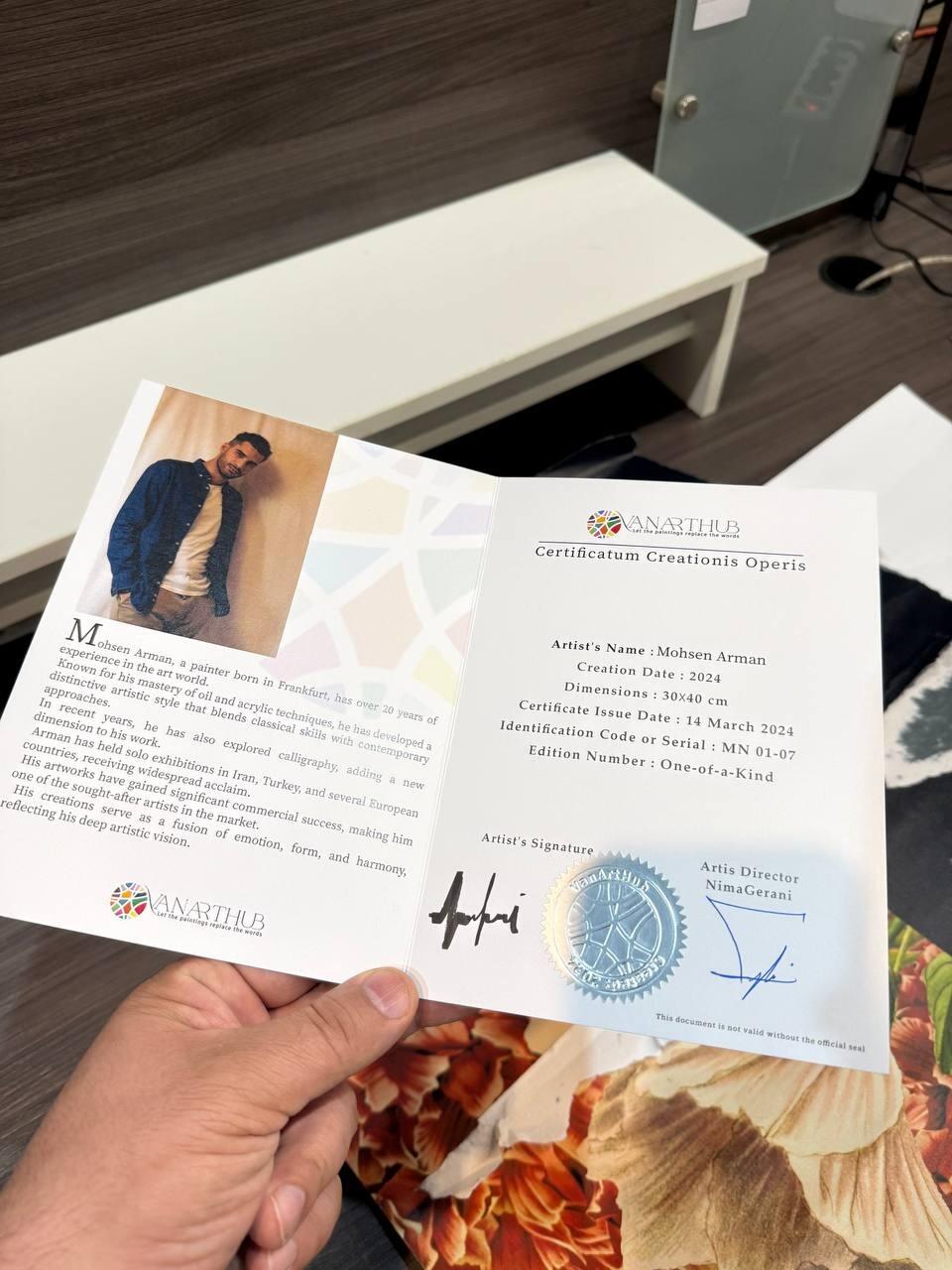
Store a stretched canvas somewhere with moderate, steady humidity and temperature, the kind of spot that stays comfortable all year. Skip the attic, the basement, exterior walls, and anywhere near heat, because all of them swing. Stand the painting upright and off the floor, face to face if you have two, and wrap it in a breathable material, never plastic pressed to the paint. Stability matters more than any exact number. Every piece we sell is an original that ships with a Certificate of Authenticity, free insured shipping, and a 14-day trial, so it starts its life with you in good condition and stays that way with a little care.
For what damp does to a canvas that is hanging, and the rooms to avoid, see canvas, damp and humidity.