What Gives an Artwork Its Value? Beyond the Surface
UpdatedTwo paintings can show the same level of skill and still be worth very different amounts. One is pleasant to look at and easy to forget. The other holds you in front of it, and you are still thinking about it days later. The difference is rarely the brushwork alone. It is what the painting is actually about, and whether it comes from somewhere real.
We get asked a version of this question often: why is one original worth more than another that looks just as polished? The honest answer sits underneath the surface. Here is how we think about where a painting's value really forms.
Beauty gets you in the door. It does not carry the whole value.
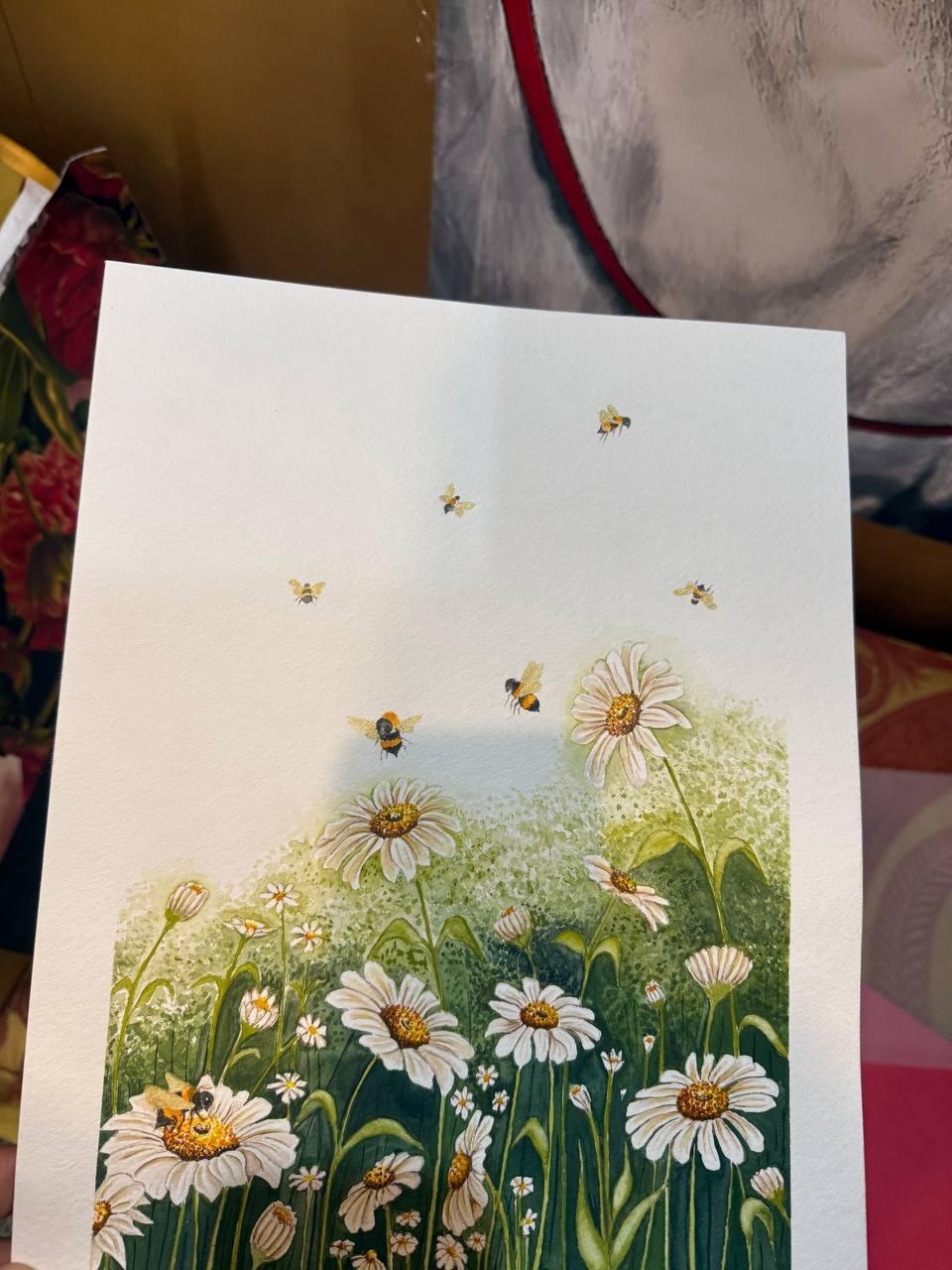
Visual beauty matters. Colour, composition, and technique are the first thing you notice, and a badly made painting will not hold up on a wall for years. But beauty on its own is easy to produce. Plenty of decorative art is well made and completely empty. It matches a sofa and says nothing. A piece like that fills wall space. It does not stay with you.
So when a painting keeps pulling you back, something else is doing the work. That something is meaning, and meaning has a source.
Where the deeper value actually comes from
A painting gains depth when it carries the artist's real life inside it. Not a theme picked because it photographs well, but a question the artist cannot stop asking. You can usually break this down into five layers:
- The artist's lived experience. What they have actually seen, believed, or lived through.
- The real question the work is asking. A genuine concern, not a decoration.
- Recurring symbols and marks. The same figures, colours, or shapes that return across many works.
- The link to a larger body of work. One painting as part of a series, like one chapter of a longer story.
- Its place in the artist's path. Where this piece sits in how the artist has grown over time.
When these line up, the repeated symbols stop looking random. They become a personal visual language. That language is what separates a real body of work from decoration, and it is what turns a single painting into a small, fixed piece of a world only that one artist could record. A group of related works then reads like chapters of one story, and each piece holds part of the larger whole.
A real example: Phaedra's "The Weight of Suffering"
The Weight of Suffering is an original oil on canvas by Phaedra, a Vancouver-based artist we represent. A pale lamb rests across the head of a blindfolded figure. The subject was not chosen to make a pretty picture. It comes straight out of the artist's own life and beliefs.
Phaedra is vegetarian, and the suffering of animals is part of her daily life, her sense of right and wrong, and how she looks at the world. So the animals and the signs of pain in this series carry more than a visual role. They are her way of speaking about a concern she actually holds. In her words on the work: the lamb is a body that still carries the energy of death and fear, a weight we take into ourselves and try not to look at.
That is why the value of this painting reaches past its colour, its technique, and its composition. The work is a visual record of the artist meeting a moral question head on, and a limited piece of her inner world.

You can see the personal language clearly when you place the series side by side. In Birth of Death, a seated figure again has the eyes covered, again carries an animal above the head, again sits in the same deep green dark. The same idea returns in The Foreign Mother and The Wound Adorned. Four paintings, one continuing thought about how we live with the harm behind what we eat and wear. Own one, and you own a chapter of that record. That is a different kind of ownership than hanging a print that a factory made ten thousand times.
Three kinds of value, and why we keep them separate
When we describe a work to a collector, we try not to blend three different things into one vague claim. They come from different places, and honest writing keeps them apart.
| Type of value | Where it comes from |
|---|---|
| Aesthetic value | Technique, colour, form, and composition. What the eye responds to first. |
| Intrinsic or conceptual value | Lived experience, meaning, authenticity, and the artist's view of the world. Why the work exists. |
| Market value | Reputation, exhibition history, documentation, scarcity, and demand. What someone will pay, and when. |
Aesthetic and intrinsic value are what you can judge for yourself, today, standing in front of the painting. Market value is the one that moves over time and depends on many things outside the canvas.
The honest part about money
It would be easy to tell you that a meaningful original will always rise in price. We will not, because it is not true, and no honest gallery will promise you a return. Meaning, authenticity, and a limited body of work can help a piece grow in cultural and collecting importance over the years. Whether the price follows is a separate question.
Resale prices in the art market are driven by things that build up slowly around an artist. A study published in European Financial Management in 2022, which looked at nearly three million auction sales, found that an artist's reputation, a documented exhibition history, references in art literature, and a clear ownership record all raise the price a work sells for, and that most paintings never gather that kind of paper trail. A new original by an emerging artist has not had time to build any of that yet. So buy the painting because the work reaches you and the meaning holds up. Treat any future rise in price as a possibility, not a promise.
Key Takeaways
- Visual beauty is the entry price of a good painting, not the whole reason one is worth more than another.
- Deeper value comes from the artist's lived experience, a real question, and recurring symbols that form a personal visual language.
- A work that belongs to a series carries part of a larger story, which decoration cannot do.
- Keep aesthetic, conceptual, and market value separate. Blending them turns description into a sales pitch.
- Meaning and scarcity can raise a work's cultural importance, but a rise in price is never guaranteed.
Frequently Asked Questions
Does the meaning behind a painting really affect its value?
Yes, though not in a single way. Meaning and the artist's lived experience shape a work's conceptual value, the part you can judge yourself in front of the canvas. Market value is separate and depends on reputation, documentation, and demand. A meaningful work can still be affordable, and a shallow work can still be expensive.
What makes an original painting worth more than a print?
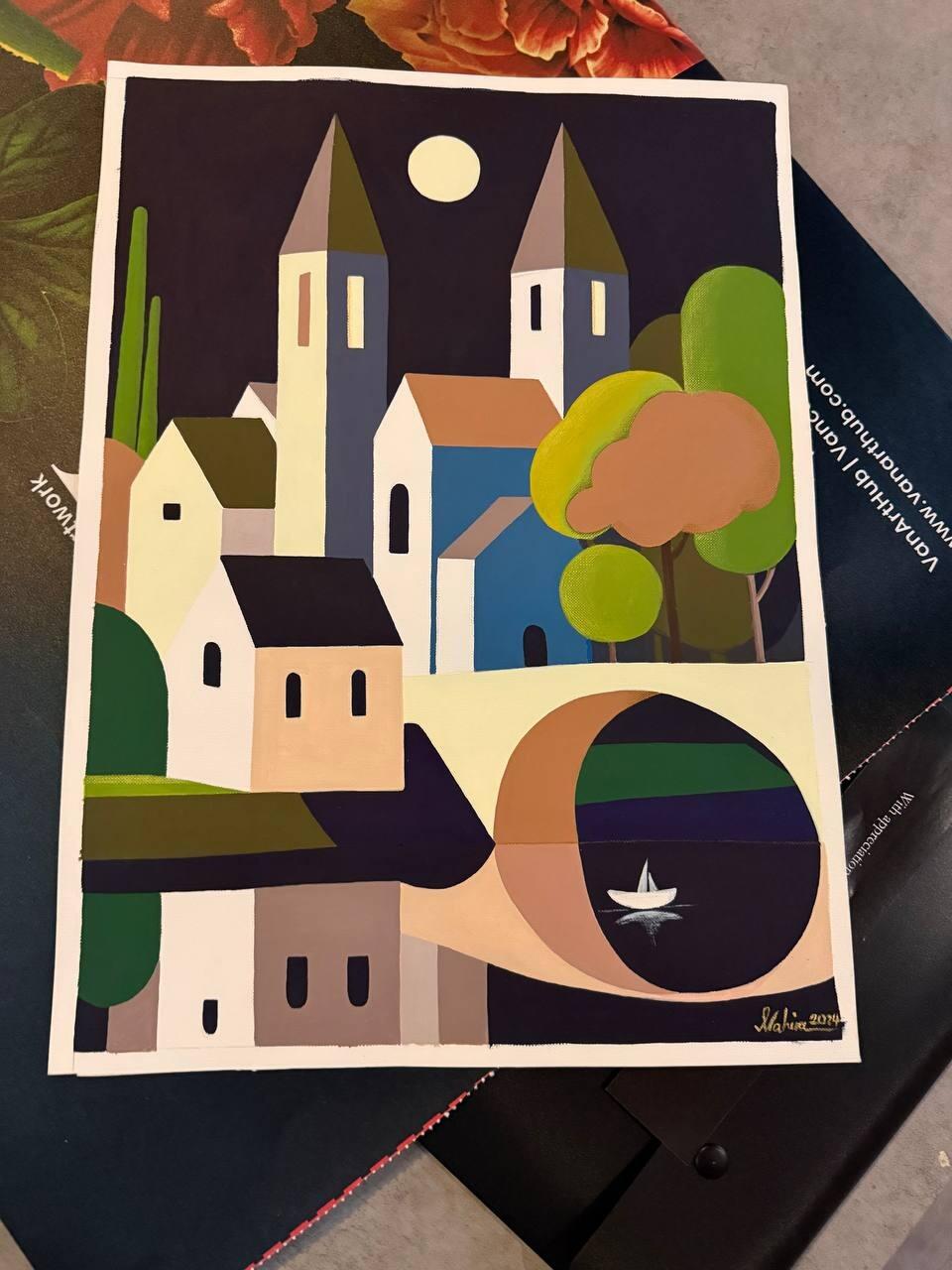
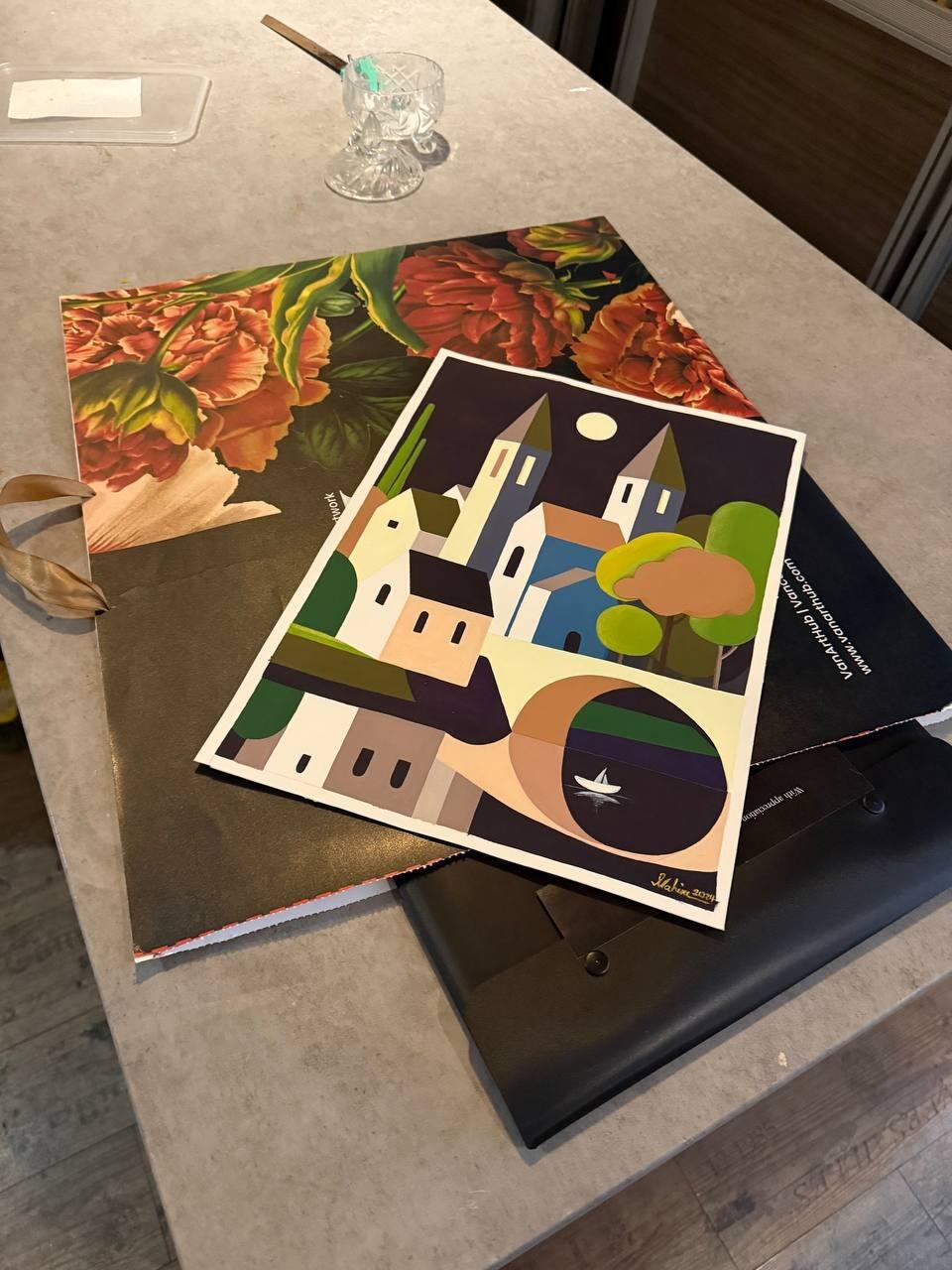
A print fills wall space. An original is a one-of-a-kind object that nobody else in the world owns a copy of. It carries the artist's actual hand, the texture of the paint, and, when the work is honest, a real idea. Those things do not survive being reproduced by the thousand.
Is "The Weight of Suffering" available to buy?
Yes, at the time of writing it is an available original oil on canvas by Phaedra. You can see it on its product page. Because every piece is one of a kind, once it sells it is gone, though we keep sold works online so their record stays public.
Will an original painting go up in value over time?
It might, but no one can promise it. Price growth depends on the artist's reputation, exhibition history, documentation, scarcity, and demand, most of which build slowly over years. Buy a painting because the work reaches you and the meaning holds up. Treat any future rise in price as a possibility.
What is a personal visual language in an artist's work?
It is the set of symbols, colours, figures, and marks an artist returns to again and again on purpose. Over time these repeats stop looking random and start to read as one voice. That consistency is what tells you a real body of work, rather than a set of unrelated decorative pieces.
Why does buying a piece from a series matter?
A series works like chapters of one story. Each painting holds part of a larger idea the artist is developing across several works. Owning one means owning a fixed piece of that record, which carries more weight than a single image made to match a room.
How do I know a painting is a genuine original?
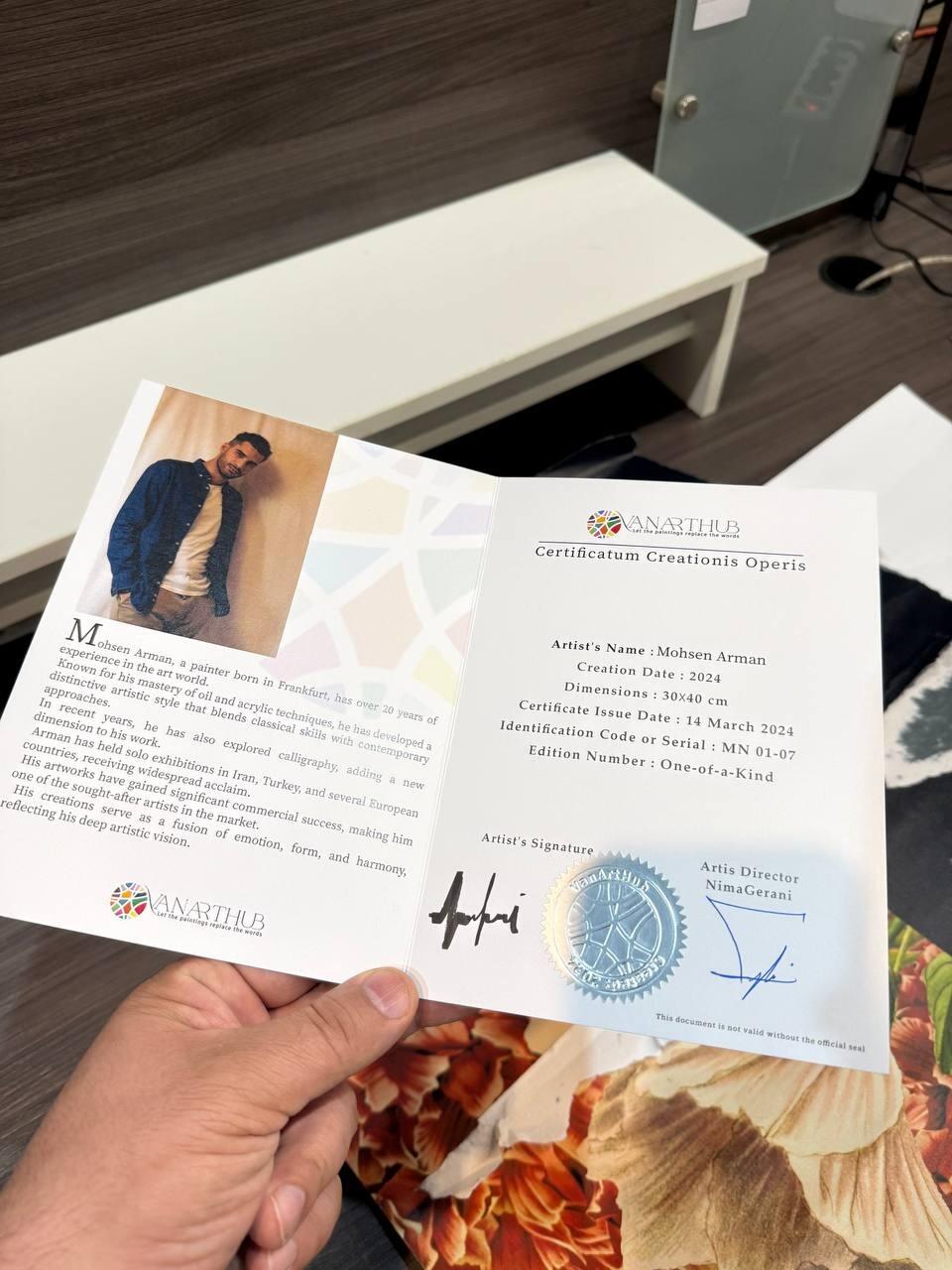
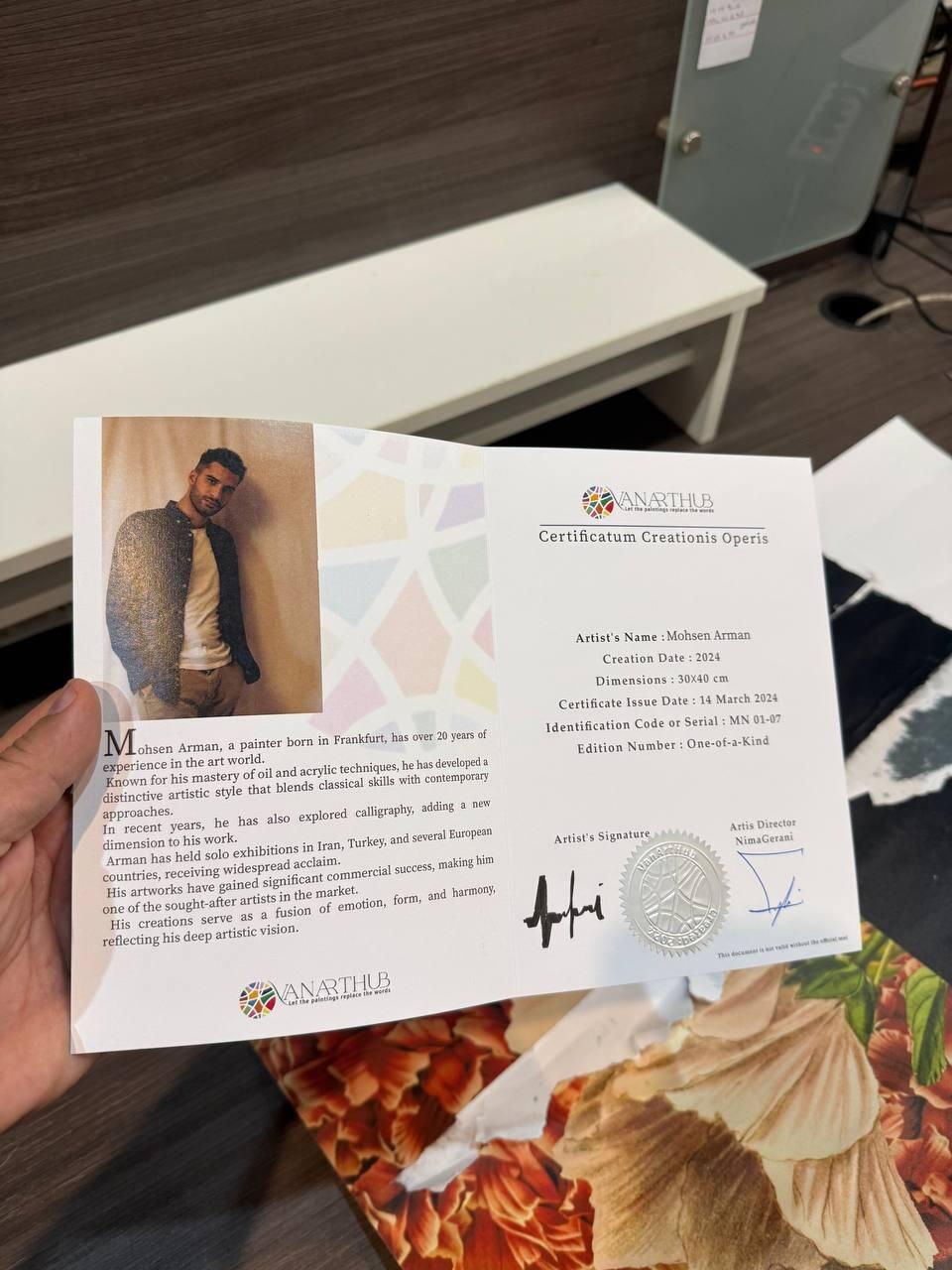
Look for the artist's hand: real paint texture, brush or knife marks, and small variations a print cannot fake. Ask for documentation. Every VanArtHub piece is an original, one-of-a-kind work signed by the artist and comes with a Certificate of Authenticity that records the title, artist, medium, and dimensions.
What does the Certificate of Authenticity include?
It records the title, the artist, the medium, and the dimensions of the exact piece you bought. It is the paperwork that ties the object in your hands to its identity and its maker, which matters both for your own confidence and for any future sale or appraisal.
Can I return a painting if it does not feel right at home?
Yes. Every piece ships with a 14-day trial. Live with it on your own wall, and if it is not right, send it back within 14 days for a full refund. We pay the return shipping. Seeing a painting in your own light is the only real test.
Where does VanArtHub ship, and how long does it take?
We ship free and fully insured to Canada and the United States from our Vancouver studio. Canada usually takes 3 to 7 business days and the United States 5 to 10. Each work is packed by hand, since an original cannot be reprinted if it is damaged.
Sources
- Li, Y. et al. Pricing art and the art of pricing: On returns and risk in art auction markets. European Financial Management, 2022.
- Masterworks Academy. Understanding Provenance: Why an Artwork's History Drives Its Value.
- Artsper Magazine. Who decides the value of an artwork?
Data sourced July 2026. If you spot something out of date, let us know and we will update the guide.
About VanArtHub
VanArtHub is an online gallery that sells original, signed, one-of-a-kind paintings to collectors in Canada and the USA. Every piece ships with a Certificate of Authenticity and a 14-day trial, so you can judge the work on your own wall before you commit. See more of Phaedra's paintings, browse our contemporary art, or read how we protect you when you buy on our Buy with Confidence page.