Buying Original Art Sight Unseen: How to Reduce the Risk
Updated By VanArtHub Curatorial TeamShare
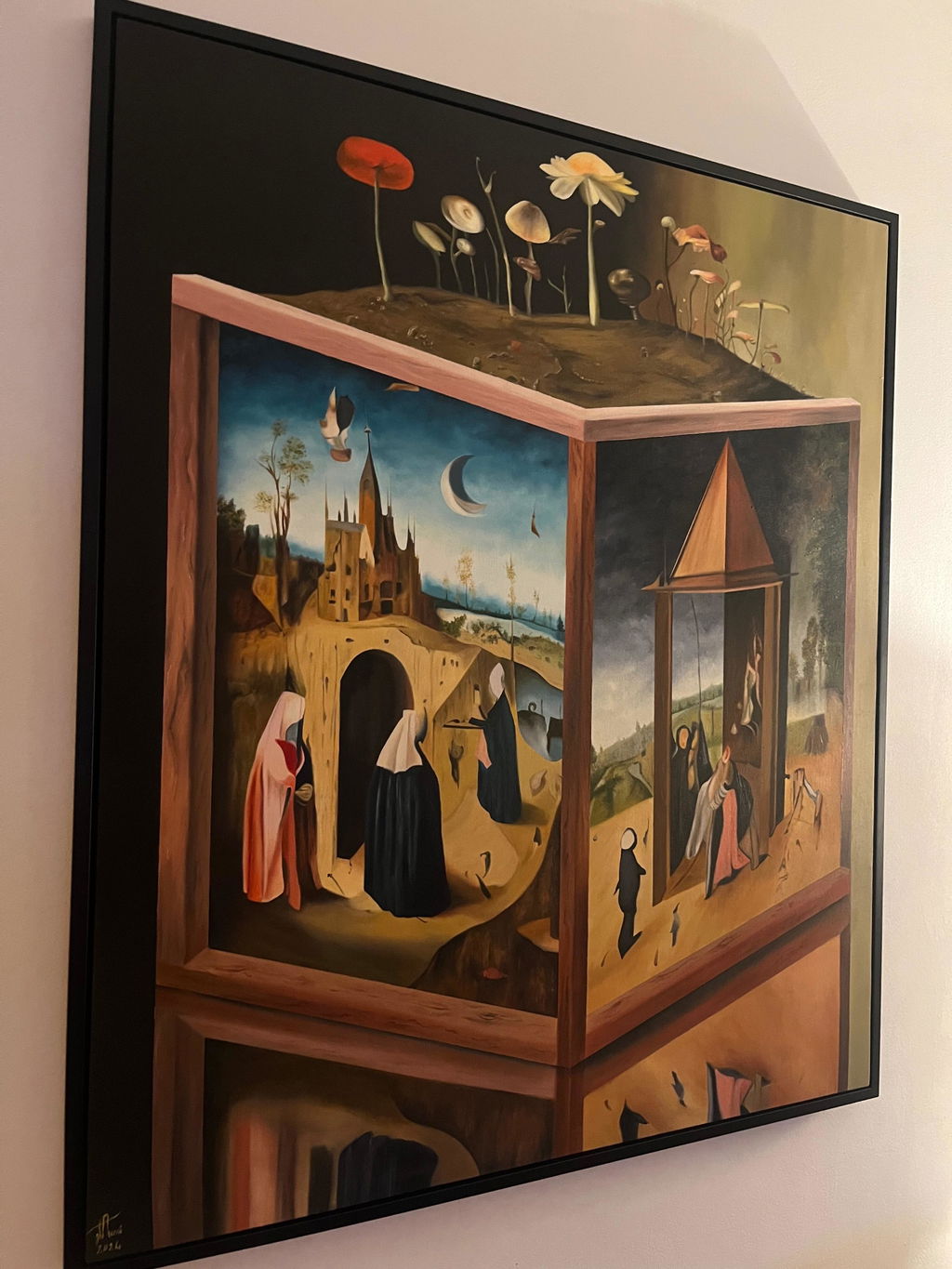
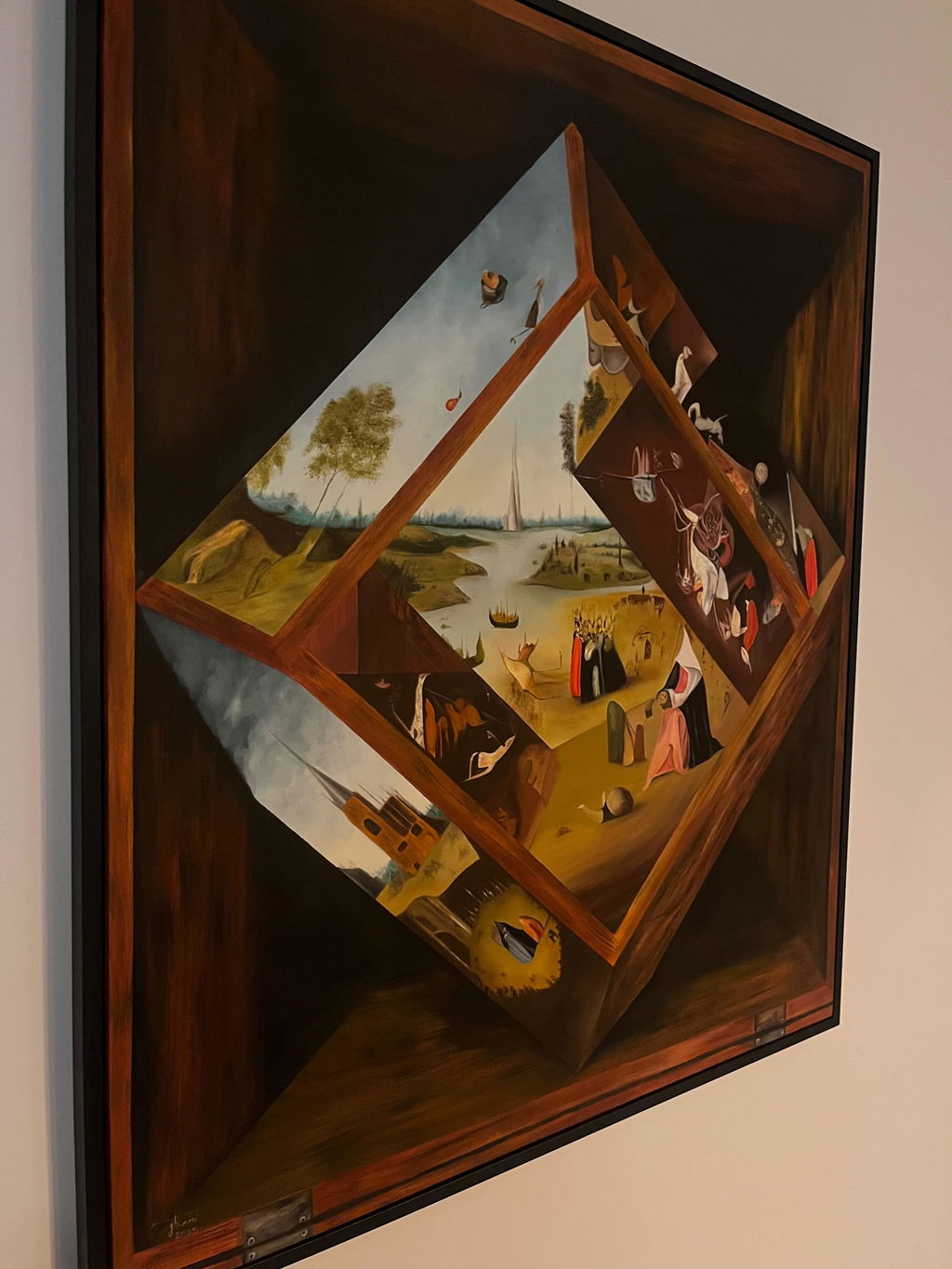
Almost every original painting sold today is bought by someone who has never stood in front of it. That should worry you more than it usually does, because a photograph cannot carry texture and it lies about scale by default. Here is how we would reduce that risk if we were the buyer instead of the seller.
Say the problem out loud first
A screen cannot show you two things about a painting, and they happen to be two of the three things that decide whether you love it.
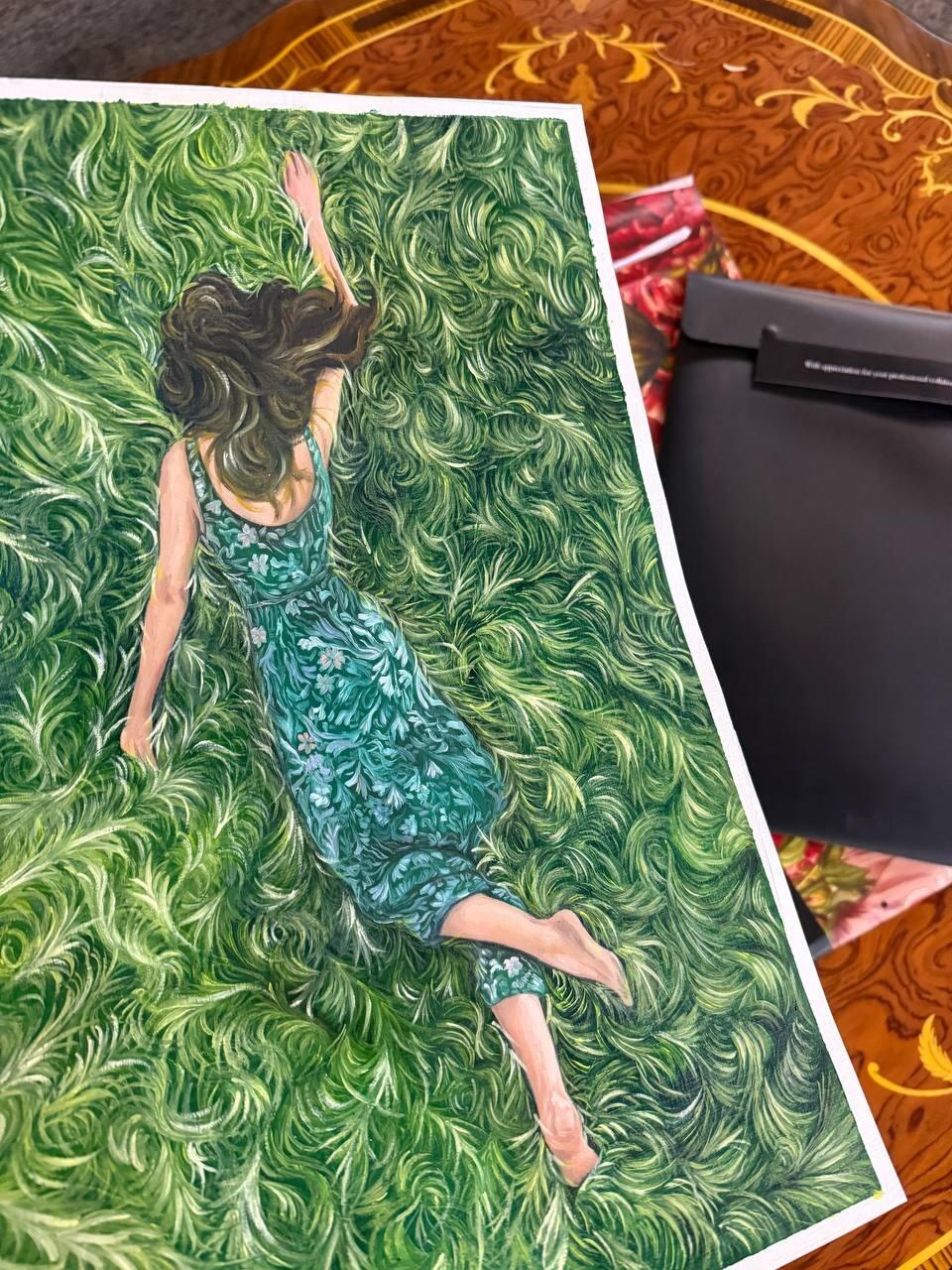
The first is surface. Paint that stands up off the canvas casts small shadows that shift as you walk past, and a photograph freezes one lighting angle and turns those ridges into a slightly darker smudge. Gloss varies across a single canvas depending on how much oil sits in each passage, and a photograph either flattens that out or turns it into a hotspot.
The second is scale. Every painting online is displayed at the size of your screen. A 30 cm study and a 150 cm canvas arrive in your browser as the same rectangle, and your brain has no reference to correct for it. Scale errors are the expensive mistake, because a painting that is too small for the wall is a purchase you have to make twice.
Colour is the third thing, and it worries people most while going wrong least. Screens emit light and paintings reflect it, so strong blues and reds look more intense on a screen. Deep blacks and subtle greys look better in person. The gap is smaller than people fear.
Five things to ask for before you buy
These are all reasonable requests. Any seller who resists them is telling you something.
Ask for a photograph of the painting beside a common object. A chair, a door, a person standing next to it. This solves the scale problem faster than any measurement, because a number requires you to imagine and a photograph does not. We keep a standard chair in the studio for exactly this.
Ask for a raking-light photograph. That means a shot with the light coming across the surface from one side rather than from the front, which throws every ridge and brushmark into relief. It is the single most informative image of a painting and almost nobody thinks to ask.
Ask for a photograph of the back. It tells you the support, whether the work is stretched or on board, whether a backing board is fitted, whether the corners are square, and where the artist signed. Old repairs show there too.
Ask for the exact dimensions, in centimetres, height by width by depth, and ask whether that measurement includes the frame. Depth matters more than people expect on an unframed canvas, because a 4 cm deep canvas reads as a substantial object and a 1.8 cm one reads as flat.
Ask what the painting is made of and on. Oil on linen, acrylic on cotton canvas, coloured pencil on artboard. A seller who cannot answer immediately has not handled the work.
The painter's tape test, which takes four minutes
This is the step that prevents the expensive mistake and almost nobody does it.
Take the dimensions and mark the exact rectangle on your wall with painter's tape. Not a rough guess, the real measurement. Then leave it there for two days and walk past it. You will know by the second evening whether the size is right, and you will be surprised how often the answer is that you need something larger.
If it will hang above furniture, tape the rectangle at the real height, usually with the bottom edge 20 to 25 cm above the top of a sofa or credenza.
Our experience is that most buyers who tape out a size go one step up from the painting they were considering. We would take the larger one nearly every time. A painting that is slightly too big for a wall looks confident. A painting that is too small looks like an accident.
Read the seller, not just the painting
Buying sight unseen is mostly a judgement about who is describing the work to you. A few checks every time.
| Question | What a good answer looks like | What should slow you down |
|---|---|---|
| Is it an original? | A direct yes, with the medium and support named | Words like giclee, limited edition, or hand-embellished |
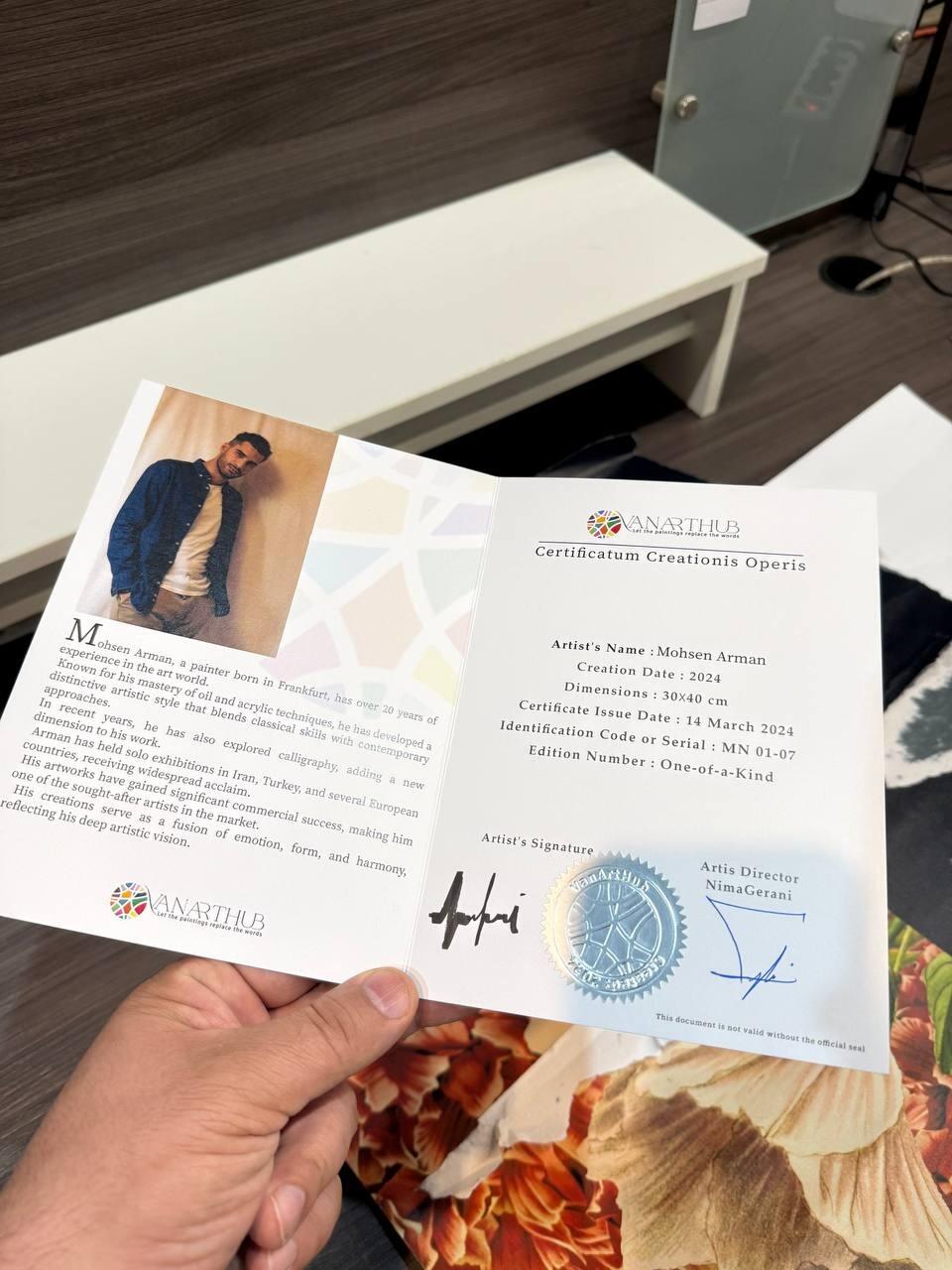
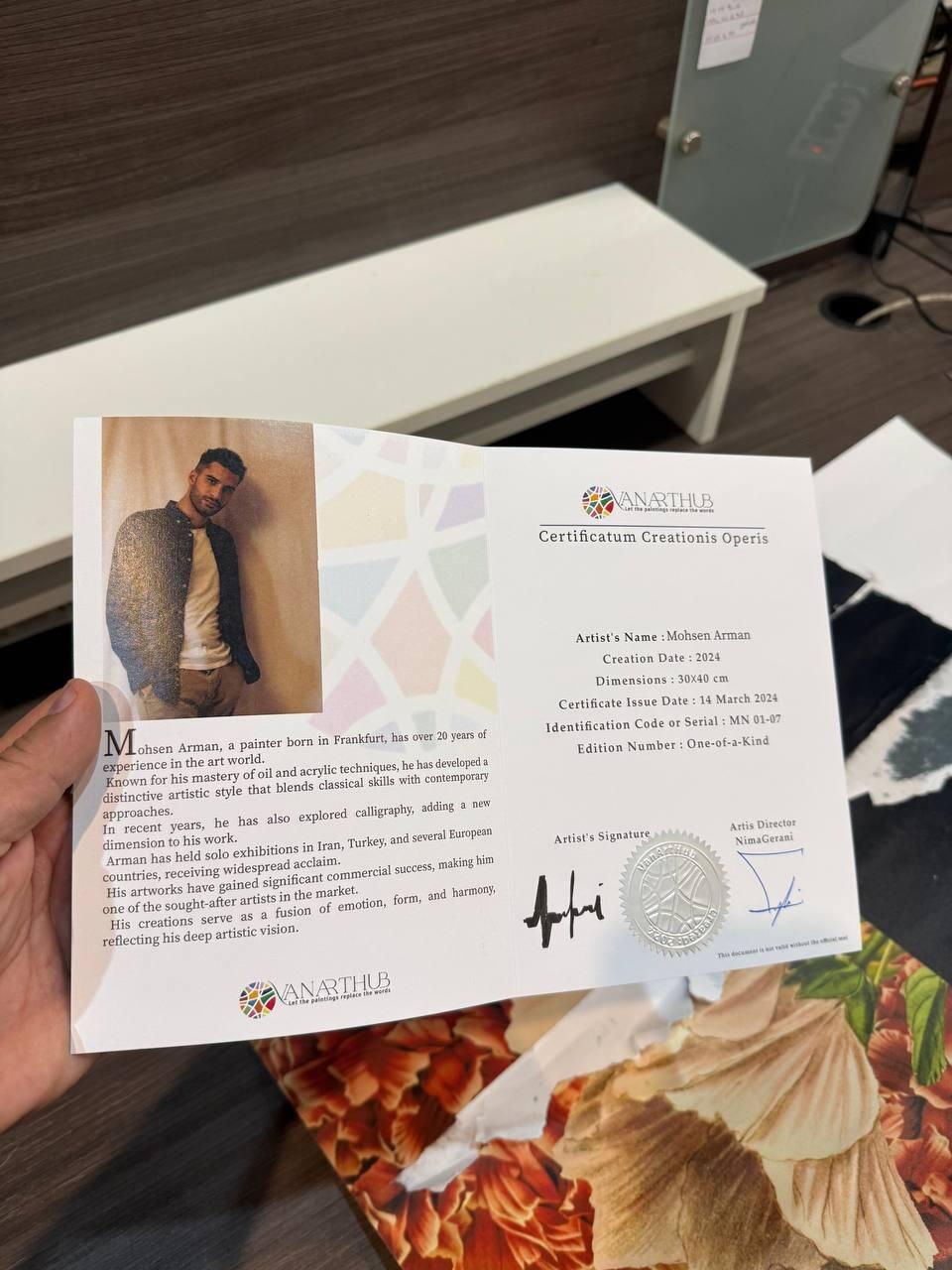
| What documentation comes with it? | A Certificate of Authenticity naming artist, title, year, medium, and size | No paperwork, or a certificate the seller wrote with no detail on it |
| What is the return policy? | A stated number of days and who pays return shipping | All sales final, or returns at your cost on a heavy canvas |
| How is it packed and insured? | A specific description of the packing, with insurance in place | A vague reassurance that it will be fine |
| Can I see the back? | A photograph within a day | Reluctance, or only ever the same three images |
| Who is the artist? | A name, a body of work you can look at, other pieces by the same hand | A single painting by an artist with no other trace |
The return policy line matters most and it is the one people skim. Everything else on that table lowers your chance of being wrong. The return policy is what happens when you are wrong anyway.
Why the 14-day trial is the real answer
Every step above narrows the gap. None of them closes it, because standing in front of a painting in your own room is a different experience from looking at any number of photographs of it.
So the honest answer to buying sight unseen is that you should only do it where you can send it back. We give you 14 days from delivery. Hang it properly, live with it through a morning and an evening, see it under your own lights, watch how it looks when you come home. If it is wrong, tell us within those 14 days and we send a prepaid insured return label and refund you in full once it arrives back. We pay the return shipping.
That mechanism turns a decision you had to get right from a photograph into a decision you make in the actual room. We would rather take a return than have a painting hanging somewhere it does not belong. So use the 14 days properly: hang it on day one, in the place it is meant to go.
What we cannot fix, and when not to buy from us
We photograph every piece as carefully as we can, in daylight, with a raking shot for surface, and we send more images of any work on request. The surface still has to be stood in front of. We cannot photograph our way out of that.
If you are in or near Vancouver, book a private viewing. It is free and better than any set of photographs. If you are elsewhere and a return process bothers you, buy from a gallery in your own city where you can see the work first. That is a sensible way to buy art and we will not argue with it.
One more honest limit. If you are buying primarily as an investment and you need a resale market, we are not the right shop. We sell work by independent artists to people who want to live with it. Our Lifetime Trade-Back gives you store credit toward another original, which is a real thing but it is credit rather than cash.
Key Takeaways
- A screen cannot show texture or true scale. Colour is the thing people fear most and it goes wrong least.
- Ask for the painting photographed next to a chair or a person. It solves scale faster than any measurement.
- Ask for a raking-light shot, taken with light across the surface, to see the actual brushwork.
- Ask for a photograph of the back. It reveals the support, the backing board, the signature, and any repairs.
- Tape the exact rectangle on your wall and live with it for two days before you buy.
- The return policy is the only thing that protects you when you are wrong anyway. Ours is 14 days and we pay the return shipping.
Frequently Asked Questions
Is it safe to buy an original painting online without seeing it?
It is reasonable when the seller offers a real return period. Ask for a raking-light photograph, a shot of the back, an image of the work beside a common object for scale, and the exact dimensions. Then confirm how many days you have to return it and who pays the return shipping.
What is a raking-light photograph and why should I ask for one?
It is a photograph taken with the light coming across the surface from one side rather than head on, which throws every ridge, brushmark, and area of thick paint into visible relief. It is the most informative single image of a painting's surface and very few buyers know to request it.
How can I tell how big a painting will look on my wall?
Mark the exact dimensions on the wall with painter's tape and leave it there for two days. Numbers do not translate into a mental picture, and a taped rectangle does. Most people who do this end up choosing a larger painting than they were originally considering.
Why does the back of a painting matter?
It tells you the support, whether the work is stretched canvas or on board, whether a backing board is fitted, whether the corners are square, and often carries the artist's signature and date. Old repairs and patches show there too, which is information no front view gives you.
Will the colours look the same as they do on my screen?
Close, with predictable differences. A screen emits light and a painting reflects it, so strong blues and reds tend to appear more intense on screen. Deep blacks and subtle grey transitions usually look better in person. View the images on your largest screen with night mode off for the fairest comparison.
What questions should I ask a seller I do not know?
Ask whether it is an original and in what medium on what support, what documentation comes with it, exactly how many days you have to return it and who pays that shipping, how it will be packed and insured, and whether you can see a photograph of the back. Reluctance on any of those is the signal.
How long do I have to return a painting to VanArtHub?
Fourteen days from delivery. Hang it on day one, in the place it is meant to go, and live with it through morning and evening light. If it is wrong, tell us within those 14 days and we send a prepaid insured return label and refund you in full once it is back.
Can I see a piece in person before buying?
Yes, by appointment in Vancouver. Private viewings are free and they are better than any set of photographs. If you are outside the city the 14-day trial does the same job, since the real test is the painting in your own room under your own lights.
Should I buy original art as an investment?
We would say no, and we are the ones who lose by saying it. We sell work by independent artists to people who want to live with it, and there is no resale market we can promise you. Our Lifetime Trade-Back gives store credit toward another original, which is credit rather than cash.
Are these prints or original paintings?
Originals only. Every piece on the site is a one-of-a-kind work, signed by the artist, and once it sells nobody can buy that exact painting again. We do not sell prints, giclees, or reproductions of any kind.
About VanArtHub
VanArtHub is an online gallery in Vancouver selling original, signed, one-of-a-kind paintings by independent artists. No prints and no reproductions. Every piece ships with a Certificate of Authenticity, free fully insured delivery to Canada and the USA, and a 14-day trial so you can decide at home. Start with every available original, read how to buy original art, or see why we offer a 14-day trial. Our full policy lives on the Buy with Confidence page.