Original Art for a Rented Office You May Leave in Two Years
Updated By VanArtHub Curatorial TeamShare
You have signed a three-year lease on a floor you do not own, and the walls are the standard rental beige. Should you buy real paintings for a space you might hand back in two years? We think yes, and the reason is simple: the art leaves with you and the leasehold improvements do not.
The lease is temporary. The painting is not.
Almost everything you spend on a rented office stays in the building. New flooring, a glass partition, better lighting, a reception desk built to fit that alcove. All of it is written off over the lease term and then belongs to the wall.
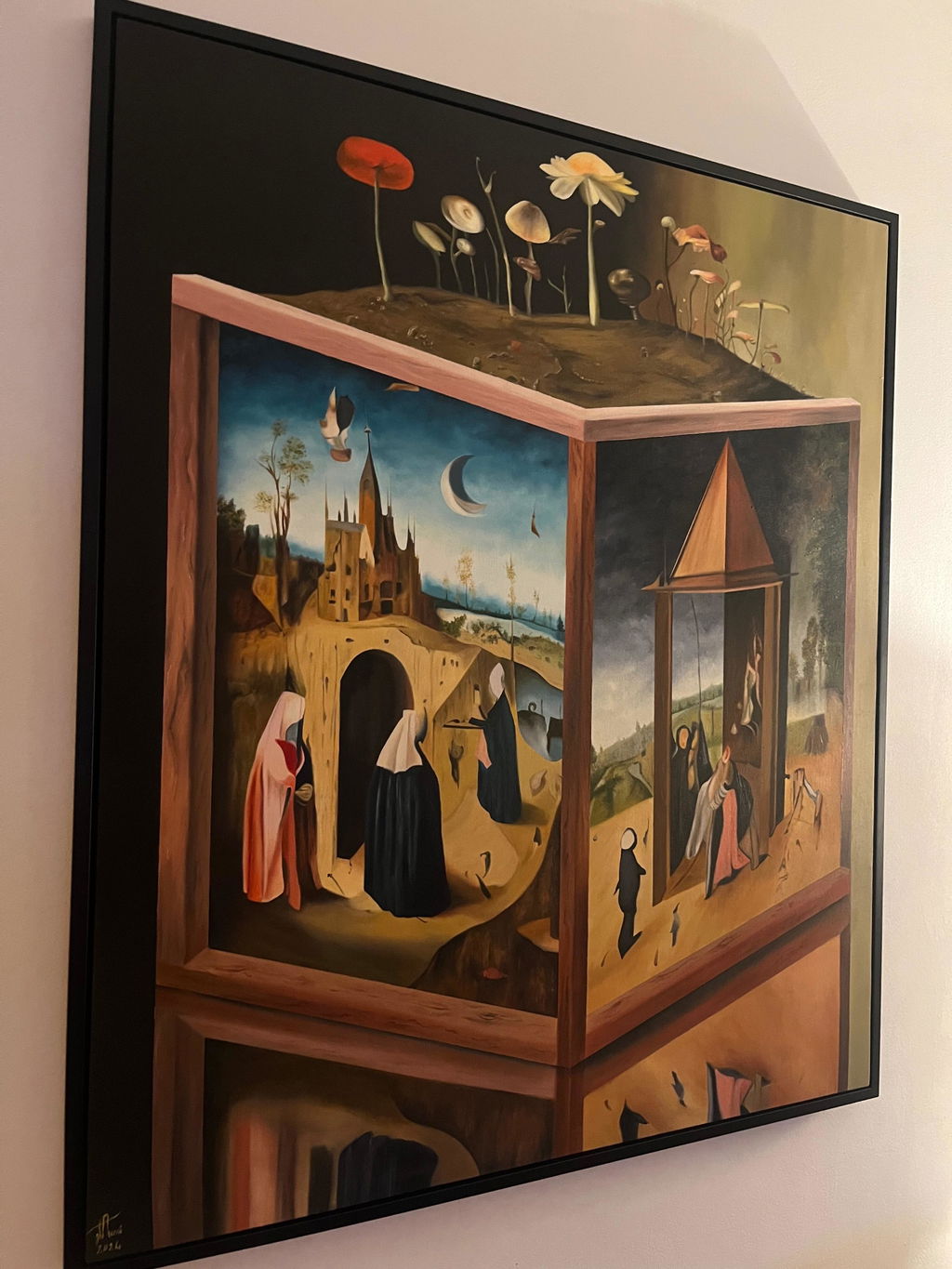
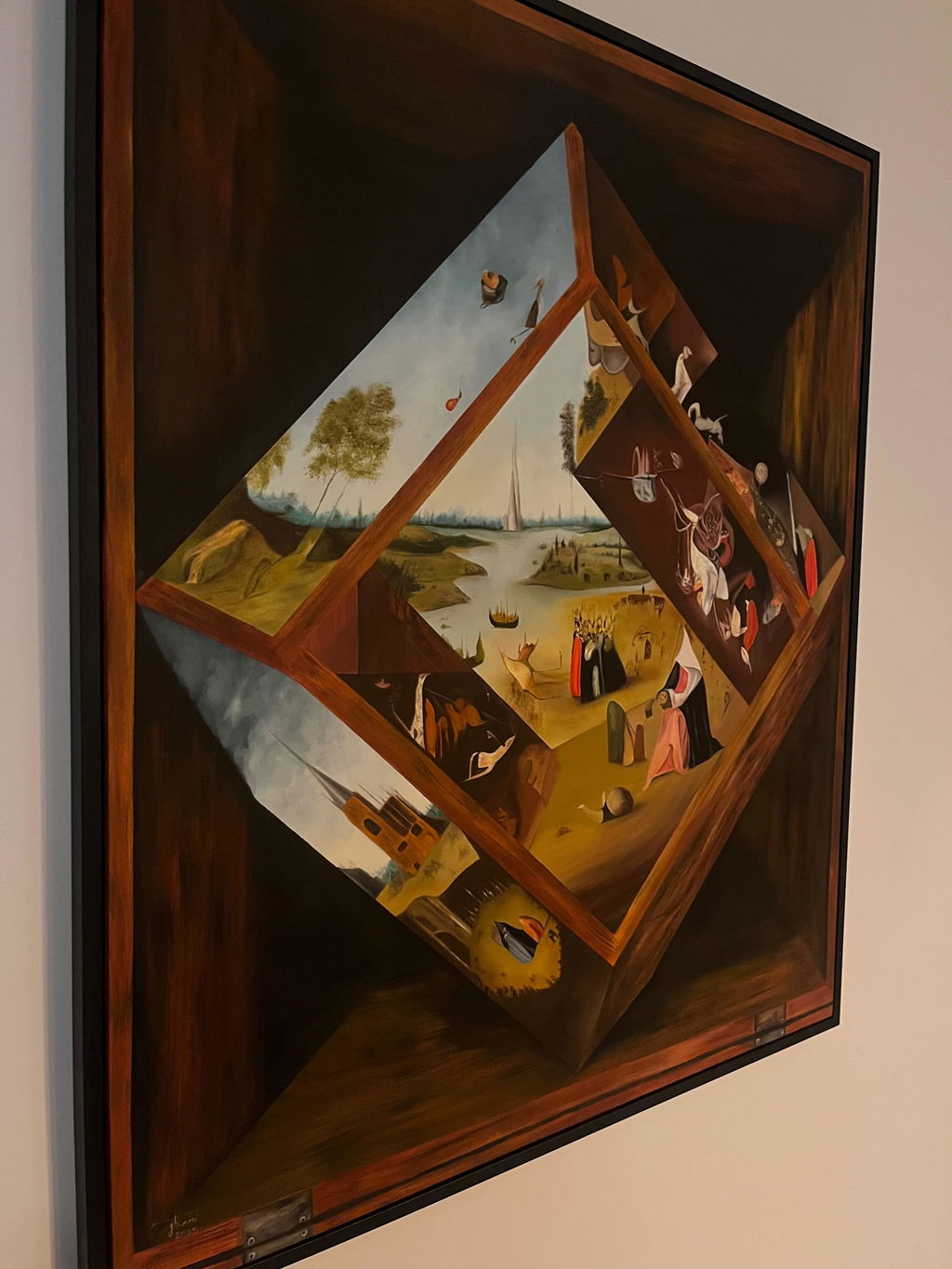
An original painting is the exception. It is a moveable object with its own value, and it goes into the next office, the office after that, or your home. Of everything you can put in a rented space to make it feel like it belongs to you, art is the only category that is fully portable.
So the real question is whether you want to own some paintings. The office is where they live for now.
What a rented office actually needs from art
Offices have a specific problem that homes do not: the same people look at the same wall for eight hours a day, five days a week. A picture that is loud, or busy, or trying to be clever wears out fast under that kind of exposure. We have had clients replace an office piece within a year because it was tiring to sit across from.
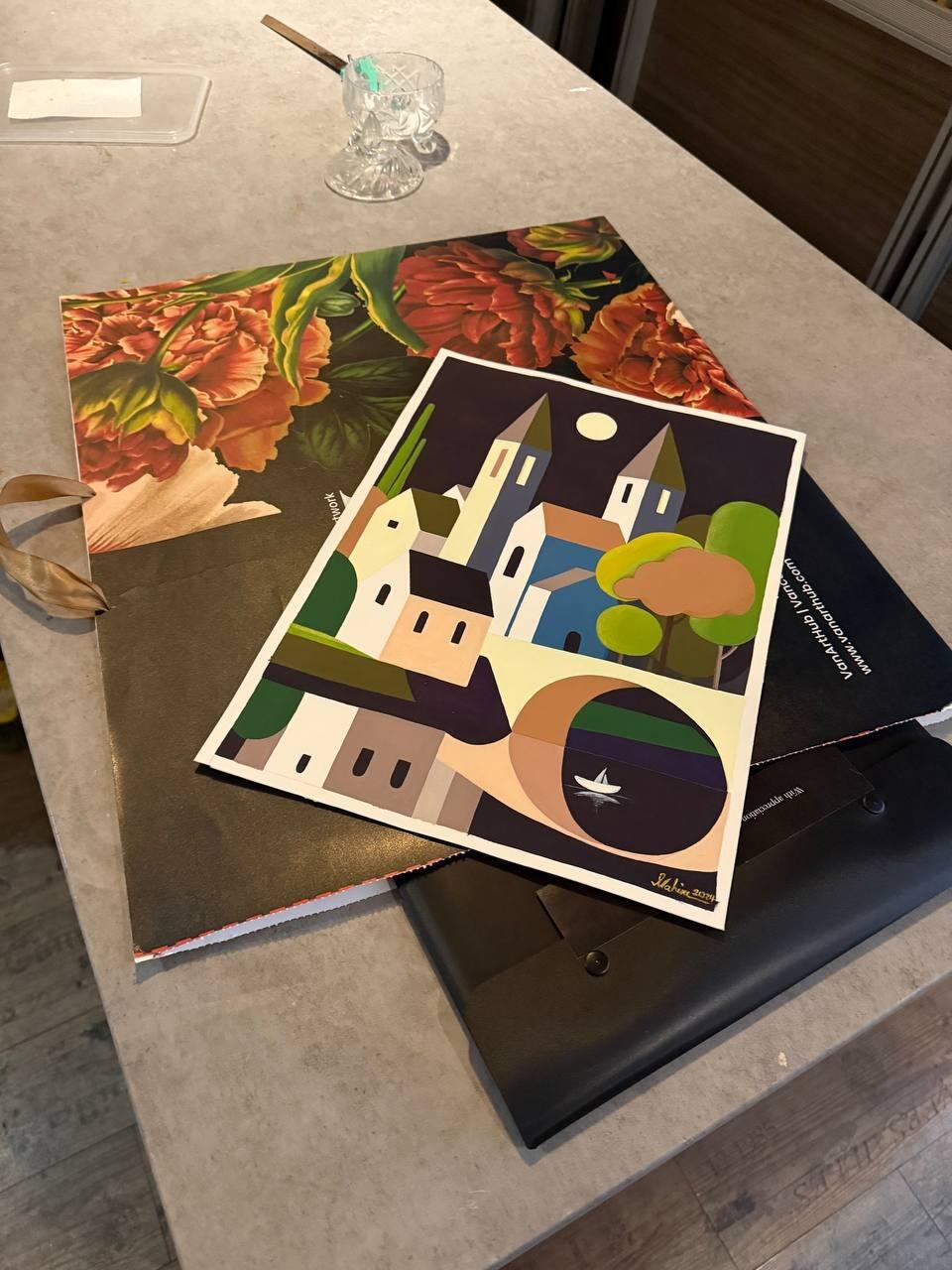
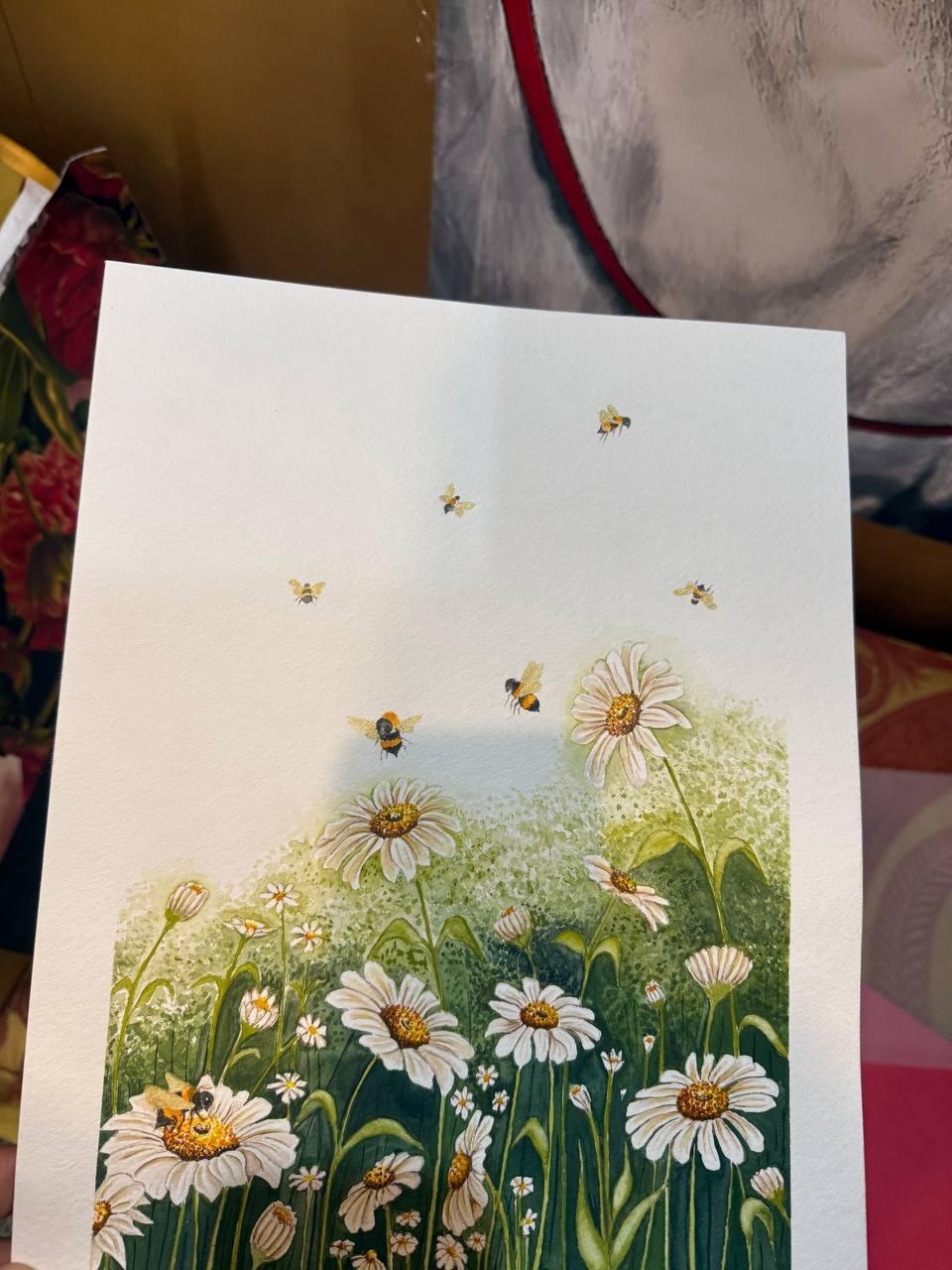
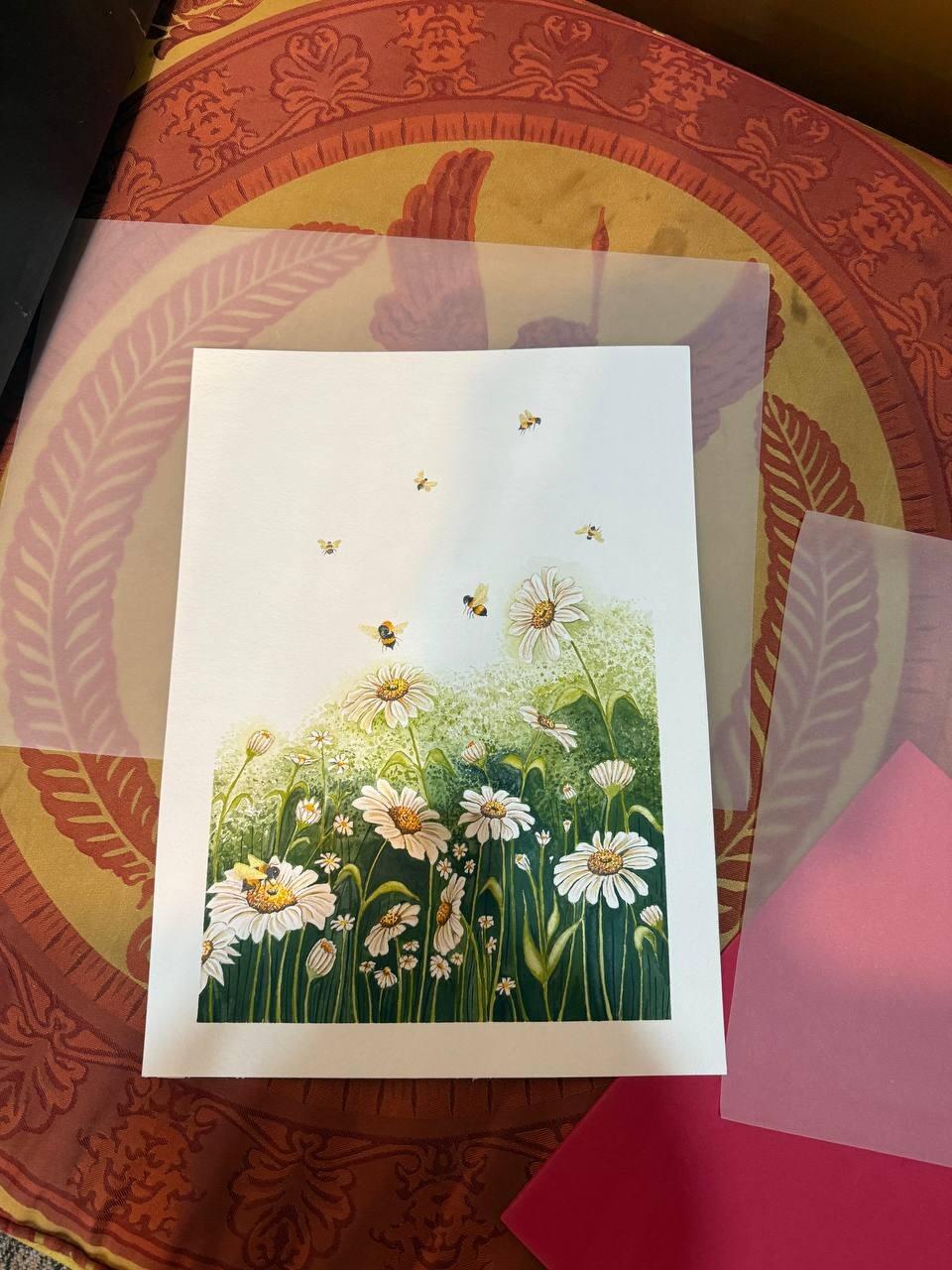
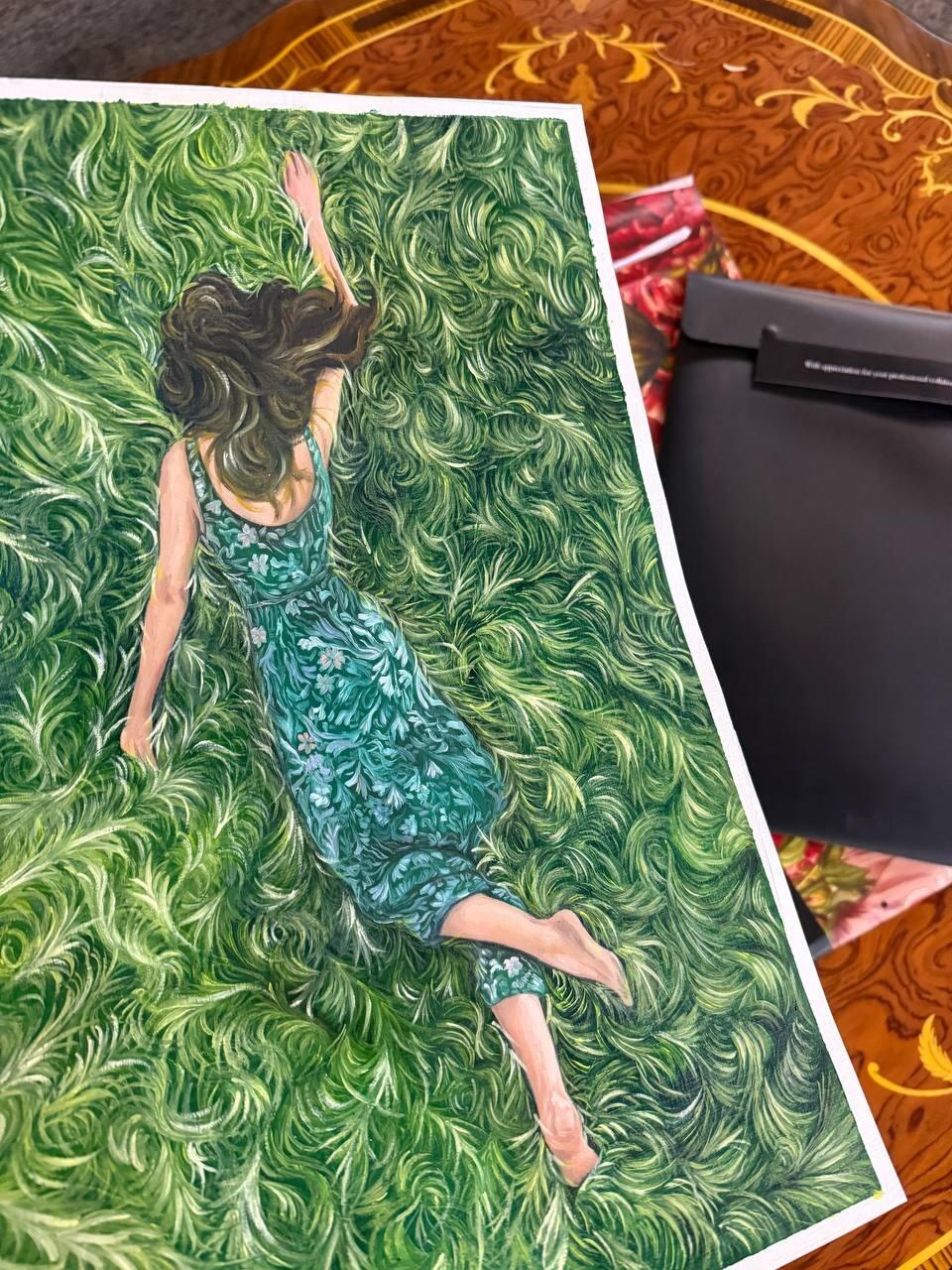
What holds up is work with depth rather than impact. Layered abstracts, landscapes with a lot of quiet in them, and anything with subtle colour shifts that reveal themselves slowly. The test we use is whether the painting still has something to give you on the two-hundredth viewing.
An office is also shared, so a painting with a strong story or a recognisable person in it puts a specific mood on the room whether people want that or not. Abstract and landscape work carries a shared space better. We love portraits in a private room, which is a different problem.
Where to hang it, and where not to
The three walls worth spending money on are the one behind reception, the wall in the meeting room that faces the camera, and the end wall of any long corridor. Those are the three surfaces that appear in every video call, every client visit, and every photograph of your space.
The meeting room wall is the one we would prioritise if you only buy one piece. Since remote meetings became normal, that wall is your company's background in hundreds of calls a year, and a real painting reads very differently on camera than a printed motivational poster does. It also gives people something to look at while they think.
Avoid the wall directly opposite a full-height window unless you can control the light. Corridors suit art and are hard on it at knee height, so hang higher there than you would in a room.
Sizing for a commercial wall, which is bigger than you think
The most common mistake in an office is buying something too small. Commercial ceilings run higher than residential ones and the walls are wider, so a piece that looks generous in a living room looks like a postage stamp behind a reception desk.
Our working rule is that a single painting should occupy roughly two thirds to three quarters of the width of the furniture or wall section it sits above. Behind a two metre reception desk, that means a canvas around 140 to 150 cm wide. In a meeting room above a credenza, measure the credenza and work from that, never from the whole wall.
If the piece you love is smaller than that, group two or three works hung close together with 5 to 8 cm between frames so they read as one block. Or put the small painting in a private office where its scale makes sense.
| Location | Typical furniture width | Painting width we would aim for |
|---|---|---|
| Behind a reception desk | 180 to 220 cm | 130 to 160 cm, or a group of two |
| Meeting room, above a credenza | 150 to 180 cm | 100 to 135 cm |
| Meeting room, camera background wall | No furniture | 90 to 120 cm, hung so it fills the frame behind a seated person |
| Private office, above a desk | 140 to 160 cm | 90 to 120 cm |
| End of a corridor | Wall width 100 to 150 cm | 70 to 100 cm, hung slightly higher than eye level |
Hanging it so you can take it down cleanly
Your deposit depends on the state of the walls, so plan the hanging around that from day one. On standard drywall, two small hooks rated for the weight do less damage than one big anchor and hold the painting level. Two 5 mm holes fill with filler and a touch of paint in about four minutes. A 40 mm toggle bolt does not.
For anything over about 15 kg, or for a concrete or glass wall you cannot drill, ask the building manager whether there is a hanging rail or a picture track already installed. Many newer commercial buildings have one above the window line and nobody ever mentions it. A track means zero new holes and you can move the work whenever the layout changes.
Photograph every wall before you hang anything. If there is an argument at the end of the lease about a mark, the dated photograph settles it in one minute.
The awkward questions: who owns it, and what happens at the end
Decide before you buy whether the company owns the painting or you do. If the company buys it, it is a company asset and it goes wherever the company assets go, including into a wind-up if things go badly. If you buy it personally and lend it to the office, write that down in one paragraph and keep the invoice in your own name. This takes five minutes and prevents a genuinely unpleasant conversation later.
The other end-of-lease question is downsizing into a space with less wall. Our Lifetime Trade-Back covers this. Return a piece in good condition at any point and we issue store credit toward another original, so a large reception canvas can become two smaller works. It is credit rather than cash, and we say that plainly.
When we would tell you not to buy from us
If you are furnishing twenty identical breakout rooms and you need twenty matching pieces, we are the wrong supplier. Every work we sell is a one-off, so we cannot repeat anything, and a set that has to match is a print job. We would rather tell you that than sell you a mismatched set and let you discover it on installation day.
The same applies if your budget per wall is genuinely small and you need eight walls covered this month. Original art is the wrong tool for full coverage on a tight budget. Buy one real painting for the wall that matters and leave the rest empty until you can do it properly. An empty wall reads as unfinished. Eight cheap prints read as a decision somebody made.
And if you are leaving the space in under six months, wait. Buy the painting when you know what the next wall looks like.
Key Takeaways
- Everything else you spend on a rented office stays with the building. The paintings leave with you.
- Buy for the wall people stare at for eight hours, which means depth over impact.
- Office walls are bigger than home walls. Aim for two thirds to three quarters of the furniture width below.
- The meeting room camera wall is the highest-value single purchase in most offices now.
- Two small hooks fill in four minutes. One large anchor costs you part of the deposit.
- Decide in writing whether the company or you personally owns the work, before you buy it.
Frequently Asked Questions
Is it worth buying original art for an office we are only renting?
Yes, because the painting is the one thing you can take with you. Flooring, partitions, and lighting all stay with the building at the end of the lease. A painting is a moveable object with its own value that goes into the next office or your home.
What size painting do I need behind a reception desk?
Roughly two thirds to three quarters of the desk width. For a two metre desk that means a canvas around 130 to 160 cm wide, or two works hung close together to reach that span. Commercial ceilings are higher than residential ones, so undersized art is the most common office mistake.
What kind of art works best in a shared office?
Work with depth rather than immediate impact. Layered abstracts, quiet landscapes, and pieces with subtle colour shifts hold up when the same people look at them all day. Loud or highly narrative work tends to get tiring within a year in a shared room.
How do I hang art without losing the damage deposit?
Use two small hooks rated for the weight rather than one large anchor. Two 5 mm holes fill with a dab of filler and matching paint in a few minutes. Photograph every wall before you hang anything, so a dated image settles any argument at the end of the lease.
Our building will not let us drill. What are the options?
Ask the building manager whether a picture rail or hanging track is already installed above the window line. Many newer commercial buildings have one and nobody mentions it. A track needs no new holes and lets you move work whenever the layout changes.
Should the company buy the art or should I buy it personally?
Decide before you order and write it down. Company-owned art is a company asset and follows the company, including through an insolvency. Personally owned art lent to the office should have the invoice in your name and a short written note confirming the arrangement.
Can we get several matching pieces for identical meeting rooms?
No, and this is where we are the wrong supplier. Every work we sell is a one-of-a-kind original, so nothing can be repeated. If you need twenty matching pieces for twenty identical rooms, that is a print order and you should go to a print supplier.
What if we downsize and no longer have the wall space?
Use the Lifetime Trade-Back. Return a piece in good condition at any point and we issue store credit toward another original, which lets you swap one large reception piece for smaller works. It is store credit rather than a cash refund, and we would rather be direct about that.
Can we see pieces in person before committing?
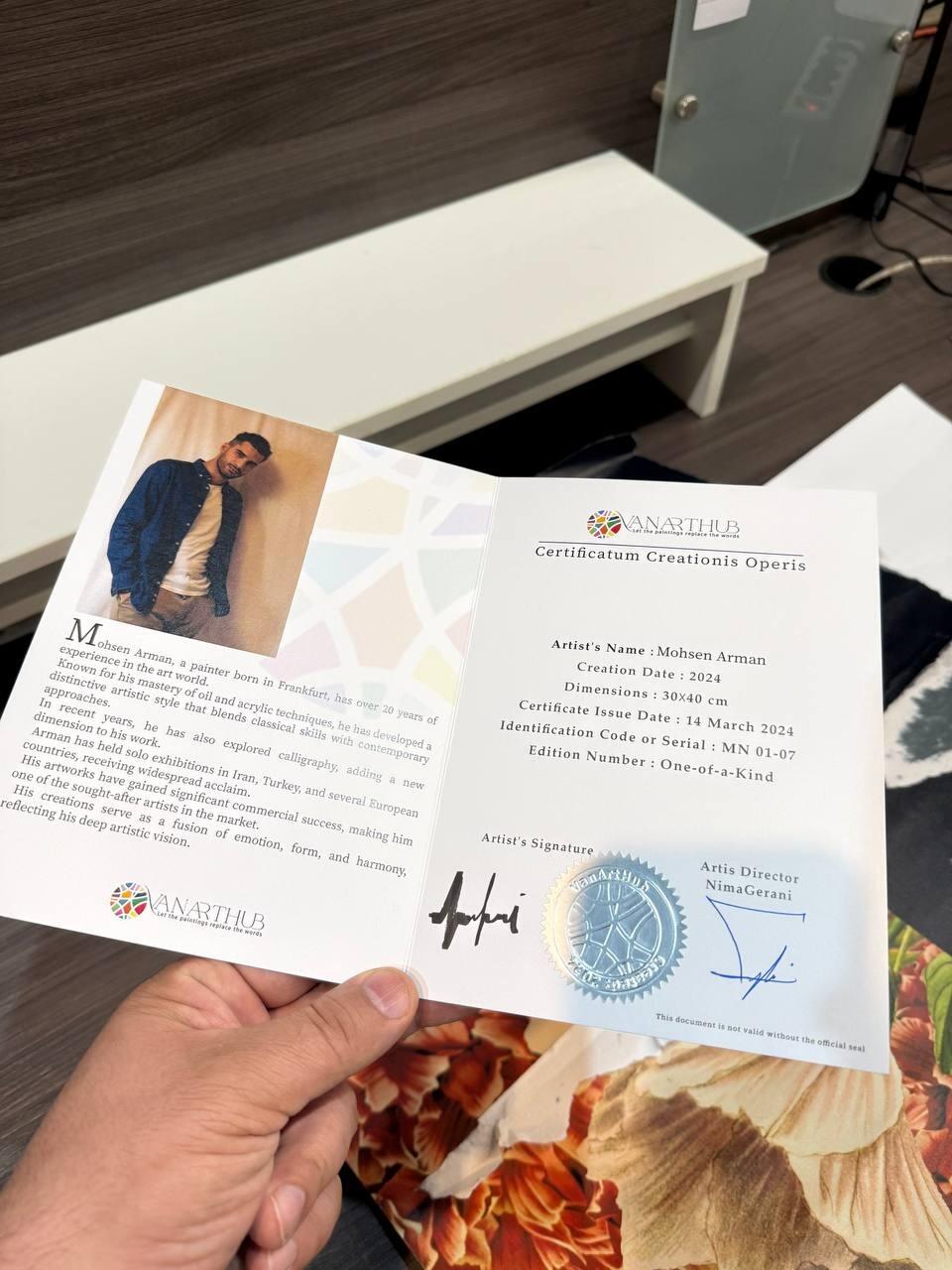
Private viewings are available by appointment in Vancouver. If you are outside the city, the 14-day trial does the same job: hang it in the real room, in the real light, and if it is wrong tell us within those 14 days and we send a prepaid insured return label.
How does shipping work and what does it cost?
Shipping is free and fully insured to both Canada and the USA. Canadian orders typically arrive in 3 to 7 business days and USA orders in 5 to 10. Every piece is packed in our Vancouver studio and travels with the insurance already in place.
About VanArtHub
VanArtHub is an online gallery in Vancouver selling original, signed, one-of-a-kind paintings by independent artists. No prints and no reproductions. Every piece ships with a Certificate of Authenticity, free fully insured delivery to Canada and the USA, and a 14-day trial so you can decide at home. Browse our art for offices, look at large wall art for reception walls, or read about the designer trade programme. Our full policy lives on the Buy with Confidence page.