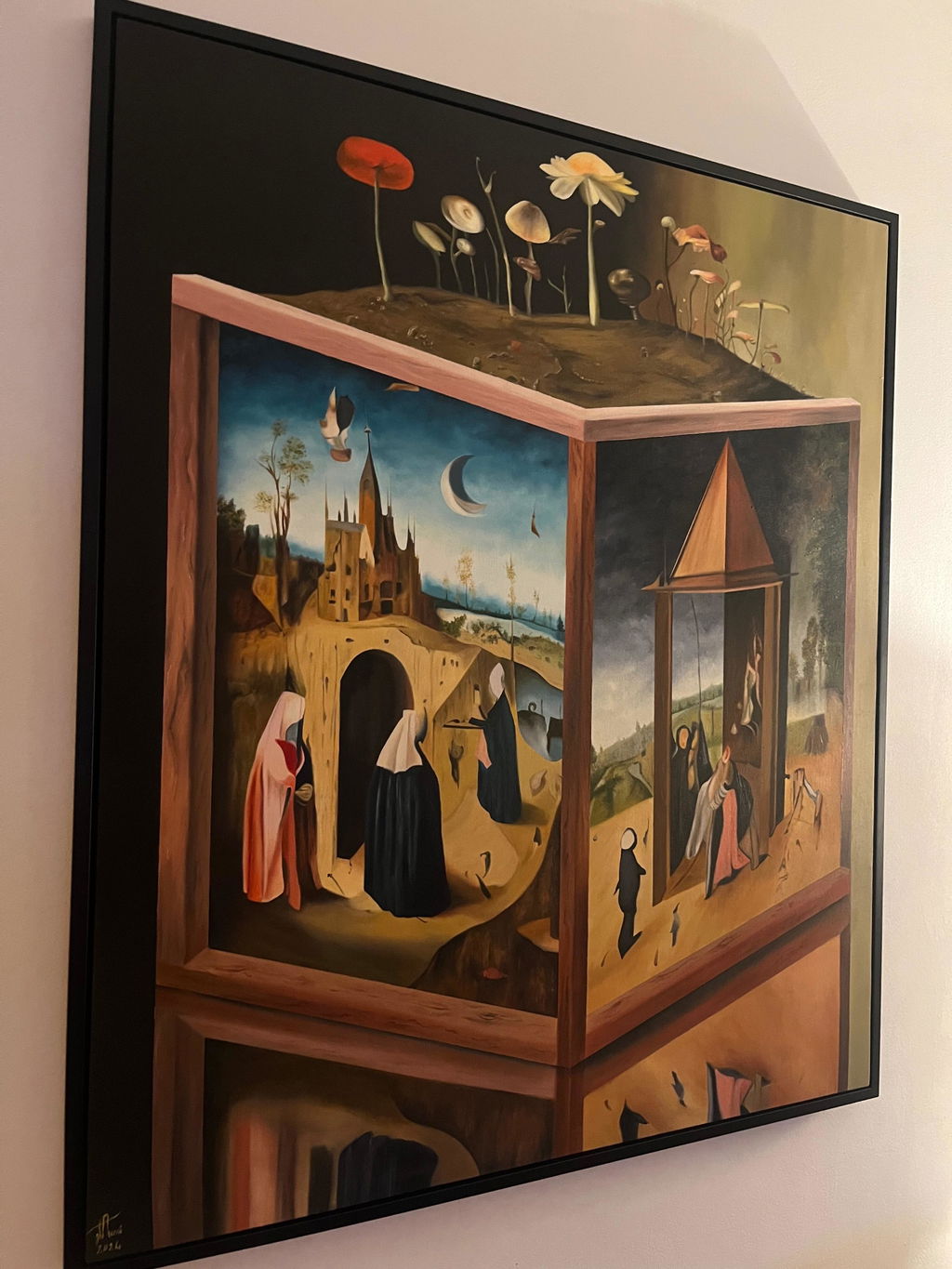
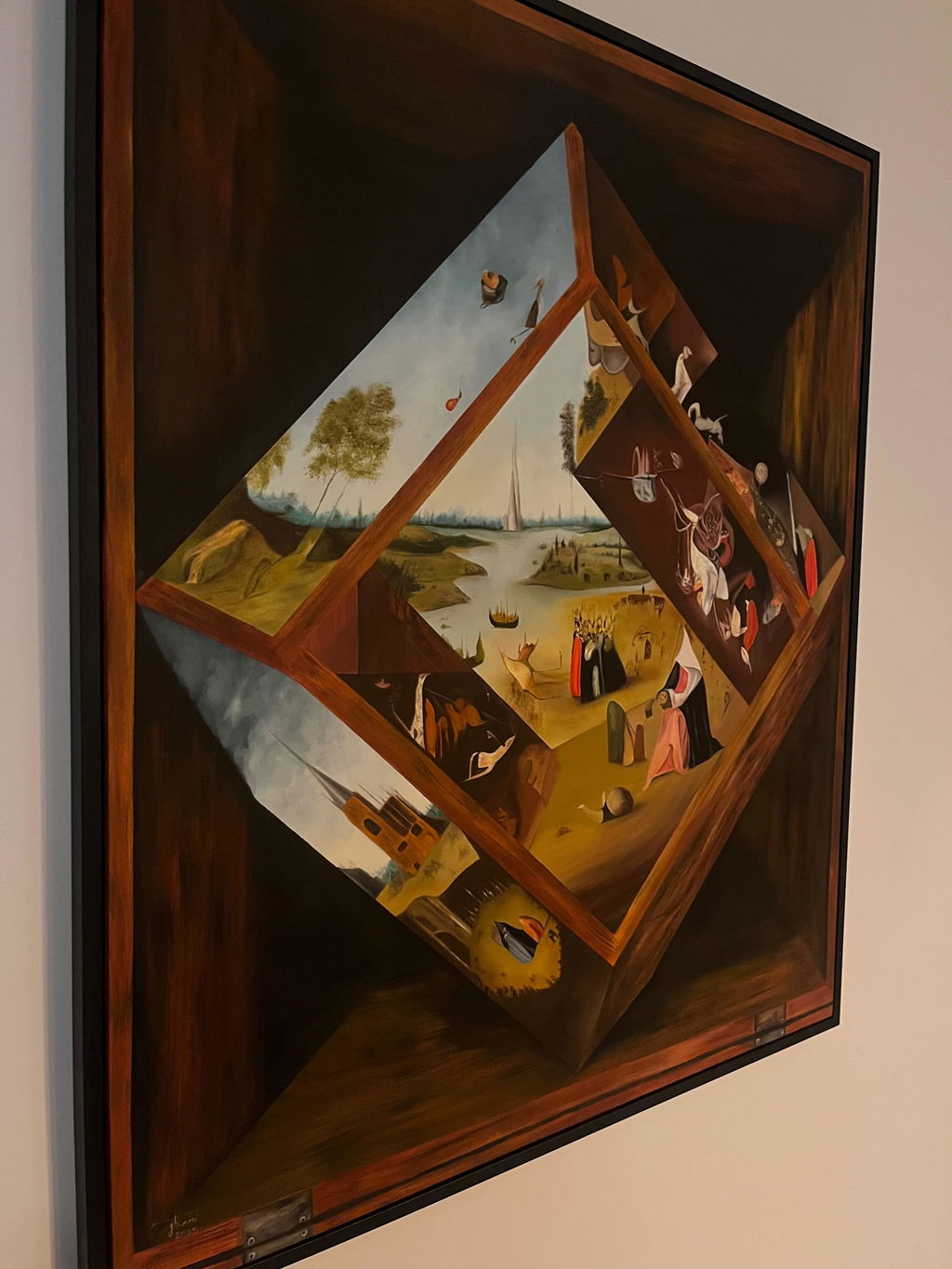
A floater frame is an L-shaped frame that a stretched canvas sits inside, with a small gap all round. We measure your canvas at the counter and build the frame to its size and depth.
A floater frame is an L-shaped frame that a stretched canvas sits inside. The canvas is fixed to the frame from behind, and a small, even gap is left between the canvas and the inside wall of the frame, so the front and the painted edges all stay visible. We build floater frames in our workshop at 1242 Davie Street, each one to the size and depth of the canvas you bring in. Our guide to floater frames for canvas explains the style.
What is measured first
A floater frame covers no part of the canvas, so any difference between the frame and the canvas shows as an uneven gap. Three things are measured first.
All four sides. Opposite sides of a canvas often differ in length.
Both diagonals. A diagonal runs from one corner to the opposite corner. Two equal diagonals mean the canvas is square.
The depth at each corner. Stretcher bars are the wooden bars a canvas is pulled over, and they are made in several depths. Our guide to stretcher bars explains them.
Depth, and where the front of the canvas sits
The frame is chosen at least as deep as the bars. The back of the canvas then stays inside the frame, and the frame lies flat against the wall. You also choose where the painted front sits.
Level with the front of the frame. The painting and the frame make one flat face.
Set back behind the front edge. The frame touches a wall or a hand before the paint does, which protects thick paint when the piece is carried.
The gap, the face and the finish
A narrow gap keeps the frame close to the painting. A wider gap shows a clear dark line around the canvas. The face is the front edge of the frame, and it can be thin or wide. Floater frames are made in painted finishes such as black and white, in natural wood and in metal. Ask us at the counter which are in stock, and hold the corner samples against your canvas before you decide.
The finish is chosen against the painting. Birth of Death, an oil on canvas from our gallery, 70 by 100 cm, shows a seated figure holding a golden egg with a hen on its head, on a dark green background, and a black or natural wood sample would be held beside those colours.
Many canvases have corners that are off a true right angle, or bars that bow inward along a long side. Inside a square frame this shows as a gap that is wider at one end. There are three fixes.
Centre the canvas, so the difference is shared between opposite sides.
Choose a wider gap, in which the same difference is harder to see.
Re-stretch the canvas on square bars before the frame is made, which is also the fix for twisted bars. Our canvas stretching service does this in the same workshop.
Edges and staples
Part of each side stays visible through the gap. Look at the sides before you come: staples, bare white cloth and paint drips all show. A narrow gap and a frame deeper than the canvas show less of them. A traditional frame has a lip that covers the front edge and hides rough sides completely, and our oil and acrylic painting framing page compares the two types.
No glazing
Glazing means the sheet of glass or acrylic at the front of a frame. A floater frame has no lip to hold one, so nothing covers the paint. That suits a varnished oil or acrylic painting. A print on canvas can go in a floater frame too, once it is stretched, as our canvas print stretching and framing page explains.
With no glazing, the painted surface is open to the room. Sadness is a mixed media on canvas, 60 by 60 cm, showing a pale figure with a blue tear among black shapes.
Screws pass through the back of the frame into the wooden bars. The cloth and the paint are untouched, and the screws come out again if the frame is ever changed. Hanging hardware goes on the frame and is matched to the weight of the frame and canvas together.
What changes the cost
The distance around the canvas, the depth of the frame, the width of the face and the finish. Re-stretching a canvas that is out of square is a separate job with its own quote. We quote at the counter once the canvas has been measured.
What to bring or send
Bring the canvas itself. The size printed on a label can differ from the real canvas. If you live outside Vancouver, send the length of all four sides, both diagonals, the depth of the bars, a photograph of the front and a photograph of one corner taken from the side.
Walk in at 1242 Davie Street during opening hours. Enter your email on this page for a 10% framing code to show at the shop, and see custom framing for everything else we frame.
How it works
1
Bring it in, or send photographs
Walk in to 1242 Davie Street during opening hours. If you are not in Vancouver, send the dimensions and a photograph and we will work from that.
2
We look at the actual piece
What it is made of, what condition it is in, and where it is going to hang all change the answer. You get a straight recommendation and a price for your piece, not a rate card.
3
It is made by hand and fitted
Cut to the piece, using conservation materials, and finished with hanging hardware rated for the actual weight.
Common questions
How is a canvas fixed inside a floater frame?
A canvas is fixed inside a floater frame with screws that pass through the back of the frame into the wooden stretcher bars. The cloth and the paint are untouched. The canvas is centred first, so the gap is the same on all four sides, and then the screws go in. Taking the screws out later releases the canvas with no mark on the painting.
My canvas is out of square. Can it still go in a floater frame?
Yes, a canvas that is out of square can still go in a floater frame. The frame itself is square, so the difference shows as a gap that is wider at one end of a side. A small difference is shared between opposite sides by centring the canvas, and a wider gap makes it harder to see. A large difference is fixed by re-stretching the canvas on square bars before the frame is made.
Should the front of the canvas sit level with the floater frame or behind it?
The front of a canvas can sit level with a floater frame or behind its front edge, and the choice depends on how the painting will be handled. A canvas set level gives one flat face. A canvas set back is better protected, because the frame touches a wall or a hand before the paint does. Thick paint that stands up from the surface is a reason to set the canvas back.
Do the sides of my canvas need to be painted for a floater frame?
A canvas with unpainted sides can go in a floater frame, and part of each side stays visible through the gap. Bare white sides show as a pale line inside a dark frame. A narrower gap, or a frame deeper than the canvas, shows less of them. Painting the sides changes the work, so ask the artist before anyone adds paint to them.
Why do you need the canvas itself to make a floater frame?
We need the canvas itself because a floater frame is built to its real size, and that size can differ from the one printed on the label. All four sides, both diagonals and the depth of the bars are measured. Any difference between the frame and the canvas would show as an uneven gap. If you cannot bring the canvas, send those measurements with a photograph of one corner.
Can a canvas print go in a floater frame?
Yes, a canvas print can go in a floater frame once it is stretched on wooden bars. The frame is fixed to the bars from behind, in the same way as for a painting. Thin bars on a ready-made canvas print are sometimes warped, and a warped canvas gives an uneven gap, so the bars are checked first. A rolled print is stretched in the same workshop before the frame is built.
How much bigger is a canvas once it is in a floater frame?
A canvas in a floater frame is bigger on each side by the width of the gap plus the width of the frame face. A thin face adds the least. A wide face adds more and makes a small canvas take up more of the wall. Ask for the finished outer size at the counter before the frame is made, so you can check it against the space where it will hang.
10% off your custom framing when you show this code at our shop
We frame, stretch canvas and reframe by hand, in our own workshop inside the gallery at
1242 Davie Street. Enter your email and your code appears right here. Show it at the
counter and we take 10% off the job. The code does not expire.
Send the measurements, what it is made of, and a photograph. We will tell you what it actually needs, including when the answer is that it needs less than you expected.
Choosing a selection results in a full page refresh.
Opens in a new window.
In-shop offer · 1242 Davie Street, Vancouver
Get 10% off your framing at our shop
Add your name and email and your code appears on the next screen. Show it at the counter
and we take 10% off any framing, stretching or reframing job you bring us. It does not
expire.
Exceptional Service and a Truly Memorable Art Purchase
I had a wonderful experience with Van Art Hub Gallery. I came across two pieces by Melina Ghaemi — *Mad Mirrors* and *Small World in the Hands of a Stranger* — and immediately fell in love with them.
I contacted Van Art Hub Gallery, and they were incredibly helpful throughout the entire process, from arranging the payment to organizing the shipping. At first, I was a little skeptical and nervous about how everything would work, especially since the paintings were still in Iran and it was shortly after the war. But the gallery handled everything with such professionalism and care that my concerns quickly disappeared. Amazingly, they were able to get the paintings to Canada in just two days!
The pieces are absolutely captivating. Even when I picked them up from the frame maker and was simply carrying them to my car, several people stopped and asked me about the paintings. That says a lot about how striking and special Melina Ghaemi’s work is.
A big thank you to Van Art Hub Gallery for making this experience so smooth and enjoyable. I truly appreciated their professionalism, communication, honesty, and integrity throughout the entire process. I would happily work with them again and highly recommend them to anyone interested in purchasing art through the gallery.
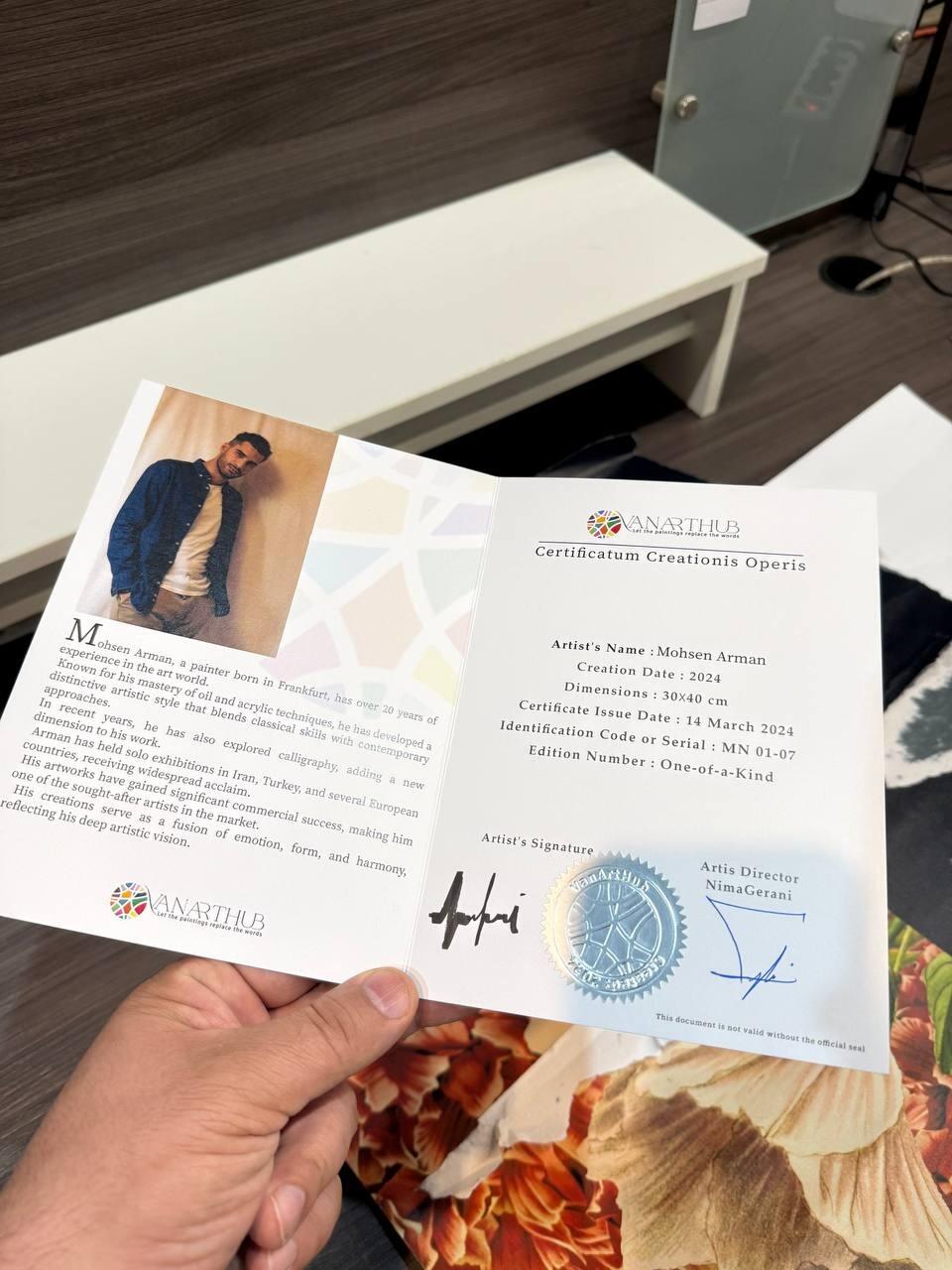
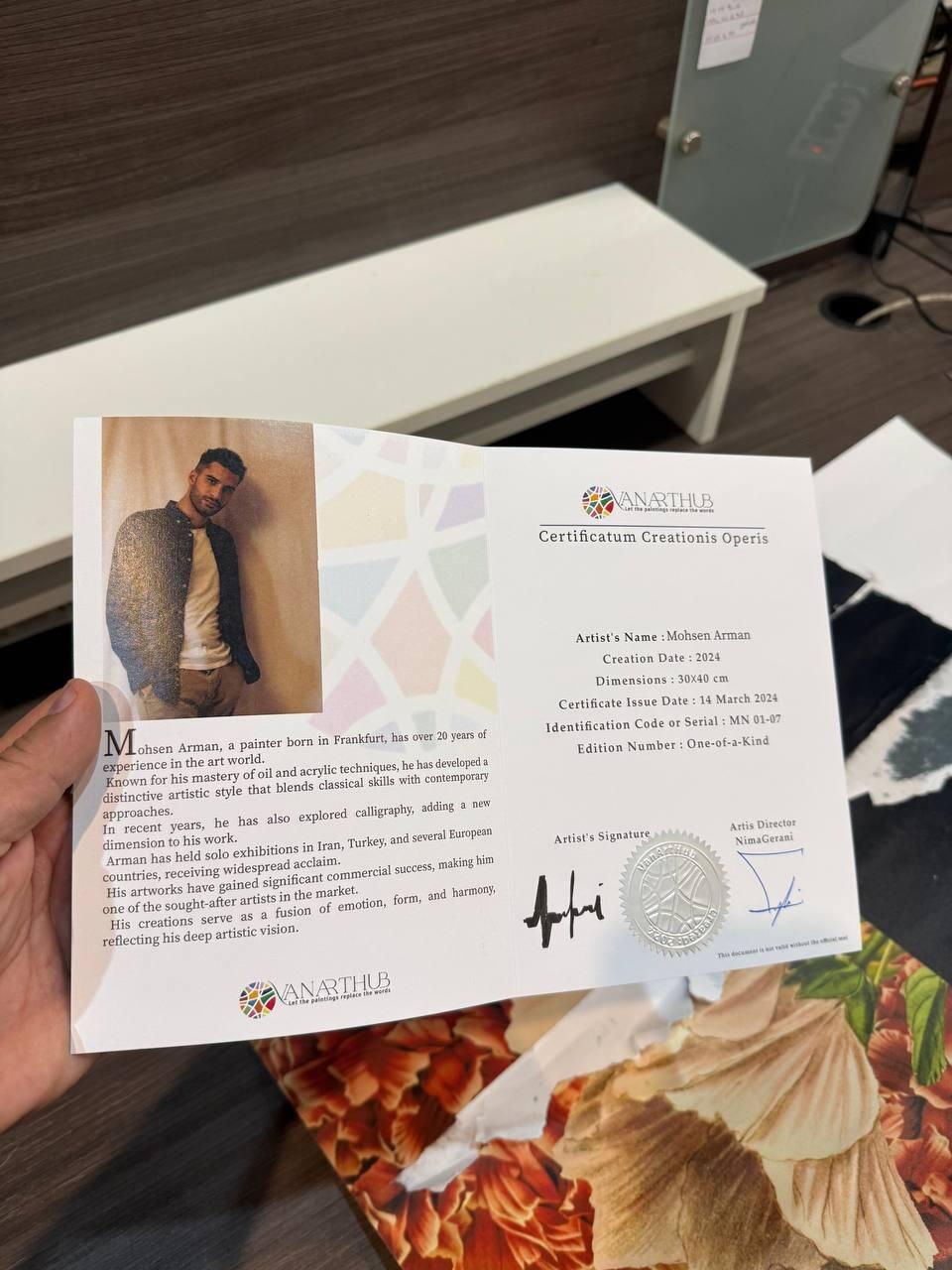
I got my order today and your work is really good. I didn’t expect to get a certificate for this painting, it was a surprise. Thanks for caring about small details.
The support team was really helpful and followed up nicely, wich I really appreciated. The painting is just like the photo – great quality and very detalied. I just wish it arrived a bit sooner, but honestly it was worth the wait.
I received my painting today. The support team was great and very responsive. The artwork is exactly what I was hoping for – even more beautifull in person. Truly a valuable piece. I’ll definetely order again. Thank you!