A woven textile is heavy for its size and stretches when it hangs from one edge. We stitch it to a cloth-covered support that carries its weight, and frame it with or without glazing.
We frame woven tapestries, small quilts, hand weavings, rugs small enough to frame, molas and other textile art. A mola is a panel made of layers of cloth, cut and stitched to form a picture. Thick textiles are heavy for their size. Hung from the top edge alone, a textile is pulled by its own weight, and it sags and loses its shape. In a frame the textile is stitched to a support across its whole area, so the support carries the weight. The work is done at 1242 Davie Street.
How the textile is mounted
A rigid acid-free board is covered with plain cloth such as cotton or linen, in a colour chosen to suit the textile. Acid-free means the board is made so it stays free of the acid that browns fibres. The textile is laid on the covered board and stitched to it by hand with fine thread. The stitches run in rows across the piece and pass between the woven threads without splitting them, so the weight is spread over many points. No glue, staple or tape touches the textile. Cutting the stitches releases it.
The covering cloth shows as a border around the textile, so its colour is part of the design. A fringe, a rough edge or an uneven outline stays visible, because the textile lies on top of the cloth with nothing over its edges. A mat, a border of card, can be added if you prefer straight edges. Embroidery and cross stitch on thin cloth are mounted in a different way, described under needlework framing.
With glazing or without
Glazing means the sheet of glass or acrylic at the front of the frame. A textile can be framed with it or without it.
With glazing. Dust, cooking grease, insects and hands stay off the fibres. UV glazing also filters ultraviolet light, the part of daylight that fades dye fastest. The frame needs depth, and spacers, thin strips under the edge of the frame, hold the glazing away from the pile and the stitching. The frame is heavier.
Without glazing. The texture is seen directly, with no reflection, and the frame is lighter. Dust settles on the textile and you remove it from time to time. Light and moths reach the fibres freely.
We recommend glazing for wool, for silk, for anything old and for any room with cooking or smoke. An open frame suits a strong modern weaving in a clean, dry room.
A painting on canvas is usually hung open as well, with no glazing between the paint and the room. Toward the Light, an acrylic on canvas of pale birds turning toward a white light on a dark background, is 100 by 100 cm.
A quilt or a rug makes a large, heavy frame. For large sizes we recommend acrylic glazing, which weighs less than glass and does not shatter, as our guide to acrylic and glass explains. The hanging hardware is matched to the finished weight, and a wide frame hangs from two fixing points. Before you order, measure the doors and stairs the finished frame must pass through. Our page on large format framing covers bracing and hardware. For a full-size bed quilt, ask us at the counter about framing one folded section.
Measuring doors and stairs matters for a large painting too. Flight into Infinity is an oil on canvas, 120 by 150 cm, showing birds in a wide sky above a blue sea, and it is one of the originals in our gallery.
The outer size, the depth, the glazing and the moulding, the shaped length of wood or metal the frame is cut from. Hand stitching is a large share of the labour, and a heavy or fragile textile needs more rows of stitches. You get the quote at the counter when we have seen the piece.
What to bring or send
Bring the textile rolled or flat. A fold kept for a long time leaves a crease in thick weaving. Check the piece for moth damage first, and tell us what you find. If you live outside Vancouver, send the height, width and thickness, the fibre if you know it, and photographs of the front and the back. Thin, flat cloth such as a scarf is covered under silk scarf and textile framing.
Walk in at 1242 Davie Street during opening hours. Enter your email on this page for a 10% framing code to show at the shop, and see custom framing for everything else we frame.
How it works
1
Bring it in, or send photographs
Walk in to 1242 Davie Street during opening hours. If you are not in Vancouver, send the dimensions and a photograph and we will work from that.
2
We look at the actual piece
What it is made of, what condition it is in, and where it is going to hang all change the answer. You get a straight recommendation and a price for your piece, not a rate card.
3
It is made by hand and fitted
Cut to the piece, using conservation materials, and finished with hanging hardware rated for the actual weight.
Common questions
How is a woven tapestry mounted for framing?
A woven tapestry is mounted for framing by hand stitching it to a rigid acid-free board covered in cloth. Rows of stitches in fine thread pass between the woven threads across the whole piece, so the weight is spread over many points. No glue or staples are used. Cutting the stitches releases the tapestry from the board unmarked.
Should a tapestry be framed behind glass?
A tapestry made of wool or silk, an old tapestry, or one hanging near a kitchen should be framed behind glazing. Glass or acrylic keeps dust, grease and insects off the fibres, and UV glazing slows fading. Spacers hold the glazing away from the surface. A strong modern weaving in a clean, dry room can be framed open, with its texture seen directly.
Can a small quilt be framed?
Yes, a small quilt such as a baby quilt, a wall quilt or a single quilt block can be framed. The quilt is stitched through its seams to a cloth-covered acid-free board, and the frame is built deep enough for its thickness. Acrylic glazing keeps a frame of this size lighter than glass. Bring the quilt so its weight can be judged.
Can a small rug be framed for the wall?
Yes, a small rug can be framed for the wall. The rug is stitched in rows to a cloth-covered board strong enough for its weight. The frame is built to the depth of the pile, and the fringe can be left showing. A rug is heavy, so the frame hangs from two fixing points with hardware matched to its weight.
How is a mola or other layered cloth panel framed?
A mola or other layered cloth panel is framed by stitching it at its edges and along its seams to a cloth-covered acid-free board. The panel lies flat with its full outline showing, or behind a mat that covers the raw edge. A spacer keeps the glazing off the raised layers, and UV glazing slows the fading of its strong colours.
Will moths get into a framed wool textile?
A framed wool textile behind glazing with a closed back is less exposed to moths than one hanging open on a wall. Moths eat wool and silk, so check the piece for holes, loose fibres or small cases before framing, and tell us what you find. An open frame without glazing gives no barrier, so look over a wool piece framed that way from time to time.
What colour should the cloth behind a framed weaving be?
The cloth behind a framed weaving should be a plain colour taken from the less bright parts of the weaving, or a neutral such as off-white, grey or black. The cloth shows as a border around the piece, so it changes how the colours look. Lay the weaving on plain cloth of a few colours before you decide, and ask us at the counter which covering cloths are available.
10% off your custom framing when you show this code at our shop
We frame, stretch canvas and reframe by hand, in our own workshop inside the gallery at
1242 Davie Street. Enter your email and your code appears right here. Show it at the
counter and we take 10% off the job. The code does not expire.
Send the measurements, what it is made of, and a photograph. We will tell you what it actually needs, including when the answer is that it needs less than you expected.
Choosing a selection results in a full page refresh.
Opens in a new window.
In-shop offer · 1242 Davie Street, Vancouver
Get 10% off your framing at our shop
Add your name and email and your code appears on the next screen. Show it at the counter
and we take 10% off any framing, stretching or reframing job you bring us. It does not
expire.
Exceptional Service and a Truly Memorable Art Purchase
I had a wonderful experience with Van Art Hub Gallery. I came across two pieces by Melina Ghaemi — *Mad Mirrors* and *Small World in the Hands of a Stranger* — and immediately fell in love with them.
I contacted Van Art Hub Gallery, and they were incredibly helpful throughout the entire process, from arranging the payment to organizing the shipping. At first, I was a little skeptical and nervous about how everything would work, especially since the paintings were still in Iran and it was shortly after the war. But the gallery handled everything with such professionalism and care that my concerns quickly disappeared. Amazingly, they were able to get the paintings to Canada in just two days!
The pieces are absolutely captivating. Even when I picked them up from the frame maker and was simply carrying them to my car, several people stopped and asked me about the paintings. That says a lot about how striking and special Melina Ghaemi’s work is.
A big thank you to Van Art Hub Gallery for making this experience so smooth and enjoyable. I truly appreciated their professionalism, communication, honesty, and integrity throughout the entire process. I would happily work with them again and highly recommend them to anyone interested in purchasing art through the gallery.
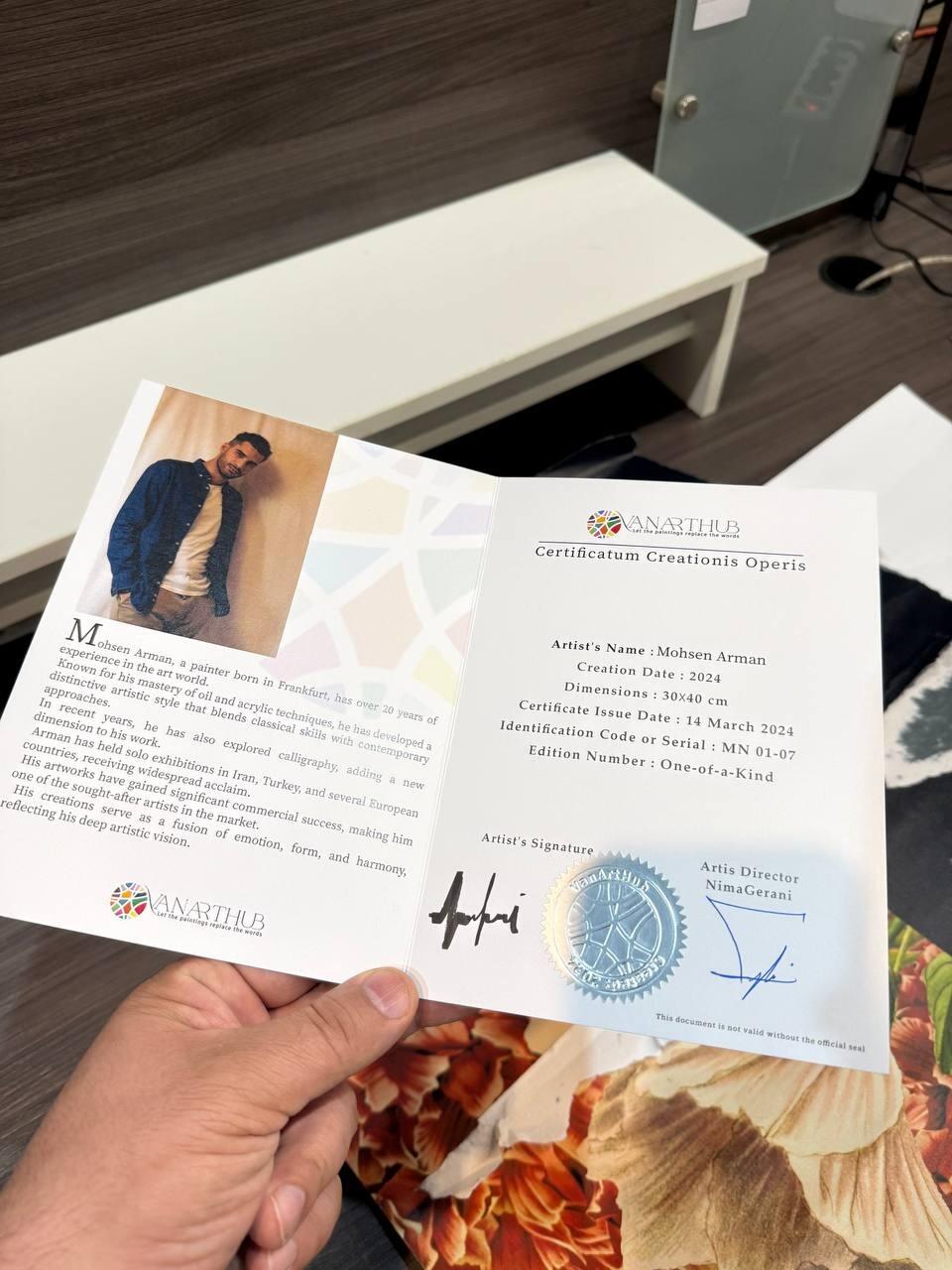
I got my order today and your work is really good. I didn’t expect to get a certificate for this painting, it was a surprise. Thanks for caring about small details.
The support team was really helpful and followed up nicely, wich I really appreciated. The painting is just like the photo – great quality and very detalied. I just wish it arrived a bit sooner, but honestly it was worth the wait.
I received my painting today. The support team was great and very responsive. The artwork is exactly what I was hoping for – even more beautifull in person. Truly a valuable piece. I’ll definetely order again. Thank you!