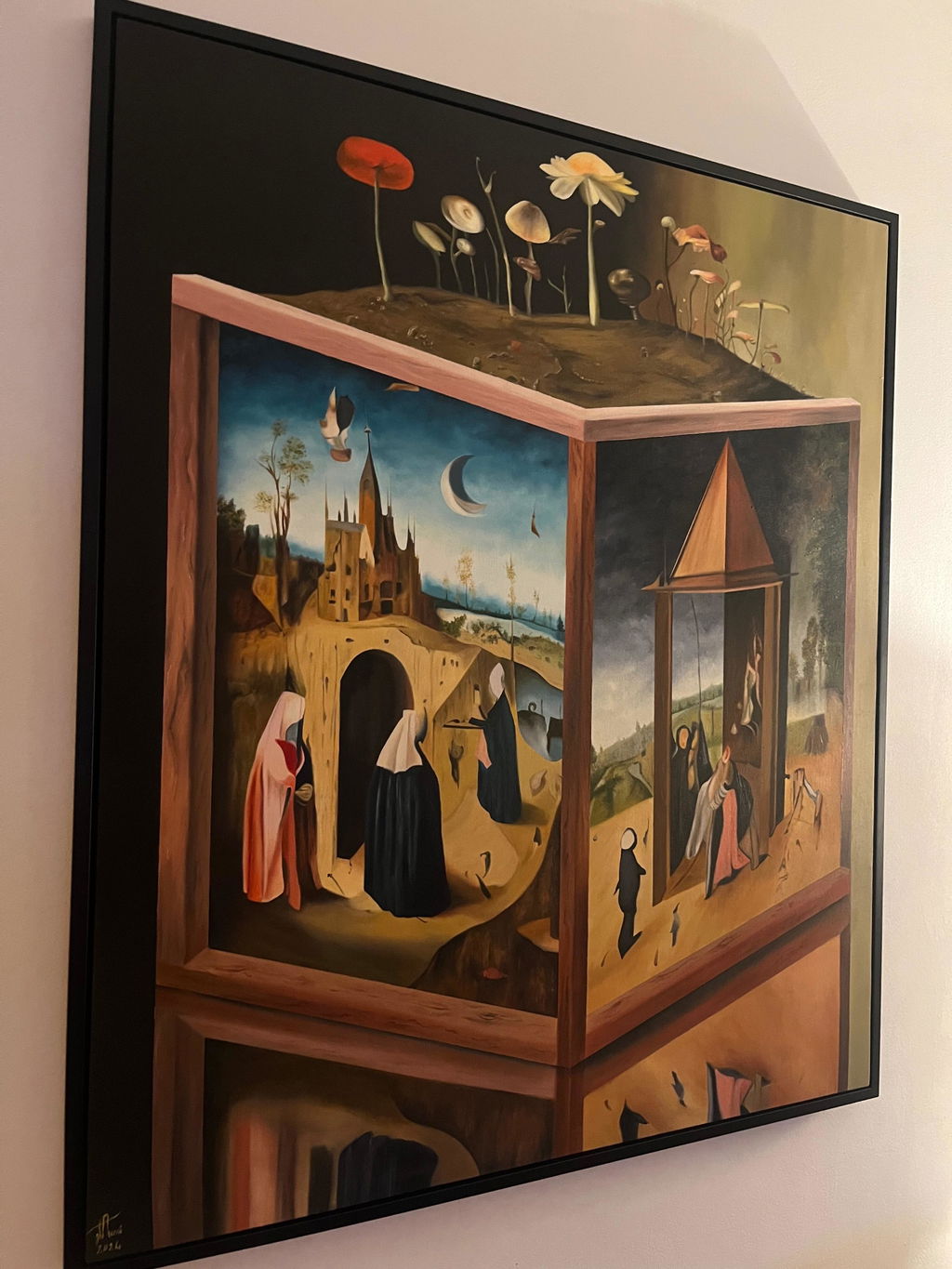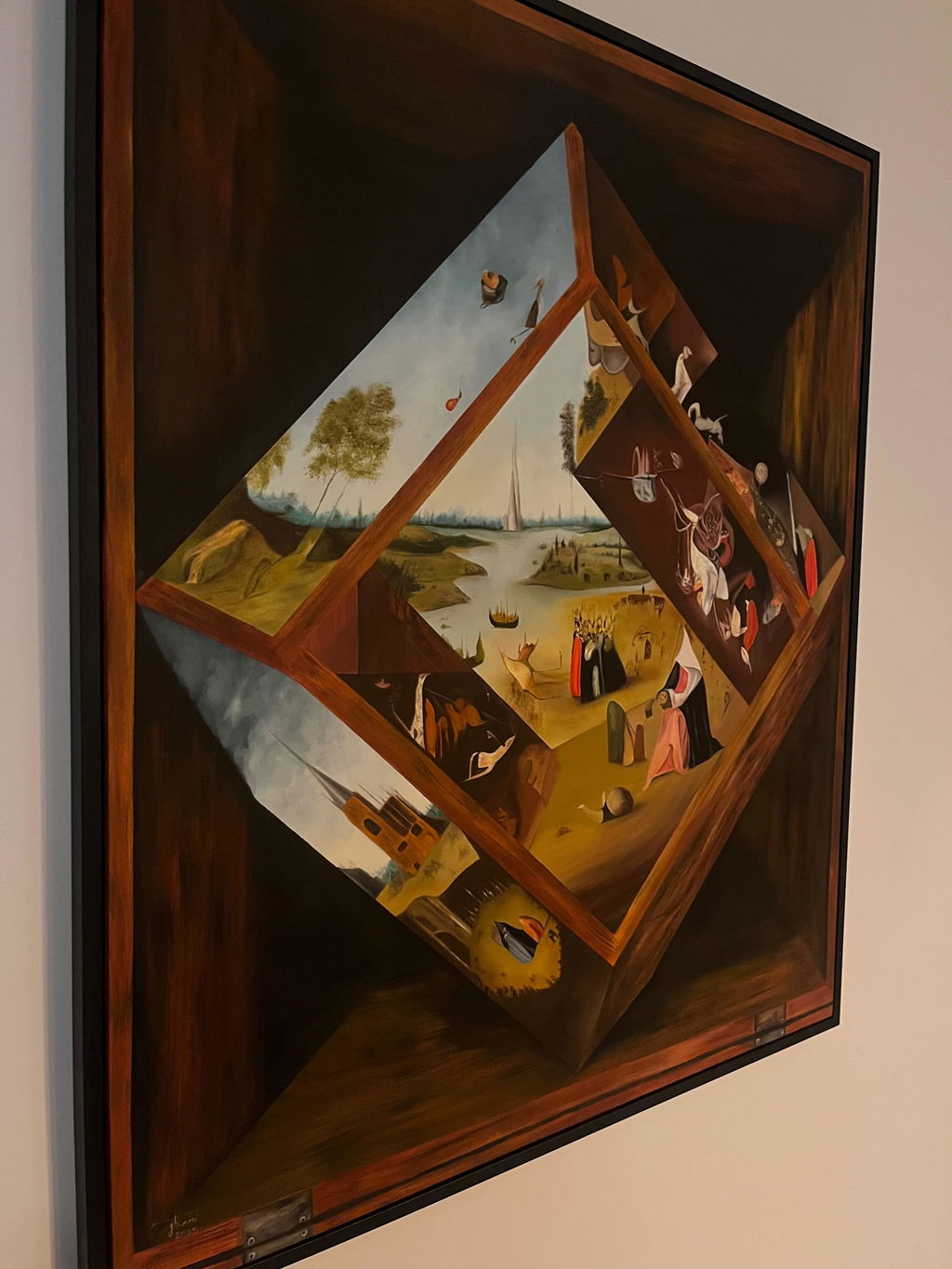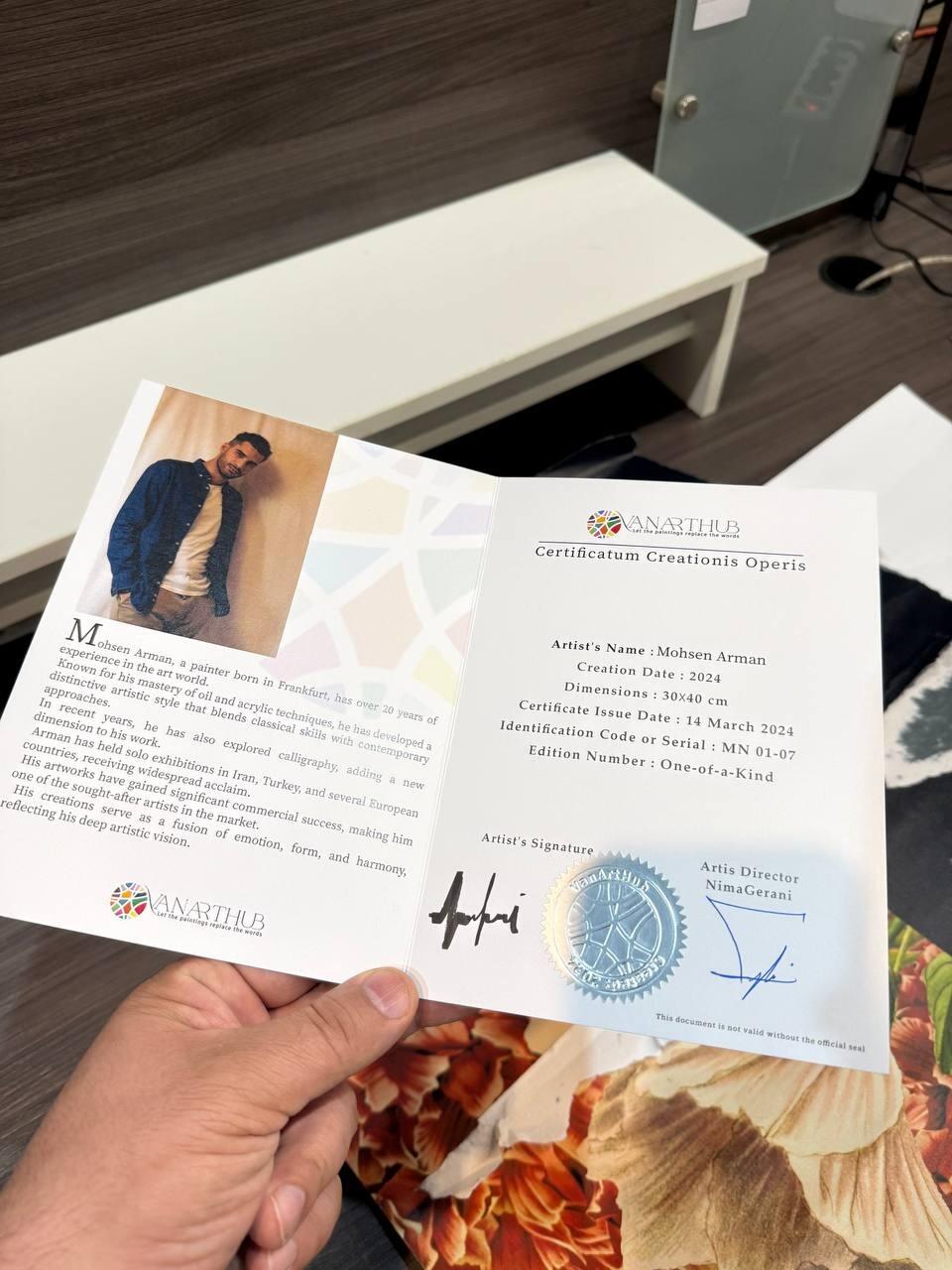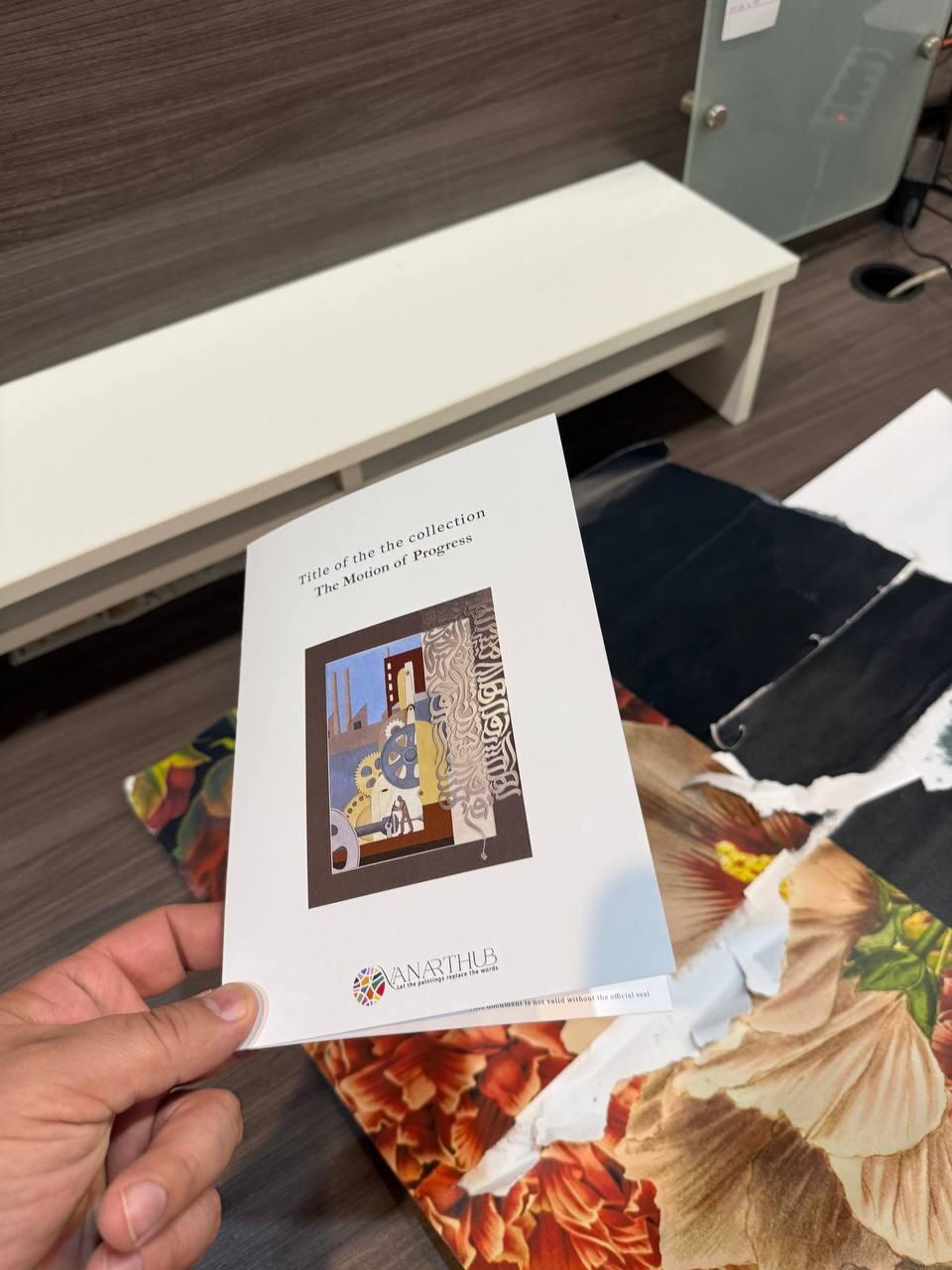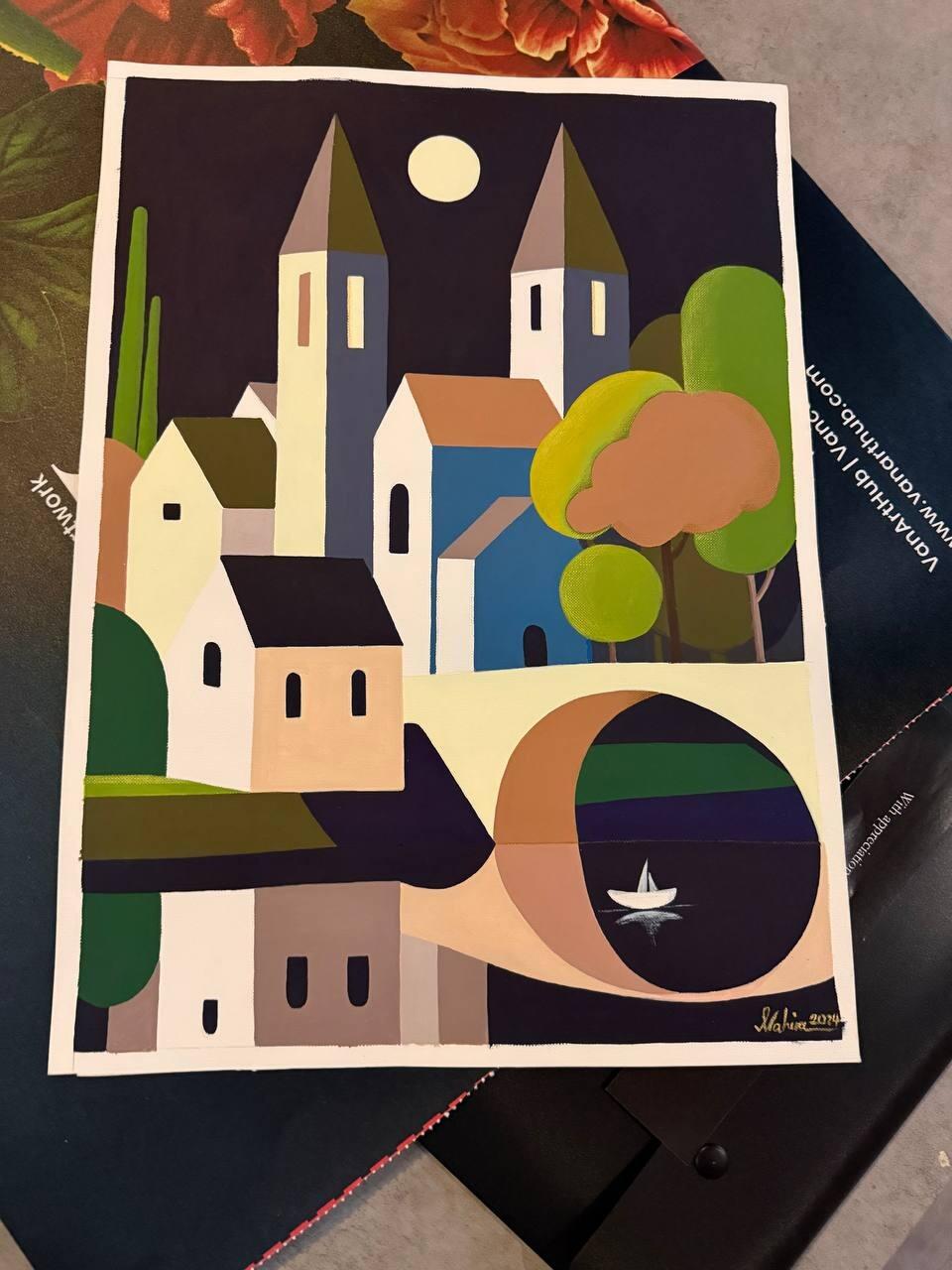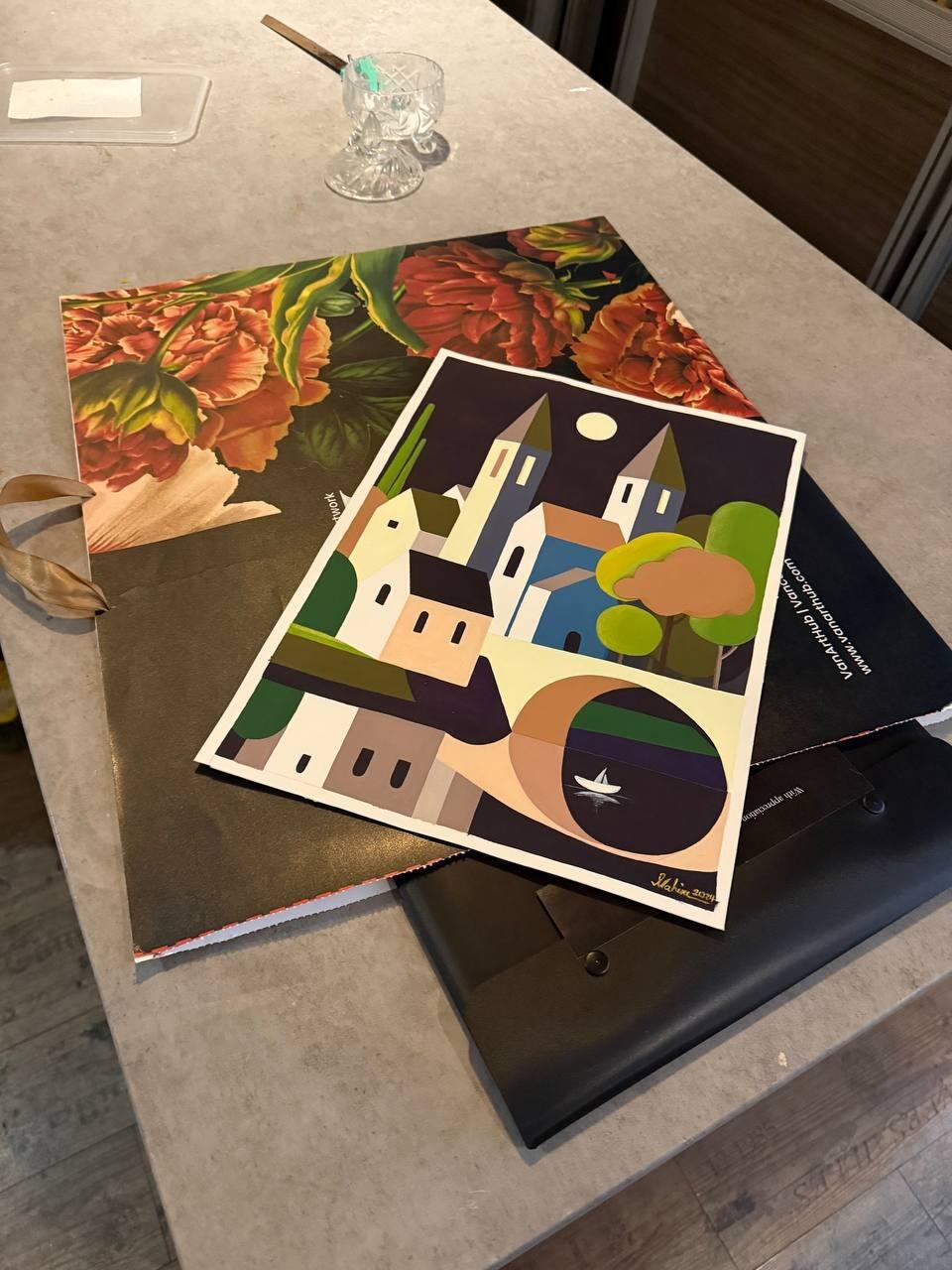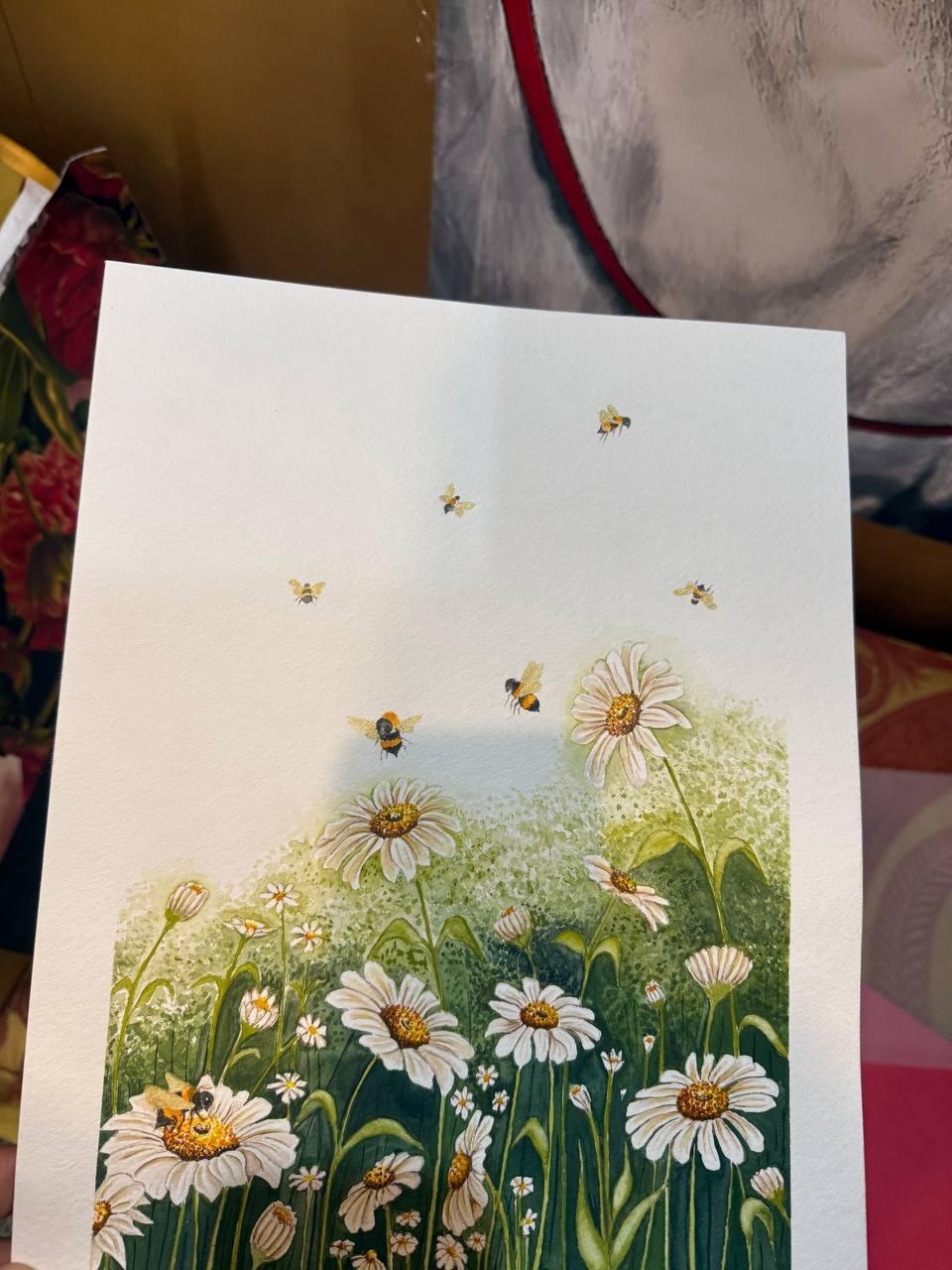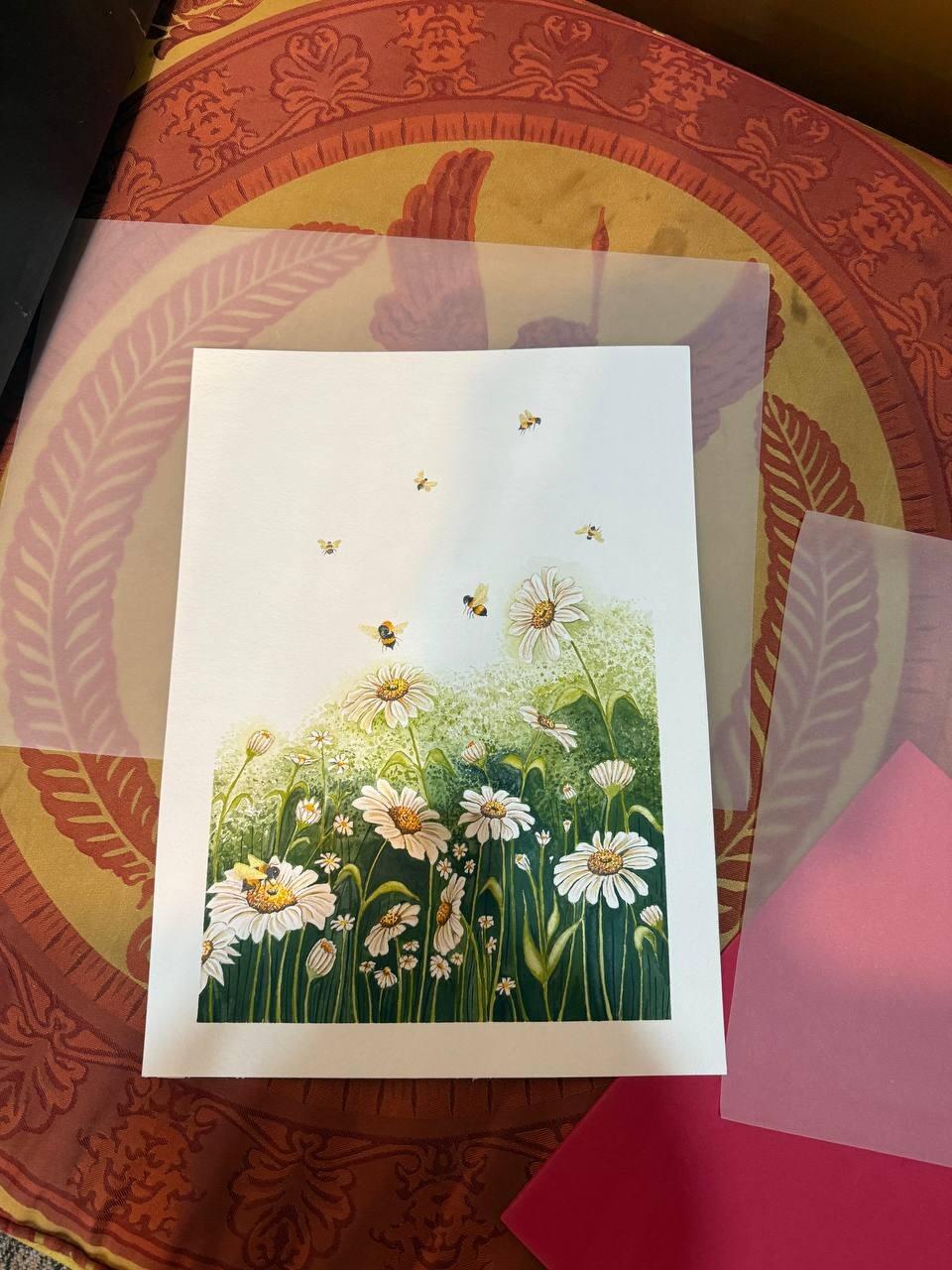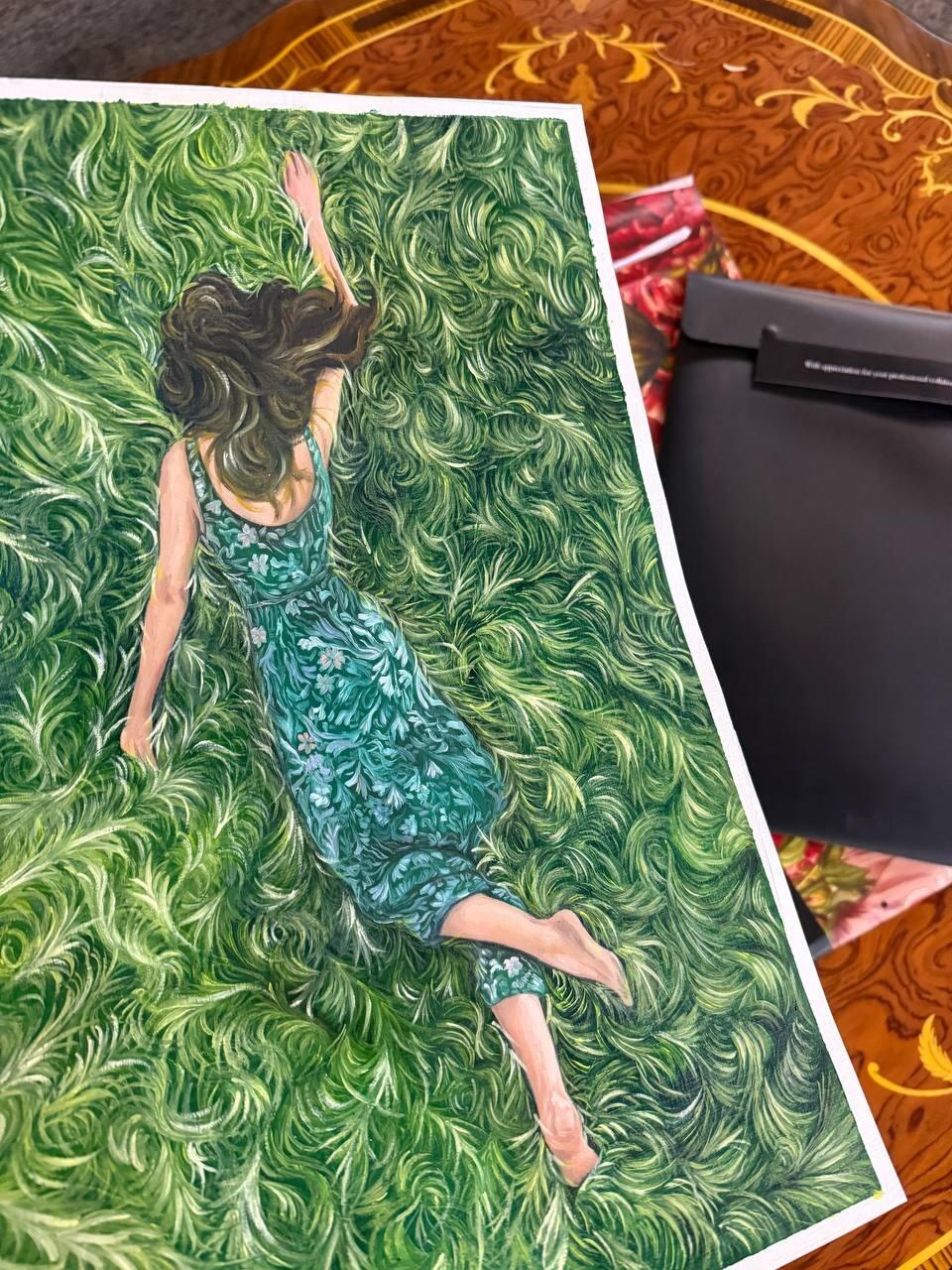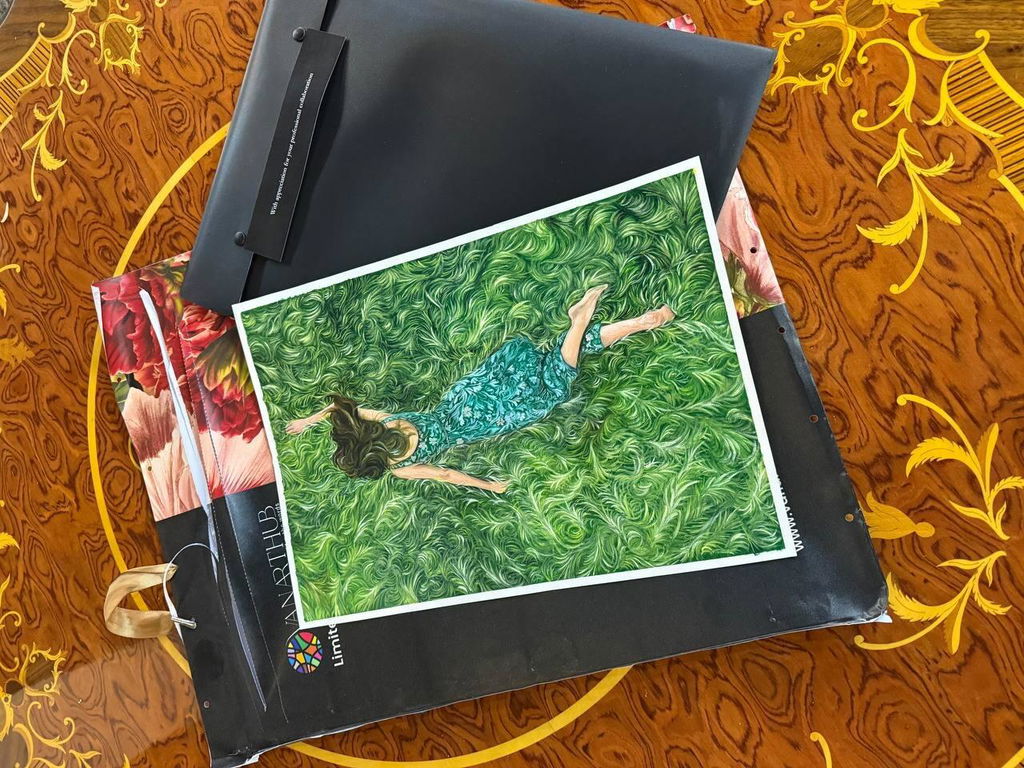
An original painting on canvas from the VanArtHub gallery at 1242 Davie Street in Vancouver.

Canvas · Vancouver

Oversized Canvas Stretching

Large canvases stretched on cross-braced kiln-dried bars in Vancouver, with the access and transport worked out before anything is built. 1242 Davie Street.

Past roughly a metre and a half on the longest side, stretching a canvas stops being the same job at a larger scale. The bars have to be braced or they bow, the piece becomes two-person work, and how it gets from the workshop to your wall becomes part of the plan rather than an afterthought.

Bracing

A long bar under constant inward pull from the fabric bows toward the centre. That slackens the canvas in the middle of that side even though nothing has happened to the fabric itself. One cross-brace handles it up to a point; past about a metre and a half the stretcher is braced in both directions.

The brace sits slightly below the plane of the stretcher so it never touches the back of the canvas. A brace in contact with the fabric prints a visible line through to the front over the following years, which is a slow and completely avoidable way to damage a large painting.

Access, before anything is built

Measure your doorways, your stairwell, the lift if there is one, and any turn between the entrance and the wall. A stretched canvas is rigid and cannot be angled the way a rolled one can. This is the single most common thing people forget on a large piece, and it is much easier to plan around than to solve afterwards.

Where access genuinely will not allow a finished piece through, a canvas can sometimes be stretched on site. That has to be planned rather than discovered on the day, so raise it early if you think your access is tight.

Hanging

A cleat spread across two studs, not two hooks. A cleat distributes the load along a line rather than at two points and holds the piece flat against the wall. The hardware is chosen for the finished weight, which we work out rather than estimate.

What we need

The dimensions, the margin, and a description of the route from your street door to the wall. If you are commissioning the piece and it is not painted yet, talk to us before the size is fixed.

braced both ways cleat across two studs, not two hooks acrylic, not glass: lighter, and it does not shatter
Past roughly a metre and a half everything changes at once. The stretcher gets braced in both directions so the long bars cannot bow, the glazing usually becomes acrylic because glass at that size is both heavy and dangerous, and the piece hangs on a cleat spread across two studs rather than on two hooks.

How it works

  1. 1

    Bring it in, or send photographs

    Walk in to 1242 Davie Street during opening hours. If you are not in Vancouver, send the dimensions and a photograph and we will work from that.

  2. 2

    We look at the actual piece

    What it is made of, what condition it is in, and where it is going to hang all change the answer. You get a straight recommendation and a price for your piece, not a rate card.

  3. 3

    It is made by hand and fitted

    Cut to the piece, using conservation materials, and finished with hanging hardware rated for the actual weight.

Common questions

What counts as oversized for stretching?

Roughly a metre and a half on the longest side. Past that a bar bows under the pull of the fabric unless it is braced, the piece becomes a two-person handling job, and how it gets from here to your wall stops being an afterthought.

Why does a large canvas need cross-bracing?

Because a long bar under constant inward tension bows toward the centre, which slackens the canvas in the middle of that side even though nothing has happened to the fabric. A brace across the span stops it. Over about 150 cm it is braced in both directions.

Will a large stretched canvas fit through my door?

Measure before committing to a size. A stretched canvas is rigid and cannot be angled the way a rolled one can, so the doorway, the stairwell and any turn between the door and the wall all matter. This is the most common thing people forget.

Can a large canvas be stretched on site?

Sometimes, when access genuinely does not allow a finished piece through. It has to be planned rather than discovered on the day, so raise it early if you think your access is tight.

Does a brace touch the back of the canvas?

It must not. A brace sits slightly below the plane of the stretcher so it never contacts the fabric, because a brace in contact prints a visible line through to the front over time.

How is a large stretched canvas hung?

On a cleat spread across two studs rather than two hooks, so the load is distributed along a line and the piece sits flat against the wall. Hardware is chosen for the finished weight, which we work out rather than estimate.

Where to find us

VanArtHub Gallery 1242 Davie Street
Vancouver, BC V6E 1N3
Canada
Gallery opening hours
Monday10 a.m. to 7 p.m.
Tuesday10 a.m. to 7 p.m.
Wednesday10 a.m. to 7 p.m.
Thursday10 a.m. to 7 p.m.
Friday10 a.m. to 7 p.m.
Saturday11 a.m. to 7 p.m.
Sunday11 a.m. to 6 p.m.

Not sure what yours needs?

Send the measurements, what it is made of, and a photograph. We will tell you what it actually needs, including when the answer is that it needs less than you expected.