Gallery Wall: Same Frames or Mixed?
Updated By VanArtHub Curatorial TeamShare
Identical frames across a group works. Deliberately mixed frames works. There is only one approach that reliably fails, and unfortunately it is the one people arrive at without choosing it.
The only real mistake: almost-matching
Two blacks that are slightly different blacks. Three woods that are nearly the same tone. Frames that are all about 25 mm wide but not exactly.
Your eye is extremely good at detecting near-misses and very poor at explaining them. A wall of almost-matching frames does not read as varied, it reads as though somebody tried to match and failed.
So commit. Either the frames are the same, or they are clearly and confidently different.
Going identical
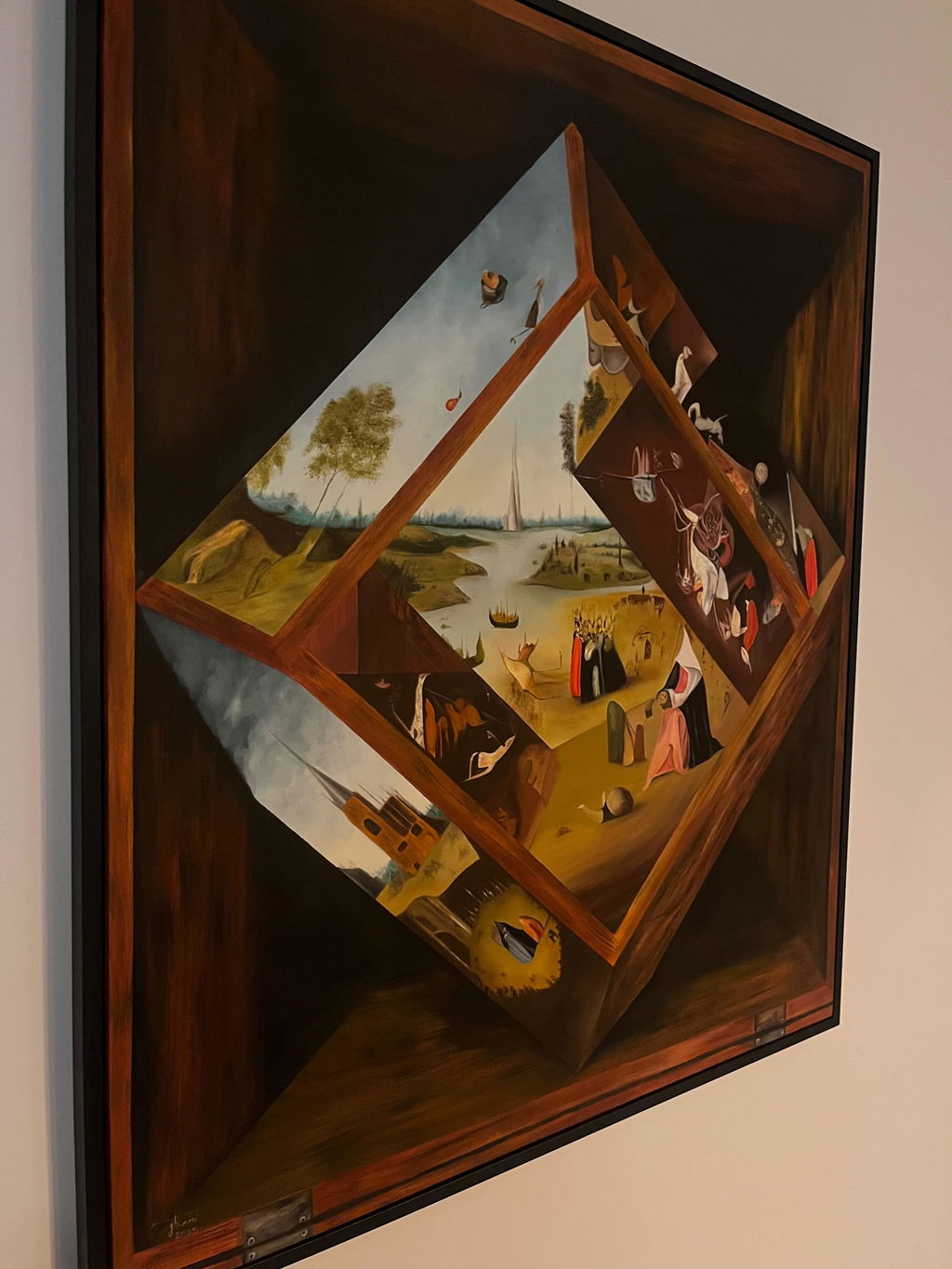
Same moulding, same width, same finish. The frames stop being visible as objects and become a repeating structure, which frees the images to be as different from each other as they like. This is why identical framing is the standard solution for a group of unrelated works.
Two practical notes. Order all the moulding at once from one batch, because wood varies between batches and a walnut frame cut in March will not match one cut in October. And keep a note of exactly what was used, because you will want to add to the group later.
Narrow profiles are safer than wide ones here. In a group, any weight in the moulding multiplies.
Going mixed
Mixed frames work when they share one specific, statable property. Pick one and hold it absolutely:
- All dark. Black, charcoal, walnut, bronze.
- All natural wood. Oak, ash, maple and walnut together read as a collection.
- All narrow. Any colour, any material, all under about 25 mm.
- All the same width, whatever the finish.
Say the rule out loud before you start. If you cannot state it in a sentence, the group does not have one yet.
The technique that does most of the work
Whether the frames match or not: mat everything to the same outer dimensions.
Different images, different mat borders, identical finished sizes. From across the room it reads as an ordered grid. Up close, each piece has proportions suited to it. It lets you hang a small graphite drawing next to a larger coloured pencil piece and have them read as siblings.
Spacing matters more than either
50 to 80 mm between frames, consistent throughout.
Tighter and the frames read as one solid block. Wider than about 100 mm and the group dissolves into individual pictures that happen to be near each other. The most common gallery wall mistake is spacing that is too generous, usually because people are nervous about crowding.
Keep the gaps identical everywhere. Uneven spacing is what makes a wall look accidental, more than any difference in frame or size.
Mixing canvases with framed work
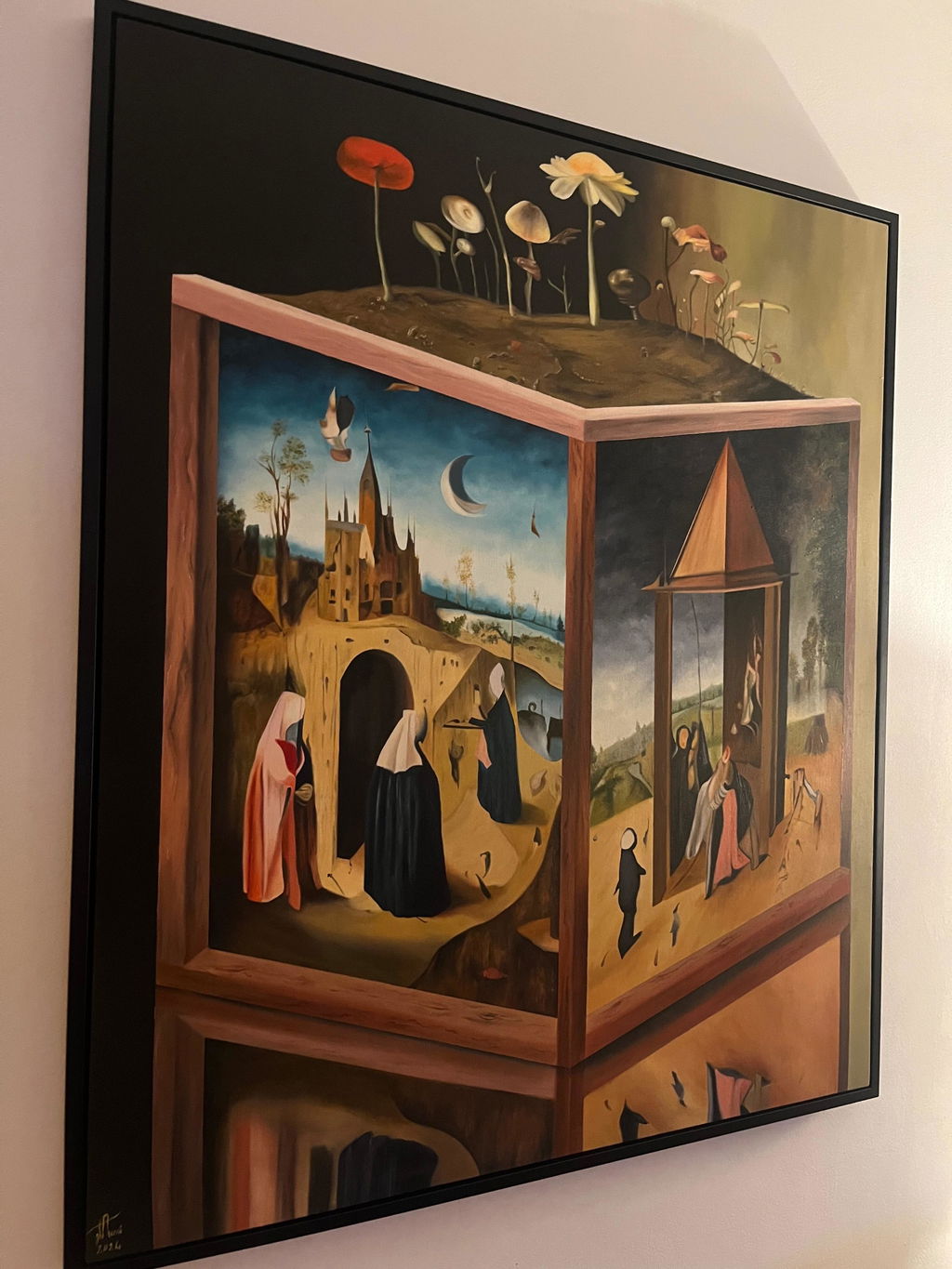
This is where groups most often fall apart, because a bare canvas has no visual border and a framed piece has a strong one. They belong to different families.
The bridge is a floater frame on the canvases, giving them a defined outer edge in the same tone as the other frames.
Plan it on the floor
Lay the whole arrangement on the floor and move it around until it looks right. Then cut paper templates the size of each frame, mark where the hanging point falls on each one, and tape the templates to the wall. Step back, adjust, and only then drill.
Twenty minutes of this saves an afternoon of holes. And measure to the hanging point, not the top of the frame, which is why so many pictures end up hung too high.
Leave room to grow
The good gallery walls are rarely finished on day one. Start with a core group that works on its own, and pick an arrangement that extends naturally. A grid and a shared-centre-line hang both grow outward easily. A salon hang built to a fixed rectangle does not.
More in matching frames across a gallery wall, gallery wall frame sizing, and framing small paintings.
We frame in-house in Vancouver, including whole walls at once. Browse available originals, or tell us what you are planning.