Inside the Studio: The Work of Amir Fazelian
Updated By VanArtHub Curatorial TeamShare
Stand in front of a painting of a crowned monster playing chess, and you have to ask what it is thinking. That is the whole point. Amir Fazelian paints creatures from Persian mythology, but he does not treat them as old legends. He treats them as mirrors for how we live now, wired into data, watched by systems, and thinking through machines.
The Div, and why it is not just a monster
Fazelian is an Iranian-Canadian artist based in Vancouver. His main body of work is the "Div" (Monster) series, and the word matters. In Persian mythology the Div is a demon, but the artist reads it differently. In his own words: "The Div is not a monster. The Div is a mirror. In Persian mythology, the Div represents what we refuse to see in ourselves, chaos, desire, the untamed."
He then pulls that ancient figure into the present. The Div, he writes, is "trapped in data, commanded by systems, thinking through machines." So the series is not a history lesson. It takes creatures from the Shahnameh, the great Persian epic, and turns them into metaphors for modern anxieties: surveillance, technology, and the loss of self inside digital systems. His closing line in the statement is the one that sticks: "The question is not whether monsters exist. The question is what we have become."
How the work is made
Fazelian works in watercolour, acrylic, and mixed media, and the two ends of that toolkit do different jobs. His figures are rendered in delicate watercolour washes and bold acrylic marks, so a single creature can feel both soft and aggressive at once. The palette is worth watching. It moves between earthy Persian miniature tones, the warm reds and ochres of traditional manuscript painting, and cold digital blues that read like screen light. That tension between old and new is the whole style in one glance.
You can see it in the three pieces we currently hold in his collection at VanArtHub, each an original, signed, one-of-a-kind painting:
| Work | Medium | Price (CAD) |
|---|---|---|
| The Thinking Monster (Div Andish) | Watercolour and ink on cardboard | $1,128 |
| The Monster (Div) Command | Acrylic on canvas | $1,833 |
| The Monster (Div) Trapped in Data | Acrylic on canvas | $4,230 |
Reading the three paintings
The recurring props tell the story. In "The Thinking Monster (Div Andish)," a regal tusked monster with blue eyes wears a crown and plays chess against a rainbow-coloured ground. The chessboard is not decoration. It is the mind at work, calculating, strategizing, trapped in a game with rules it did not set.
"The Monster (Div) Command" shows a horned figure with a white beard, a crown, and claws, holding dice inside a psychedelic landscape. Here the game shifts from strategy to chance. Dice are luck and risk, power handed over to systems the figure cannot fully control. And "The Monster (Div) Trapped in Data" gives you a fanged, horned royal figure gripping a blue chess piece against a bright abstract field. The title says it plainly. This is the crowned self, caught inside the information it was supposed to command.
Put the three side by side and you see the argument the series makes. Chess, then dice, then the single blue piece against noise: strategy sliding into chance sliding into entrapment. The crowns say these figures still hold power. The context says the power is thinner than it looks.
What it does to a room
Work like this is not quiet wall filler, and it is not meant to be. A Fazelian painting is a talking point. The mythological figure pulls a viewer in from across the room, and the modern reading, the data, the surveillance, the machine thinking, keeps them there once they are close. In a home it earns the most-looked-at wall. In a studio, a gallery corner, or a thoughtful office, it signals that a real person made a real choice, not a poster ordered by the metre.
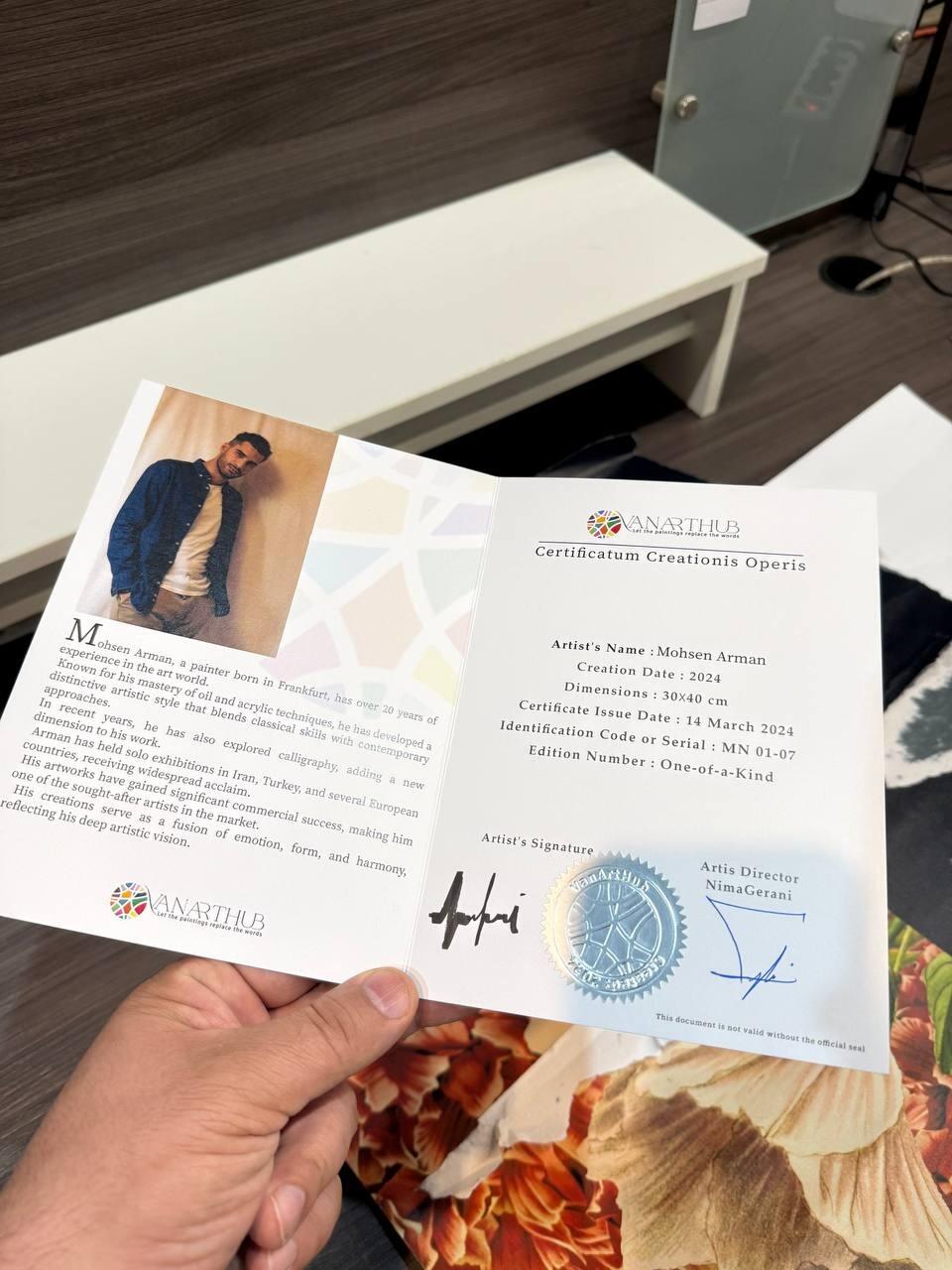
Because these are originals in watercolour, ink, and acrylic, the surface carries information a photo cannot. The wash where the watercolour pooled, the ridge where an acrylic mark sits proud of the ground, the exact temperature of that digital blue against the warm Persian tones. You feel that in person and lose it on a screen. Every piece ships with a Certificate of Authenticity, so the provenance travels with the painting.
Bringing one home
If a bold contemporary painting rooted in Persian mythology is a stretch for your space, we understand the hesitation. That is exactly what our 14-day trial is for. Live with the work on your own wall, in your own light, and if it is not right, send it back within 14 days for a full refund with return shipping paid by us. Shipping is free and fully insured, 3 to 7 business days across Canada and 5 to 10 to the USA. Every painting also carries our Lifetime Trade-Back, so you can return a piece in good condition any time for store credit as your collection grows.
You can see all three Div paintings on Amir Fazelian's artist page, read more about the tradition he draws from in our guide to Canadian abstract art, and browse related work in our abstract paintings collection. If a piece speaks to you, sit with it a while. That first pull toward a crowned monster staring back is usually the honest one.