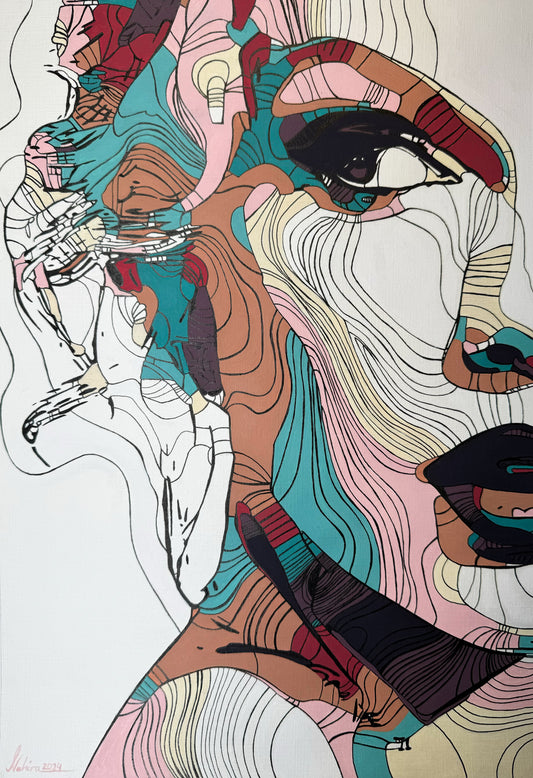
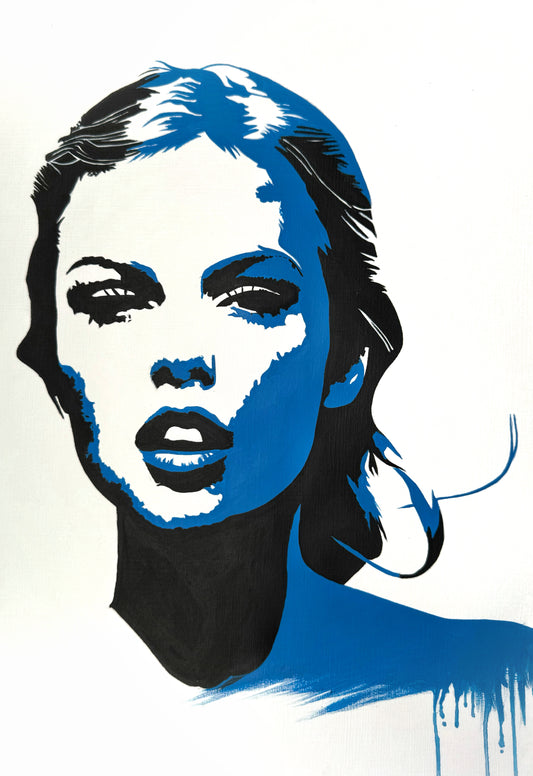
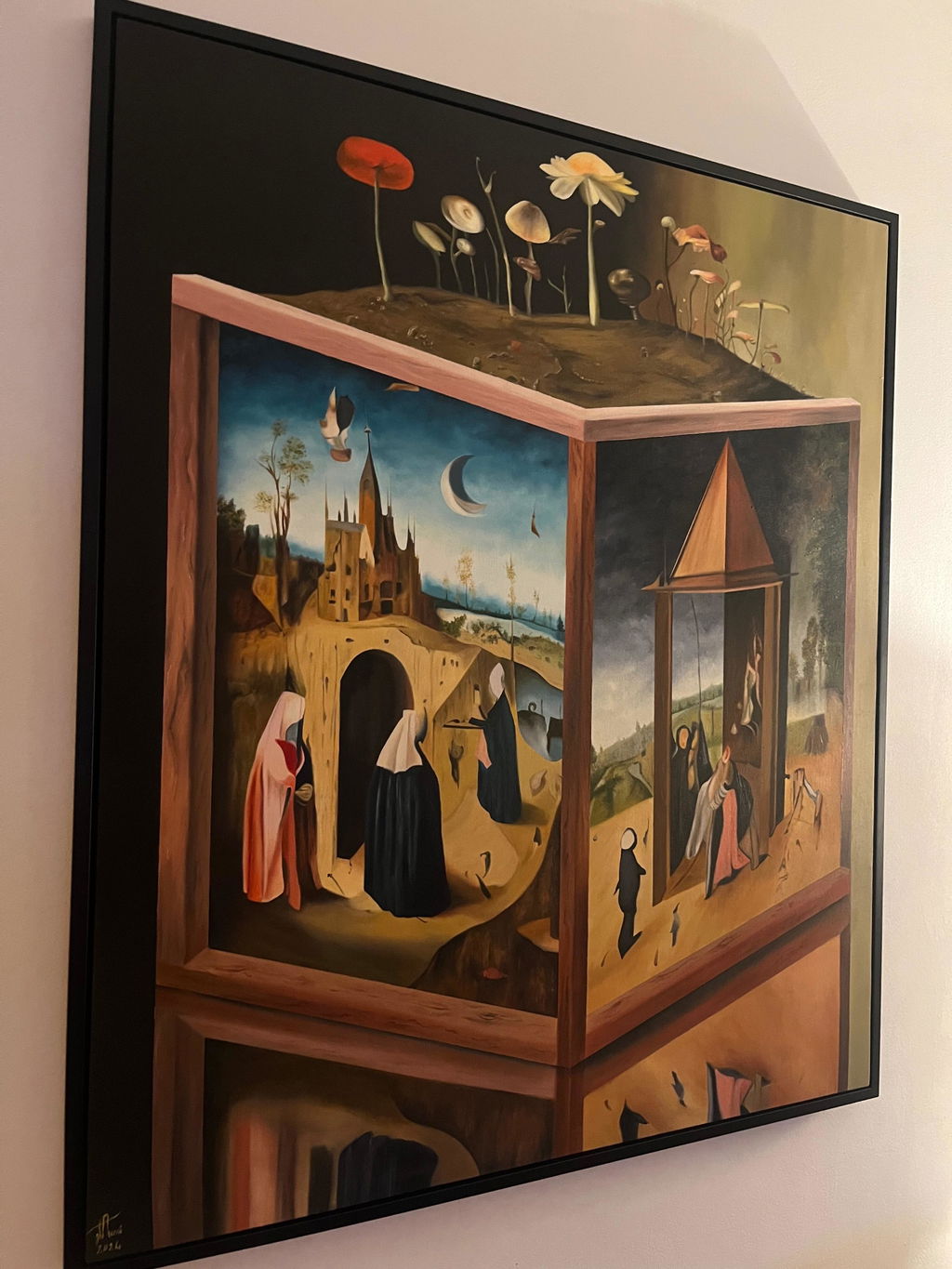
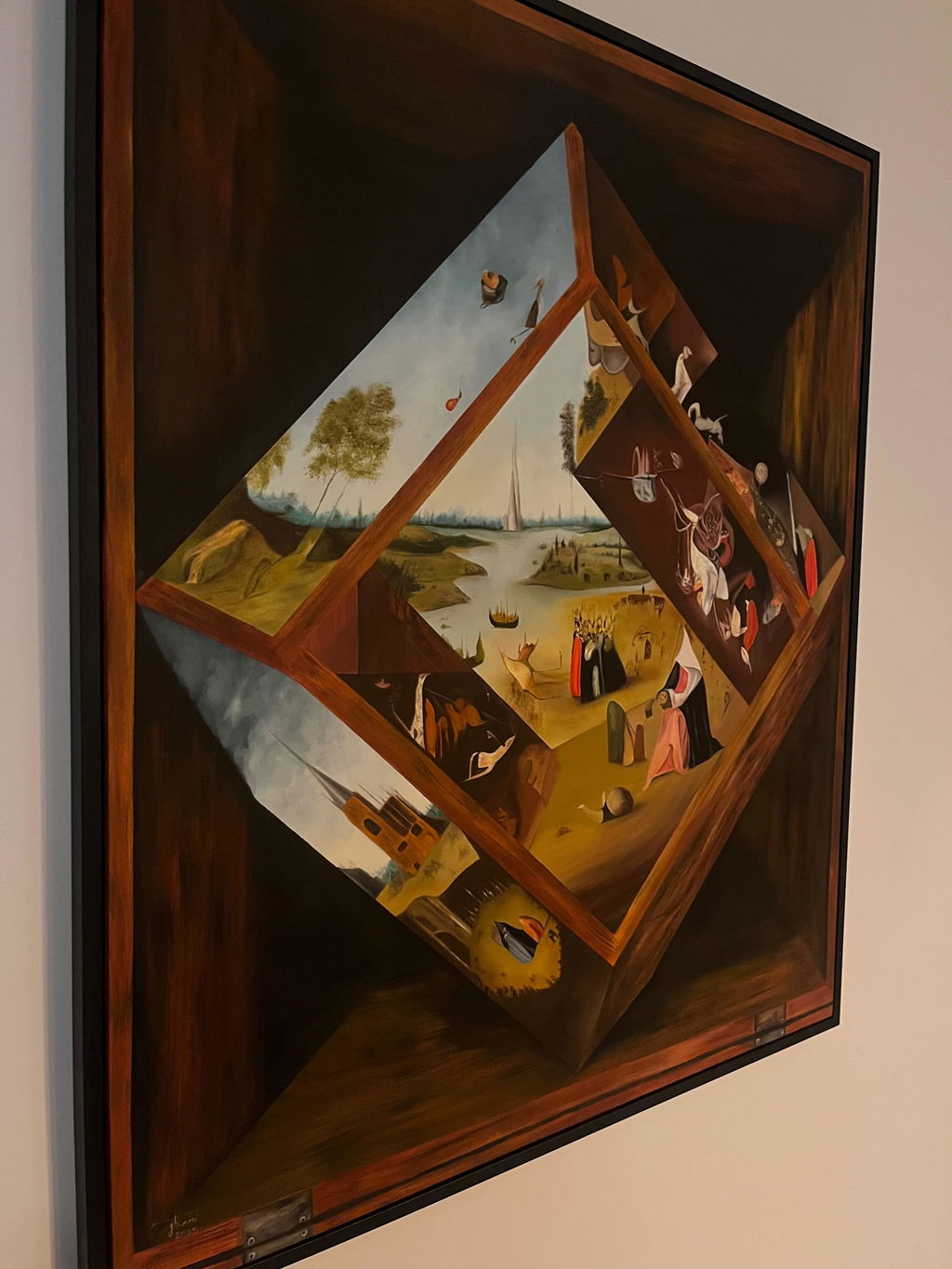
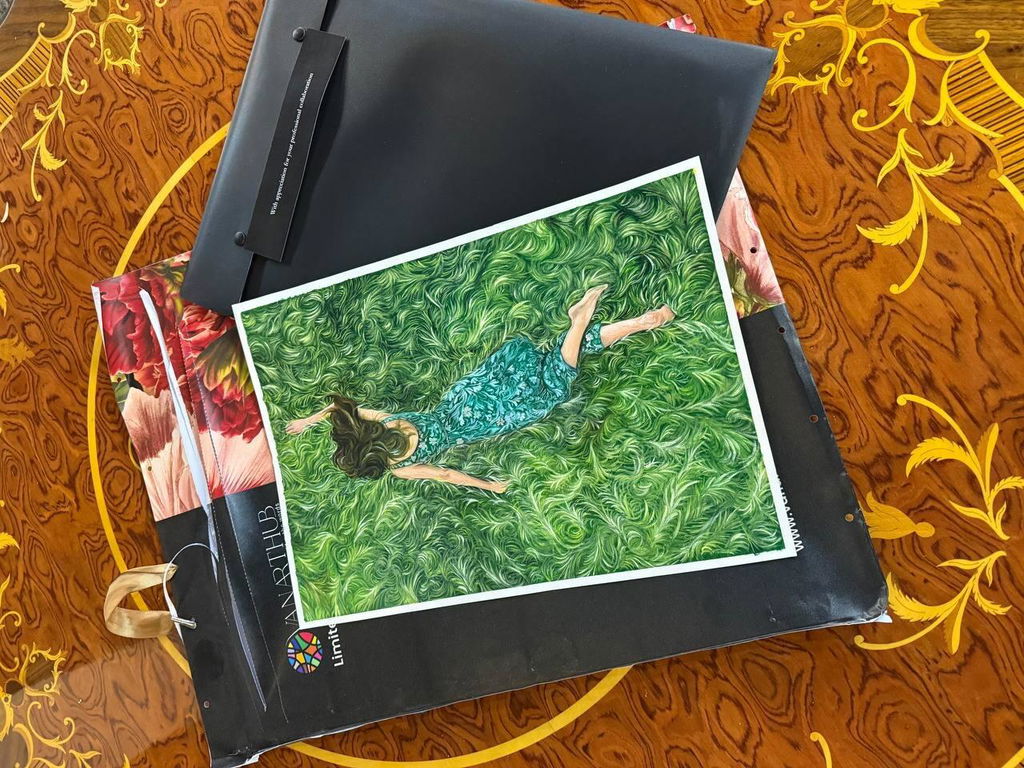
Large statement paintings work best on a wall with clear space around it: an open-plan living area, a lobby with height to spare, a dining room feature wall, or the long wall you walk toward down a hallway. A small painting decorates. A large painting transforms. Once a canvas passes about a metre in either direction, it stops being an accessory and starts organizing the room around it, so the wall you choose matters as much as the work you choose.
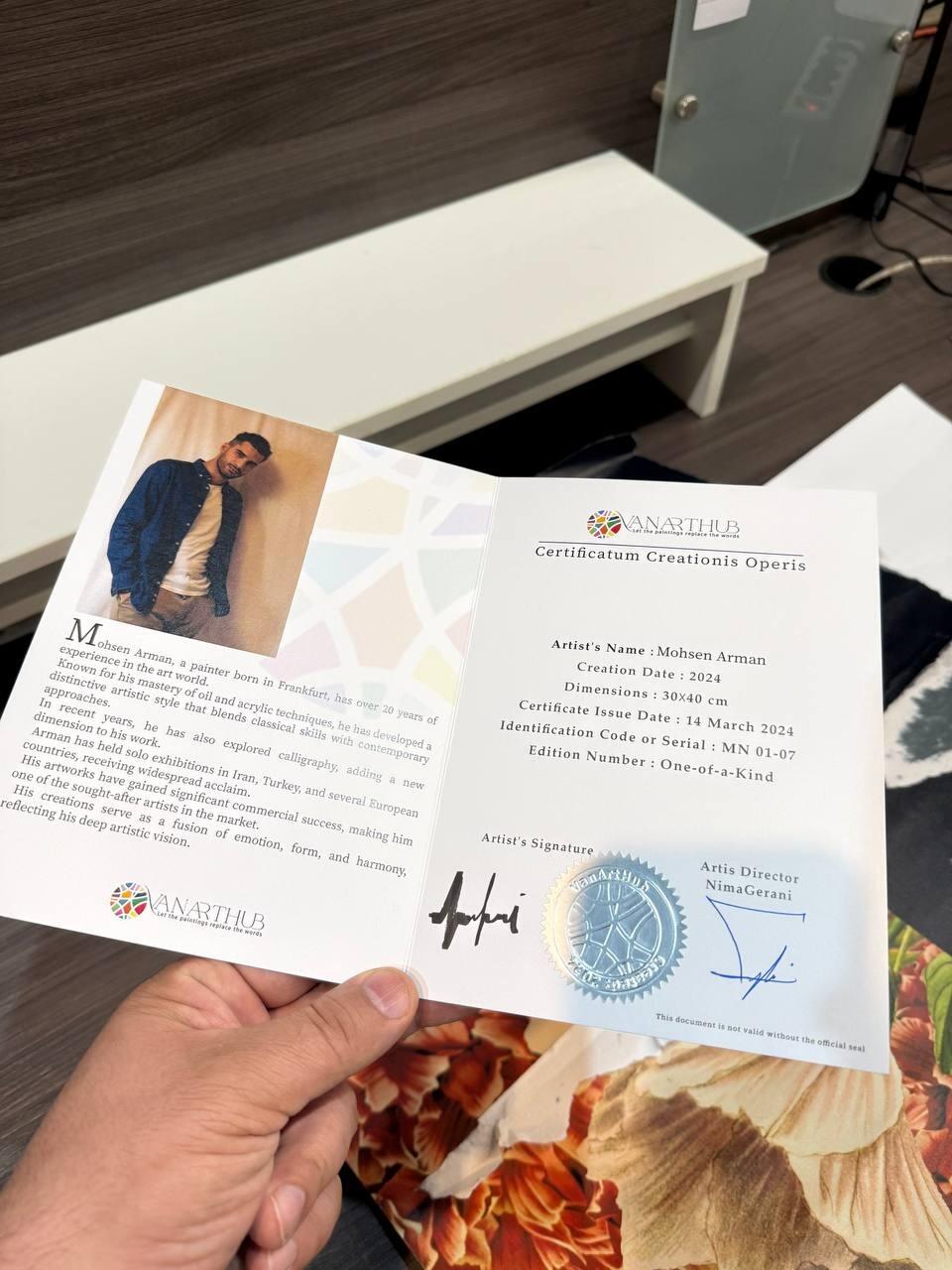
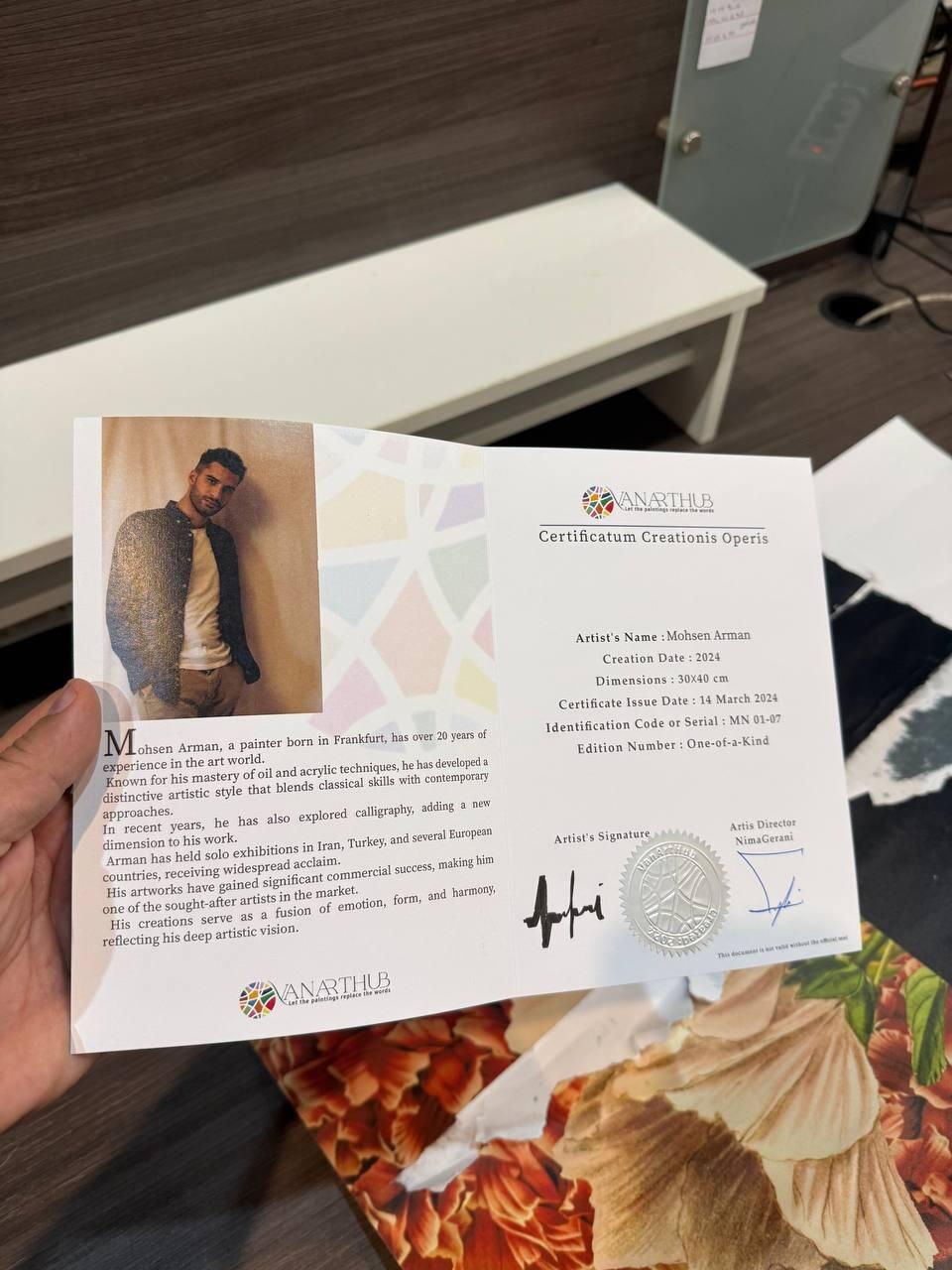
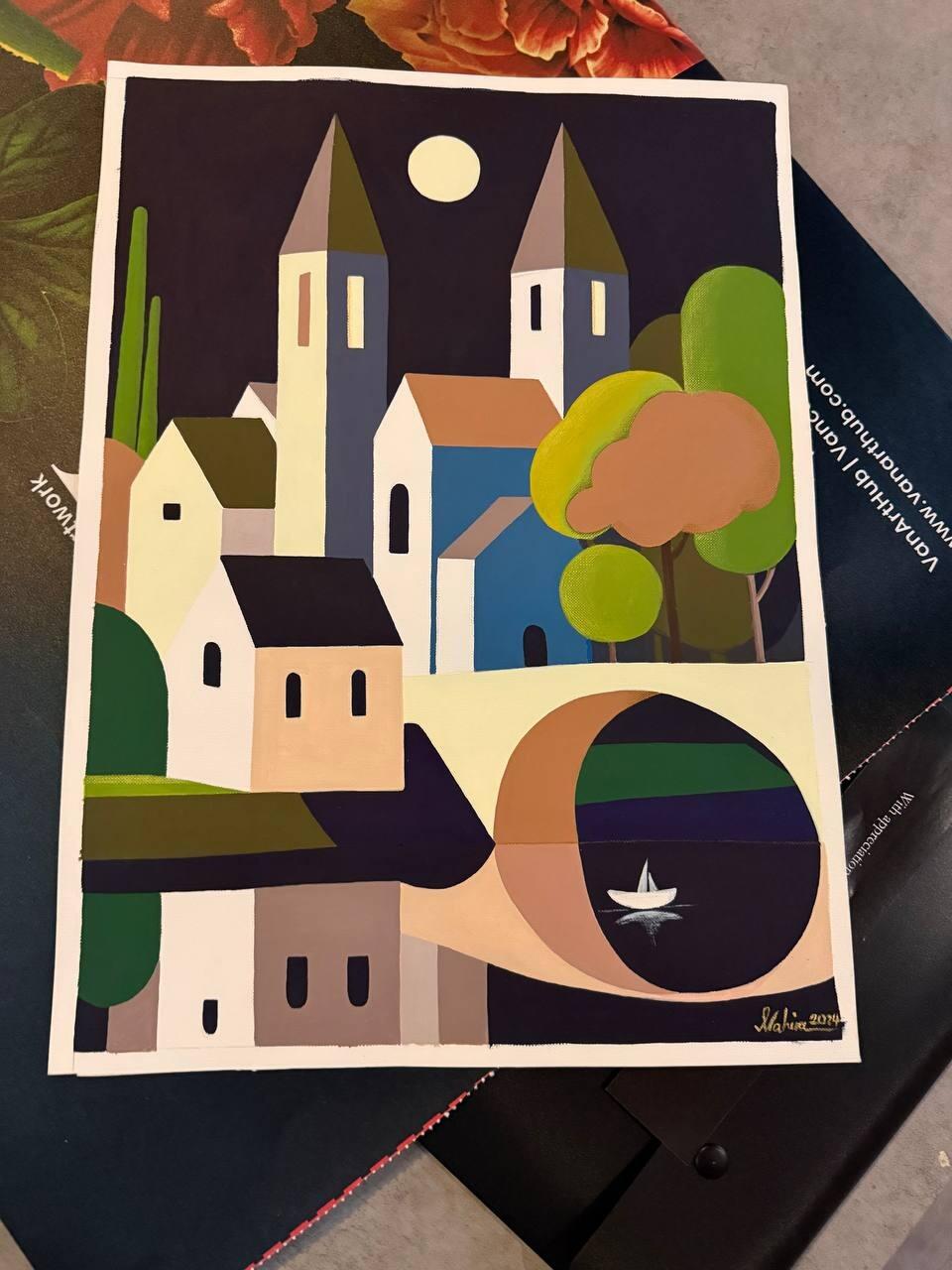
A few pairings tend to hold up. Abstract canvases suit open-plan homes, where they carry a wide wall without competing with the furniture. Surrealist compositions suit lobbies and reception areas, where people have time to stand and look. Contemporary figurative work suits a gallery wall inside a private home. None of these are prints enlarged to size. Each was painted at the dimension it was meant to occupy, and each arrives signed, with a Certificate of Authenticity and free insured shipping.
A statement piece is the one artwork a room is built around, and it earns that job by being larger, higher in contrast, or more saturated than everything near it. Size helps, but contrast does most of the work. A 90 cm canvas with deep darks and a hard light edge will anchor a room that a pale 150 cm canvas cannot. Before you shop, look at your room and decide which wall you want people to face when they walk in. That wall gets the statement. Everything else stays quiet.
How many statement paintings should one room have?
One. Two anchor works in the same sight line leave a room feeling unresolved, because the eye keeps checking which one is in charge. Open-plan spaces are the exception, and only a partial one: a living zone and a dining zone can each hold an anchor, as long as you cannot take in both from the same seat. If you can, the second piece should step down in scale or in colour intensity and become supporting work. This is also why we tell people to buy the anchor first and fill in around it. Choosing a big painting to match three medium ones you already own is a much harder problem.
What is the difference between statement art and background art?
Statement art is meant to be looked at; background art is meant to be lived with. Both are real jobs, and a house full of statements is exhausting.
Statement piece
Background piece
Job in the room
Sets the mood and gives the eye a destination
Fills and softens a wall without demanding attention
Typical size
120 to 180 cm (47 to 71 in) on the long side
40 to 90 cm (16 to 35 in) on the long side
Colour and contrast
High contrast, one dominant colour that sits apart from the room
Low contrast, tones already present in the walls and textiles
Where it goes
The wall you face on entering, or above the main seating
Hallways, bedrooms, stair landings, behind doors
How many per room
One
As many as the walls carry
If you get it wrong
The room feels loud and unrestful
The wall feels empty and the art goes unnoticed
Most homes we help are short on statement work and long on background work. That is why so many well-furnished rooms feel flat: nothing in them is willing to be the loudest thing.
Does a statement painting have to be bold colour?
No, and colour is only one of two routes. The first is colour drama: a large canvas built on one saturated field, pulled from a shade that already exists somewhere in the room, so it reads as intentional instead of random. Look through red paintings or gold paintings if that is your instinct, and pick the version that is the strongest form of a colour your room already uses. The second route is scale with restraint. In a room that is already busy with pattern and colour, a big neutral modern canvas in charcoal or bone white becomes the calm spot, and calm is loud in a noisy room.
Here is the limit we always name. Not every room wants a statement piece. If you already have patterned wallpaper, a stone fireplace wall, or a window with a real view, that feature is your anchor, and adding a large dramatic painting gives the eye two places to go and it never settles. Buy background work in that case and spend the statement budget in the room that needs it. If you want a second opinion on which wall in your home is the anchor wall, our art advisory service exists for exactly that question, and every piece we send goes out signed, one of a kind, with its Certificate of Authenticity.
Frequently asked questions
How do you decide a painting is strong enough to be called a statement piece?
We hang it on a plain wall, stand about three metres back and check whether it still holds attention. A statement painting has to work from across a room, not only from arm's length. If the composition falls apart at distance, or the only interest is in the surface texture, we list it as a regular work instead. Size on its own never earns the label here.
What mistake do people make most often when buying a statement painting?
They buy the loudest canvas in the session and get tired of it within a month. Most of the regret we hear comes from a fast decision made on a screen, not from spending too much. That is exactly what the 14-day home trial is for. Hang it, walk past it for two weeks, and if it stops working on you, send it back at our cost for a full refund.
How wide do your statement canvases actually get, and will one fit through my door?
The widest run to about 140 cm and the tallest to about 152 cm, so roughly 55 inches across and 60 inches high. Measure your door frames and any stairwell turn before ordering at that end of the range, because a stretched canvas cannot be folded or rolled. If the piece will not physically reach the wall, tell us and we will suggest a smaller work or a pair instead.
Do you ever tell a customer not to buy the big one?
Often, and we would rather lose the sale than send a canvas that gets returned. If your wall has under about two metres of clear space, or a sofa back and a light switch eat into it, a 140 cm painting looks jammed rather than impressive. Send us a photo through our free art advisory and we will tell you plainly which size fits and which one you should skip.
Why does one statement painting cost about $300 and another closer to $3,000?
Size and studio hours, mostly. This group runs from around $300 to about $3,000, with the middle sitting near $1,100. A small work on paper takes days. A large oil built in layers takes weeks of drying time between passes, on expensive linen, with expensive pigment. The artist's sales record matters too, so steady demand for a painter's work raises the price of the next piece.
Can I ask one of your artists to paint a statement piece in a specific size?
Sometimes, and the honest answer depends on the artist. Some painters in this group take a small number of commissions each year, others prefer to paint only what they choose and will say no. Send us your wall measurements, your budget and the artist whose work you like, and we will put the request to them and come back with a straight yes or no.
What is a statement painting?
A statement painting is the single artwork a room is organized around, large enough and strong enough in contrast that it is the first thing a visitor looks at. Scale helps, but contrast matters more. A 90 cm canvas with deep darks will anchor a room that a pale 150 cm canvas would not.
How much do large statement paintings cost?
Statement-scale originals generally run from several hundred dollars into the low thousands. Price follows surface area first, then medium, then the artist's sales history. Our smallest works start around $72, while canvases past 120 cm usually sit in our higher price collections. Every piece is hand painted, signed, and one of a kind.
What size should a statement painting be?
On a standard 8 foot ceiling, plan for 120 to 180 cm (47 to 71 in) on the longest side, and make sure it is the largest single object on that wall. If it hangs over a sofa, it should be clearly wider than half the sofa. Anything narrower reads as a mistake rather than a choice.
Can a statement painting work in a small room?
Yes, and small rooms often take one large painting better than people expect. A single big piece gives the eye a place to rest, while four small frames make the same wall feel cluttered. What a small room cannot carry is two anchors, so choose one wall and keep the others quiet.
Will a bold painting clash with my furniture?
Usually not, if you pull a colour the room already contains and let the painting be the strongest version of it. Clashes come from temperature, not intensity. Dropping a hot orange canvas into a cool grey room fights the room, while a deep rust that echoes a cushion or a wood tone settles in.
Do your statement paintings come with proof they are original?
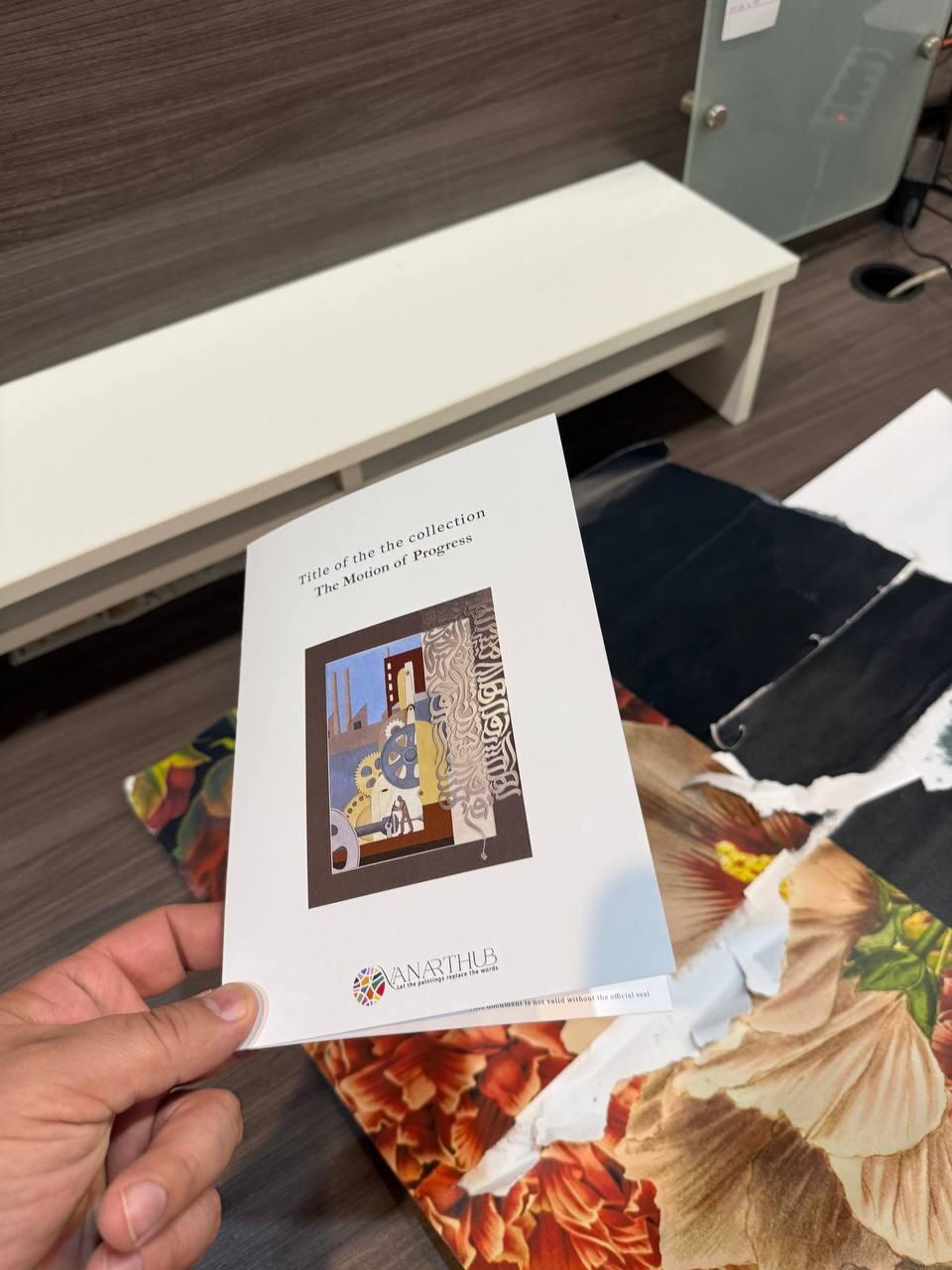
Yes. Every piece ships with a Certificate of Authenticity and comes direct from the artist's studio. Reproductions of paintings are not something we sell at all, with one exception: fine art photography prints from a single photographer, which are labelled as prints. What arrives is hand painted, signed, and the only one of its kind.
How do large paintings get to me, and what if one arrives damaged?
Shipping is free and fully insured across Canada and the United States, 3 to 7 business days inside Canada and 5 to 10 to the USA, packed at our Vancouver studio. If a piece arrives damaged, send us photos and we replace or refund it. Filing the insurance claim is our job, not yours.
When should you not buy a statement painting?
When the room already has a strong focal point: patterned wallpaper, a feature stone wall, or a big window with a view. A loud canvas in that room creates two competing centres and neither wins. Buy quieter background work there, and save the statement piece for the wall that has nothing going on.
Choosing a selection results in a full page refresh.
Opens in a new window.
Mahi
Exceptional Service and a Truly Memorable Art Purchase
I had a wonderful experience with Van Art Hub Gallery. I came across two pieces by Melina Ghaemi — *Mad Mirrors* and *Small World in the Hands of a Stranger* — and immediately fell in love with them.
I contacted Van Art Hub Gallery, and they were incredibly helpful throughout the entire process, from arranging the payment to organizing the shipping. At first, I was a little skeptical and nervous about how everything would work, especially since the paintings were still in Iran and it was shortly after the war. But the gallery handled everything with such professionalism and care that my concerns quickly disappeared. Amazingly, they were able to get the paintings to Canada in just two days!
The pieces are absolutely captivating. Even when I picked them up from the frame maker and was simply carrying them to my car, several people stopped and asked me about the paintings. That says a lot about how striking and special Melina Ghaemi’s work is.
A big thank you to Van Art Hub Gallery for making this experience so smooth and enjoyable. I truly appreciated their professionalism, communication, honesty, and integrity throughout the entire process. I would happily work with them again and highly recommend them to anyone interested in purchasing art through the gallery.
Exceptional Service and a Truly Memorable Art Purchase
I had a wonderful experience with Van Art Hub Gallery. I came across two pieces by Melina Ghaemi — *Mad Mirrors* and *Small World in the Hands of a Stranger* — and immediately fell in love with them.
I contacted Van Art Hub Gallery, and they were incredibly helpful throughout the entire process, from arranging the payment to organizing the shipping. At first, I was a little skeptical and nervous about how everything would work, especially since the paintings were still in Iran and it was shortly after the war. But the gallery handled everything with such professionalism and care that my concerns quickly disappeared. Amazingly, they were able to get the paintings to Canada in just two days!
The pieces are absolutely captivating. Even when I picked them up from the frame maker and was simply carrying them to my car, several people stopped and asked me about the paintings. That says a lot about how striking and special Melina Ghaemi’s work is.
A big thank you to Van Art Hub Gallery for making this experience so smooth and enjoyable. I truly appreciated their professionalism, communication, honesty, and integrity throughout the entire process. I would happily work with them again and highly recommend them to anyone interested in purchasing art through the gallery.
I got my order today and your work is really good. I didn’t expect to get a certificate for this painting, it was a surprise. Thanks for caring about small details.
The support team was really helpful and followed up nicely, wich I really appreciated. The painting is just like the photo – great quality and very detalied. I just wish it arrived a bit sooner, but honestly it was worth the wait.
I received my painting today. The support team was great and very responsive. The artwork is exactly what I was hoping for – even more beautifull in person. Truly a valuable piece. I’ll definetely order again. Thank you!