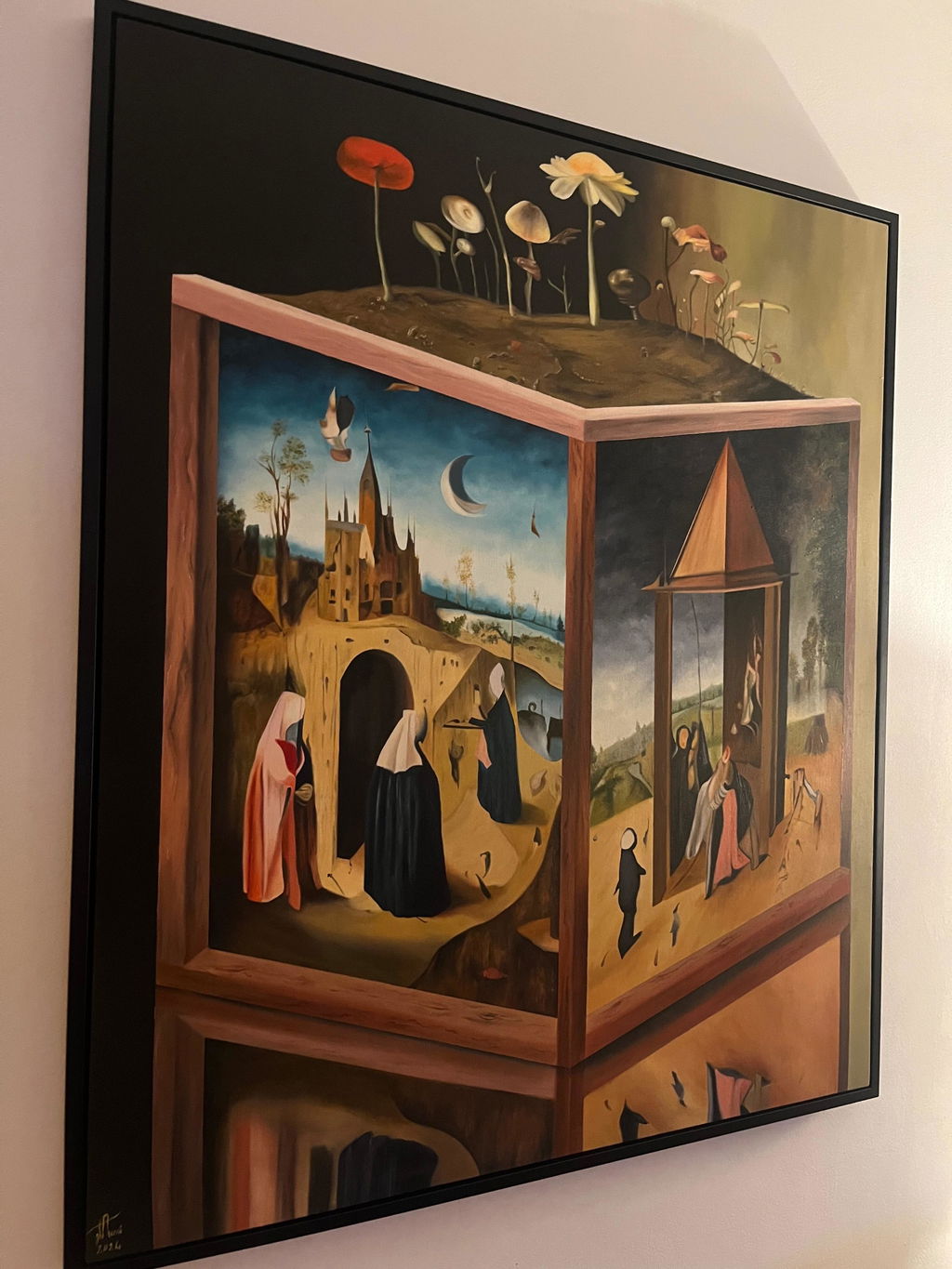
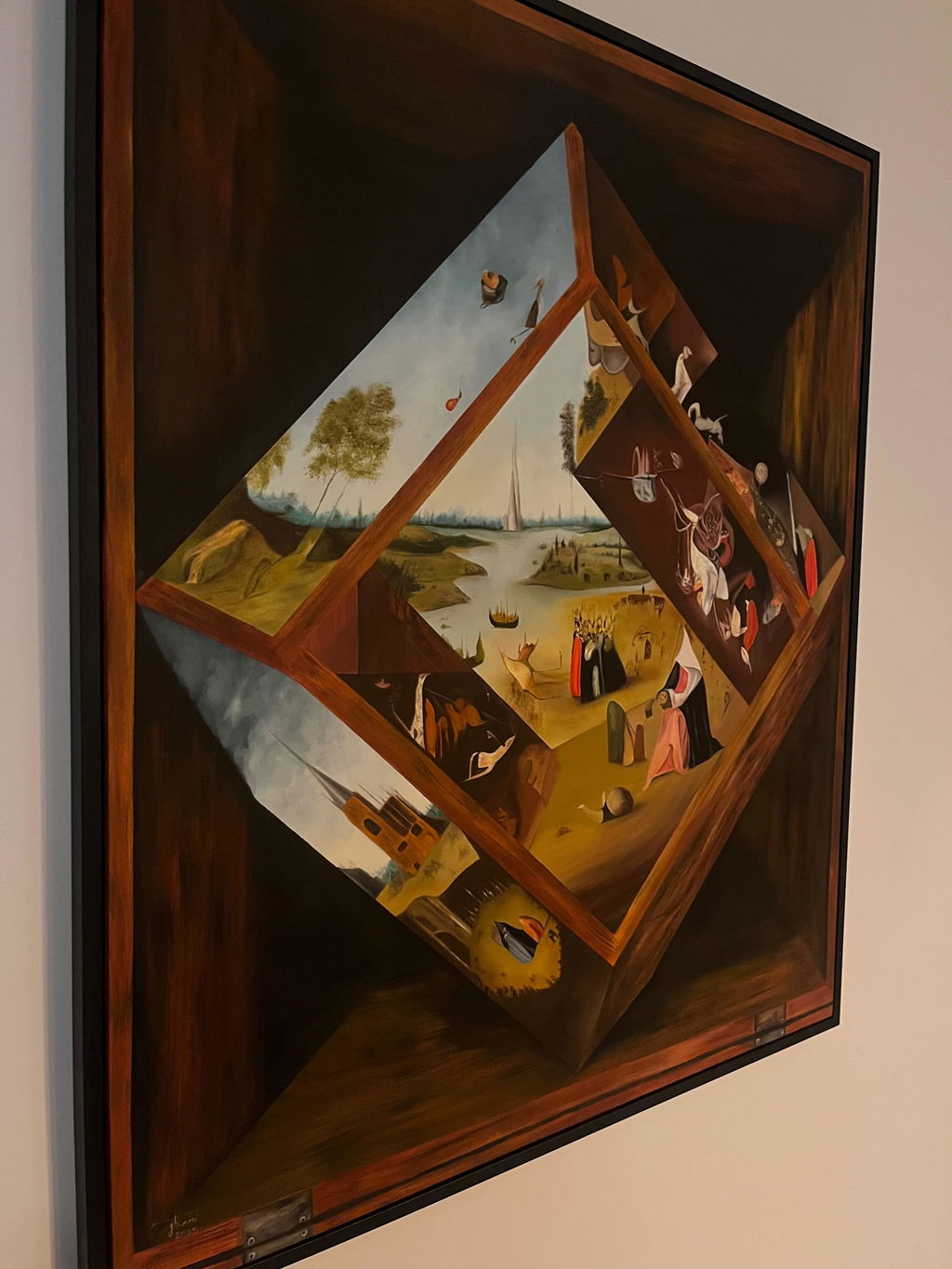
Some office walls are simply too big for a normal piece of art. A double-height atrium, a long feature wall, a stairwell that rises two floors: these spaces need one large statement work, or they read as empty.
Large statement art is the one place where going big is not a risk, it is the point. The common mistake is going too small out of caution, which leaves the piece looking stranded. This page covers how to size a large work, when to use a multi-panel set, and how to hang something heavy safely.
Size for the wall, then size up again
On a big wall, the eye needs a large focal point. Aim for the art to cover 60 to 75 percent of the width of the feature area. On a tall wall, also think about height: a piece that is wide but short can look thin on a two-storey wall. Vertical or square formats often suit double-height spaces better than a wide landscape shape.
If you land between two sizes, choose the larger one. We say this on every sizing page because it is the most common regret. A piece that felt daring in the studio almost always looks right, and often a little modest, once it is up on a large wall seen from a distance.
| Wall type |
Suggested approach |
| Long single-storey feature wall |
One wide piece 180 to 300 cm, or a coordinated pair |
| Double-height atrium or stairwell |
Tall vertical piece, or a stacked multi-panel set |
| Very wide lobby wall |
Multi-panel set of three or more, planned as one composition |
When to use a multi-panel set
Sometimes one canvas cannot physically cover the wall, or cannot fit through the door and up the stairs. A set of coordinated panels solves both problems. Three or more pieces that share a palette and a theme can span a very large wall and still read as one work.
The key is to plan the set together from the start, so the spacing, scale, and colours line up as a single composition. A hang that looks accidental undoes the effect. We plan multi-panel sets as one piece of design, not as separate paintings that share a wall. Browse our statement artwork for commercial spaces and large wall art for works at this scale.
Hang it safely
A large canvas is heavy, and a two-storey wall means working at height. This is not a job for a picture hook and hope. Get it wrong and the piece can fall, damage the wall, or hurt someone.
- Use hardware rated well above the weight of the piece, fixed into studs or with proper anchors for the wall type.
- For heavy works, use a cleat system that spreads the load along the top of the frame rather than two small hooks.
- On tall walls, plan access. Atriums and stairwells often need proper scaffolding or a lift, not a household ladder.
We offer delivery and installation for large works, including multi-panel sets and high walls. Our team brings the right hardware and access equipment, hangs the piece level and secure, and takes the risk of a heavy hang off your facilities team.
Related pages
See also modern commercial wall art.
Frequently asked questions
How big should statement office art be?
Aim for the art to cover 60 to 75 percent of the width of the feature area. On a tall wall, favour vertical or square formats so the piece does not look thin. If you are between two sizes, choose the larger one, since too small is the most common regret.
Should I use one canvas or a multi-panel set?
Use a multi-panel set when one canvas cannot cover the wall or cannot fit through the door and up the stairs. Three or more coordinated panels can span a very large wall, as long as they are planned together as one composition, not hung as separate paintings.
How do you hang heavy art safely?
Use hardware rated well above the weight, fixed into studs or proper wall anchors. For heavy pieces, a cleat system spreads the load better than two hooks. Tall walls often need scaffolding or a lift. We handle this with our delivery and installation service.
Can you install on a double-height wall?
Yes. We offer delivery and installation for large works and high walls, including atriums and stairwells. Our team brings the right access equipment and hardware, and hangs the piece level and secure so your facilities team does not take on the risk.
Have a big wall to fill? Our art advisory team can help you size and plan the piece, or reach us on the contact page.