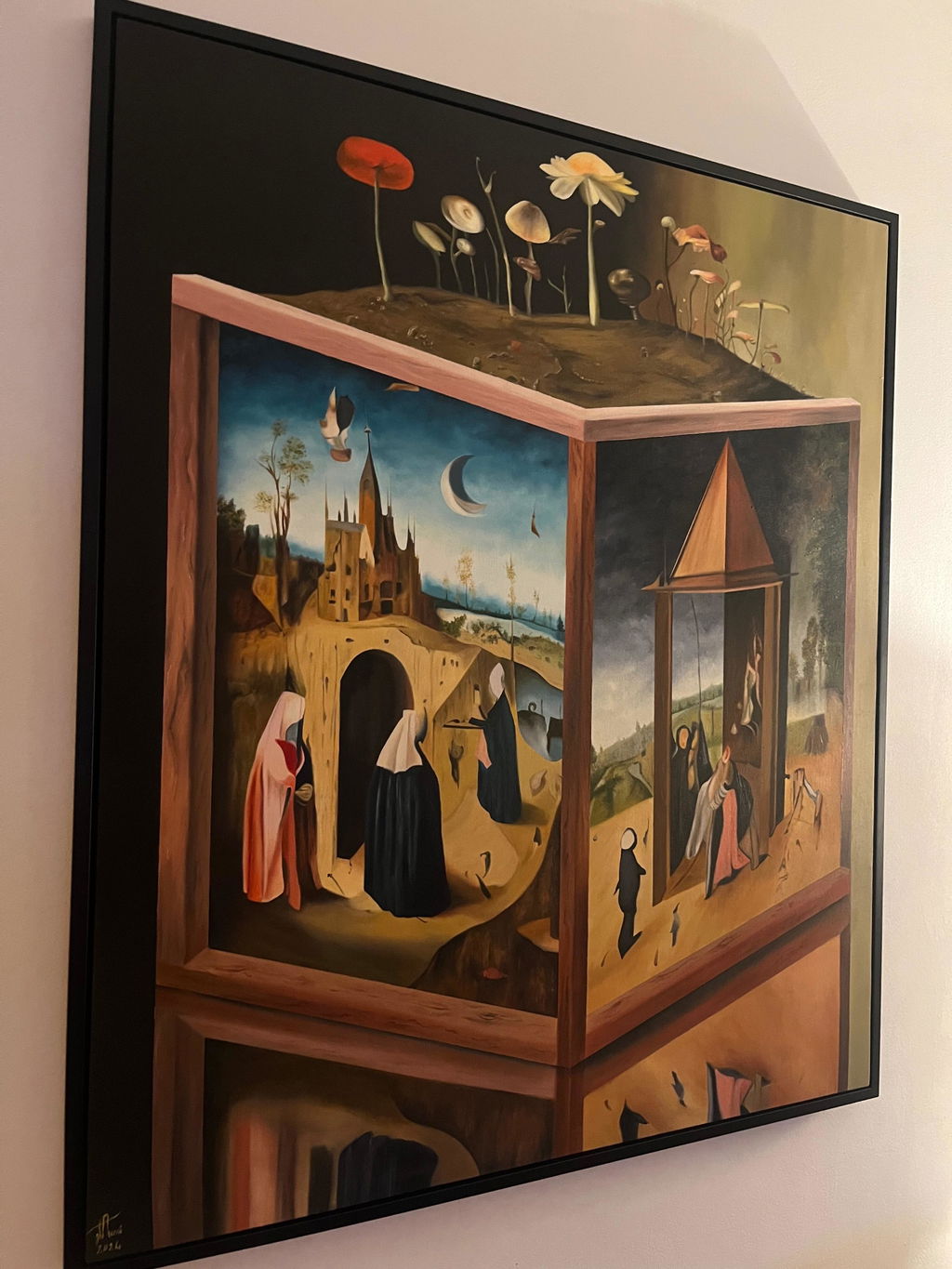
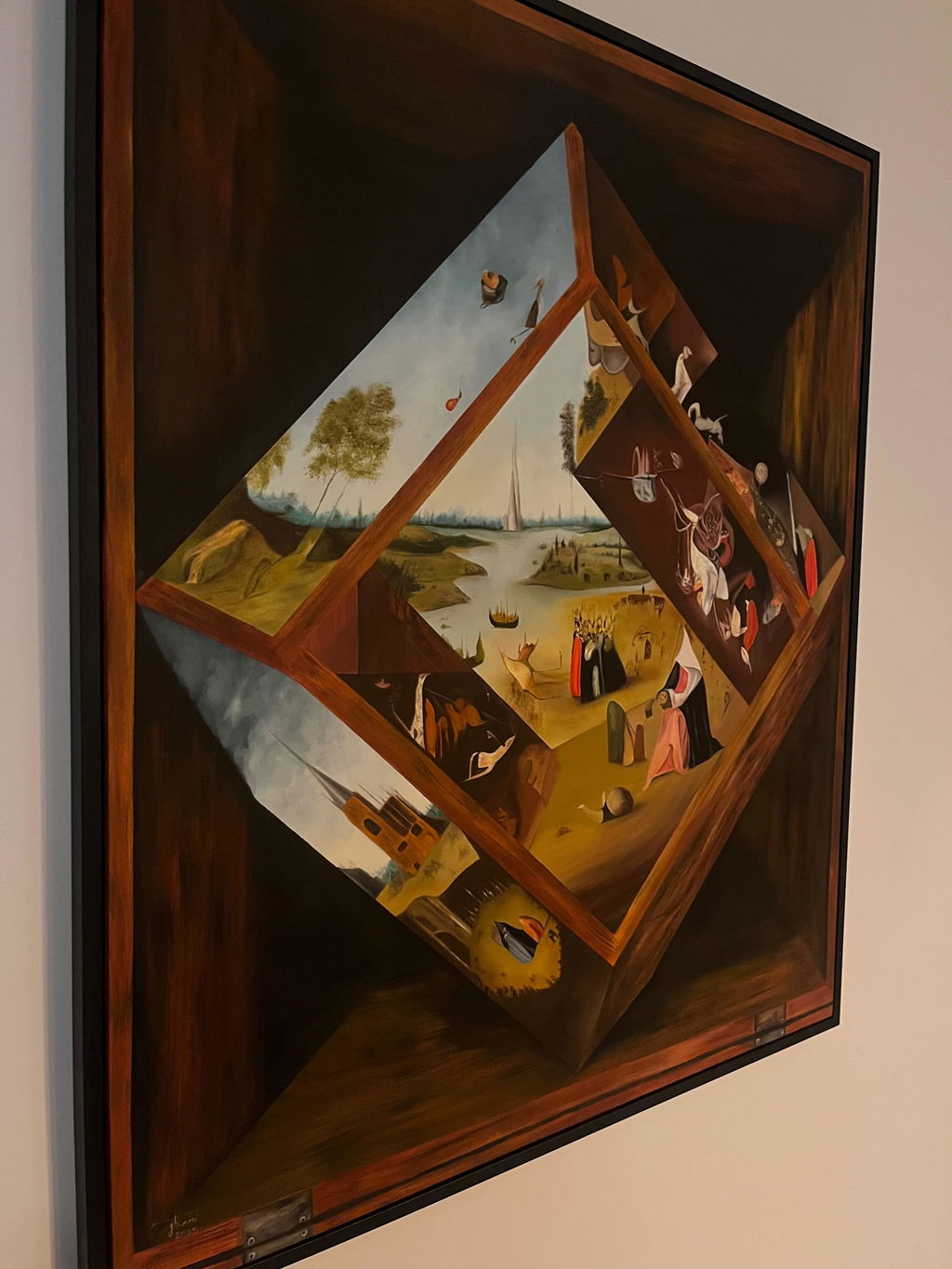
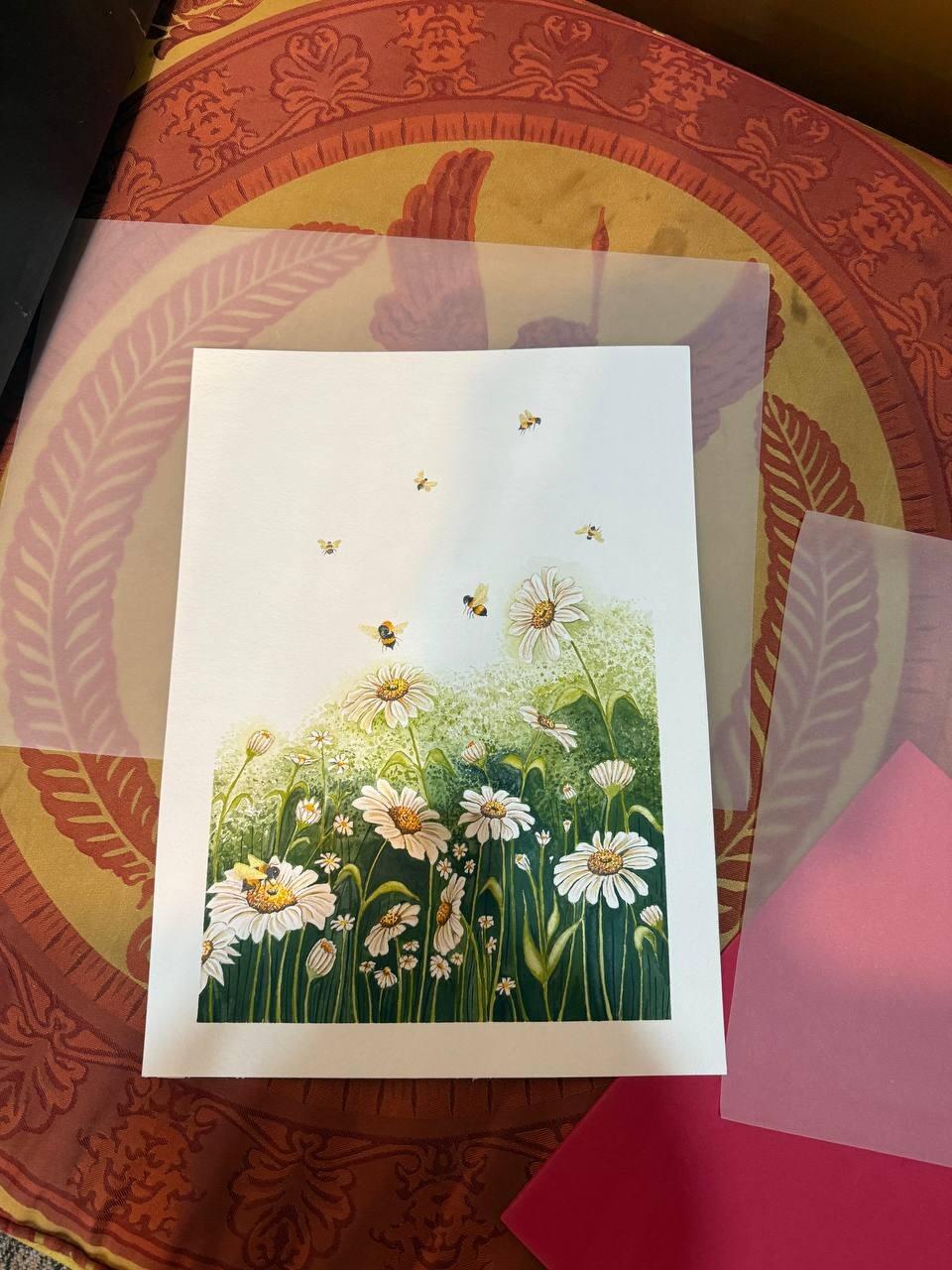
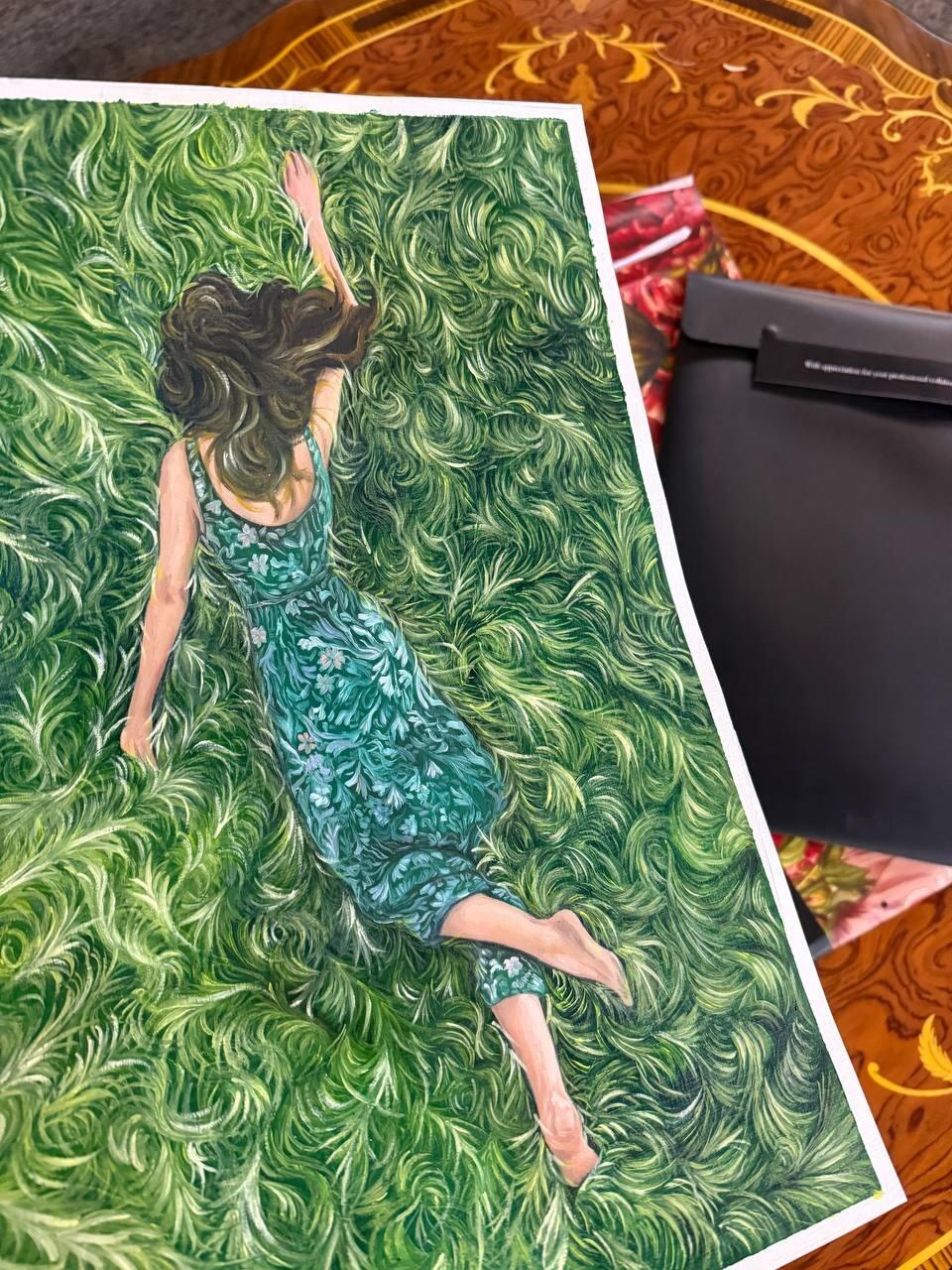
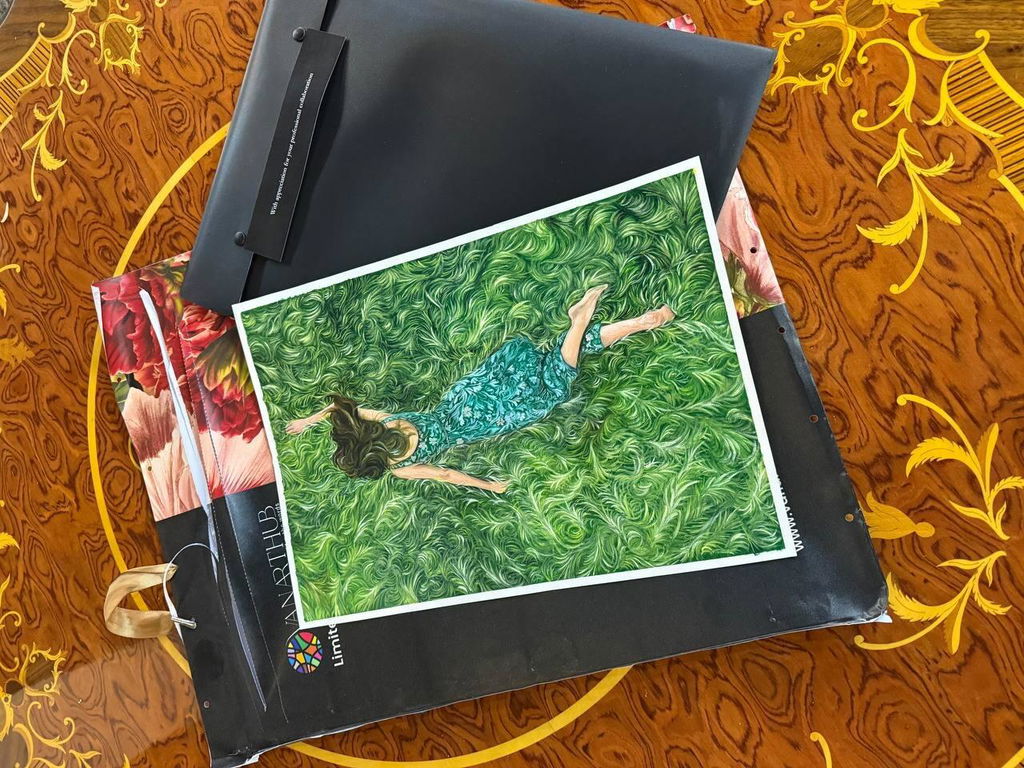
The wall behind you on a video call is now part of how people read you. A blank wall looks flat. A cluttered one looks messy. One well-chosen piece of art fixes both, if you get the size, contrast, and placement right.
We get this question a lot from people setting up a home office or a call room. The rules are a little different from hanging art for a physical room, because the camera flattens everything and changes how the piece reads. Here is what actually works on screen.
Size it for the frame, not the wall
On camera, only a small slice of the wall behind you is visible. A large piece often gets cut off at the edges and looks like an accident. The sweet spot is a piece that sits mostly over one shoulder, filling part of the frame without crowding your head.
As a guide, position the art so it appears behind and slightly to one side of you, with the top of the piece roughly level with the top of your head or a little above. A medium canvas, around 60 by 90 cm, works for most home setups. In a larger room where you sit further from the wall, you can go bigger.
Keep the contrast moderate
Contrast is the setting people get wrong most often. Very dark or very bright art confuses the camera's exposure and can leave your face too dark or washed out. Choose a piece with moderate, even tones so the camera reads your face correctly and the art stays a calm backdrop.
- Avoid stark black-and-white or very high-contrast pieces directly behind your face.
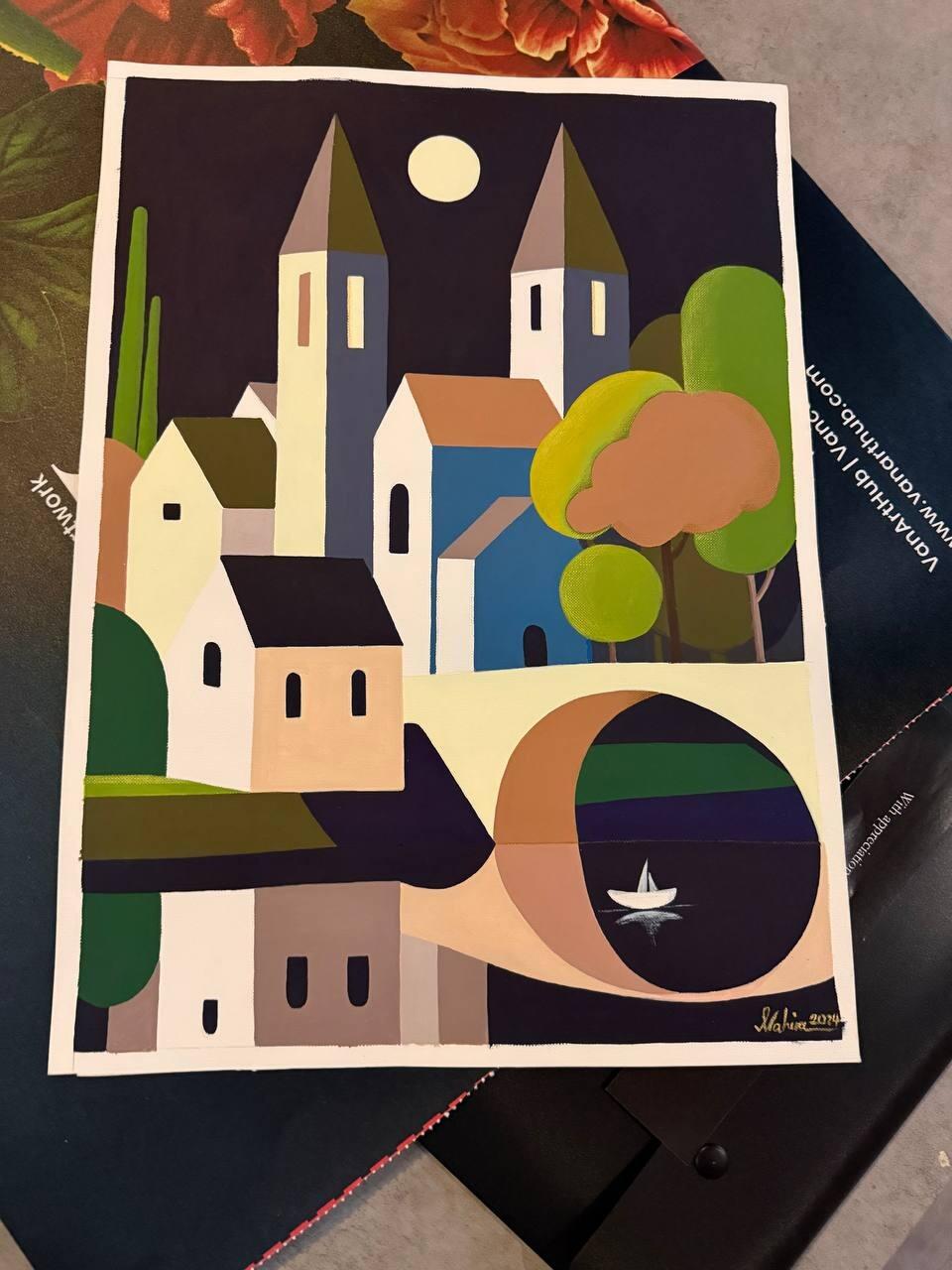
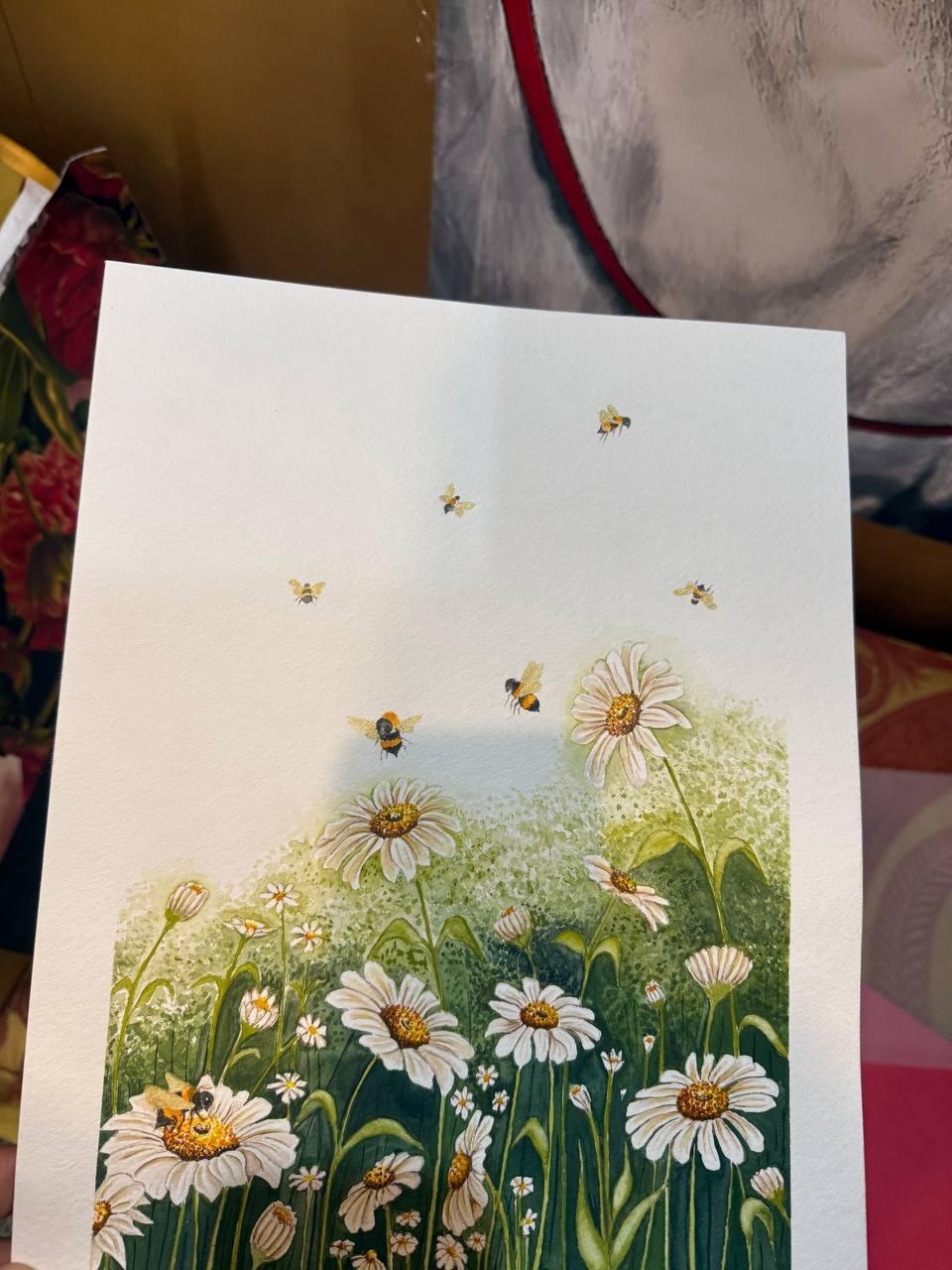
- Avoid fine detail. Small marks turn to mush at video resolution. Broad shapes and clear colour read far better on screen.
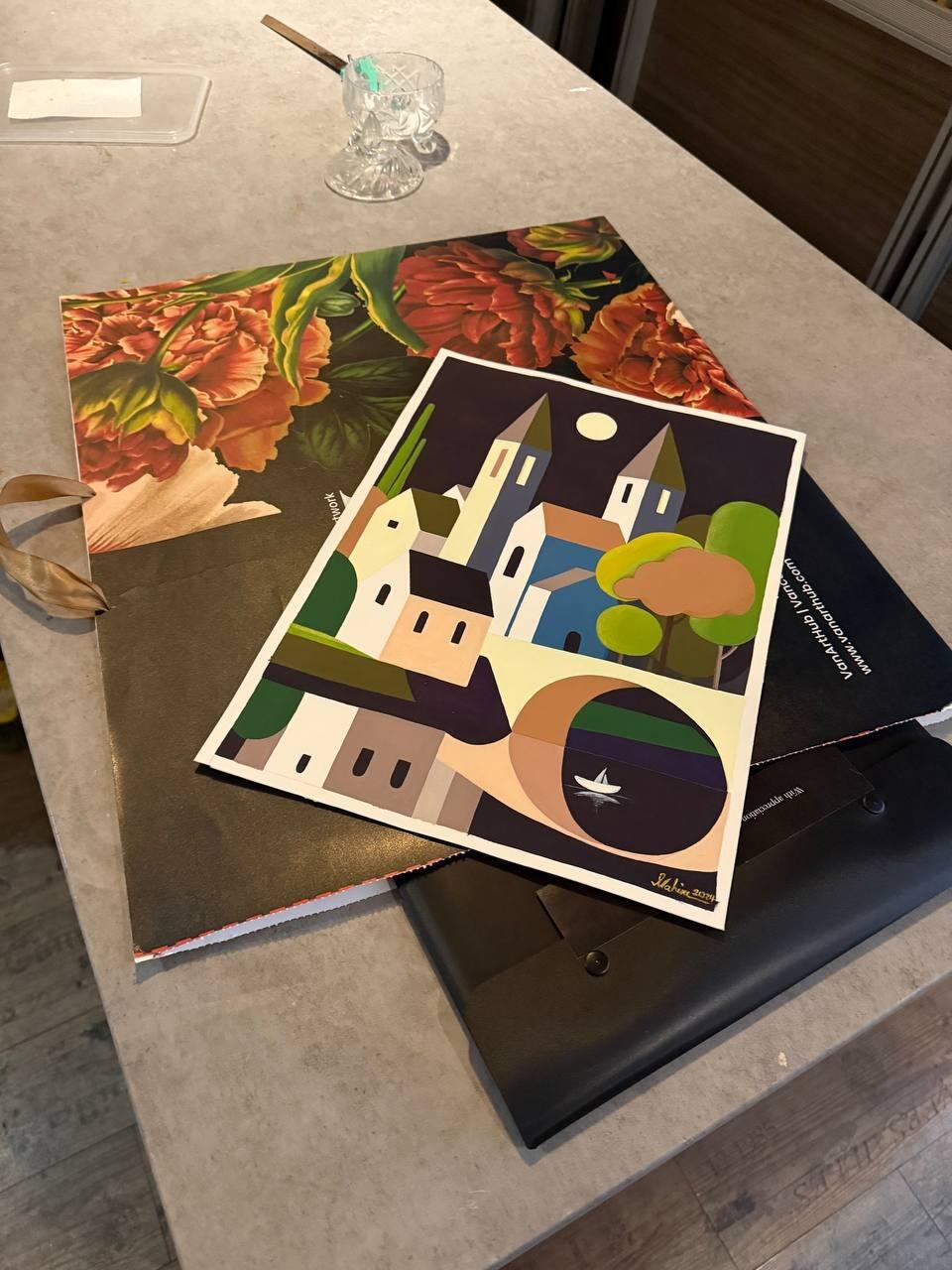
- Choose a matte, textured surface. Glossy prints under glass catch your ring light or ceiling lights and show glare on camera. An original painting with texture avoids that reflection.
Placement and framing
Set your camera and chair first, then hang the art to suit the shot. Sit where you normally would, look at the framing, and place the piece where it fills the space over your shoulder. Do not centre it directly behind your head like a halo. Slightly off to one side looks more natural.
Mind the light. If a window is behind you, the camera will struggle no matter what art you hang. Face a window or a soft light instead, and keep the art on a wall that is evenly lit. Once the light is right, the art does its job as a calm, professional backdrop.
Why an original works better on camera
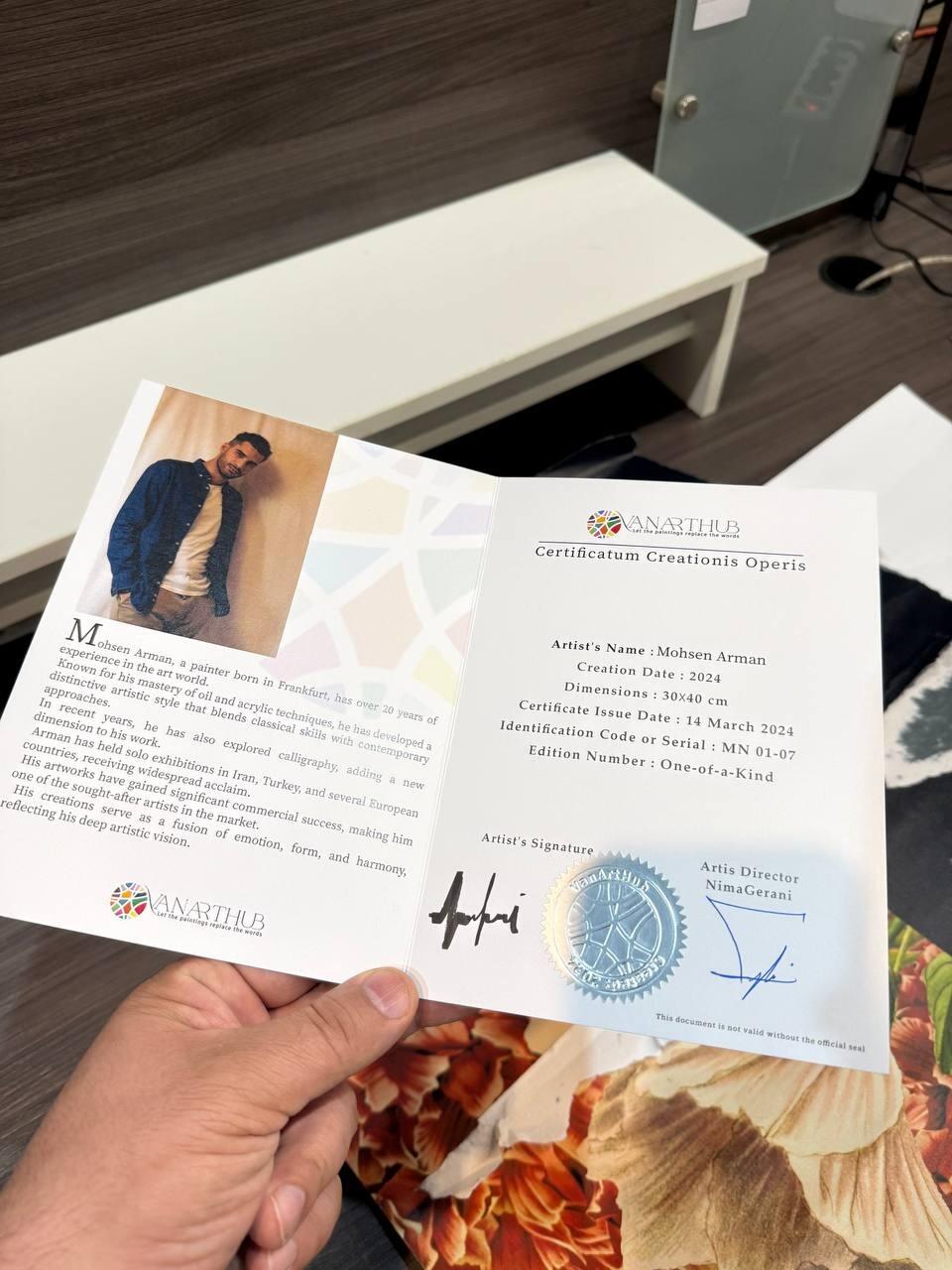
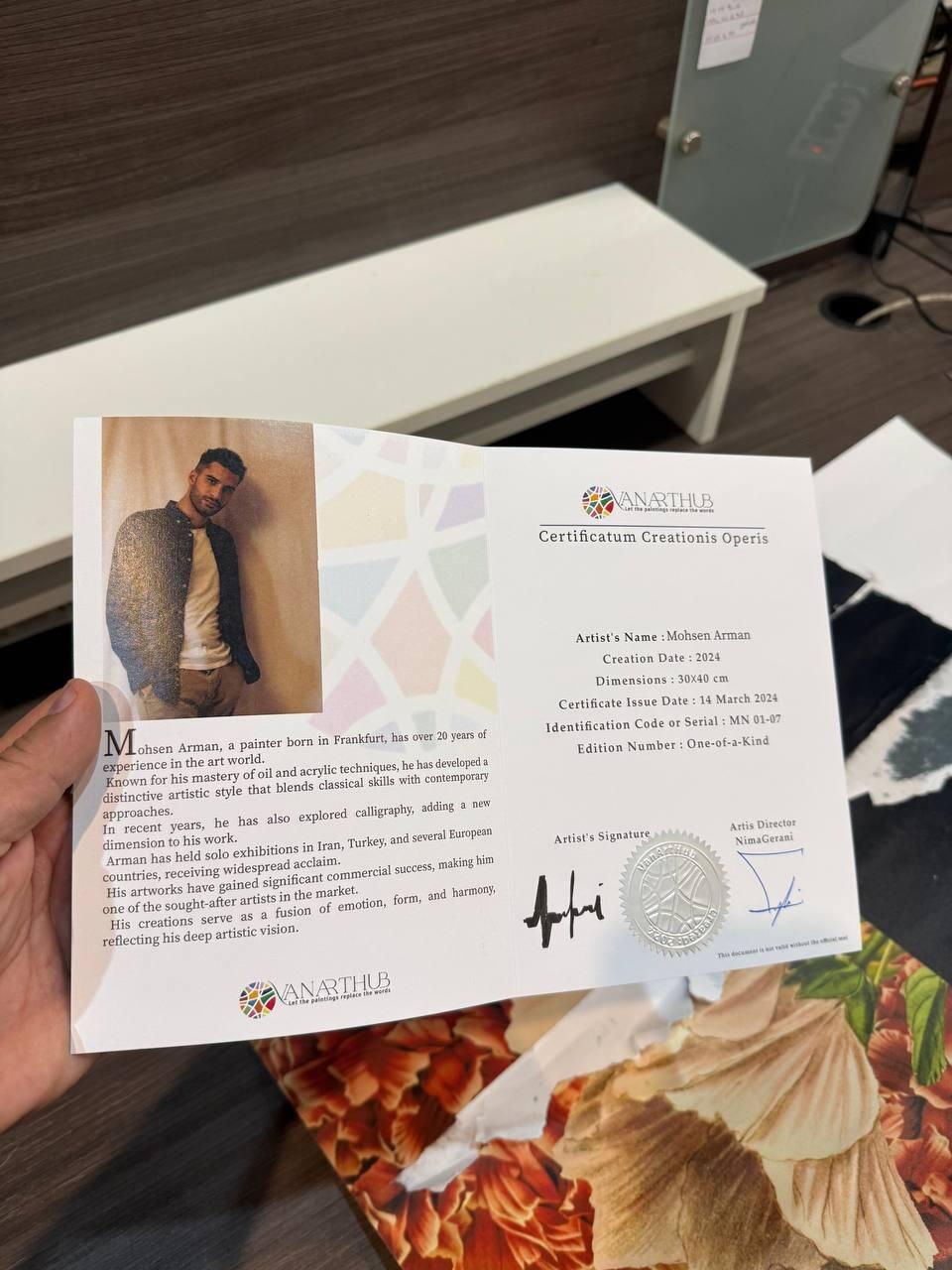
Beyond the matte surface, an original painting simply reads as more considered on a call. It signals that you invested in your space, which is a small but real signal in client meetings and interviews. Each piece we sell is a one-of-a-kind original, hand-signed by the artist, with a Certificate of Authenticity. For an executive office that doubles as a call room, our executive office art page pairs well with this one, and for shared meeting rooms see boardroom art.
Related pages
Browse fitting pieces in contemporary office paintings and office wall art.
Frequently asked questions
What size art works behind me on video?
A medium piece, around 60 by 90 cm, suits most home setups. Position it behind and slightly to one side, with the top roughly level with your head or a little above. In a larger room where you sit further back, you can go bigger.
Why does my art cause glare on camera?
Glossy prints under glass reflect your ring light or ceiling lights straight into the lens. Choose an original painting with a matte, textured surface instead. The paint scatters light and keeps the backdrop clean and glare-free on screen.
Should the art go directly behind my head?
No. Art centred right behind your head looks like a halo. Place it slightly off to one side so it fills the frame over your shoulder. Set your camera and chair first, then hang the piece to suit the actual shot.
What contrast looks best on video?
Moderate, even tones. Very dark or very bright art confuses the camera's exposure and can leave your face too dark or washed out. Avoid stark contrast and fine detail behind your face, and favour broad shapes and clear colour.
Setting up a call room and want a backdrop that looks right? Our art advisory team can help you pick the piece, or reach us on the contact page.