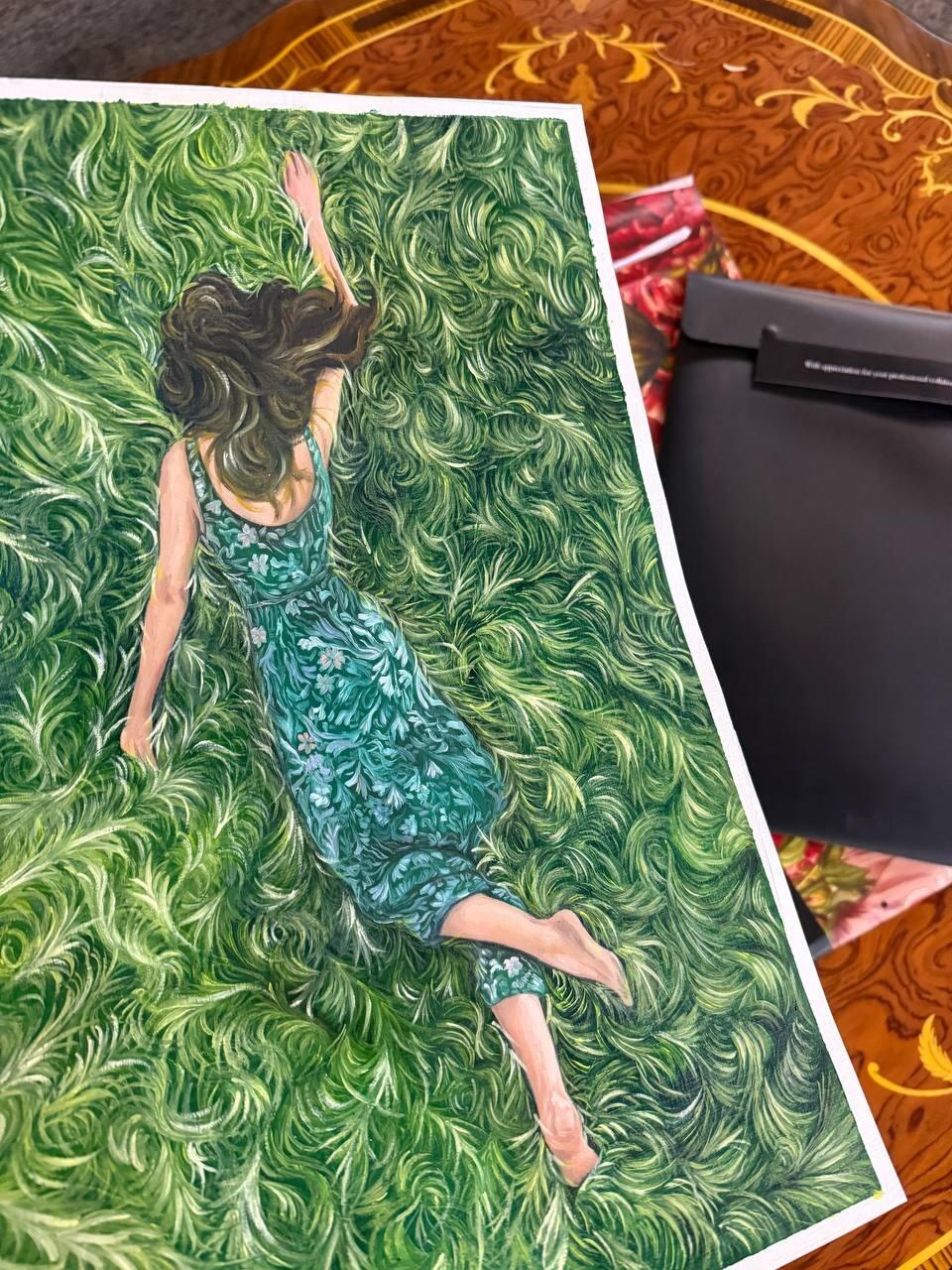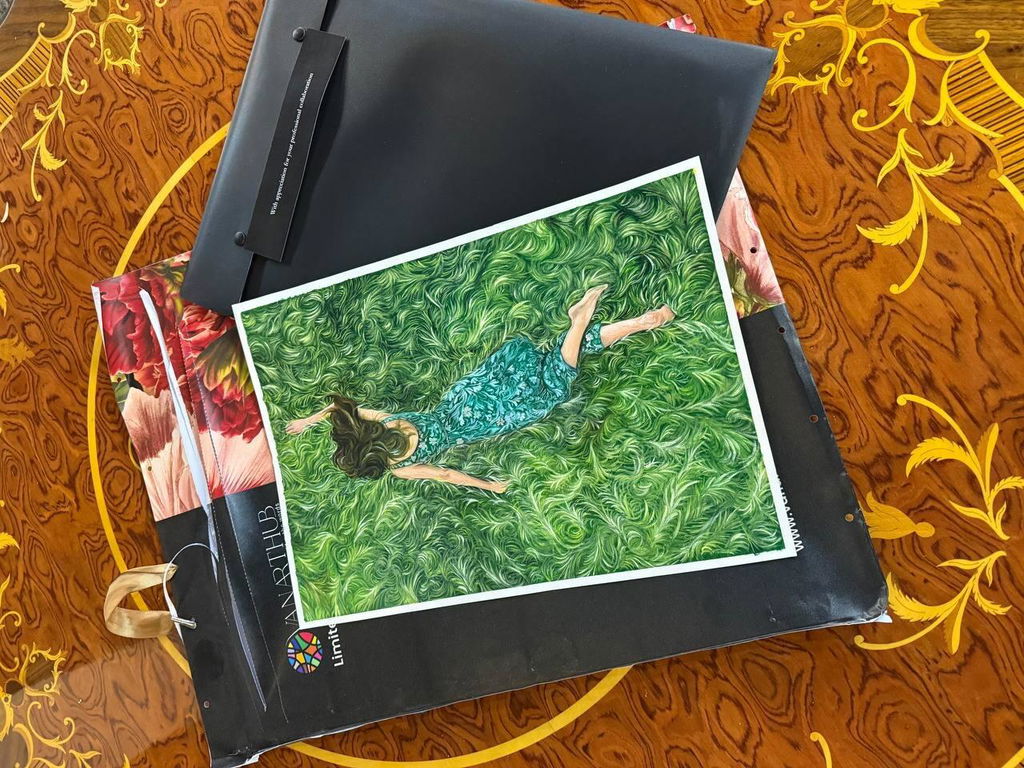
Hanging Original Art in a Rental Without Nails
Updated By VanArtHub Curatorial TeamShare
Renting does not mean living with bare walls or cheap posters. You can hang a real original painting without a single nail hole, and take it with you when you move. The trick is matching the method to the weight of the piece and respecting the limits. Here is how we do it.
Adhesive hanging strips, and their real weight limits
Adhesive strips are the most common no-nail solution, and for good reason. They hold the frame flat to the wall, come off cleanly when you follow the instructions, and leave no mark. But weight is where people go wrong, so read the pack carefully.
Most consumer strip sets top out somewhere around 7 to 8 kilograms even when you use several pairs, and some smaller sizes hold only a kilogram or two per pair. A framed canvas is heavier than it looks, especially with glass. So weigh the piece first on a bathroom scale, then choose enough strips for that weight with room to spare. Three rules make or break it: the wall and the frame must both be clean and dry before you stick anything, the wall surface must be smooth and firm, not textured, flaking, or freshly painted, and you must press hard for the full time the maker states, often 30 seconds on and then a wait before you hang. Skip any of those and the strip lets go a week later. Getting the placement right the first time also saves you peeling and re-sticking; our note on how high to hang a painting gives a simple height rule.
Picture rails: the best option if you have them
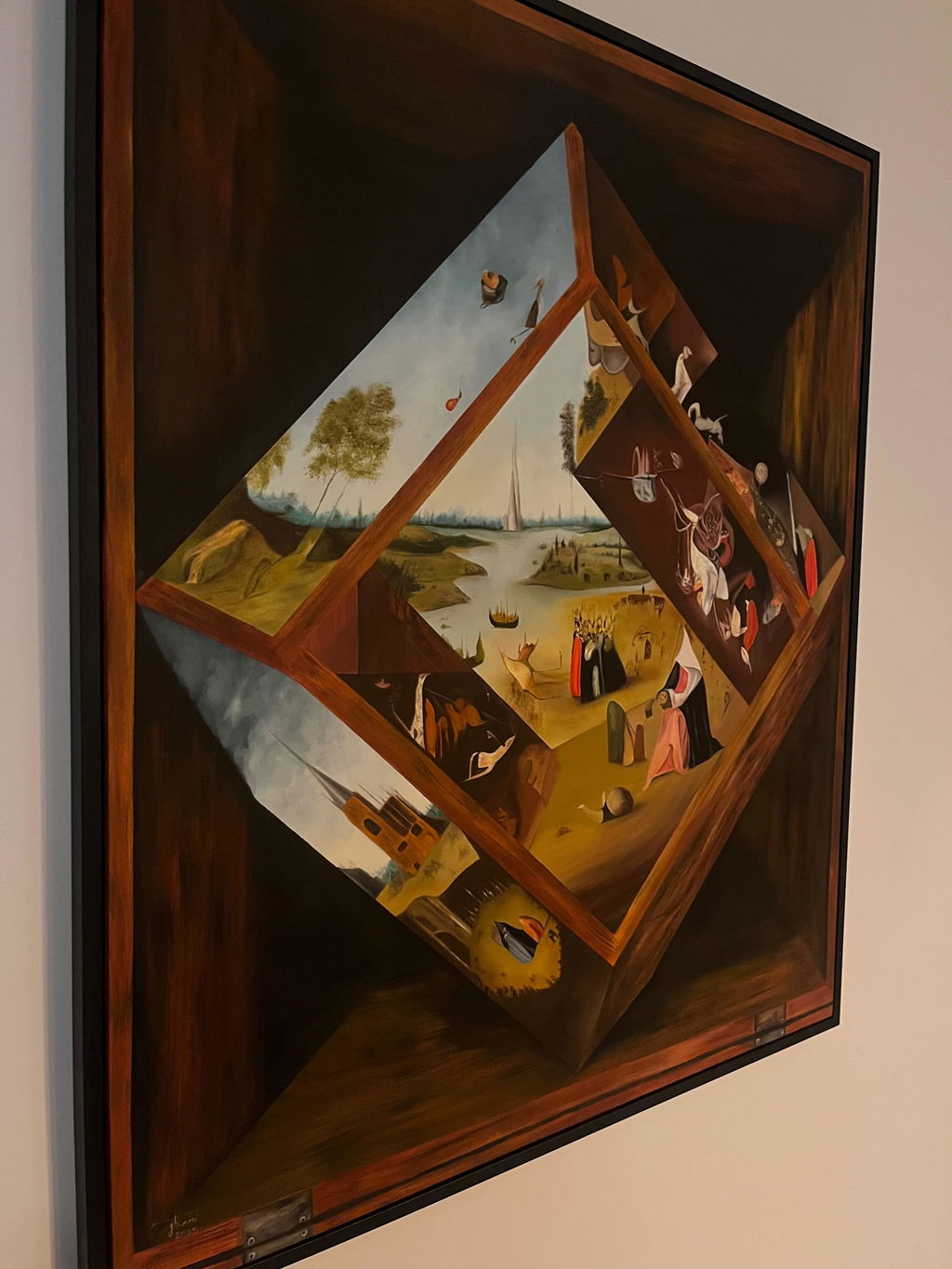
If your rental has a picture rail, a strip of moulding running near the top of the wall, you have the best no-damage option in the building. A special hook slides onto the rail and a cord or wire drops down to hold the painting. You make zero holes, and you can slide the piece left or right or swap it out any time. Many older apartments and heritage buildings still have these rails, and they were built for exactly this.
You can also add a hanging rail system yourself, some clip onto an existing picture rail or mount with very little fixing, but check your lease first. The beauty of a rail is that one install serves the whole wall, so you can rearrange your art as often as you like with no further marks.
Leaning large pieces
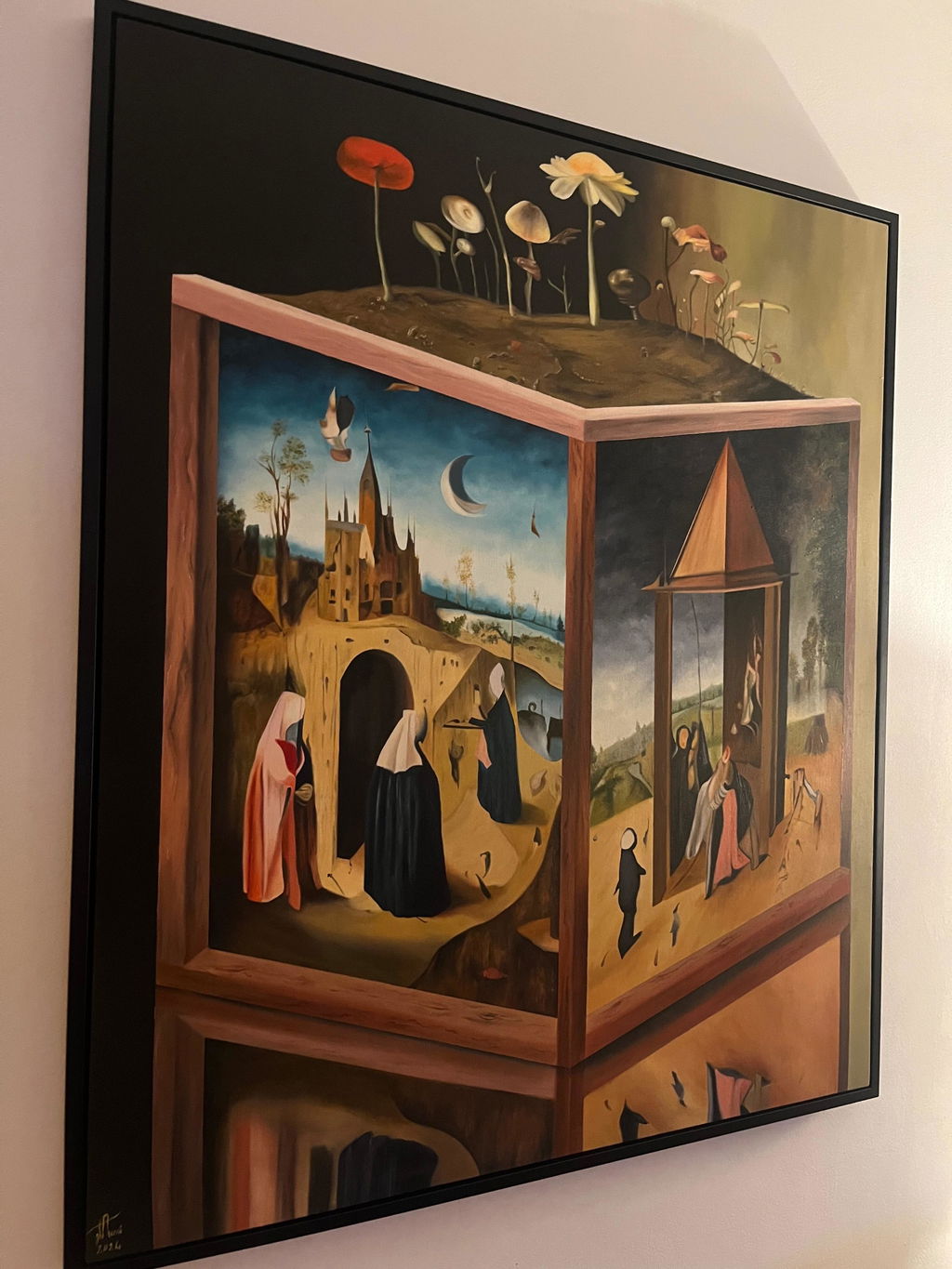
For a big, heavy painting, the simplest answer is often to not hang it at all. Lean it. A large canvas resting on the floor against the wall, or standing on a shelf, mantel, sideboard, or low bookcase, looks intentional and relaxed, and it holds real weight with no hardware. This is one of the easiest ways to give a rental a strong, finished look.
Two safety notes. Rest the bottom edge on something with a little grip, or add small felt or rubber pads, so the frame does not slide on a hard floor. And if there are children or pets around, or the piece is very large, add one discreet anchor so it cannot tip, or place it where it is braced by furniture. A big piece leaning behind a sofa or on a wide credenza reads beautifully. If you are choosing scale for the spot, our room-by-room guide on what size original painting you need helps you pick a piece that suits a leaning display.
Freestanding easels
A floor easel turns one strong painting into the centrepiece of a room, with no wall contact at all. It works especially well for a single large or medium original in a corner, beside a reading chair, or as a room divider in an open space. Wooden studio easels look warm and classic. Slim metal ones feel modern and take up less floor.
An easel is also handy if you are not ready to commit to a spot. You can move the piece around the room over a few days and see where the light suits it best before you settle. That fits naturally with a trial period, since you can test the painting in different corners while you decide whether to keep it.
One thing to check with an easel is stability. A tall easel holding a large canvas can be top-heavy, so place it where it will not get knocked, keep the legs on a firm surface rather than a thick soft rug, and if you have young children pick a sturdy design with a wide base. For a medium piece, a solid tabletop easel on a sideboard also works and sits at a natural eye level.
Protecting the canvas and the wall
However you display it, protect both the art and the wall so you get your deposit back and the painting stays perfect. Keep paintings out of direct sun and away from heat sources like radiators, and off bathroom and kitchen walls where steam and grease collect. When a canvas leans, make sure nothing rests against its painted face, since pressure can mark the surface, and this matters even more with raised, textured paint. Behind a leaning frame, a small felt pad where the top edge touches the wall stops scuffs.
Because you rent, you are also likely to move this art again. Keep the original packaging if you can. When a piece ships from us it arrives packed to travel safely and fully insured, so you have a ready-made box for the next move. Handle the canvas by the frame, never by pressing on the front.
Why a rental is still worth hanging real art in
People hesitate to buy an original for a place they do not own. We think that is backwards. A rental is often where you spend the most hours and where a single good painting changes how the whole space feels. And real art moves with you. Unlike a fixed feature you leave behind, a painting is yours, so every dollar follows you to the next home.
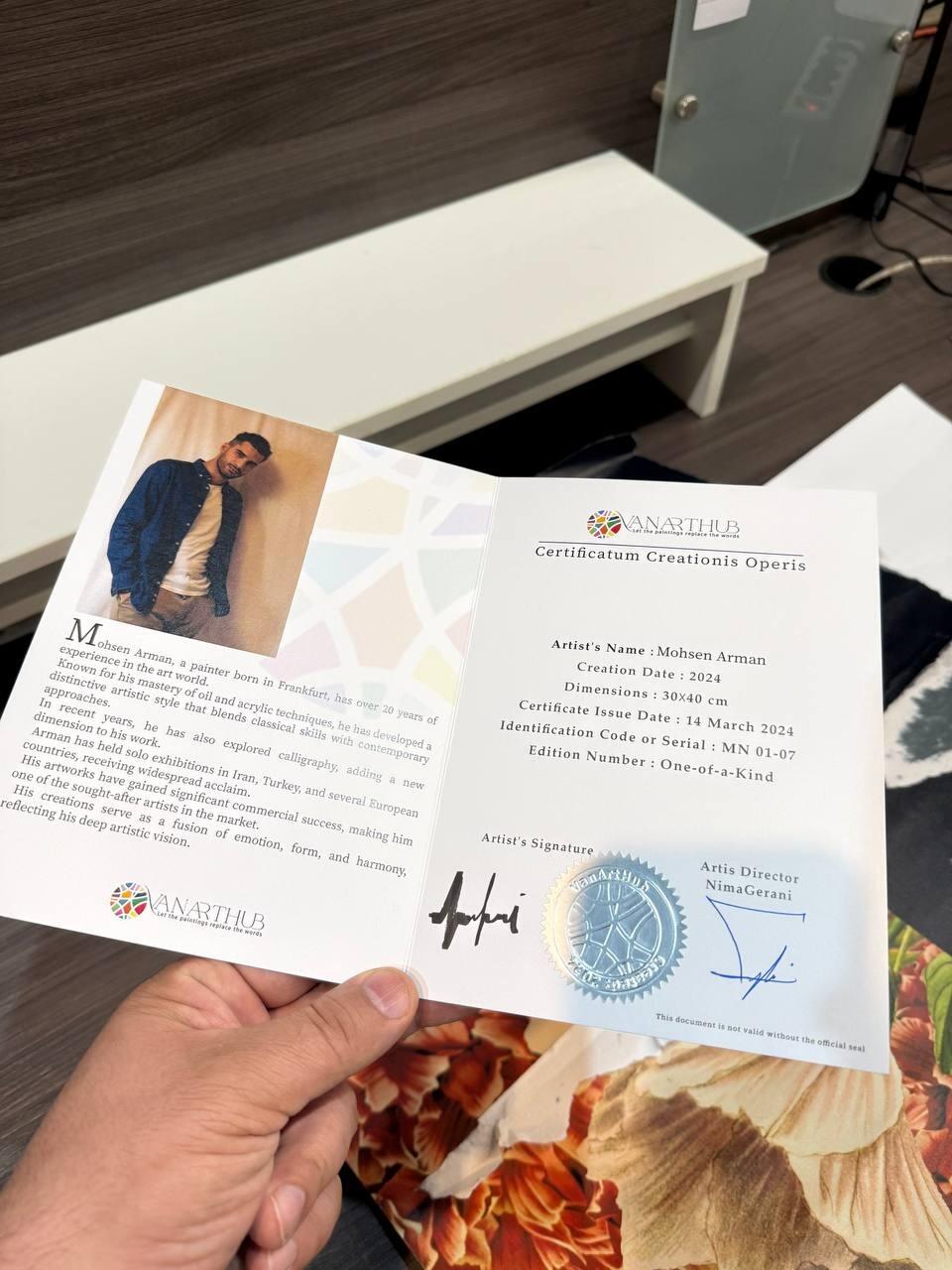
Two things we offer take most of the risk out of it. The 14-day trial means you can hang the piece, see it in your actual light, and return it for a full refund if it is not right, and we pay the return shipping. Lifetime Trade-Back means that even years later you can return an original for store credit at its original price and trade up or change direction. So a painting in a rental is not money stuck to a wall you do not own. It is a piece you keep, test freely, and can trade later. If you are starting out, our guide on how to start collecting original art on a small budget is a good next read.
The short version
You can hang a real original in a rental with no nails. Use adhesive strips for lighter framed pieces, but weigh the work and respect the pack's limit, usually around 7 to 8 kilograms at most. Use a picture rail if your place has one, since it does zero damage and lets you rearrange freely. For big, heavy pieces, lean them on a shelf or the floor, or stand them on a floor easel. Protect the canvas face, keep art out of sun and damp, and save the shipping box for your next move. We sell originals only, based in Vancouver, each with a Certificate of Authenticity, free fully insured shipping, a 14-day trial, and Lifetime Trade-Back, so real art in a rental carries almost no risk.