How to Build a Gallery Wall With Original Paintings
Updated By VanArtHub Curatorial TeamShare
A gallery wall looks effortless when it is done well, which is exactly why it goes wrong so often. People buy a few paintings, put the first nail in the wall, and start hanging. Then the spacing drifts, the sizes fight each other, and the whole thing reads as clutter instead of a collection.
We help collectors plan these walls all the time, and the good news is that the method is simple. You solve almost everything before a single hole is drilled. Here is how we do it.
Plan the layout on the floor first, never on the wall
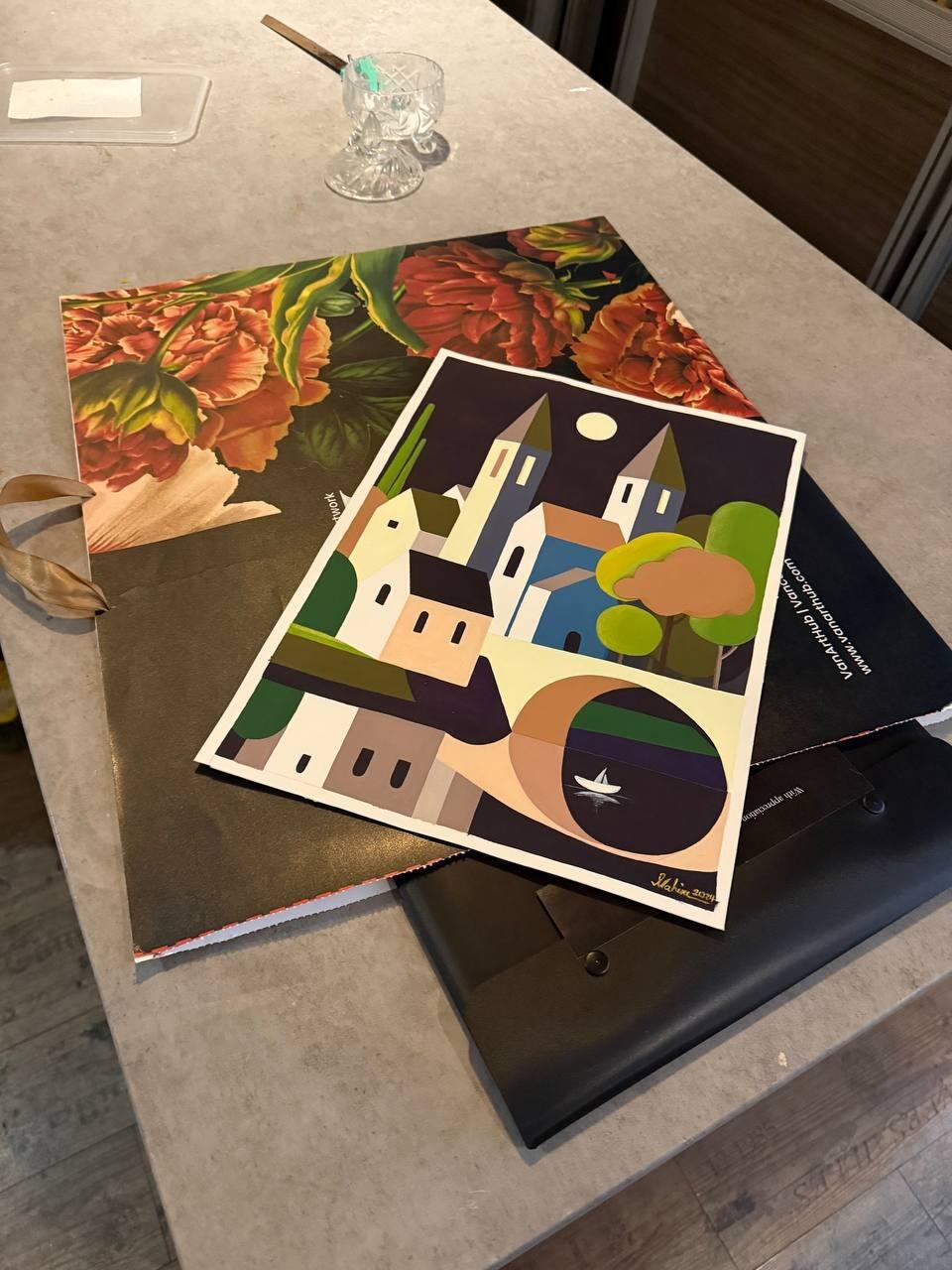
The most useful trick we can give you costs nothing. Lay all your paintings out on the floor in front of the wall, and move them around there until the arrangement feels right. The floor lets you try ten versions in the time it would take to hang one badly.
Once you like a layout, trace each painting onto kraft paper or newspaper, cut the shapes out, and tape them to the wall with painter's tape. Step back. Live with the paper mockup for a day if you can. You will catch problems your eye misses in the first minute, like a heavy piece pulling the group off to one side. Only when the paper version looks right do you measure for hooks.
Spacing: about 5 to 8 cm between frames
Consistent gaps are what separate a designed wall from a random one. Keep about 5 to 8 cm between every painting, measured edge to edge, and hold that gap the whole way across. The exact number matters less than keeping it even.
- Smaller pieces and tight rooms: stay near 5 cm so the group reads as one unit.
- Larger canvases and big walls: open up toward 8 cm to give each piece room to breathe.
- The whole grouping should sit with its visual center around 145 to 150 cm from the floor, which is average eye level. Center the arrangement, not each individual painting.
Uneven gaps are the single most common mistake we see. A wall can hold beautiful paintings and still look wrong if one gap is 4 cm and the next is 11 cm. Measure every time.
Mix sizes and subjects, but keep one common thread
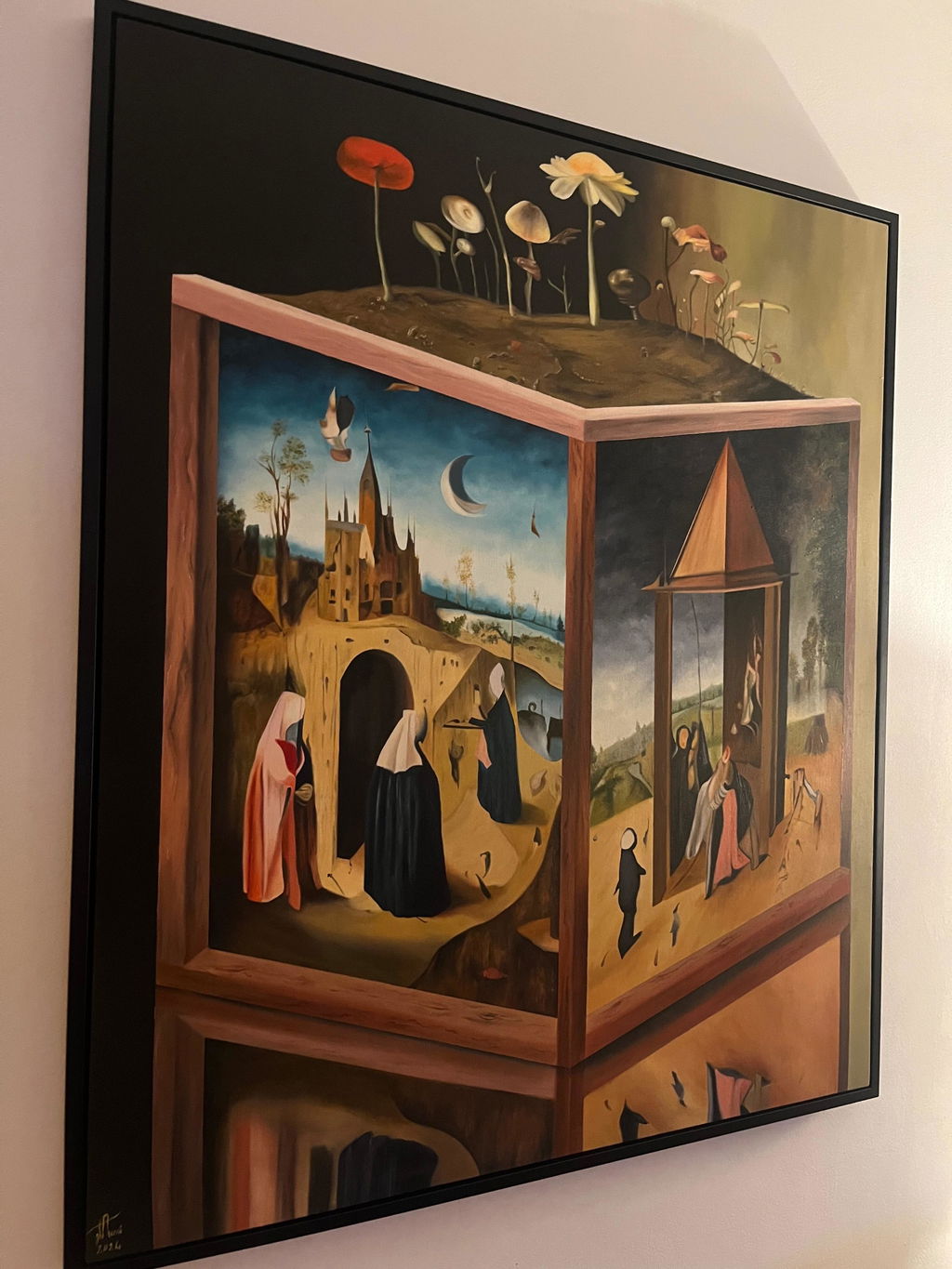
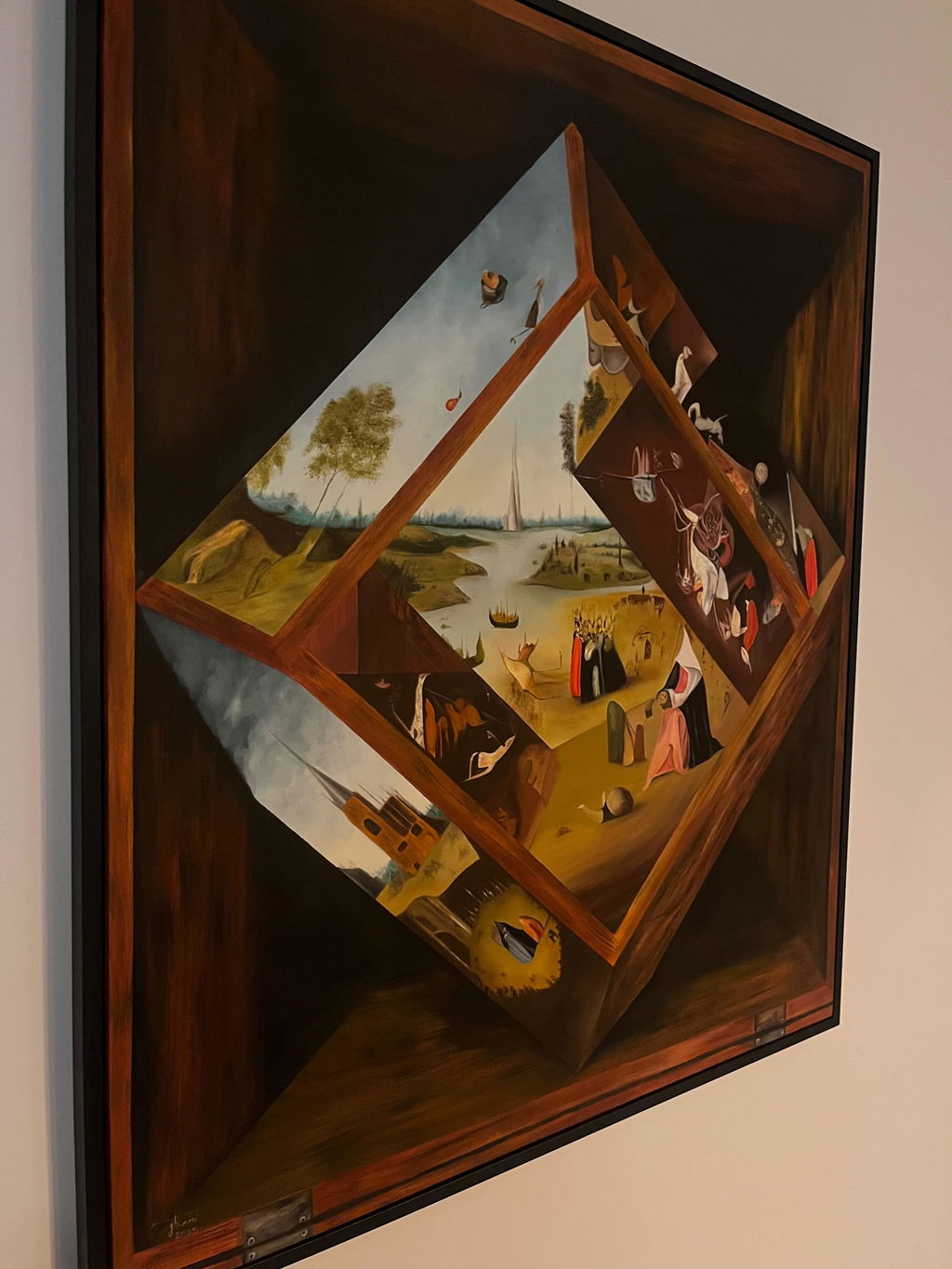
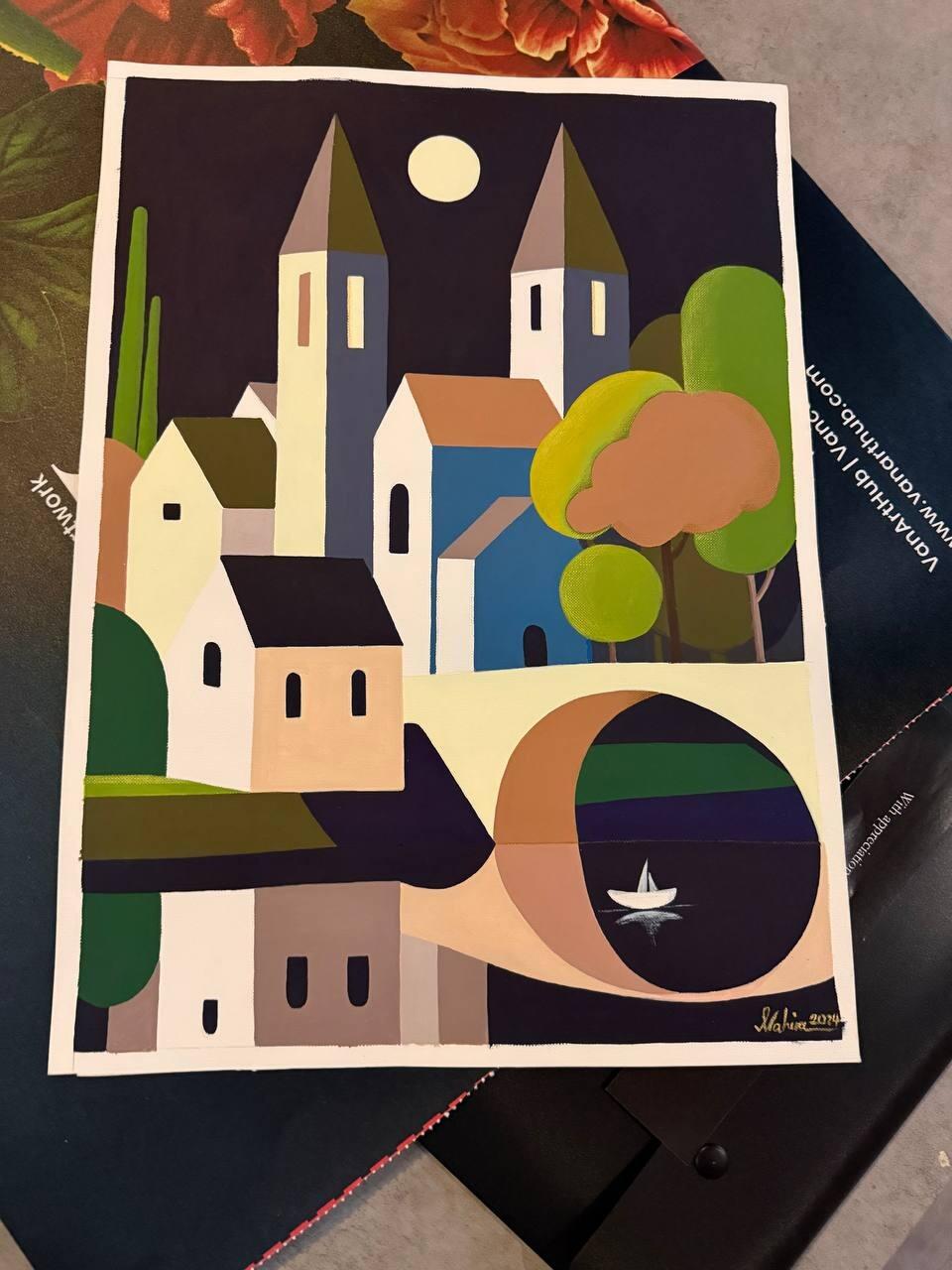
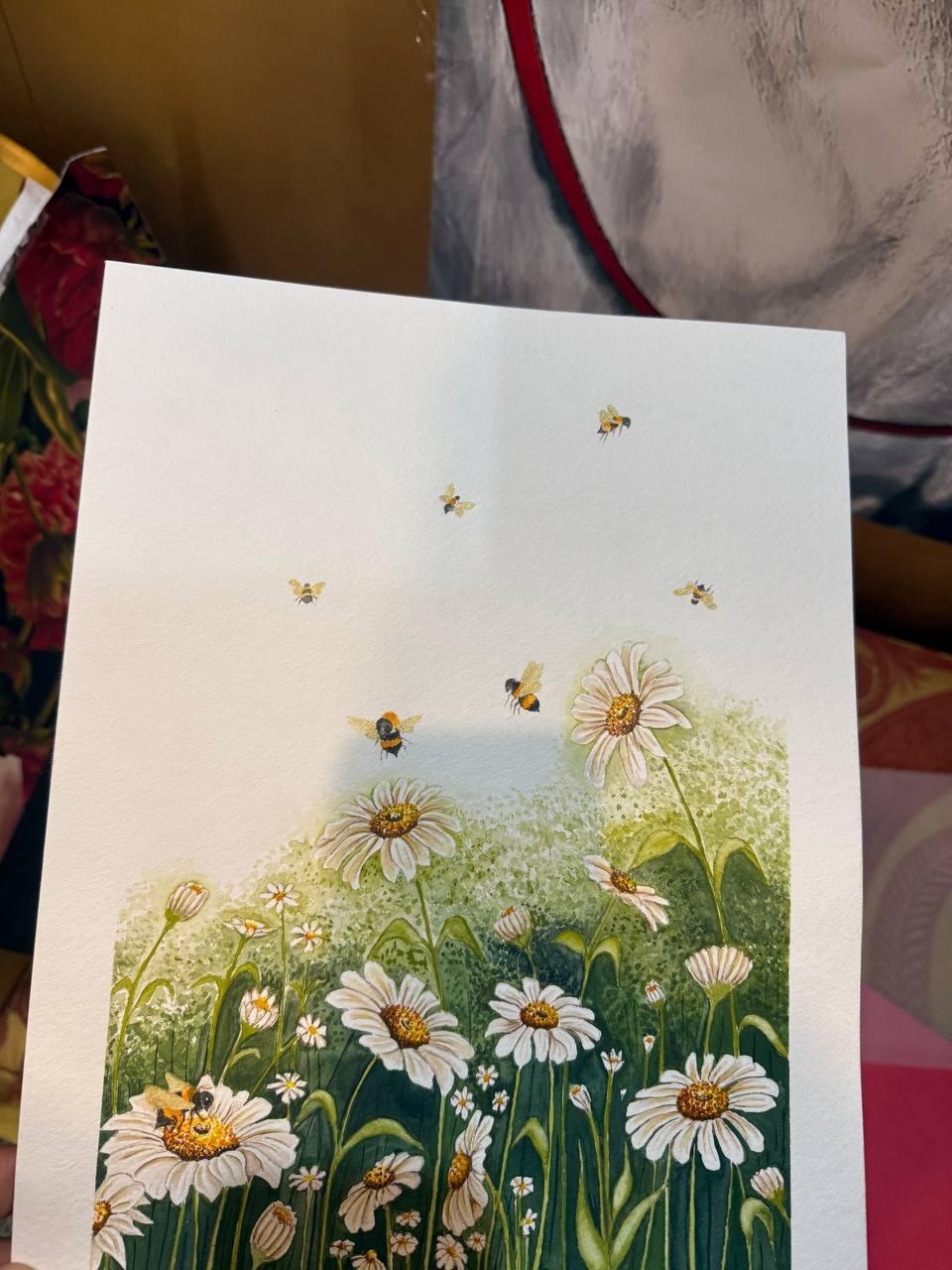
A wall of identical squares is safe and a little boring. The walls people actually love mix a large anchor painting with a few smaller ones around it. Vary the subjects too: a landscape next to an abstract next to a small portrait can work beautifully.
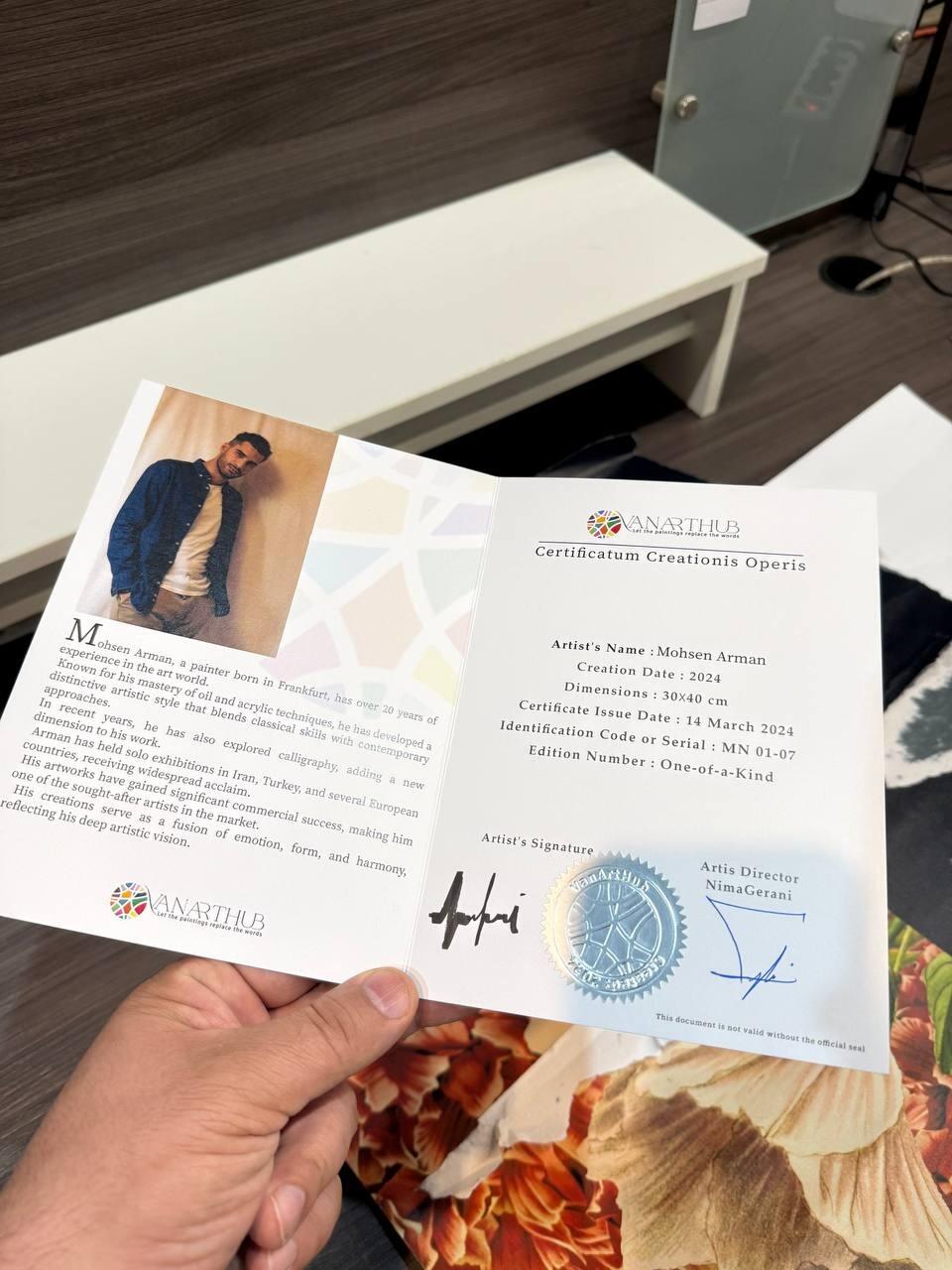
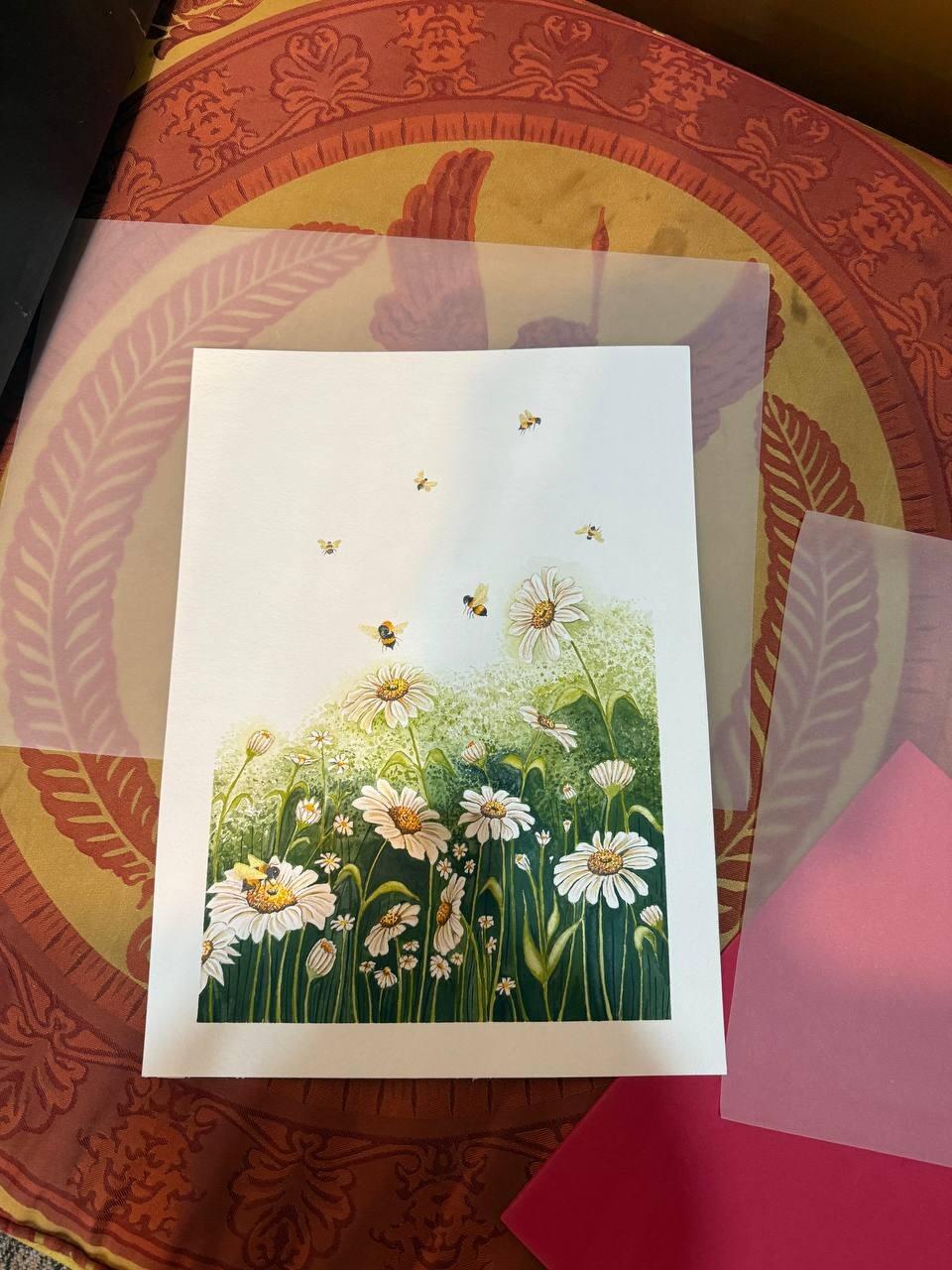
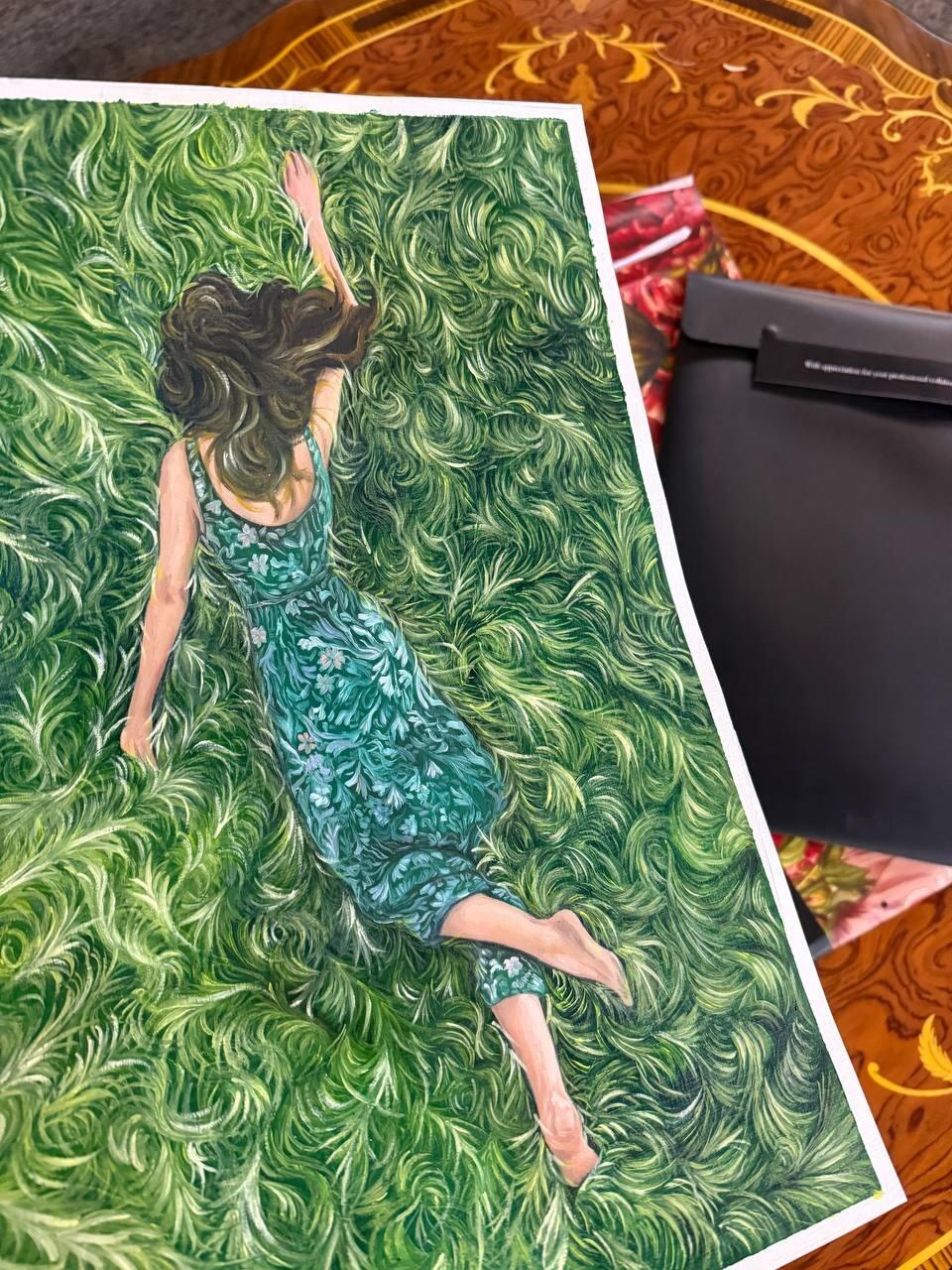
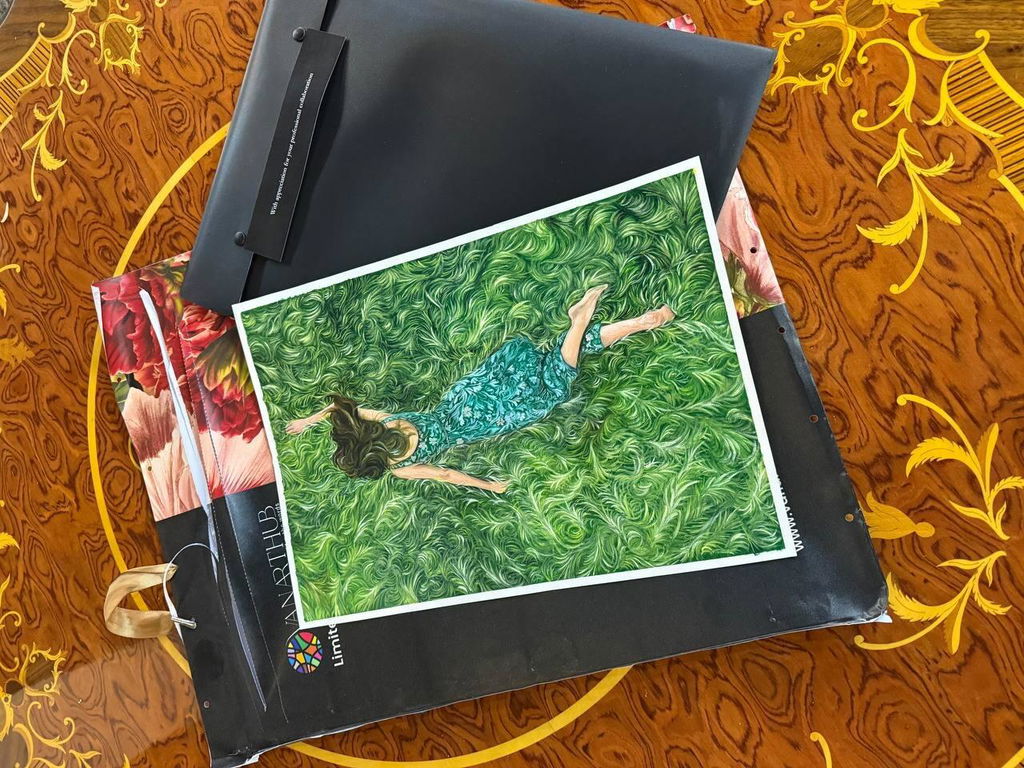
What holds the mix together is a common thread. Pick one thing that repeats. It might be a shared color that appears in each painting, a single medium like oil on canvas throughout, or a frame style you carry across all of them. Because every piece we sell is an original signed painting, the thread is often the artist's own hand: buy two or three works by the same Vancouver painter and they already speak to each other. The rule is simple. Let one thing be constant so the eye has something to hold, and let everything else vary.
Choose a hanging order that has a center of gravity
Groups need an anchor. Start with your largest or most striking painting slightly off true center, then build the smaller pieces outward from it. Balance visual weight rather than counting pieces: one big dark canvas on the left can be balanced by two smaller bright ones on the right.
For the actual hanging order, work from the middle out. Hang the anchor first, get it level, then add its immediate neighbors, checking your spacing at each step. Working outward from the center keeps small measuring errors from piling up at one end, which is what happens when you hang left to right across a long wall.
A short step list
- Gather your paintings and lay them on the floor below the wall.
- Rearrange on the floor until the grouping feels balanced.
- Trace each piece onto paper, cut it out, and tape the shapes to the wall.
- Adjust the paper mockup for even 5 to 8 cm gaps and a center around eye level.
- Mark the hook positions through the paper, then hang the anchor piece first.
- Add each neighbor working outward from the center, leveling and checking spacing as you go.
Key takeaways
- Plan on the floor, then test with paper on the wall before you drill.
- Hold an even gap of about 5 to 8 cm between every frame.
- Center the whole group near 145 to 150 cm, not each painting.
- Mix sizes and subjects, but keep one common thread: color, medium, frame, or artist.
- Hang the anchor first and build outward to keep spacing tight.
A gallery wall is one of the best reasons to buy original work, because every piece is a real object with texture and depth that a print flattens. If you want the paintings to plan around, start with our Vancouver wall art collection, then read our guide to hanging and lighting art so the finished wall looks as good lit as it does laid out. For a room-by-room approach you can also see how we treat a Canadian art hallway. Every VanArtHub painting is an original signed by the artist, ships free and fully insured across Canada in 3 to 7 business days, and comes with a 14-day trial so you can live with the wall before you commit.