How We Frame a Large Canvas So It Hangs Safely
Updated By VanArtHub Curatorial TeamShare
A small frame only has to look right. A large one has to look right and also not fall off the wall, and the second requirement changes almost every decision.
Weight arrives faster than people expect
Glass is the reason. A large glazed frame can easily weigh three times what the artwork inside it weighs, and the weight climbs with area while the strength of a fixing does not.
So the first decision on anything large is usually to move from glass to acrylic. Acrylic is roughly half the weight for the same size and does not shatter, which matters a great deal on a piece hanging above head height. The trade-off is that it scratches easily and can bow slightly across a big span.
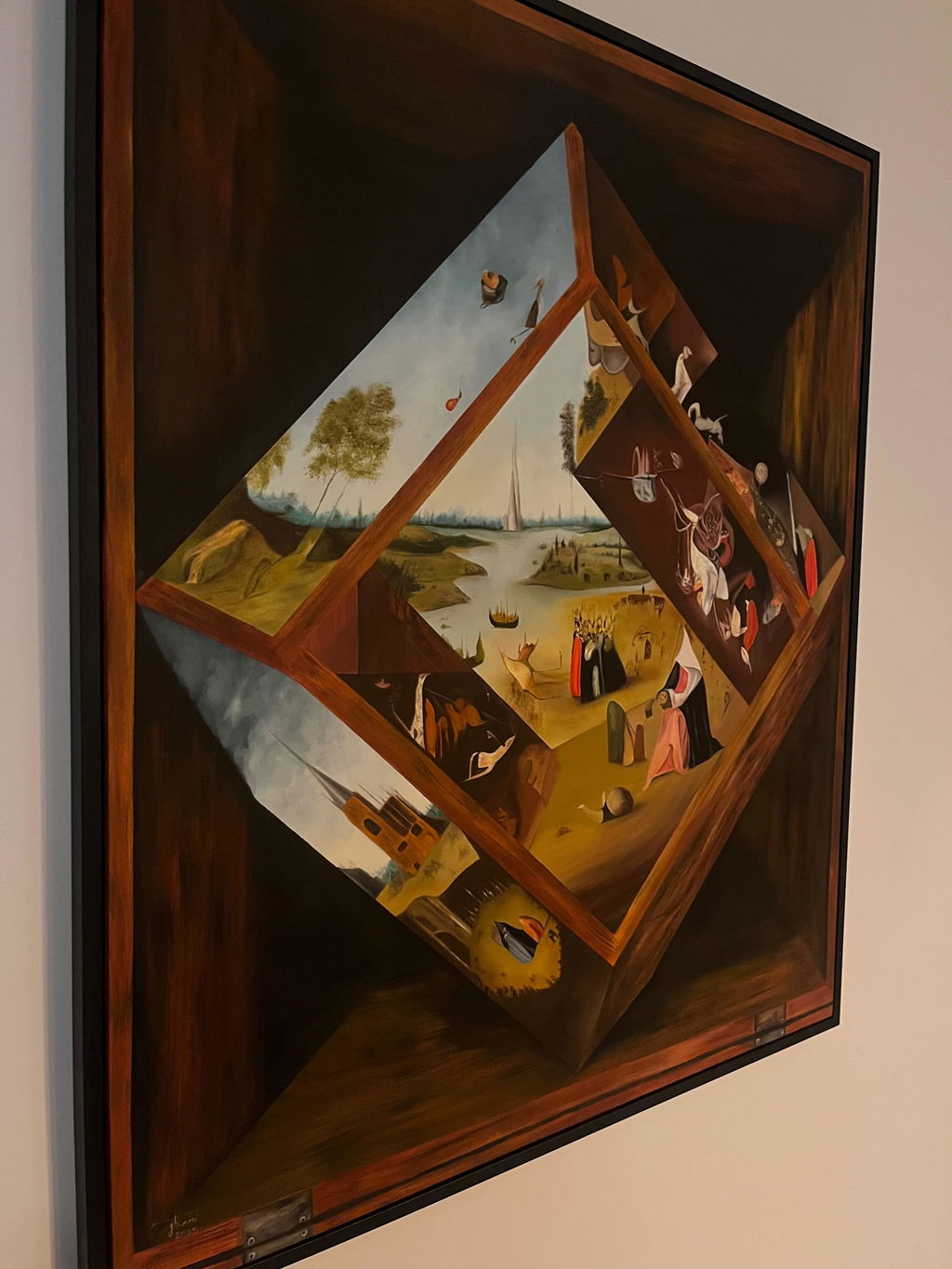
For a canvas the question does not arise, because there is no glazing at all. That is one of the reasons large canvases are more practical than large works on paper.
The frame has to be stiffer, which means deeper
A long length of moulding will bow across a big span if the section is too small. That is why large frames use deeper profiles: not for looks, but so the frame stays straight.
Deeper reads as wider from the front, which is why large work tends to end up in wider frames. It is a structural consequence that happens to look right.
Wood also moves with humidity over a long run, which is one of the arguments for metal on very large pieces. Metal is dimensionally stable and much stronger for its thickness, so you can have a narrower frame carrying more.
Two points, never one
Wire is convenient and it is the first thing to fail on a heavy piece. It stretches over years so the picture slowly drops, it concentrates the whole load at a single hook, and it fatigues where it flexes over that hook, invisibly, until it parts.
Past about 9 kg, skip it. Two D-rings hooked directly onto two wall hooks cannot stretch, holds the piece flat and level, and does not swing.
Past 20 kg, use a cleat
A French cleat is two interlocking bevelled rails, one on the wall and one on the frame. The weight is carried along the entire length of the rail rather than at two points, the piece sits flat against the wall, and it cannot be knocked off its hooks.
This is the correct answer for anything genuinely heavy, anything very wide, and anything in a public or commercial space. It is also what to use for a diptych or triptych, because a single rail keeps every panel on one line.
What is behind the wall decides everything
Drywall alone holds very little. A hook in bare drywall is fine for a couple of kilos and unreliable above that, because the fixing crushes the gypsum around it and works loose.
For anything heavy, find a stud. Studs in most homes here sit at 400 or 600 mm centres. A screw into timber will hold far more than you are likely to hang.
In a Vancouver condo you may well be fixing into concrete, which holds enormous weight once a proper anchor is in. Two warnings: check your strata bylaws, and never drill into a post-tensioned slab without professional advice, because there are tensioned cables inside it.
Older houses here often have plaster over lath. Drill slowly and never hammer, because the plaster keys behind the lath break easily and you can bring down a patch.
Getting it there
A large framed piece in transit is glazed with acrylic as a matter of course, protected at the corners, foam wrapped, packed so it cannot move inside the box, and crated rather than cartoned above a certain size. A broken sheet of glass inside a sealed package does not just mean a replacement pane, it means broken glass moving around against the artwork.
And hang it at the right height
Centre at about 145 to 150 cm from the floor, regardless of ceiling height. Tall ceilings tempt people to hang higher; eye level does not move.
More in framing large art, hanging hardware for framed art, and framing turnaround and shipping.
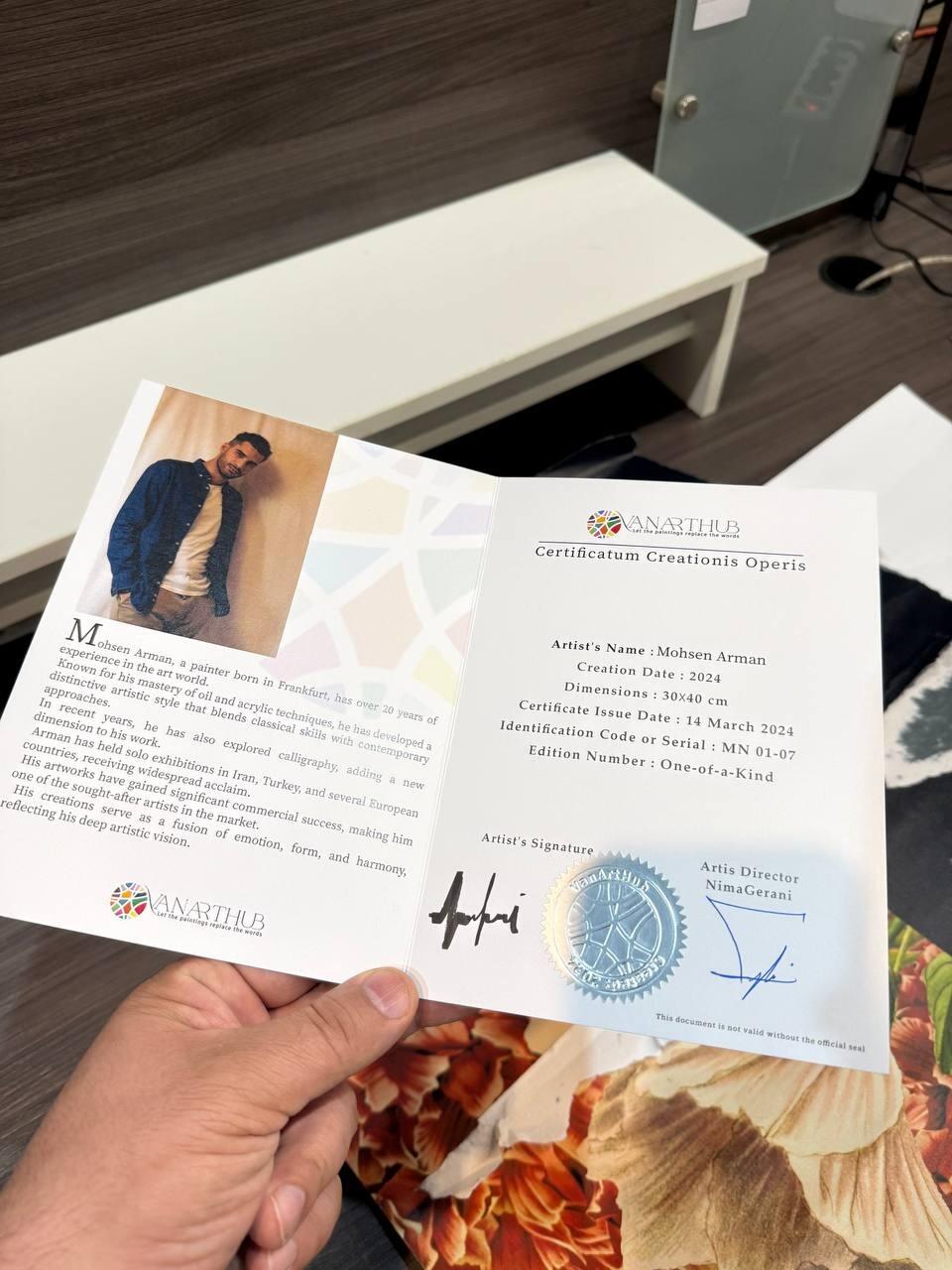
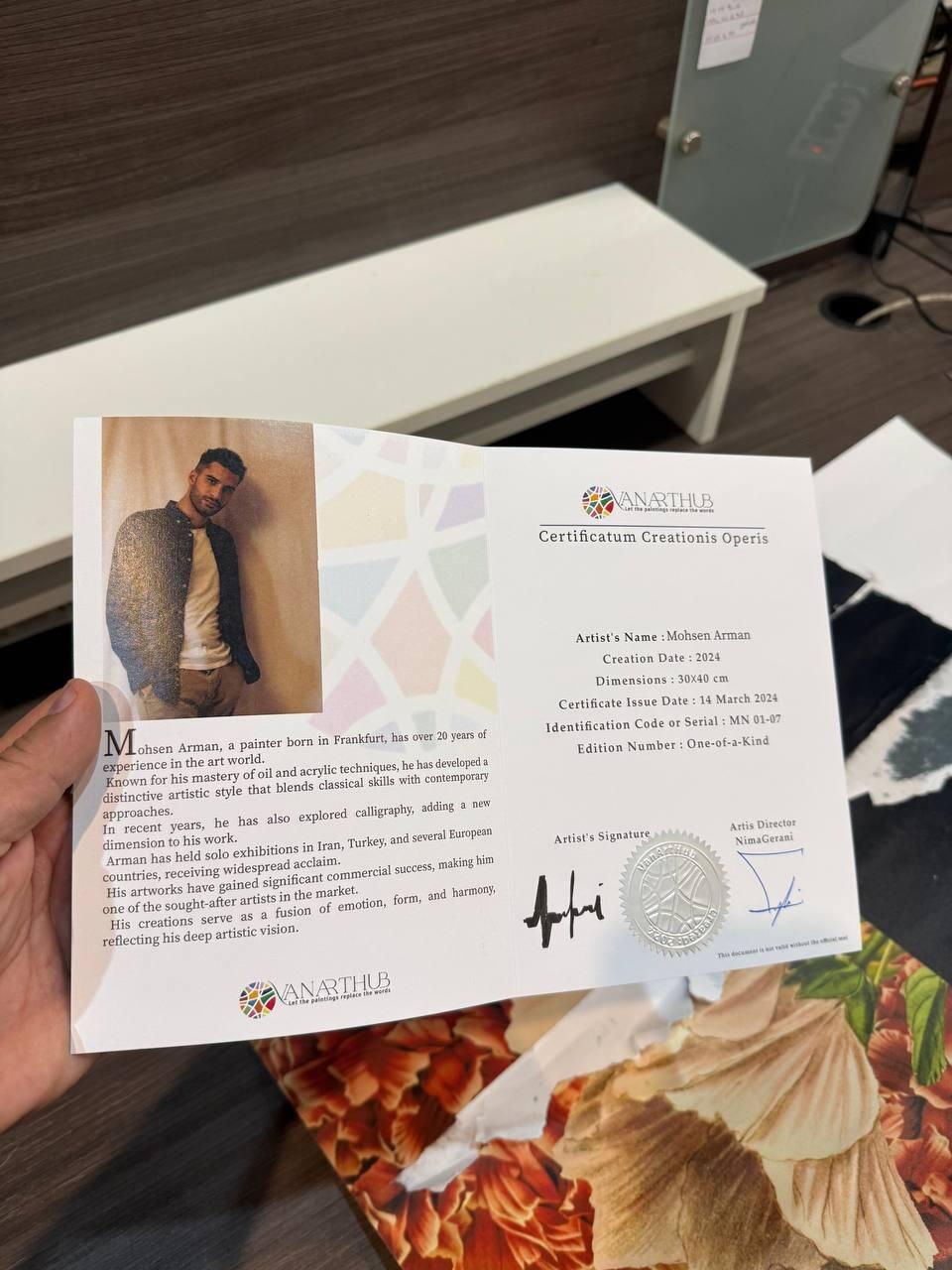
We frame in-house, including pieces well over a metre. Browse large original wall art, or send us the measurements. Every piece is a signed one-of-a-kind original with a Certificate of Authenticity, free insured shipping across Canada and the USA, and a 14-day trial.