What Water Damage Does to a Painting, and What Can Be Saved
Updated By VanArtHub Curatorial TeamShare
A pipe lets go in the ceiling above your living room at two in the morning. By the time you have the water off, the painting on that wall is wet along the bottom third and it looks, honestly, fine. That is the dangerous part. Water damage in a painting is a slow chemical and mechanical event, and the visible result arrives long after the water does.
The first hour is not when the damage shows up
The Canadian Conservation Institute puts a specific warning on this. The effects of water contact with a painting may take minutes to hours to develop, so a work that looks unharmed immediately after a leak is not evidence that the work escaped. It is evidence that you are looking at it too early.
Underneath, a painting on canvas is a stack of materials that absorb water at different speeds. The canvas fibres take it up fastest. The ground layer, the white preparation under the paint, takes it up next. The paint film barely absorbs at all. Three layers glued together are now changing size independently.
That is why the CCI's instruction is to contact a conservator as soon as possible rather than to wait and see. The useful window is measured in hours and days.
Why simple air drying is usually the wrong answer
Most people's plan is to stand the painting somewhere warm and let it dry. The CCI states directly that simple air drying of a water-damaged painting is often not suitable, because the layers of the painting react at different rates and flaking and loss of paint are likely to occur.
Think about what drying does. The canvas swelled the most, so it contracts the most, and fastest. The paint film on top does not shrink at the same rate. The canvas pulls out from underneath the paint, and the paint has nowhere to go except up and off.
Heat makes every part of this worse and faster. No hairdryer, no heat gun, no space heater aimed at the canvas, no radiator, no sun. Heat compresses two days of failure into ten minutes.
What a wet canvas actually does to itself
The mechanical outcome is the one that ends paintings. Wet canvas can shrink dramatically, and the CCI describes the result plainly: this can cause the paint and ground layers to crack, buckle and flake off. A canvas that shrinks even a small percentage against a fixed wooden stretcher generates enormous force across the whole surface.
If the painting is on a wooden panel instead of canvas, the failure mode is different. Wood supports swell and warp when they take up water, and because a panel is usually painted on one side only, it absorbs unevenly and bows. The paint on the convex face is then stretched over a curve it was never applied to.
The frame matters too. A wet wooden frame swells and grips the painting harder than before, which is a second source of pressure at exactly the wrong moment.
The named defects a conservator will look for
Condition reports use specific words, and knowing them helps you read what you are being told. The CCI condition glossary defines several that show up after water exposure.
Blanching is a whitish, dull, cloudy appearance in the surface. Bloom is a white or bluish haze in a coating such as varnish. Blistering is the paint lifting into small raised bubbles. Cupping is where the paint between cracks curls up at the edges, so the surface reads like tiny tiles.
Blind cleavage is the one to worry about. It is a separation between layers that is invisible from the front, so the paint is no longer attached and nothing on the surface tells you. If your conservator uses that phrase, take the estimate seriously. That painting will shed paint the next time it is moved.
What causes this in real homes
The CCI names the common sources, and they are unglamorous: burst pipes, flooding, sewer backup, and water used to fight a fire. Not one of them is a rare event, and three of the four bring dirty water rather than clean.
That distinction matters. Flood water and sewer backup add contamination, and firefighting water often carries soot. A painting soaked in dirty water needs treatment for the contamination as well as the swelling.
A second clock runs after any water event. Mould is encouraged once relative humidity passes roughly 70 to 75 percent, and a room that has just taken on water sits far above that for days. So a painting that survived the wetting can still grow mould that week. Dry the room aggressively. Let someone trained decide how to dry the painting.
What to do in the first hour, in order
This is the part to remember, because you will be doing it while stressed and probably at night.
| Step | What to do | Why |
|---|---|---|
| 1 | Stop the water and cut power to the room if water reached any outlet | Your safety comes before the painting, every time |
| 2 | Photograph the painting where it is, then again after you move it | Insurers want the scene, and the before and after set decides the claim |
| 3 | Move it face up and flat, off the floor, with nothing touching the paint surface | Hanging or leaning lets water run down through the layers |
| 4 | Call a paintings conservator, that day | The CCI says as soon as possible, and the useful window is hours |
| 5 | Dry the room, not the painting | Fans and a dehumidifier in the room lower mould risk without forcing the layers |
| 6 | Do not blot, wipe, or press the surface | Wet paint film is soft, and a cloth lifts it |
Point six is the one people break. The instinct to pat something dry with a towel is very strong, and it is the fastest way to remove paint from a wet painting.
Insurance, and the photographs that decide your claim
The difference between a paid claim and a disputed one is almost always documentation you created before you needed it.
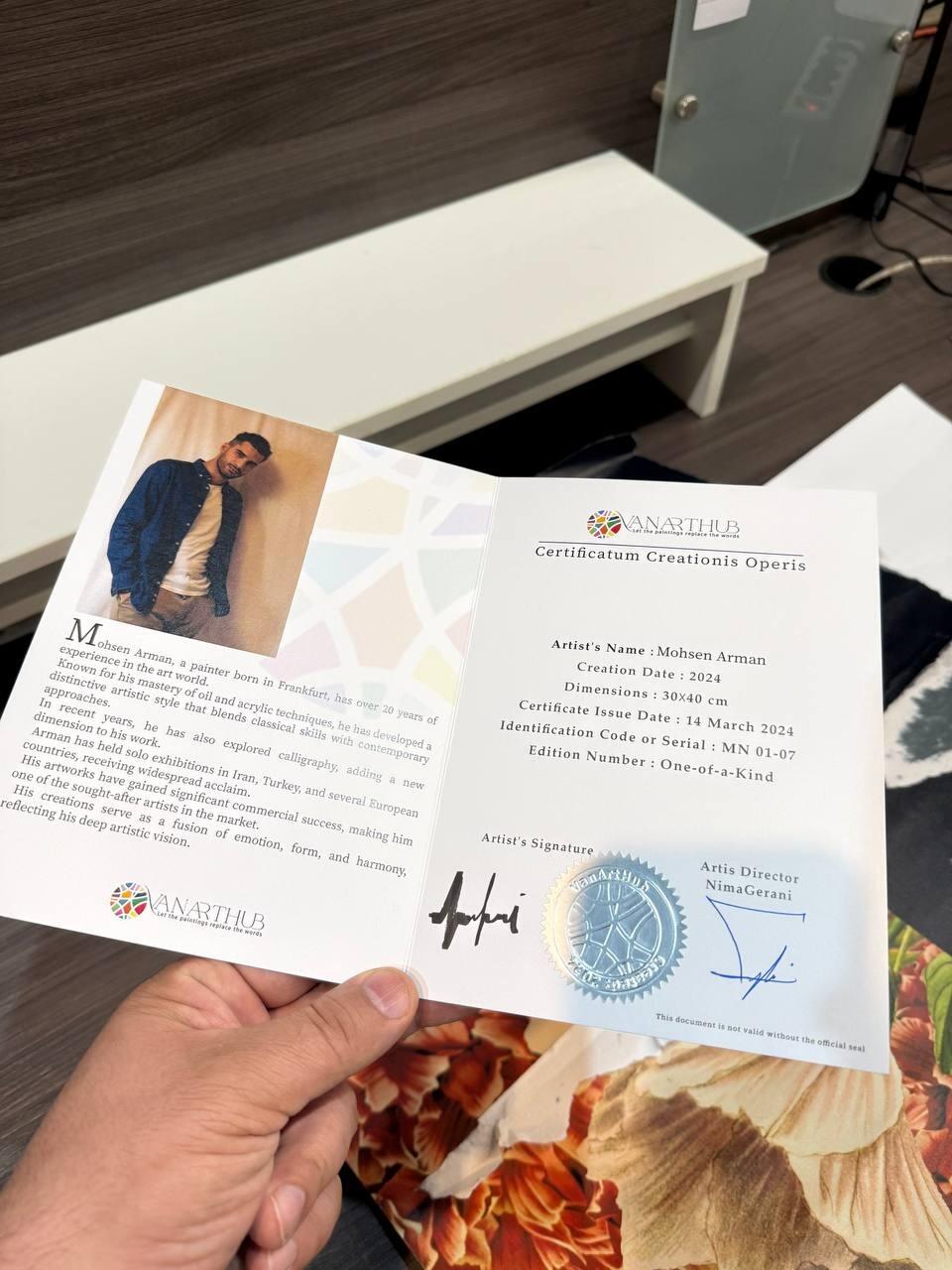
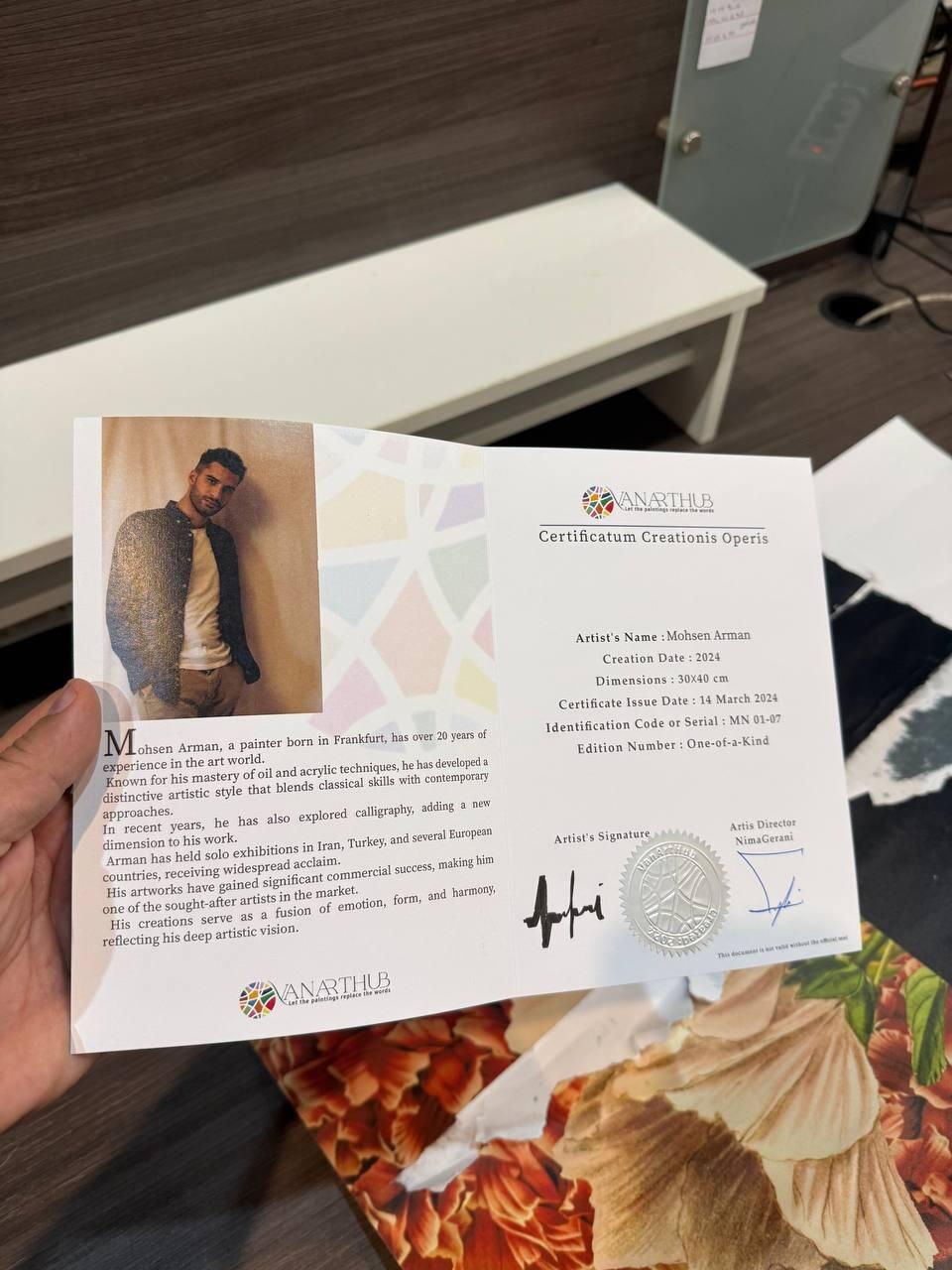
Photograph every painting you own now, front and back, in daylight, with the Certificate of Authenticity in one of the shots. Keep the invoice and the exact dimensions, stored somewhere other than the house the painting is in. Our guide to insuring an original painting covers the rest, and the water case is where that file earns its keep.
After the event, keep the conservator's condition report and the treatment estimate. Even where the painting is fully restorable, most policies will consider a loss in value claim for the difference between what it was worth before and after treatment, and that argument needs a professional document behind it.
Where we admit the limits of what we can do
We are a gallery. We are not a conservation lab, and we do not treat water-damaged paintings. If a piece you bought from us gets wet, we will help you find a conservator in your city and we will send you the full catalogue record for the work, which the conservator and the insurer will both want. That is where our usefulness ends.
We will also say the uncomfortable thing. Some water-damaged paintings are not economically worth treating. Conservation is skilled hand labour charged by the hour, and on a modestly priced work the treatment can cost more than the painting did. Get the estimate, look at it honestly, and decide whether this is a piece you love enough to spend that on.
Prevention costs nothing. Do not hang paintings on a wall directly below a bathroom, laundry, or kitchen, and avoid basement walls. If your building has leaked once, assume it will again.
Key Takeaways
- Water damage takes minutes to hours to appear, so a painting that looks fine right after a leak has not been cleared.
- Call a paintings conservator the same day. The CCI's instruction is as soon as possible.
- Never dry a wet painting with heat, a hairdryer, or the sun. Simple air drying alone is often not suitable either.
- Wet canvas can shrink dramatically, which cracks, buckles, and flakes the paint and ground off the front.
- Do not blot or wipe the paint surface. Wet paint film is soft and a cloth will lift it.
- Photograph everything before and after you move it, and keep the conservator's report for the insurance claim.
Frequently Asked Questions
My painting got wet but it looks completely fine. Do I still need to do anything?
Yes, call a conservator. The Canadian Conservation Institute warns that the effects of water contact may take minutes to hours to develop, so a painting that looks undamaged in the first moments is simply being examined too early. The swelling and shrinking that cracks paint happens over the following hours.
Can I dry a wet painting with a hairdryer or a fan?
No. Never apply heat, and do not aim a fan at the surface. The CCI states that simple air drying is often not suitable because the layers react at different rates, making flaking and paint loss likely. Dry the room instead, with fans and a dehumidifier working on the air rather than the painting.
What does water actually do to a canvas painting?
Wet canvas can shrink dramatically as it dries, which causes the paint and ground layers on top of it to crack, buckle and flake off. The canvas, ground, and paint all absorb and release water at different rates while glued to each other. That mismatch is the whole mechanism.
Is a painting on wood panel safer than one on canvas?
It fails differently rather than less. Wood supports swell and warp when they take up water, and because a panel is usually painted on one face only it absorbs unevenly and bows. The paint is then stretched over a curve it was never applied to.
How quickly can mould start after a flood?
Fast, because a room that has taken on water sits well above the mould threshold for days. Mould growth is encouraged once relative humidity passes roughly 70 to 75 percent. Getting the room's humidity back down is the most useful thing you can do while you wait for the conservator.
What is blind cleavage and why does my conservator keep saying it?
It is a separation between paint layers that cannot be seen from the front of the painting. The paint is no longer attached to what is under it, and nothing about the surface reveals it. That invisibility is why it is serious: the paint will come away the next time the work is handled.
Will my home insurance cover this?
It depends on the cause and your policy, and that is a question for your broker rather than us. Sudden events like a burst pipe are commonly covered, while gradual seepage often is not. The claim goes far better if you already have dated photographs, the invoice, and the Certificate of Authenticity on file.
Is it always worth restoring a water-damaged painting?
No, and we would rather say that plainly. Conservation is skilled hand labour billed by the hour, and on a modestly priced work the treatment can cost more than the painting. Get the written estimate, then decide whether this is a piece you love enough to spend that on.
What does the Certificate of Authenticity cover?
It records the artist, title, year, medium, and dimensions of your specific piece, signed by us as the gallery that sold it. Every original we ship carries one. It is the document you will want if you ever insure, donate, or resell the work.
Sources
- Canadian Conservation Institute, Emergency Treatment of Water-damaged Paintings on Canvas (CCI Notes 10/5)
- Canadian Conservation Institute, Condition Reporting, Paintings Part III: Glossary (CCI Notes 10/11)
- Canadian Conservation Institute, Environmental Guidelines for Paintings (CCI Notes 10/4)
Sources checked 1 September 2026. If you spot something out of date, tell us and we will update the guide.
About VanArtHub
VanArtHub is an online gallery in Vancouver selling original, signed, one-of-a-kind paintings by independent artists. No prints and no reproductions. Every piece ships with a Certificate of Authenticity, free fully insured delivery to Canada and the USA, and a 14-day trial so you can decide at home. If you are rebuilding a collection after a loss, browse every available original, see what is under $1,000, or read our guide to caring for original paintings. Our full policy lives on the Buy with Confidence page.