Most frames look fine on the day you collect them. The difference between framers shows years later, so ask about the parts you cannot see: the board, the mount and the glazing.
Most frames look good on the day you collect them. The difference between a careful framer and a careless one shows years later, as a brown line on the paper, a faded signature or a sheet that has buckled. By then the cause is hidden behind the backing. The way to compare framers is to ask about the parts you will never see. These seven questions work in any framing shop.
1. What are the mat and the backing made of?
A mat is the border of card around a picture, and the backing is the board behind it. Both touch the piece for as long as it is framed. Ordinary card turns acidic with age and stains paper brown where it touches. Acid-free board is made so that it stays neutral.
A good answer names the board and says it is acid-free. An answer such as "standard board" is a reason to ask more. Our guide to acid-free mats and backing shows what the damage looks like.
2. How will my piece be attached?
For paper, the careful method is hinging: small tabs of thin paper hold the sheet at its top edge, and the rest of the sheet hangs free. For fabric, it is hand stitching to a padded board. For an object, it is a support shaped to the object. All three can be undone.
The methods to question are glue across the back, ordinary sticky tape, and dry mounting, which bonds the piece to a board with heat and adhesive. Dry mounting has one reasonable use: a poster you could buy again tomorrow stays flatter that way. It should happen only when you have agreed to it. Our guide to framing works on paper explains hinging.
An original drawing is a piece where the answer matters, because glue or dry mounting would be permanent. The Quiet Collapse is a coloured pencil drawing on artboard from our gallery, 30 by 40 cm, of a figure with one arm raised across the face.
3. What glazing do you offer, and which would you use here?
Glazing is the sheet of glass or acrylic at the front of the frame. A shop should be able to offer plain glass, glass with a UV filter (which removes the part of light that fades colour), glass with an anti-reflective coating, and acrylic, which is lighter and does not shatter.
Listen for the second half of the answer. A good framer asks where the piece will hang before recommending one, because the light on that wall decides it. Also ask what keeps the glazing off the surface. The answer should be a mat or a spacer, a thin strip hidden under the frame edge. See acrylic and glass compared.
4. Is the work done on the premises?
Some shops frame in their own workshop. Others take the order at a counter and send the piece to a workshop somewhere else. Both can produce good work. The difference is handling: a piece that travels is packed, driven, unpacked and driven back.
If the work is sent out, ask who is responsible for the piece while it is away, and whether you can speak to the person doing the work if a question comes up.
5. Can everything be undone later?
Framers call this being reversible. It means a future framer can open the frame and take your piece out in the condition it went in. Ask directly: "If I want a different frame in the future, what will the next framer find when they open this one?" The answer you want is hinges, stitches or shaped supports, and no glue on the piece.
This matters most for anything you cannot replace: an original, a signed item, a family document. Our conservation framing standards list the methods we use on every piece.
6. How is the quote built?
A clear quote lists its parts: the moulding (the shaped length of wood or metal the frame is cut from), the glazing, the mat, the mount and the labour. With the parts listed, you can ask what happens to the total if you change one of them.
A figure given before the framer has seen or measured the piece is an estimate. Treat it as one, and ask for the quote itself once the piece is on the counter. Our page on custom framing cost explains what moves each part.
7. Can I see the samples against my piece?
A frame should be chosen with corner samples of the moulding and pieces of mat board laid on the actual work, in good light. A colour that looks right on a wall of samples can look wrong beside your picture. A framer who brings the samples to the piece, and who suggests a plainer choice when a plainer choice looks better, is showing you how they work.
Colour is the reason samples belong on the piece itself. Veil of Perception, an oil on canvas, 50 by 70 cm, shows a pale face in profile against bright green, and a frame finish that looks right on a sample wall can look different beside that green.
Custom framing with careful materials is the right choice for originals, signed pieces and anything with personal meaning. A poster you can replace, in a size that fits a ready-made frame, can go in one, and an honest framer will tell you so. Our guide to standard and custom frame sizes explains when a ready-made frame fits and when it does not.
How we answer
At our own workshop the work is done in-house, the board is acid-free, paper is hinged at the top edge, and no glue goes on an object. The custom framing page explains this, and our guide on what to bring to a framing appointment helps you prepare for a visit to any framer.
Common questions
What should I ask a picture framer before leaving my artwork?
Before leaving your artwork with a picture framer, ask what the mat and backing are made of, how the piece will be attached, which glazing they would use and why, whether the work is done on the premises, whether everything can be undone later, and how the quote is built. Ask as well to see samples against your piece. Clear answers tell you how the shop works.
How can I tell if a framer uses acid-free materials?
You can tell that a framer uses acid-free materials by asking them to name the mat board and backing board and to show you a sample. A framer who uses acid-free board will say so without hesitation. On a finished frame, you cannot check from the front, which is why the question has to be asked before the work is done.
Does it matter if a framing shop sends work out to another workshop?
Sending work out to another workshop matters mainly because of handling. A framing shop that sends work out to another workshop adds packing and transport in both directions, and each trip is a moment when damage can happen. Good work can still come back. Ask who is responsible for the piece while it is away and whether your questions can reach the person doing the framing.
What makes one framer's quote higher than another's for the same picture?
One framer's quote is higher than another's for the same picture when the materials or the labour differ. UV or anti-reflective glazing costs more than plain glass, acid-free board costs more than ordinary card, and hinging takes longer than gluing. Ask each framer to list the parts of the quote, then compare the two lists part by part.
Should a framer ever glue artwork to a board?
A framer should glue artwork to a board only when the piece is replaceable and you have agreed to it. Gluing, including dry mounting with heat, is permanent. It keeps a low-cost poster flat, and it removes the worth of an original or a signed print to collectors. For anything you cannot replace, ask for hinges.
Do I need a conservation framer for an ordinary family photograph?
An ordinary family photograph needs conservation materials when it is the only copy. A print that cannot be made again should have acid-free backing and UV glazing, because photographs fade and stain easily. If you hold the digital file or the negative and can print it again, a simpler frame is a reasonable choice for that copy.
10% off your custom framing when you show this code at our shop
We frame, stretch canvas and reframe by hand, in our own workshop inside the gallery at
1242 Davie Street. Enter your email and your code appears right here. Show it at the
counter and we take 10% off the job. The code does not expire.
Choosing a selection results in a full page refresh.
Opens in a new window.
In-shop offer · 1242 Davie Street, Vancouver
Get 10% off your framing at our shop
Add your name and email and your code appears on the next screen. Show it at the counter
and we take 10% off any framing, stretching or reframing job you bring us. It does not
expire.
Exceptional Service and a Truly Memorable Art Purchase
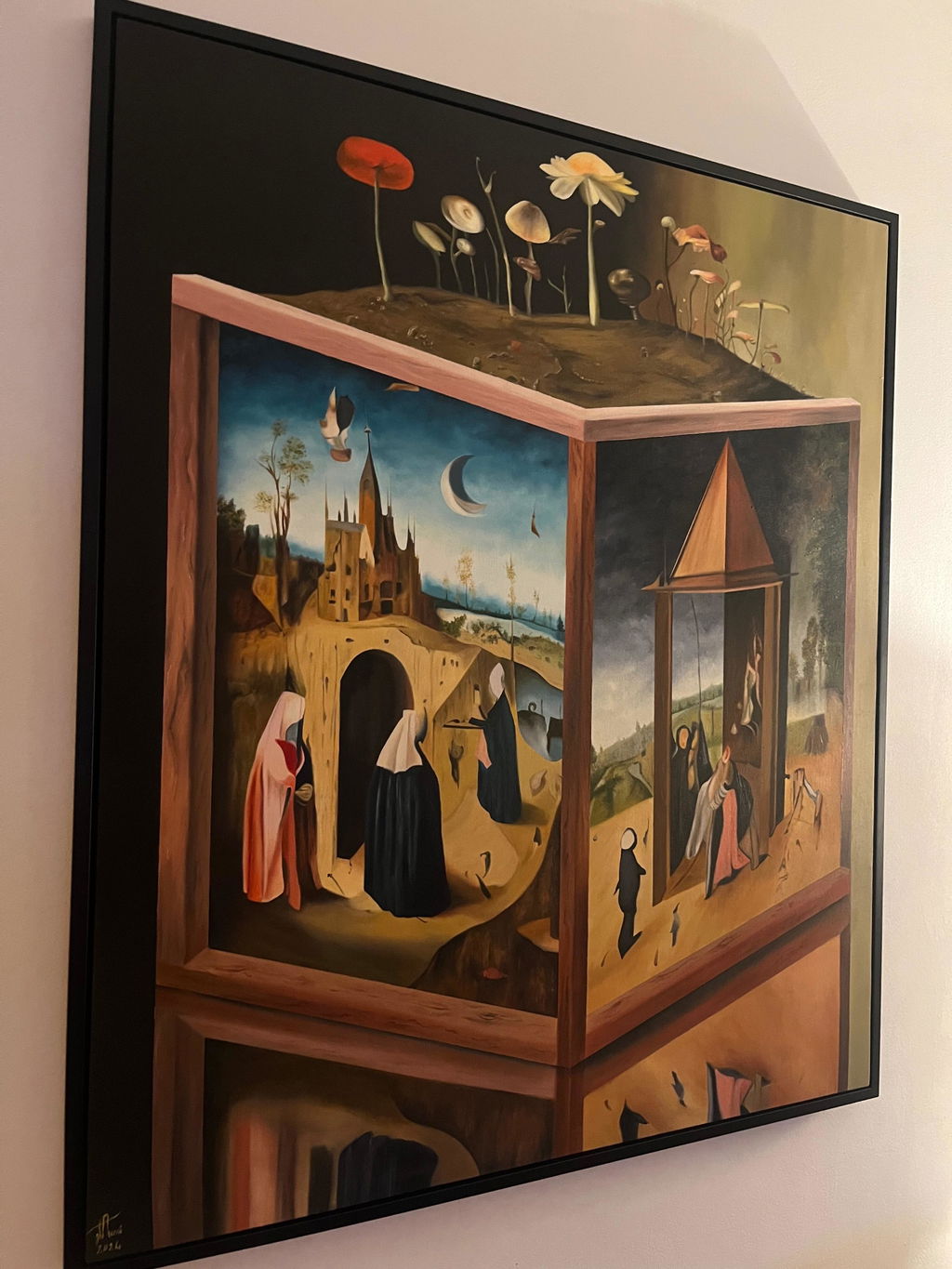
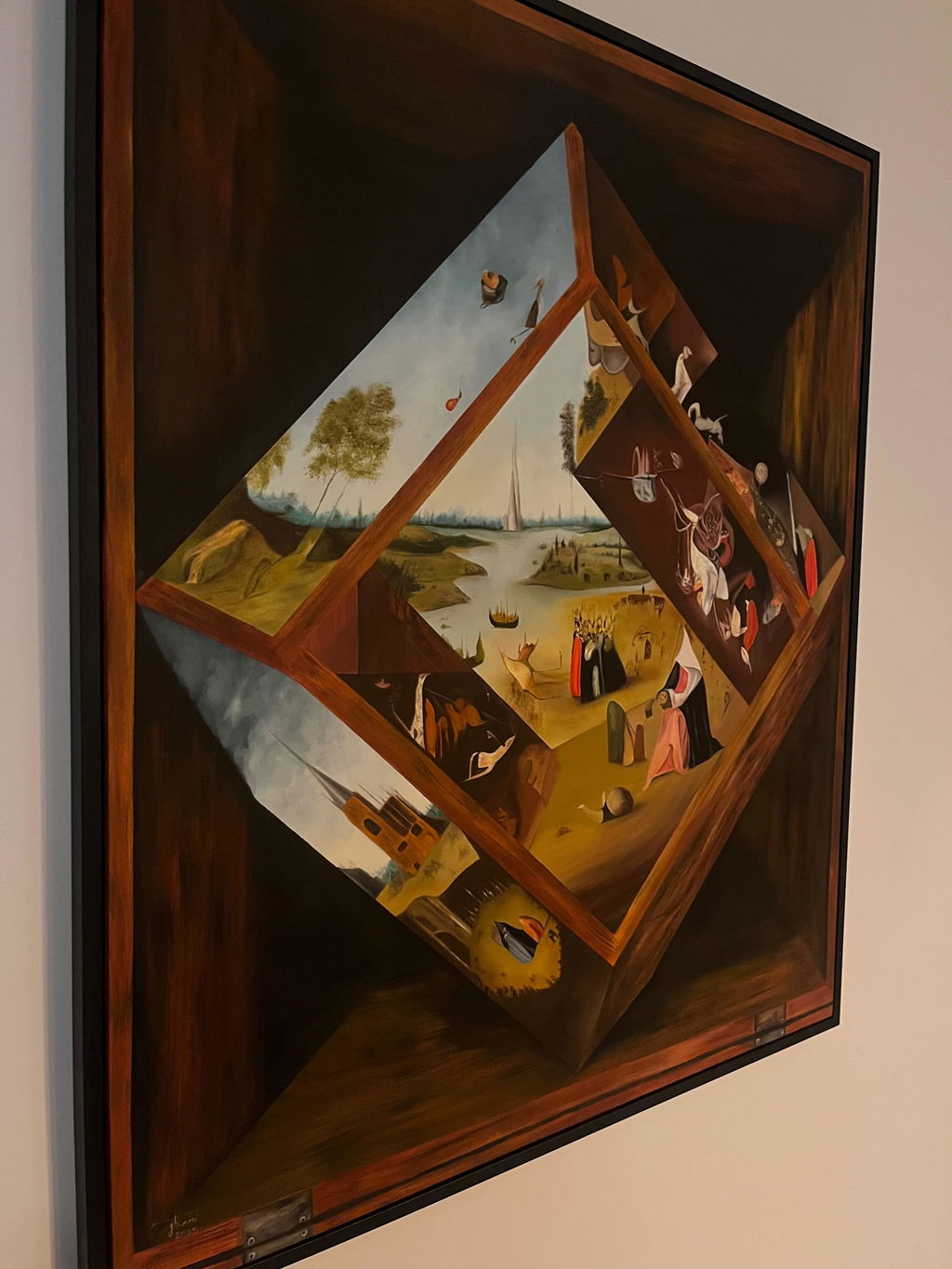
I had a wonderful experience with Van Art Hub Gallery. I came across two pieces by Melina Ghaemi — *Mad Mirrors* and *Small World in the Hands of a Stranger* — and immediately fell in love with them.
I contacted Van Art Hub Gallery, and they were incredibly helpful throughout the entire process, from arranging the payment to organizing the shipping. At first, I was a little skeptical and nervous about how everything would work, especially since the paintings were still in Iran and it was shortly after the war. But the gallery handled everything with such professionalism and care that my concerns quickly disappeared. Amazingly, they were able to get the paintings to Canada in just two days!
The pieces are absolutely captivating. Even when I picked them up from the frame maker and was simply carrying them to my car, several people stopped and asked me about the paintings. That says a lot about how striking and special Melina Ghaemi’s work is.
A big thank you to Van Art Hub Gallery for making this experience so smooth and enjoyable. I truly appreciated their professionalism, communication, honesty, and integrity throughout the entire process. I would happily work with them again and highly recommend them to anyone interested in purchasing art through the gallery.
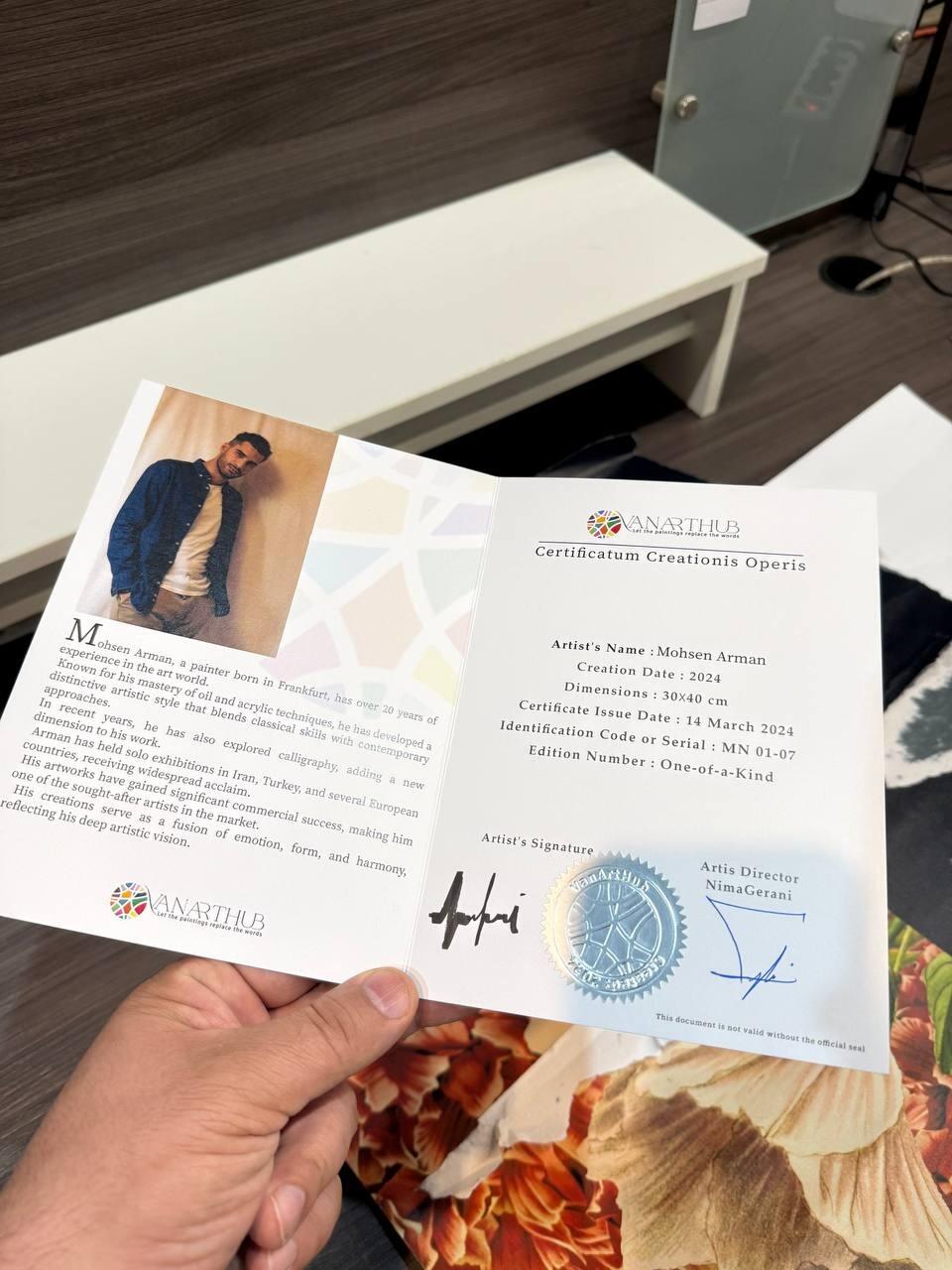
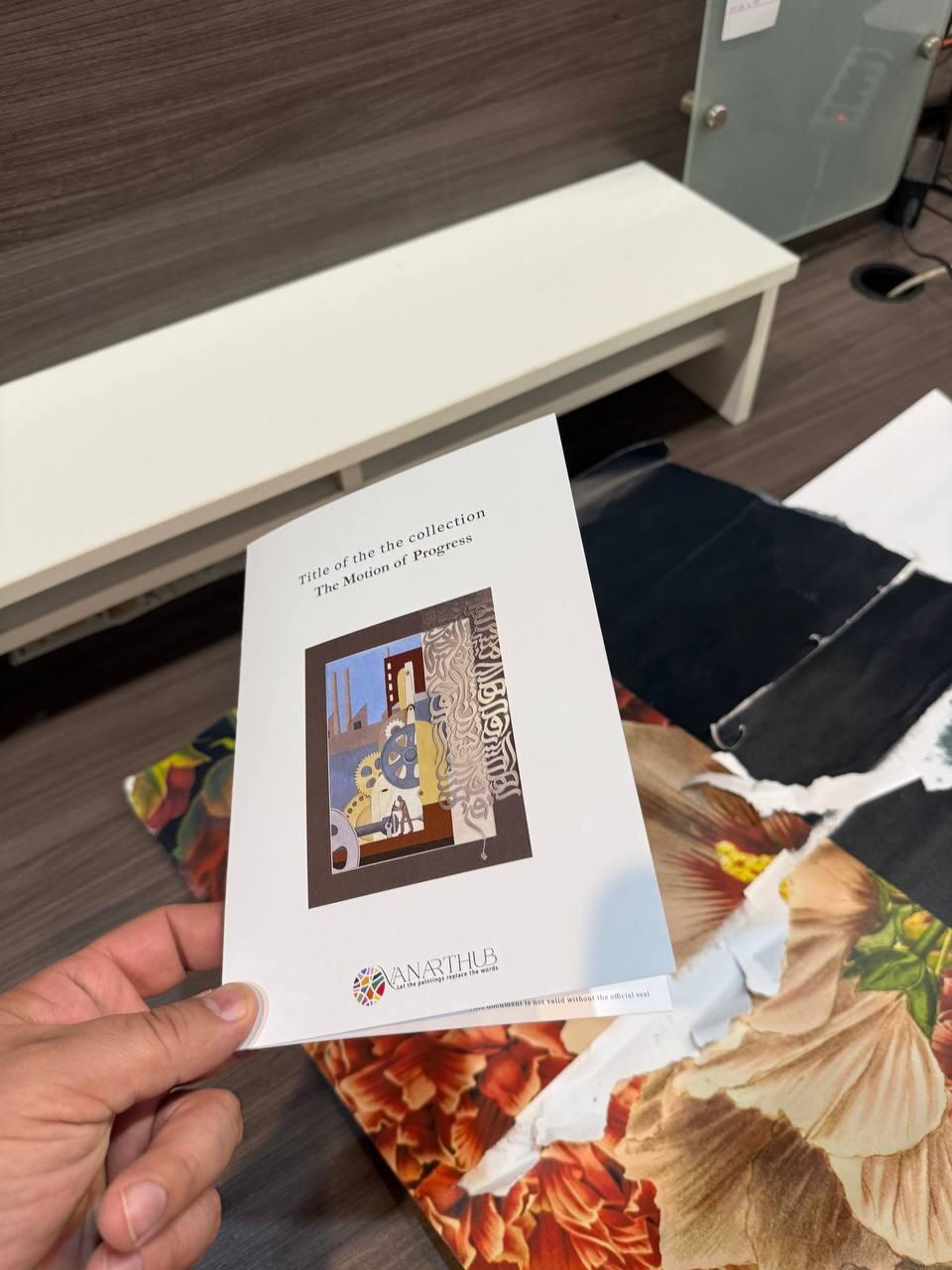
I got my order today and your work is really good. I didn’t expect to get a certificate for this painting, it was a surprise. Thanks for caring about small details.
The support team was really helpful and followed up nicely, wich I really appreciated. The painting is just like the photo – great quality and very detalied. I just wish it arrived a bit sooner, but honestly it was worth the wait.
I received my painting today. The support team was great and very responsive. The artwork is exactly what I was hoping for – even more beautifull in person. Truly a valuable piece. I’ll definetely order again. Thank you!