A traditional room already has a lot of edges. Cornices, skirting, panelled doors, picture rails, patterned textiles. A frame that would look substantial on a bare white wall can vanish into all that detail.
So traditional interiors generally need more frame, not less. The real risk in a traditional room is a frame too light for its surroundings, where the picture reads as a small pale rectangle lost among the mouldings.
What traditional rooms ask for
Width
A wider moulding, often 40 mm and up. Enough to hold its own against the architectural detail in the room.
Depth and shadow
Traditional profiles have relief: a scoop, a cap, a cassetta with a raised lip. That relief catches light and casts small shadows, which is what gives a frame presence in a room lit by lamps rather than by a wall of glass. A flat profile in a traditional room can look like a sample rather than a frame. See frame profiles explained.
Warmth
Traditional interiors run warm: wood floors, warm whites, brass, textiles. Cool frames fight that. Walnut, warm oak, antique gold, and dark warm-toned finishes all sit comfortably. Brushed silver and cool black often do not.
Gold, used properly
This is the interior style where gilding genuinely belongs, and where it is most often done badly.
The rule is the same as everywhere: use gold when there is already warmth or gold in the painting. A piece worked in oil and gold, like Siyavash Passing Through the Fire, is asking for it. A cool grey abstract is not, and putting it in a gilded frame because the room is traditional makes the frame look like a costume the painting is wearing.
Prefer toned-back, antique golds over bright gilt. Bright leaf is hard to live with and it is what makes gold frames look like reproductions. See gold and ornate frames.
Mats in traditional rooms
Generous, and usually warm rather than cool. A bright white mat in a warm room reads as a hole punched through it. Cream, bone, or a soft warm off-white all sit better.
This is also the setting where a double mat or a fillet earns its place. The extra line adds refinement and it matches the general level of detail elsewhere in the room. See double mats and fillets.
The trap: theming
The failure mode of traditional framing is that the room stops looking traditional and starts looking like a set. It happens when every frame is ornate, every mat is cream, and every picture is period.
The fix is contrast. One or two contemporary pieces in plain frames, among the traditional work, keeps a room feeling like it belongs to someone rather than to a decade. Traditional rooms are extremely good at absorbing modern art; it is one of the reasons the combination is so common in older houses that are actually lived in.
Picture rails
If the room has one, use it. Hanging from a rail on cord or chain is period-correct, avoids putting holes in old plaster, and lets you move pictures without redecorating.
Two practical points. Keep the cords vertical and parallel rather than splayed into a V, which is a Victorian look that reads as fussy now. And check the rail is actually fixed into something structural before hanging anything heavy from it; in old houses that is not a safe assumption. See hanging hardware for framed art.
Lighting
Traditional rooms are usually lit by lamps, which means low, warm, uneven light. That flatters warm frames and gilding, which is not an accident: these frames were designed for candle and lamp light and they do their best work in it.
It also means glare behaves differently. A single lamp opposite a glazed picture produces one bright hot spot rather than the broad reflection you get from a window. Moving the lamp is often the whole solution.
Modernizing a traditional room with one contemporary piece
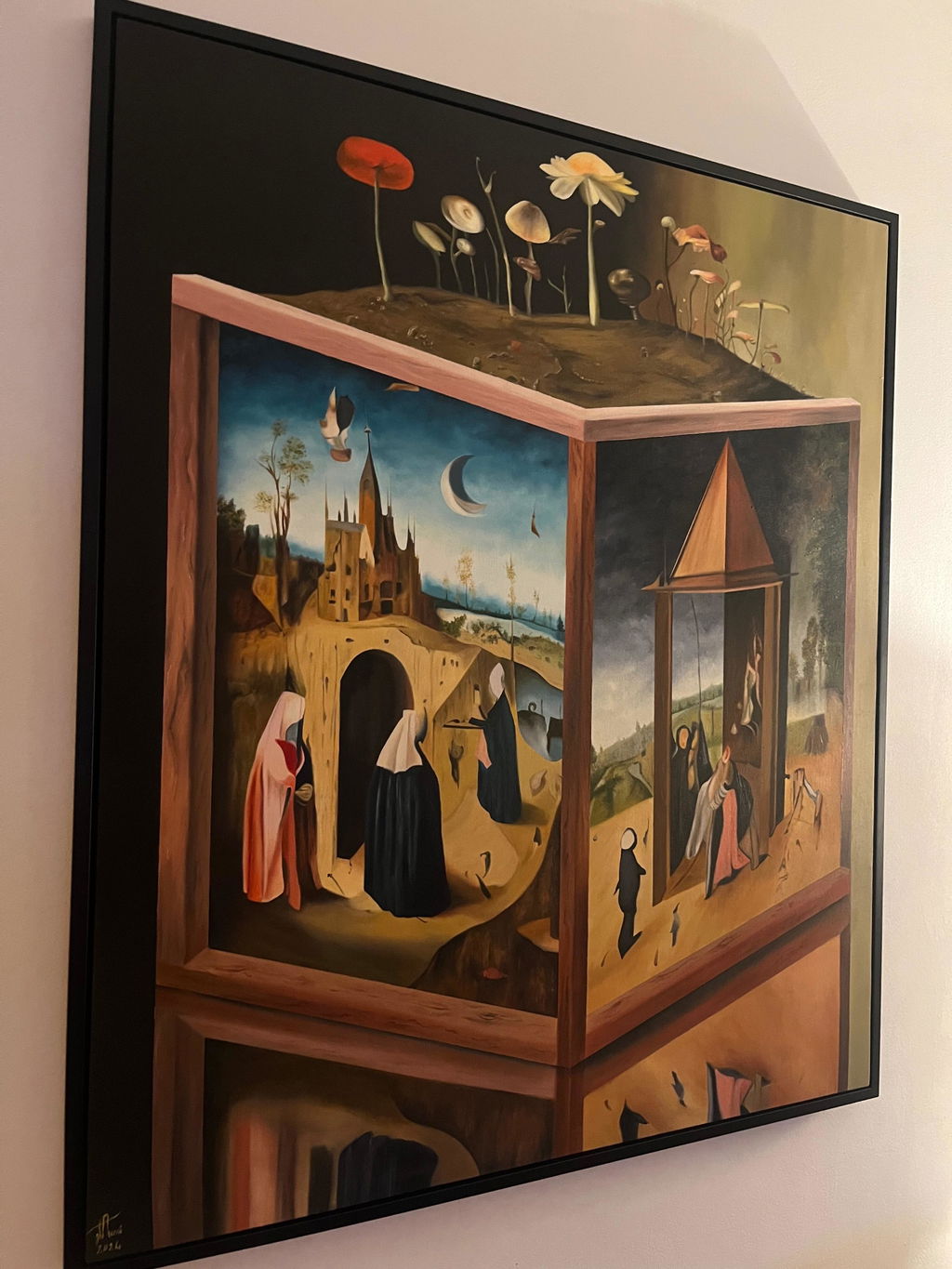
A traditional room, dark wood furniture, classic mouldings, a formal layout, does not have to stay locked to gilded and ornate framing throughout. One contemporary piece, framed deliberately against the grain of the room, is often what keeps a traditional interior from reading as a period set piece rather than a home someone actually lives in.
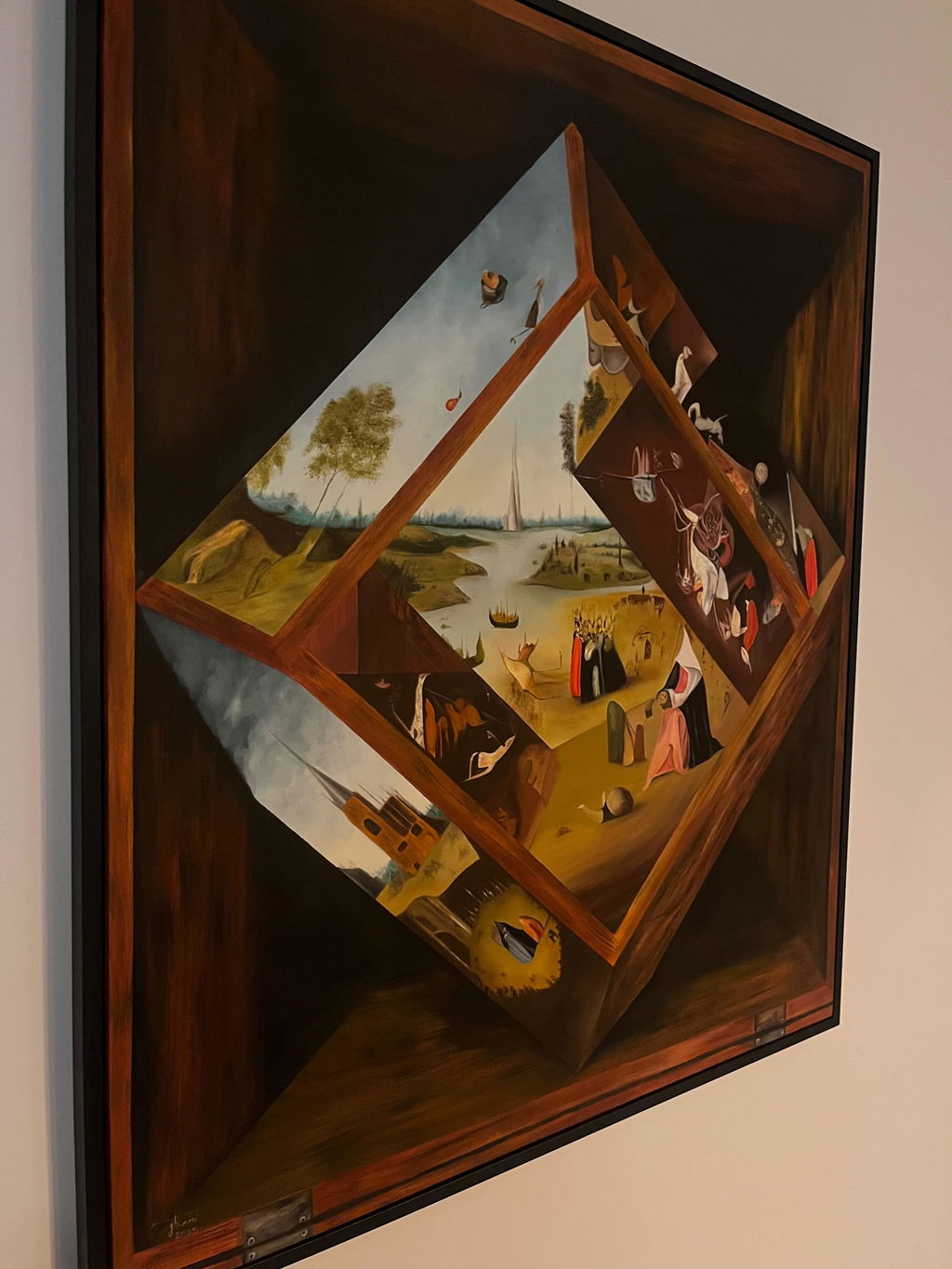
The frame is what makes this work or fail. A contemporary painting in an ornate gold frame loses the thing that made it worth hanging, since the frame's history fights the image's lack of one. Instead, frame the contemporary piece plainly, a slim black or dark wood profile with no ornament, and let the contrast with its surroundings do the work. The plain frame reads as a deliberate choice next to the room's other gilded or carved frames, rather than as a mismatch, because a single confident departure looks intentional where several would look unplanned.
Placement matters as much as the frame. Put the contemporary piece somewhere it gets a moment of its own, over a console rather than jammed into a symmetrical grouping of traditional pieces, so it is not competing for attention inside a formal arrangement built on matching frames. One piece is usually enough for this to read as a considered choice; two or three contemporary pieces scattered through a traditional room starts to look like two different design decisions that never agreed with each other.
Common questions
Can modern art hang in a traditional room?
Yes, and it usually looks excellent. The contrast between a spare contemporary painting and a room full of mouldings flatters both. Frame it as the painting wants, not as the room wants, and let the difference be visible.
Should the frame match the woodwork?
Relate, not match. A frame in exactly the floor's wood tone tends to look like flooring on the wall. A tone or two away is more interesting and does not look accidental the way a near-miss does.
Are antique frames a good idea?
The frame often is; what is inside it usually is not. Old frames typically hold acidic board, animal glue, and nails in the rebate. Keep the frame, replace everything behind the artwork. See reframing an old or inherited painting.
Does a traditional room always call for an ornate frame?
No. A traditional room supports ornate framing well, but a simpler wood moulding also sits comfortably in the same space, especially if other elements in the room, such as the trim or furniture, are already fairly detailed. Too much ornamentation everywhere can start to feel busy rather than considered.
What frame finish suits dark, traditional wood panelling?
A frame a shade or two lighter or darker than the panelling, rather than an exact match, tends to hold its own against the wall better. An exact match to the panelling can cause the frame to visually disappear into it, losing the definition a frame is meant to give the art.
Can a gold frame work without looking dated in a traditional room?
Yes, particularly an aged or antiqued gold finish rather than a bright, new-looking one. A softer, toned-down gold reads as classic rather than trend-driven, and it pairs naturally with the warm wood tones and deeper colours common in traditional interiors, without the shine that can make a newer gold frame feel showy.
Is a floater frame ever appropriate in a traditional room?
It can be, especially as a deliberate contrast on a contemporary painting hung in an otherwise traditional space. Used well, the difference in framing style signals that the piece is meant to stand apart, rather than being a mismatch. It is a less common choice than wood moulding in this setting, but a valid one.
Does traditional framing cost more than modern framing?
Not inherently. An ornate, hand-finished moulding does cost more than a plain flat profile, but a simple wood frame in a traditional style can cost the same as a simple modern profile of the same size. Cost tracks material, finish and size more than it tracks style category.