A framer can only work with what is on the counter. Bring the piece, a photograph of the wall, the wall colour, your date and a budget range, and most decisions take one visit.
A framer chooses a frame by looking at two things: the piece and the place where it will hang. You carry the first one in. The second one stays at home, so you have to bring it as photographs, colours and measurements. This guide lists what to bring, why each item matters, and what the framer will ask you.
The piece itself, or its exact measurements
Bring the piece whenever you can. A framer learns more from a short look at it than from any description: what it is made of, how thick it is, what condition the edges are in, and whether anything stands up from the surface.
Bring it as it is. Leave a print untrimmed. Leave a picture in its old frame, because the way it was put together tells the framer what to expect inside. Leave creases and curls alone. Tape, glue, an iron and scissors all cause damage that a framer cannot undo.
If the piece is too large or too fragile to carry, bring measurements and photographs:
Height and width, measured twice.
Depth, for a canvas or an object, at the thickest point.
For a work on paper, two sizes: the whole sheet and the picture area.
A photograph taken straight on, and one of a corner from the side.
Upright, held by the sides, with nothing leaning on the front or back
An object or a textile
In a box, folded loosely or padded with clean tissue
A broken frame
With every loose piece, in a bag
A canvas on its wooden bars is carried upright by the sides, with nothing leaning on the paint. The same care suits a small painting such as Path to Wonderlight, an oil on canvas, 30 by 40 cm, of a snowy path leading past a decorated tree to a small house.
Stand back and photograph the whole wall, from floor to ceiling, with the furniture below it in the picture. Then measure the width of the empty space where the piece will hang. With those two things a framer can judge how large the finished frame should be. A small print on a wide wall may need a wider mat, the border of card around a picture. A piece above a sofa should be narrower than the sofa.
The photograph also shows the style of the room, and that narrows the choice of moulding, the shaped length of wood or metal a frame is cut from.
The wall colour
A frame is seen against the wall every day, so the wall colour matters as much as the colours in the piece. A phone camera changes colours. If you have the paint name or a paint sample card, bring it. If you have neither, photograph the wall in daylight with a sheet of white paper held against it, so the framer can see how far the wall is from white. Our guide to frame colour by room explains how the wall colour affects the choice of frame.
A frame has to suit two sets of colour: the wall and the piece. Verdant Gaze, an acrylic on canvas from our gallery, 30 by 40 cm, shows a woman's face in one strong green with black and white, and a frame sample would be held against that green.
Note three things: where the windows are in relation to the wall, whether direct sun reaches the wall at any time of day, and what lamps or ceiling lights point at it. Light decides the glazing, which is the sheet of glass or acrylic at the front of the frame.
A window opposite the wall causes reflections. Anti-reflective glazing reduces them, as our anti-reflective glass guide shows.
Daylight fades paper, ink and dye. UV glazing filters the part of light that does the most fading. See UV glass and glazing.
A dim hallway may need neither.
Any frames it has to match
If the new piece will hang beside frames you already own, bring one of them. If that is not possible, photograph one straight on and from the side, and measure the width of its moulding and the width of its mat. Our guide to matching frames across a wall explains which parts need to match.
Your date
Say the real date you need the piece, and what the date is for. A framer can then tell you which mouldings and glazing are in stock and which would have to be ordered. If the piece is a gift, give the date you need to wrap it, which is earlier than the occasion.
A budget range
Tell the framer what you are comfortable spending. Some people keep this to themselves because they expect the quote to go up to that amount. In practice it saves time. The moulding and the glazing are the two parts of a quote with the widest range, and a framer who knows your limit shows you choices inside it. Our page on custom framing cost explains what moves a quote.
What the framer will ask you
Is it an original, or can it be replaced? This decides how much protection the piece needs.
Where will it hang? The room, the wall and the light.
Do you want to see the whole sheet, or can a mat cover the edges?
Is anything signed, and where? A signature near an edge changes the mat opening.
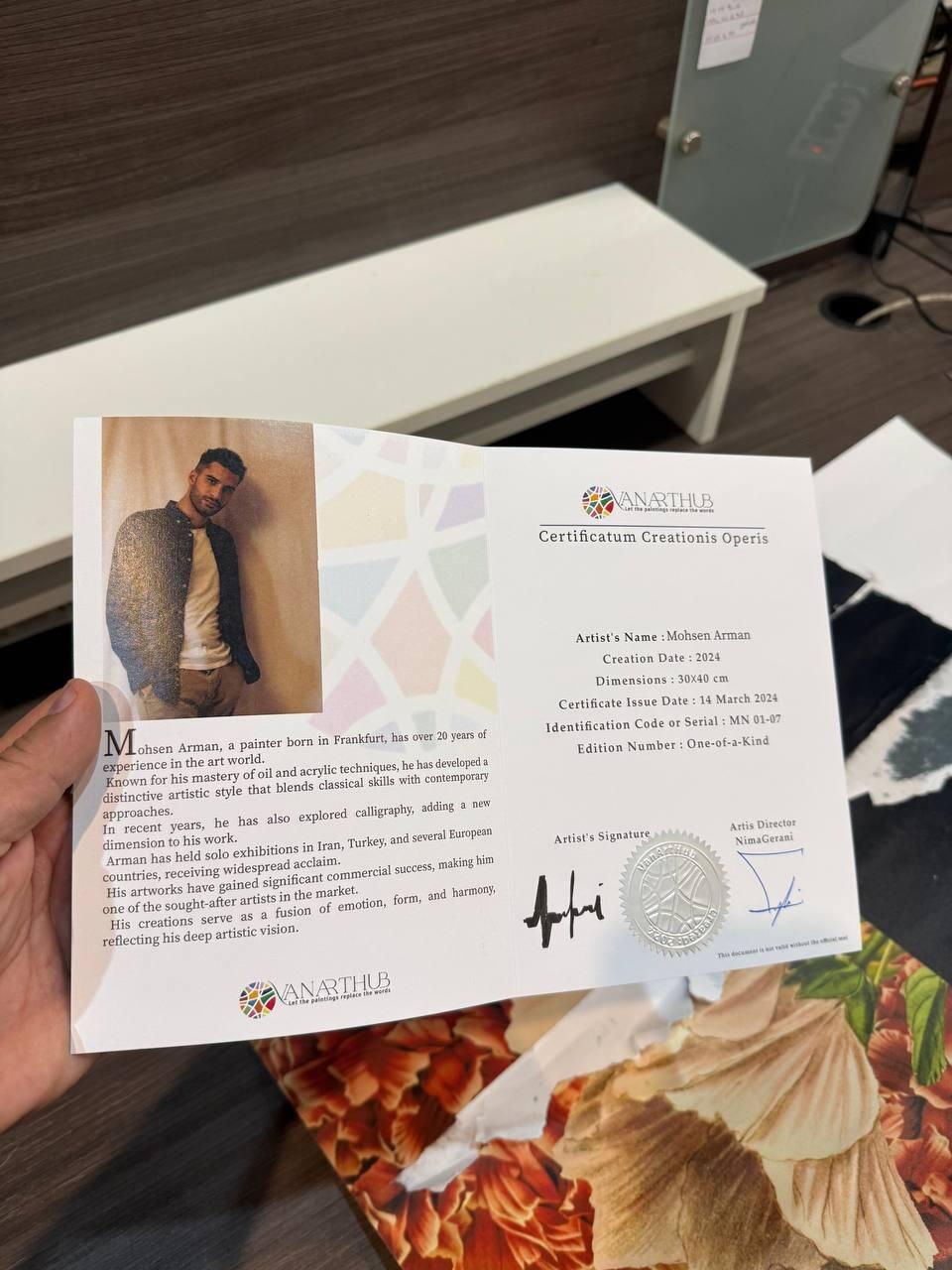
Will it ever need to come out of the frame again? A certificate that is renewed, or an instrument that is played, is framed differently.
How will you get it home? A large frame has to fit in your car and through your door.
The short checklist
The piece, untrimmed and as it is, or its exact measurements and two photographs
A photograph of the whole wall, and the width of the space
The wall colour: a paint name or a sample card
Notes on windows, sun and lamps
A frame it must match, or photographs and measurements of one
Your date
Your budget range
At our own workshop you can walk in with the piece during opening hours, and the custom framing page explains how we work. If you are still deciding where to go, read how to choose a picture framer.
Common questions
Do I need to bring the actual artwork to a framing appointment?
Bringing the actual artwork to a framing appointment gives the best result, because the framer can see its thickness, its edges and its true colours. If the piece is too large or fragile to carry, exact measurements and two photographs are enough for a first conversation. Measure height, width and depth, and photograph the front and one corner from the side.
How do I carry a large unframed print to a framer without creasing it?
Carry a large unframed print to a framer flat between two sheets of stiff board that are larger than the print, taped together at the edges of the boards. If the print arrived rolled in a tube, leave it rolled in that tube. Folding a print, or carrying it loose under your arm, is how most creases happen.
Why does a framer ask about the wall colour?
A framer asks about the wall colour because the frame is seen against the wall every day. A white frame can be hard to see on a white wall, and a dark frame on a pale wall can draw more attention than the picture. A paint name or a paint sample card is the most reliable thing to bring, since a phone photograph changes colours.
Should I tell the framer my budget?
Yes, tell the framer your budget range at the start. The moulding and the glazing each come in a wide range of costs, and a framer who knows your limit shows you choices inside it. Without a budget, you may spend the visit choosing a frame and then learn that it costs more than you planned to spend.
Can a frame be chosen from photographs when I cannot visit the shop?
Yes, a frame can be chosen from photographs when you cannot visit the shop, with some loss of accuracy in colour. Send exact measurements, a photograph of the piece, a photograph of the wall and the paint name if you have it. Ask the framer to photograph the moulding samples beside a print of your piece or beside a white card.
What measurements does a framer need for an object such as a shirt or a medal?
For an object such as a shirt or a medal, a framer needs the height, the width and the depth at the thickest point. Depth is the measurement people forget, and it decides how deep the frame has to be. For a group of objects, measure each one and photograph them laid out the way you imagine them.
What should I avoid doing to a picture before taking it to be framed?
Before taking a picture to be framed, avoid trimming it, taping it, laminating it, ironing it or taking it out of an old frame. Each of these removes a choice or causes damage that cannot be reversed. Bring the picture exactly as it is, and tell the framer what you would like changed.
10% off your custom framing when you show this code at our shop
We frame, stretch canvas and reframe by hand, in our own workshop inside the gallery at
1242 Davie Street. Enter your email and your code appears right here. Show it at the
counter and we take 10% off the job. The code does not expire.
Choosing a selection results in a full page refresh.
Opens in a new window.
In-shop offer · 1242 Davie Street, Vancouver
Get 10% off your framing at our shop
Add your name and email and your code appears on the next screen. Show it at the counter
and we take 10% off any framing, stretching or reframing job you bring us. It does not
expire.
Exceptional Service and a Truly Memorable Art Purchase
I had a wonderful experience with Van Art Hub Gallery. I came across two pieces by Melina Ghaemi — *Mad Mirrors* and *Small World in the Hands of a Stranger* — and immediately fell in love with them.
I contacted Van Art Hub Gallery, and they were incredibly helpful throughout the entire process, from arranging the payment to organizing the shipping. At first, I was a little skeptical and nervous about how everything would work, especially since the paintings were still in Iran and it was shortly after the war. But the gallery handled everything with such professionalism and care that my concerns quickly disappeared. Amazingly, they were able to get the paintings to Canada in just two days!
The pieces are absolutely captivating. Even when I picked them up from the frame maker and was simply carrying them to my car, several people stopped and asked me about the paintings. That says a lot about how striking and special Melina Ghaemi’s work is.
A big thank you to Van Art Hub Gallery for making this experience so smooth and enjoyable. I truly appreciated their professionalism, communication, honesty, and integrity throughout the entire process. I would happily work with them again and highly recommend them to anyone interested in purchasing art through the gallery.
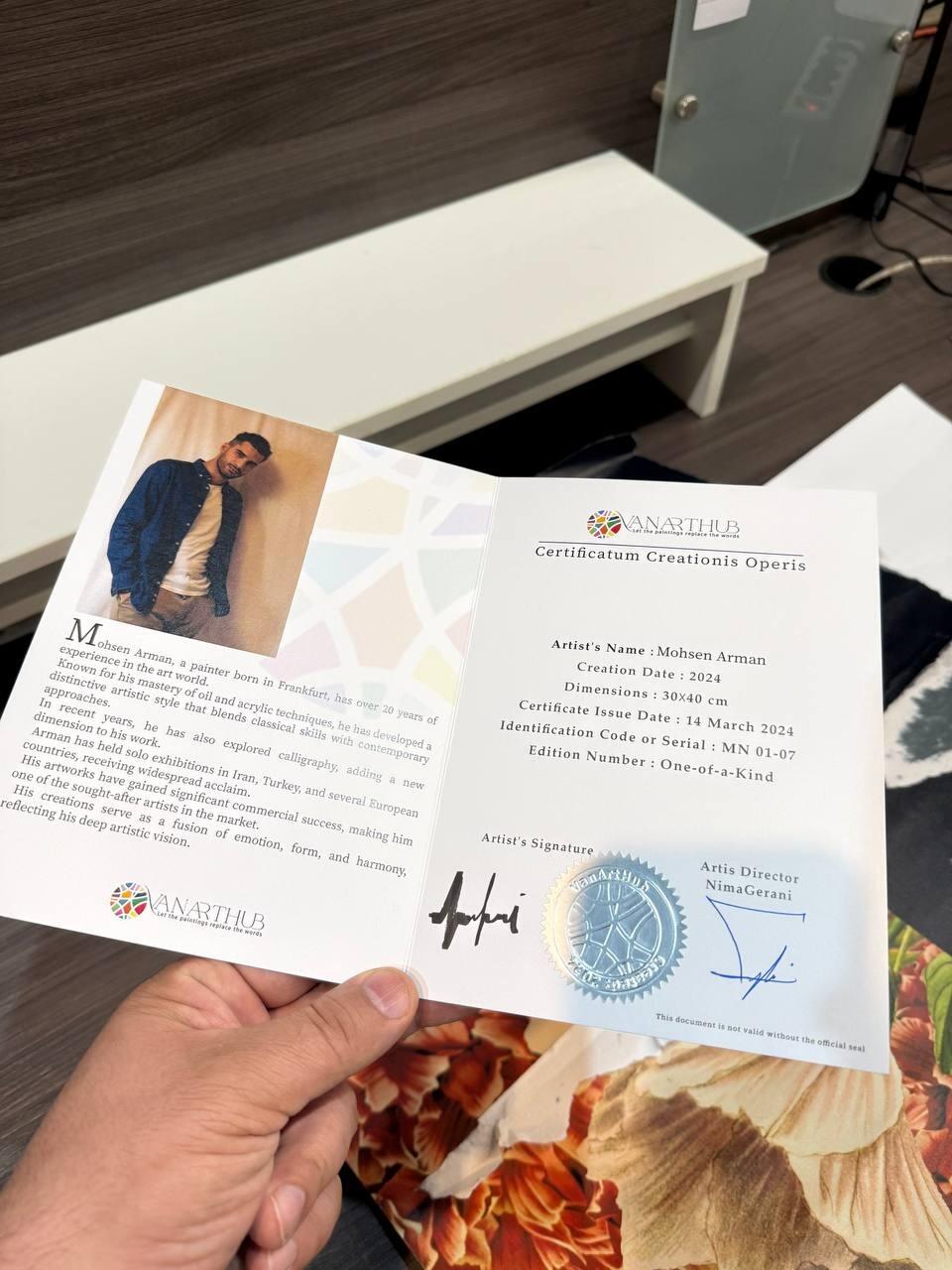
I got my order today and your work is really good. I didn’t expect to get a certificate for this painting, it was a surprise. Thanks for caring about small details.
The support team was really helpful and followed up nicely, wich I really appreciated. The painting is just like the photo – great quality and very detalied. I just wish it arrived a bit sooner, but honestly it was worth the wait.
I received my painting today. The support team was great and very responsive. The artwork is exactly what I was hoping for – even more beautifull in person. Truly a valuable piece. I’ll definetely order again. Thank you!