Choosing Art for a Cold North-Facing Room
Updated By VanArtHub Curatorial TeamShare
A north-facing room is the best place in the house to look at a painting and one of the coldest places to sit. The light is soft, even, and steady, which is wonderful for seeing true colour, but it is cool in temperature, so the room can feel grey. The good news is the right painting fixes a lot of that.
Why north light feels cold
In the northern half of the world, a north-facing window never gets direct sun. The sunlight that reaches it has bounced off the sky first, so it arrives soft and slightly blue. It is also very even. There is no bright hot spot in the morning and no glare in the afternoon. The light barely changes from breakfast to dinner.
That evenness is exactly why artists prize north-lit studios. Colours stay honest, shadows stay gentle, and nothing gets bleached out. But even, cool, and shadow-free can also read as flat and chilly, especially on a grey winter day. A south-facing room gets warm gold light that does the warming for you. A north room does not, so the warmth has to come from what you put in it.
There is a small upside worth knowing before you buy for the space. Because the light is steady and never harsh, a north wall is one of the kindest places in the home for a painting. Direct sun fades colours and stresses paint over the years, and a north window gives none of it. So the piece you hang there will hold its colour longer than the same piece on a bright south wall. You are trading a warmer feel for a gentler, safer light.
Which palettes warm a north-facing room?
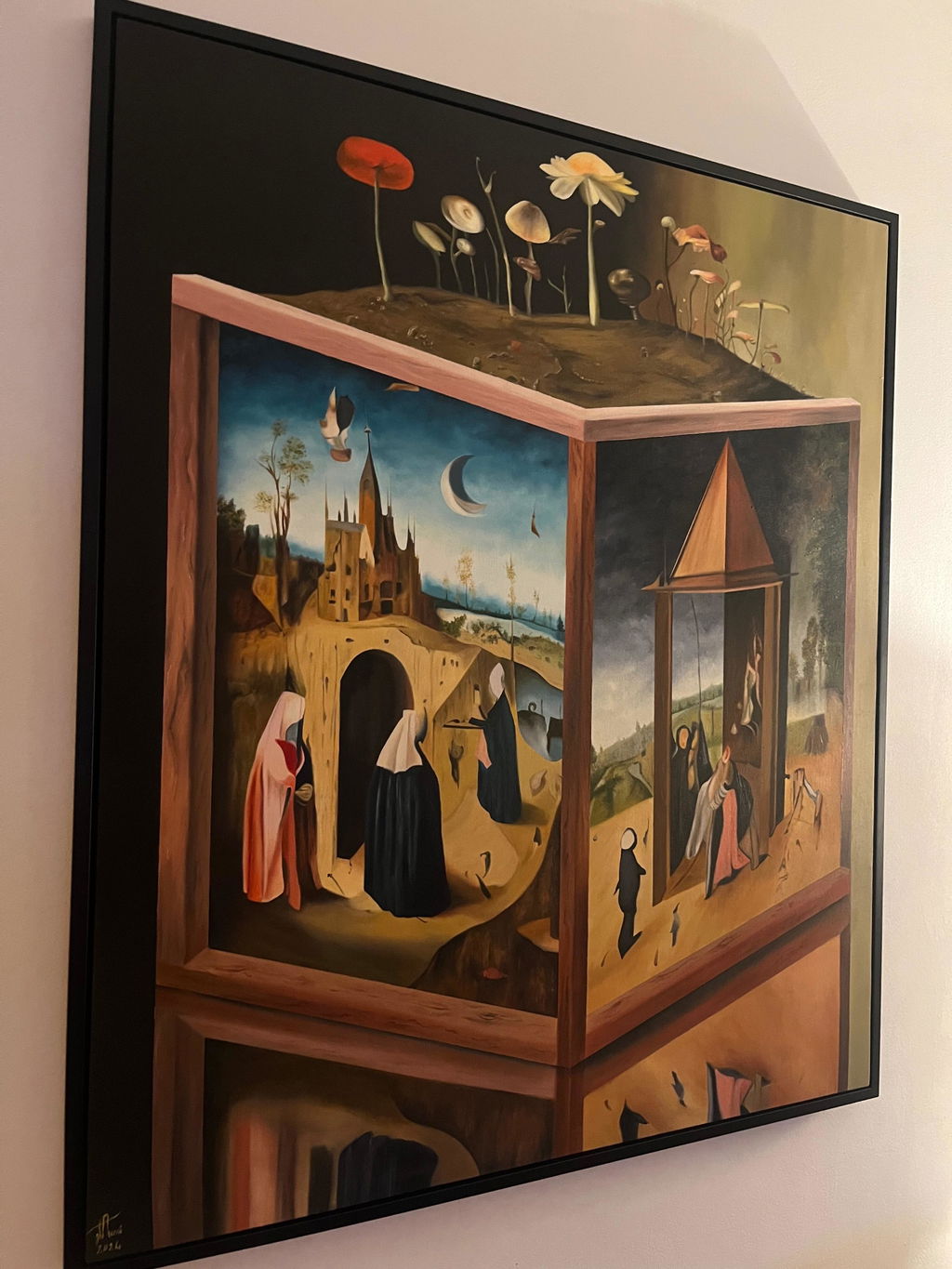
Reach for warm colours: reds, oranges, ochre, terracotta, warm brown, and deep gold. These colours sit at the warm end of the spectrum, and against cool daylight they seem to glow. A single strong warm painting can change how the whole room feels, because your eye keeps returning to the one point of heat on the wall.
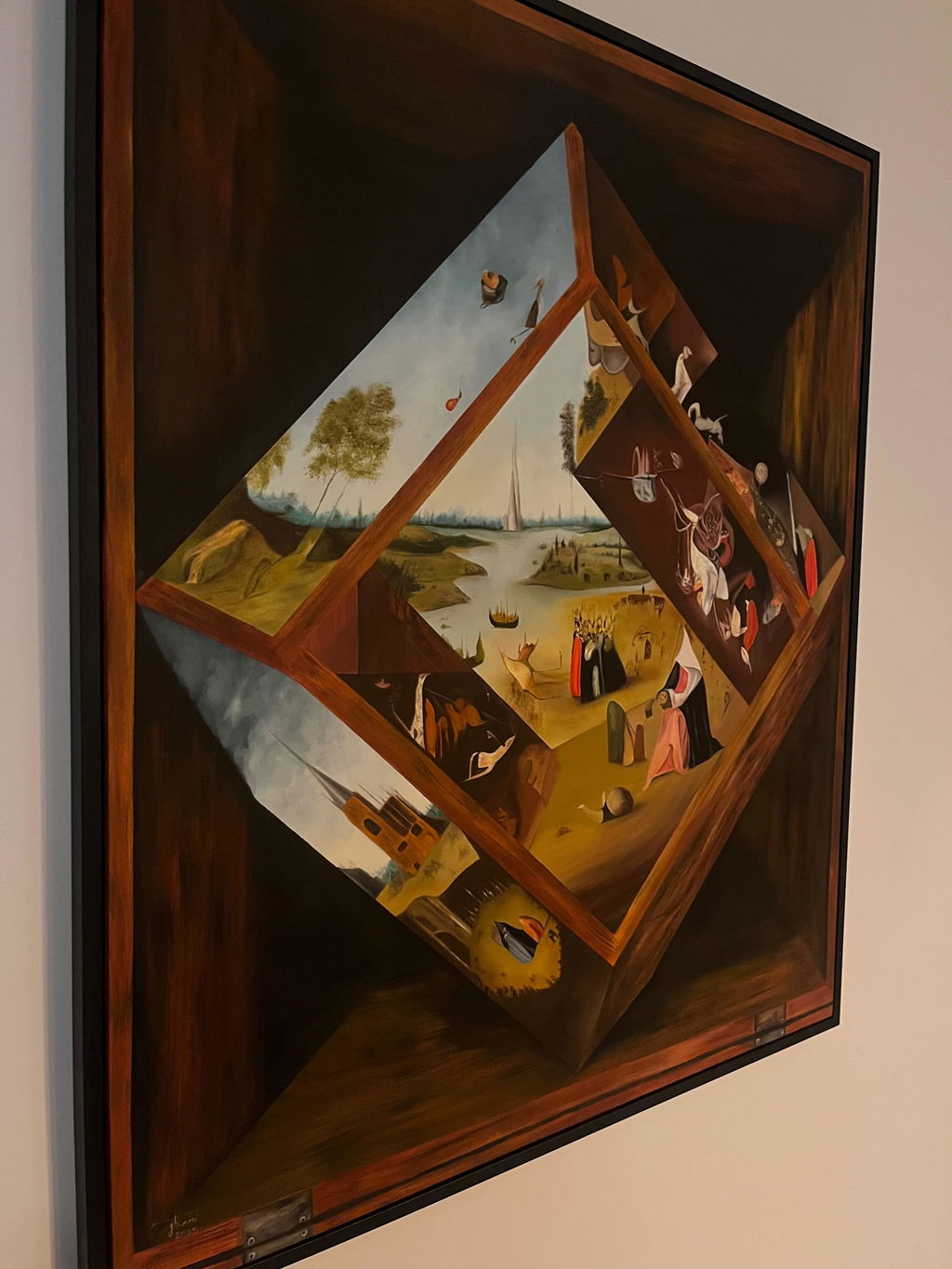
Earth tones work especially well because they feel grounded and lived-in rather than loud. Think of the colour of clay, dried grass, autumn leaves, and old wood. They warm the space without shouting, and they sit comfortably next to natural materials like wood, wool, and stone that a cool room often already has. Oil paint helps here too, because oil has a deep, slightly glossy richness that holds warm colour beautifully in soft light. If you are weighing materials, our comparison of oil versus acrylic versus mixed media paintings explains how each one reads on the wall.
Which subjects work best?
Subject matters as much as colour. Scenes that already contain warmth do double duty. Look for late-afternoon and golden-hour light, harvest fields, warm interiors lit by a lamp or a fire, sunlit stone, and portraits with warm skin tones. A painting of golden evening light brings the feeling of that light into a room that never gets it in real life.
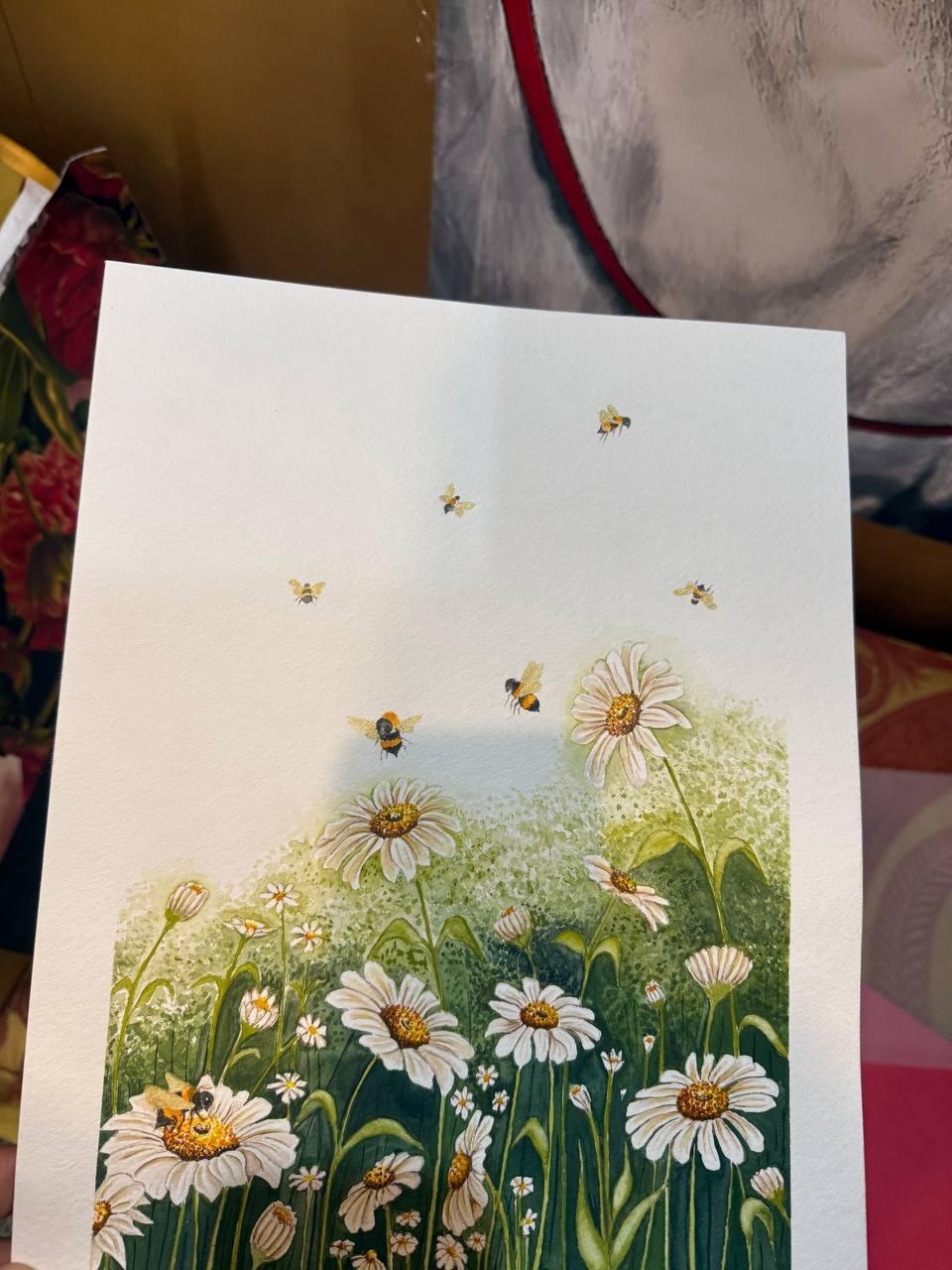
Still lifes with warm objects also work well: fruit, copper, terracotta pots, bread, flowers in reds and oranges. These give the cool room small anchors of warmth at eye level. If you are still deciding what actually suits the space, our checklist on signs a painting will work in your space is worth a read before you commit.
One more thing about the medium. Oil paintings often warm a cool room better than flat, matte work, because the oil surface has a slight sheen that catches and holds warm colour. In soft north light that sheen gives the reds and golds a small glow that a very flat surface loses. It is a minor point, but on a wall lit only by cool daylight, every bit of warmth counts.
What to avoid in a north room
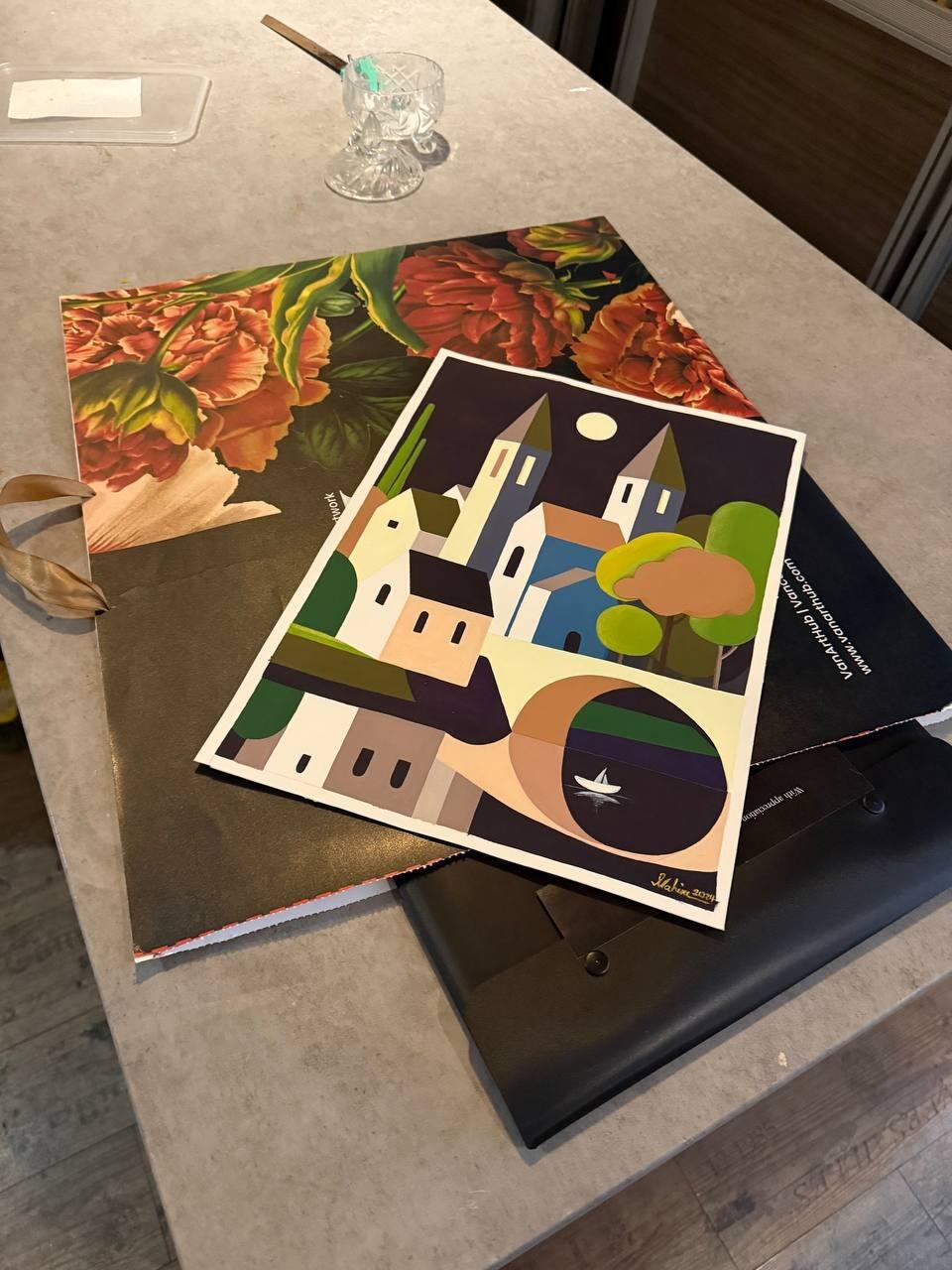
Be careful with cold blue-grey abstracts. They can be beautiful pieces, but in flat, cool north light they often read even colder, and the room tips further toward grey. The same goes for stark black-and-white work with no warm note anywhere, and for icy scenes like snow, winter seas, and pale minimal compositions. None of these are wrong, but they push a north room in the direction it is already heading.
If you love a cool-toned piece, you can still make it work. Hang it opposite or beside a warmer painting so the room stays balanced, and lean on the lighting fixes below to add heat the art does not.
Lighting fixes that help
Art choice does most of the work, but lighting finishes it. Warm-white bulbs make a real difference. Look for bulbs around 2700 kelvin, which give a soft golden glow, rather than 4000 kelvin or higher, which look bluish and match the cold daylight you are trying to counter. A small picture light or a nearby lamp aimed at your warm painting makes the colours richer, especially in the evening once the daylight fades.
Placement matters too. Try hanging your warmest piece where the cool window light falls directly on it during the day. The daylight lights the painting evenly and the warm colours push back against the cool light, so the piece becomes the anchor your eye keeps finding. Aim to hang it at a height where the centre sits near eye level, so the warm colours meet you as you enter.
Size and placement for cool rooms
In a room that feels flat and grey, one larger warm painting usually beats several small ones. A big piece gives the eye a strong, single place to land, and the warmth reads from across the room. Small scattered pieces spread the warmth too thin. If you are not sure what scale suits the wall, our room-by-room notes on what size original painting you need give sensible starting points.
Put the warm anchor on the wall you look at most: behind the sofa, above the bed, or facing the door as you walk in. That is where a warm painting does the most to change how the room feels.
If the room is large, you can add one or two smaller warm pieces on side walls to carry the warmth around, but keep the big warm work as the clear main event. The small pieces support it, they do not compete with it. And in a north room, resist the urge to fill every wall. Cool, even light already reads as calm and quiet, so a few well-placed warm pieces feel richer than a crowded gallery wall of cool-toned prints.
The short version
North light is soft, even, and true, which is great for seeing art, but it is cool, so a north room can feel grey. Warm it with warm colours and warm subjects: reds, oranges, earth tones, golden-hour light, lamp-lit interiors, and warm portraits. Go easy on cold blue-grey abstracts, which read colder still. Add warm-white bulbs and aim a light at your main piece. We are based in Vancouver and sell originals only, each with a Certificate of Authenticity, and every piece ships with a 14-day trial so you can hang it and watch how it holds up in your own north light before deciding. If it does not warm the room the way you hoped, we pay the return shipping.