Cleaning a Painting: What Not to Do
Updated By VanArtHub Curatorial TeamShare
You notice a film of dust on an original painting and reach for the nearest thing under the sink. Stop there. Almost every quick fix people use on a canvas, from a damp cloth to a spritz of glass cleaner, is the exact thing conservators warn against, and the damage often cannot be undone.
We pack and ship signed originals from our Vancouver studio every week, so we field this question a lot. The short version: the safest cleaning is the one that does the least. Here is what to avoid, and the one gentle step that is actually safe to do yourself.
Never use water or cleaning sprays
Water looks harmless. On a painting it is not. The Canadian Conservation Institute is blunt about this: water-based solutions can weaken the bond between pigment and medium, leach out water-soluble components from acrylic paint, and blanch the paint or varnish layers. Glass cleaners, all-purpose sprays, and any product with solvents or ammonia are worse, because they can dissolve varnish and lift paint.
The problem is that you cannot tell by looking. An oil, an acrylic, and a varnished surface all react differently to the same drop of liquid, and once a pigment starts to move you cannot put it back. This is why the Institute says aqueous and solvent cleaning should be done only by a conservation professional.
Skip the household wipes and the old kitchen tricks
Disinfecting wipes, baby wipes, and microfibre cloths loaded with cleaning fluid all carry the same risk as a spray: moisture and chemistry you cannot control. They also drag grit across the surface.
Then there are the internet tricks. Rubbing a painting with a slice of white bread, or a cut potato, or your own saliva on a cotton bud, are all things people swear by online. Please do not. Bread and potato leave starch and moisture behind, saliva contains enzymes, and none of it belongs on a paint layer that took an artist hours to build up. A trick that works on a cheap poster can quietly ruin a one-of-a-kind original.
Do not rub, ever
Even with a dry cloth, pressure is the enemy. Many paintings have texture: raised brushstrokes, impasto, thin spots where the paint is fragile. Rubbing flattens that texture, polishes down high points, and can flake paint that is already lifting. If a surface is flaking or powdery, do not touch it at all. That is a signal to call a conservator, not to clean harder.
The one thing you can safely do: dry dusting
Light, loose dust is the only thing a collector should handle at home, and only when the paint is stable and not flaking. The safe method is dry: a soft, clean, natural-hair brush, worked gently from the top down so the dust falls away from the surface. No cloth pressed flat, no liquid, no scrubbing. Hold the painting upright or lay it flat and let gravity help.
- Do: use a soft dry brush, light strokes, top to bottom, on a stable surface only.
- Do not: use water, sprays, wipes, bread, potato, saliva, or any rubbing pressure.
- Do not touch a surface that is flaking, powdery, blistered, or lifting. Call a professional.
When it is real grime, call a conservator
Dusting handles the everyday film. It does nothing for a yellowed varnish, smoke haze from a fireplace, or a decade of kitchen grease, and it should not. Removing dirt and aged varnish means reading the exact materials in each layer of the painting, which takes training and experience most of us do not have. A professional conservator tests a tiny area first and works under magnification. It costs money, but it is far cheaper than a botched home job that strips paint.
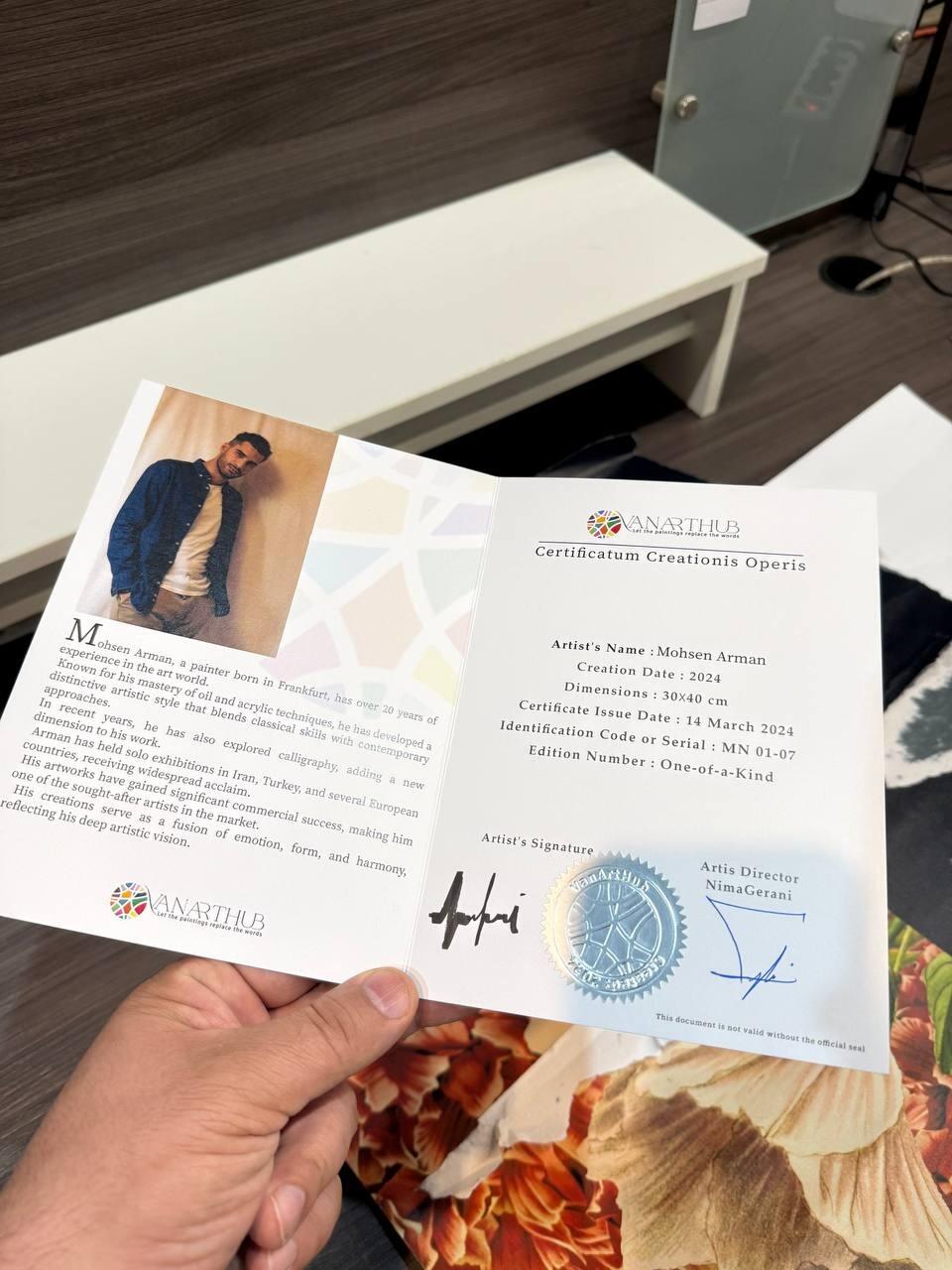
Prevention beats cleaning anyway. Keep a painting out of direct sun, away from radiators and busy kitchens, and off damp exterior walls, and it will need far less work over its life. At VanArtHub, every original ships with a Certificate of Authenticity and our care guidance, because a painting you plan to keep for decades deserves to be looked after for decades.
Key takeaways
- Never put water, cleaning spray, or household wipes on a painting.
- Skip the bread, potato, and saliva tricks. They leave residue and moisture behind.
- Do not rub. Pressure flattens texture and flakes fragile paint.
- The only safe home step is gentle dry dusting with a soft brush, on stable paint only.
- For yellowed varnish, smoke, or grease, hire a conservator. Do not improvise.
If you want the full routine for keeping a piece in good shape, our guide on caring for original paintings covers light, humidity, and handling in one place, and our notes on framing original paintings explain how the right frame and glazing protect the surface from dust in the first place. Ready to add a piece worth caring for? Browse the signed originals in our fine art collection.
Frequently asked questions
Can I use a damp cloth to clean my painting?
No. The Canadian Conservation Institute warns that water can weaken the bond between pigment and medium and blanch the paint or varnish, and you cannot tell which surfaces are sensitive just by looking. Even a barely damp cloth is a risk. Stick to a dry soft brush, and leave anything wet to a conservator.
Is glass cleaner or an all-purpose spray ever safe on art?
Not on the painted surface. Sprays with ammonia or solvents can dissolve varnish and lift paint, and household cleaners deposit chemicals into the layers. If your painting is behind glass, spray the cloth away from the frame and wipe the glass only, never letting liquid reach the artwork.
Do the bread or potato cleaning tricks actually work?
They can lift surface grime, but they leave starch and moisture behind on a paint layer that should stay dry. Saliva is no better because it contains enzymes. These tricks might be fine on a cheap print, but on a one-of-a-kind original the risk of residue and staining is not worth it.
When should I call a professional conservator?
Call one whenever the paint is flaking, powdery, or lifting, or when the problem is more than loose dust: yellowed varnish, smoke haze, water damage, or grease. Removing those safely requires testing and training. A conservator works on a tiny test area first, so real grime is a job to hand over, not to improvise.
Source: Canadian Conservation Institute, Cleaning Paintings: Precautions (CCI Notes 10/1). Guidance reviewed July 2026. If you spot something out of date, let us know and we will update the guide.