5 West Coast Landscapes That Calm a Busy Living Room
Updated By VanArtHub Curatorial TeamShare
Some living rooms fill up on their own. The couch, the pillows, the toys, the mail on the side table, the glow of a screen that is always on. When a room carries that much visual noise, the last thing it needs is a loud painting fighting for attention. It needs a quiet one that gives the eye a place to rest.
West coast landscapes do this better than almost any subject we hang. The scenery here is naturally soft: fog on the water, cedar and fir in low light, wet grey sky over a still inlet. Those are calm colours to begin with, and calm colours calm a room.
Why a foggy west coast scene settles a busy room
Think about the palette of the Pacific Northwest coast. Muted greens, cool greys, soft blues, the brown of driftwood and cedar bark, the white of low mist. There is very little pure red or bright yellow in it. A painting built from those tones does not demand your attention the way a high-contrast abstract does. It sits back. It lowers the temperature of the wall instead of raising it.
Fog helps for a reason. When an artist paints haze over water or a treeline half lost in mist, the edges go soft and the detail drops away. Your eye is not asked to read a hundred small shapes. It reads one calm mood. In a room full of hard edges, screens, and corners, that softness is a relief.
The subjects that work hardest for a calm living room:
- Still water: a glassy inlet, a lake at dawn, a tide line with no waves. Flat water reads as quiet.
- Fog and low cloud: anything where the far distance dissolves. It adds depth without adding busyness.
- Cedar, fir, and rainforest: deep greens that ground a room and pull in the feeling of the coast.
- Grey sky over the sea: the overcast light most of us actually live under here, honest and restful.
Where to hang it so the calm actually lands
The most common spot is above the sofa, and it works. The sofa is usually the largest calm surface in the room, so a landscape above it reads as one settled block rather than clutter. Aim to fill roughly 60 to 75 percent of the sofa's width. Go smaller and the painting looks like a stamp lost on a big wall.
Hang the centre of the piece at eye level, which for most rooms puts the middle of the painting around 145 to 150 cm from the floor. People hang art too high far more often than too low. When a landscape floats up near the ceiling, it stops feeling connected to the room and the calming effect weakens.
One more placement idea people forget: the wall facing your favourite chair, or the one you see when you first walk in. A calm west coast scene is most useful where your eye lands when you sit down to unwind, not tucked behind you where you never look at it.
How a horizontal landscape widens a wall
Here is a small trick of the eye. A wide, horizontal painting pulls your gaze sideways, and a wall your eye travels across feels broader than it is. In a narrow living room, or above a long low sofa, a horizontal landscape stretches the space and makes the room breathe.
It also matches the shape of what it shows. A horizon, a shoreline, a treeline: these are horizontal things in real life. When the canvas follows that same long line, the room feels calm rather than cramped. A tall vertical painting does the opposite. It draws the eye up and can make a low-ceilinged room feel tighter.
| Wall or room | Landscape shape that helps |
|---|---|
| Long wall above a wide sofa | One wide horizontal piece, filling 60 to 75 percent of the sofa width |
| Narrow room that feels cramped | Horizontal, to pull the eye sideways and widen the wall |
| Small wall or alcove | A modest horizontal or near-square, so it does not crowd the space |
| Tall, open wall | A larger horizontal hung at eye level, not floated near the ceiling |
Keep the frame quiet too. A slim natural wood, a soft black, or a pale float frame lets the mist and water stay the star, while a heavy gilt frame fights the mood.
Why an original beats a print here
A print of a coastal scene fills the wall. An original painting of the same scene is a one-of-a-kind object, made by hand, that nobody else owns a copy of. The difference shows in the exact quality you want here: texture. Brushwork in the fog, a ridge of thick paint where a wave breaks, the sheen where light catches the surface. None of that survives a flat reproduction, and all of it is what makes a calm painting feel alive on the wall.
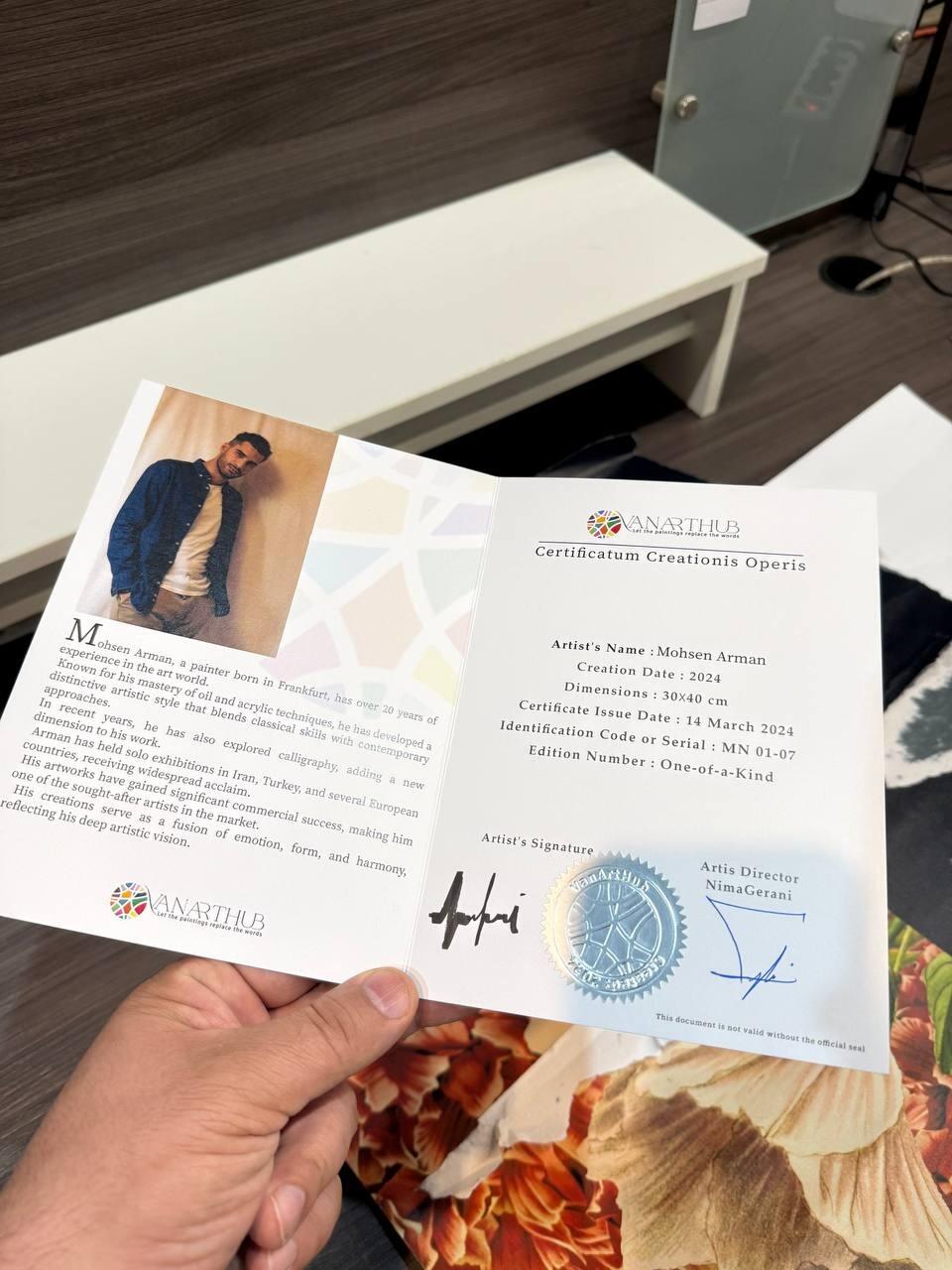
Every painting from VanArtHub is an original, signed by the Vancouver artist who made it, and it arrives with a Certificate of Authenticity. If you are nervous about how a piece will read in your own light, that is normal, and it is why we offer a 14-day trial. Live with it on your actual wall, and if it does not settle the room the way you hoped, send it back within 14 days for a full refund with return shipping paid by us.
Key takeaways
- Soft, low-contrast west coast palettes, fog, still water, cedar, muted greys and greens, calm a busy room by giving the eye a place to rest.
- Hang above the sofa, filling 60 to 75 percent of its width, with the centre at eye level around 145 to 150 cm.
- A horizontal landscape pulls the eye sideways and makes a narrow or crowded wall feel wider.
- Keep the frame slim and quiet so the mist and water stay the focus.
- An original holds texture a print cannot, and the 14-day trial lets you test it in your own light.
To see how these scenes work in a real space, start with our guide to Canadian landscape paintings and our notes on choosing Canadian art for the living room. When you are ready to pick one, browse the current landscape paintings collection and look for the quiet, foggy, water-and-cedar pieces. Free insured shipping takes 3 to 7 business days in Canada and 5 to 10 to the USA, so the calm can be on your wall soon.
Frequently asked questions
What size landscape should I hang above my sofa?
Aim to fill about 60 to 75 percent of the sofa's width. On a 200 cm sofa that means art roughly 120 to 150 cm wide, whether that is one wide horizontal painting or a pair hung close together. Smaller than 60 percent tends to look lost and stamp-like on the wall.
Why do foggy or muted paintings feel calmer than bright ones?
Fog and muted colour soften edges and reduce contrast, so your eye reads one restful mood instead of many competing shapes. Bright, high-contrast art pulls attention and adds visual energy. In a living room that is already full of screens, shelves, and hard corners, a soft scene lowers the noise.
Do your paintings come with anything to prove they are original?
Yes. Every piece is an original, signed by the Vancouver artist who painted it, and ships with a Certificate of Authenticity. We sell no prints and no reproductions. The certificate is the paperwork that confirms you own a one-of-a-kind object, not a copy.
What if the painting does not calm the room the way I hoped?
You have a 14-day trial. Hang it on your real wall, in your own light, and live with it. If it does not work, send it back within 14 days for a full refund and we pay the return shipping. We also offer a Lifetime Trade-Back for store credit if your taste changes later.