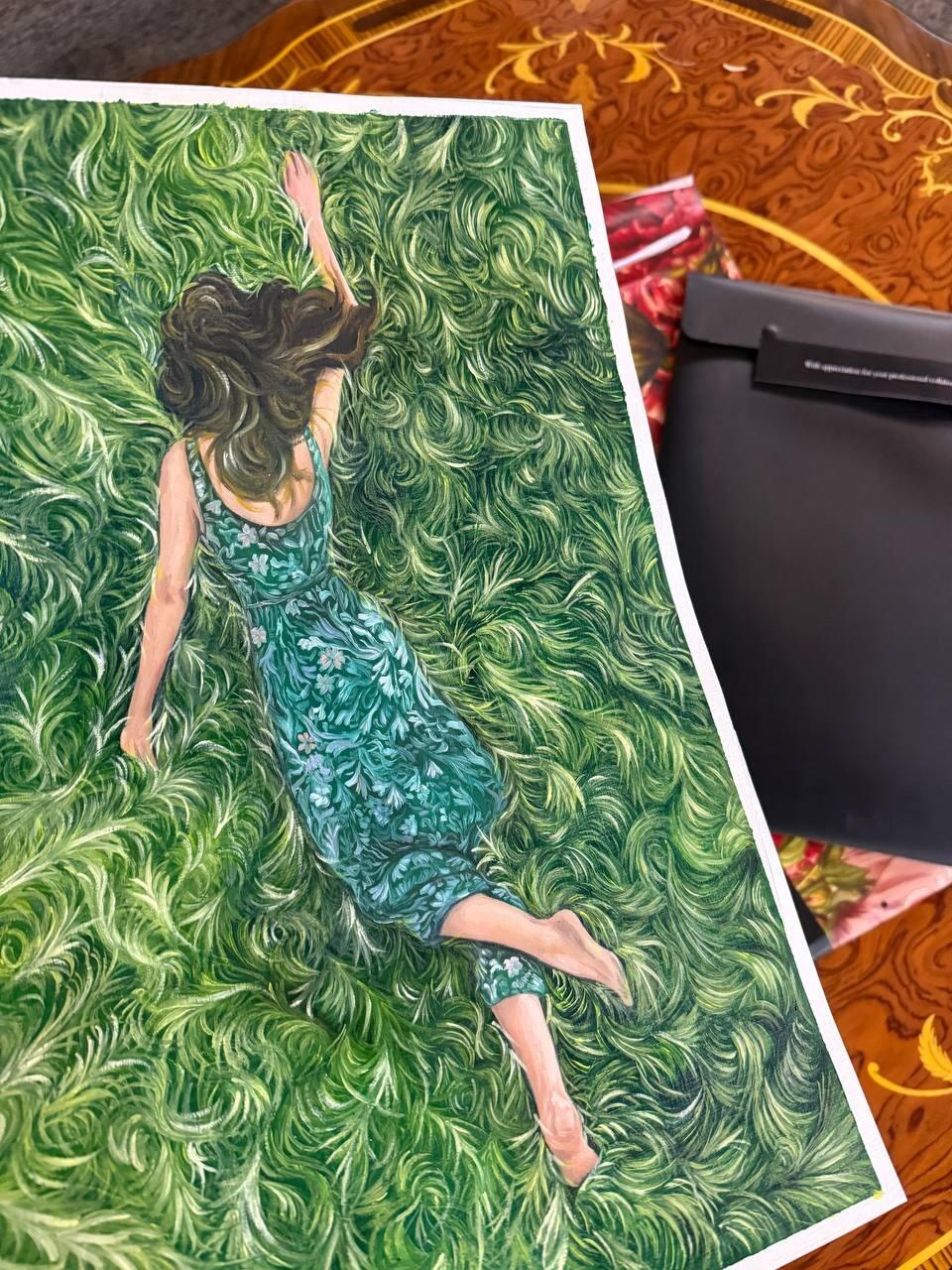
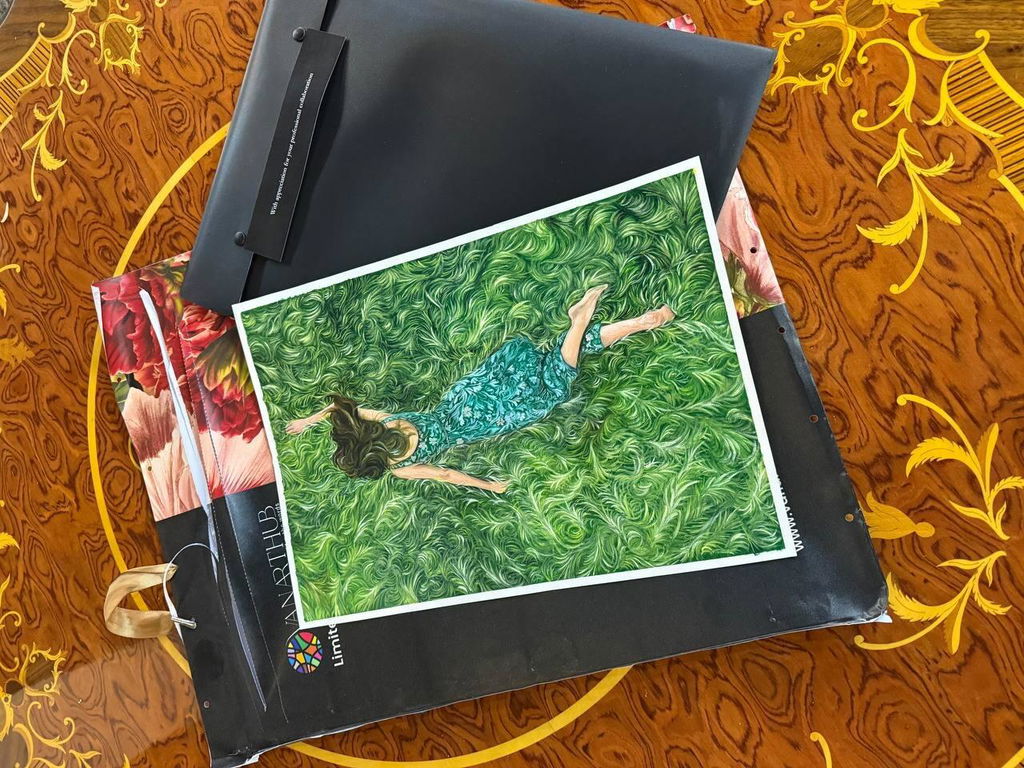
Figurative painting is painting that keeps clear references to the real world, and above all to the human figure. Tate's glossary defines figurative art as "any form of modern art that retains strong references to the real world and particularly to the human figure". The word came into use after abstract art appeared, as a way to name painting that still shows recognisable subjects, and Tate notes that in a general sense it also covers all art made before abstraction.
The word matters to anyone buying a surrealist painting, because most surrealist painting of the dream-image kind is figurative. It shows people, animals and objects you can name, and then puts them somewhere they cannot be. This page explains the difference between figurative, representational and abstract painting in plain terms, traces what happened to the human figure in painting after abstraction, and shows where figurative and surreal painting overlap.
It is part of our guide to surrealist paintings. If you are choosing between a figurative and an abstract painting for your first purchase, our article on abstract or figurative for your first original covers that decision in detail.
Key takeaways
- Tate defines figurative art as modern art that "retains strong references to the real world and particularly to the human figure".
- Tate treats "representational" as a broader term for art that represents some aspect of reality in a straightforward way, and says "figurative" also implies a particular focus on the human figure.
- Tate defines abstract art as art that does not attempt an accurate depiction of visual reality and uses shapes, colours, forms and gestural marks instead.
- In 1976 the painter R.B. Kitaj organised The Human Clay at the Hayward Gallery in London, an exhibition made up only of figurative drawing and painting, and Tate says his catalogue gave rise to the name School of London.
- The German critic Franz Roh coined the term magic realism in 1925 for modern realist paintings with fantasy or dreamlike subjects, which Tate describes as closely related to surrealism.
Figurative, representational and abstract: what each word means
These three words are often used as if they were interchangeable. Each one has its own meaning, and the differences help when you search for a painting or describe what you want to a gallery or an artist.
Figurative describes art that keeps strong references to the real world, with a particular focus on the human figure. Tate adds that the term is used most for modern art, meaning art made since abstraction arrived, where recognisable things are treated in modern ways.
Representational is the wider term. Tate calls it a "blanket term for art that represents some aspect of reality" in a straightforward way, and says it came into use after the rise of abstract art as a way to refer to art that modern developments had not changed in any important way. A careful still life painted in a traditional manner is representational. A figure painted with the distortions of expressionism is figurative.
Abstract art does not try to depict the visible world accurately. Tate explains that it can start from a real object, figure or scene and simplify it, or it can use geometric shapes and gestural marks that have no source in the visible world at all. Tate also notes that "non-representational" is often used to mean abstract.
Figurative, representational and abstract painting compared, using Tate's definitions
| Term |
What it means |
What you see |
Where the word is useful |
| Figurative |
Modern art that keeps strong references to the real world, particularly the human figure |
Recognisable people, animals and objects, often changed by the painter's style |
Describing modern and contemporary painting of people, including most surrealist dream imagery |
| Representational |
A broad term for art that represents some aspect of reality in a straightforward way |
Things shown as they look, with little modern distortion |
Describing traditional still life, portrait and scenery painting |
| Abstract |
Art that does not attempt an accurate depiction of visual reality |
Shapes, colours, forms and gestural marks, sometimes simplified from a real subject |
Describing paintings with no recognisable subject, or one simplified past easy recognition |
| Modern realism |
Painting since abstraction that keeps to styles older than post-impressionism |
Carefully observed subjects painted in an older manner |
Separating older-style realism from figurative painting in a modern idiom |
Tate draws the last line in its figurative entry: modern figurative art uses modern idioms, while modern realists work in styles that predate post-impressionism. In everyday gallery use, we say "figurative" for any painting of people. The distinction is worth knowing when you read a museum label or an auction catalogue.
What happened to the human figure after abstract art arrived
Tate says abstract art has formed a central stream of modern art since the early 1900s. The figure stayed in painting, and Tate's glossary gives the line of painters who kept it. It names Picasso's work from the 1920s onward as "the great exemplar of modern figurative painting", and says that after the Second World War figuration can be traced through Francis Bacon, Lucian Freud and the other painters of the School of London, and through pop art, neo-expressionism and new spirit painting.
The School of London was a label that came out of one exhibition. In 1976, at the height of minimal and conceptual art, R.B. Kitaj organised The Human Clay at the Hayward Gallery in London. Tate says it was made up only of figurative drawing and painting, "which proved to be highly controversial", and that Kitaj used the term School of London loosely in his catalogue. The painters Tate links to the name include Michael Andrews, Frank Auerbach, Francis Bacon, Lucian Freud, David Hockney, Howard Hodgkin and Leon Kossoff.
Two other terms mark returns to the figure. Tate calls "new figuration" the revival of figurative art in Europe and America in the 1960s after a period dominated by abstraction, a term first used by the French critic Michel Ragon, with Hockney and Leon Golub as examples. Neo-expressionism, in Tate's words, was a major revival of painting in an expressionist manner in the 1980s, with Philip Guston and Julian Schnabel in the United States and Paula Rego and Christopher Le Brun in Britain.
The body is still central in contemporary art. The curator Cecilia Alemani built the 2022 Venice Biennale, The Milk of Dreams, around what she called "the metamorphoses of bodies and definitions of the human", and La Biennale says it was the first edition in its 127-year history with a majority of women and gender non-conforming artists.
Where figurative and surreal painting overlap
Surrealist painting of the dream-image kind is figurative painting with one change: the logic of the scene comes from a dream. Tate's display at Tate Modern says some surrealists "depicted the imagery of dreams in highly realistic detail". The figure is painted as carefully as in any portrait. What is wrong is where it stands, what it holds, or what has happened to it.
There is also a nearby term. Tate says the German critic Franz Roh coined "magic realism" in 1925 for modern realist paintings with fantasy or dreamlike subjects, and that magic realism is closely related to the dreamlike depictions of surrealism. Tate lists Giorgio de Chirico among its painters.
Self-portraits show the overlap most clearly. Leonora Carrington's Self-Portrait, dated to 1937 to 1938 and owned by the Metropolitan Museum of Art, shows the artist perched on the edge of a chair, reaching towards a hyena, with a rocking horse flying behind her and a white horse galloping outside the window. Dorothea Tanning's Birthday of 1942, at the Philadelphia Museum of Art, is a self-portrait with endless hallways, a fantastic creature at her feet, and a robe made of human bodies. Both are portraits you could recognise the sitter from, and both are dreams. Our page on women surrealist painters covers these artists in more depth.
Two contemporary painters in our collection
On her artist page, the gallery describes Phaedra as a Vancouver-based painter "working at the boundary of the figurative and the surreal", whose layered oil and coloured-pencil works explore memory and identity. The page describes her visual language as "figures that dissolve into abstraction at the edges" and says her work recalls the technical precision of classical portraiture joined with the psychological ambiguity of surrealist narrative. Her work is in the Phaedra collection.
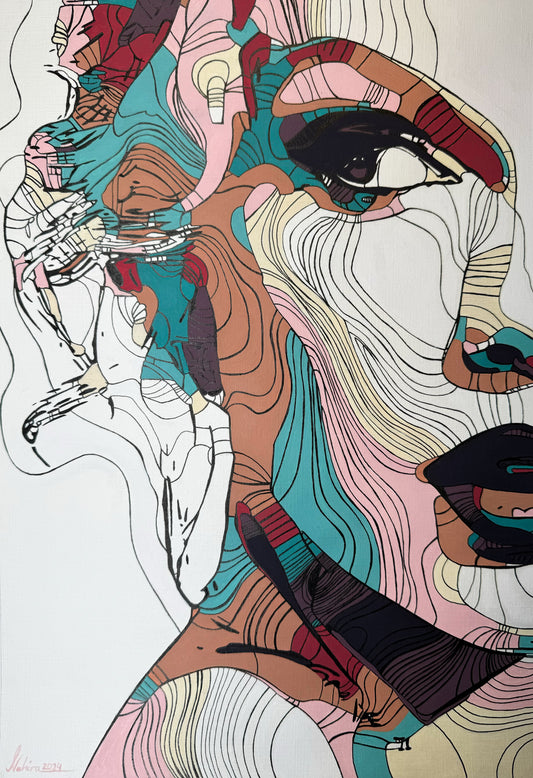
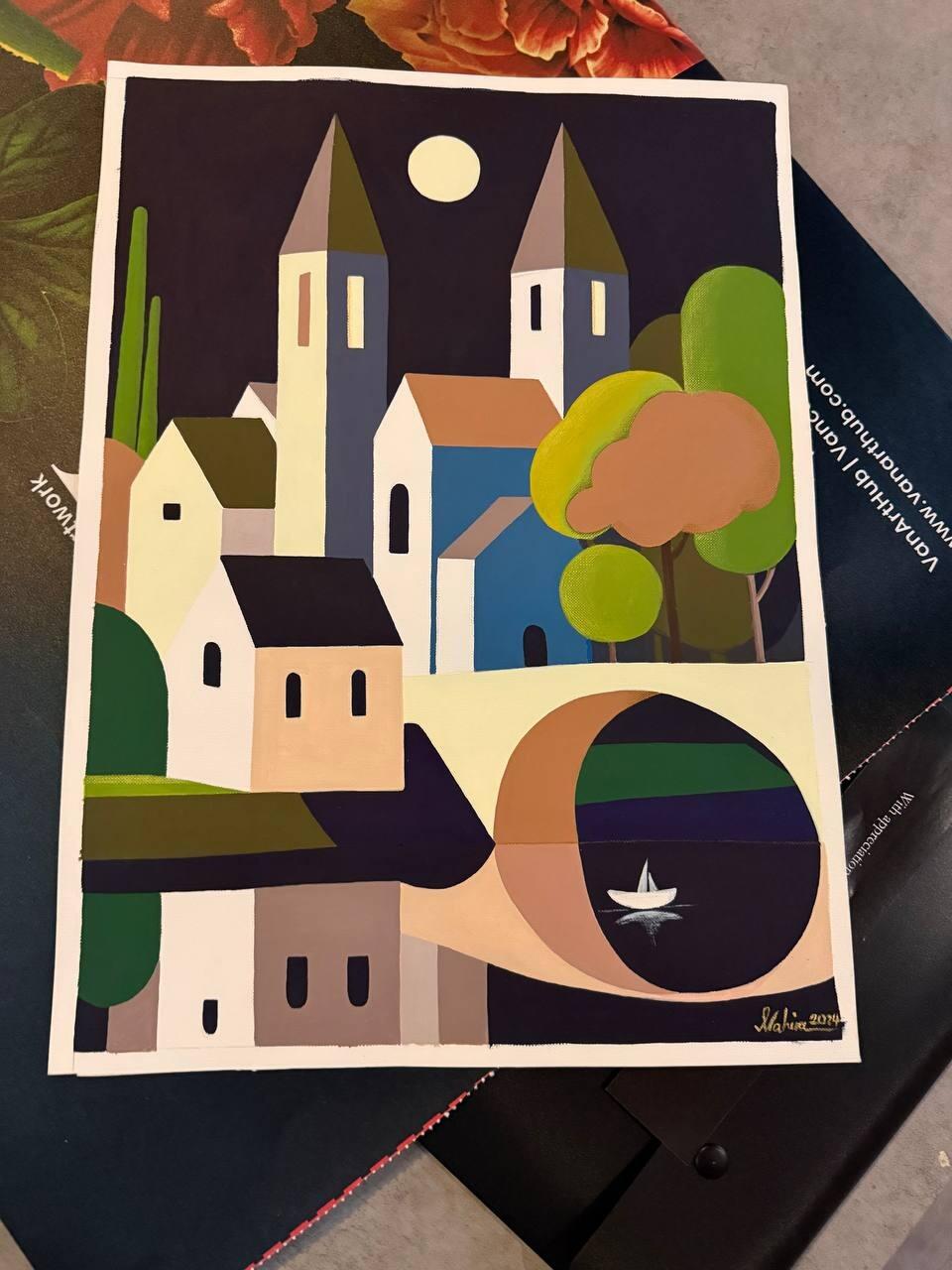
On the artist page for Nahira, the gallery describes soft-edged figures emerging from atmospheric backgrounds, with brushwork that "ranges from delicate realism in facial features to gestural abstraction in clothing and background". That combination, a face you can read inside a surface that moves towards abstraction, is one practical answer to the figurative or abstract question. See the Nahira collection.
How to judge the figure in a figurative painting
A painted figure is where skill shows first, because everyone knows what a hand or a face looks like. When we assess a figurative painting, we look at these points in order:
-
Hands and faces. We treat these as the hardest test of drawing. Check whether they are resolved, or whether the painter has hidden them in shadow or behind objects.
-
Deliberate distortion. A stretched neck or an oversized head can be a choice. Look at the rest of the figure: if everything else is well drawn, treat the distortion as a choice and ask the artist about it.
-
Where the figure meets the background. A soft or dissolving edge, as in Phaedra's and Nahira's work, should look controlled and consistent across the canvas.
-
The gaze. Where the figure looks decides where you look. In a surrealist painting, a figure who does not see the impossible thing beside them is often part of the effect.
For the full method of reading a surreal image, from setting to title, see our page on how to read a surrealist painting.
Frequently asked questions
What is figurative painting?
Figurative painting is painting that keeps strong references to the real world, above all the human figure. Tate's glossary defines figurative art as "any form of modern art that retains strong references to the real world and particularly to the human figure". The term came into use after abstract art arrived, and in a general sense it covers all art before abstraction.
What is the difference between figurative and representational art?
The difference between figurative and representational art is focus and treatment. Tate calls representational a blanket term for art that represents some aspect of reality in a straightforward way. Figurative applies to modern art where recognisable things are treated in modern ways, such as expressionism, and implies a particular focus on the human figure.
Is figurative art the same as realism?
Figurative art is related to realism but separate from it in Tate's definitions. Tate says modern figurative art uses modern idioms, while modern realists work in styles that predate post-impressionism. A figure painted with expressionist distortion is figurative, and a figure painted in an older, carefully observed manner since the arrival of abstraction is modern realism.
Can abstract art be based on real objects?
Abstract art can be based on real objects. Tate explains that the term applies to art based on an object, figure or scene whose forms have been simplified or schematised, as well as to art built from geometric shapes or gestural marks with no source in visual reality. Tate also notes that non-representational is often used to mean abstract.
What does new figuration mean in art history?
New figuration means the revival of figurative art in Europe and America in the 1960s, after a period dominated by abstraction. Tate says the French critic Michel Ragon first used the term, and it names David Hockney and Leon Golub as examples. The revival came as painters returned to recognisable subjects, including the human figure.
What was the School of London?
The School of London was a name for London-based painters who kept working figuratively in the 1970s. Tate says R.B. Kitaj used the term in the catalogue for The Human Clay, his 1976 exhibition of figurative drawing and painting at the Hayward Gallery. The painters linked to it include Francis Bacon, Lucian Freud, Frank Auerbach, Leon Kossoff and David Hockney.
Who are important figurative painters of the twentieth century?
Important figurative painters of the twentieth century named in Tate's glossary include Pablo Picasso, whose work from the 1920s onward Tate calls the great exemplar of modern figurative painting, and Francis Bacon and Lucian Freud after the Second World War. Tate also names Paula Rego, Philip Guston and Julian Schnabel among the neo-expressionists of the 1980s.
Can a painting be both figurative and surrealist?
A painting can be both figurative and surrealist, and most surrealist dream imagery is. Tate says some surrealists depicted the imagery of dreams in highly realistic detail. Dorothea Tanning's Birthday of 1942, at the Philadelphia Museum of Art, is a recognisable self-portrait set among endless hallways, with a fantastic creature at her feet.
What is magic realism in painting?
Magic realism in painting means modern realist paintings with fantasy or dreamlike subjects. Tate says the German critic Franz Roh coined the term in 1925, and that magic realism is closely related to the dreamlike depictions of surrealism. Tate lists Giorgio de Chirico among the magic realist painters in Italy, alongside Alberto Savinio.
How does Phaedra combine figurative and surreal painting?
Phaedra combines figurative and surreal painting by painting precise figures that dissolve into abstraction at the edges, according to her artist page at VanArtHub. The gallery describes her as working at the boundary of the figurative and the surreal, in layered oil and coloured pencil, joining the technical precision of classical portraiture with the ambiguity of surrealist narrative.
References
-
Figurative art. Tate. Undated. Accessed 26 September 2026. The definition of figurative art, its use since abstraction, the distinction from modern realism, and the line from Picasso to Bacon, Freud and neo-expressionism.
-
Representational. Tate. Undated. Accessed 26 September 2026. The definition of representational art and its relation to figurative and non-representational.
-
Abstract art. Tate. Undated. Accessed 26 September 2026. The definition of abstract art and its place in modern art since the early 1900s.
-
School of London. Tate. Undated. Accessed 26 September 2026. Kitaj's 1976 exhibition The Human Clay and the painters linked to the name.
-
New figuration. Tate. Undated. Accessed 26 September 2026. The 1960s revival, Michel Ragon, Hockney and Golub.
-
Neo-expressionism. Tate. Undated. Accessed 26 September 2026. The 1980s revival and the painters Tate names.
-
Magic realism. Tate. Undated. Accessed 26 September 2026. Franz Roh's 1925 term and its relation to surrealism.
-
International Surrealism. Tate Modern display text. Undated. Accessed 26 September 2026. The surrealists who depicted dream imagery in realistic detail.
-
Biennale Arte 2022: Statement by Cecilia Alemani. La Biennale di Venezia. Published 2022. Accessed 26 September 2026. The theme of bodies and the majority of women and gender non-conforming artists.
-
Leonora Carrington, Self-Portrait. The Metropolitan Museum of Art. Undated; Internet Archive copy of 17 June 2026. Accessed 26 September 2026. The date and the description of the self-portrait.
-
Dorothea Tanning, Birthday, 1942. Philadelphia Museum of Art. Undated. Accessed 26 September 2026. The date and the description of the self-portrait.
-
Phaedra. VanArtHub. Undated. Accessed 26 September 2026. The gallery's description of Phaedra's work and visual language.
-
Nahira. VanArtHub. Undated. Accessed 26 September 2026. The gallery's description of Nahira's figures and brushwork.
Checked 26 September 2026. If something here is out of date, write to us and we will correct it.