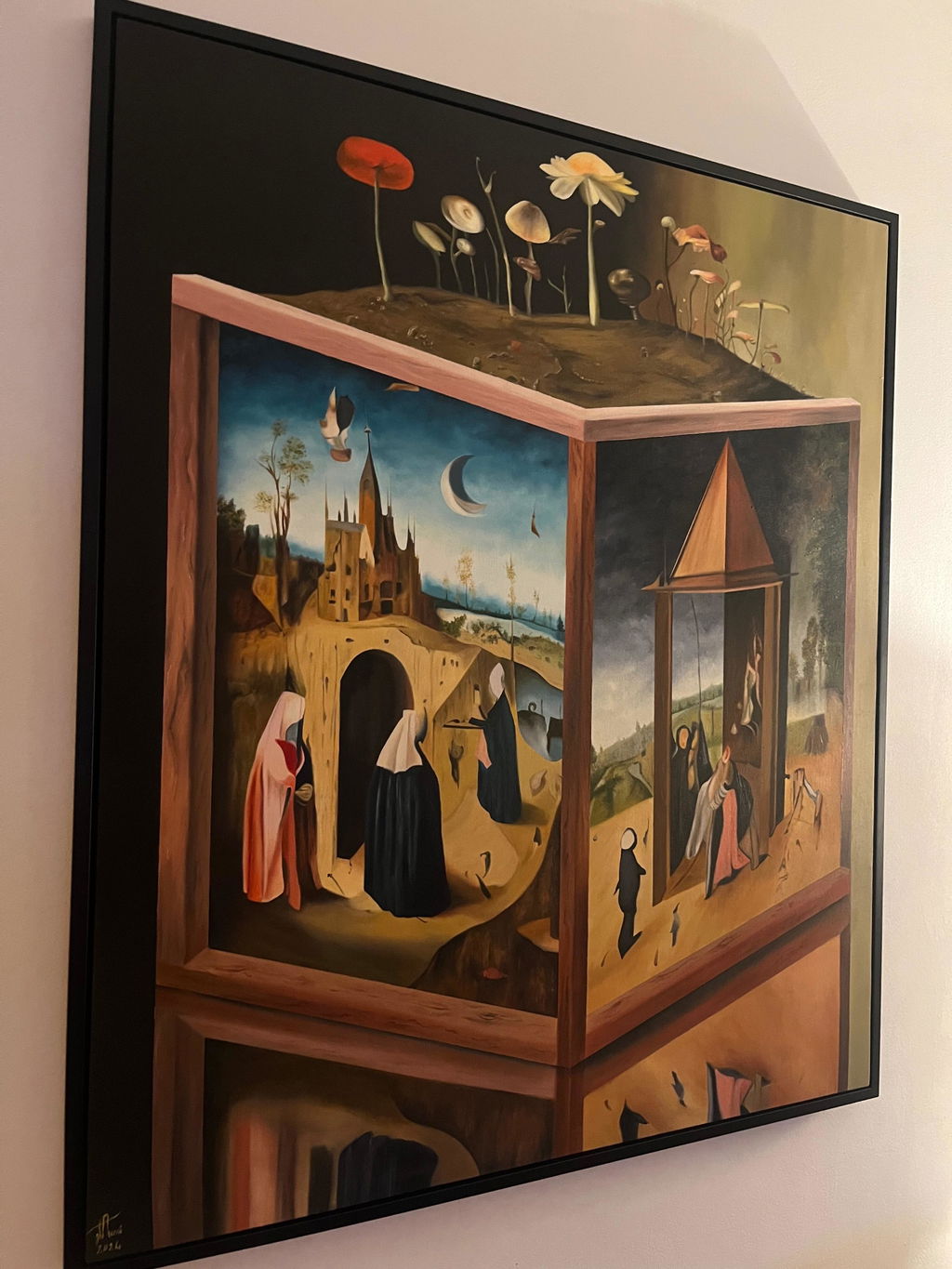
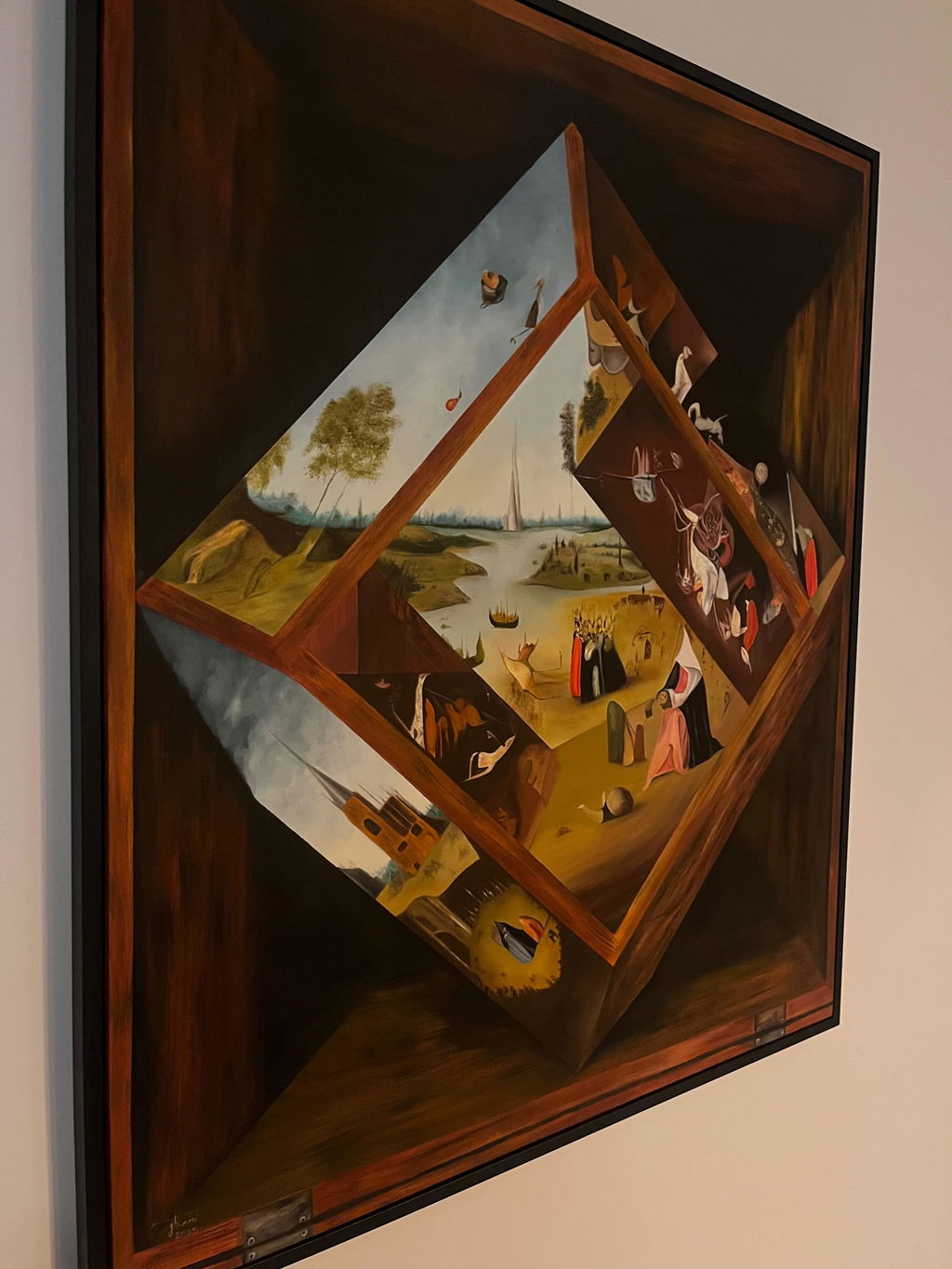
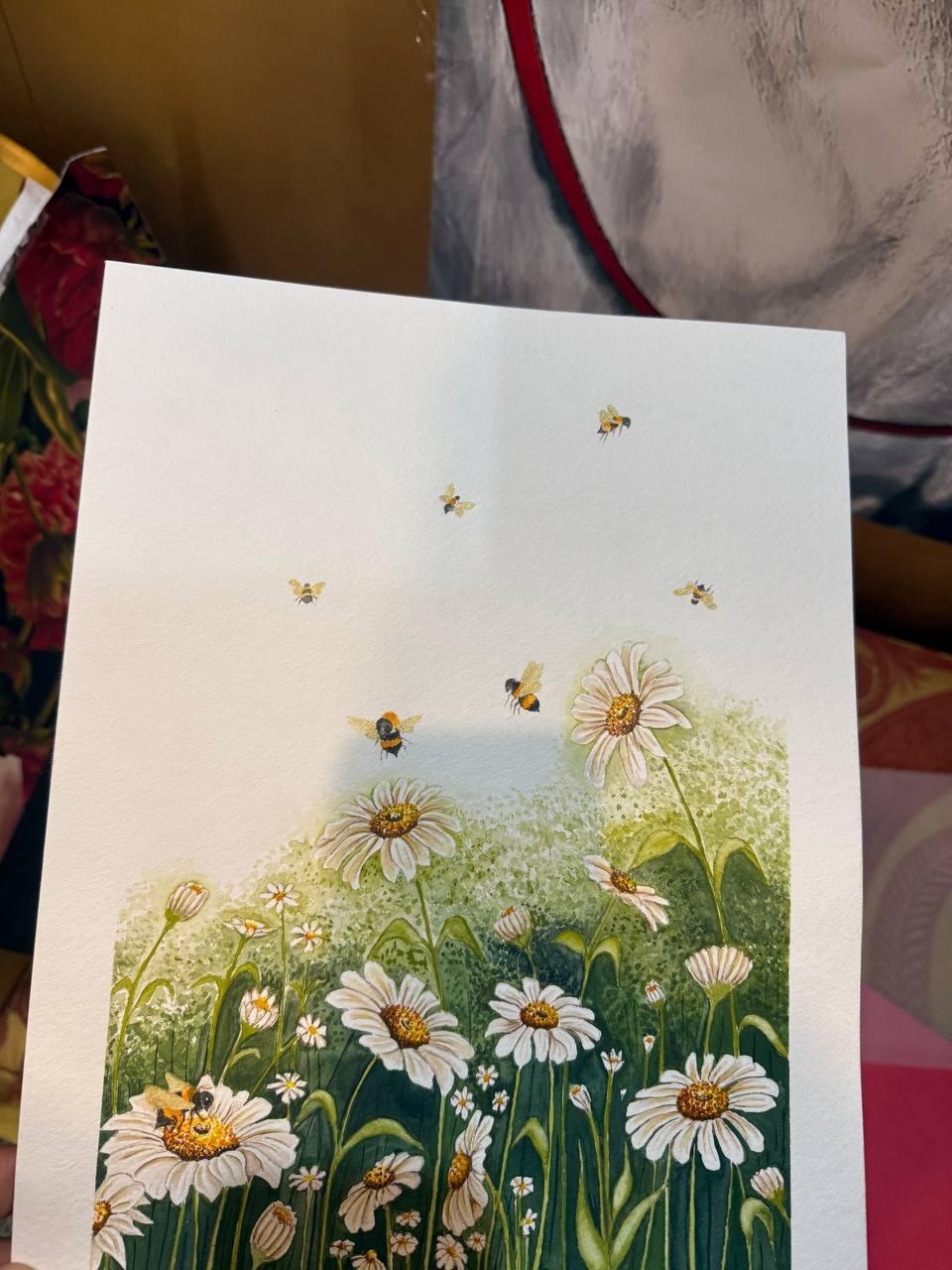
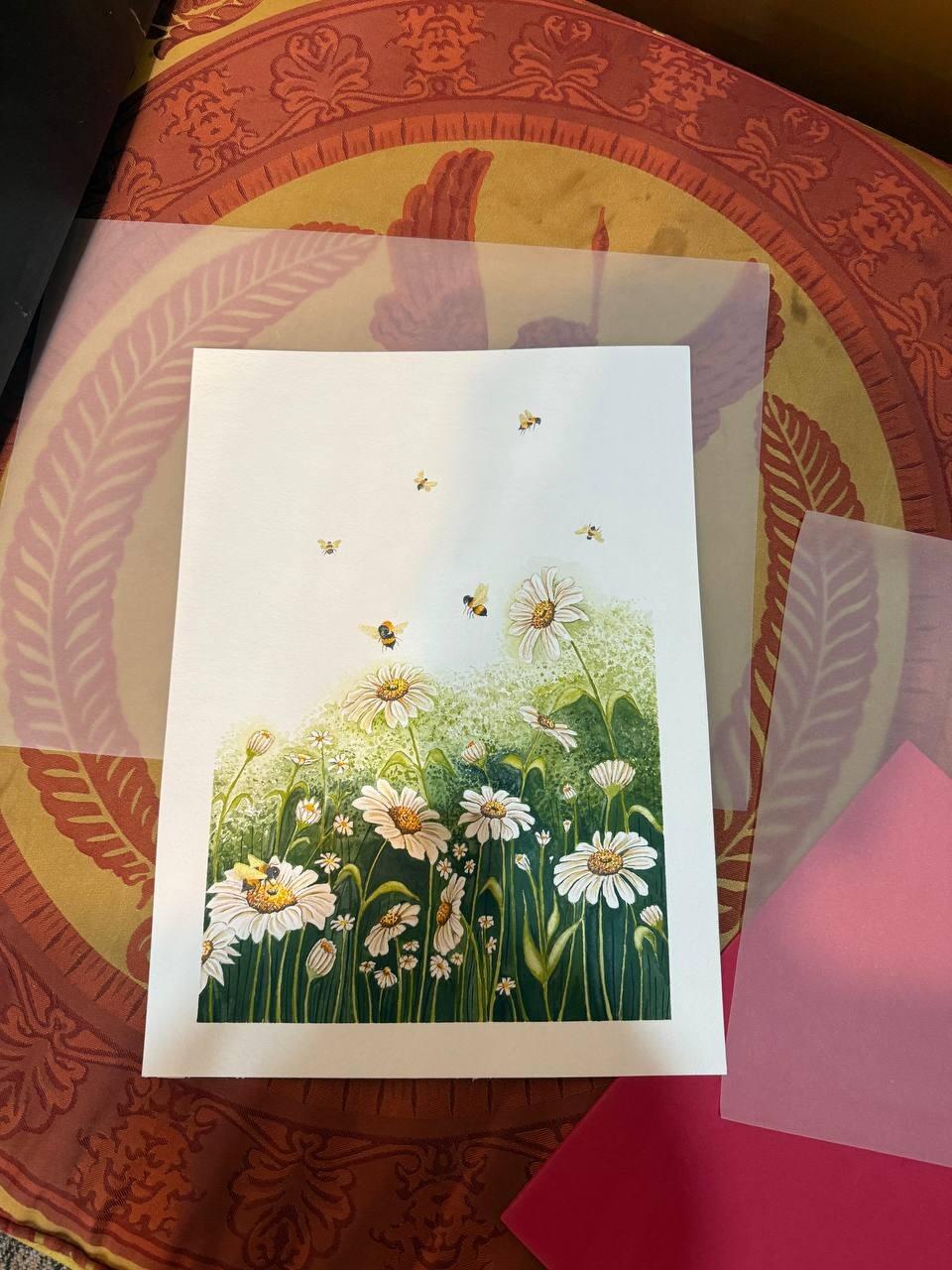
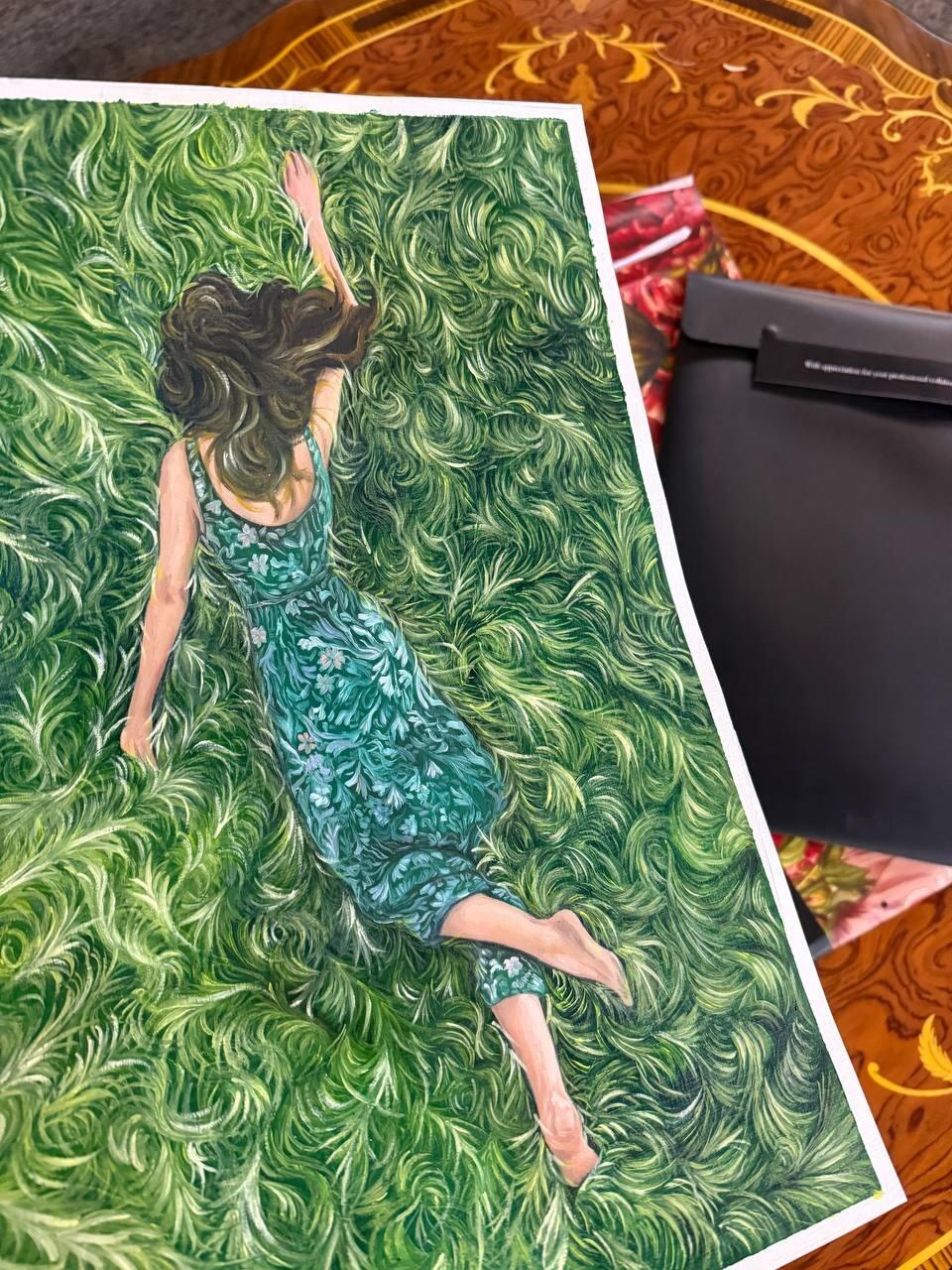
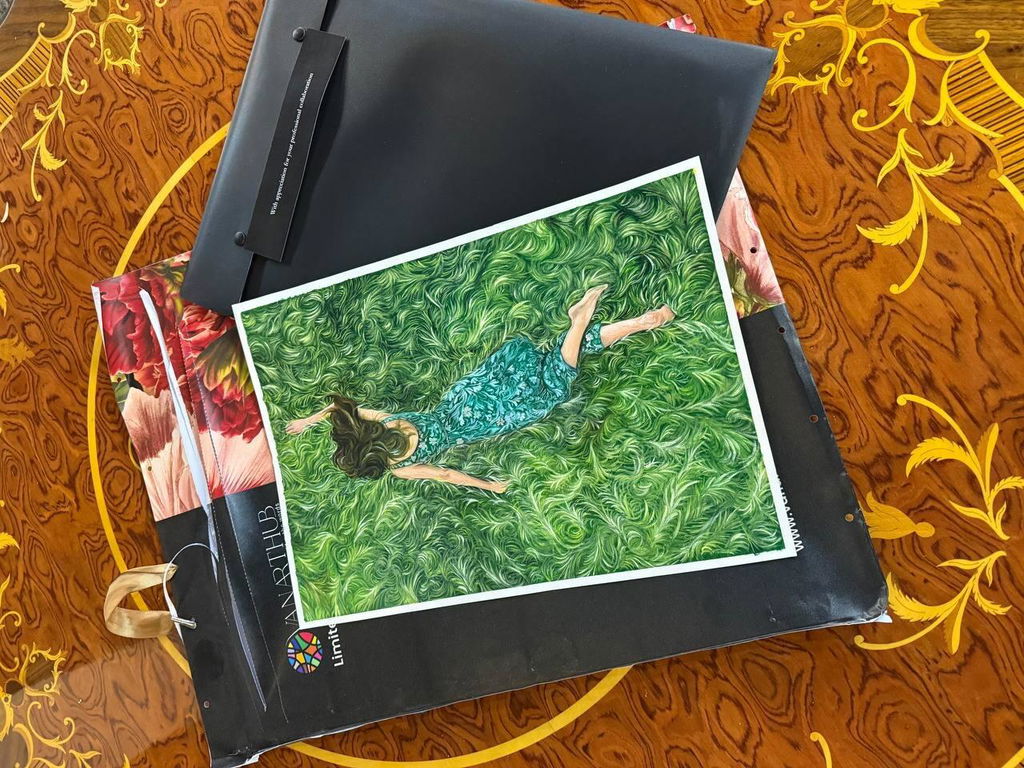
Living with surrealist art works best when the painting hangs where you choose to look at it and can also walk away from it: a living room, a study, a hallway or a dining room. We advise against hanging a disturbing surrealist image where someone has to face it while trying to rest, such as across from a bed, and against any bathroom, where humidity is a risk to every original painting. A gentle, dreamlike surrealist picture is a different case and can suit a bedroom well.
This page gives our room-by-room view, then covers framing, hanging a surrealist painting beside other work, and light. For height, spacing and size, our hanging guides already do the arithmetic, and we link to them instead of repeating it. This page is part of our guide to surrealist paintings.
Key takeaways
- A surrealist painting is built to produce what Tate calls the uncanny, a strange and anxious feeling from familiar things in unfamiliar places, so the room should let you choose when to feel it.
- The Canadian Conservation Institute says conservation adopted 50 lux as the benchmark light level for museum display, and older guidelines allowed 150 lux for oil and acrylic paint surfaces.
- The Canadian Conservation Institute lists typical light levels of 500 lux in an office, 5,000 lux at a window or study lamp, and 30,000 lux in average daylight.
- The Canadian Conservation Institute defines damp as relative humidity over 75%, and says visible mould growth becomes possible on some surfaces at 60%.
- Watercolours and works on paper fall in the 50 lux group in the older museum guidelines, so we give coloured pencil and watercolour works more protection from light than an oil on canvas.
Why the room matters more for a surrealist painting
A calm painting asks little of a room. A surrealist one asks for attention. Tate's glossary explains that surrealist artists "made artworks that combined familiar things in unexpected ways to create uncanny feelings", using a word Sigmund Freud developed in a 1919 essay for the feeling that comes when something familiar turns strange. That feeling is the reason to own the painting. It is also the reason to think about when, and in what mood, you will meet it.
Our rule is simple: hang a strong surrealist image where you pass it or sit with it by choice.
Which rooms suit a surrealist painting
This is our own view, from placing surrealist work in homes. It is an opinion, and you may disagree once you have lived with a piece.
Where we would and would not hang a surrealist painting, room by room
| Room |
Our view |
Why |
What to watch |
| Living room |
Yes, one of the best places |
People talk about the painting, and you can sit facing it or with your back to it |
Direct sun from a window |
| Study or home office |
Yes, the best place for a disturbing image |
You choose when to look up, and a detailed picture rewards close viewing |
A desk lamp aimed at the painting |
| Hallway or entry |
Yes, for small and detailed work |
You meet it briefly and at close range, many times a day |
Narrow halls where people brush past the surface |
| Dining room |
Yes, for playful or dreamlike work |
A strange image gives a table something to talk about; a violent one spoils a meal |
Heat and steam from serving dishes on a sideboard below |
| Bedroom |
Only for gentle, dreamlike images |
You face the wall opposite the bed when you are least able to look away |
Morning sun on the wall opposite a window |
| Child's room |
Only for playful images, chosen with the child |
A child cannot choose to leave the room the way an adult can |
Hands and toys at low height |
| Bathroom |
No, for any original painting |
Steam from showers adds moisture, and the Canadian Conservation Institute defines damp as over 75% relative humidity |
Mould and paint damage |
Two notes on the table. First, "disturbing" and "gentle" depend on the viewer. A painting of whales swimming through a room may read as wonder to one person and as fear to another, so look at a candidate painting for a few minutes before you decide which kind it is for you. Second, a bedroom with a strong surrealist picture can work if the painting hangs on the same wall as the bed, above the headboard, so you see it as you walk in, and it sits behind you when you lie down.
Size and height: use the hanging guides
Surrealist paintings follow the same rules of size and height as any other painting, and we have covered those in detail. Our hanging and sizing hub explains the height convention and the common mistakes, our guide on what size painting goes above a sofa gives the proportions for the most common wall in a living room, and our page on how to size art to a wall covers every other wall.
One point is specific to surrealism. A precise dream painting depends on detail, such as the shapes inside an egg or the reflection in a floor, and detail is lost at a distance. If you will see the painting mostly from across a large room, choose a larger piece. If you will see it from a chair or a desk, a smaller painting can work on its own, because you will be close enough to read it.
Framing a surrealist painting
Choose a quiet frame, so all of the strangeness comes from the picture. For oil and acrylic on stretched canvas, a thin frame in a colour taken from the painting, or a floater frame that leaves a small gap around the canvas, lets the image lead. An ornate gold frame can work on a surrealist painting that imitates old master technique, where the frame becomes part of the joke. Our guide to framing original paintings covers profiles, colours and glazing in detail.
Works in coloured pencil, watercolour or ink need different care from oil paint. The Canadian Conservation Institute's older guidelines grouped "works on paper, watercolours on any medium" at 50 lux, the most light-sensitive group, and oil and acrylic paint surfaces at 150 lux. The Institute's tests on an oil paint sample show how much a good ultraviolet filter reduces damage. For a coloured pencil or watercolour work we frame behind ultraviolet-filtering glazing and hang it away from windows. The organisation ASTM International publishes a standard for artists' coloured pencils that tests each pencil's lightfastness under daylight through window glass, and a separate standard for the lightfastness of colorants in other artists' materials.
Hanging a surrealist painting beside other work
A surrealist painting competes for attention, so decide first whether it will lead the wall or join a group. We see three arrangements work:
-
Alone on a wall. The strongest option for a large or disturbing image. Leave the wall on either side empty, and keep busy patterns away from it.
-
With quiet neighbours. A surrealist painting beside calm abstract work or plain drawings keeps its force, because nothing else on the wall asks a question. Match one colour between the pieces to tie them together.
-
In a room of dream images. Several small surrealist works, grouped closely in a study or hallway, read as a single collection. Keep the frames the same so the images stand out.
The arrangement we would avoid is two large surrealist paintings side by side on one wall. Each image needs time to be read, and two of them split your attention so that neither one works. If you own two, give each its own wall or its own room.
Light: how much, and what kind
Light fades colour, and the Canadian Conservation Institute is the clearest source on how much. It says conservation adopted 50 lux as a benchmark for museums, because colour science showed 50 lux was enough for full colour vision, and that older museum guidelines, based on that benchmark, allowed 150 lux for oil and acrylic paint surfaces. For comparison, the Institute lists typical levels of 500 lux in an office, 5,000 lux at a window or under a study lamp, and 30,000 lux in average daylight. In a living room you will want more light than 50 lux. The figures show why direct sun is the real danger: average daylight, at 30,000 lux, is 60 times the 500 lux of a lit office.
Heat is a second risk. The Institute says heating from infrared light usually becomes a problem only with incandescent lamps at high intensity, over 5,000 lux, and with direct sunlight. Our page on lighting a painting at home gives the angle, the light level and the choice of fixture.
Humidity and where not to hang
The Canadian Conservation Institute defines damp as relative humidity over 75%, and says damp causes mould, corrosion and physical damage; visible mould growth becomes possible on some surfaces at 60%. It also shows what daily swings in humidity do over a long period: a painting by Cornelius Krieghoff cracked and cupped after a century of daily changes, except in the strips over the wooden stretcher bars, which slowed the changes. Keep any original away from bathrooms, from the wall above a kettle or stove, and from outside walls that stay cold and damp in winter.
Living with it over time
A good surrealist painting keeps changing as you live with it. You notice a new detail in the second month, and the mood of the picture shifts with the light of each season. That is the best argument for buying one. It is also why we suggest giving a new painting a few weeks before deciding it is right for the room. Every original we sell comes with a 14-day trial, explained on our buy with confidence page, so you can hang it in the real room before you commit. If you want to understand what you are looking at while it hangs there, our page on how to read a surrealist painting gives a five-step method, and our page on collecting contemporary surrealism covers condition and care questions to ask before you buy.
Frequently asked questions
Should a disturbing surrealist painting hang in a bedroom?
A disturbing surrealist painting should not hang opposite a bed, in our view, because you face that wall when you are least able to look away. Gentle, dreamlike images suit a bedroom well. If you want a strong image there, hang it above the headboard, where it faces the door and sits behind you when you lie down.
Which room is best for a strong surrealist painting?
A study or home office is the best room for a strong surrealist painting, in our view, because you choose when to look up at it and a detailed picture rewards close viewing. The living room comes next, since people talk about the painting there. Tate describes the feeling these paintings create as the uncanny.
How much light should a surrealist oil painting get?
A surrealist oil painting should get far less light than direct sun. The Canadian Conservation Institute says older museum guidelines allowed 150 lux for oil and acrylic paint surfaces, against a benchmark of 50 lux for the most sensitive works. It lists average daylight at 30,000 lux, so a wall that receives direct sun is the real danger.
Can a coloured pencil artwork hang in a sunny room?
A coloured pencil artwork should not hang where sun reaches it. The Canadian Conservation Institute's older guidelines grouped works on paper and watercolours at 50 lux, the most light-sensitive group, and lists 5,000 lux at a window. We treat coloured pencil work the same way. Frame coloured pencil work behind ultraviolet-filtering glazing and hang it on a wall away from windows.
Can I hang an original painting in a bathroom?
An original painting should not hang in a bathroom. The Canadian Conservation Institute defines damp as relative humidity over 75% and says damp causes mould and physical damage, with visible mould possible on some surfaces at 60%. Steam from a shower adds moisture to the air, so we advise against a bathroom for every original, surrealist or not.
Why do humidity changes damage a painting on canvas?
Humidity changes damage a painting on canvas because repeated swings stress the paint and canvas, and over years the paint cracks. The Canadian Conservation Institute shows a Cornelius Krieghoff painting that cracked and cupped after a century of daily humidity changes, except over the wooden stretcher bars, which slowed the changes beneath them.
What frame suits a surrealist painting?
A quiet frame suits a surrealist painting, so the strangeness stays in the picture. For oil or acrylic on canvas, choose a thin frame or a floater frame. For coloured pencil or watercolour, add ultraviolet-filtering glazing, since the Canadian Conservation Institute's older guidelines put those works in the most light-sensitive group, at 50 lux.
Can I hang a surrealist painting next to other art?
A surrealist painting can hang next to other art if its neighbours are quiet, such as calm abstract work or plain drawings, so nothing else on the wall asks a question. Avoid two large surrealist paintings on one wall: each needs time to read, and together they split your attention. Small surrealist works grouped closely can form one collection.
Does a surrealist painting need a picture light?
A picture light is optional for a surrealist painting and helps a detailed picture be read in the evening. Keep the lamp modest: the Canadian Conservation Institute says heat from infrared usually becomes a problem only with incandescent lamps at high intensity, over 5,000 lux, and with direct sunlight. Our lighting guide covers the angle and the level.
What if a surrealist painting feels too strong after I hang it?
If a surrealist painting feels too strong after you hang it, try it on another wall or in another room before deciding, since the same image reads differently in a study than in a living room. Every VanArtHub original comes with a 14-day trial, so you can return it for a full refund if it does not suit the room.
References
-
Agent of Deterioration: Light, Ultraviolet and Infrared. Stefan Michalski, Canadian Conservation Institute, Government of Canada. Undated online edition. Accessed 26 September 2026. The 50 lux benchmark, the 50 and 150 lux guideline groups, typical light levels, ultraviolet filtering, and infrared heating above 5,000 lux.
-
Agent of Deterioration: Incorrect Relative Humidity. Stefan Michalski, Canadian Conservation Institute, Government of Canada. Undated online edition. Accessed 26 September 2026. Damp above 75% relative humidity, mould at 60%, and the cracking of a Krieghoff painting from daily humidity changes.
-
The uncanny. Tate. Undated. Accessed 26 September 2026. The uncanny, Freud's 1919 essay, and its use by surrealist artists.
-
Standard Specification for Artists' Colored Pencils (D6901-15R21). ASTM International. Reapproved 2021. Accessed 26 September 2026. Lightfastness testing of coloured pencils under daylight through window glass.
-
Standard Test Methods for Lightfastness of Colorants Used in Artists' Materials (D4303-10R16). ASTM International. Reapproved 2016. Accessed 26 September 2026. The existence of a lightfastness standard for colorants in artists' materials.
Checked 26 September 2026. If something here is out of date, write to us and we will correct it.