The women surrealist painters who shaped the movement include Leonora Carrington, Remedios Varo, Dorothea Tanning, Leonor Fini and Kay Sage. Each one exhibited with the surrealists or worked alongside them from the 1930s onward, and museums in New York, Philadelphia, Venice, Chicago and Mexico City hold or have shown their work. Their subjects include self-portraits set in imaginary worlds, alchemy and science, animals as private stand-ins for the artist, and grief.
This page gives each painter's dates, one or two works you can see in a museum, and what she added to surrealist painting. It closes with Frida Kahlo, who is often called a surrealist and rejected the label herself, and with the painters working in this line today. It is part of our guide to surrealist paintings.
Key takeaways
- Leonora Carrington's Self-Portrait, dated to 1937 to 1938, is at the Metropolitan Museum of Art, and the Met quotes her saying "I didn't have time to be anyone's muse".
- Remedios Varo left Europe in 1941 and settled in Mexico City, and the Art Institute of Chicago showed more than 20 of her paintings from 29 July to 27 November 2023.
- Dorothea Tanning painted Birthday, a self-portrait with endless hallways, in 1942, and the Philadelphia Museum of Art owns it.
- The Peggy Guggenheim Collection says Leonor Fini never officially joined the surrealist movement, and owns her The Shepherdess of the Sphinxes of 1941.
- SFMOMA quotes Frida Kahlo saying "They thought I was a Surrealist, but I wasn't. I never painted dreams. I painted my own reality."
The five painters compared
Women surrealist painters, with dates, a museum work, and what each added to the movement
| Painter |
Dates |
A work to see |
What she added |
| Leonora Carrington |
1917 to 2011 |
Self-Portrait, 1937 to 1938, Metropolitan Museum of Art, New York |
Animals and creatures as stand-ins for the self; a major figure in Latin American surrealism |
| Remedios Varo |
1908 to 1963 |
Useless Science, or The Alchemist, 1955, Museo de Arte Moderno, Mexico City |
Surrealist chance techniques joined to science, mysticism, tarot and exploration |
| Dorothea Tanning |
1910 to 2012 |
Birthday, 1942, Philadelphia Museum of Art |
The self-portrait as a guide to an imaginary world |
| Leonor Fini |
1907 to 1996 |
The Shepherdess of the Sphinxes, 1941, Peggy Guggenheim Collection, Venice |
Commanding women surrounded by sphinxes and cats |
| Kay Sage |
1898 to 1963 |
Tomorrow is Never, 1955, Metropolitan Museum of Art, New York |
Empty structures and draped forms as pictures of the mind |
Leonora Carrington (1917 to 2011)
Carrington was born in Lancashire, England, in 1917 and died in Mexico City in 2011. The Peggy Guggenheim Collection says she met Max Ernst in 1937, when she was nineteen, and went with him to Paris, where she met Breton, Jean Arp and Yves Tanguy. During the Second World War, Ernst was held prisoner in France because of his German citizenship, and Carrington fled to Spain, where she was confined in a mental hospital. She wrote about it in her book Down Below, published in 1944. She then moved to New York and on to Mexico, where she lived for many years.
Her Self-Portrait at the Met, dated to 1937 to 1938, shows her perched on the edge of a chair in white riding trousers, reaching towards a hyena, with a rocking horse flying behind her. Through the curtained window, a white horse gallops into the green countryside. The Met explains that Carrington grew up on a country estate among animals, reading fairy tales and legends, and that the white horse was her symbolic stand-in. The Met also quotes her: "I didn't have time to be anyone's muse. I was too busy rebelling against my family and learning to be an artist."
A later work, Oink (They Shall Behold Thine Eyes) of 1959, is in the Peggy Guggenheim Collection in Venice. The collection says that today Carrington is recognised as a major figure in Latin American surrealism. In 2022 the Venice Biennale took its title, The Milk of Dreams, from one of her books. The curator, Cecilia Alemani, wrote that the book describes "a magical world where life is constantly re-envisioned through the prism of the imagination".
Remedios Varo (1908 to 1963)
Varo was born in Spain in 1908 and died in 1963. She was among the exhibitors at the International Exhibition of Surrealism in Paris in January 1938, according to the André Breton archive's list. The Art Institute of Chicago says she fled Europe in 1941 because of the growing dangers of the Second World War and settled permanently in Mexico City, among Mexican and European artists who drew on the culture and geography of Mexico.
It was there, the Art Institute says, that Varo developed her practice of joining surrealist chance-based techniques with imagery from chivalric romance, ecology, geographic exploration, feminist critique, mysticism, psychology and tarot. Her pictures are full of scientists, musicians and travellers in strange machines. Useless Science, or The Alchemist of 1955 belongs to the Museo de Arte Moderno in Mexico City, and Exploration of the Sources of the Orinoco River of 1959 is in a private collection.
From 29 July to 27 November 2023 the Art Institute of Chicago showed more than 20 paintings Varo made in Mexico from 1955 until her death. The museum called it the first museum exhibition dedicated to her in the United States since 2000, and its own first solo exhibition of a woman surrealist painter.
Dorothea Tanning (1910 to 2012)
Tanning was an American painter, born in 1910 and died in 2012, according to the Philadelphia Museum of Art. Her Birthday of 1942, which the museum owns, marked an early turning point, painted as she was "coming into her own as a member of the Surrealist group in New York". The museum describes the painting as showing the artist as a flesh-and-blood person and also as a guide to an imaginary world. It points to the endless hallways and the fantastic creature at her feet, and then to details that need a closer look: the tilted floors, and a robe made of human bodies.
Tate owns Tanning's Eine Kleine Nachtmusik of 1943, an oil on canvas. The Biennale of 2022 included her in its room of women artists of the historical avant-garde, beside Carrington, Fini and Varo.
In our reading, what Tanning added is the self-portrait as an entrance. In Birthday the painter stands in front of endless hallways, and she is both the subject and the person who leads you into the dream.
Leonor Fini (1907 to 1996)
The Peggy Guggenheim Collection says Fini was born in Buenos Aires on 30 August 1907, grew up in Trieste, and moved to Paris in 1933, where she met Victor Brauner, Paul Éluard and Max Ernst. She never officially joined the surrealist movement, but experimented with its methods, especially automatism. In 1936 she showed in the International Surrealist Exhibition in London and in Fantastic Art, Dada, Surrealism at the Museum of Modern Art in New York. Her first solo exhibition was at the Julien Levy Gallery in New York in 1938, with a catalogue essay by Giorgio de Chirico. From 1945 to 1969 she designed costumes for theatre, opera, ballet and film. She died in Paris on 18 January 1996.
Her The Shepherdess of the Sphinxes of 1941, an oil on canvas of 46.2 by 38.2 cm, is in the Peggy Guggenheim Collection. The collection describes a "provocative protagonist" surrounded by sphinxes, "half women half lions", that seem to have just finished a feast. Fini lived with many cats, and cats and sphinxes fill her paintings of the 1930s, 1940s and 1950s. In our reading, what she added to surrealism is a woman in charge of the scene: the commanding figure at the centre, with the fantastic creatures around her.
Kay Sage (1898 to 1963)
The Met gives Sage's dates as 1898 to 1963, born in Albany, New York, and calls her "one of the most prominent women associated with Surrealism in the United States". She was married to the surrealist painter Yves Tanguy.
The Met owns her Tomorrow is Never of 1955, painted after a five-month break from painting that followed Tanguy's sudden death. The Met says that, like many surrealists, she used scenery as a metaphor for the mind. In somber grey tones, the painting brings together architectural scaffolding, latticework structures and draped figures to evoke entrapment and dislocation. It is one of her last large works; she died in 1963.
Her name also appears in another museum's records. MoMA records that it bought Magritte's The Menaced Assassin in 1966 with the Kay Sage Tanguy Fund.
Frida Kahlo and the surrealist label
Frida Kahlo is often listed with the surrealists, and she rejected the label. SFMOMA says that although André Breton called her a surrealist, Kahlo drew her imagery from her own reality, which separated her paintings from theirs. The museum quotes her from an interview: "They thought I was a Surrealist, but I wasn't. I never painted dreams. I painted my own reality." The Met adds that Kahlo and Diego Rivera were included in the International Surrealist Exhibition that Breton organised in Mexico City in 1940, although neither joined the movement officially. We follow her own word and list her as a painter who showed with the surrealists.
How museums see these painters now
Two recent exhibitions placed these women at the centre. Surrealism Beyond Borders, organised by Tate and the Met and shown at Tate Modern from 24 February to 29 August 2022, described surrealism in Mexico City as "shaped by the creative bonds of women artists". The 2022 Venice Biennale built a room around women of the early avant-garde, including Eileen Agar, Carrington, Fini, Tanning and Varo, and La Biennale says it was the first edition in its 127-year history with a majority of women and gender non-conforming artists.
Their work also shows how often surrealism and the figure go together: two of the paintings on this page, by Carrington and Tanning, are self-portraits. Our page on figurative painting explained looks at that overlap, and our short history of surrealist painting places these women in the timeline of exhibitions from 1925 to the 1940s.
Women painting surrealist work today
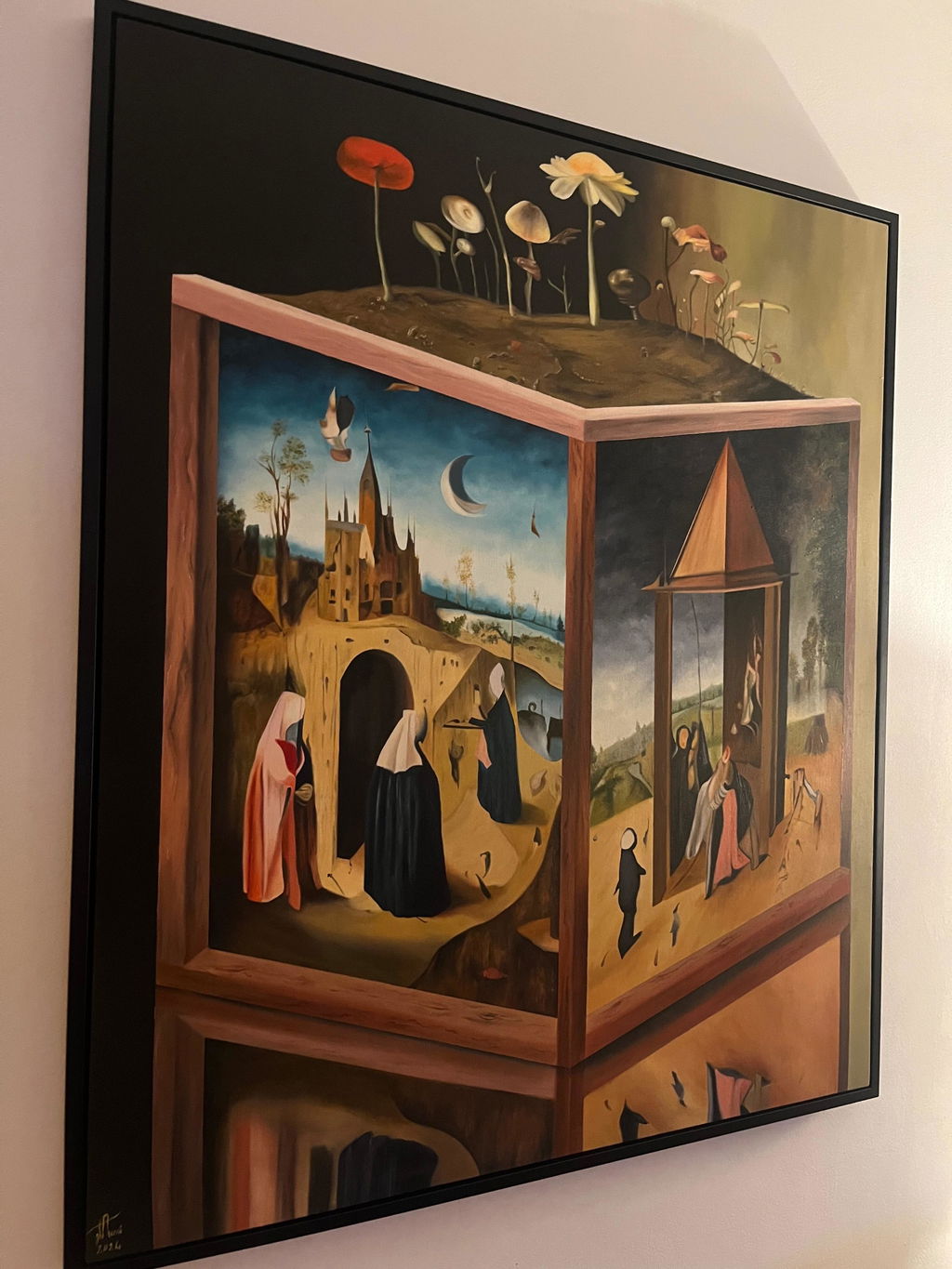
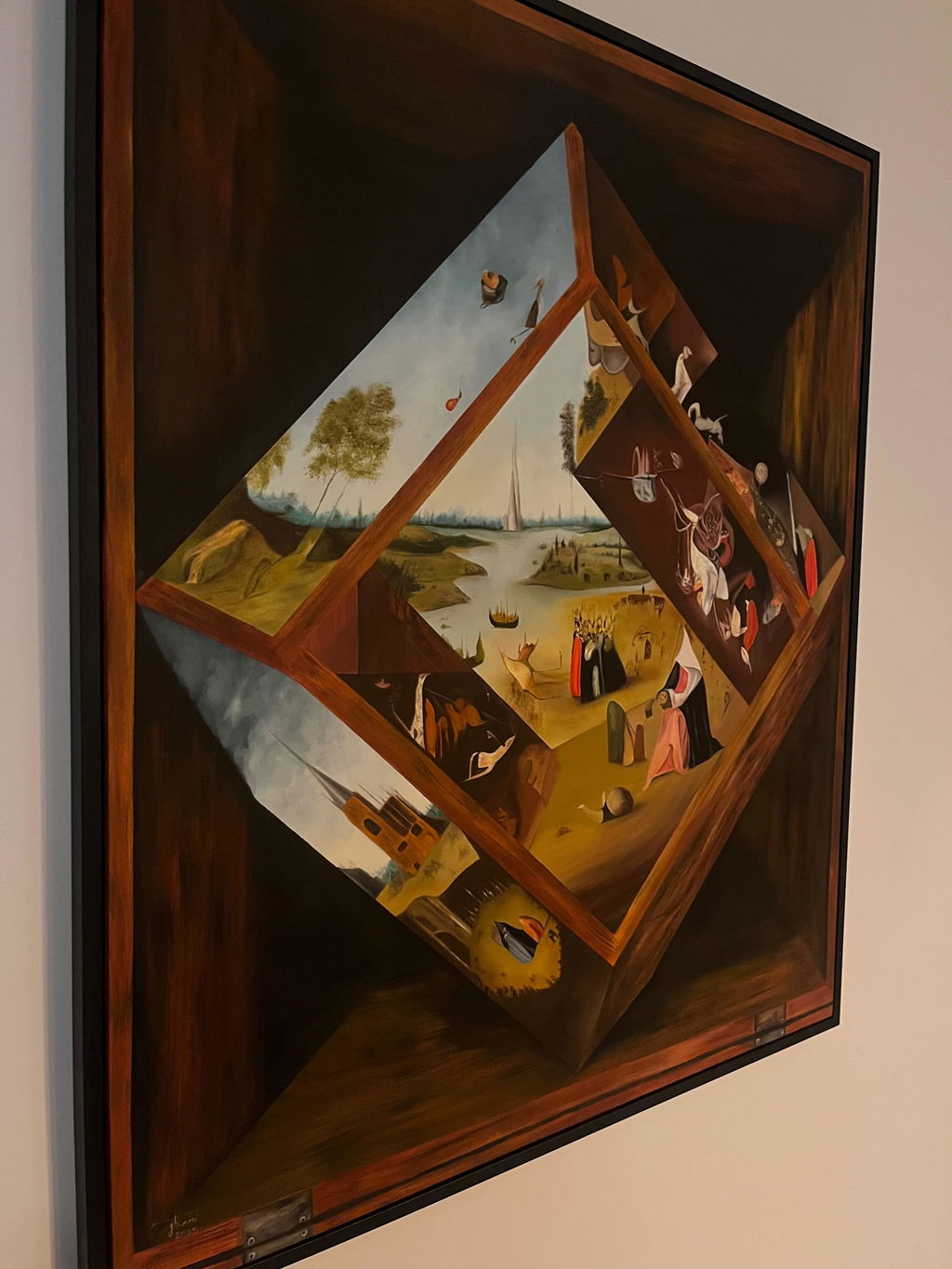
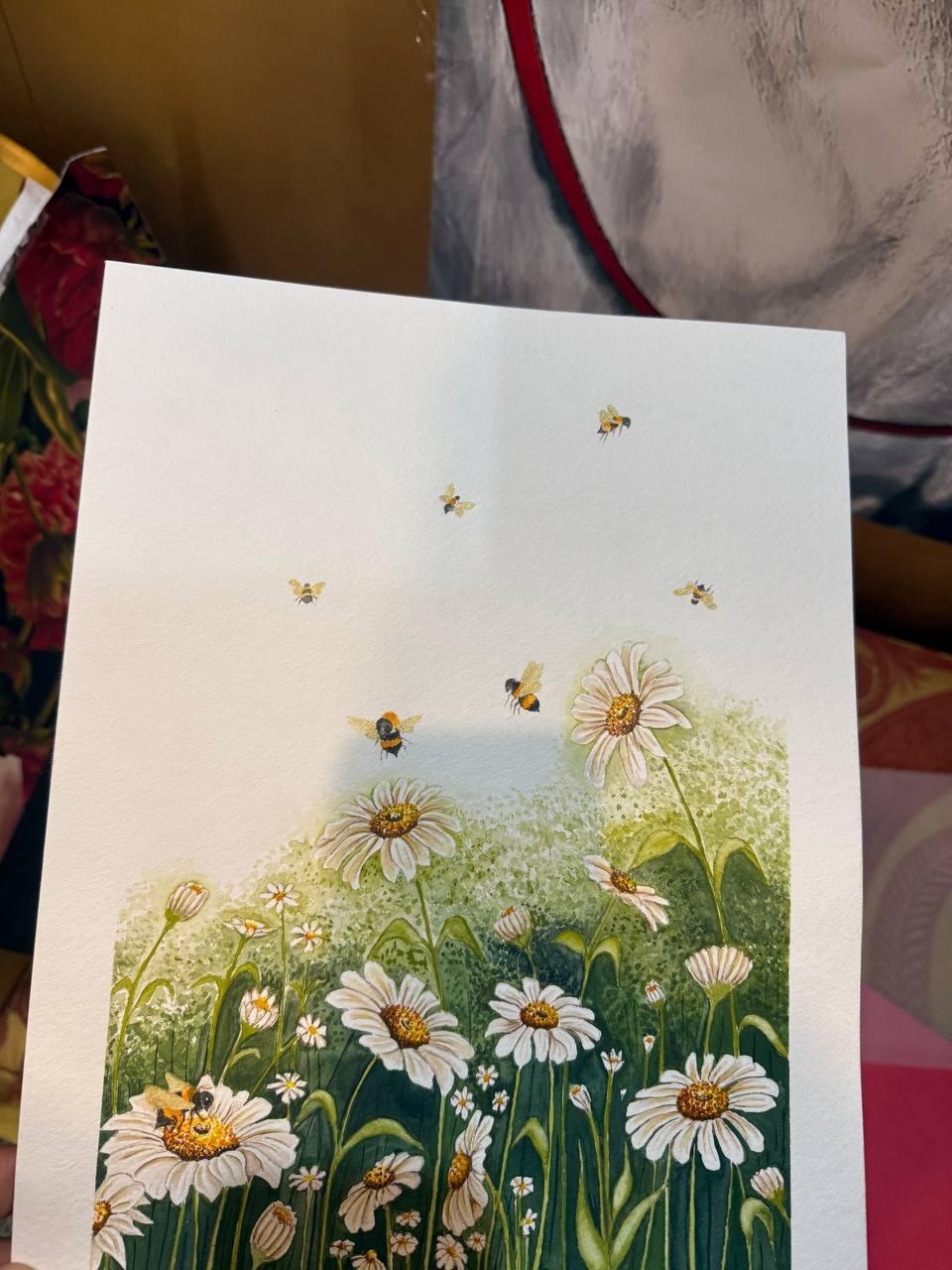
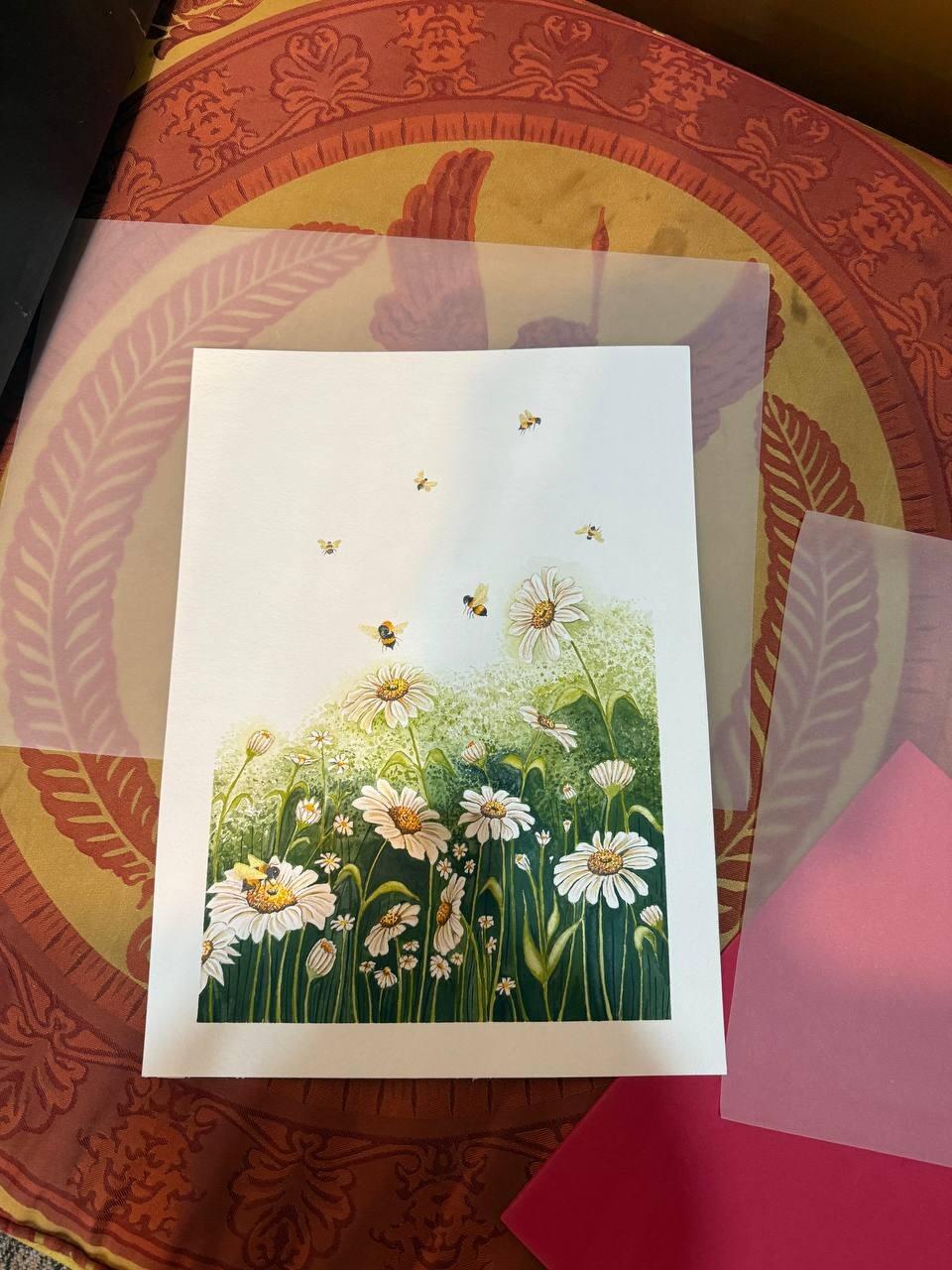
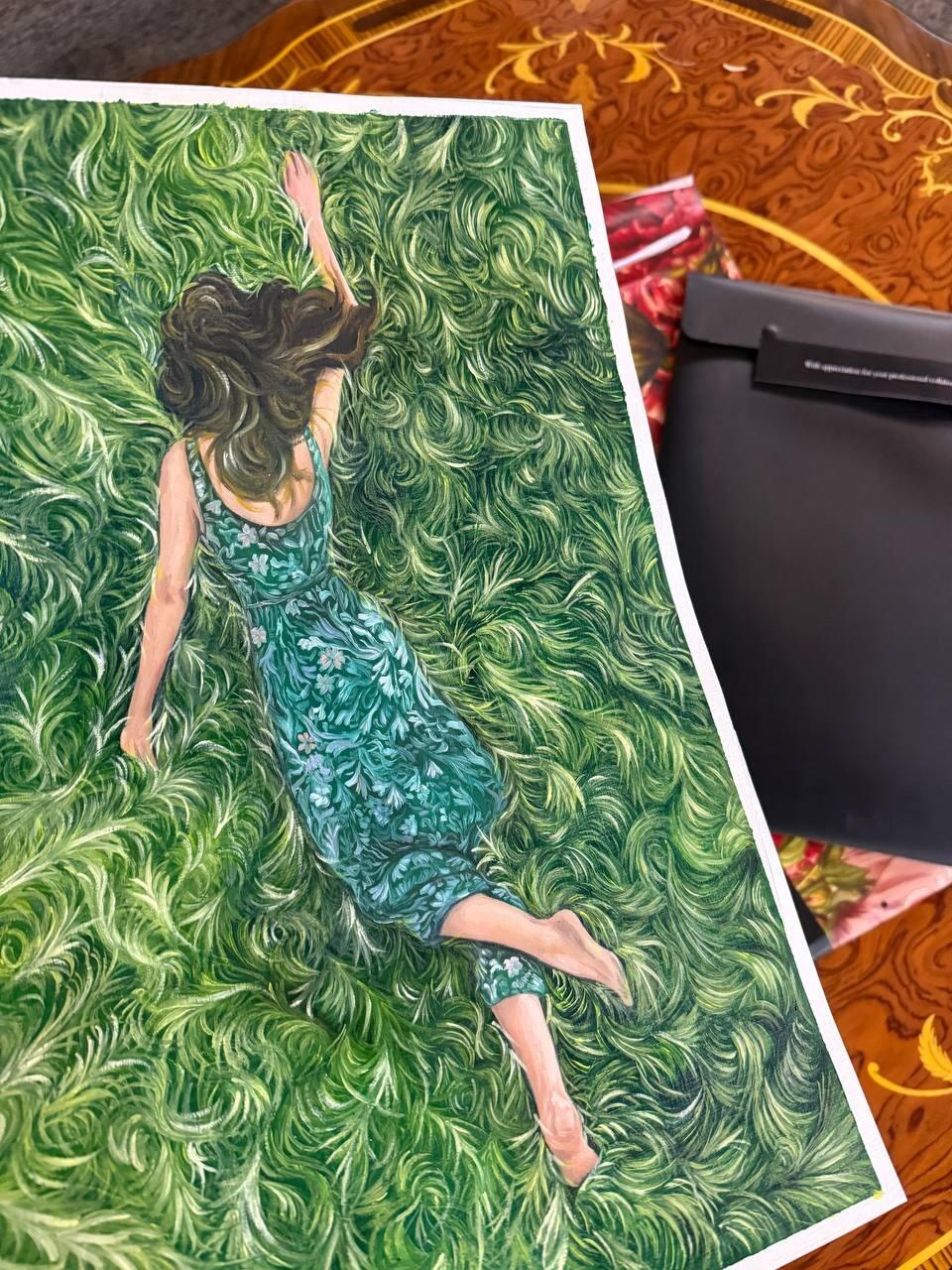
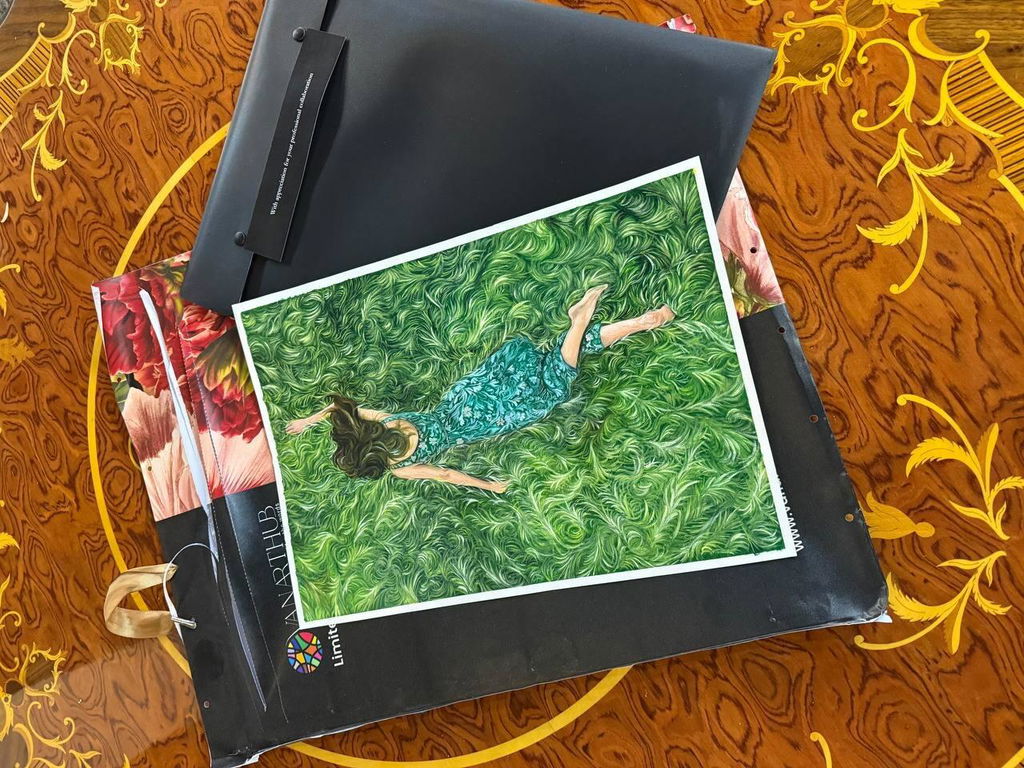
The line these painters started continues in contemporary studios, including ours. On her artist page, the gallery describes Phaedra as a Vancouver-based painter working at the boundary of the figurative and the surreal, whose layered oil and coloured-pencil works explore memory, identity and "the quiet tension between what is seen and what is felt". The page lists surrealist cinema and Persian miniature painting among her inspirations, and her themes include the psychological interior and transformation. You can see her work in the Phaedra collection and among the other painters in our surrealism collection.
Frequently asked questions
Which women exhibited in the 1938 surrealist exhibition in Paris?
The women who exhibited in the 1938 International Exhibition of Surrealism in Paris included Eileen Agar, Meret Oppenheim, Toyen and Remedios Varo, according to the André Breton archive's list of exhibitors. The exhibition ran at the Galerie Beaux-Arts from 17 January to 24 February 1938, alongside work by Dalí, Ernst, Magritte, Masson and Miró.
Did Leonora Carrington see herself as a surrealist muse?
Leonora Carrington rejected the role of muse. The Metropolitan Museum of Art quotes her saying "I didn't have time to be anyone's muse. I was too busy rebelling against my family and learning to be an artist." The Met owns her Self-Portrait, dated to 1937 to 1938, painted soon after she met Max Ernst and moved to Paris.
Where can I see Leonora Carrington's paintings in a museum?
Leonora Carrington's paintings can be seen at the Metropolitan Museum of Art in New York, which owns her Self-Portrait of 1937 to 1938, and at the Peggy Guggenheim Collection in Venice, which owns Oink (They Shall Behold Thine Eyes) of 1959. The Guggenheim collection calls her a major figure in Latin American surrealism.
Why did Remedios Varo move to Mexico City?
Remedios Varo moved to Mexico City because she fled Europe in 1941 to escape the growing dangers of the Second World War, according to the Art Institute of Chicago. She stayed permanently, working among Mexican and European artists, and painted in Mexico until her death in 1963. Her Useless Science, or The Alchemist of 1955 belongs to the Museo de Arte Moderno there.
What subjects did Remedios Varo paint?
Remedios Varo painted scientists, musicians and travellers in strange machines, drawing on chivalric romance, ecology, geographic exploration, feminist critique, mysticism, psychology and tarot, according to the Art Institute of Chicago. She joined these subjects to surrealist chance-based techniques. Her Exploration of the Sources of the Orinoco River of 1959, now in a private collection, is one example.
What does Dorothea Tanning's painting Birthday show?
Dorothea Tanning's painting Birthday shows the artist as a guide to an imaginary world, standing before endless hallways with a fantastic creature at her feet and a robe made of human bodies. The Philadelphia Museum of Art, which owns the 1942 self-portrait, says it marked a turning point as she came into her own in the surrealist group in New York.
Was Leonor Fini a member of the surrealist group?
Leonor Fini was never an official member of the surrealist group, according to the Peggy Guggenheim Collection, though she experimented with its methods, especially automatism. She showed in the 1936 surrealist exhibitions in London and at MoMA in New York. Her The Shepherdess of the Sphinxes of 1941 is in the Guggenheim collection in Venice.
What is Kay Sage's painting Tomorrow is Never about?
Kay Sage's Tomorrow is Never, painted in 1955 after the sudden death of her husband Yves Tanguy, evokes entrapment and dislocation, according to the Metropolitan Museum of Art. In somber grey, it combines architectural scaffolding, latticework structures and draped figures. The Met, which owns it, calls it one of her last large works before her death in 1963.
Did Frida Kahlo call herself a surrealist?
Frida Kahlo did not call herself a surrealist. SFMOMA quotes her from an interview: "They thought I was a Surrealist, but I wasn't. I never painted dreams. I painted my own reality." André Breton called her a surrealist, and the Met notes that she showed in his 1940 exhibition in Mexico City without officially joining the movement.
Why was the 2022 Venice Biennale named after a Leonora Carrington book?
The 2022 Venice Biennale was named The Milk of Dreams after a book by Leonora Carrington because its curator, Cecilia Alemani, used Carrington's world of transformation as a starting point. Alemani wrote that the book describes "a magical world where life is constantly re-envisioned through the prism of the imagination", and the exhibition took Carrington's creatures as companions for its theme.
Are there contemporary women surrealist painters?
Contemporary women surrealist painters are working today, including in our own gallery. On her artist page, VanArtHub describes Phaedra as a Vancouver-based painter working at the boundary of the figurative and the surreal, in layered oil and coloured pencil, and lists surrealist cinema and Persian miniature painting among her inspirations.
References
-
Leonora Carrington, Self-Portrait. The Metropolitan Museum of Art. Undated; Internet Archive copy of 17 June 2026. Accessed 26 September 2026. The date and description of the Self-Portrait, the white horse, Carrington's childhood, and her quotation about being a muse.
-
Leonora Carrington. Peggy Guggenheim Collection. Undated. Accessed 26 September 2026. Carrington's dates, her meeting with Ernst in 1937, Down Below of 1944, her move to Mexico, and her place in Latin American surrealism.
-
Oink (They Shall Behold Thine Eyes). Peggy Guggenheim Collection. Undated. Accessed 26 September 2026. The 1959 date and the collection's ownership.
-
Remedios Varo: Science Fictions. Art Institute of Chicago. Published 2023. Accessed 26 September 2026. Varo's dates, her move to Mexico City in 1941, her subjects, the two paintings named, and the 2023 exhibition.
-
Dorothea Tanning, Birthday, 1942. Philadelphia Museum of Art. Undated. Accessed 26 September 2026. Tanning's dates and the description of Birthday.
-
Eine Kleine Nachtmusik, Dorothea Tanning, 1943. Tate. Undated. Accessed 26 September 2026. The title, date, medium and Tate's ownership.
-
Leonor Fini. Peggy Guggenheim Collection. Undated. Accessed 26 September 2026. Fini's life, her exhibitions of 1936 and 1938, her costume work, and her death in 1996.
-
The Shepherdess of the Sphinxes. Peggy Guggenheim Collection. Undated. Accessed 26 September 2026. The 1941 date, the medium and size, and the description of the painting.
-
Kay Sage, Tomorrow is Never. The Metropolitan Museum of Art. Undated; Internet Archive copy of 13 February 2026. Accessed 26 September 2026. Sage's dates and birthplace, and the description and date of the painting.
-
René Magritte. The Menaced Assassin. Brussels 1927. The Museum of Modern Art. Undated; Internet Archive copy of 21 June 2026. Accessed 26 September 2026. The purchase with the Kay Sage Tanguy Fund in 1966.
-
Frida Kahlo. San Francisco Museum of Modern Art. Undated. Accessed 26 September 2026. Breton's label and Kahlo's statement that she painted her own reality.
-
Surrealism (Heilbrunn Timeline of Art History). James Voorhies, The Metropolitan Museum of Art. Published October 2004; Internet Archive copy of 28 January 2025. Accessed 26 September 2026. The 1940 Mexico City exhibition and Kahlo's position outside the movement.
-
1938: the International Surrealist Exhibition, archive record. Atelier André Breton archive. Undated. Accessed 26 September 2026. The dates of the 1938 exhibition and its list of exhibitors.
-
Biennale Arte 2022: Statement by Cecilia Alemani. La Biennale di Venezia. Published 2022. Accessed 26 September 2026. The title taken from Carrington's book, the room of women avant-garde artists, and the majority of women artists.
-
Surrealism Beyond Borders. Tate press release. Published 14 December 2021. Accessed 26 September 2026. The exhibition dates and the role of women artists in Mexico City.
-
Phaedra. VanArtHub. Undated. Accessed 26 September 2026. The gallery's description of Phaedra's work, themes and inspirations.
Checked 26 September 2026. If something here is out of date, write to us and we will correct it.